AI agent for radiographers
Equipment Downtime Reschedule Agent
Rebook every affected patient quickly with minimal disruption.
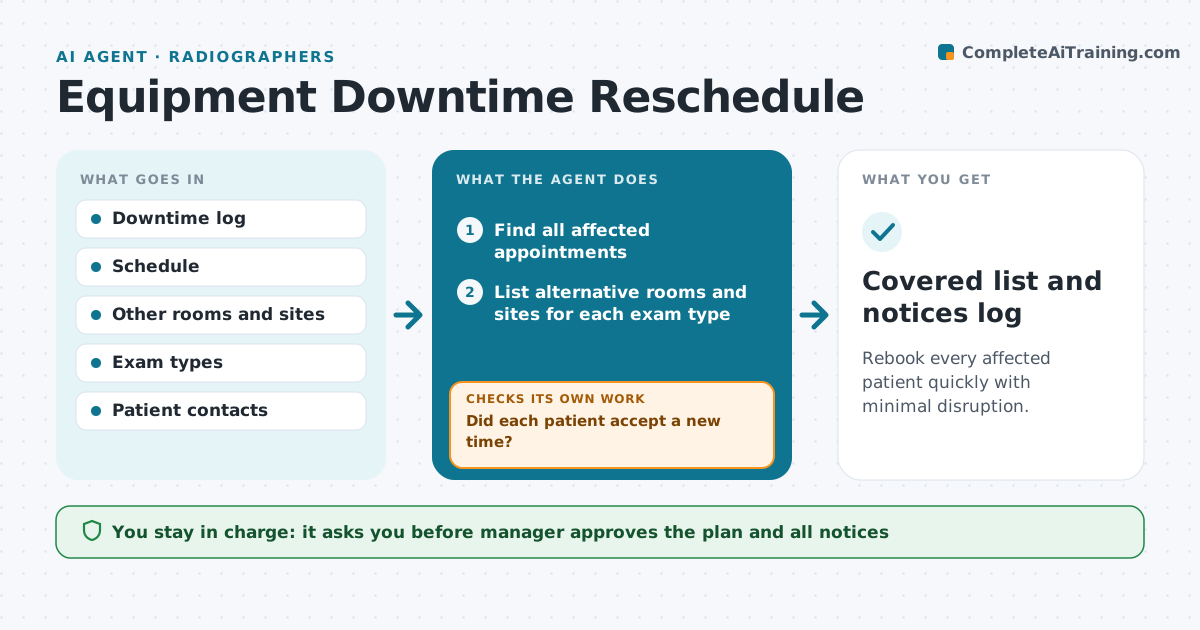
What it does
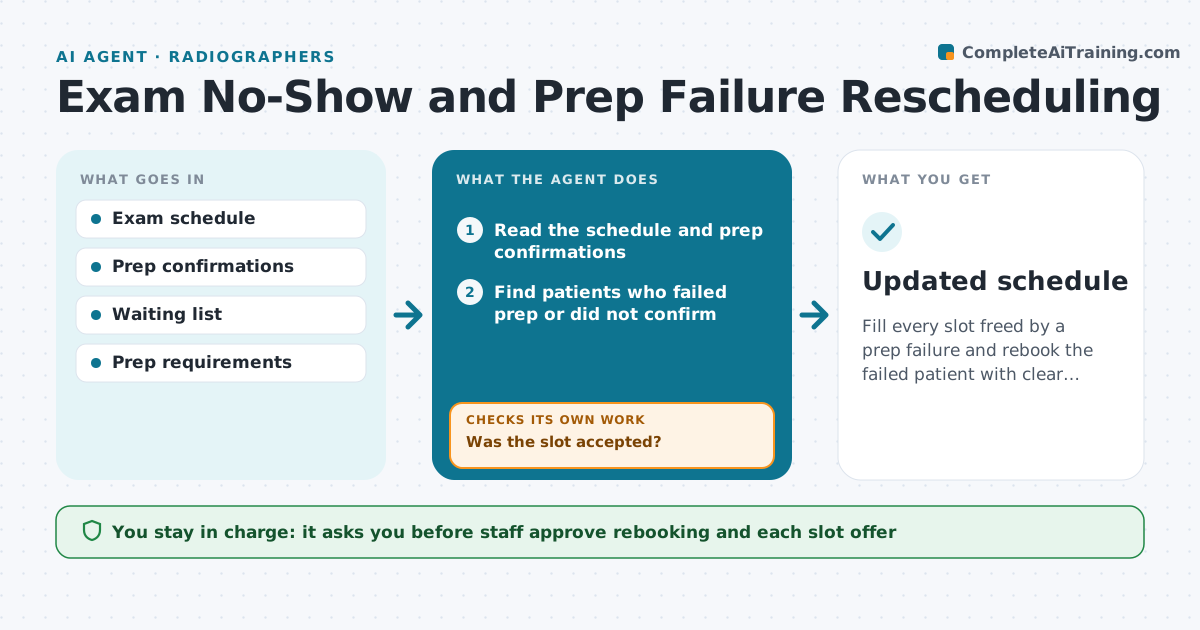
When a scanner goes down, dozens of appointments are affected and phones ring all day. This agent starts when the downtime is logged. It finds every appointment on the affected machine for the expected period, then looks for other rooms or sites that can do the same exam, with the same prep and the same staff skills. It drafts the notice and new time for each patient and sorts them by urgency. Managers approve before anything goes out. If a rebooked patient cannot attend, the agent tries the next slot or site until the list is covered. Edge case: a patient is on an inpatient list and cannot travel, so the agent keeps them on site and reorders the day.
How it works
Follow the arrows from top to bottom. The orange dashed arrow is the loop: when a check fails, the agent goes back and tries again.
Read the steps as a list
- Downtime is logged
- Find all affected appointments
- List alternative rooms and sites for each exam type
- Match appointments to slots, urgent first
- Draft patient notices
- Manager approves the rebooking plan and noticesThe agent waits here for your OK.
- Send the notices and update the schedule
- Did each patient accept a new time?If not: offer the next slot or site. Back to step 4.
- Is every appointment covered?If not: escalate the uncovered list to the manager with options. Back to step 4.
- Covered list and notices log
How it decides
It rebooks the most urgent first, in the closest suitable slot. Exams needing special prep stay with matching rooms.
- Rebook by urgency, then by original time
- Keep inpatients on site
- Match prep and equipment
- Offer at most 3 alternatives per patient
Make it yours
Every agent is a starting point. You choose these settings for your own situation.
- Sites and rooms allowed
- Offer limit (default 3)
- Urgency order
- Notice wording
What keeps you in control
It always asks you first
- Manager approves the plan and all notices
Hard limits
- Never cancel without a new offer
- Never move urgent patients without the manager
It stops when
- Done: every appointment rebooked
- Stop: not enough capacity, manager decides
Set it up
We guide you through the set-up, step by step
Members get the full set-up guide for this agent. No technical skills needed: you copy, paste and upload.
- One set of instructions to paste into your AI, with the clicks for ChatGPT, Claude, Microsoft 365 Copilot, Gemini and Grok
- The agent then walks you through connecting your own data, one source at a time
- A downloadable copy with the flow chart, the rules and the full guide