AI agent for underwriters
Loss Run Analysis Agent
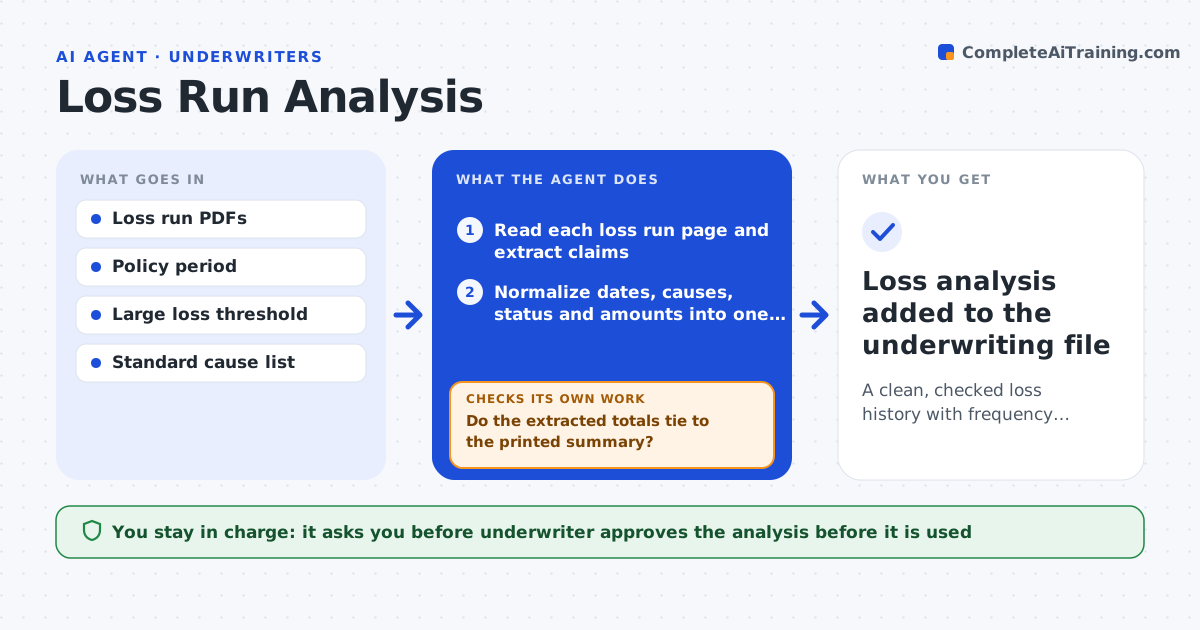
A clean, checked loss history with frequency, severity and large losses
What it does
Loss runs arrive from prior carriers as PDFs in all kinds of layouts, and normalizing them takes hours. This agent reads each loss run and puts claim dates, causes, status and amounts into one standard table. It then checks that its totals tie to the summary figures printed on the loss run. If they do not, it flags the page and reads it again, using a second method for tables that were hard to read. It computes frequency, severity and large losses and writes a short analysis. The underwriter approves the analysis used in the decision. Edge case: a claim appears on two pages with different amounts, so the agent keeps the later one and notes the conflict.
How it works
Follow the arrows from top to bottom. The orange dashed arrow is the loop: when a check fails, the agent goes back and tries again.
Read the steps as a list
- Loss runs received
- Read each loss run page and extract claims
- Normalize dates, causes, status and amounts into one table
- Read the carrier's summary totals
- Do the extracted totals tie to the printed summary?If not: flag the page that differs and read it again with a second method. Back to step 2.
- Remove duplicate claims and note conflicts
- Compute frequency, severity and large losses by year
- Do yearly counts match the policy periods covered?If not: fix the claim dating and recompute. Back to step 6.
- Underwriter approves the analysisThe agent waits here for your OK.
- Loss analysis added to the underwriting file
How it decides
Totals must tie to the carrier's summary within a small tolerance. Claims above the large loss threshold are listed separately.
- Treat totals as tied when they match within one percent
- Keep the later amount when duplicate claims differ
- List losses above the threshold separately
- Flag any gap in years covered
Make it yours
Every agent is a starting point. You choose these settings for your own situation.
- Large loss threshold (default: $50,000)
- Tie-out tolerance (default: 1%)
- Years to analyze (default: five)
- Cause categories
What keeps you in control
It always asks you first
- Underwriter approves the analysis before it is used
Hard limits
- Never changes the carrier's data
- Never decides coverage or price
It stops when
- Done: totals tie and the analysis is approved
- Stop: loss run pages are unreadable
Set it up
We guide you through the set-up, step by step
Members get the full set-up guide for this agent. No technical skills needed: you copy, paste and upload.
- One set of instructions to paste into your AI, with the clicks for ChatGPT, Claude, Microsoft 365 Copilot, Gemini and Grok
- The agent then walks you through connecting your own data, one source at a time
- A downloadable copy with the flow chart, the rules and the full guide