AI agent for film composers
Score Parts Preparation and Proofing Agent
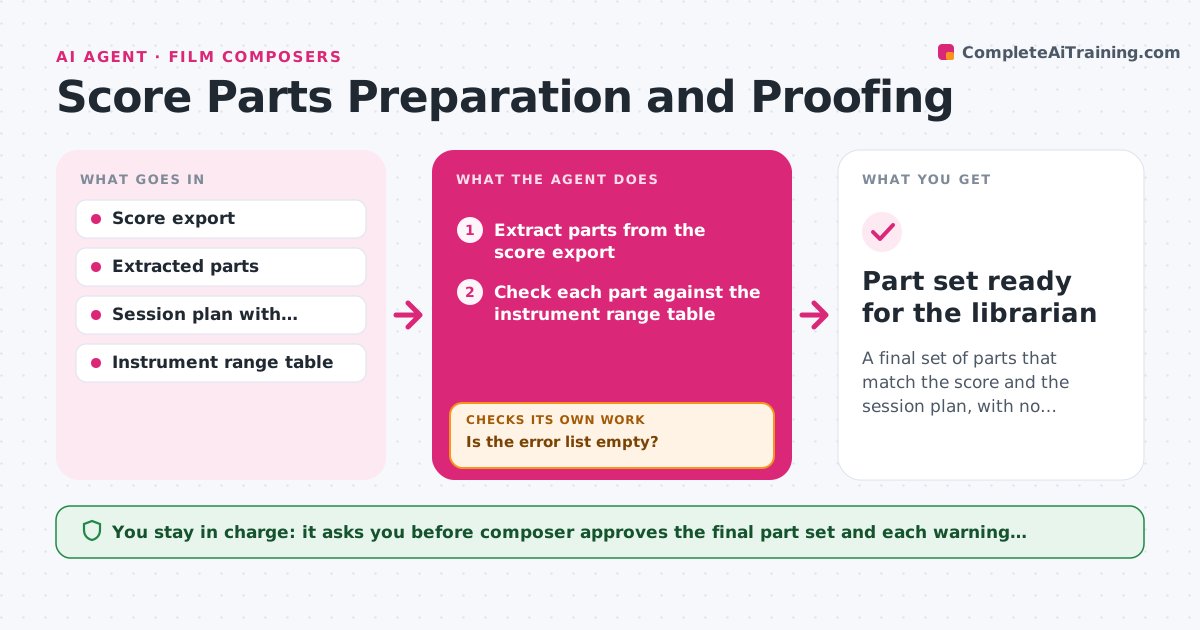
A final set of parts that match the score and the session plan, with no range, page turn or marking errors
What it does
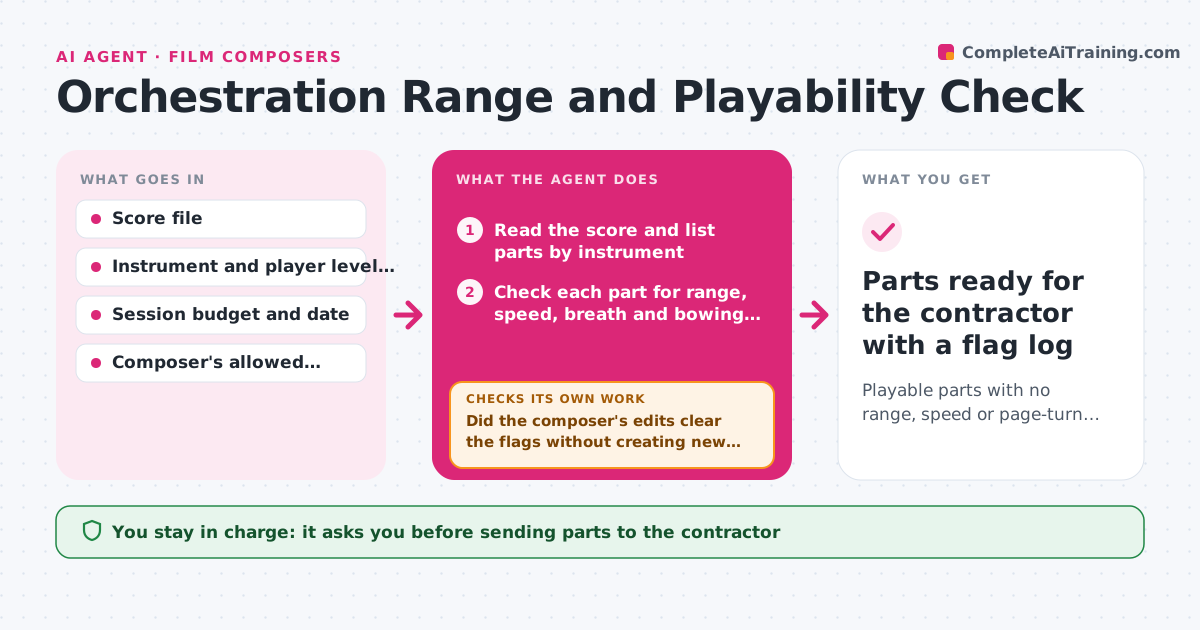
An orchestra session can cost thousands of dollars an hour, and a wrong note found at the stand stops the clock. This agent proofs the parts before they are printed. It extracts the individual parts from the score export, then checks each against the session plan: ranges for each instrument, awkward page turns, missing rehearsal marks, tempo changes, cues and click track alignment. It lists errors by part and bar. After the composer or copyist corrects them, it regenerates the parts and checks them again, repeating until the list is clean. It also compares each part with the score for notes and rhythms in a sample of bars. The composer approves the final set for the librarian. Edge case: a horn part with a note two semitones above the player's comfortable range is flagged as a warning, not an error.
How it works
Follow the arrows from top to bottom. The orange dashed arrow is the loop: when a check fails, the agent goes back and tries again.
Read the steps as a list
- Score locked for the session
- Extract parts from the score export
- Check each part against the instrument range table
- Check page turns, rehearsal marks, cues and tempo markings
- Compare sampled bars of each part with the score for notes and rhythms
- Is the error list empty?If not: List errors by part and bar for correction, then regenerate the parts and check again. Back to step 2.
- Review warnings such as range stress and tight page turns
- Composer approves the final part set and decides on each warningThe agent waits here for your OK.
- Export the parts and a proofing report
- Do the exported parts match the approved score version?If not: Regenerate from the approved score and compare again. Back to step 8.
- Part set ready for the librarian
How it decides
Errors are mismatches with the score or hard range limits; warnings are comfortable-range or page turn issues. It treats the score as the source of truth.
- Treat a note outside the instrument's playable range as an error
- Treat a page turn with less than 2 bars of rest as a warning
- Require rehearsal marks at least every 16 bars
- Compare at least 20 percent of bars per part with the score, more after corrections
Make it yours
Every agent is a starting point. You choose these settings for your own situation.
- Instrument range table and warnings
- Minimum rest for page turns (default 2 bars)
- Rehearsal mark spacing
- Share of bars compared (default 20 percent)
- Output format of parts
What keeps you in control
It always asks you first
- Composer approves the final part set and each warning decision
Hard limits
- Never alter the score itself
- Never send parts to the orchestra or librarian without approval
It stops when
- Done: Parts match the score with no errors and the composer has signed off
- Stop: The score version changes during proofing, so the agent restarts from the new version
Set it up
We guide you through the set-up, step by step
Members get the full set-up guide for this agent. No technical skills needed: you copy, paste and upload.
- One set of instructions to paste into your AI, with the clicks for ChatGPT, Claude, Microsoft 365 Copilot, Gemini and Grok
- The agent then walks you through connecting your own data, one source at a time
- A downloadable copy with the flow chart, the rules and the full guide