AI agent for transportation managers
Vehicle Disposal Timing Agent
Sell each vehicle at the point where holding it costs more than selling it.
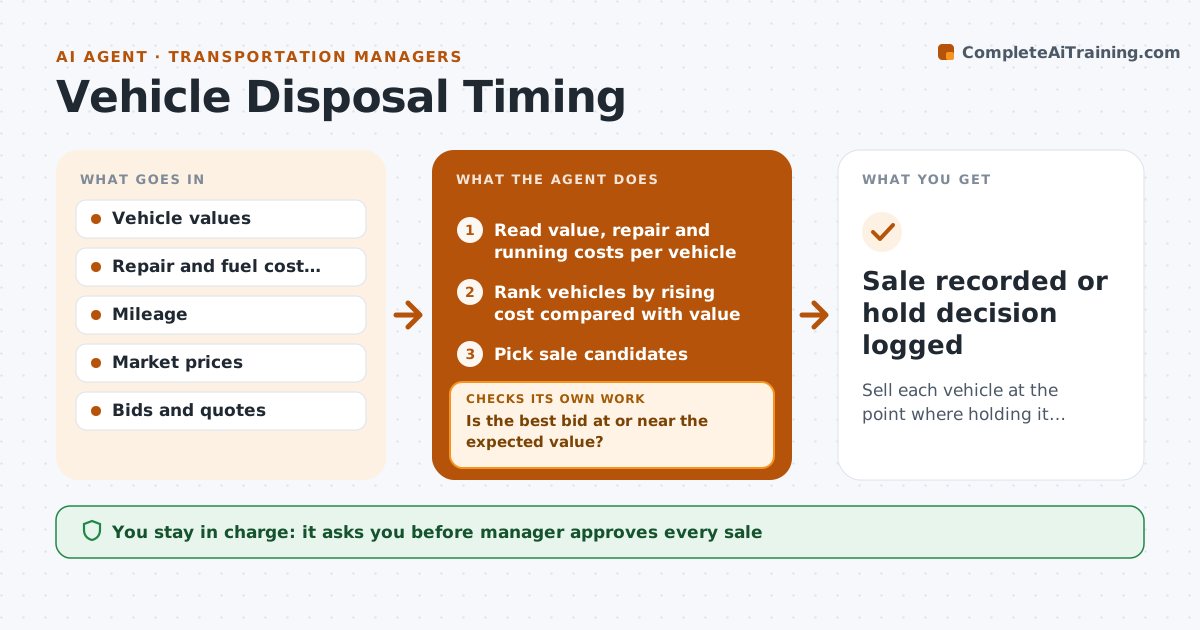
What it does
Old vehicles are often sold when they break down or when the budget is tight, not when selling makes the most sense. This agent compares each vehicle's resale value with its repair cost trend and its running cost per mile. It picks candidates where costs are rising faster than value is falling. It prepares listing details from the records and gathers bids or quotes from dealers and auction sites. It compares them with the expected value. If the bids are below it, it tests holding the vehicle another quarter against selling now, using repair forecasts. The manager approves any sale. Edge case: a truck with a pending major repair is listed before the repair, not after.
How it works
Follow the arrows from top to bottom. The orange dashed arrow is the loop: when a check fails, the agent goes back and tries again.
Read the steps as a list
- Quarterly fleet review
- Read value, repair and running costs per vehicle
- Rank vehicles by rising cost compared with value
- Pick sale candidates
- Prepare listing details and ask for bids
- Is the best bid at or near the expected value?If not: Test holding the vehicle another quarter against selling now. Back to step 4.
- Compare the cost of holding with the sale price
- Is selling now cheaper than holding?If not: Postpone and set a recheck for next quarter. Back to step 4.
- Manager approves the saleThe agent waits here for your OK.
- Sale recorded or hold decision logged
How it decides
It recommends sale when expected cost of holding another quarter exceeds the value lost by selling now, and the best bid is near the expected value.
- Candidates have repair cost above 15 percent of value in the past year
- Accept a bid within 5 percent of expected value
- If bids are below that, compare with holding cost for a quarter
- List before a major repair, not after
Make it yours
Every agent is a starting point. You choose these settings for your own situation.
- Repair cost trigger (default 15 percent of value)
- Acceptable gap to expected value (default 5 percent)
- Where to list vehicles
- Review frequency
What keeps you in control
It always asks you first
- Manager approves every sale
Hard limits
- Never sell a vehicle without approval
- Never list a vehicle with unknown safety defects undisclosed
It stops when
- Done: a sale is approved or a hold is logged with a date
- Stop: no bids and the manager decides
Set it up
We guide you through the set-up, step by step
Members get the full set-up guide for this agent. No technical skills needed: you copy, paste and upload.
- One set of instructions to paste into your AI, with the clicks for ChatGPT, Claude, Microsoft 365 Copilot, Gemini and Grok
- The agent then walks you through connecting your own data, one source at a time
- A downloadable copy with the flow chart, the rules and the full guide