AI tool
AEVS
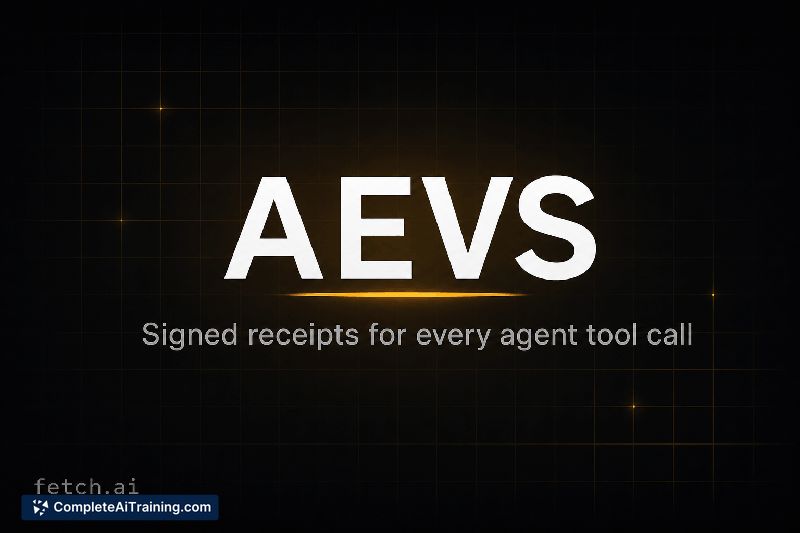
AEVS is a drop-in SDK that records AI agent tool calls as tamper-evident execution receipts. It captures inputs, outputs, and timing to verify agent actions. It serves builders using agent frameworks like LangChain.
About AEVS
AEVS (Agent Execution Verification System) is a drop-in SDK that records every AI agent tool call. It generates tamper-evident execution receipts capturing the tool, inputs, outputs, status, and timing. This allows teams to verify exactly what an agent executed without relying solely on chat history or fragile logs.
Review
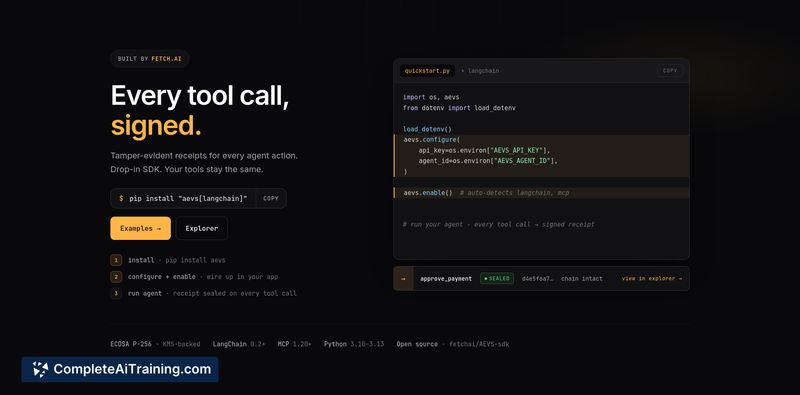
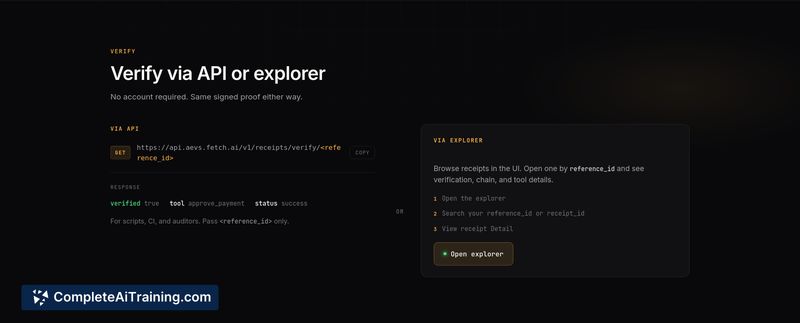
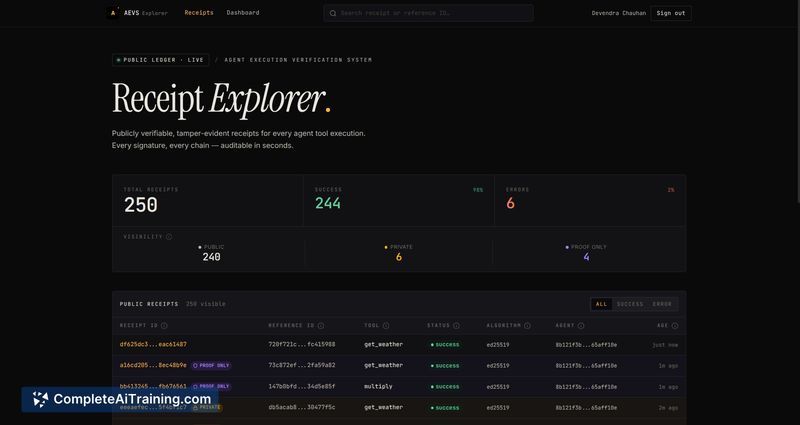
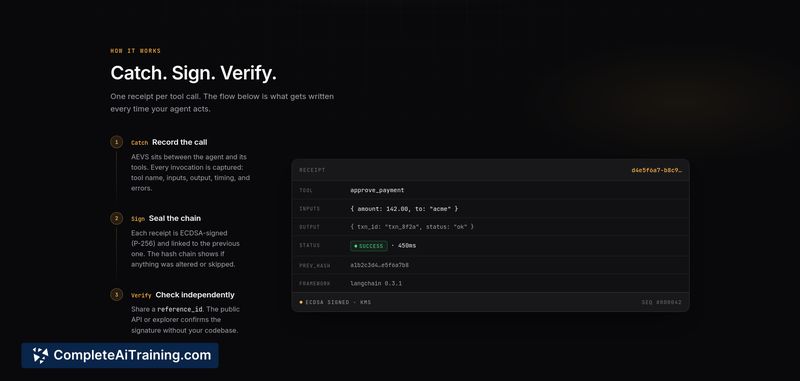
AEVS addresses a specific gap in AI agent deployment by recording execution data. When agents interact with external systems, teams need verifiable records rather than scattered logs. The SDK integrates with existing agent frameworks to create an auditable trail of tool calls.
Key Features
- Generates tamper-evident execution receipts for every tool call.
- Captures specific metadata including the tool used, inputs, outputs, status, and timing.
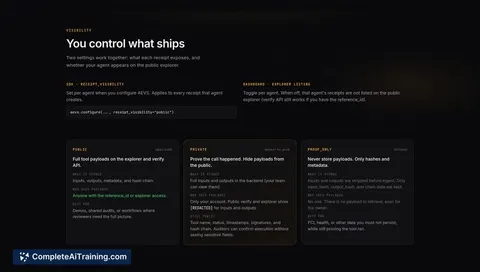
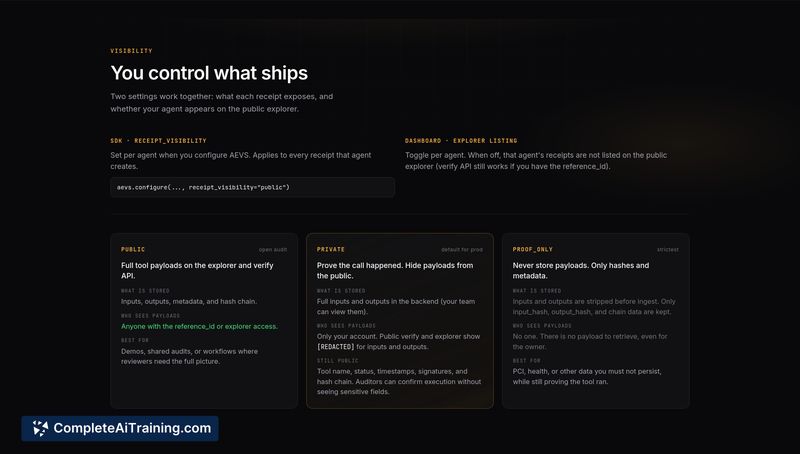
- Supports three visibility levels: Public, Private, and Proof Only to manage payload privacy.
- Integrates directly with LangChain, LangGraph, and MCP tools at launch.
Pricing and Value
The tool is currently marked as free at launch. Long-term pricing models are not yet defined. The SDK serves teams needing cryptographic integrity for agent actions without requiring a complete rewrite of their existing agent stack.
Pros
- Generates verifiable records independent of chat history.
- Allows developers to choose between full data visibility or hash-only verification for sensitive payloads.
- Functions as a drop-in SDK, avoiding the need to rebuild existing agent architectures.
- Maintains cryptographic integrity, preventing retroactive modification of past receipts.
Cons
- Does not verify agent intent or reasoning, only the execution of the action.
- Existing receipts retain their original visibility mode if settings change, meaning past data cannot be retroactively redacted.
- Not well suited for teams that require pre-execution approval gates or hardware-dependent Trusted Execution Environments (TEEs).
AEVS fits best in high-trust environments where agent actions directly modify customer state or financial data. Engineering teams building compliance-sensitive workflows, data pipelines, or API automation will find the execution receipts most useful. Builders needing to verify the reasoning behind an agent's decisions should look elsewhere, as the tool strictly records what happened.
Jobs AEVS suits
We checked AEVS against 500+ jobs; these get the most out of it.