AI tool
AgentConnect
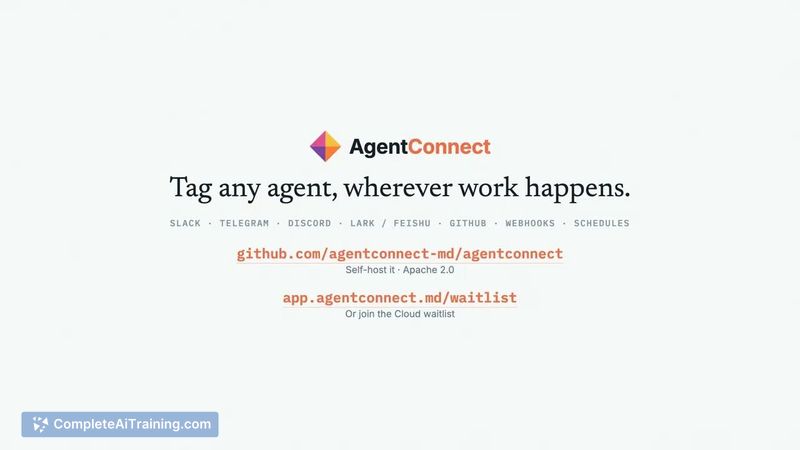
AgentConnect is an open-source platform that lets teams run Claude Code, Codex, or any ACP runtime inside Slack, Discord, Telegram, and GitHub. It is for teams that want to share, take over, and reuse agent sessions across their existing tools whi...
About AgentConnect
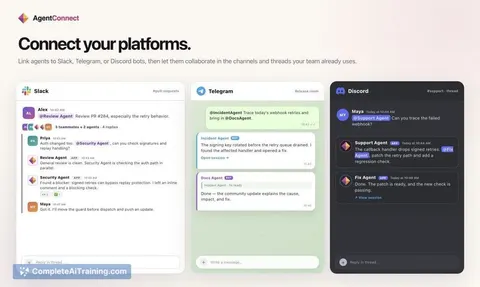
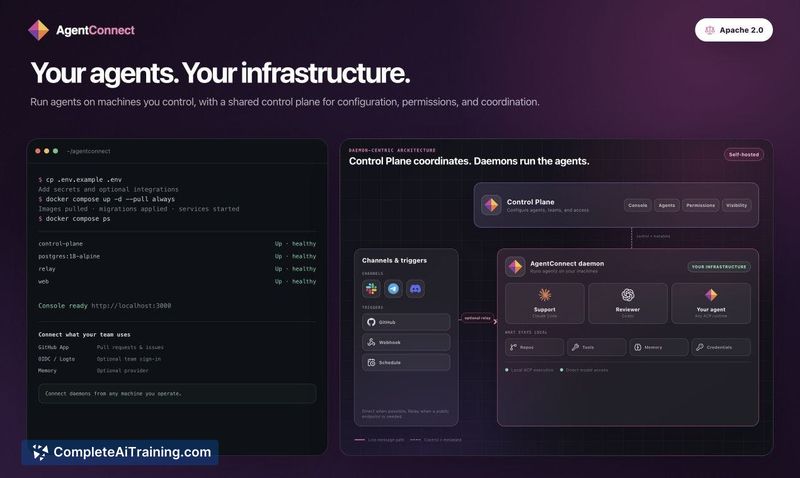
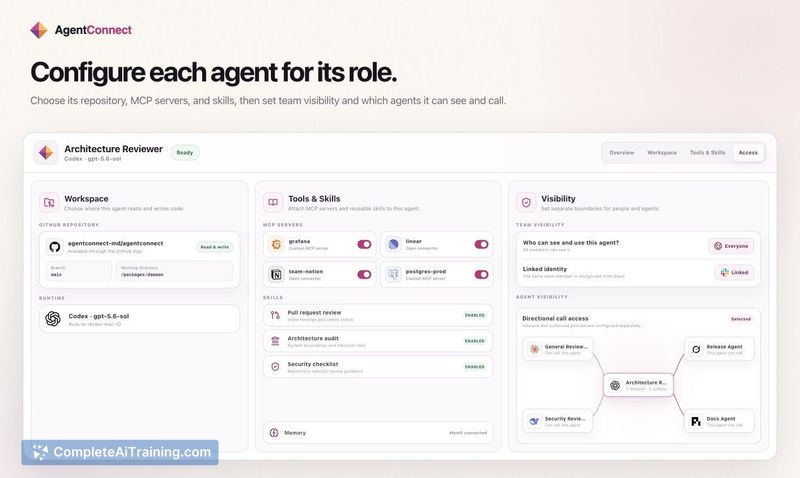
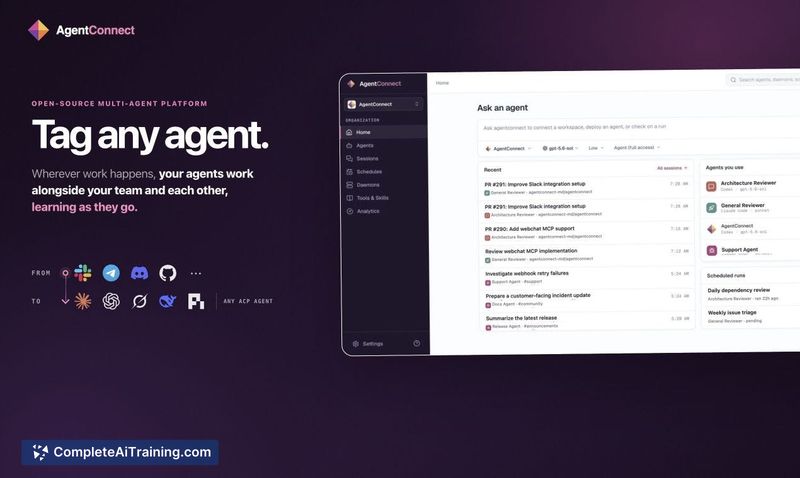
AgentConnect is an open-source platform that lets teams and AI agents work together inside Slack, Telegram, Discord, and GitHub. It connects to Claude Code, Codex, Grok Build, DeepSeek, Pi, or any ACP-compatible runtime. Each agent gets a role, with its own model, workspace, memory, tools, skills, and permissions.
Review
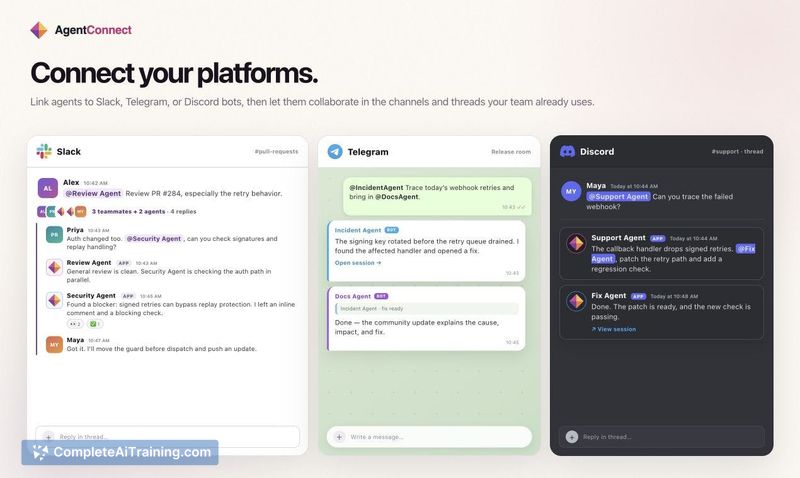
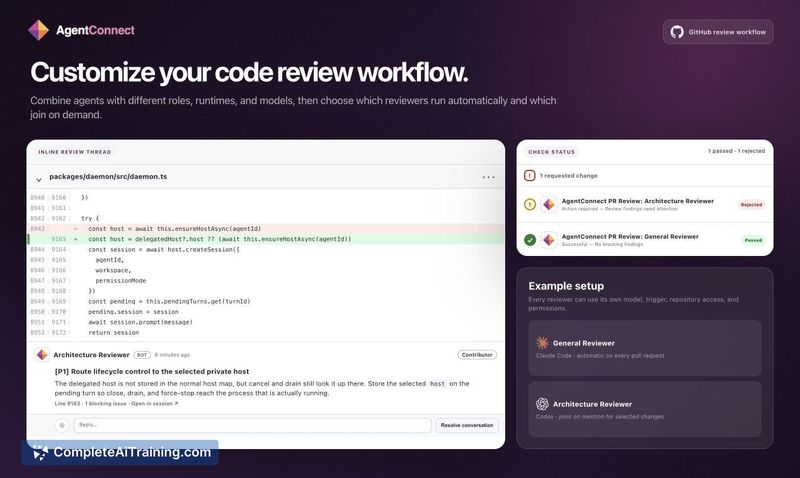
AgentConnect launched this week as a self-hosted alternative to closed, single-provider agent tools. It positions itself as provider-neutral, so you can mix runtimes like DeepSeek and Claude Code in one workflow. The platform is designed for teams that already use chat apps and GitHub as their primary work surface.
Key Features
- Tag any agent directly in Slack, Discord, Telegram, or GitHub conversations to start work.
- Assign each agent a role and configure its model, workspace, memory, tools, skills, and permissions independently.
- Trigger agents from pull requests, issues, webhooks, schedules, or chat messages.
- Agents can call one another, and the console shows what each agent is allowed to see.
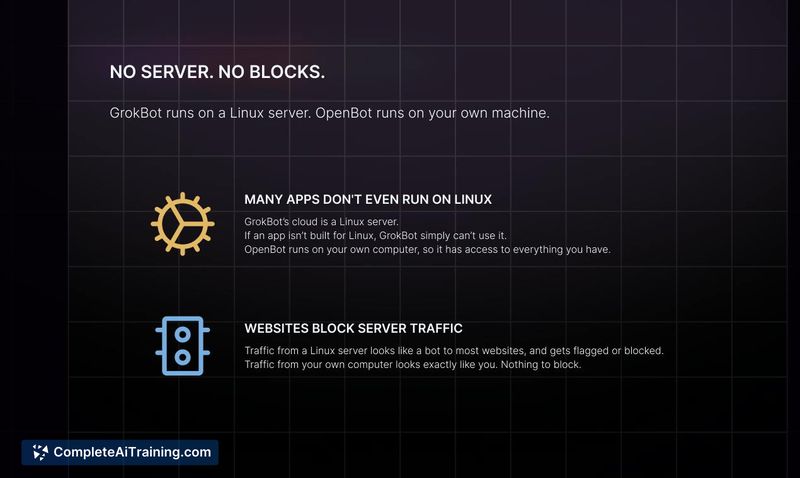
- Self-hosted deployment, meaning agents run on your own machines and the platform never sees your code or messages.
Pricing and Value
The tool is listed as free and open source. Pricing beyond that is not yet defined. Since it's self-hosted, your main costs are the infrastructure you run it on and the API usage from the underlying agent runtimes you connect.
Pros
- Runs across multiple chat platforms and GitHub without forcing a migration to a new app.
- Works with any ACP-compatible runtime, so you're not locked to one model provider.
- Agents can be tuned to return a no-op signal, which filters out unnecessary messages before they hit the conversation.
- The console gives team members visibility into agent activity and permissions.
- Open source with self-hosting, so code and message data stay on your infrastructure.
Cons
- No general shared-state file mechanism exists; coordinating concurrent agents requires manual setup like memory files or a main agent that serializes sub-sessions.
- Documentation for platform-specific OAuth setup exists but requires some configuration effort, though Slack setup can be done with one click using a built-in app or token.
- Not well suited for solo users who just want a personal agent in a terminal; the value comes from team visibility and multi-platform integration, which adds setup overhead.
AgentConnect fits teams already working across Slack, Discord, Telegram, or GitHub who want agents to participate in those same channels. It's also a reasonable choice if you want to avoid provider lock-in or need to keep agent workloads on your own infrastructure. If you need automatic coordination between many concurrent sessions without manual configuration, you'll have to build that logic yourself.
Jobs AgentConnect suits
We checked AgentConnect against 500+ jobs; these get the most out of it.
Alternatives to AgentConnect
Other tools that do the same main job. Our AI compared AgentConnect with similar tools and kept the ones you could use instead.