About AgentOS
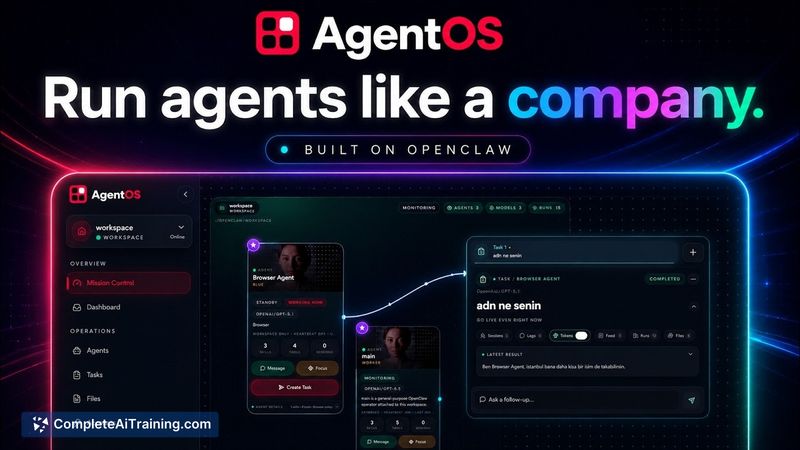
AgentOS is an open-source, local-first control surface for managing AI agents, tasks, jobs, approvals, and workspaces from a single interface. It adds a human-oriented layer on top of an agent orchestration runtime to make multi-agent projects easier to operate and observe.
Review
AgentOS targets the operational gaps that appear once projects rely on multiple autonomous agents: context sharing, visibility, and operator controls. The product is early-stage and free to use, with a focus on giving builders clear runtime insights and workflow structure rather than just another chat interface.
Key Features
- Centralized workspace and agent management for organizing projects, roles, and shared context.
- Task and job orchestration with session history, task-level execution details, and approval workflows.
- Runtime visibility including model selection, activity logs, and token/usage tracking per task or agent.
- Policies and shared context so multiple agents can coordinate while retaining agent-specific behavior.
- Local-first and open-source architecture that supports customization and self-hosting.
Pricing and Value
AgentOS is released as a free, open-source project with a local-first approach, which makes it appealing for individuals and small teams that prefer self-hosting or want to inspect the code. For technically inclined users, the combination of centralized management and runtime transparency delivers strong practical value, especially during early development and experimentation. Enterprise-ready features like built-in spend limits and broader administrative controls are mentioned as next steps, so organizations with strict governance needs should evaluate maturity before adopting it for production.
Pros
- Consolidates agent workflows into one control surface, reducing context switching.
- Provides clear runtime visibility and task-level activity that aids debugging and review.
- Open-source and local-first, allowing customization, auditability, and self-hosting.
- Supports shared workspace policies and agent cloning for reuse of proven setups.
- Good fit for solo builders and small teams experimenting with multi-agent patterns.
Cons
- Early-stage product: some advanced operator controls (per-agent budgets, automated kill switches) are still planned rather than fully implemented.
- May require technical setup and familiarity with agent runtimes to get the most out of it.
- User interface and onboarding could feel rough for non-technical or casual users until refinements arrive.
AgentOS is best suited for builders, solo founders, and small teams that run multiple AI agents and need better coordination, visibility, and control. If you want a customizable, self-hostable platform to organize agent-driven work and are comfortable with an early-stage project, AgentOS is worth trying; organizations needing polished enterprise features should monitor its roadmap as it matures.
Open 'AgentOS' Website
Your membership also unlocks: