AI tool
Harness Router
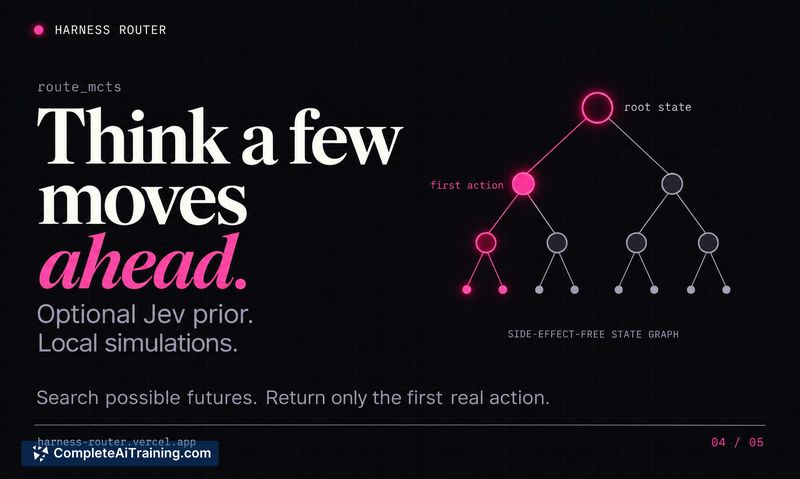
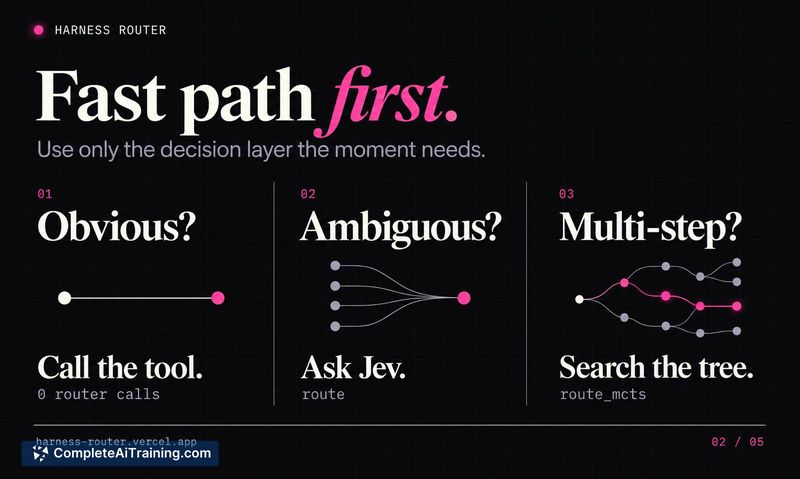
Harness Router is a framework-agnostic routing layer that optimizes how AI agents select tools. It sends straightforward calls to a fast path, ambiguous ones to a dedicated model, and complex decisions to bounded Monte Carlo tree search. It is bui...
About Harness Router
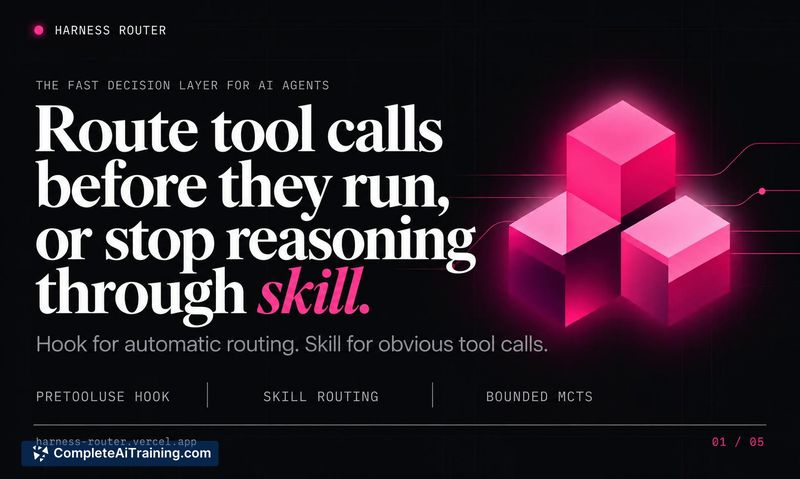
Harness Router is a decision layer for AI coding agents that handles tool selection before execution. It uses a tiered approach: straightforward decisions stay on a fast path, ambiguous choices are resolved with Jev, and complex multi-step decisions can escalate to MCTS (Monte Carlo Tree Search). The tool is framework-agnostic, open source, and can be integrated as a Codex hook for automatic routing or as an explicit skill the agent invokes when needed.
Review
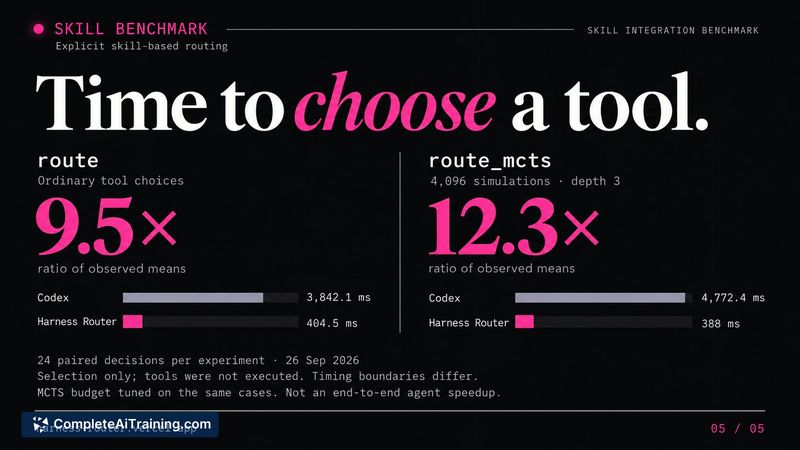
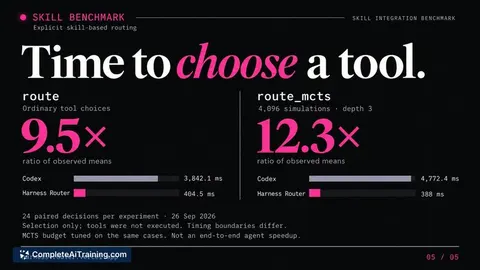
Harness Router addresses a concrete problem in agentic systems-models burning tokens and time on tool selection. Rather than replacing the agent's reasoning, it sits in front of tool calls and decides how much compute to spend on each routing decision. The launch is recent, and the codebase is fully open source, which means anyone can inspect the routing logic or contribute.
Key Features
- Tiered decision paths. Obvious tool calls take a fast path with minimal overhead. Ambiguous cases get routed through Jev, and the hardest multi-step decisions can use bounded MCTS.
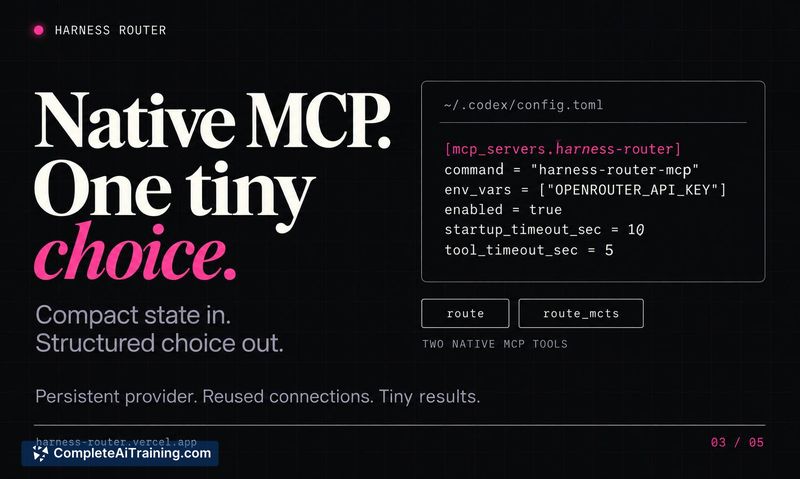
- Codex hook integration. Using SessionStart and PreToolUse hooks, Codex can discover available tools once and then route or re-plan calls through Harness Router transparently before execution.
- MCP exposure. The routing layer can be exposed through the Model Context Protocol, letting other MCP-compatible systems query it.
- Framework-agnostic design. The tool doesn't lock you into a specific agent framework. It works as a standalone routing layer you plug into existing setups.
- Open source. The full codebase is available, with no indication of a hosted paid tier at launch.
Pricing and Value
Harness Router is listed as free and open source at launch. The maker has not announced any paid tiers, enterprise licensing, or usage-based pricing. Whether a hosted service or managed version will appear later is not yet defined.
Pros
- Reduces token consumption by skipping heavy reasoning on obvious tool selections.
- Integrates directly with Codex hooks, which means existing Codex users can adopt it without rewriting their agent logic.
- Escalation to MCTS is bounded, so worst-case decision costs are capped rather than open-ended.
- Open source license allows inspection, modification, and self-hosting without vendor lock-in.
- Works across frameworks-no dependency on a single agent runtime or orchestration layer.
Cons
- The tool is newly launched, so production usage data, stability metrics, and community bug reports are minimal.
- Teams not using Codex or MCP will need to build custom integration glue, which adds upfront work.
- Not well suited for systems where tool selection is almost always trivial-the routing layer adds a dependency without meaningful benefit in those scenarios.
Harness Router fits teams running AI coding agents that make frequent, non-trivial tool calls and want to cut decision latency and token costs. It's less relevant for simple agent setups where tool selection is rarely ambiguous. The open source nature and Codex hook support make it straightforward to test in an existing Codex workflow without a long evaluation cycle.
Jobs Harness Router suits
We checked Harness Router against 500+ jobs; these get the most out of it.
Alternatives to Harness Router
Other tools that do the same main job. Our AI compared Harness Router with similar tools and kept the ones you could use instead.