AI tool
HydraDB OSS
HydraDB is an open-source graph database written in Rust for AI systems that need fast, relational context across multiple data sources. It helps developers building agents that require persistent memory and an understanding of how information con...
About HydraDB OSS
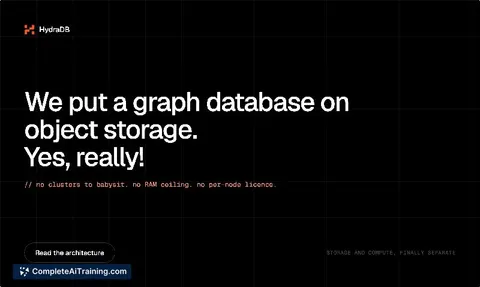
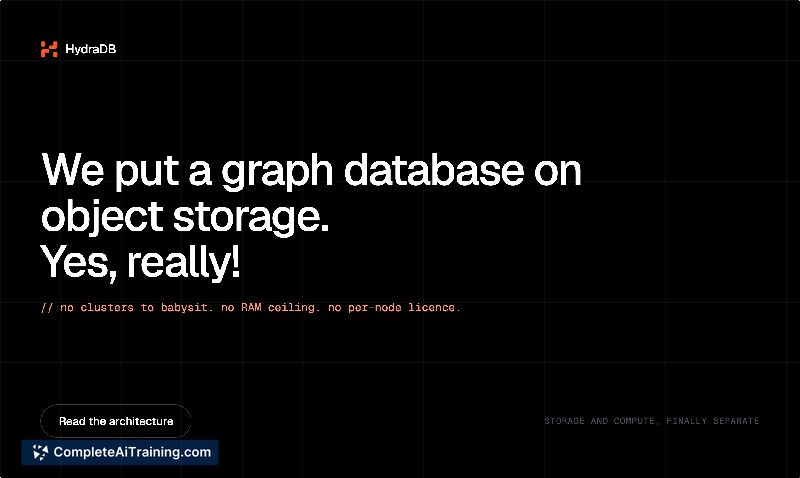
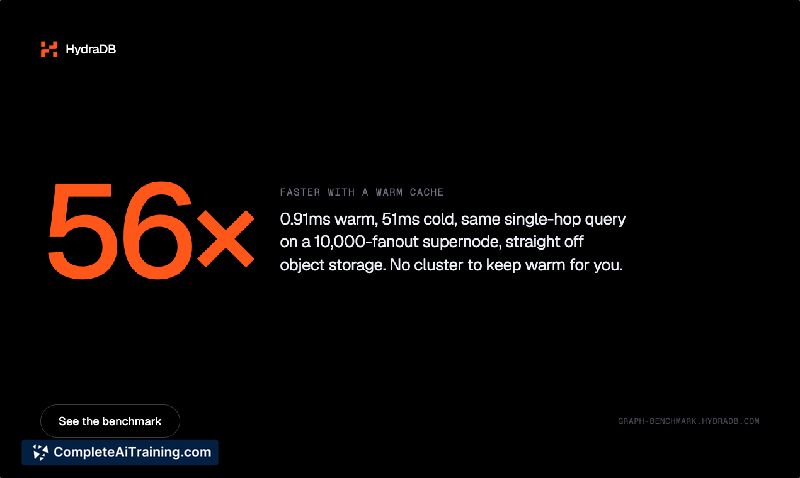
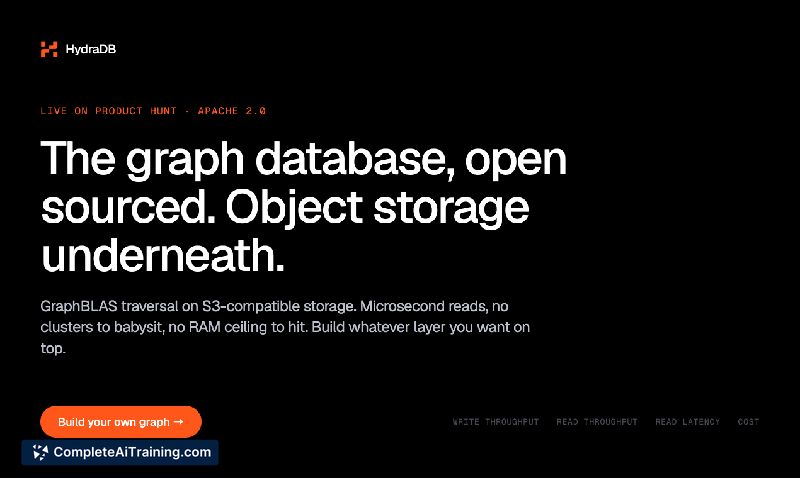
HydraDB OSS is an open-source native graph database written in Rust and built on object storage. The tool targets AI infrastructure workloads-specifically agent memory, ontologies, and context retrieval-with sub-200ms latency and a single API call for core primitives. It positions itself as a low-operational-overhead alternative to traditional graph databases for developers building AI systems that need connected context rather than isolated data chunks.
Review

HydraDB OSS arrives at a moment when vector similarity search alone is showing its limits for agent workflows. The team open-sourced the core database this week, making the codebase available for inspection, self-hosting, and community contribution. This review focuses on what ships today, what's stated on the roadmap, and where the tool fits among existing options.
Key Features
- Native graph storage built directly on object storage, eliminating the need for separate disk provisioning or cluster management.
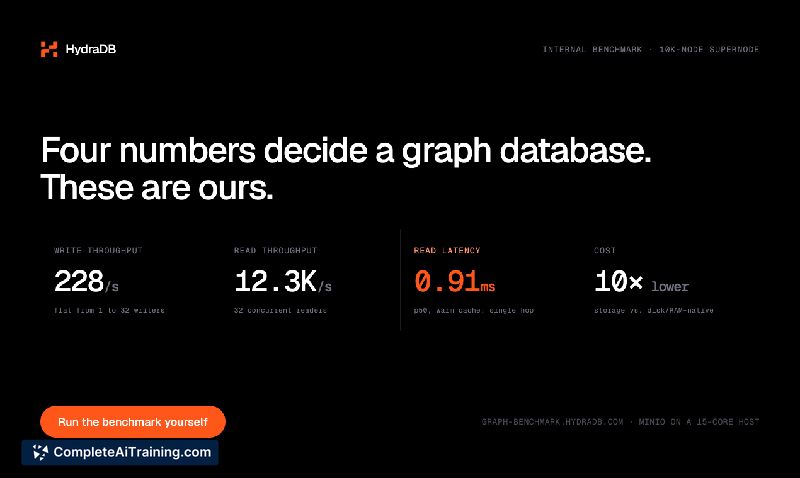
- Sub-200ms latency on graph queries through a single API call that returns core primitives.
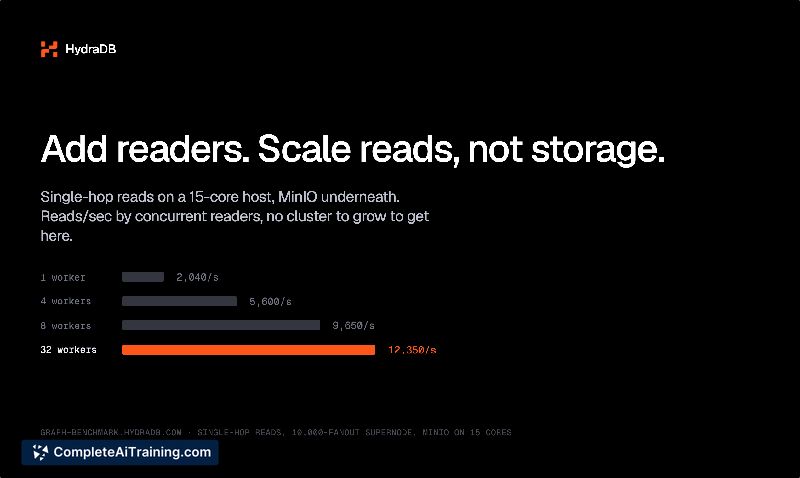
- Rust-based implementation targeting memory efficiency and predictable performance under concurrent workloads.
- Open-source codebase (launched this week) that developers can self-host, inspect, and extend.
- Graph-native primitives that store relationships, dependencies, sequences, and historical facts-not just semantic similarity vectors.
Pricing and Value
The open-source core is free to self-host. The team has not yet published pricing details for any managed or cloud-hosted version. As of this launch, there is no paid tier, no usage-based metering, and no enterprise licensing structure described publicly. Organizations evaluating HydraDB OSS should budget for their own infrastructure and operational costs when self-hosting.
Pros
- Eliminates operational overhead associated with legacy graph databases by running on object storage.
- Written in Rust, which can translate to lower memory footprint and predictable latency for latency-sensitive AI pipelines.
- Open-source from day one, allowing teams to audit the code, run benchmarks, and fork for internal needs.
- Directly addresses multi-hop reasoning and connected context retrieval, which vector-only approaches handle poorly.
- Single API call design simplifies integration compared to databases requiring multiple round-trips for graph traversal.
Cons
- No managed hosting option exists yet, so teams without DevOps capacity for self-hosting face a barrier to adoption.
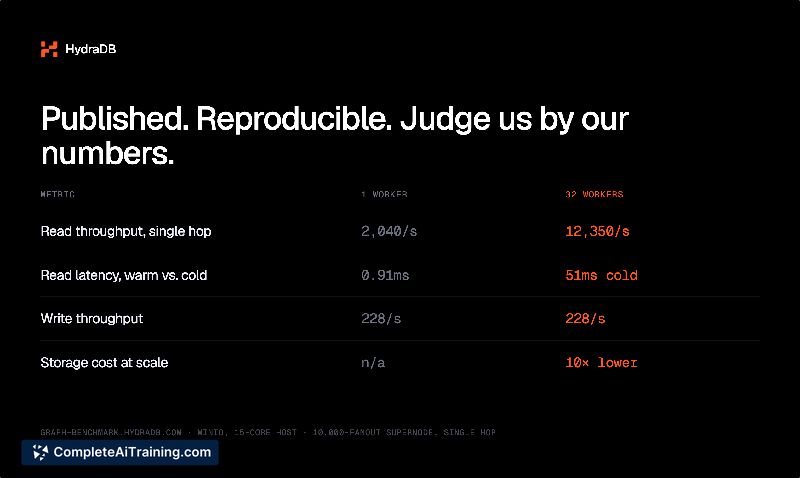
- The project launched this week-there is no published track record in production environments, no third-party benchmarks, and a small community at this stage.
- Not well suited for teams that don't need graph-native context. If your application already works with vector similarity or key-value lookups, adding a graph database introduces complexity without clear benefit.
HydraDB OSS fits teams already running agent architectures that struggle with fragmented context across Slack, Jira, email, and document stores. It's most relevant for developers building GraphRAG pipelines, long-term agent memory, or enterprise knowledge graphs who are comfortable self-hosting Rust infrastructure. Teams waiting for a managed service or needing proven production stability will likely want to watch the project's trajectory before committing.
Jobs HydraDB OSS suits
We checked HydraDB OSS against 500+ jobs; these get the most out of it.
Alternatives to HydraDB OSS
Other tools that do the same main job. Our AI compared HydraDB OSS with similar tools and kept the ones you could use instead.