About: Luna
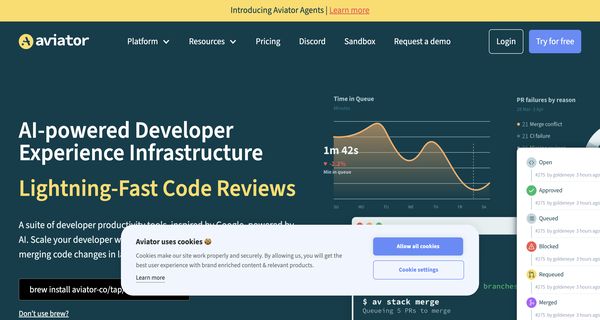
Aviator is a sophisticated project management tool tailored for software development, designed to enhance productivity by offering deep insights into Jira, automating reporting, and identifying potential risks. Developed by a team of former Google engineers, Aviator is engineered to streamline the development process by reducing manual tasks, optimizing code merge operations, and facilitating effective code reviews. Its robust analytics capabilities provide teams with actionable insights, enabling data-driven decision-making.
Aviator supports both monorepo and microservice architectures, ensuring seamless integration with existing workflows and toolchains. This versatility allows engineering teams to address workflow bottlenecks and maintain high code quality, significantly accelerating their development cycles. The tool is ideal for teams seeking to minimize overhead, allowing developers to concentrate on innovative solutions rather than administrative burdens. With its unique blend of automation and analytics, Aviator stands out as a valuable resource for modern software engineering teams aiming to enhance their operational efficiency.
Review: Luna
Introduction
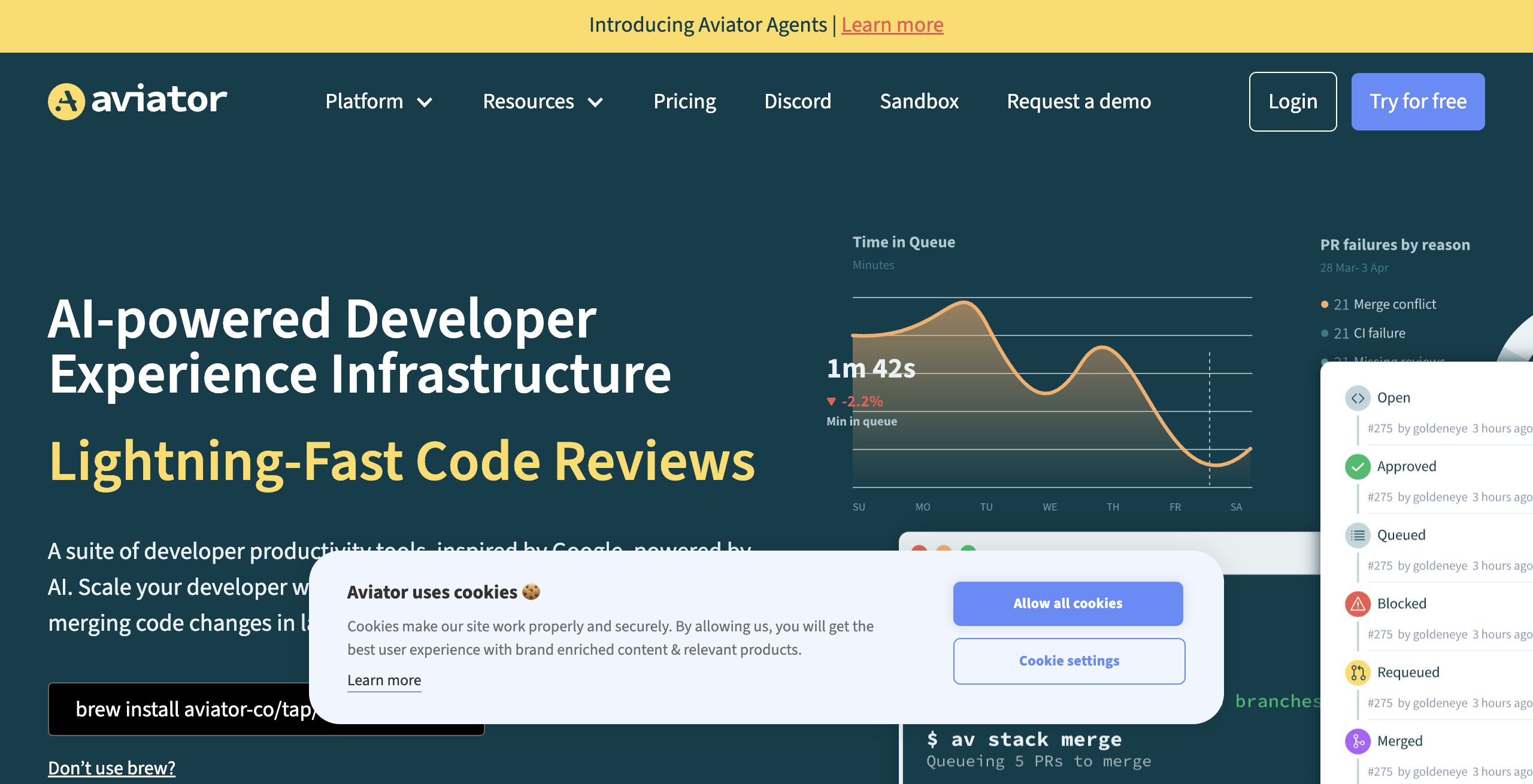
Aviator is an AI-powered developer productivity platform designed to streamline software development workflows. Built by ex-Google engineers, Aviator caters to engineering teams of all sizes—from agile startups to enterprise-level organizations with thousands of developers. The platform is particularly relevant in today’s fast-paced development environments, where automating repetitive tasks and managing complex code workflows are essential to maintaining high performance and code quality.
Key Features
Aviator packs a robust set of functionalities that distinguish it in the crowded space of developer tools. Some of its core capabilities include:
- Automated Workflows: The platform automates repetitive tasks such as code merging, deployment, and running tests, allowing teams to focus on creative problem-solving rather than process management.
- Efficient Code Reviews: With features like lightning-fast code reviews, Stacked PRs, and an open-source CLI for managing pull requests, Aviator helps break down large changes into more manageable segments, streamlining the review process.
- Actionable Analytics & Reporting: The tool provides automated reporting and actionable analytics to identify risks, offering Jira insights and other metrics that help teams stay proactive in addressing workflow bottlenecks.
- Seamless Integration: Designed to work with various build tools such as Bazel, NX, Pants, Turborepo, and Gradle, Aviator integrates smoothly with existing toolchains while supporting both monorepo and microservice architectures.
- Agentic Framework: The introduction of Aviator Agents, a large-scale code migration solution, highlights the platform’s commitment to leveraging AI to simplify even the most complex tasks.
Pricing and Value
Aviator offers a flexible pricing structure designed to accommodate teams of different sizes. Notably, the platform is free for teams with fewer than 15 developers, making it an attractive option for startups and smaller teams. For larger organizations, Aviator provides enterprise-grade features, including on-prem deployments, security certifications (SOC2 Type II compliance), and real-time support over Slack. This range of options ensures that teams can select a tier that aligns with their needs and budget, potentially offering significant value when compared to competitors that charge premium rates for similar automations and integrations.
Pros and Cons
- Pros:
- Streamlines complex development workflows through automation.
- Enhances code quality with efficient code reviews and integrated testing.
- Integrates seamlessly with a wide array of existing build tools and workflows.
- Offers scalable solutions for both small teams and large enterprises.
- Free for teams under 15 developers, lowering the entry barrier.
- Cons:
- Potential learning curve associated with setting up and integrating the platform into existing workflows.
- Advanced features and enterprise-grade security may come at a higher price point for large teams.
- The extensive suite of features might be overwhelming for teams with simpler project management needs.
Final Verdict
Aviator is a highly recommended tool for engineering teams that need to streamline and automate their development processes. Its robust features, from automated workflows and efficient code reviews to actionable analytics and intelligent risk identification, make it ideal for teams that are looking to overcome bottlenecks and enhance overall productivity. While smaller teams can benefit from its free tier, larger organizations will appreciate the enterprise-ready features and integrations that help maintain code quality and ensure smooth deployments. However, teams with very basic requirements or limited technical resources might find the extensive feature set more complex than necessary.
Overall, Aviator stands out as a comprehensive solution designed to push the boundaries of productivity in modern software development.
Open 'Luna' Website
Your membership also unlocks: