About Lunen.ai
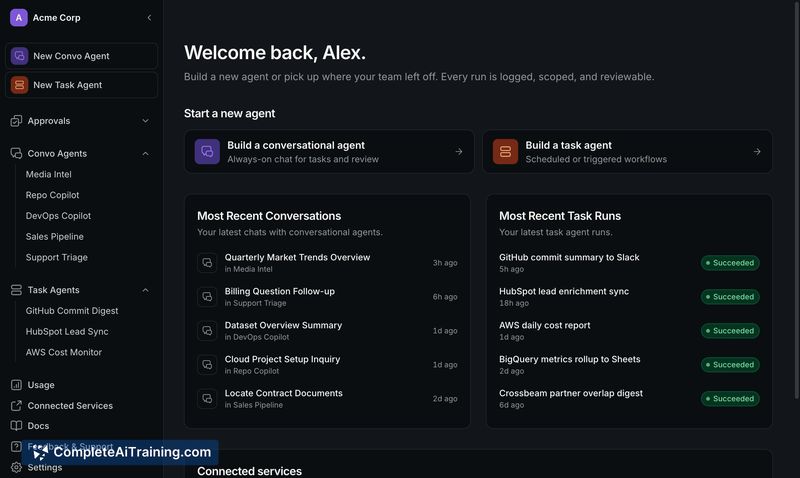
Lunen.ai is an early-access platform for building AI agents that non-technical team members can describe in plain language, while IT and security teams retain visibility and control. The tool generates an execution plan automatically, scopes data access, and logs every action with agent-specific identity. It's built by a team with a background in enterprise platform development at REDspace.
Review
Lunen takes a specific stance on the friction between AI usability and governance. Instead of offering either a consumer-grade agent experience or a locked-down enterprise interface, it tries to combine both-a clean UI with a policy engine that gates risky writes and records everything. The early-access release focuses on letting users describe an agent's task conversationally, then approving or denying individual tool calls before and after execution.
Key Features
- Plain-language agent creation that produces a detailed execution plan-called a blueprint-with named tools and scoped data sources.
- Policy engine that enforces "allow reads, approve writes" at the level of individual tool calls on each MCP service. Admins can set per-agent or per-user policies.
- Human-in-the-loop checkpoints that pause an agent when a write requires approval, including for scheduled runs. The agent waits until permission is granted.
- Unified audit log where every action carries the agent's own identity, so reviewers can distinguish between user-initiated steps, agent-initiated steps, and approvals. Logs are exportable.
- Post-run timeline view showing per-session details of what the agent did against the original plan. Execution plans are wrapped in a DAG to manage tool-call sequencing.
Pricing and Value
Lunen is currently in early access and marked as "Payment Required," but no public pricing tiers or subscription details have been shared. Organizations interested in using it must apply for early access; the cost structure will presumably be defined as the product moves toward general availability.
Pros
- No-code agent setup: the plan auto-generates from a plain-language description, so team members outside engineering can build agents without learning YAML or a new builder.
- Granular permissions let you scope exactly which tool calls are allowed and which require human approval, down to the level of a single action on a connected service.
- Agent identity in the audit log separates actions taken directly by a user from those the agent performed independently, which helps during compliance reviews.
- Exportable audit records mean security teams can hand off logs to external reviewers without relying solely on the hosted UI.
- Execution plans as DAGs provide a structured view of the agent's intended steps before it runs, reducing guesswork during post-hoc debugging.
Cons
- The tool is not well suited for individual users or small teams that don't face security reviews and can tolerate a simpler, ungoverned agent workflow.
- No redo/undo capability at the individual step level exists yet; the timeline view shows what happened, but correcting a mistaken tool call requires re-running the whole session.
- Self-hosting of the audit record store isn't mentioned-only export is available-so teams with strict data residency requirements may need to verify whether the hosted store meets their policies.
Lunen fits teams that have already experimented with AI agents and now need to satisfy a security review without abandoning the ease of use that got them started. It's built for organizations where the same person describing an agent must also define its data boundaries and approval gates, and where audit trails must survive external scrutiny. For those still in the exploratory phase with no governance pressure, the early-access state and the emphasis on policy configuration may feel like more overhead than they need.
Open 'Lunen.ai' Website
Your membership also unlocks: