AI tool
Memmy Agent
Memmy Agent manages memory and context for developers using coding assistants like Claude Code. It allows programmers to maintain project details across multiple coding sessions.
About Memmy Agent
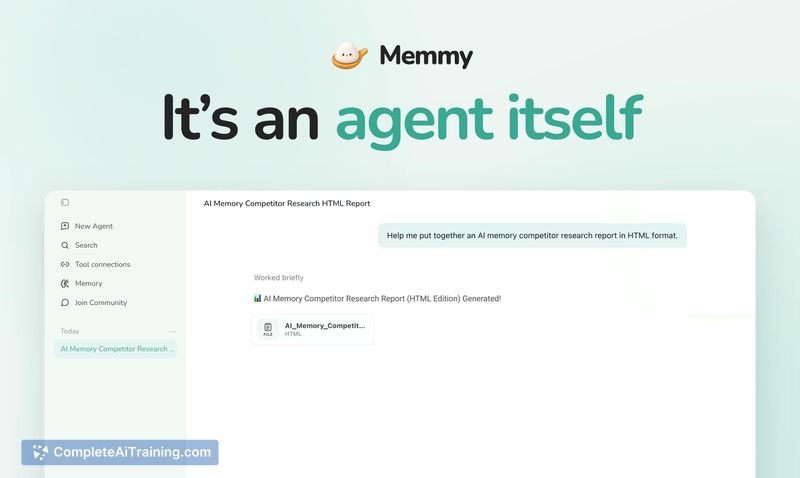
Memmy Agent is a local-first personal memory hub that gives multiple AI tools-Claude Code, Codex, OpenClaw, Cursor, and Hermes-a shared, user-controlled long-term memory. It converts chat history, decisions, preferences, and project context into structured memories that follow you across tools. The tool also functions as an agent itself, capable of taking on tasks directly rather than only managing memories.
Review
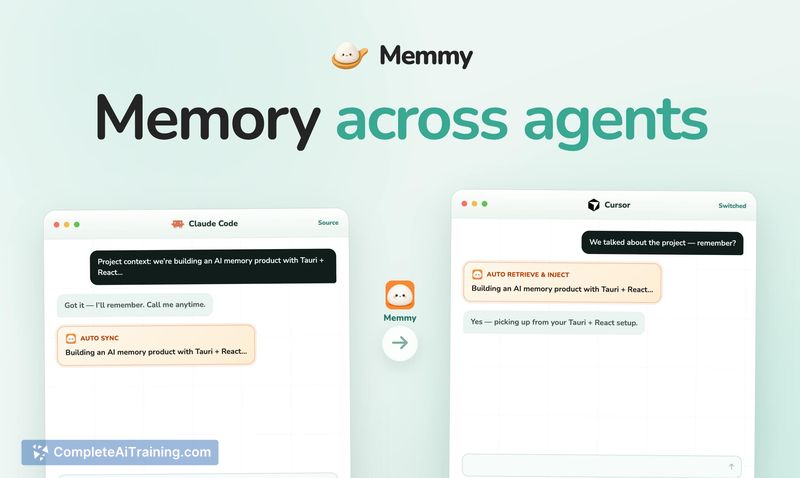
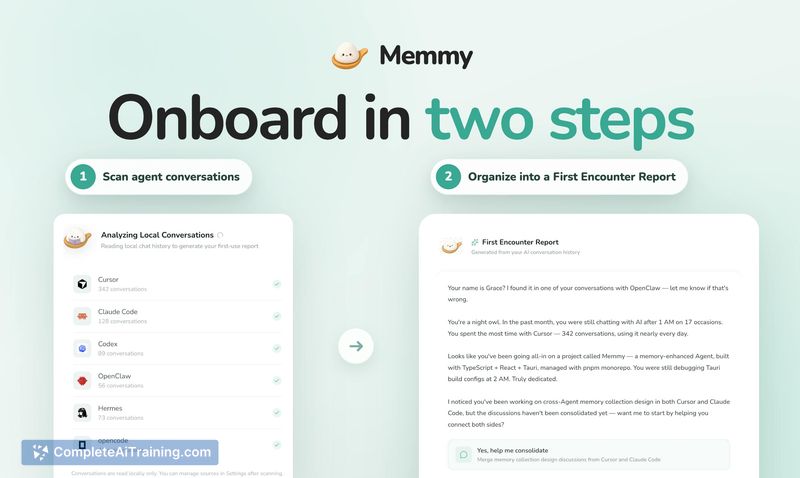
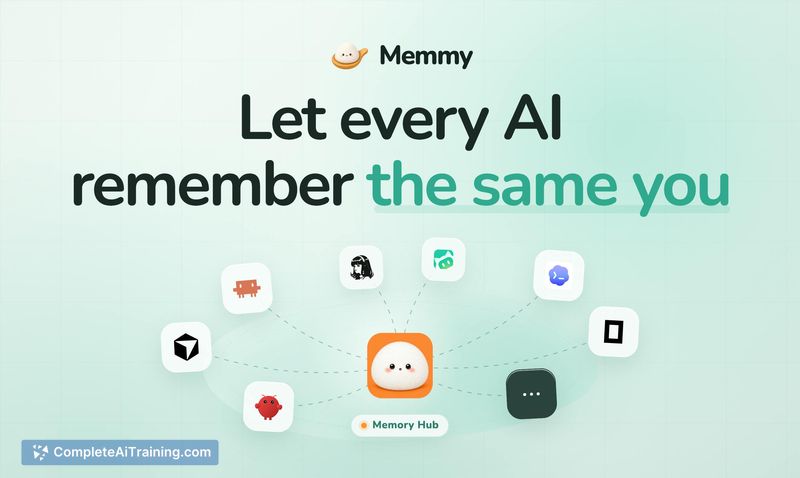
Memmy Agent tackles a specific friction point: every new AI chat session starts with zero context about you, your project, or decisions you've already made. The tool sits between you and your various AI coding assistants, capturing what happens and feeding relevant context back when you switch tools or start fresh sessions. It's open source under the MIT license and runs locally by default, with a free tier that includes 2 million ChatGPT tokens.
Key Features
- Four-layer memory architecture - L1 Trace captures raw conversation turns, L2 Policy distills preferences and patterns, L3 World Model holds declarative project knowledge, and Skill crystallizes reusable procedures from qualified L2 policies. Each layer has its own write path, evolution pipeline, and retrieval rules.
- Cross-tool context injection - When you start a new session in Claude Code, Cursor, or another connected tool, Memmy classifies your prompt and retrieves relevant memories before the model responds. The system skips retrieval entirely for chitchat and meta commands, so the memory layer doesn't add overhead to every keystroke.
- Memory Management logs - A log view under Memory Management shows which candidate memories were considered for a given request, which ones were filtered out, and what was ultimately injected into context. The OpenAI-compatible API response body does not yet return memory IDs or citation details, so the logs are currently the primary inspection path.
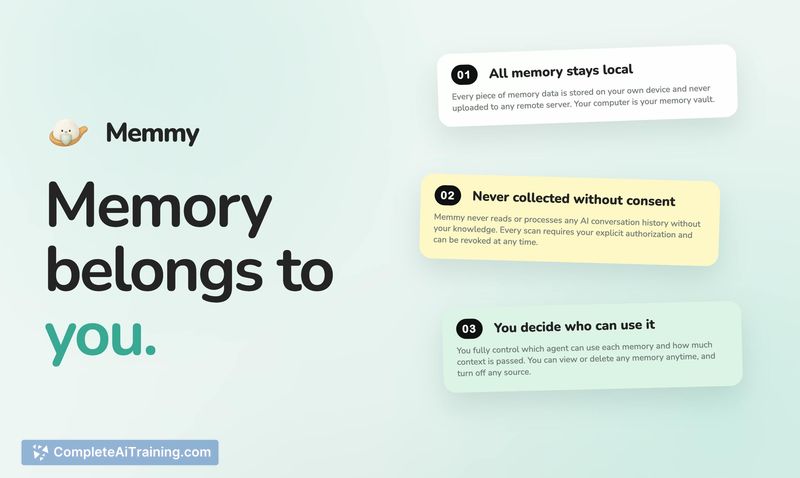
- Local-first storage - The memory pool is a SQLite database stored on your machine. It is not uploaded to a remote server, and you can export the database file to move it to a new computer. There is no automatic cloud sync at this time.
- Agent mode - Beyond managing memories, Memmy can accept and execute tasks directly, functioning as a local AI agent.
Pricing and Value
Memmy Agent is free to start, with 2 million ChatGPT tokens included. The codebase is MIT-licensed, so commercial use, modification, and self-hosting are permitted. Beyond the free starting tier, pricing details are not yet defined. An optional hosted database path is on the roadmap for international availability, which would reduce retrieval latency compared to the current local SQLite backend, but that option is not available today.
Pros
- Memory stays local by default - no data leaves your machine unless you opt into account-mode features or enable the memory-improvement toggle.
- The four-layer architecture separates raw traces from distilled policies and reusable skills, so retrieval can match the right type of memory to the current task.
- Open source under MIT license, which means self-hosting, auditing, and modification are straightforward for teams with compliance requirements.
- Task-contextual retrieval keeps coding preferences from bleeding into creative writing sessions and vice versa.
- Integration with Claude Code is live and automatic - hooks capture turns and inject context without manual steps.
Cons
- Retrieval latency averages around 3 seconds with the local SQLite backend, and that number grows as the memory pool expands. This delay sits directly on the path to the first token from the model.
- No automatic cloud sync exists yet. Moving to a new machine requires manually exporting and importing the SQLite database. A laptop swap without that step means starting from zero.
- Memmy is not well suited for users who need a managed, always-available cloud deployment with admin controls and automatic cross-device sync. The current local-first architecture demands manual portability management and tolerates noticeable retrieval latency on larger memory pools.
Memmy Agent fits developers who regularly switch between Claude Code, Cursor, Codex, and similar tools and are tired of re-explaining project context in every new session. It's worth a look for solo developers and small teams who value local data control and are comfortable with the current latency tradeoffs. Those who need instant retrieval and zero-config multi-machine sync may want to wait for the hosted database path to ship.
Jobs Memmy Agent suits
We checked Memmy Agent against 500+ jobs; these get the most out of it.
Alternatives to Memmy Agent
Other tools that do the same main job. Our AI compared Memmy Agent with similar tools and kept the ones you could use instead.