AI tool
MESA
MESA automates Shopify workflows without code-build custom order, inventory and data automations (notifications, Google Sheets syncs, tags/metafields fixes, PO-box blocks) so merchants scale operations without hiring developers.
About MESA
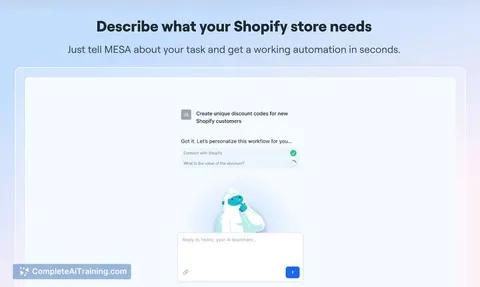
MESA is an AI-driven automation builder aimed at Shopify merchants and teams that want to reduce repetitive store operations. It converts plain-English descriptions into working automations that connect orders, inventory, fulfillment, and customer support across existing tools.
Review
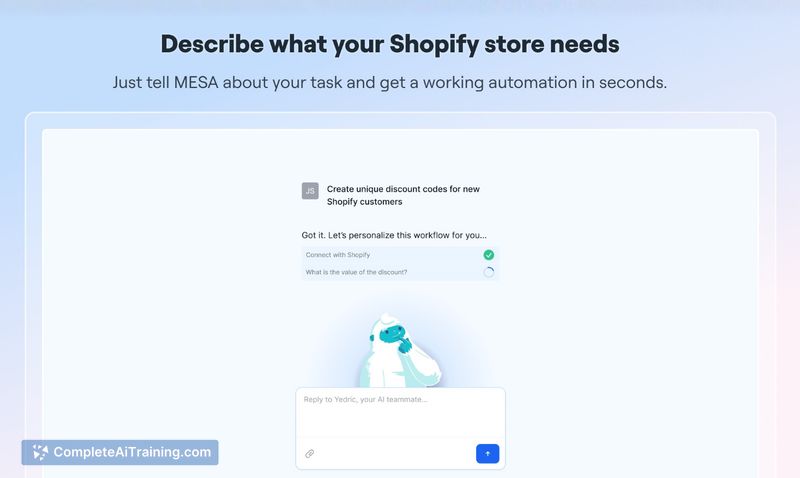
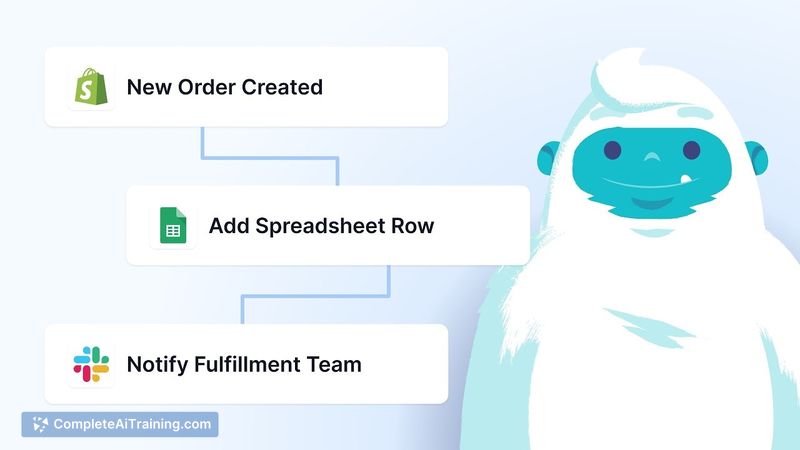
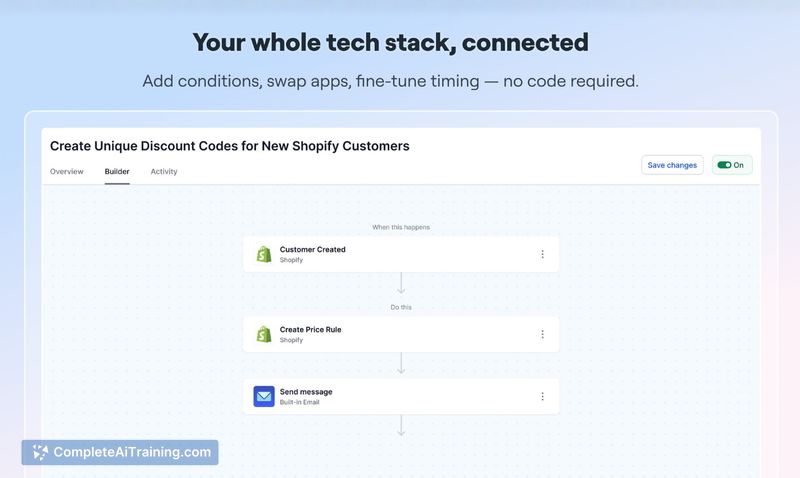
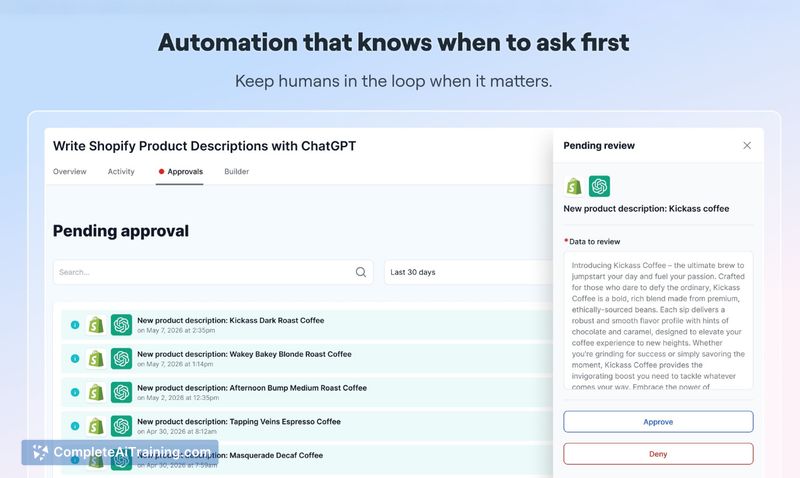
MESA targets merchants who face a long backlog of manual tasks but don't want to hire developers or spend time building fragile DIY automations. The platform combines an AI assistant that generates workflows from natural language with a visual editor, broad integrations, and operational tooling for debugging and recovery.
Key Features
- Plain-English AI builder that generates working workflows from short descriptions and can be refined via chat or the visual builder.
- Broad integrations and triggers (Shopify ecosystem plus webhooks, APIs, spreadsheets, ERPs, and 100+ apps like Klaviyo, ShipStation, Etsy, Recharge).
- Real-time inventory sync and mapping to reduce overselling, with rate-limit-aware handling and batching strategies.
- Operational tooling: activity logs, step-level debugging, alerting for failures, AI suggestions for fixes, and a Time Travel feature to replay missed events.
- Options for human approval steps and workflow testing before deploying changes to production.
Pricing and Value
MESA offers free options and trial incentives (for example, a 3-month Basic trial code was available at launch). The pricing model is tiered, with higher tiers unlocking greater usage, integrations, and support. For merchants with recurring operational work or complex integrations, MESA can reduce engineering time and ticket overhead, which often offsets subscription costs compared with hiring developers or maintaining fragile DIY automations.
Pros
- Quickly turns plain-English requirements into runnable automations, lowering the barrier to automation.
- Extensive integration support makes it useful across commerce and non-commerce systems alike.
- Real-time syncing and error-handling features help prevent oversells and improve reliability during high-volume events.
- Good operational visibility with logs, alerts, AI-assisted troubleshooting, and the ability to replay missed events.
- Ability to add manual approvals and test changes before deployment gives control for risk-averse teams.
Cons
- Costs can be higher than free native tools for very simple automations, so small shops with minimal needs may not see immediate ROI.
- Some users will still need to learn and refine workflow design; the AI gets you started but not always to a perfect production-ready workflow on the first pass.
- Third-party API outages remain a potential source of failure, so teams must design fallback logic and monitor integrations.
Overall, MESA is best suited for merchants and mid-size teams that manage nontrivial automation needs across multiple services and want to avoid constant developer tickets. It's a good fit when you need cross-system automations, reliable inventory syncing, or better failure recovery-and less necessary if your needs are covered by simple, free platform-native rules.
Jobs MESA suits
We checked MESA against 500+ jobs; these get the most out of it.
Alternatives to MESA
Other tools that do the same main job. Our AI compared MESA with similar tools and kept the ones you could use instead.