About npm i -g hotcell
hotcell is an open-source (Apache 2.0) command-line tool that creates and manages local sandboxes for AI agents. It runs on Mac, Linux, and bare metal, and it was launched this week. The project draws inspiration from Cloudflare's Sandbox SDK but targets on-prem environments where Cloudflare isn't available.
Review
hotcell positions itself as a self-hostable sandbox SDK for agentic workflows. The core idea is to give developers and AI agents isolated environments that can be spun up, used, and destroyed without polluting the host system. The tool launched with three isolation drivers and a token system designed to keep API keys out of sandboxes.
Key Features
- Sandbox creation, pausing, and management through a CLI installed via
npm i -g hotcell - Three isolation drivers: docker (containers), firecracker on Linux/KVM, and Apple VZ on macOS for VM-grade isolation
- Per-sandbox tokens that replace direct API key injection; tokens become invalid when the sandbox stops
- Default-deny egress with the ability to allow traffic only to LLM providers
- Capacity and token spend controls per sandbox, configurable at setup and overridable per sandbox with
--driver - Bulk creation command:
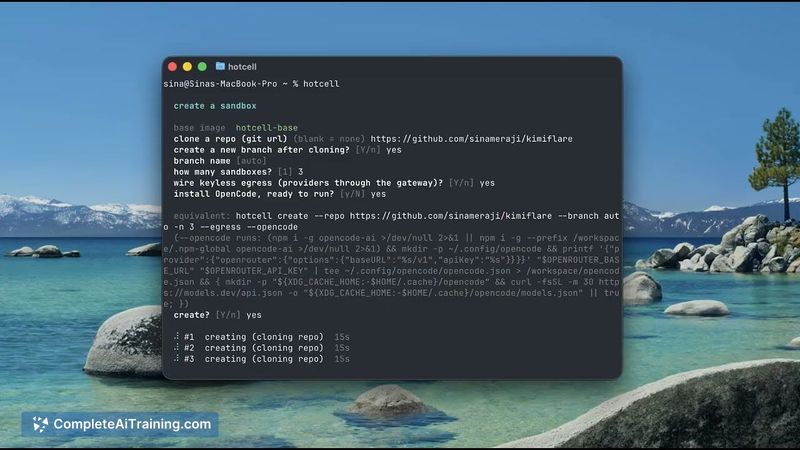
hotcell create -n 5 --name feat --branch auto --opencode --repo https://github.com/you/appspins up multiple sandboxes from a single repo
Pricing and Value
The tool is free and open source under the Apache 2.0 license. There is no paid tier or commercial pricing structure defined at this time. Since it runs locally on your own hardware, the main cost is the compute resources consumed by the sandboxes themselves.
Pros
- Runs on hardware you already own, including bare metal, without requiring a cloud provider
- Per-sandbox token lifecycle keeps API keys out of the blast radius; tokens die with the sandbox
- Measured idle footprint of roughly 54 MB host RAM per firecracker VM, with virtualization overhead around 16% on a clone, install, and typecheck workload
- Single daemon can run both container and microVM tiers simultaneously
- Works with existing agent CLIs like Claude Code via the
--opencodeflag
Cons
- Project is brand new (launched this week) with 128 followers; long-term maintenance and community support are unproven
- Benchmark results are self-reported by the maker and hosted on a personal GitHub repository, not independently verified
- Not well suited for teams that require managed, cloud-hosted sandbox infrastructure with built-in scaling, monitoring, and support SLAs
For developers building agentic desktop applications that need local filesystem isolation, or individuals who want to run multiple coding agent environments without worktree juggling, hotcell addresses a concrete gap. The tool's token model and driver flexibility make it worth evaluating in a test environment. Teams needing enterprise-grade managed isolation should wait for the project to mature or look elsewhere.
Open 'npm i -g hotcell' Website
Your membership also unlocks: