AI tool
Pylar
Pylar safely connects AI agents to databases and CRMs with scoped access, usage limits and audit controls to prevent over-querying and sensitive data leaks.
About Pylar
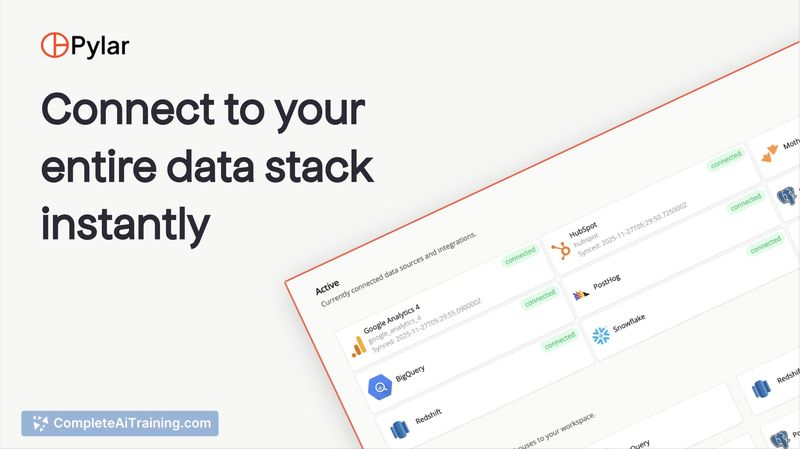
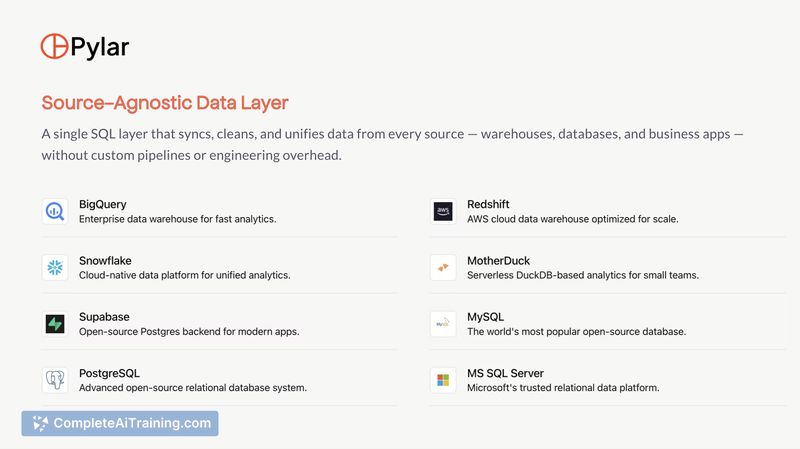
Pylar securely connects AI agents to structured data sources such as Snowflake, Postgres, and common CRMs. It offers sandboxed data views, policy-driven guardrails, and centralized observability so teams can expose only the data agents need without giving direct warehouse access.
Review
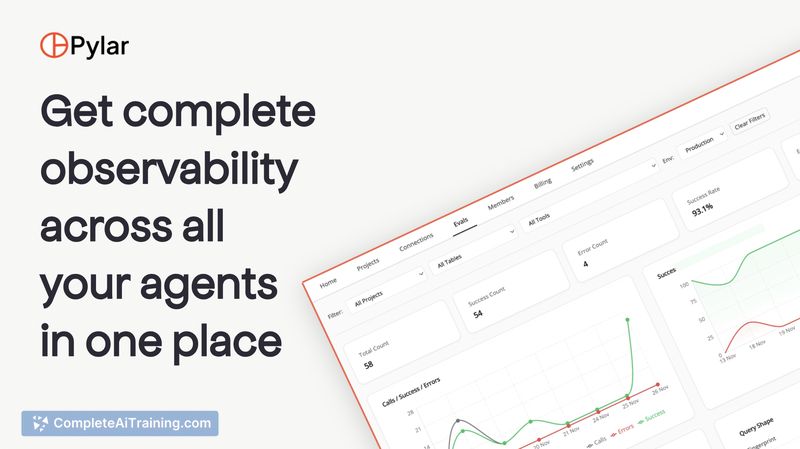
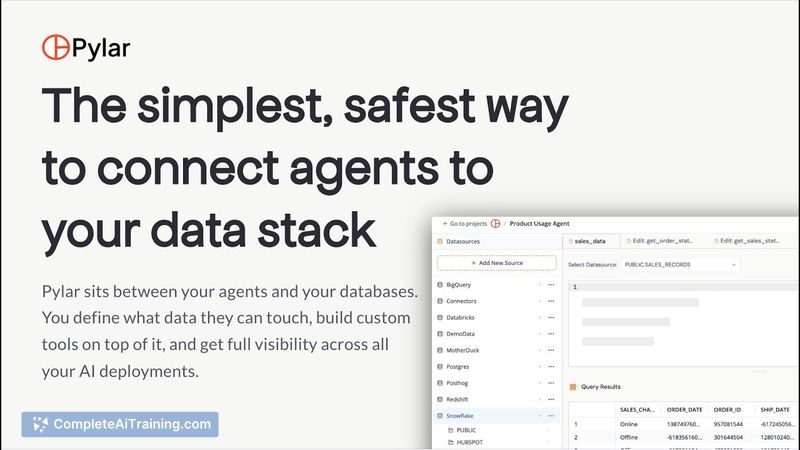
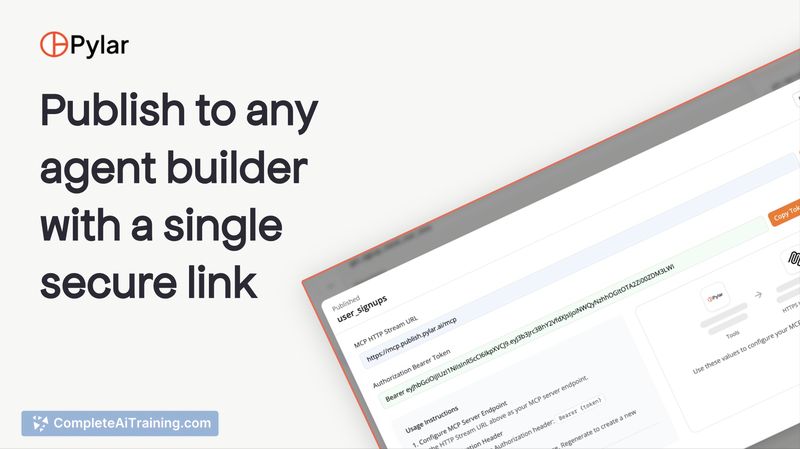
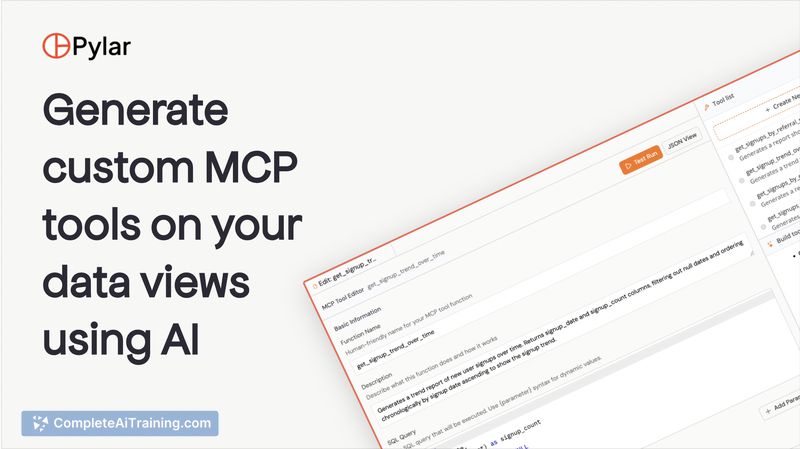
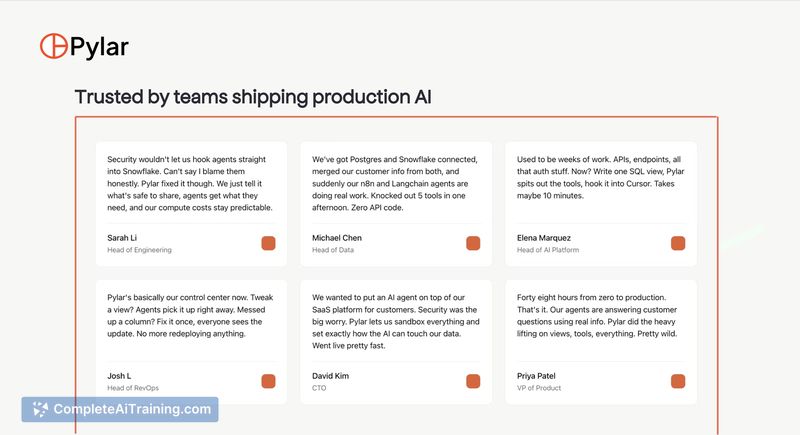
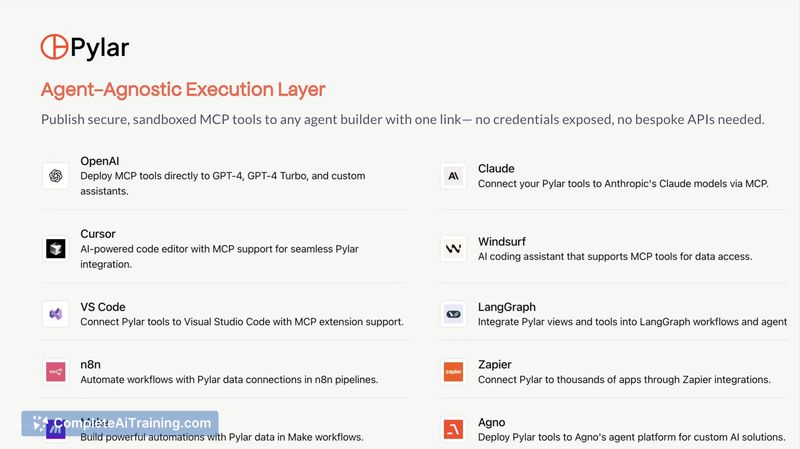
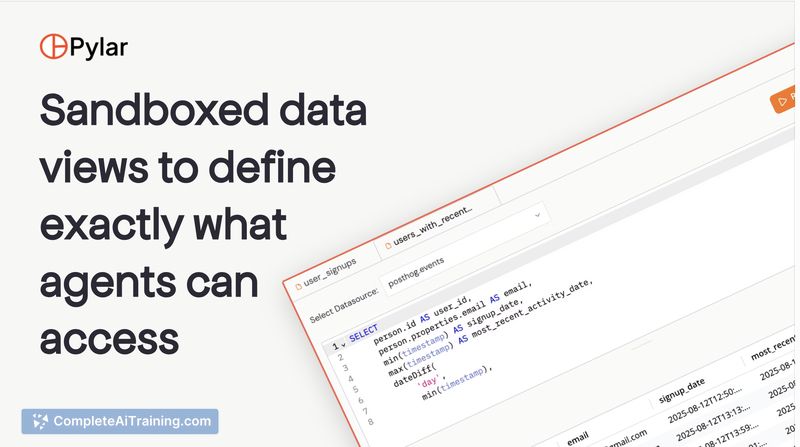
Pylar addresses two frequent pain points when deploying agents against internal systems: runaway queries that inflate warehouse costs and accidental exposure of sensitive data. By acting as a control plane between agents and your data stack, it lets teams define scoped views, publish those views as managed tools, and monitor agent activity in one place.
Key Features
- Sandboxed views: agents access curated slices of your database instead of raw tables, limiting scope and risk.
- Policy-based guardrails: enforce row limits, block unscoped scans, and set query-level constraints to prevent over-querying.
- Publishable MCP tools: convert scoped views into tools that can be used across multiple agent builders.
- Centralized observability and audit logs: see which agents queried what, what was allowed or blocked, and cost per tool call.
- Cross-builder support: monitor and control agents running on different platforms from a single dashboard.
Pricing and Value
At launch Pylar offers free options, making it accessible for teams to trial core functionality. For larger deployments or enterprise needs, expect tiered pricing or custom plans that include advanced governance and support; contacting the provider will clarify volume and SLA-based costs. The main value is reducing engineering work and operational risk by replacing bespoke API wrappers and ad hoc controls with a unified, auditable layer.
Pros
- Strong data scoping that prevents agents from accessing raw warehouse tables.
- Policy and query-level controls help cap unexpected costs and enforce safe access patterns.
- Single dashboard for audit trails and cost visibility across multiple agent builders.
- Updating a view or policy propagates to all connected agents without redeploying those agents.
Cons
- New product at launch, so integrations and enterprise features may still expand over time.
- Some capabilities such as rate limiting were slated for near-term release rather than being live at initial launch.
- Teams with highly custom workflows might need initial setup and policy tuning to match internal governance.
Pylar is a good fit for engineering and security teams that want to expose structured data to agents safely while avoiding months of custom API work. It is especially useful for organizations concerned about cost control and auditability when agents interact with sensitive systems.
Jobs Pylar suits
We checked Pylar against 500+ jobs; these get the most out of it.
Alternatives to Pylar
Other tools that do the same main job. Our AI compared Pylar with similar tools and kept the ones you could use instead.