AI tool
Stride
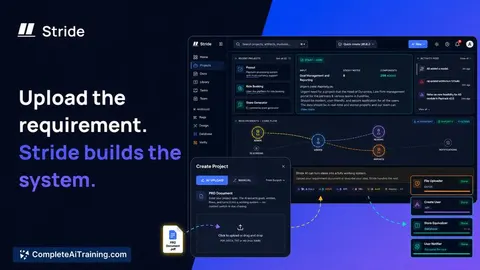
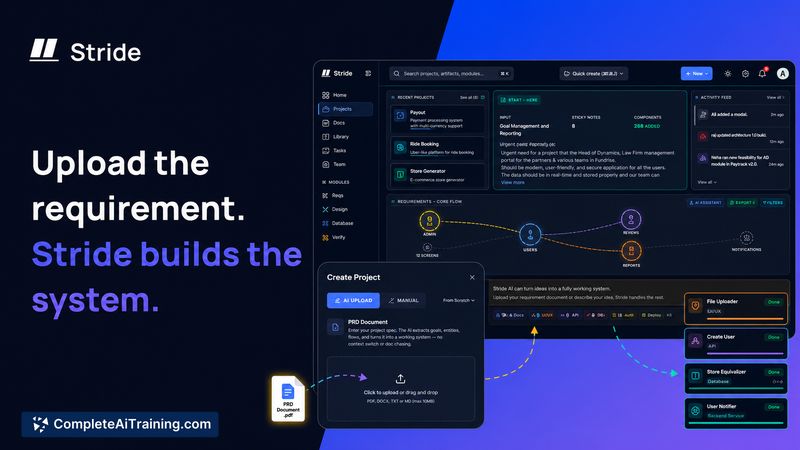
Stride is an AI-native workspace for product teams managing projects from idea to shipped. It combines planning, design, and testing in a single environment. An AI teammate acts on your project data to create and move work.
About Stride
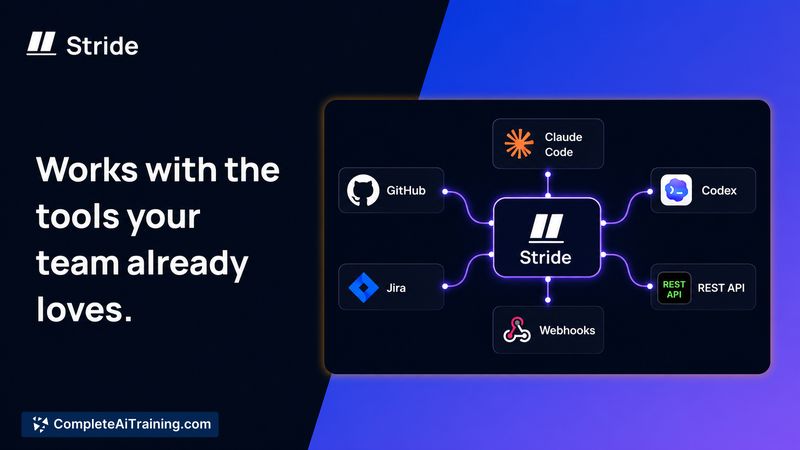
Stride is an AI-native workspace that connects planning, system architecture design, quality verification, and release management in a single environment. Its AI operates directly on project data - tickets, stages, and linked context - rather than through a separate chat interface. The tool integrates with Claude Code and Codex over MCP, and it launched publicly this week.
Review



Stride enters a crowded project management market with a graph-based approach: stories, architecture decision records, test cases, and releases all live as linked nodes the AI can see. The team built it to reduce the friction of switching between boards, docs, whiteboards, and AI chats that don't share context. What follows is a look at what ships today, what's still ahead, and where the tool fits.
Key Features
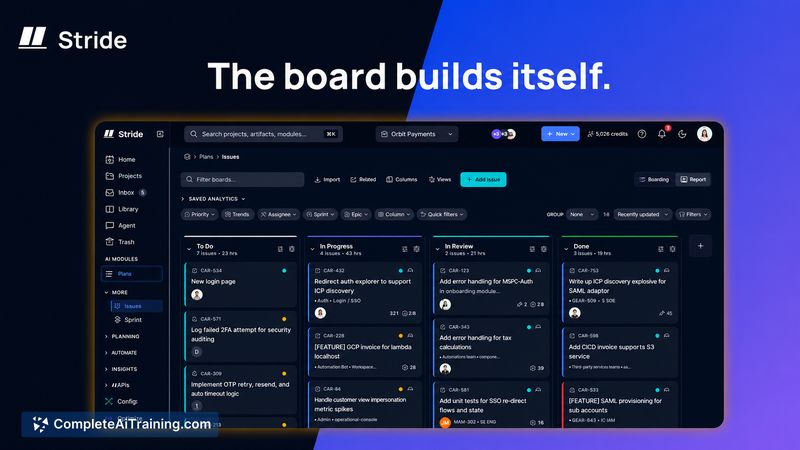
- Plan - A flexible board with custom stages, WIP limits, and issue tracking that adapts to how a team structures work.
- Design - System architecture tools including C4 diagrams, sequence and deployment diagrams, scored solution options, and architecture decision records (ADRs) grounded in past project decisions.
- Verify - Define acceptance criteria, generate test cases from requirements, and apply quality gates that block a release when gaps exist between what was planned and what was built.
- Agent - An AI teammate that creates, updates, and moves work items. It plugs into Claude Code and Codex over MCP, giving coding agents full product context instead of isolated snippets.
- Ship - Release management with release notes pulled from real commits, plus quality gates that validate before a release goes out.
Pricing and Value
Stride includes a free tier. Paid plans follow a per-seat model combined with pay-as-you-go AI credits, based on details shared in the launch materials. A 10% discount applies during the launch period. Exact pricing tiers beyond this structure are not yet detailed publicly.
Pros
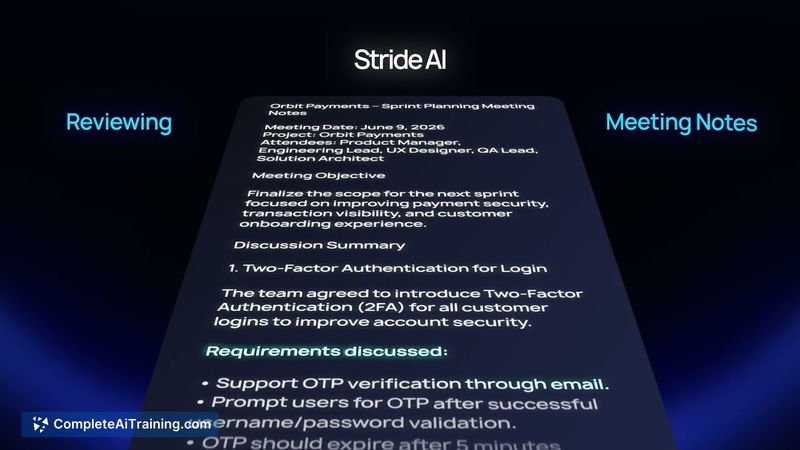
- The AI reads actual project data - tickets, stages, linked artifacts - so users don't re-explain context each session.
- Traceability flows from stories to ADRs to test cases to defects, all inside one connected graph.
- GitHub integration can draft a real pull request from an architecture review.
- Jira import lowers the friction of migrating existing projects.
- MCP server support means coding agents work with the full product picture, not a single prompt snippet.
Cons
- The design layer covers system architecture only - C4, ADRs, deployment diagrams. UI design and Figma integration are not available yet and sit on the roadmap.
- "Ship" handles the delivery layer (releases, notes, quality gates) but doesn't include one-click deployment to production; that's a future direction, not a current feature.
- Not well suited for teams whose workflows depend on visual UI design tools or on integrations with services Stride doesn't connect to yet - the integration surface is still growing.
Stride makes the most sense for teams doing substantial planning and architecture work who want their AI to operate on connected project data rather than isolated prompts. It fits shops that already use Claude Code or Codex and want those agents to pull context from the same graph that holds their stories and decisions. Solo developers or teams with lightweight planning needs may find the full workspace more than they require, especially while the integration list is still maturing.
Jobs Stride suits
We checked Stride against 500+ jobs; these get the most out of it.