About TrueFoundry AI Gateway
TrueFoundry AI Gateway is a production-ready control plane that connects, observes, and governs LLMs, model connectors (MCPs), guardrails, prompts, and agents through a unified API. It offers a playground for assembling agent components and provides detailed traces and health metrics to keep visibility on responses in production.
Review
The AI Gateway focuses on giving platform and developer teams a single place to route requests, apply policies, and monitor complex agent workflows. It emphasizes observability (detailed traces, latencies, token timings), governance (rate limits, cost and content rules), and operational features such as fallbacks and model routing.
Key Features
- Unified API and control plane for models, MCPs, guardrails, prompts, and agents.
- End-to-end tracing and observability: prompts, completions, tool call results, latency and time-to-first-token, plus flagged events for fallbacks and rate limits.
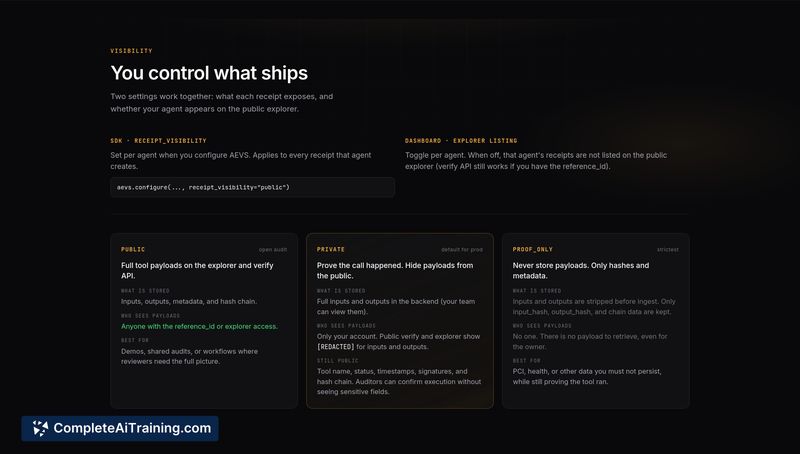
- Governance controls including request volume limits, cost controls, content guardrails, and configurable rate-limiting and fallback behavior.
- Multi-MCP support and token/auth management for different provider auth flows, with data residency and security-focused controls.
- Prompt management and routing capabilities that reduce client-side code and simplify model swaps and failover.
Pricing and Value
Public materials highlight free options and a promotional three-month free trial for the community, but detailed pricing tiers are not listed on the announcement page. The offering appears positioned as a SaaS control plane with options appropriate for enterprise deployments and self-hosting patterns; costs will likely be influenced by request volumes, agent counts, and enterprise features. For teams operating many agents or requiring strict observability and governance, the Gateway can reduce the engineering effort of building and maintaining bespoke integrations and logging layers, which may offset subscription or hosting costs.
Pros
- Comprehensive observability with granular traces that capture prompts, tool calls, and model interactions.
- Built-in governance primitives (limits, guardrails, cost controls) that simplify compliance and safety work.
- Support for multiple MCPs and auth flows, easing provider rotations and token management.
- Features like routing, fallback, load-balancing and prompt substitution reduce application complexity.
- Reported production use at scale, indicating maturity for platform workloads.
Cons
- Specific pricing details are not publicly detailed on the launch page, which makes upfront cost estimation harder.
- Adopting a centralized control plane introduces operational dependency and potential integration effort for custom MCPs or legacy systems.
- Some advanced functionality (enterprise-grade data residency or self-hosting) may require deeper setup and support compared with simpler gateway alternatives.
Overall, TrueFoundry AI Gateway is best suited for platform teams and engineering organizations running many agents or internal copilots that require strong observability, governance, and multi-provider flexibility. Small projects or prototypes that need minimal observability may find the feature set heavier than necessary, while compliance-sensitive or large-scale deployments are likely to benefit most.
Open 'TrueFoundry AI Gateway' Website
Your membership also unlocks: