AI tool
valv
Valv enables software developers to build applications using GPT-5.6. The tool helps teams create AI features that were previously impractical to implement.
About valv
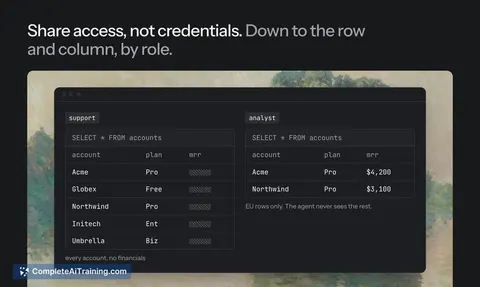
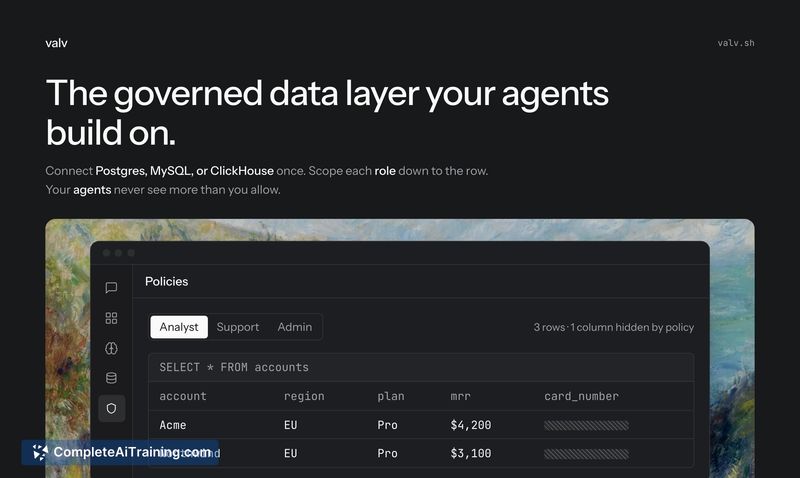
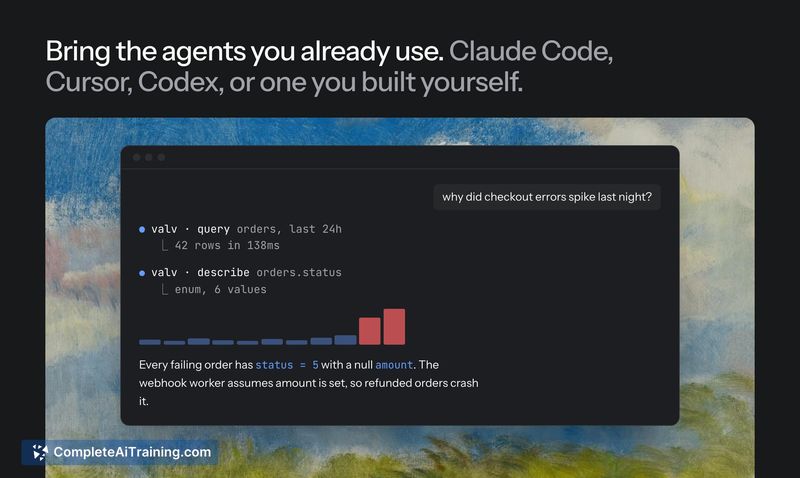
valv is a tool that connects databases like Postgres, MySQL, ClickHouse, and PostHog to AI agents, scoping access down to the row level. It lets teams point MCP agents at live data without handing over full credentials. The platform also includes an agent that builds HTML dashboards from connected data, with permissions checked per viewer at load time.
Review
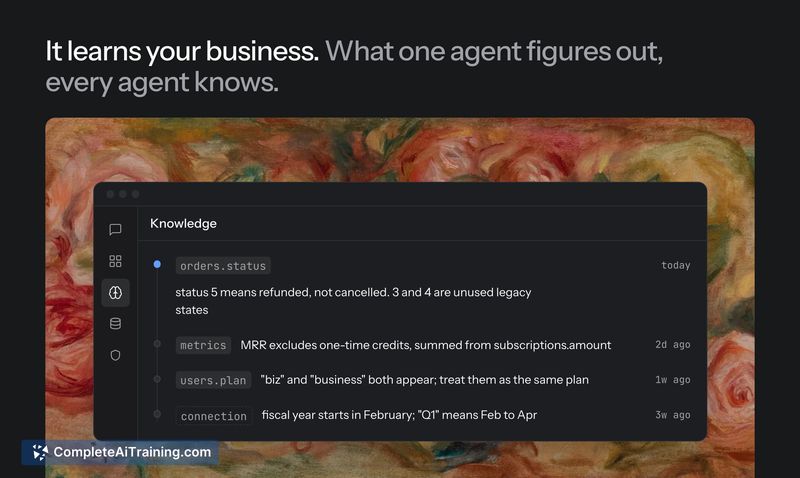
valv addresses a specific gap in agent-database interactions: most teams either share full credentials or build custom proxies. The tool's approach centers on permission scoping that follows the user, not the agent. This review examines what valv currently ships, what's on the roadmap, and where it fits.
Key Features
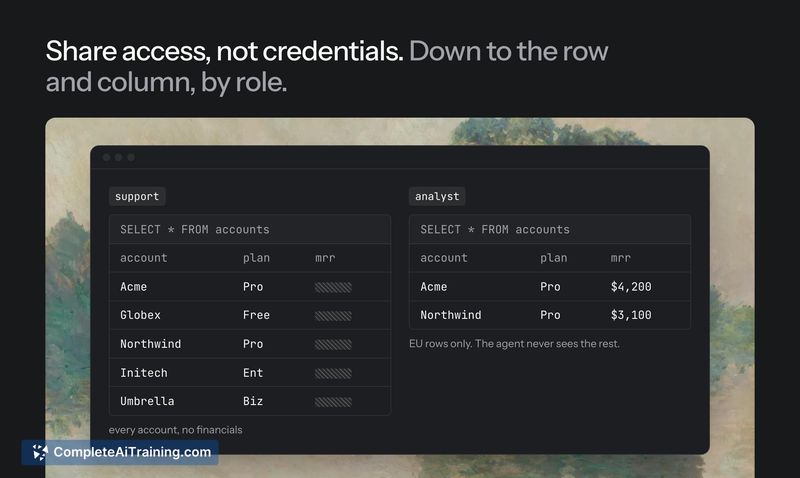
- Row-level permission scoping. Administrators create roles with permissions that can be scoped to the table or row level. Agents only see databases and tables within their assigned scope - a table outside permissions simply doesn't appear to exist for that agent.
- Multi-source connections. The platform connects Postgres, MySQL, ClickHouse, and PostHog. A team connects each source once and then defines per-role access across all of them.
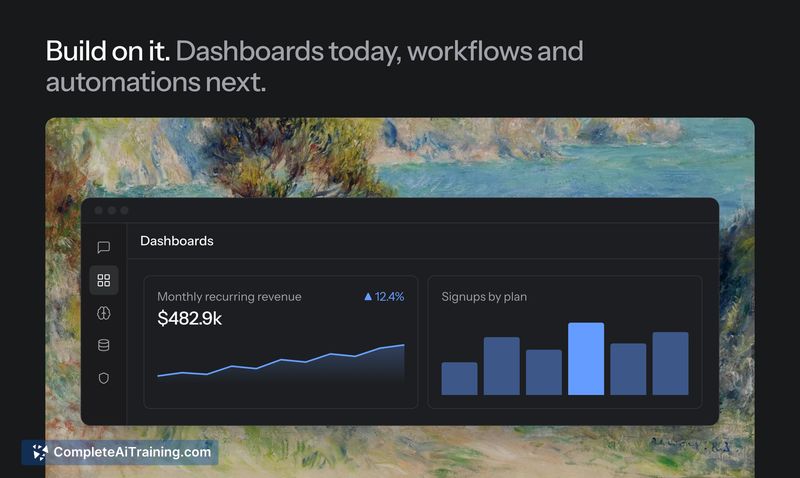
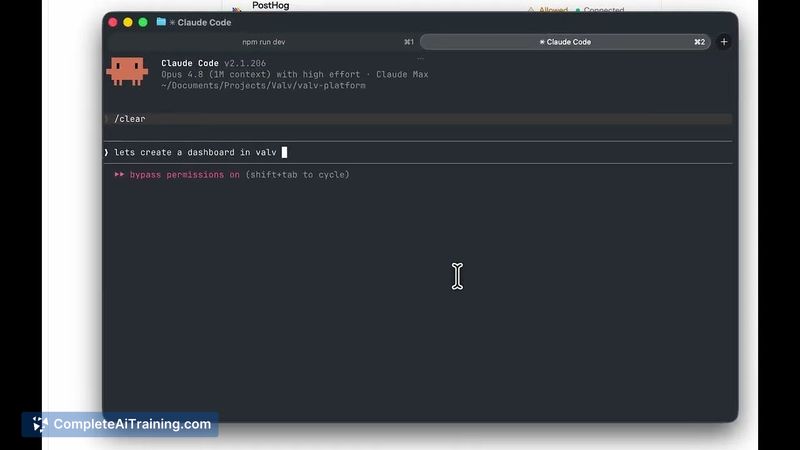
- Agent-built dashboards. A coding agent generates custom HTML dashboards from connected data. Each dashboard enforces per-query permissions, checking the viewer's access at load time rather than baking in the builder's privileges.
- MCP agent support. Team members point their own MCP agents at valv, which mediates all queries through the defined permission model.
- Query safety guardrails. The platform currently blocks write operations and other potentially risky queries. The query tools reject anything that could mutate data.
Pricing and Value
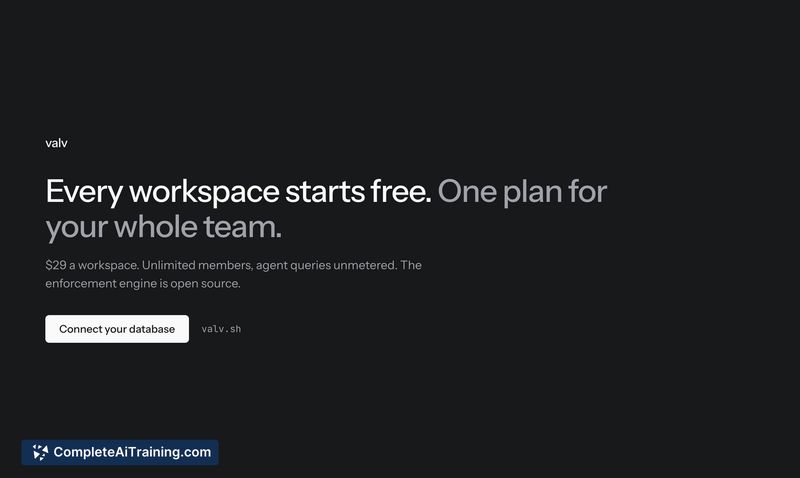
valv launched with a 50% discount for the first three months using the code PRODUCTHUNT. The standard pricing after that promotional period is not yet defined on the product page. The tool operates as a SaaS product with free options available, though the exact feature split between free and paid tiers hasn't been detailed publicly.
Pros
- Permission checks happen per user, per query, and per dashboard load - revoking access takes effect immediately across all surfaces including MCP, chat, and shared dashboards.
- The agent doesn't silently filter rows outside its scope. Queries touching unauthorized data fail with a permission error that informs the model access is restricted, which avoids silently incorrect aggregate results.
- Dashboard permissions re-evaluate against the viewer, meaning a dashboard shared with a teammate who has narrower access shows only what that teammate is allowed to see.
- Connecting data sources happens once at the platform level, so individual team members don't handle database credentials directly.
- No write operations are permitted, reducing the risk of accidental data mutation through agent queries.
Cons
- The write-blocking approach means valv isn't suited for teams that need agents to insert, update, or delete records as part of their workflow.
- Supported data sources are currently limited to four - Postgres, MySQL, ClickHouse, and PostHog. Teams on other database systems can't use the tool yet.
- Pricing beyond the three-month promotional period remains unclear, making it difficult to evaluate long-term cost for teams with multiple users and data sources.
valv fits teams that already use MCP agents and need read-only access controls tighter than table-level grants, particularly when multiple team members have different data visibility requirements. It's less relevant for teams that need agents to perform write operations or those running databases outside the currently supported four sources. The dashboard-sharing model, where permissions re-check at load time, addresses a real problem for organizations where data access levels vary across colleagues.
Jobs valv suits
We checked valv against 500+ jobs; these get the most out of it.
Alternatives to valv
Other tools that do the same main job. Our AI compared valv with similar tools and kept the ones you could use instead.