AI tool
Zoho Tables
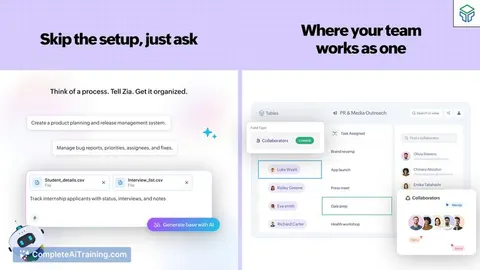
Zoho Tables lets teams build databases without developers using the Zia assistant to create bases from text descriptions. The tool routes this data into Grid and Kanban views for collaborative project management.
About Zoho Tables
Zoho Tables is a no-code hybrid that combines a spreadsheet interface with database structures. It uses AI to generate bases from a prompt, supports multiple views, and automates repetitive tasks. The tool launched this week and includes real-time collaboration.
Review
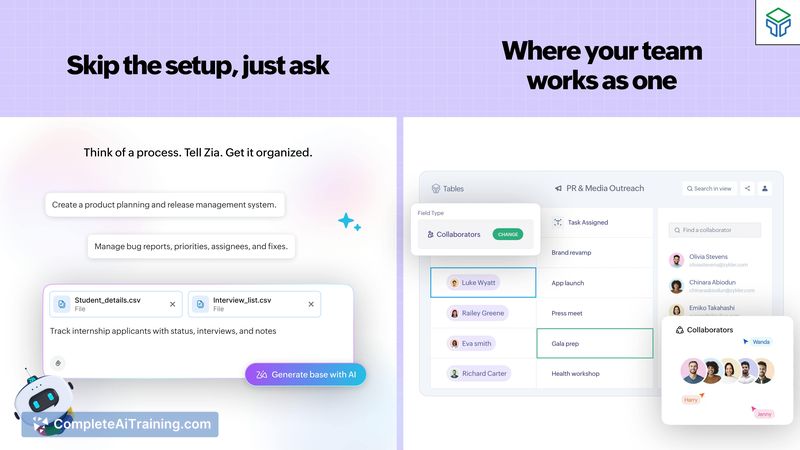
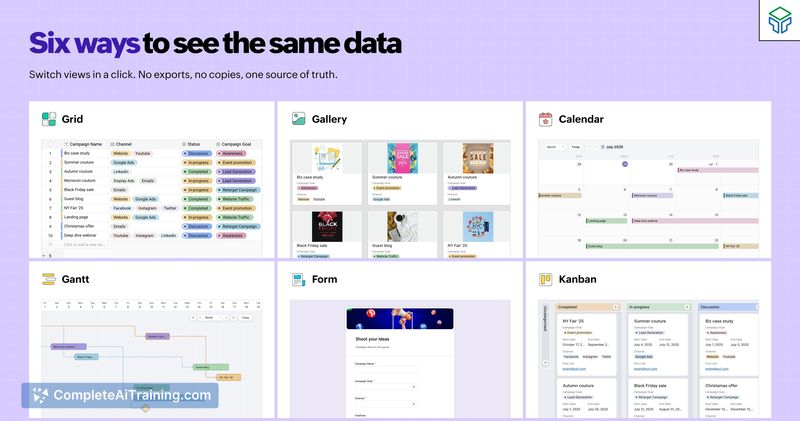
Zoho Tables targets the space where spreadsheets become unwieldy and full databases feel like overkill. The AI component takes a natural language description and builds a complete base-tables, fields, relationships, and views-so you don't start from a blank grid. The same data then surfaces in Grid, Calendar, Gallery, Gantt, Form, and Kanban views without any export step.
Key Features
- AI-generated bases from a simple prompt, with the option to customize the output
- Six interchangeable views: Grid, Calendar, Gallery, Gantt, Form, and Kanban
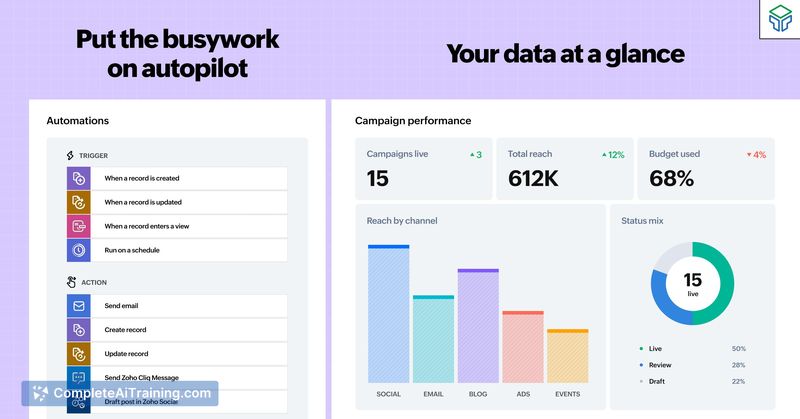
- Automations that trigger actions based on conditions you define
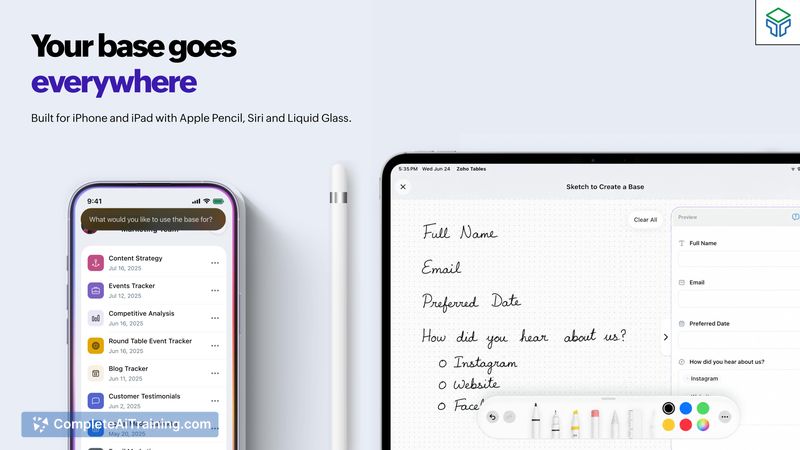
- Mobile app with Siri voice commands to create a base and Apple Pencil support for image annotation
- Real-time collaboration across the team, with reports that update automatically
Pricing and Value
A Free plan is available, with limits on the number of records and active automations. Full details on plan tiers and the specific caps are listed on the Zoho Tables pricing page. The free tier lets you evaluate the core feature set before committing to a paid plan.
Pros
- AI builds a relational base from a plain-language prompt, saving initial setup time
- Views switch instantly without reformatting or exporting data
- Automations handle routine updates and notifications
- Mobile app creates bases by voice and accepts handwritten annotations on images
- Collaboration features keep reports current as data changes
Cons
- The AI assistant that modifies bases via chat (adding fields, generating sample data, querying records) is planned for later this quarter and not yet available
- The Free plan restricts record counts and active automations, which may require a paid upgrade for growing projects
- Not the right fit for teams that need direct SQL access, custom backend integrations, or very large-scale data processing typical of a traditional database
Zoho Tables suits small to medium teams that want structured, collaborative data management without database complexity. It works for project tracking, inventory, event planning, and similar relational tasks. Teams that rely on raw SQL queries or need to process millions of rows with fine-grained control will likely find it limiting.
Jobs Zoho Tables suits
We checked Zoho Tables against 500+ jobs; these get the most out of it.
Alternatives to Zoho Tables
Other tools that do the same main job. Our AI compared Zoho Tables with similar tools and kept the ones you could use instead.