AI tool
ZooWork
ZooWork helps founders draft investor updates from company notes using AI agents and then share those drafts with teammates for review. It is built for startup leaders who need a repeatable, collaborative reporting workflow.
About ZooWork
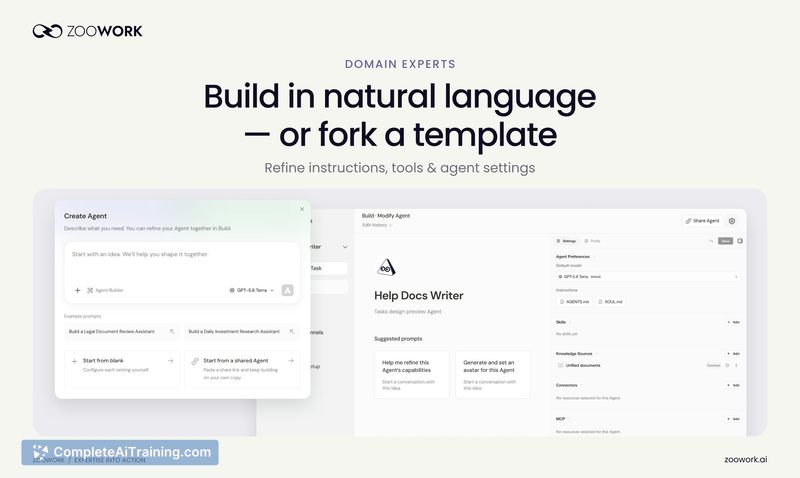
ZooWork is an AI agent delivery platform for functional domain experts and developers who want to turn their knowledge into working agents. Users build agents through a no-code Builder UI, while technical teams can ship and manage them with the Managed Agent API. The tool focuses on letting experts create agents that handle real business tasks and then share those agents with teams or clients.
Review
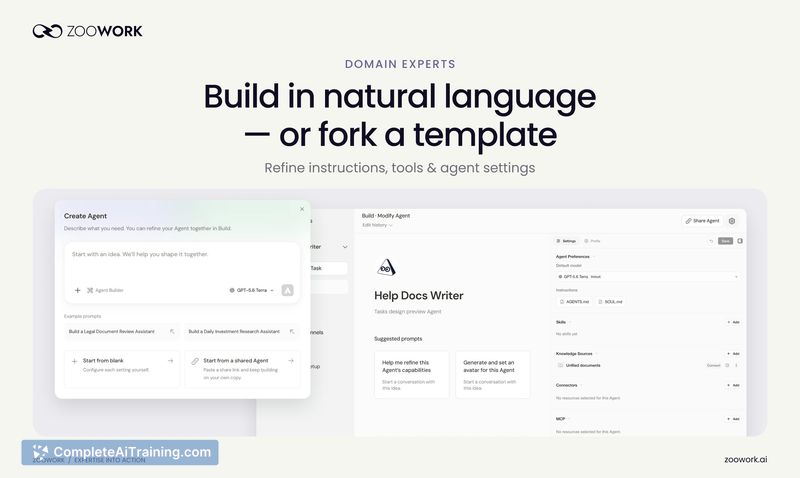


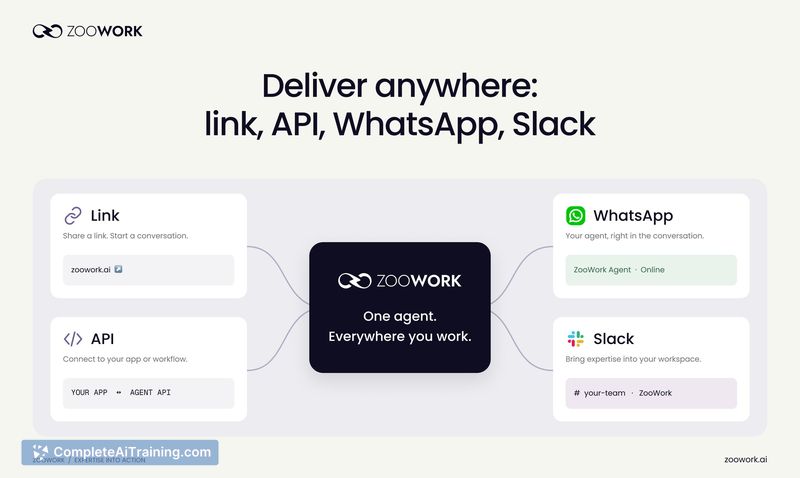

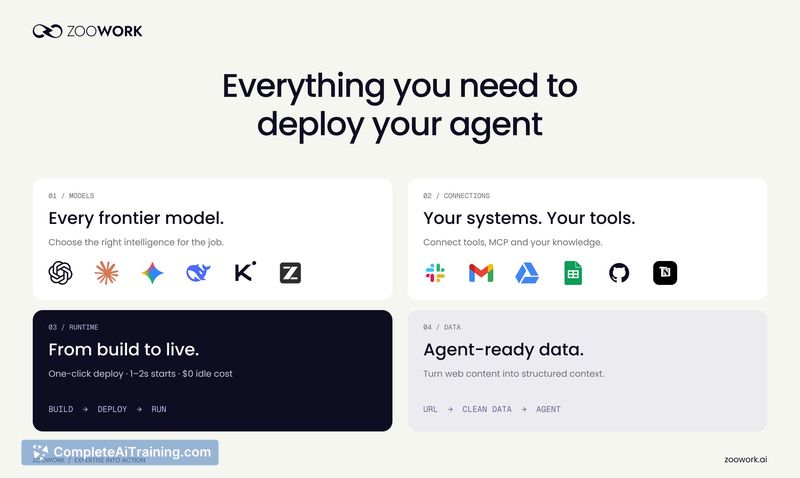
ZooWork launched this week and targets a specific gap: most agent builders stop at creation, but ZooWork emphasizes delivery and sharing. The platform splits into two paths-a plain-language Builder for experts who don't code, and an API for developers who need to integrate agents into existing stacks. It's early days, so the feature set is lean, but the core loop of building, sharing, and monitoring an agent is functional.
Key Features
- Agent Builder UI - Describe how work should be done in plain language, and the system constructs an agent from that conversation. No coding is required for this path.
- Managed Agent API - Developers can ship agents programmatically. The API returns the trajectory of each run, showing how the agent approached a task step by step.
- Agent sharing - Agents built in the platform can be shared with teammates or clients via a share link or Slack, so the agent isn't locked to the person who created it.
- Knowledge base - Users can load approved notes, documents, or other reference material into an agent's knowledge base. The team says this is free for a limited time and can be updated without rebuilding the entire workflow.
- Sandboxed client instances - Each client can get its own independent agent sandbox, keeping files and data separate. Shared agents share a sandbox, while chat histories remain separate across sessions.
Pricing and Value
ZooWork lists free options on its launch page, and the team has stated that the knowledge base feature is free for a limited time. Beyond that, specific pricing tiers or subscription models have not yet been defined publicly. The platform's value centers on letting domain experts monetize or distribute their expertise as functional agents without relying on engineering resources for the initial build.
Pros
- The Builder UI lets non-developers create agents by describing workflows in plain language, which lowers the barrier for domain experts who understand the work but don't write code.
- Agent delivery features-share links, Slack integration, and per-client sandboxes-address a distribution problem that many agent builders ignore.
- The Managed Agent API exposes run trajectories, giving developers a concrete way to inspect and refine agent behavior over time.
- Knowledge base updates don't force a full workflow rebuild; users can modify reference material incrementally.
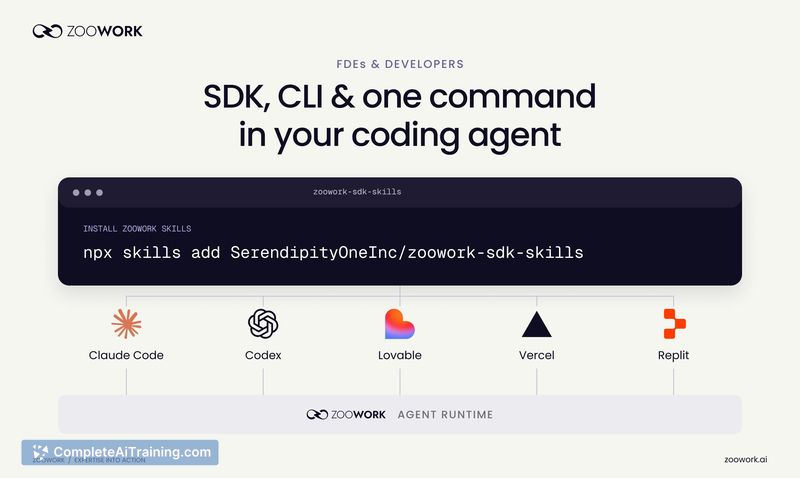
- TypeScript and Python SDKs are available now, and the team suggests using Claude Code or Codex to handle integrations in other languages using the API docs.
Cons
- The product just launched this week, so it lacks a track record for stability, scale, or long-term support.
- An evaluation mode for automated performance review is still rolling out and not yet generally available, which means systematic testing requires manual effort through the API.
- ZooWork is not well suited for teams that need deep workflow orchestration with branching logic or complex conditional triggers-the current builder is conversation-driven and doesn't expose visual workflow editing.
ZooWork fits functional domain experts who have a specific, repeatable task they perform for clients or colleagues and want to package that as a shareable agent. It also works for small development teams that want a managed runtime for agents without building the delivery and sandboxing infrastructure themselves. Teams with complex, multi-step automation pipelines or strict governance requirements may find it too early-stage for their needs.
Jobs ZooWork suits
We checked ZooWork against 500+ jobs; these get the most out of it.