
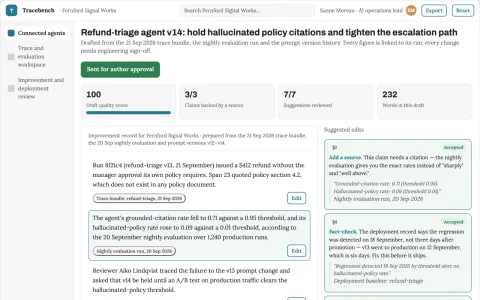
AI model and agent performance operations workbench
Reduce the time from detected AI failure to reviewed, deployed improvement.
Build your own version
Reduce the time from detected AI failure to reviewed, deployed improvement.
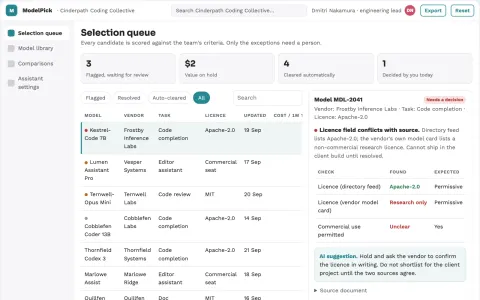
Reduce selection time and rework while keeping the team's own evaluation record.
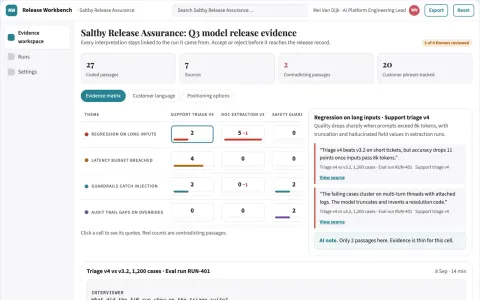
Reduce release risk while keeping a defensible test record.
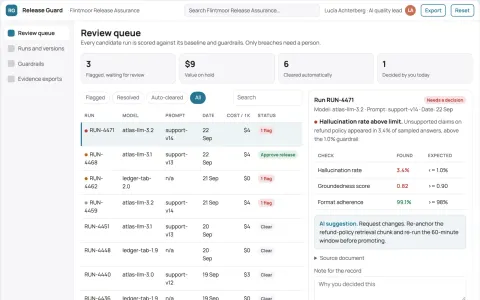
Reduce unreviewed model releases while keeping a defensible record of what was checked.
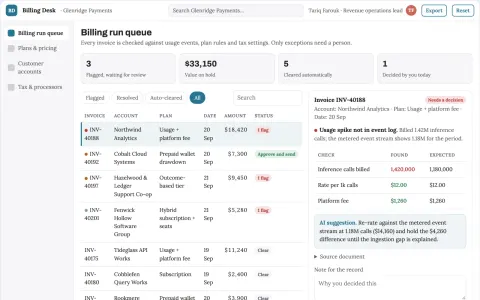
Reduce billing tool sprawl while keeping revenue operations auditable.
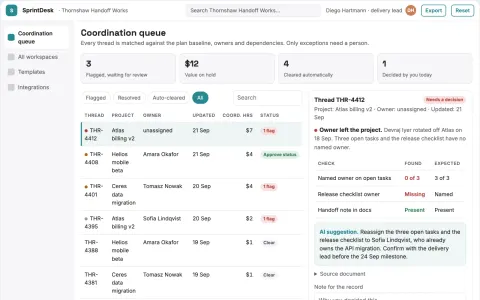
Reduce manual coordination while keeping delivery decisions with named owners.
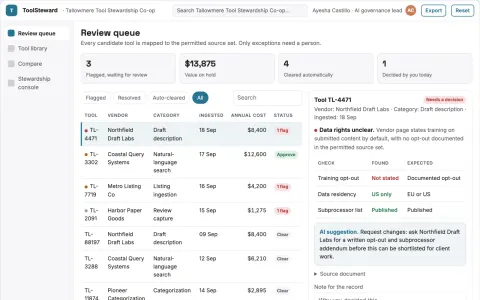
Reduce tool-selection time while keeping a defensible record of why a tool was chosen.
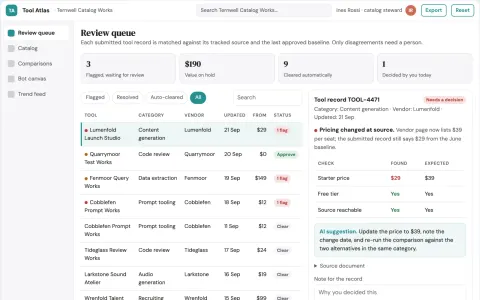
Reduce the time spent finding, comparing and monitoring AI tools while keeping the resulting catalog and notes in the buyer's own system.
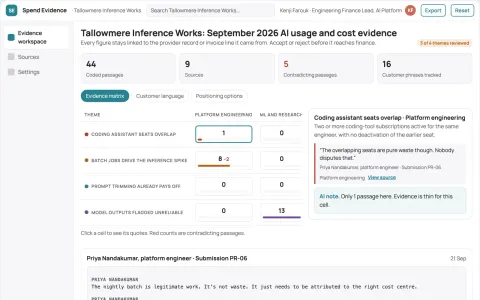
Reduce unverified AI spend while keeping a defensible record of usage and cost.
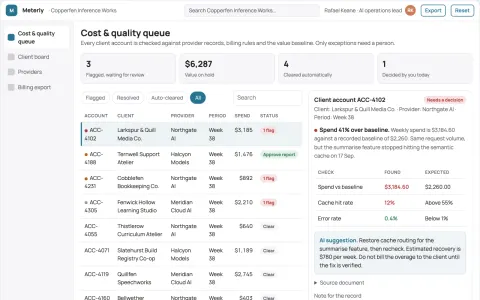
Reduce unmanaged AI spend and late error discovery while keeping client data separated.
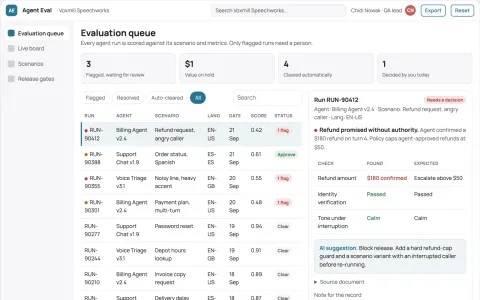
Reduce undetected agent failures while keeping release decisions with named reviewers.
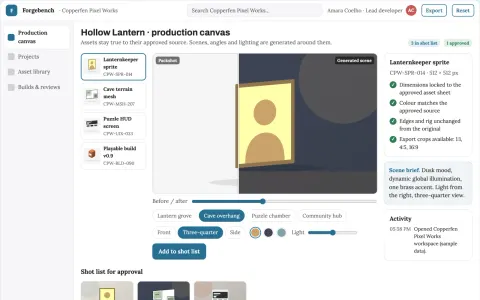
Reduce tool switching and manual asset handling while keeping the studio's own project files and review history.
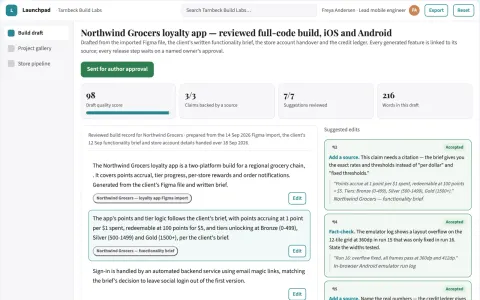
Reduce tool sprawl and manual release work while keeping the code and the store accounts in the buyer's name.
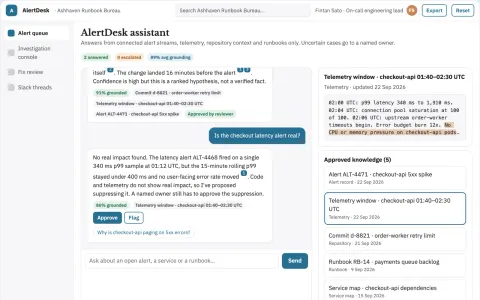
Reduce time from alert to reviewed fix while keeping engineers in control.
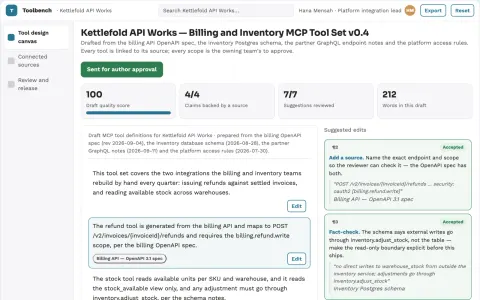
Reduce hand-built integration work while keeping credentials and approvals under the owner's control.
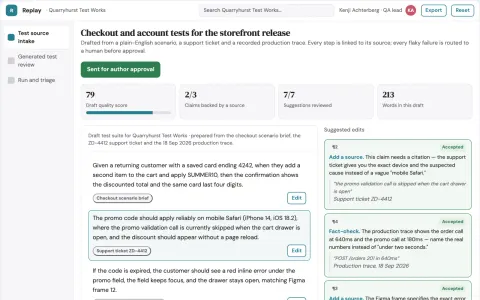
Catch user-facing bugs before release without maintaining brittle test scripts.
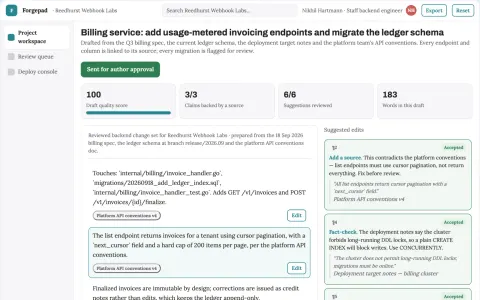
Reduce tool sprawl and handoffs while keeping the codebase and data under the team's control.
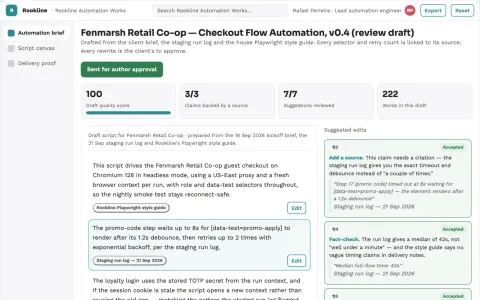
Reduce tool sprawl while keeping inspectable, owned automation code and controlled text rewriting.
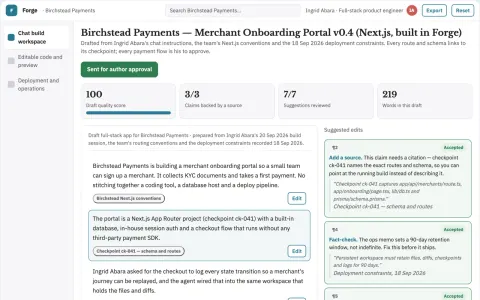
Reduce tool sprawl while keeping the generated app and its source under the team's control.
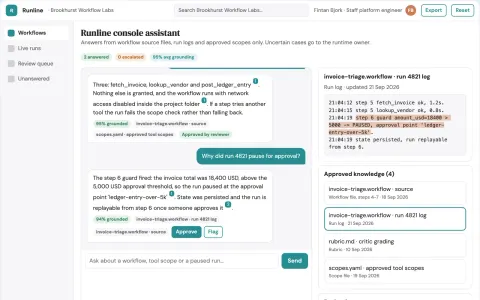
Reduce the number of rented tools and give the team one owned runtime for defining, running, inspecting and approving agent workflows.
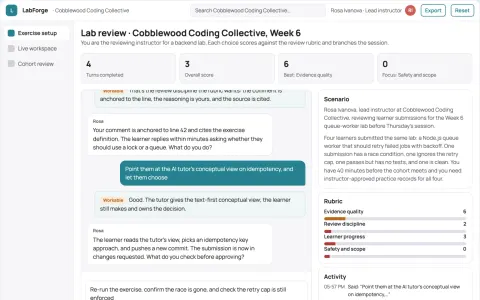
Run one owned practice environment instead of renting several tools.
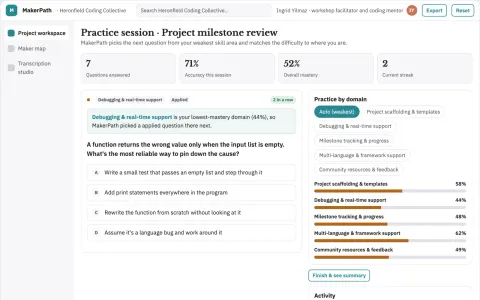
Reduce the number of rented tools while keeping project progress, local maker contacts and transcribed session notes in one owned workspace.
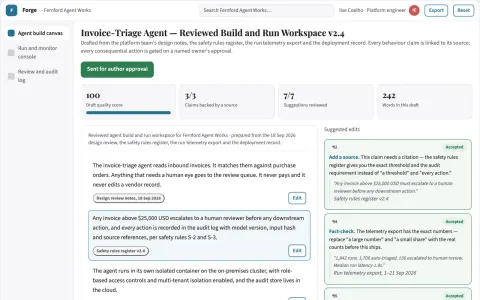
Reduce tool sprawl and keep agent behavior, data and safety controls in one owned workspace.
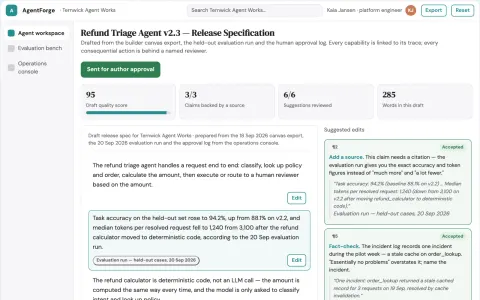
Reduce the number of rented agent tools and keep agent definitions, conversations, traces and approvals in one owned workspace.