
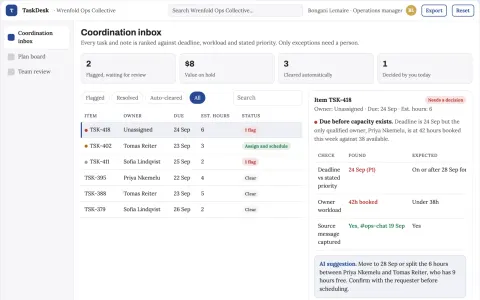
AI task and note coordination workspace
Reduce coordination overhead while keeping one owned record of tasks, notes and schedules.
Build your own version
Reduce coordination overhead while keeping one owned record of tasks, notes and schedules.
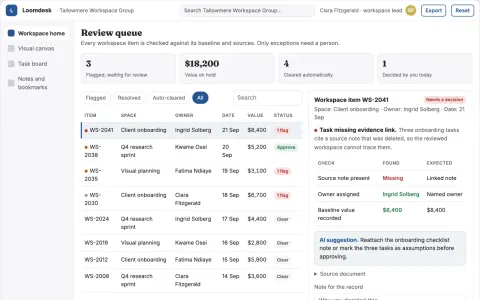
Reduce tool switching while keeping tasks, notes and research in one owned workspace.
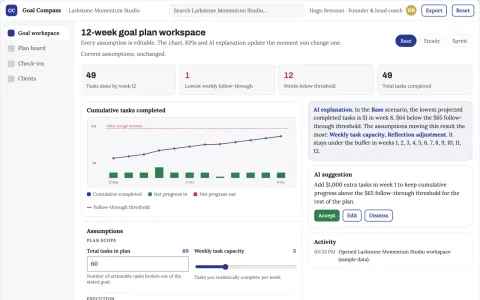
Reduce abandoned goals by turning a stated goal into a reviewed plan with tasks, reminders and reflection.
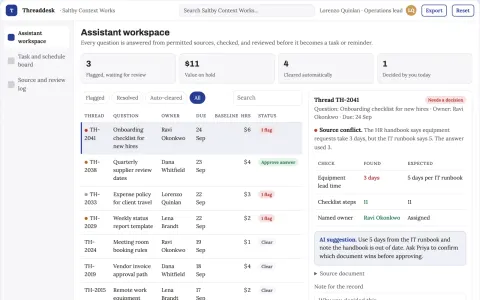
Reduce tool switching and missed follow-ups while keeping one owned record of questions, sources and tasks.
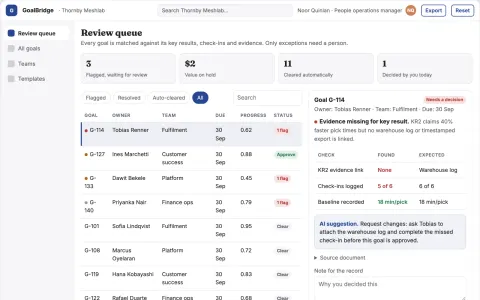
Reduce manual coordination while keeping goal and review decisions with named managers.
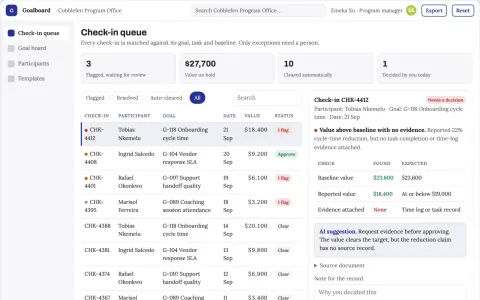
Reduce manual chasing while keeping every goal, task and check-in in one owned system.
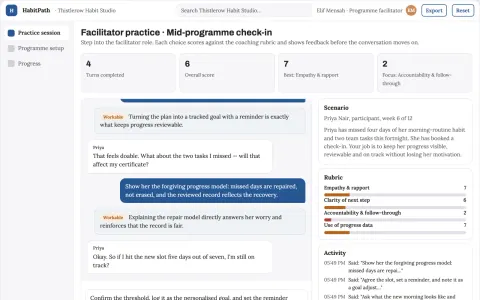
Reduce tool sprawl while keeping habit and task progress visible and reviewable.
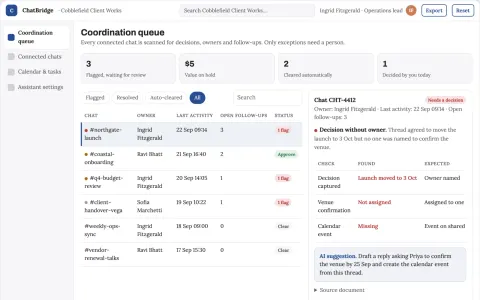
Reduce app switching and lost follow-ups while keeping coordination inside the chat the team already uses.
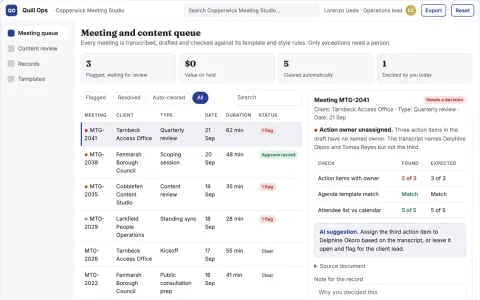
Reduce coordination overhead while keeping meeting records and written content under one owned workflow.
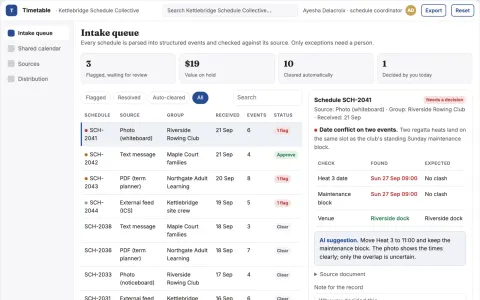
Reduce manual calendar entry and missed updates while keeping one shared schedule everyone can see.
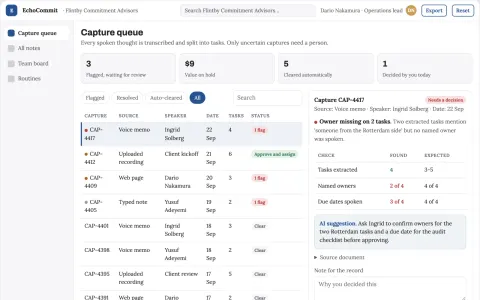
Reduce lost commitments and manual note cleanup while keeping a single owned record.
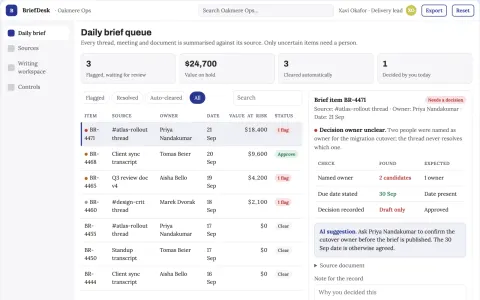
Reduce missed follow-ups and repeated context gathering while keeping a human-approved record of decisions.
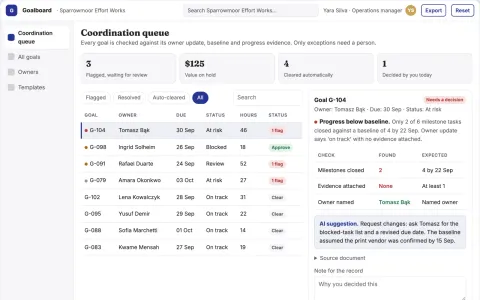
Reduce coordination overhead while keeping every goal and task traceable to a named owner.
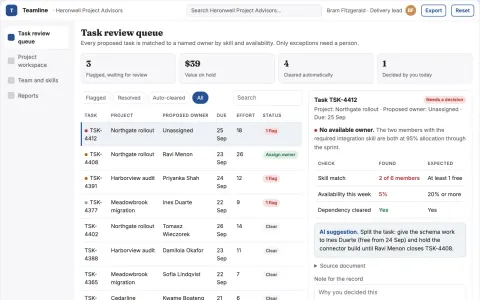
Reduce coordination overhead while keeping task ownership and project records in one place.
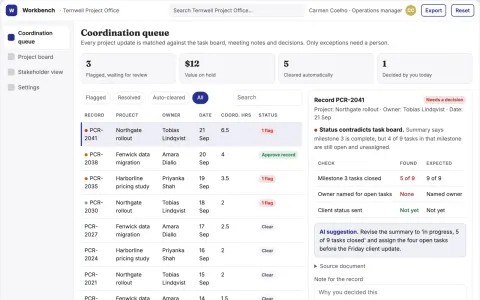
Reduce coordination overhead while keeping project decisions and communication in one owned workspace.
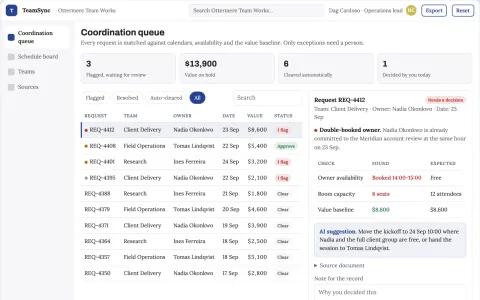
Reduce coordination overhead while keeping every commitment visible and owned.
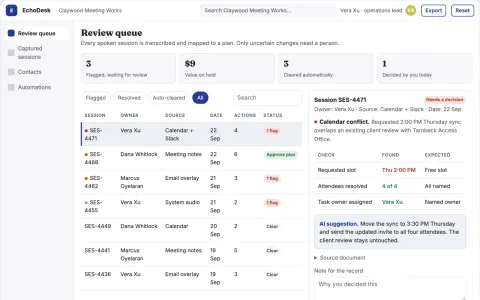
Reduce manual coordination work while keeping a named owner in control of every consequential action.
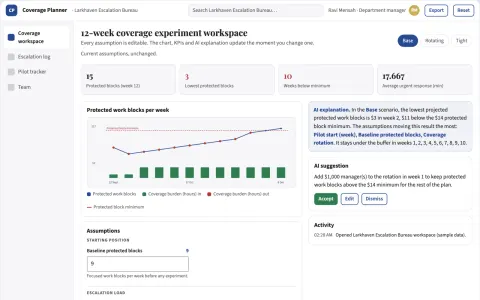
Reduce fragmented work while keeping urgent escalation access.
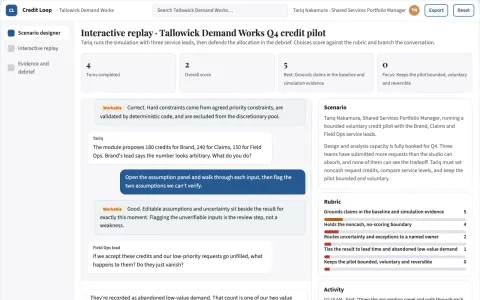
Expose opportunity cost and reduce queue congestion.
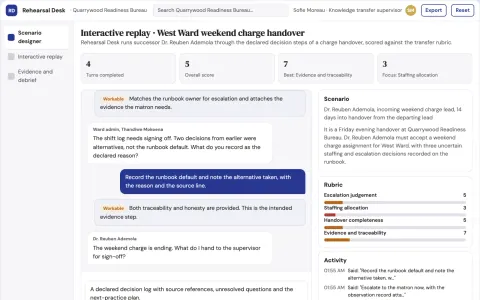
Test whether knowledge transfer produces usable capability.
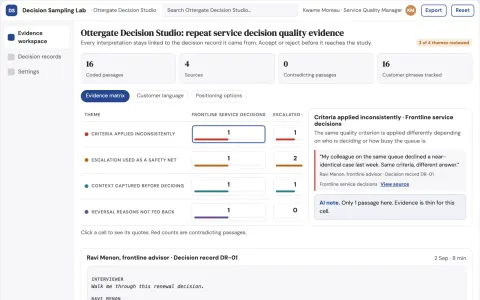
Improve routine decision quality through reviewed representative evidence.
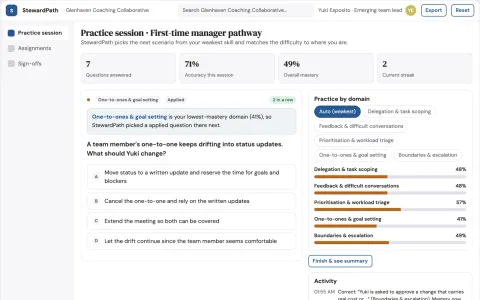
Build demonstrated skills through supervised work.
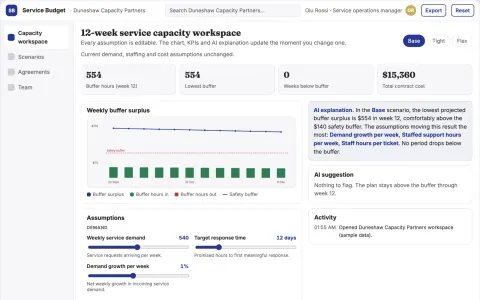
Set supportable service expectations with explicit resource tradeoffs.
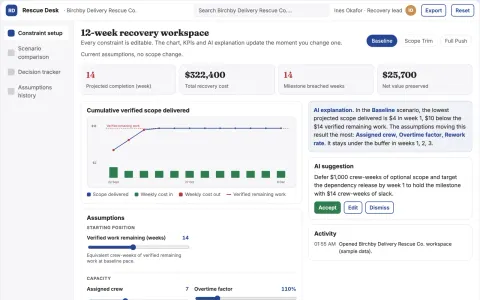
Make credible recovery choices before overtime escalates.