
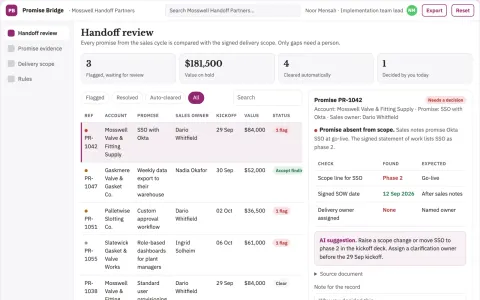
Sales-to-implementation promise bridge
Expose promise-to-delivery gaps before customer kickoff.
Build your own version
Expose promise-to-delivery gaps before customer kickoff.
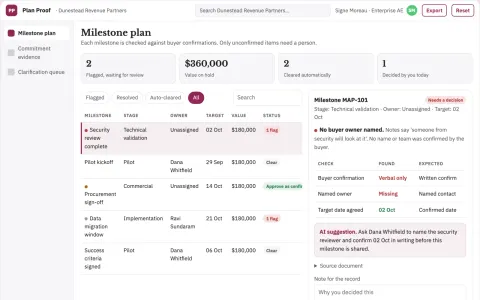
Separate confirmed buyer commitments from seller assumptions.
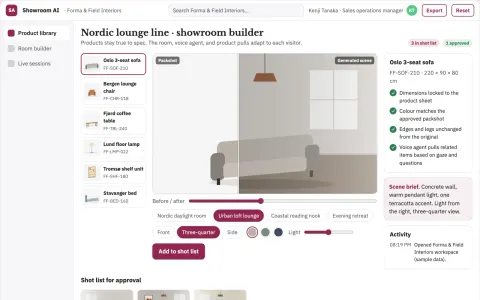
A showroom that rebuilds itself in seconds based on what each visitor looks at and asks, guided by a voice agent that knows the full range.
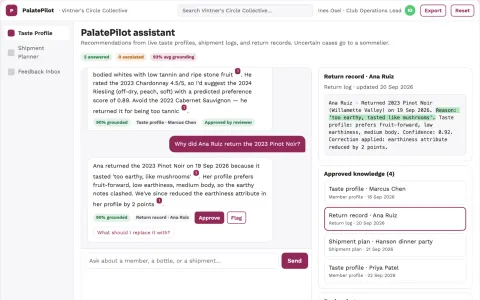
A taste model that learns continuously from every sip, voice note and return, not just a one-time quiz.
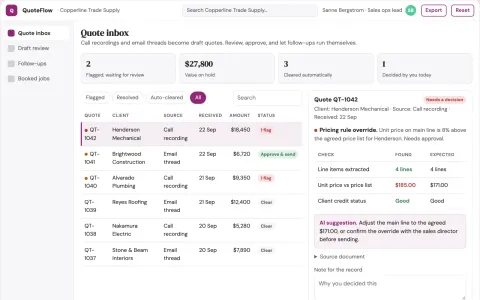
The agent drafts, sends, and chases quotes autonomously, turning a missed follow-up into a booked job without manual intervention.
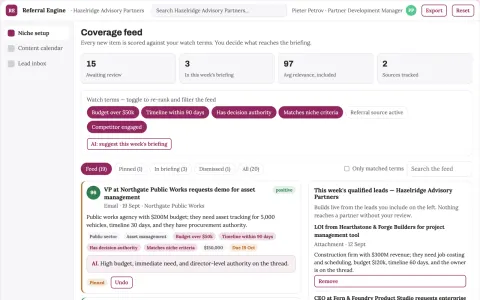
A closed loop where AI content attracts leads and the same system qualifies them against specific partner criteria, reducing manual triage to near zero.
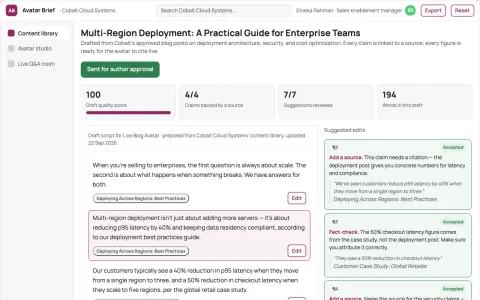
The avatar answers only from approved, cited blog content, so sales teams trust it as a live expert rather than a generic chatbot.
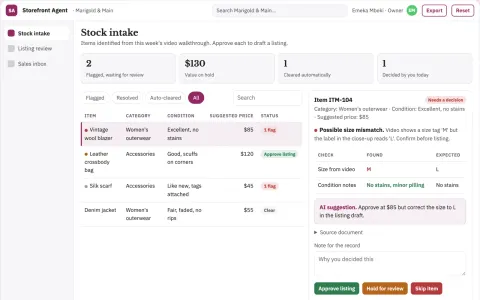
The whole shop floor becomes an online storefront from nothing but a phone video, with no manual listing at any point.
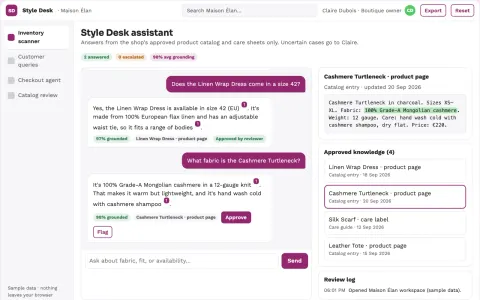
A sales assistant that runs on the customer's existing phone without requiring app downloads or hardware installation
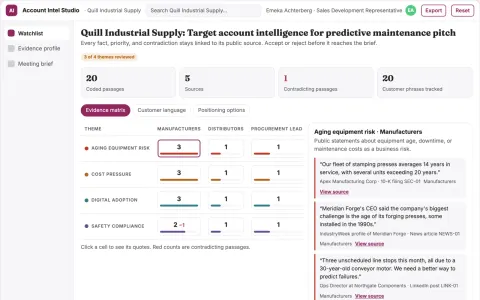
Source-linked account context tailored to a particular sales motion.
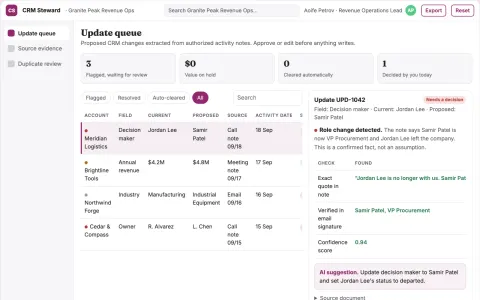
Evidence-backed updates that separate confirmed facts from assumptions.
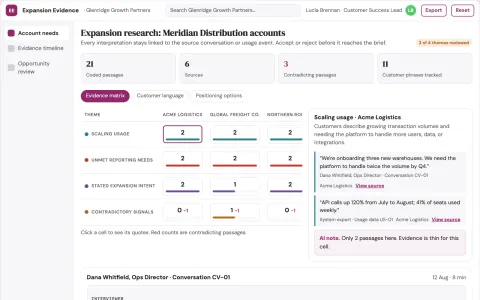
Evidence-based discovery opportunities rather than automatic upsell recommendations.
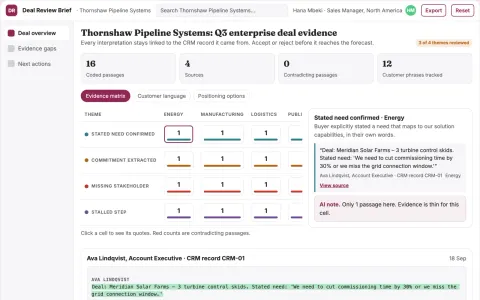
Deal narratives separate verified buyer evidence from seller assumptions.
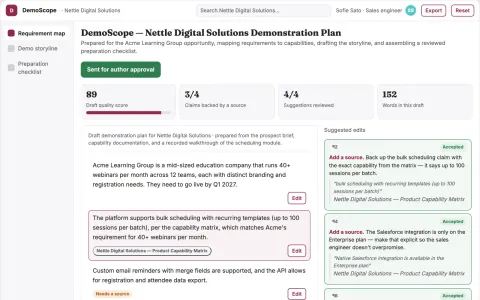
A requirement-to-capability map keeps the demo relevant and accurate.
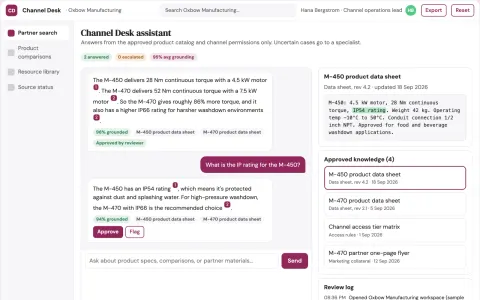
Distributor-specific product context and approved reusable sales material.
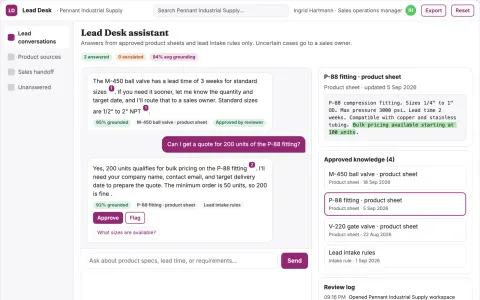
Helpful product guidance plus structured requirements before salesperson contact.
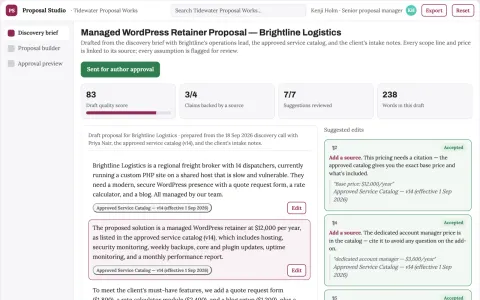
Service-specific scope and pricing rules carried through every proposal.
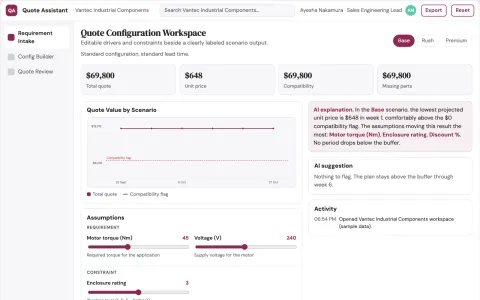
Explainable compatibility checks and controlled commercial calculations.
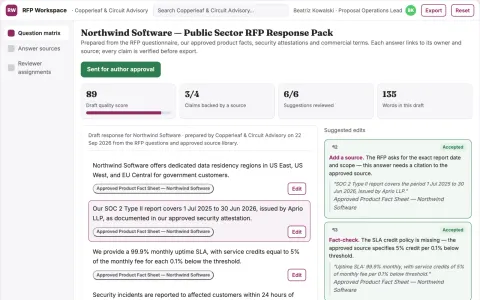
Each answer has an owner, source and review status.
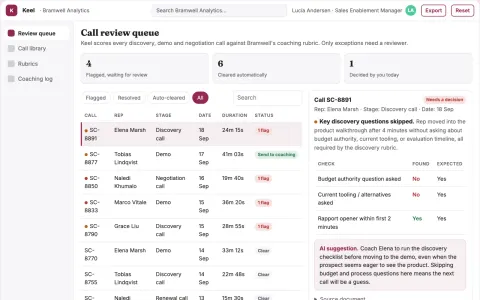
Observable behavior feedback with manager calibration and conversation evidence.
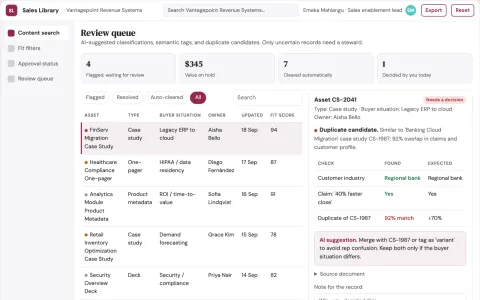
Buyer-situation search with approved claims and current collateral.
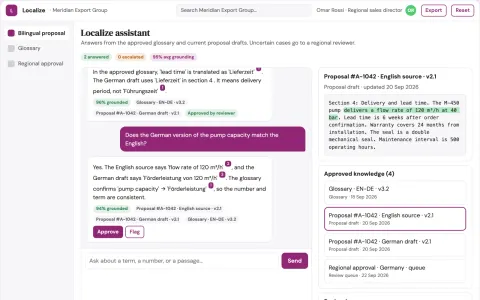
Consistent commercial meaning across localized proposals and presentations.
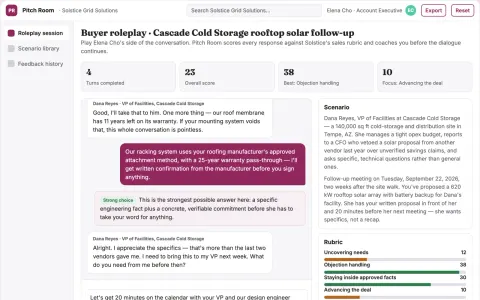
Company-specific buyer situations with factual product boundaries.
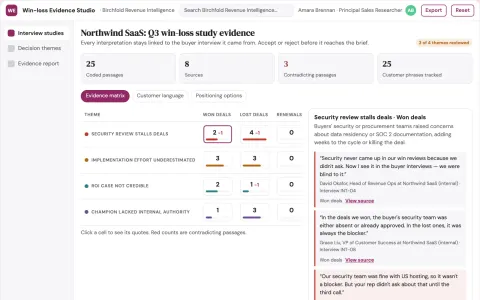
Independent buyer evidence separated from sales team assumptions.