Affiliate Marketing with AI: Free 10-Hour Course to Earn Online (Video Course)
Most affiliate advice is stuck in 2015. This free course shows a faster, quieter system: pick a niche that pays, let AI speed up research and scripts, and negotiate with brands like a real media company. You'll build assets you own, not rented traffic.
Related Certification: Certification in Building Profitable AI-Powered Affiliate Marketing Campaigns
Also includes Access to All:
What You Will Learn
- Select a profitable, sustainable niche using three non-negotiable filters
- Implement a four-part AI production system: research, scripts, teleprompter, batching
- Execute the three-phase monetization plan: affiliate day-one, email list, own product
- Distribute content strategically: own website hub with YouTube and Pinterest spokes
- Negotiate with brands and optimize earnings-per-click, including PPC fundamentals
Study Guide
Welcome To The New Game
Most people still think affiliate marketing means putting a few Amazon links on a tired blog and waiting for pennies to roll in. That version of the game is dead. What works now is faster, quieter, and far more profitable. This course walks you through the full system, from picking a niche that actually pays, to using AI as your production engine, to negotiating with brands like a media company instead of a hobby blogger. The goal is not quick cash. It is a sustainable digital income stream built on assets you own.
Why this matters now
Affiliate channels drive roughly sixteen percent of all online orders, which translates to about one hundred seventy-six billion dollars in annual sales globally. That is not a small niche. That is a massive, hidden layer of the economy. AI has made it possible for one person to do what used to take a team of researchers, writers, and editors. But AI only accelerates the work. It cannot replace genuine human judgment, original evidence, or the trust that comes from actually testing products and sharing honest results. If you understand that distinction, you can build something real.
What you will learn
You will learn how to select a niche using three non-negotiable filters. You will learn a four-part AI-powered content production system. You will understand the three-phase monetization architecture: affiliate income from day one, email list building, and then your own product. You will see how to distribute across Google, YouTube, and Pinterest without spreading yourself thin. You will learn advanced negotiation tactics and the math behind pay-per-click affiliate campaigns. By the end, you will have an action plan that moves you from zero to a compounding content business.
The Core Shift: Affiliate Marketing Is A Real Business
The three parties in every transaction
Affiliate marketing is a performance-based model. Brands need visibility. Publishers, meaning you, create content that sits between a consumer's search and their purchase. Platforms like Google, YouTube, and Pinterest connect that content to consumers. When someone clicks your link and buys, the brand pays you a commission. That simple loop is the foundation of a seven-figure media machine when it is built with depth and consistency.
The old model is broken
For years, the standard play was to find a keyword, rewrite whatever ranked, stuff in affiliate links, and repeat. That worked when Google did not punish thin content. Now, Google explicitly favors unique, non-commodity content. AI-generated mass pages without original evidence or human insight get buried. The new model starts with a real purchasing problem, creates original testing or documentation, and then uses AI to organize, script, and distribute. You are not filling a template. You are building an authority asset.
The advantage you actually have
Large media organizations dominate broad, high-volume terms. They have the brand power and content mass. But they cannot justify publishing one hundred articles on a narrow sub-niche like ATV winches or indoor herb garden lighting. That depth is exactly where an individual operator wins. You go deeper than a media company can justify, and in doing so, you become the definitive source for that specific topic. Topical depth beats topical breadth. That is the entire strategy in one sentence.
Niche Selection: Three Non-Negotiable Filters
Filter one: monetization viability
The niche must contain a population actively spending money online. There must be affiliate programs with meaningful commission structures. A niche like journaling might feel peaceful and content-friendly, but the only purchasable items are basic supplies. There is no real affiliate opportunity. Compare that to personal finance, where credit card affiliate programs pay fifty to four hundred dollars per approved application. One niche writes poems about journals. The other pays your rent.
Filter two: content production feasibility
You need to be able to create content from a fixed studio environment, without a production crew or constant travel. If your niche requires elaborate on-location filming or a full editing team, you will burn out. The best niches let you sit at a desk, turn on a camera or open a document, and produce a valuable piece of content. Travel content works if you reframe it around credit card rewards, loyalty programs, or theme park strategy. You shoot footage once or twice a year and produce videos from your desk the rest of the time.
Filter three: personal sustainability
Ask yourself: would I want to be publicly associated with this topic in five years? You will be creating content about it for three to five years minimum. A student once had to choose between pickleball and sales. Pickleball was a current hobby. Sales was a long-term professional identity. He chose sales because the future identity mattered more than the current enthusiasm. That is the kind of clarity you need. Passion fades. Alignment with who you want to become compounds.
Examples that work
Personal finance offers credit cards, investing apps, retirement accounts, and tax software. Software and technology offer recurring commissions of thirty to forty percent monthly for SaaS products. Travel content works when it is studio-based, centered on credit card rewards and loyalty programs rather than constant travel cinematography. Health and wellness, home improvement, real estate investing, and online education are also strong. The common thread is simple: people spend money in these spaces, products exist at multiple price points, and you can produce content from a desk.
Personal brand versus niche-specific domain
Using a personal brand gives you flexibility. You can pivot between niches as interests and opportunities evolve. People trust individuals more than faceless brands. Every piece of content contributes to your personal authority, even if you change direction. A niche-specific domain feels safer in the short term but becomes a cage if you want to expand. Start with your name or a brand that can grow with you.
AI-Enhanced Content Production: The Four-Part System
Part one: topic research
Do not pick topics based on what you feel like making. Package content based on keywords, competitive research, and real audience demand. Analyze top-performing videos or articles in your niche over the last twelve months. Look for outlier content: small channels with disproportionately high views. Mine comment sections for recurring questions and confusion. Now, with AI tools like Claude connected to YouTube analytics platforms such as VidIQ, you can pull real-time engagement data directly into your workflow. You can generate twenty specific video ideas based on actual audience pain points instead of guessing.
Part two: scripting
AI can generate complete script structures, including hooks, three-part organizational frameworks, cold opens, section transitions, and production notes. The output still requires human editing, but it eliminates the blank-page problem that stalls most creators. A strong intro creates stakes and curiosity. For example: "You pay every bill on time. You have done everything right. But here is the uncomfortable truth: none of these numbers is the one lenders actually care about." That immediately pulls the viewer forward. AI drafts it. You refine it with your voice.
Part three: teleprompter integration
Once the script is ready, flow it into a teleprompter application like Prompter Smart. You read on camera with a natural rhythm because the structure is already solid. This removes the friction between thinking of what to say and actually producing the video. You are no longer improvising. You are executing a planned asset.
Part four: batching
Produce two to four videos or articles in a single session. With AI-assisted research and scripting, each script can be created in about fifteen minutes compared to four hours traditionally. Film two or three videos in one day. Dedicate specific days to filming, editing, and thumbnail creation. A monthly output of four videos can be filmed in one or two dedicated days. Consistency becomes manageable because the assembly line is built.
The human element remains essential
AI assists with frameworks and outlines. It does not replace your testing, your opinions, or your experience. Never publish purely AI-generated content without substantial human editing and personal insight. The moment AI output replaces authentic human insight is the moment you lose your competitive advantage. AI is the production engine. Your experience is the fuel.
Multi-Platform Distribution: Own The Hub, Rent The Spokes
Google and your website are the sun
The core asset remains your owned website. It is the sun in the solar system around which all other platforms orbit. You control it. You can pivot it. You can collect emails from it. Evidence-based content with original methodology ranks through topical authority built via content clusters. Every article you publish is a permanent asset that can generate search traffic for years.
Pinterest as a visual search engine
Pinterest is not social media in the traditional sense. It is a visual search engine where users actively seek purchasing ideas. Recent Amazon-Pinterest integration allows direct product tagging with automatic affiliate disclosure. This opens two paths: pin directly to Amazon products, or pin to your article or video first, then to Amazon. Both work. The content matrix approach multiplies your output: four intent angles times three visual treatments equals twelve unique pins per product cluster. The intent angles are problem, outcome, comparison, and audience. The visual treatments are demonstration, before and after, and checklist. One content piece becomes twelve distribution assets.
YouTube for deep product trust
YouTube provides what Pinterest cannot: deep product trust through visible demonstration. Channels like Vacuum Wars and Project Farm prove that faceless review models built entirely on testing methodology and metric-based analysis can dominate affiliate niches. You do not need to show your face. You need a testing process, clear chapters, and description boxes with affiliate links in order of appearance. Product demonstration with hands shown, testing methodology front and center, and honest disclosure build the trust that converts viewers into buyers.
Distribution strategy
Your website is the hub. YouTube and Pinterest feed it. Do not build your entire business on rented platforms. Use them for visibility, then direct people to your email list and your owned content. The algorithm can change tomorrow. Your website and email list do not.
Affiliate Content Strategy: The Evidence-First Money Page
The old versus the new model
The old model was keyword-first: find a keyword, rewrite ranking results, add Amazon links, publish. The new model is evidence-first: identify a purchasing problem, create original evidence, use AI to organize and distribute. Google has stated that unique, non-commodity content wins. AI-generated mass pages without added value face penalties under abuse policies. You cannot fake authority anymore.
The five components of every money page
First, a specific buyer problem. "Best headlamp for running" beats "best headlamp" every time. Specificity attracts ready buyers. Second, visible methodology. Explain what you tested and how you tested it near the top of the article. Third, original evidence. Photos, measurements, demonstrations, or ownership notes prove real engagement. Fourth, decision segments. Clear categories like "best for beginners," "best value," or "best for a specific use case" help readers decide quickly. Fifth, a clear next step. Prominent affiliate links make the purchase easy. Every money page needs all five.
The earnings per click principle
Do not rank brands by commission rate alone. Rank them by earnings per click, which is total commissions divided by total clicks. A brand offering one hundred eighty-five dollars per sale that never converts is worth less than a sixty-five-dollar brand that converts consistently. One web hosting publisher placed HostPapa at number one because of a one hundred eighty-five dollar per-sale commission versus Bluehost's sixty-five dollar rate. HostPapa generated zero sales from five hundred clicks. The lesson is brutal: brand recognition and conversion capability beat nominal commission rates every time.
Differentiation covers all search intent
A search for "best office chairs" attracts ergonomic-focused professionals, budget-conscious students, executive buyers, and gaming enthusiasts at the same time. Your article must acknowledge each segment to end the search journey. If you ignore a segment, that reader bounces back to Google and your page loses authority. Decision segments solve this by giving each type of buyer a clear recommendation.
Transparency matters
Place clear, concise disclosure near affiliate links. Do not bury it at the bottom or use vague "may earn" phrasing when commissions are guaranteed. Honest disclosure builds trust. Trust is the only thing separating a helpful resource from a spam page.
Joining Affiliate Programs And Managing Links
When to apply
Do not join affiliate programs before your content is receiving traffic. Once an article gets at least one hundred monthly sessions, begin the affiliate strategy. Initial articles can use regular links to product homepages. After traffic is established, swap to affiliate links. This avoids rejection from affiliate managers who want to see a live, functioning site with real content.
The application process
You need a live website with quality content, a branded domain email address, a PayPal account, and a compelling value proposition. Applications ask for your name, company name if applicable, website URL, email address, and a brief description of your business. Be specific. Explain your content plan and how you intend to promote their products.
Following up
Affiliate managers do not always review applications promptly. If you have not heard back in three days, find the affiliate manager on LinkedIn. Send a connection request with a note. Email them directly. The main reason affiliates are rejected is not lack of traffic. It is that the affiliate manager does not trust or recognize the applicant. Direct outreach solves that problem.
Popular brands versus obscure brands
Well-known, mid-price-point products convert best. Niche-specific obscure brands with high commission rates often fail to convert. Choose the three hundred dollar well-known product over the two thousand dollar obscure product. Conversion rate determines profitability, not the headline commission number.
Commission rates and cookie duration
Physical products typically pay one to fifteen percent. Software one-time sales pay fifty to two hundred dollars or more. Software recurring commissions pay twenty to forty percent monthly. Financial products pay high-ticket percentages. Longer cookie durations, thirty days or more, mean you get credit for delayed purchases. Always check both commission rate and cookie duration before committing.
Affiliate link management
Use a tool like Thirsty Affiliates to centralize link management. You can update a link in one place instead of editing dozens of articles. Set links to no-follow and open in a new tab by default. This keeps your site clean for SEO and keeps visitors from bouncing away entirely.
Three-Phase Monetization Architecture
Phase one: affiliate income from day one
Unlike YouTube monetization, which requires subscriber thresholds, or Google AdSense, which requires substantial traffic, affiliate programs become viable immediately upon content publication. Every video or article in a monetizable niche has a natural affiliate angle. Credit card applications, software trials, Amazon product recommendations. The affiliate infrastructure exists before the audience does. You do not need permission to start earning.
Phase two: email list building
Before launching your own products, own your audience through email collection. Lead magnets are free resources exchanged for email addresses. In technology niches, an AI masterclass works. In finance, a comparison PDF works. In practical niches, a checklist works. Your email list is the only audience asset independent of algorithmic control. Google can change its algorithm. YouTube can demonetize you. Your email list remains yours.
Phase three: own product launch
The economic shift from twenty to thirty percent affiliate commissions to one hundred percent profit retention fundamentally alters income ceilings. Create a course or digital product. Validate the topic through audience surveys. Generate curriculum with AI prompts. Film lessons over a condensed period. Platforms like Thinkific let you deploy a course without rebuilding infrastructure. This is where you move from being an affiliate to being the brand.
The revenue mathematics
Consider a channel generating one hundred fifty thousand monthly views. A one percent conversion to email list yields one thousand five hundred new leads monthly. A two percent lead-to-sale conversion yields thirty sales monthly. A one thousand dollar course price yields thirty thousand dollars monthly, which is one thousand dollars per day. Layer affiliate commissions from the same viewers: a half percent conversion generating five to seven thousand dollars monthly. Then add sponsorship revenue of two to five thousand dollars per video. This is the triple-stacked monetization model. Affiliate income keeps the lights on early. Your own product changes your life. Sponsorships become the cherry on top.
Income at smaller scale
You do not need one hundred fifty thousand views. At thirty thousand monthly views, the math still works: roughly five thousand dollars from course sales, two thousand from sponsorships, and two thousand from affiliate commissions. That is about nine thousand dollars monthly. Content that drives affiliate revenue does not require millions of views. It requires targeted traffic with purchase intent.
PPC Affiliate Marketing: The Advanced Tier
How the model works
Pay-per-click affiliate marketing is a fundamentally different business. You bid on Google keywords, send traffic to comparison landing pages, and profit when affiliate commissions exceed advertising costs. You are buying attention instead of earning it through organic search.
The critical distinction
Standard affiliate commission rates almost never support PPC economics. If you pay five dollars per click and earn a three percent commission on a twenty dollar product, you lose money on every click. Viable PPC campaigns require either high-ticket items, where five to ten percent commissions on large principal amounts justify ten dollar or more cost-per-click, or cost-per-lead structures, where brands pay one hundred to two hundred dollars per qualified form submission regardless of eventual purchase.
Example mathematics
Suppose you bid on a retirement account keyword. You get five hundred clicks at a ten dollar cost-per-click, spending five thousand dollars. Those clicks generate five leads at one percent conversion. One lead produces a one hundred thousand dollar retirement account sale at eight percent commission. That is eight thousand dollars in revenue. Your return on ad spend is one point six to one. That is thin but profitable at scale. This is why negotiation and conversion tracking are non-negotiable in PPC.
Campaign setup essentials
Choose website traffic as your objective. Select search network only, not display. Set location targeting to your preferred market. Start with maximize clicks bidding, then switch to conversion-based bidding once you have data. Create ad groups with specific keywords. Use exact match and phrase match, not broad match. Broad match wastes budget on irrelevant searches. Add extensive negative keyword lists to prevent wasted spend.
Landing page structure
Comparison pages for PPC are optimized differently from blog posts. Products appear in order of earnings per click. Affiliate links sit directly on product names and throughout the page. Extra text exists only to satisfy Google quality scores. Remove navigation menus to keep visitors focused on clicking affiliate links. Every element on the page serves one purpose: move the visitor toward a commission-generating click.
Tracking conversions
Conversions occur on the brand's site, which you do not control. You need postback URLs or API integrations connecting affiliate network conversion data back to Google Ads. Without this technical bridge, campaigns remain stuck optimizing for clicks rather than actual conversions. That bridge is the difference between profitable arbitrage and burning money.
Negotiation And Brand Relationships
The power position
Affiliate managers typically hold entry-level to mid-level positions with tenure of one to two years. They have revenue goals tied to their jobs. The blogger often persists through multiple affiliate manager transitions. Brands compete against each other for placement in ranking articles. This gives you more leverage than you realize.
What you can offer a brand
You have three leverage assets. First, adding a brand to an existing high-traffic article. Second, moving a brand higher within an existing article. Third, creating new content featuring the brand. Each of these has monetary value because ranking positions directly influence sales. You are not begging for a partnership. You are offering a placement that generates revenue for the brand.
What brands can offer you
Increased commission rates are the most common and valuable concession. A single email negotiation moving commission rates from twenty percent to forty percent has generated hundreds of thousands of dollars in additional commission over the lifespan of customer relationships. Flat fee sponsorship arrangements can range from five hundred to six thousand dollars or more monthly for prominent placement. Backlinks from brand domains build your authority. Custom landing pages or co-branded promotions can also be negotiated.
Negotiation email framework
Start with a simple outreach: "Hey [affiliate manager name], I write to [X] monthly readers at [your domain]. My article [article name with link] ranks well for [keyword]. Right now your brand is at position five, but I would love to discuss moving you up. Let me know if you are interested in collaborating." For a commission increase after generating sales, say: "I have been generating consistent sales for your brand through my content. What can I do to increase my commission rate? I have the ability to expand my coverage across more articles." Specific, respectful, and backed by data.
Rank by earnings per click, not by commission rate
Regularly evaluate brand positioning based on actual performance. If brand number three has a higher earnings per click than brand number one, move it to the top. Rankings should be optimized based on earnings per click, with the highest EPC brand in the top position. This maximizes total revenue per thousand visitors and gives you a clear, defensible reason to ask brands for better terms or higher placement.
The Algorithm Economy And Building An Algorithm-Proof Asset
Understand platform incentives
Every platform exists to make money. Google earns revenue from ads and increasingly from built-in shopping features. It maximizes revenue by keeping search results useful enough to ensure return visits, not by serving publisher interests. YouTube earns revenue from ad impressions. It optimizes for click-through rate and watch time. Pinterest functions as a visual search engine, optimizing for pin engagement and click-through rates. When you understand why platforms do what they do, you stop fighting them and start serving their incentives while building your own assets.
Strategic implication
Independent publishers compete where large media organizations cannot operate efficiently. A major media company cannot justify one hundred articles on ATV winches alone. An individual operator can, and thereby becomes the definitive authority in that space. You are not trying to outrank Forbes on "best credit cards." You are trying to own "best credit cards for digital nomads with no foreign transaction fees." That is a winnable fight.
Build around assets you own
Your website is the central hub. Your email list is the only audience you truly own. Your personal brand transfers across platforms and niches. Use Google, YouTube, Pinterest, and LinkedIn for visibility, but do not build your entire business on them. Algorithm shifts, platform policy changes, and search engine updates can destroy traffic overnight. An owned email list survives all of them.
E-E-A-T and original methodology
Google prioritizes expertise, authoritativeness, and trustworthiness. Include author credentials at the top of articles. Explain testing methodology. Link to reputable external sources. Create original supporting images. Consumers increasingly distrust promotional content. Third-party validation through visible testing methods, suction metrics, power tests, and original photography establishes credibility that AI summaries and corporate marketing cannot replicate.
The consistency compound
Understand the difference between inputs and outputs. You control inputs: content creation, link building, publishing frequency. You do not control outputs: traffic, conversions, revenue. Sustainable success demands persistent input focus without output discouragement. The early months may show minimal observable return. Compounding arrives only after topical authority thresholds are crossed. Show up when views are small, income has not started, and the algorithm seems indifferent. That patience is the hidden advantage.
The AI Niche Hunter And The 20-Article Framework
Beyond traditional keyword tools
Traditional keyword research from tools like Hrefs has limitations. It is expensive. Everyone uses the same tools and finds the same keywords. Search volumes are frequently inaccurate. It does not provide topical authority mapping. The modern approach uses AI to identify sub-niches and content plans before validating with traditional tools.
The AI niche hunter workflow
Input your broad niche, such as ATVs. AI generates five sub-niche ideas: equipment, maintenance, trail riding, racing, and buying guides. Select one sub-niche. AI generates twenty keyword ideas for both informational and transactional content. AI identifies pillar posts and supporting content. You now have a focused content plan in minutes instead of weeks.
The twenty-article framework
For each sub-niche, publish fifteen informational articles and five transactional articles. Informational content answers questions and builds topical authority: how-to guides, tutorials, explanations. Transactional content contains "best" keywords and affiliate links: product comparisons and recommendations. Add one or two pillar posts: comprehensive foundational guides that serve as hubs. A pillar post might be "The Ultimate Guide to Herb Gardening for Beginners" for informational authority, or "The Best Indoor Herb Gardening Kits" for transactional authority.
Internal linking structure
All supporting articles link to the pillar post. More links point up to the pillar than down from it. This signals to Google which pages are most important. If you have written fifty articles about ATVs, you will rank faster for UTV content than a brand-new site would. Topical authority compounds across adjacent topics.
Content creation workflow
Input your target keyword into an AI content generator. AI produces a title, meta description, introduction, H2 headings, and conclusion. Fill in the middle sections with personal experience or AI-assisted paragraphs. Add original images, screenshots with annotations, or AI-generated visuals. Optimize for readability with short paragraphs, clear subheadings, and prominent buttons. Publish consistently. Review performance monthly and adjust priorities based on data.
Scaling strategy
Start with one sub-niche. Dominate it. Then move to an adjacent sub-niche. Build broader authority over time. Do not spread yourself across unrelated topics too early. The contextual relationship between ATVs and UTVs helps you rank faster in the adjacent space. That is how small sites become recognized authorities.
Putting It All Together: Your 90-Day Action Plan
Immediate actions for content creators
Select one sub-niche and commit to producing twenty articles, fifteen informational and five transactional, before expanding into adjacent content areas. Use AI tools strategically for niche validation, keyword discovery, article outlining, and script generation. Never use AI output as final published content without substantial human editing and personal insight injection. Establish a consistent publishing schedule: minimum two articles or one video weekly, with monthly review of engagement metrics to adjust topic priorities. Begin affiliate account setup upon first article publication. You do not need millions of views. Apply for programs relevant to produced content and follow up with affiliate managers via email or LinkedIn when applications go unanswered.
For established publishers
Negotiate commission increases after generating any consistent sales or meaningful clicks. Build the email list immediately with lead magnets and exit-intent popups from launch. Create media kits once monthly visitors exceed one thousand, with documented rates for branded content, newsletter features, and article placements. Treat every placement as a real estate decision: the value of a position is tied to the cost per click of the keyword you rank for.
Monthly content cycle
Week one: plan next month's content across the sub-niche. Weeks two through four: execute production at two to three articles per week. Month end: review analytics, adjust strategy, plan next month. Use Google Analytics to track individual article performance. Which topics are gaining traction? Which underperform? Data-driven pivoting beats stubborn consistency in the wrong direction.
The mindset that separates winners
This is not a get-rich-quick scheme. It is a business-building framework that rewards consistency, authenticity, and strategic thinking. The people who succeed are not those with the best cameras or the most sophisticated tools. They are the ones who understand what they are building toward and show up consistently, even when results are small and income has not started yet. Every piece of content becomes a permanent asset. Videos continue generating views and affiliate clicks indefinitely. Articles rank and attract search traffic for years. Email subscribers are owned contacts that can be monetized repeatedly. Courses create scalable, repeatable revenue. This library of assets compounds over time, and each new piece adds to the revenue-generating base.
Conclusion: The Durable Advantage
The affiliate marketing landscape now represents both an expansion of opportunity and a consolidation of competitive dynamics. AI tools have democratized production capabilities that previously required teams. A single operator can compete in specialized content niches that large organizations cannot efficiently serve. But democratization arrives alongside increasing algorithmic sophistication that penalizes automated content without genuine human insight. The durable advantage lies not in any single metric or tool. It lies in the combination of deep topical focus, authentic methodological credibility, AI-accelerated production, multi-platform distribution, and systematic monetization architecture.
What has always worked still works
Helpful content in defined topical areas, original evidence, consistent publishing, and genuine audience relationships will continue working in the algorithm economy. AI serves as the accelerant, not the substitute. The path requires patience through early low-return months, discipline in maintaining publishing schedules, and strategic courage in negotiating with brands from positions of leverage that genuinely help both parties.
Your next step
Pick the sub-niche you can commit to for three to five years. Run it through the three filters: monetization viability, production feasibility, personal sustainability. Then use AI to map twenty articles, build the assembly line, and start publishing. Set up affiliate links from day one. Build the email list immediately. Launch your own product when the audience tells you what they need. The system is not complicated. It requires execution. That is the only thing standing between you and a real digital income stream.
Frequently Asked Questions
This FAQ section addresses the most common questions that arise when building an AI-accelerated affiliate marketing business. It covers foundational concepts, niche selection, content production, monetization mechanics, traffic channels, negotiation, and scaling. Use it as a quick reference while working through the course material.What is affiliate marketing, exactly?
Affiliate marketing is a performance-based revenue model where a content publisher (a blogger, YouTuber, or other creator) promotes products from brands and earns a commission when a sale or lead happens through their unique affiliate link.
The transaction works like this: a reader searches for information about a product category (often "best hiking boots" or "best email marketing software"). They land on an article that compares options. They click an affiliate link, which stores a cookie in their browser. If they purchase within the cookie window (typically 30 to 90 days), the brand's tracking system credits the publisher and pays a commission.
From the brand's perspective, this model is financially efficient. A brand paying 10% commission on a $100 sale spends only $10,a return that beats most paid advertising. Many software companies generate 30-50% of revenue through affiliate partnerships.
Why do brands participate in affiliate marketing?
Brands participate because affiliate marketing expands their visibility in search results where they cannot rank themselves. When a consumer searches "best hiking boots," only one or two results might belong to the brand itself,the other eight or nine positions on page one are occupied by publishers and review sites.
A brand's ideal scenario is to rank for its own product category and also appear as the top recommendation in every affiliate article targeting that search term. This dynamic drives the entire affiliate economy. Affiliate marketing functions as an external, commission-based sales team. Brands only pay after a sale occurs, making it one of the most cost-effective channels available.
What key metrics and components should every affiliate understand?
Four core concepts form the foundation of affiliate marketing literacy:
Commission Rate: The percentage or flat fee a brand pays per sale. Physical products typically range from 3-15% (Amazon tends to be lower at 1-8%, while individual outdoor brands like REI often pay 8-10%). Software products frequently pay 20-40%, sometimes on a recurring monthly basis.
Cookie Duration: The length of time after a click that the publisher can still be credited for a sale,commonly 30, 60, or 90 days. Amazon's window is notably shorter, requiring either an immediate purchase or the item to remain in the cart.
EPC (Earnings Per Click): The most important optimization metric. It's calculated as total commissions earned divided by total clicks sent to a brand. This reveals which products in a comparison article actually generate the most revenue per visitor click.
Conversion Rate: The percentage of clicks that result in a sale. Typical e-commerce conversion rates hover around 2%, meaning roughly 1 in 50 affiliate link clicks leads to a purchase. Software products often convert at 1% or less because they involve trials before sales.
How does the "numbers game" of affiliate marketing work in practice?
Affiliate marketing operates on measurable, scalable math. Consider a treadmill review article ranking on page one.
If a keyword has 10,000 monthly searches, the top result typically captures 50-70% of clicks, bringing about 5,000 visits. Of those visitors, perhaps 50% click an affiliate link,2,500 clicks sent to brands. At a 2% conversion rate, that yields 50 sales per month. If the average treadmill costs $1,000 and the commission rate is 10%, the publisher earns $100 per sale, totaling $5,000 monthly from that single article.
The formula makes clear why search intent matters: higher-priced products generate substantially more revenue per sale, but only if the brand converts. Popular, mid-priced items with strong brand recognition often outperform expensive, obscure alternatives because they convert at higher rates.
What makes a niche viable for affiliate marketing?
A niche must satisfy three criteria to be profitable:
1. People are spending money in the niche. There must be a range of products or services with meaningful price points. A niche with $5 products and no upsell potential will never generate meaningful commissions.
2. Real affiliate programs exist with genuine commission structures. The niche needs brands that actively operate affiliate programs. To verify, search for "[niche] + affiliate programs" online and examine commission rates, terms, and cookie durations.
3. The content can be created from a studio setting. For YouTube creators specifically, content must be sustainable without constant on-location production. The channels that survive are those where a creator sits down, turns on a camera, and teaches. This eliminates the burnout factor common in channels requiring constant outdoor shooting or heavy production.
Strong examples include personal finance, software and technology, travel, health and wellness, home improvement, and specialized hobbies like fishing, hiking, or golf.
How do I choose between multiple niche candidates?
When choosing between options,for example, a hobby like pickleball versus professional experience like sales,consider what you want to be known for in five years. Affiliate marketing requires consistency, and consistency requires genuine interest. If your face is on the website, you need to ask whether you want that identity associated with pickleball or sales for the next three to five years.
If you lack experience in any niche, choose something you are genuinely interested in and learn as you create. The internet is full of beginners, so you only need slightly more knowledge than your audience to be helpful. A beginner learning beekeeping can document that journey authentically and still provide valuable perspectives to other beginners.
What is topical authority and why does it matter?
Topical authority is the Google-recognized expertise in a focused subject area based on the volume of related content. It functions differently from traditional SEO optimization,instead of obsessing over individual keyword metrics, the emphasis is on covering a topic comprehensively across multiple articles.
Big media sites like Forbes, CNET, and Tom's Guide dominate top-level searches ("best laptops," "best credit cards") because they have thousands of related articles. However, they cannot go deep on narrower topics. This creates opportunities for individual publishers: while Forbes may rank for "best VR headsets," it probably won't rank for "best VR headsets for sim racing",that requires too specific a content cluster to justify their resources.
The winning strategy is to go deep where media sites can't. Pick one subniche and publish 20 articles focused specifically on it: 15 informational and 5 affiliate posts. Each article becomes a "chapter in a book," and the cumulative cluster establishes authority that enables ranking across the entire topic area.
What are pillar posts and how do they structure a content plan?
Pillar posts are the foundational articles that anchor a niche's content cluster. Every subniche should have at least two pillars:
An informational pillar post: A comprehensive guide that establishes teaching authority. For a herb gardening niche, this would be "The Ultimate Guide to Growing Herbs Indoors."
A transactional pillar post: The main affiliate revenue driver in the niche. For herb gardening, this would be "Best Indoor Herb Gardening Kits."
All secondary articles should internally link "up" to these pillars. For example, articles about specific herb containers, soil mixes, grow lights, or pruning techniques would all contain links pointing to the ultimate guide and the best kits post. This internal linking signals to Google which articles are most important within the topical cluster.
What is the proper ratio of informational to transactional content?
The recommended starting ratio is 15 informational articles to 5 affiliate (transactional) articles within a 20-article content plan. This emphasis on informational content serves two purposes:
1. It builds topical authority faster, which helps the entire cluster rank.
2. It aligns with Google's stated preference for content that helps an audience rather than content written purely for SEO or monetization.
An affiliate-only site with 20 "best X" articles looks like a content farm to both Google and potential affiliate program managers. A site with helpful informational content plus a few well-placed transactional posts looks like a genuine resource.
What does the "Forbes test" mean for keyword selection?
The Forbes test is a simple filter for keyword competitiveness: if Forbes, CNET, or similar top-tier media sites have covered the topic, ranking for it will be extremely difficult. Forbes has no reason to write about specific cobalt molding tools or VR headsets for sim racing, but they certainly write about "best web hosting" and "best credit cards."
This doesn't mean ignoring all competitive terms. A fishing blog should still have a post about the "best fishing rods" as a pillar post, regardless of difficulty. But the bulk of the content strategy should focus on keywords below that competitive threshold,longer-tail terms where smaller sites can establish a foothold.
How do I find new and emerging keyword opportunities?
Four methods are most commonly used:
The AI Method: Using a framework prompt in Claude or GPT, you can input your niche and receive subniche suggestions, pillar post ideas, and 20 keyword recommendations organized by informational and transactional categories. AI identifies emerging subniches before they appear in traditional SEO tools because it can think contextually about a topic.
The Hrefs Method: Use the keyword explorer to search "best + [niche term]," then filter by low difficulty scores. Look for keywords where a site with a domain rating (DR) of 40 or lower appears on page one,this indicates the keyword is accessible to smaller sites. Limitations: Hrefs is expensive, volumes are frequently inaccurate for new keywords, and if everyone sees the same data, competition builds quickly.
The Trend Method: Google Trends and tools like Glimpse or Exploding Topics reveal what is gaining search volume. Searching within your category for upward trends can surface new products before affiliate sites have saturated the space. Timing is critical,a brand-new keyword may have zero recorded difficulty but will likely become competitive over 1-2 years.
Review Hacking: For software niches, platforms like AppSumo list newly launched tools. Search for these new product names in Hrefs,many will show zero difficulty and minimal competition. A simple "Product X Review" post can rank number one simply because nobody else has written one yet.
How can AI accelerate the content creation process?
AI compresses the four most time-consuming parts of content production:
Topic Research: Instead of manually browsing video rankings and comment sections, a Claude project (with VidIQ synced) can pull real YouTube data, identify outlier videos from small channels, analyze comment threads for recurring themes, filter out bot traffic, and validate search demand,producing 20 specific video ideas based on real audience demand in minutes. The same principle applies to blog topics: AI can generate a full content plan that takes into account subniche relationships, pillar post structure, and informational/transactional balance.
Scripting: Once a topic is selected, AI can produce a complete video hook, three-part outline, and full teleprompter-ready script. The creator's role becomes editing and personalizing rather than generating from scratch.
Course Development: For those at the product-creation stage, AI can generate a complete course curriculum from a single prompt specifying the course title, target student, and desired transformation. A six-module, four-lessons-per-module outline emerges in minutes.
Outlining Articles: By pasting a framework prompt into Claude, creators can get an optimized article title, meta description, written introduction, H2 headings, conclusions, and semantic keyword suggestions for any target keyword.
Certification
About the Certification
Get certified in AI-assisted affiliate marketing. You'll prove you can spot paying niches, use AI to draft research and scripts fast, pitch brands with confidence, and build affiliate assets you own,not rented traffic.
Official Certification
Upon successful completion of the "Certification in Building Profitable AI-Powered Affiliate Marketing Campaigns", you will receive a verifiable digital certificate. This certificate demonstrates your expertise in the subject matter covered in this course.
Benefits of Certification
- Enhance your professional credibility and stand out in the job market.
- Validate your skills and knowledge in cutting-edge AI technologies.
- Unlock new career opportunities in the rapidly growing AI field.
- Share your achievement on your resume, LinkedIn, and other professional platforms.
How to complete your certification successfully?
To earn your certification, you’ll need to complete all video lessons, study the guide carefully, and review the FAQ. After that, you’ll be prepared to pass the certification requirements.
Other AI Video Courses
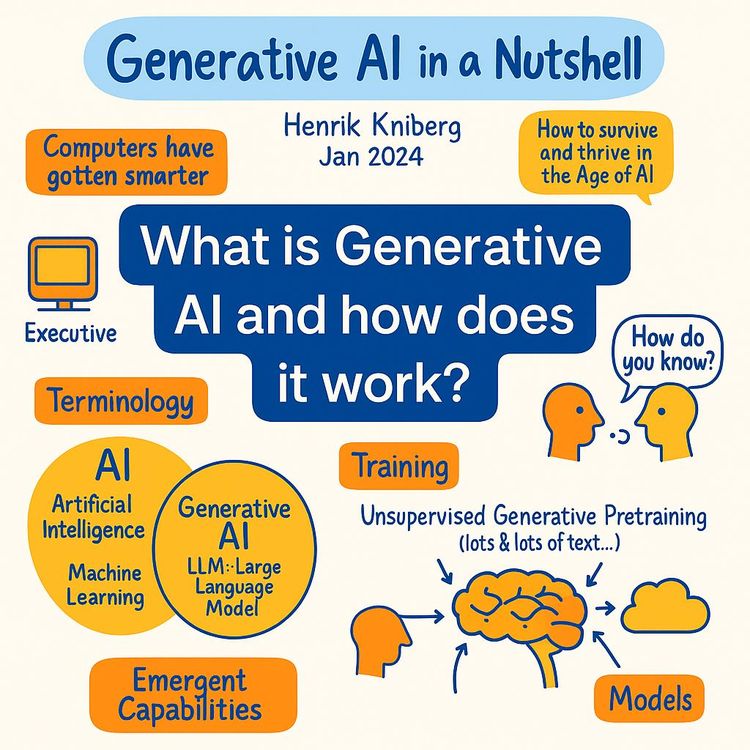
Video Course: What is Generative AI and how does it work?
Video Course: How to Use ChatGPT from Beginner to Professional
Video Course: How to Use Google Gemini for Google Workspace to Boost Productivity

Video Course: How to Use Claude 3.7 AI - Tips for Beginners!

Video Course: ChatGPT for Data Analytics: Full Course - from Beginners to Professional

Video Course: Generating Images and photos With ChatGPT?

Video Course: Generating Images & Photo's with MidJourney

Video Course: Generating Design's with Microsoft Designer and AI

Video Course: Generating Design's with Canva.com and AI
Join 20,000+ Professionals, Using AI to transform their Careers
Join professionals who didn’t just adapt, they thrived. You can too, with AI training designed for your job.