Agentic AI Crash Course: Build LLM Agents with Tools and Memory (Video Course)
Build AI that doesn't just predict,it plans, acts, and adapts. This crash course gives you the blueprint: purpose, memory, tools, guardrails, and evals. Go from idea to a trustworthy "junior assistant" you can ship without guesswork.
Related Certification: Certification in Developing and Deploying Tool-Integrated LLM Agents with Memory
Also includes Access to All:
What You Will Learn
- When to use an agent versus a static workflow
- How to define an agent's purpose (system prompt) and pick the right model/brain
- How to design short- and long-term memory with retrieval and vector stores
- How to build secure, schema-driven tools and sandboxed actions
- How to orchestrate plan→act→observe loops, evaluate outcomes, and trace failures
- How to deploy progressively with guardrails, approvals, canaries, and cost controls
Study Guide
Building Agentic AI Workloads - Crash Course
If you're tired of making "smart" software that only follows a script, this course is your invitation to build systems that think, decide, and do. We're going to build agentic AI workloads from scratch, without fluff,so you can go from idea to working agent, and avoid the expensive mistakes that most teams make when they jump into this space.
Here's the idea in plain language: traditional AI predicts; agents operate. They plan, act, observe, and adapt. That makes them useful for messy, real-world problems where the path isn't obvious. But it also makes them unpredictable unless you design them with the right guardrails, evaluation methods, and architecture.
By the end of this course, you'll know exactly what an AI agent is, when to use one instead of a static workflow, how to architect the core pieces (purpose, brain, memory, tools), and how to safely deploy your first agent as a "junior assistant" that you can trust in production. You'll get the mental models, the pitfalls, and the practical patterns. No hype; just the real thing.
Software 1.0 → 2.0 → 3.0: The Mindset Shift
Before we talk agents, orient your thinking to the new software stack.
- Software 1.0: Humans write explicit rules. If X → do Y.
- Software 2.0: Humans curate data and train models. The "rules" are learned.
- Software 3.0: Humans design prompts, tools, and systems around generative models. The "rules" emerge at runtime and are steered.
Agentic AI lives in Software 3.0. Your leverage comes from how you define the agent's purpose, structure its memory, choose tools, and constrain its behavior,not just from the model itself.
Example 1:
A legacy billing system uses if/else logic to calculate invoices (Software 1.0). You add a fraud model trained on historical anomalies (Software 2.0). Then you deploy an agent that investigates suspicious accounts by querying logs, cross-checking with customer profiles, and drafting outreach emails,adapting its strategy based on what it finds (Software 3.0).
Example 2:
A content team used to write social posts by hand (Software 1.0). They added a fine-tuned classifier to tag topics (Software 2.0). Now, an agent plans a weekly content calendar, pulls insights from analytics, drafts posts, requests human approval for risky statements, and schedules publication (Software 3.0).
Why Generative AI Makes Agents Possible
Agentic systems ride on three pillars that grew exponentially:
- Data: From tiny, task-specific datasets to internet-scale corpora. The models now encode broad human knowledge.
- Algorithms: From small, task-bound models to massive LLMs with emergent capabilities,reasoning, instruction-following, and tool-use.
- Compute: Parallelizable architectures made training these models feasible; serving them via APIs made them accessible.
Two crucial shifts followed:
- From highly specific to broadly capable: One model handles translation, summarization, coding help, question answering, and more,without bespoke training for each task.
- Model-as-a-service: Instead of training your own giant model, you pay per call and focus on building the system around it.
Example 1:
Instead of training a unique model to parse invoices, another to summarize support tickets, and another to generate emails, a single LLM can do all three,then your agent orchestrates the sequence based on context.
Example 2:
A startup can build a powerful research assistant without training a model. With an LLM API, a vector database, and a browser tool, the agent reads papers, compares findings, and drafts memos,good enough to ship.
What Is an AI Agent?
An AI agent is a software entity that perceives its environment, decides what to do next, and takes action to achieve a goal. It runs a loop that looks like this:
1) Plan: Understand the goal, decompose it into steps.
2) Act: Choose and call a tool to execute a step.
3) Observe: Read the result. What changed?
4) Repeat: Update the plan until done,or until it decides to stop.
That "decide and adapt" loop is the difference between an agent and a static workflow. A workflow follows a fixed path. An agent devises the path at runtime.
Example 1:
Goal: "Audit the last quarter's sales anomalies and propose fixes." A workflow might run a preset SQL pipeline and produce a dashboard. An agent queries multiple databases, finds inconsistent schemas, asks for clarification, tries alternative queries, reads internal docs via retrieval, drafts a remediation plan, and requests approval before pushing changes.
Example 2:
Goal: "Plan a low-carb meal week under a budget." A workflow scrapes a recipe site and compiles a list. An agent looks at pantry items, local store prices, dietary preferences, and time constraints, proposes swaps if items are unavailable, and generates a shopping list with alternatives if costs exceed the limit.
Agent vs Workflow: The Practical Difference
If the exact path is predictable, use a workflow. If the problem requires exploration, judgment, and adaptation, use an agent.
Example 1:
"Reset my password." That's a workflow. It must be deterministic, auditable, and fast. No surprises allowed.
Example 2:
"Find three high-ROI partnerships in the fintech space and draft outreach." That's an agent. It needs to search, evaluate, reason about fit, and adapt its approach.
The Spectrum of Autonomy
You don't jump straight to full autonomy. Progress along a spectrum that balances risk, speed, and control.
- Assisted (LLM-only): The model suggests steps; a human executes them.
- Semi-autonomous: The agent can read data and propose actions. It requires explicit human approval for writes or sensitive operations.
- Guarded autonomy: The agent can execute within a sandbox with limits,step budgets, spending caps, role-based access, and real-time alerts.
- Full autonomy (rare in practice): The agent executes end-to-end without human approvals. Only consider in low-risk environments.
Example 1:
A procurement agent starts in read-only mode: it pulls vendor quotes and drafts recommendations. Later, it gets permission to send RFQs under a spending cap with a required human sign-off for anything above the threshold.
Example 2:
An internal analytics agent can run SQL in a read-only replica and create PRs with proposed data model changes. Merges require a human. This gives leverage without risking production data.
The Four Core Components of an AI Agent
Every agent you build rests on four pillars: purpose, reasoning, memory, and tools. Get these right and the rest gets easier.
1) Purpose (System Prompt)
The system prompt is the agent's identity, mission, and rules of engagement. It informs tone, behavior, constraints, and priorities. Invest time here; it's your operating manual.
Best practices for purpose design:
- State the role and desired outcomes clearly.
- List constraints: what the agent must never do.
- Specify how to handle uncertainty: ask clarifying questions, escalate, or stop.
- Give formatting rules for tool calls and outputs.
- Define success metrics the agent can track.
Example 1:
"You are a cautious financial research assistant. You analyze public reports, extract quantitative evidence, and produce neutral summaries. You never give investment advice. If asked for a recommendation, respond with a standardized disclaimer and offer comparable metrics."
Example 2:
"You are a customer support triage agent. Your goal is to understand intent, retrieve policy answers, and propose next steps. For anything involving refunds, returns, or legal claims, route to a human and include a structured case summary."
2) Reasoning and Planning (The Brain)
The LLM is your planner. It breaks goals into steps, chooses tools, adapts strategy, and communicates results. Your job is to pick a model that's capable enough, responsive enough, and cost-effective for your use case,and to constrain it where needed.
Considerations when choosing the brain:
- Reasoning strength: Can it decompose complex tasks and recover from errors?
- Context window: Can it hold enough history and retrieved knowledge?
- Tool-calling: Does it natively support structured tool invocation?
- Latency and cost: Can you meet performance and budget targets?
Example 1:
A marketing research agent benefits from a model with strong summarization, retrieval integration, and decent tool-use. Latency is fine if the output is higher quality.
Example 2:
A real-time chat concierge needs low latency. You might use a smaller, faster model for routine queries and escalate to a stronger model when the problem looks ambiguous or high-stakes.
3) Memory (Short-Term and Long-Term)
LLMs don't remember state unless you give it to them. Memory is how you make agents coherent over time.
- Short-term memory: The conversation history and recent actions within the context window. Manage it with summarization and selective inclusion.
- Long-term memory: Persistent knowledge stored externally,user preferences, past decisions, domain facts,retrieved on demand (often via a vector database).
Memory tips:
- Don't dump entire histories; store distilled facts and source references.
- Separate "facts about the world" from "facts about the user" and from "facts about this project."
- Add recency and confidence scores; keep what proves useful.
Example 1:
A sales agent stores user preferences like "hates long emails," "interested in competitive comparisons," and "timezone: PST." On future interactions, it automatically shortens responses and schedules messages at better times.
Example 2:
A coding agent keeps "project memory" with design decisions, error patterns, and interface contracts. Before proposing a fix, it retrieves past PR summaries and avoids repeating the same anti-patterns.
4) Tools (Actions)
Tools give the agent hands. Without tools, the model is stuck in its head. With tools, it can browse, query, calculate, write, schedule, and transact.
Types of tools:
- Capability extensions: APIs for payments, bookings, email, calendar, Slack, CRM.
- Knowledge augmentation: Retrieval from databases, search, document stores.
- Orchestration: Calling other services, agents, or workflows.
- Local execution: Code, file system, browser automation,use strict sandboxing.
Tool design tips:
- Define strict input/output schemas.
- Enforce idempotency where possible.
- Add timeouts, rate limits, and clear error messages the agent can reason about.
- Start read-only; add write capabilities gradually.
Example 1:
A travel agent has tools: search_flights, check_loyalty_status, hold_reservation, book_ticket, and add_to_calendar. It's only allowed to call book_ticket after a human approval step returns "approved: true."
Example 2:
A research agent has tools: web_search, fetch_url, extract_tables, summarize_pdf, and create_citations. It's required to produce a references section with URLs and quotes for all claims over a risk threshold.
Architectural Patterns for Agentic Systems
You have three broad options: keep it simple with a single agent, coordinate specialists with a supervisor, or let a swarm collaborate. Choose the least complex option that solves the problem.
Single Agent
One agent with a toolbelt. Most problems can live here. It's easier to debug, cheaper to run, and fast to ship.
Example 1:
An internal "report builder" agent that pulls metrics, joins them with CRM data, generates charts, and drafts an executive summary,asking clarifying questions when dimensions are ambiguous.
Example 2:
An HR policy assistant that retrieves answers from a knowledge base, highlights caveats, and routes sensitive topics to a human with a structured ticket.
Multi-Agent: Supervisor Pattern
A supervisor decomposes tasks and delegates to specialists. Workers don't talk to each other,only to the supervisor. Clear control, easier debugging, more overhead.
Example 1:
A product research system where the supervisor assigns subtasks to "Market Trends," "Competitive Analysis," and "Pricing Analyst" workers. The supervisor merges their findings and resolves conflicts.
Example 2:
A compliance review system where the supervisor routes documents to "PII Detector," "Policy Checker," and "Risk Scorer." Each worker returns a structured report; the supervisor produces an audit-ready summary.
Multi-Agent: Swarm Pattern
A group of agents that can communicate directly. More efficient when collaboration is tight; harder to orchestrate and debug as complexity grows.
Example 1:
A software delivery swarm: "Planner," "Coder," "Reviewer," and "Tester." The Coder pings Reviewer for feedback; Tester triggers edge-case checks; Planner adjusts scope when tests fail repeatedly.
Example 2:
A creative studio swarm: "Strategy," "Writer," "Designer," and "Editor." They iterate on campaign ideas, references, and moodboards, converging rapidly on a direction.
When to Use Agents vs Workflows
Use a workflow if:
- The task is mission-critical or heavily regulated.
- The path is predictable and must be deterministic.
- Latency must be minimal and costs tightly controlled.
Use an agent if:
- The task is open-ended or exploratory.
- The execution path is hard to pre-code.
- Some error tolerance exists in the process.
Example 1 (Workflow):
Bank "reset password," "unlock account," or "verify identity." These require strict consistency and traceability. No runtime improvisation.
Example 2 (Agent):
"Investigate churn in enterprise accounts and propose save offers." The agent explores data, interviews past tickets, drafts offers, and flags accounts with high recovery likelihood.
Challenges, Risks, and Guardrails
Agentic systems are powerful but immature. Expect surprises. Build with guardrails from day one.
Main challenges:
- Evaluation: Open-ended outputs are hard to score.
- Debugging: Dynamic control flows make root-cause analysis tricky.
- Cost: Looping behavior makes cost unpredictable.
- Compounding errors: Early mistakes cascade.
- Framework churn: Libraries and models change fast.
- Safety: Real-world tool access creates real-world risk.
Example 1 (Compounding error):
An agent misreads a date format in a CSV, then filters out the wrong rows, then concludes the campaign underperformed, then drafts a "cut budget" memo. One small parse error,big downstream consequences.
Example 2 (Safety incident risk):
A chatbot confidently gives an incorrect policy answer and the company is held responsible. The lesson: don't let an agent speak with authority on topics where it should escalate. Always include a human fallback and clear disclaimers.
Guardrails and best practices:
- Start read-only; progressively add writes with approvals.
- Require human-in-the-loop for sensitive actions (money, data deletion, legal commitments).
- Sandboxed execution for code and browser tools.
- Strict tool contracts with validation, timeouts, and idempotency.
- Step budgets, recursion limits, and watchdogs to break loops.
- Comprehensive logs and traces of thoughts, actions, and observations.
- Clear escalation rules: when to ask, when to stop.
The Complete Build Blueprint: From Zero to Deployed Agent
Use this sequence to go from idea to a trustworthy agent.
Step 1: Define the problem and success
- What job will the agent do? What does "done" look like?
- Metrics: accuracy, latency, cost per task, approval rate, escalation rate.
Example 1:
"Monthly board report assistant that reduces manual effort by 70%, with fewer than 2 factual errors per report, under 10 minutes end-to-end."
Example 2:
"Sales research agent that produces 5 qualified accounts per day with a human acceptance rate above 80%."
Step 2: Decide agent vs workflow
- Map the task steps. Are they deterministic?
- Identify the parts requiring judgment or exploration.
Example 1:
"Generate invoice PDFs" → workflow. "Resolve 'invoice mismatch' tickets" → agent with workflow sub-steps.
Example 2:
"ETL nightly sync" → workflow. "Diagnose data anomalies" → agent.
Step 3: Draft the system prompt
- Role, mission, constraints, uncertainty handling, success definition.
- Format outputs with structured sections and tool-call schemas.
Example 1:
Include a "Check-Your-Work" directive: "Before finalizing, verify each claim has a source, and list them under References."
Example 2:
Include "Escalation policy": "If the tool returns an unexpected schema or a 4xx error twice, stop and ask for help with a concise error memo."
Step 4: Design tools and contracts
- Clear JSON schemas for inputs/outputs.
- Timeouts, retries, rate limits.
- Safe defaults; avoid destructive actions without explicit confirmations.
Example 1:
"book_and_pay" requires fields: item_id, amount, currency, approval_token. Reject if approval_token missing.
Example 2:
"run_sql_readonly" only allows SELECT and blocks DML/DDL. Return error "WRITE_OPERATION_BLOCKED" for forbidden queries.
Step 5: Engineer memory
- Short-term: summarize long threads, keep only what matters.
- Long-term: store user preferences, decisions, domain facts with citations.
- Retrieval: relevance scoring, recency boost, deduplication.
Example 1:
Store "user_pref: email_tone=concise; avoid_jargon=true; preferred_tools=Google Sheets" and retrieve before composing emails.
Example 2:
Store "project_fact: table 'invoices_2023' uses UTC timestamps; parse as ISO-8601." This prevents repeated date errors.
Step 6: Orchestrate the loop
- Implement plan-act-observe with step caps (e.g., 12 steps), recursion limits, and break conditions.
- Add a "stuck detector": if similar actions repeat with little change, propose a new plan or escalate.
Example 1:
If web_search + fetch_url fails 3 times on the same domain, switch to a different source or ask the user for permission to try authenticated access.
Example 2:
If a tool returns "PARTIAL_DATA" twice, branch: proceed with available info and flag confidence as low, or ask the user how to proceed.
Step 7: Knowledge integration (RAG)
- Build a retrieval index for internal docs and FAQs.
- Chunk intelligently; store metadata (owner, updated_by, reliability).
- Pass retrieved snippets with citations into the context.
Example 1:
Legal policy assistant retrieves exact policy clauses and includes the paragraph IDs in its response for verification.
Example 2:
Devops agent retrieves relevant runbooks when an alert fires and cites the recommended procedure before proposing actions.
Step 8: Evaluation strategy
- Offline: golden test sets with inputs, expected outcomes, and acceptance ranges.
- Online: approval rates, escalation rates, cost, latency, and user feedback.
- Scenario tests: adversarial cases, tool failures, permission errors.
Example 1:
Create 50 synthetic "customer refund" scenarios with ground-truth outcomes. Score the agent on policy adherence and tone.
Example 2:
Simulate tool outages: the booking API returns 500 errors. Confirm the agent asks for help instead of looping indefinitely.
Step 9: Observability and tracing
- Log every thought, tool call, result, and decision.
- Store versioned prompts and tool definitions.
- Surface traces to developers and reviewers.
Example 1:
When a user flags a wrong answer, you can replay the trace, see where the plan went off the rails, and patch the prompt or tool error messages.
Example 2:
Token usage spikes? Traces reveal a retrieval loop pulling redundant documents. You fix the retriever and drop costs by half.
Step 10: Safety and approvals
- Role-based access control for tools.
- Human-in-the-loop for writes, payments, deletions, and external communications.
- Spend caps, timeouts, domain allowlists.
Example 1:
Any external email requires "approve_email(content_id)" from a human. The agent includes a summary and risk score to speed review.
Example 2:
Payments over a certain amount trigger a two-step approval and a hard stop if not approved within a defined window.
Step 11: Optimize cost and latency
- Use smaller models for routine steps; escalate selectively.
- Cache frequent answers and retrieval results.
- Summarize context aggressively.
- Batch tool calls where safe.
Example 1:
A chat concierge uses a fast model for greeting and intent detection, but routes complex travel rebooking to a stronger model only when confidence drops.
Example 2:
Cache "top 20 competitor facts" for a week. The agent uses the cache unless the user requests new data, cutting repeated web searches.
Step 12: Deploy gradually
- Shadow mode: run the agent alongside humans; compare outcomes.
- Canary rollout: small percentage of traffic.
- Fallbacks: switch to workflows or humans on errors or risk flags.
- Runbooks: clear procedures for failure modes.
Example 1:
Customer support: the agent drafts replies but doesn't send. Humans approve. After good accuracy, grant autonomy on low-risk intents.
Example 2:
Analytics: the agent generates dashboards and notes, but a human owns final distribution. Later, the agent can auto-send internal drafts with a "confirm to publish" button.
Practical Use Cases and Patterns
Software Development
Agents can help, but they can also create technical debt if left unsupervised. Treat them as junior engineers with strong guardrails.
Example 1:
Code migration assistant: reads the codebase, proposes a migration plan, drafts PRs in small, testable chunks, and runs tests in a sandbox. Human reviews are required for merges.
Example 2:
Bug triage agent: reads issue reports, reproduces errors, finds related code, and proposes candidate fixes with references to commit history. It adds labels and assigns reviewers automatically.
Tips:
- Force small PRs and require tests.
- Store "project memory" of past bugs and conventions.
- Prefer read-only tools plus PR creation over direct writes.
Customer Service
Agents can integrate with calendars, inventory, and policies. The risk is tone and accuracy. Always keep a human fallback.
Example 1:
Reservation concierge: finds options, holds bookings, drafts replies with clear alternatives, and waits for approval to complete a purchase.
Example 2:
Returns assistant: retrieves the correct policy, asks context questions, calculates eligibility, and drafts a pre-approved return label,escalating exceptions to a human with a structured summary.
Tips:
- Attach policy citations to every decision.
- Stop on ambiguity and ask for context.
- Monitor escalation rates and user satisfaction.
Education
Agents amplify learning when they personalize and cite sources. They're not a replacement for critical thinking.
Example 1:
Personal tutor: diagnoses gaps, adapts explanations to the student's learning style, and generates practice problems with step-by-step solutions.
Example 2:
Course builder: ingests a syllabus, maps learning objectives, retrieves reference materials, and drafts lesson plans with assessments and rubrics.
Tips:
- Require citations and allow students to inspect sources.
- Encourage reflection: "Explain your reasoning" prompts.
- Avoid over-automation; keep a human mentor.
Business Operations
Agents can coordinate across internal systems. The trick is proving ROI with clean boundaries.
Example 1:
HR operations agent: parses incoming requests, retrieves the right forms, pre-fills based on employee data, and routes approvals.
Example 2:
R&D scout: scans publications and patents, clusters emerging themes, flags threats and opportunities, and drafts weekly briefs.
Tips:
- Tie outcomes to metrics (time saved, error reductions, conversion lift).
- Start narrow, expand scope after wins.
- Keep tool access scoped per task, not global.
Key Insights to Build By
- Dynamic control flow is the defining feature of agents.
- Tools and memory overcome LLM limits (stale knowledge, statelessness).
- Start with one agent; only add more when complexity actually demands it.
- Treat the agent as a junior assistant,humans own outcomes.
- Start read-only, add approvals, log everything.
- You're working in Software 3.0,prompting and system design are core skills now.
Actionable Career and Team Strategy
You'll build better agents when you upgrade how you think and work.
- Learn AI, don't fear it: Get hands-on with LLMs, retrieval, and tool-calling. Curiosity beats anxiety.
- Focus on fundamentals: Systems architecture, networking, data modeling, and a bit of math help you design safer, more reliable agents.
- Move up the abstraction ladder: Let the agent handle syntax and grunt work. You define the problem, design the system, and own the outcome.
- Think in systems: Fixing one component should not break another. Map dependencies and feedback loops.
- Become a polymath: Cross-domain knowledge makes you a better "agent supervisor."
- Invest in the human element: Trust, empathy, and communication give you a durable edge. AI doesn't replace that.
Example 1:
A product manager who understands database basics and API contracts will design better tools and guardrails for an agent than someone who only writes prompts.
Example 2:
A sales lead who knows marketing analytics can steer an outreach agent to prioritize accounts that fit real revenue patterns, not vanity metrics.
Cost, Latency, and Reliability Management
Cost and speed are not afterthoughts. Design for them up front.
Cost levers:
- Use smaller models for routine steps; escalate selectively.
- Summarize history and retrieved docs to fit tight contexts.
- Cache stable answers and frequently retrieved chunks.
- Limit step counts and tool retries.
Latency levers:
- Parallelize independent tool calls.
- Stream partial responses to users.
- Debounce repetitive queries; coalesce similar requests.
Reliability levers:
- Validate tool inputs before execution.
- Use schema-based outputs and strict parsing.
- Add health checks and circuit breakers.
Example 1:
You slash costs by 40% after discovering the agent was retrieving and summarizing the same internal doc ten times per session. You add a retrieval cache keyed by doc hash.
Example 2:
Latency drops when you batch-check availability across multiple vendors in parallel instead of sequential calls.
Evaluation and Debugging
Better evals = better agents. Treat evaluation as part of the product, not an afterthought.
What to evaluate:
- Task success: Did it achieve the goal?
- Policy adherence: Did it follow constraints?
- Factual accuracy: Are claims supported?
- User experience: Tone, clarity, helpfulness.
- Cost and latency: Within budget and SLOs?
How to evaluate:
- Golden tests: Curated scenarios with expected outcomes and tolerances.
- Rubrics: Define acceptable ranges rather than single answer keys when outcomes are open-ended.
- Shadow runs: Compare agent output with human output before enabling autonomy.
- Traces: Use them to find where the plan failed.
Example 1:
For a support agent, you define a rubric: policy match, empathy tone, and action clarity. Each scored 1-5. Aggregate into a single "ready to send" threshold.
Example 2:
For a research agent, you require citations for all non-obvious claims. If the source is missing or irrelevant, the answer fails evaluation regardless of eloquence.
Security and Safety in Practice
Agents that can act need the same discipline you apply to production systems, plus a little extra.
- Secrets management: Never pass tokens via prompts. Use secure stores and short-lived credentials.
- Principle of least privilege: Grant only the permissions needed for the task at hand.
- Allowlists over denylists: Explicitly define what domains or endpoints are safe.
- Data minimization: Don't feed the model sensitive data unless necessary, and redact wherever possible.
- Auditing: Keep detailed logs of who approved what and when.
Example 1:
The browser tool only allows access to a set of internal domains. External browsing requires a specific "external_browse_allowed: true" flag from a human.
Example 2:
All outbound emails must pass through a "safe sender" service that checks for PII leaks and risky language before delivery.
The Ecosystem: Frameworks, Protocols, and Standards
Frameworks and standards help you move faster with fewer footguns.
- Frameworks: Libraries that handle tool registration, retrieval, memory, and orchestration save time. Choose one with strong community support and stable APIs.
- Protocols: The Model-Context-Protocol (MCP) is an emerging way to standardize how agents discover and safely use tools. This matters because a consistent tool interface reduces glue code and errors.
- Vector stores and retrieval: Pick an option that supports hybrid search, filters, and metadata for access control.
Example 1:
You expose your calendar and CRM as MCP-compliant tools. Now any agent that speaks the protocol can schedule meetings and update contacts without bespoke integrations for each agent framework.
Example 2:
Switching from naive keyword search to hybrid retrieval (semantic + keyword) reduces irrelevant retrievals for policy queries, improving accuracy and speed.
Hands-On Patterns: Two Agent Builds
Pattern A: Research-to-Action Agent
- Purpose: Produce decision-ready briefs with citations.
- Brain: Strong reasoning model with tool-calling.
- Memory: Long-term store of frequently cited sources and past briefs.
- Tools: web_search, fetch_url, summarize_pdf, extract_tables, create_citations, draft_email.
- Guardrails: Require citations for claims; approvals for external emails.
- Evals: Citation validity, completeness, and bias checks.
Example 1:
Investigates a new regulation, compares industry responses, lists risks and opportunities, drafts a plan for internal compliance, and proposes owner assignments.
Example 2:
Scans competitor releases, extracts feature differences, estimates effort to parity, and drafts a roadmap suggestion for internal review.
Pattern B: Data Diagnostics Agent
- Purpose: Detect and explain anomalies in dashboards.
- Brain: Balanced model with tool-calling and SQL proficiency.
- Memory: Project schema mapping and past incident library.
- Tools: run_sql_readonly, plot_timeseries, retrieve_runbook, create_issue.
- Guardrails: Read-only database access; PRs instead of direct changes.
- Evals: Accuracy of root-cause hypotheses and quality of proposed next steps.
Example 1:
Sees a sudden drop in conversions, checks upstream traffic, then payment processor logs, finds a spike in failures, and drafts a ticket tagging the payments team with logs attached.
Example 2:
Notices a seasonal spike that looks scary. Recognizes it from past incidents as normal seasonality, prevents a false alarm, and adds context notes to the dashboard.
Common Failure Modes (and Fixes)
- Over-tooling: Too many tools confuse the agent. Fix: Start with a minimal tool set and grow deliberately.
- Context bloat: Token overflow leads to amnesia. Fix: Summarize, prioritize, and retrieve on demand.
- Looping: Repeating the same action without progress. Fix: Add step budgets, loop detectors, and plan refresh prompts.
- Hallucinated structure: The agent invents fields. Fix: Strict JSON schemas with validation and informative error messages.
- Silent failures: Tools fail quietly. Fix: Make tools loud and specific when something goes wrong; the agent can reason about clear errors.
Example 1:
After giving a support agent 15 tools, success rate drops. You remove 8 rarely used tools and add a planning step that asks, "Which single tool is most promising next?" Success rebounds.
Example 2:
A marketing agent keeps writing long emails despite user preference. You persist "concise=true" in long-term memory and add a prompt rule to check preferences before drafting. Problem solved.
When to Scale Beyond a Single Agent
Push a single agent to its limit first. Move to multi-agent when you see clear bottlenecks.
Signals it's time:
- The agent struggles to juggle diverse specialties (e.g., law + finance + tech) with different tones and standards.
- You need parallel progress from independent workstreams that the planner can't manage efficiently.
- You want strict separation for compliance or auditing.
Example 1:
A due diligence system needs legal, technical, and financial reviews. A supervisor pattern ensures each domain expert agent uses the correct standards and the final report merges cleanly.
Example 2:
A creative studio with multiple deliverables (ad copy, visual design, landing page) benefits from a swarm that can discuss assets in real time and converge faster than a single generalist agent.
Real-World Ethics and Responsibility
Just because an agent can speak or act doesn't mean it should. Set boundaries.
- Honesty: Don't bluff; admit uncertainty and cite sources.
- Consent: Respect user data and preferences. Offer opt-outs and controls.
- Accountability: Humans own outcomes. The agent assists; it doesn't take blame.
- Transparency: Make it clear when users are interacting with an AI and when a human steps in.
Example 1:
Your agent responds to a complex financial question with a disclaimer, a neutral summary of options, and an offer to connect the user with a licensed professional.
Example 2:
On sensitive topics, the wellness assistant uses a safety policy: provides supportive resources, avoids diagnostic statements, and escalates to a human professional when needed.
Practice and Reflection
Multiple Choice
1) What is the primary function of an LLM within an AI agent?
A) Storing long-term user data.
B) Executing API calls to external services.
C) Planning tasks, selecting tools, and reasoning about information.
D) Managing the user interface.
Correct answer: C.
2) What is the main difference between an agentic system and a traditional workflow?
A) Workflows are more expensive to run than agents.
B) Agents use a dynamic control flow determined at runtime; workflows are static and predefined.
C) Only agents can use tools and APIs.
D) Workflows are written in Python; agents are written in natural language.
Correct answer: B.
3) In a multi-agent system, which architecture involves a central agent delegating tasks to specialized subordinate agents?
A) Swarm architecture.
B) Single-agent architecture.
C) Supervisor architecture.
D) Parallel architecture.
Correct answer: C.
Short Answer
- List the four core components of an AI agent and briefly describe the function of each.
- Explain why memory is necessary and the difference between short-term and long-term memory.
- You're building a customer support bot for a bank. Would you choose a workflow or an agentic design for "Reset Password"? Justify your answer.
Discussion Prompts
- Moravec's paradox says tasks easy for humans can be hard for machines. How do agents that handle cognitive tasks fit into that idea?
- What guardrails would you implement to mitigate compounding errors and unpredictable costs in an automated travel booking agent?
Pitfall-Proof Checklist (Use Before You Ship)
- Clear purpose and constraints are written.
- Tool contracts validated with strict schemas and obvious errors.
- Read-only first; approvals for sensitive actions.
- Memory designed: What to store, for how long, and why.
- Retrieval works with citations and metadata.
- Step limits and loop breakers in place.
- Golden tests and scenario tests pass.
- Traces enabled and reviewed.
- Gradual rollout plan with canaries and fallbacks.
- Runbook exists for outages and safety events.
Additional Resources
- Courses and lectures: Agentic design, transformer fundamentals, and practical AI engineering content from leading educators can accelerate your learning.
- Books and writing: Practical guides to building ML and AI systems help you avoid rookie mistakes.
- Frameworks and academies: Libraries and documentation from major AI platforms provide tutorials, examples, and patterns you can adapt.
- Protocols: Keep an eye on tooling standards like the Model-Context-Protocol (MCP); they make tool use safer and more reusable across agents.
Example 1:
Prototype an agent with a popular framework to handle tool registration and tracing. Replace or extend pieces as your requirements mature.
Example 2:
Pilot MCP for your internal tools so your next agent can discover and use calendar, CRM, and ticketing functions without one-off integrations.
Conclusion: Build with Curiosity, Deploy with Discipline
Agentic AI isn't magic. It's the natural next step in software: you tell systems what to achieve, and they plan how to do it. The leverage is massive when you build with intention,clear purpose, capable brain, thoughtful memory, and safe tools,backed by evaluation, guardrails, and progressive autonomy.
Here's what to remember:
- Agents are defined by dynamic control flow. That's the superpower and the liability.
- Tools and memory turn LLMs from talkers into doers.
- Start with one agent and a tight scope; earn your way to multi-agent setups.
- Treat agents as junior assistants. Humans define the problem and own the outcome.
- Build safety first: read-only access, human approvals, strict logging.
- Think in Software 3.0: prompts and systems are your new codebase.
Take one of your recurring, ambiguous tasks and apply this blueprint. Define the purpose. Add two tools. Log everything. Require approval for sensitive steps. Then iterate. The gap between "interesting demo" and "useful in production" is not talent,it's system design and disciplined deployment. You've got both in your hands now. Go build.
Frequently Asked Questions
This FAQ is a practical reference for anyone building or buying agentic AI workloads. It clarifies definitions, compares approaches, explains architecture, and outlines the trade-offs so you can make smart decisions. The questions progress from fundamentals to advanced implementation, with examples and checklists you can apply right away. Each answer highlights the most important takeaways and common pitfalls.
Fundamentals
What are Agentic AI systems?
Definition:
Agentic AI systems are applications with autonomy: they perceive context, reason, plan, and take actions to achieve a goal with minimal oversight. They range from LLMs that control their outputs to full agents operating tools like browsers, file systems, or APIs.
Why it matters:
The more agency you give, the less you hard-code. Instead of scripting every step, you set goals and guardrails, and the agent figures out the path.
Business example:
A sales research agent that reads a prospect's website, compiles insights, drafts a personalized email, and logs it in your CRM,without you specifying each API call.
Trade-off:
More autonomy increases flexibility and speed, but also raises risks and variability. Treat agents like junior assistants: useful, fast, and needing clear instructions plus oversight.
What is a Generative AI agent?
Simple mental model:
It's software with an LLM "brain" that plans tasks, uses tools, observes results, and iterates until the job is done.
Key abilities:
- Breaks big goals into steps
- Calls tools (APIs, databases, calculators, web) when needed
- Updates its plan based on new information
Example:
"Find top three suppliers, compare pricing and delivery terms, draft a negotiation email, and create a summary for my manager." The agent searches, extracts details, checks internal policies, drafts the email, and prepares a one-pager,looping until complete.
Why it's different from a chatbot:
A chatbot answers questions. An agent executes a process and adapts on the fly.
How does an AI agent work?
Core loop: Plan → Act → Observe → Repeat
- Plan: The LLM turns your goal into steps.
- Act: It executes a step, often by calling a tool (API, DB, browser).
- Observe: It reads the result, updates context, and decides what's next.
Why this loop is powerful:
The agent adapts mid-flight. If a tool fails or data is missing, it revises the plan instead of crashing.
Example:
A travel agent tries to book a hotel, sees it's sold out, checks nearby options, compares prices, asks for your budget if unclear, and finalizes a reservation,without you dictating each step.
Guardrails:
Add approvals for risky actions (payments, deletes), rate limits, and fallbacks to keep the loop safe and cost-effective.
What is the core difference between a traditional ML model and a modern Generative AI model?
Three pillars: data, algorithms, compute
- Data: Traditional ML uses task-specific datasets; GenAI is trained on internet-scale corpora covering broad knowledge.
- Algorithms: Traditional models have far fewer parameters; modern LLMs have billions-to-trillions, enabling flexible reasoning and language fluency.
- Compute: Transformer-based training scales efficiently, making these large models feasible.
Practical impact:
One foundation model can summarize, translate, write code, plan tasks, and reason, without training a new model for each job.
Business takeaway:
Instead of building many narrow models, you orchestrate one or a few powerful models with prompts, tools, and data access to handle diverse workflows.
What is the difference between an AI agent and a predefined workflow?
Dynamic vs. static control flow
- Workflow: Fixed steps coded upfront. Predictable, fast, and easier to audit,but brittle when reality changes.
- Agent: Decides steps at runtime based on context. Flexible, adaptive, and better for messy, open-ended tasks,but less predictable.
Example:
Booking activities in a city: a workflow executes a set sequence; an agent searches, checks reviews, handles errors, and pivots based on availability,without being told each condition.
Rule of thumb:
If the path is clear and stakes are high, choose a workflow. If the task is complex or uncertain, choose an agent (with guardrails).
Components and Design
What are the essential components of an AI agent?
The 4-part stack
- Purpose/Goal: System prompt that defines role, tone, and constraints.
- Reasoning/Planning: LLM that decomposes tasks and decides actions.
- Memory: Short-term within the session; long-term across sessions.
- Tools/Actions: Functions/APIs to fetch data and take real actions.
Why this matters:
Missing any piece reduces reliability. Clear purpose prevents drift; good tools break limits; memory keeps context; a strong LLM stitches it together.
Example:
A finance assistant with a compliance-first prompt, long-term memory for user preferences, tools for portfolio data, and an approval step before trades.
What is the role of the Large Language Model (LLM) in an agent?
The brain of the operation
The LLM interprets the goal, plans steps, selects tools, interprets results, and re-plans. Think of it as a strategist plus air traffic controller for actions and data.
Selection criteria:
- Reasoning quality and instruction following
- Context window size for long tasks
- Native tool-calling and function-calling
- Latency and cost for your SLA
- Data privacy and deployment options (cloud vs. private)
Example:
In procurement, the LLM compares quotes, flags outliers, drafts negotiation points, and decides when to ask a human for approval.
Certification
About the Certification
Become certified in agentic AI development. Prove you can design, build, and ship LLM agents with tools and memory, set guardrails, run evals, and deliver a reliable "junior assistant" that plans, acts, adapts, and automates real workflows.
Official Certification
Upon successful completion of the "Certification in Developing and Deploying Tool-Integrated LLM Agents with Memory", you will receive a verifiable digital certificate. This certificate demonstrates your expertise in the subject matter covered in this course.
Benefits of Certification
- Enhance your professional credibility and stand out in the job market.
- Validate your skills and knowledge in cutting-edge AI technologies.
- Unlock new career opportunities in the rapidly growing AI field.
- Share your achievement on your resume, LinkedIn, and other professional platforms.
How to complete your certification successfully?
To earn your certification, you’ll need to complete all video lessons, study the guide carefully, and review the FAQ. After that, you’ll be prepared to pass the certification requirements.
Other AI Video Courses
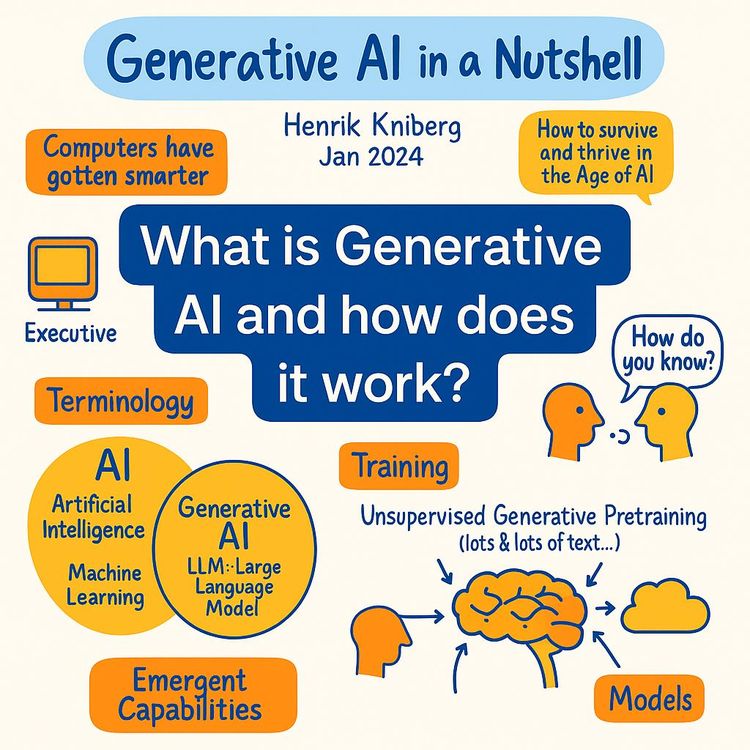
Video Course: What is Generative AI and how does it work?

Video Course: How to Use ChatGPT from Beginner to Professional
Video Course: How to Use Google Gemini for Google Workspace to Boost Productivity

Video Course: How to Use Claude 3.7 AI - Tips for Beginners!

Video Course: ChatGPT for Data Analytics: Full Course - from Beginners to Professional

Video Course: Generating Images and photos With ChatGPT?

Video Course: Generating Images & Photo's with MidJourney
Video Course: Generating Design's with Microsoft Designer and AI

Video Course: Generating Design's with Canva.com and AI
Join 20,000+ Professionals, Using AI to transform their Careers
Join professionals who didn’t just adapt, they thrived. You can too, with AI training designed for your job.