AI Affiliate Marketing: Meta & Google Ads Course for Beginners (Video Course)
Start an affiliate side-business without a product or website. Learn a clear, paid-ads + AI system to pick winning offers, make thumb-stopping video ads, and turn $1 into $2 with simple math, fast testing, and calm scaling. Practical. Real numbers.
Related Certification: Certification in Running and Optimizing AI-Driven Affiliate Ads on Meta & Google
Also includes Access to All:
What You Will Learn
- Vet and pick high-potential affiliate offers using a three-point checklist
- Create AI-powered 30-60s video ads (scripts, voiceovers, visuals)
- Launch and optimize paid campaigns on Meta and Google for consistent ROAS
- Apply EPC, CPC, ROAS, and CPA math to judge profitability and decisions
- Scale winners responsibly while managing tracking, compliance, and retargeting
Study Guide
AI-Powered Affiliate Marketing , Full Course for Beginners
You want a business you can start without building a product, stocking inventory, or waiting forever for a blog to rank. You want predictable clicks, steady conversions, and a simple rule to run the whole machine: if you spend 1, you make 2 back. That's what this course gives you.
We're building Affiliate Marketing 2.0 from the ground up: a paid ads-driven, AI-augmented system that promotes other people's products with a measurable return on ad spend. No pre-existing audience. No website required to start. And no guesswork. You'll learn how to pick high-potential offers, craft video ads using AI, launch and optimize campaigns on platforms like Meta and Google, and scale what works without burning out.
This is a practical, step-by-step training. I'll show you the model, the mindset, and the exact process to turn ad dollars into commissions. Keep an open mind, move fast, and remember the guiding principle: help people solve a real problem and the revenue follows.
The Model: Affiliate Marketing 2.0 vs. Old Methods
Most people still treat affiliate marketing like it's a lottery. Throw up links. Pray. Refresh the dashboard. That worked when the internet was quieter. Not anymore.
Affiliate Marketing 2.0 is a professional, predictable approach built on paid advertising and AI. It moves you from hoping for traffic to buying it intelligently.
What we're not doing:
- Outdated Method 1: Website & SEO. You build a blog, post reviews, and wait months hoping Google sends you a trickle of traffic. Earnings per click are usually pennies. If that's your full strategy, you're capping your potential from the start.
- Outdated Method 2: Link Spamming. Dropping affiliate links in random comments, Reddit threads, or Facebook groups. It gets flagged, banned, and doesn't scale. Even if you land a click or two, it's unpredictable and short-lived.
What we are doing:
- The Modern Approach: Paid Ads. Use Meta and Google to purchase targeted traffic, then let their AI find the people most likely to buy. You control volume with budget. You control message with creatives. You optimize with data. This is how a marketer sold a simple anti-snoring device and generated $44,000 in revenue and $8,000 in profit in a single month. The method works because it's systematic.
Examples:
- Old vs New: Instead of waiting for a "Top 10 Phone Storage Gadgets" blog post to rank, you run a short video ad that hooks attention in three seconds and sends buyers directly to a proven landing page.
- Old vs New: Instead of pasting a supplement link in random comment sections, you launch a Meta campaign targeting broad audiences and let the algorithm learn who clicks and converts while you test 5-10 ad angles.
Mindset: From "Selling" to Solving a Problem
The fastest way to lose money with paid ads is to think, "How do I sell this?" The way to win is asking, "Whose problem can I solve with this product?" That shift changes everything,from the hooks you write to the offers you select.
Your ad is a promise: here's the pain, here's the solution, here's why you can trust it, and here's your next step. When you lead with usefulness, engagement rises. Trust rises. Conversions follow.
Examples:
- Problem-first: "Your phone says 'storage almost full' right before your kid's recital. Don't delete your memories. Back up everything in one click."
- Problem-first: "Waking up exhausted because of snoring? A small device many couples swear by has helped them sleep through the night again."
Money Math You Must Know (EPC, CPC, ROAS, CPA)
Predictability comes from the math. Learn these, and you'll actually know what to test, scale, or kill:
Key terms:
- EPC (Earnings Per Click): Average revenue per click on your affiliate link.
- CPC (Cost Per Click): What you pay the ad platform per click.
- ROAS (Return on Ad Spend): Revenue divided by ad spend. Your north star.
- CPA (Cost Per Acquisition): What it costs you in ad spend to get one sale.
Simple rules of thumb:
- If EPC > CPC, you're likely profitable.
- If ROAS ≥ 2:1 consistently, you're in the green.
- If CPA < commission, you're winning on a per-sale basis.
Examples:
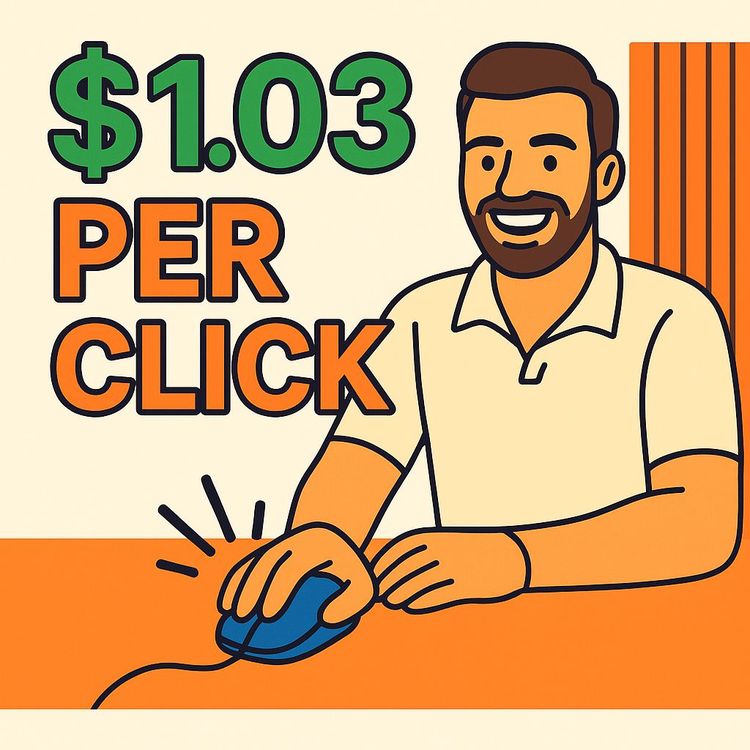
- Performance Example: 343 clicks at $1.03 EPC produced $352 in affiliate income in a day. If your average CPC was $0.50, you spent about $171 to earn $352,strong ROAS.
- Commission Math: If your commission is $60, and your CPA is $45, you keep $15 margin per sale. Scale until your CPA creeps up, then improve the ad and landing page alignment to bring it back down.
Pillar 1: Strategic Product Selection (The Three-Point Checklist)
Your product choice makes or breaks the campaign. We're not guessing,we're vetting offers using a data-backed checklist and real conversations with affiliate managers.
Where to find products:
- ClickBank, Awin, CJ Affiliate, Impact, DigiStore24, GiddyUp. Sign up for 2-3 to start. Browse categories you understand and care about,health, productivity, gadgets, home solutions.
Talk to affiliate managers:
- Ask directly for top-performing offers in your niche. "What are your top 10 products in health and wellness right now?" They know what's converting today. Use their data to shorten your ramp-up.
The vetting checklist:
- Brand Quality: Would you buy from this brand? Search reviews on Google and Amazon. Look for real customer stories and legitimate social proof.
- Video Materials: Does the brand provide a library of demo clips, testimonials, and B-roll? If yes, you can build ads faster and more credibly.
- High Commission: Look for juicy commissions. Strong brands with proven funnels can pay more. ThePhotoStick is a classic example: entry price around $34.99 yet a fixed commission around $63 because the company's average order value is higher. Big commissions signal a mature, profitable offer.
Examples:
- Gadget: ThePhotoStick for mobile backups,strong Amazon reviews, abundant demo videos, and high fixed commissions.
- Health Device: Anti-snoring aid,clear problem, real testimonials, and commissions that give you room to buy data and still profit.
Pillar 2: AI as Your Creative Force Multiplier
AI doesn't replace judgment; it amplifies it. Use AI to draft scripts, generate voiceovers, brainstorm visuals, and accelerate iteration. You keep the steering wheel. AI hits the gas.
Where AI fits:
- Scriptwriting: Feed ChatGPT the product page and your 5-part structure (Hook, Problem, Solution, Trust, CTA). It will write usable draft scripts in seconds.
- Voiceovers: ElevenLabs can produce professional narration without a voice actor. Swap voices to test tone and energy.
- Visual Brainstorming: Ask, "What visuals best match the line 'Your phone says storage almost full'?" You'll get crisp, shot-level ideas to guide editing.
Examples:
- Script Variations: Prompt AI for three hooks,urgent, emotional, and curiosity-based. Use each in different ads to see what clicks.
- Voice Test: Generate one calm, empathetic voiceover for a sleep product and one energetic, direct voiceover. Let the audience tell you which vibe sells.
Pillar 3: Paid Traffic Platforms (Meta and Google)
Meta's algorithm is exceptionally good at finding buyers when you give it a clear signal and enough budget. Google's search and Performance Max can also work,especially for intent-heavy offers. Start with one platform, learn fast, then consider expanding.
How the platform helps:
- Meta: Broad targeting, short-form video, algorithmic learning, and simple scaling. Ideal for problem-solution gadgets and consumer products.
- Google: You capture buyers actively searching. Performance Max and Search campaigns can complement Meta once you've validated your funnel.
Examples:
- Meta First: Launch a set of 5-10 short video ads for a phone backup gadget, then let Meta's AI learn who clicks, watches, and buys.
- Google Follow-Up: After identifying the best angles on Meta, build search ads around high-intent keywords like "how to free phone storage without deleting photos."
Phase I: Product Discovery and Validation
Let's make this actionable. Here's exactly how to choose a product and confirm it has a chance:
Step-by-step:
- Register with 2-3 affiliate networks (e.g., GiddyUp, ClickBank, Impact).
- Filter for your niche and shortlist 5-10 products that look promising.
- Message affiliate managers: request current top performers, EPCs, conversion rates, and any restrictions on traffic sources.
- Apply the three-point checklist to each.
- Pick one product to start. Focus beats scattered effort.
Examples:
- Shortlist: Phone backup gadget, posture corrector, non-prescription sleep aid, kitchen tool with viral potential, pet grooming device.
- Final Pick: The product with genuine reviews, a media kit of video assets, and commissions high enough to advertise profitably.
Phase II: Asset and Campaign Preparation
Now you gather the assets, wire up your tracking link, and prepare to build creative.
Generate your affiliate link:
- Inside the network dashboard, find the offer and generate your unique tracking link. This link credits you for sales. Add subIDs (e.g., subid=ad1_hookA) to trace which ad produced the sale in the network's reporting.
- Advanced: Use a custom domain or shortener to protect against platform filters. Keep it clean and brand-safe.
Examples:
- Simple Link: https://network.com/offer?affid=12345
- Tracked Link with SubID: https://network.com/offer?affid=12345&subid=hook1_visual3
The 5-Part Video Ad Structure (Story That Sells)
Great ads feel like a mini-movie. They grab attention, clarify the problem, present the solution, build trust, then point to the next step.
The structure:
- Hook (1-5s): Interrupt the scroll with specificity or tension.
- Problem: Name the pain the viewer already feels.
- Solution: Introduce the product as the fix.
- Trust: Testimonials, ratings, brand credibility.
- Call to Action: Tell them exactly what to do.
Examples:
- Hook: "Your phone is one notification away from deleting your memories…"
- Hook: "Your partner's snoring? This tiny device changed our mornings."
Examples:
- Trust: "Over 12,000 five-star reviews" overlaid on real user clips.
- CTA: "Tap 'Learn More' to secure yours while it's discounted."
AI-Powered Content Creation (Scripts, Voiceovers, Visuals)
Let's turn the structure into an asset you can launch this week. You'll use AI to speed up the heavy lifting, then refine it with your judgment.
Scriptwriting flow:
- Paste the product URL and key benefits into ChatGPT.
- Ask for three scripts using the 5-part structure: one emotional, one logical, one social proof-heavy.
- Keep the scripts tight: 30-60 seconds.
Voiceover generation:
- Paste your final script into ElevenLabs.
- Choose a voice that matches the product (calm for sleep aid, confident for tech tool).
- Export MP3.
Visual brainstorming:
- Ask AI for 10 specific visuals that match your script lines.
- Gather brand-provided clips and supplement with Storyblocks stock footage if needed.
- Assemble in Canva. Add captions. Always.
Examples:
- Visuals for "storage almost full": close-up of iPhone storage warning, someone deleting cherished photos, relief when backup completes.
- Visuals for anti-snoring: frustrated partner, quick demo of device, restful morning routine with bright light and smiling couple.
Video Editing Essentials (Fast and Effective)
You don't need Hollywood skills. You need clarity, pacing, and alignment between voice and picture.
Editing tips:
- Keep it punchy. Cut every second that doesn't sell the story.
- Caption everything in large, high-contrast text.
- Front-load the hook with motion and bold claims you can support.
- Match visuals to narration line-by-line so the viewer's brain never has to guess what's happening.
Examples:
- Formatting: Upper-third captions in bold white with a subtle shadow for readability.
- Pace: Quick cuts in the first 3 seconds, then 1-2 second shots as you explain the solution.
Phase III: Campaign Launch (Meta First)
With your video ready, it's launch time. Start simple. Let the algorithm learn. Optimize with discipline.
Set up and objective:
- Create or use an existing Meta ad account. Choose a simple objective like Sales or Leads depending on the network's tracking options. If conversions are tough to track, start with Landing Page Views or Link Clicks while you set up deeper tracking.
- Placements: Start with Advantage+ placements unless you know a specific placement outperforms for your niche.
Budgeting:
- Start with a daily budget around two times your commission. If your commission is $60, start at $100-$120/day. This gives Meta enough data to learn patterns and find buyers.
Examples:
- Launch Set: 5-10 ad variations with different hooks and first visuals but the same core message.
- Budget Model: $120/day for five days to gather statistically useful signals, then prune quickly.
The Iterative Testing Process (How You Actually Win)
Most ads won't win. That's not a problem,that's the process. Your job is to test cleanly, read the data, and keep only what proves itself.
What to vary:
- Hooks: First 3-5 seconds. Test urgency, emotion, curiosity.
- Angles: Pain-first, cost-saving, time-saving, social proof.
- Voice & pacing: Calm vs. energetic. 30s vs. 45s.
- First visual: The opening frame heavily influences scroll-stopping.
Decision rules (example):
- Kill if CTR (link) < 0.7% after $20 spend.
- Kill if CPC > 2x your target CPC after $30 spend.
- Keep testing if CTR is strong but conversions lag,try a new angle or check landing page alignment.
- Scale the winner if ROAS ≥ 2 over 3-5 days.
Examples:
- Hook Test A: "Your phone is about to delete your photos." Hook Test B: "Back up 15,000 photos in one click." Keep the winner based on CTR and cost per add-to-cart if trackable.
- Angle Test A: Emotional (memories). Angle Test B: Practical (storage space). Keep whichever drives lower CPA.
Optimization and Scaling (ABO, CBO, Retargeting)
When something works, you don't celebrate,you scale calmly and protect your profits. When something doesn't, you diagnose, fix, or move on.
Scaling options:
- Vertical Scaling: Increase budget 20-30% per day on winning ad sets.
- Horizontal Scaling: Duplicate the winner into new ad sets, test new hooks, or new countries where allowed.
- CBO vs. ABO: Start with ABO (ad set budgets) to control spend per test. Move to CBO (campaign budget) once you have a few proven winners so Meta can allocate budget to the best performers automatically.
Retargeting:
- Set up a simple retargeting ad for viewers who watched 50%+ of your video or clicked but didn't buy (if policies and tracking allow). Use social proof and urgency lightly, never hypey claims.
Examples:
- Retargeting Creative: "Still thinking about saving your photos? Here's what 12,000 customers said after trying it."
- Scale Plan: A winner at $50/day moves to $75, then $100, then $130,watching CPA and frequency. If frequency rises and CTR drops, refresh the creative.
Tracking & Attribution (Simple to Advanced)
Even without a website, you can and should track performance. Start simple, then add sophistication.
Simple:
- Use subIDs in your affiliate links to tag each ad variation.
- Check EPC, conversions, and refunds in the affiliate network dashboard. Compare to ad spend in Meta to calculate ROAS.
Advanced:
- Use a tracker (Voluum, RedTrack, similar) to manage links, UTMs, and postbacks from the affiliate network. This can improve attribution and guide optimization when the ad platform can't see final sales directly.
- If the network supports server-to-server postback, configure it so each sale pings your tracker with the subID,now you know exactly which ad sold.
Examples:
- UTM Naming: utm_campaign=photostick_launch&utm_ad=hook_emotional&utm_content=visual_warning_popup
- Kill Signal: If subID data shows 150 clicks and zero sales for a hook, retire it even if CTR is high.
Compliance & Risk Management (Stay in Business)
Great marketers stay compliant. That keeps accounts healthy and campaigns live.
Guidelines:
- Avoid exaggerated claims, before/after promises without proof, and sensitive targeting statements.
- Use brand-approved assets and messaging when provided.
- Use a custom domain for links to reduce the chance of disapprovals.
- If you send traffic to a bridge page, include clear copy, fast load speed, and respect policies. Keep it honest and helpful.
Examples:
- Acceptable Claim: "Back up your photos in one click." Not acceptable: "Guaranteed to save every file instantly, no matter what."
- Bridge Page: A clean explainer with 3 benefits, 2 testimonials, and a single button to the offer,no aggressive popups.
Troubleshooting: Fixing the Usual Problems
When the numbers dip, don't panic. Diagnose. Adjust. Move.
Low CTR (people aren't clicking):
- Improve the first frame: clearer visual problem or bigger promise you can substantiate.
- Test bolder hooks. Shorten the setup. Use motion graphics or pattern interrupts.
Good CTR but no sales:
- Misalignment: Your ad angle might not match the landing page's promise. Re-cut your ad to mirror the page's headline and benefits.
- Audience quality: Tighten placements or improve the trust segment of your ad.
High CPC:
- Creative fatigue: Refresh the hook and first 5 seconds.
- Relevance: Make the problem more specific to self-qualify the right people.
Examples:
- Fixing CTR: Replace a generic opening shot with the iPhone "Storage Almost Full" pop-up filling the screen.
- Fixing Conversions: If your ad promises "one-click backup" but the landing page leads with "advanced archival technology," sync your language to emphasize simplicity.
Case Studies and Scenarios (Numbers That Teach)
Let's walk through a few concrete scenarios so you can see the model working under different conditions.
Case 1: Anti-Snoring Device
- Channel: Meta
- Strategy: Multiple short videos highlighting the partner-friendly solution and morning energy benefit.
- Result: One marketer produced $44,000 revenue and $8,000 profit in a month. The lesson: clear problem, simple device, social proof, and consistent testing can create a reliable income engine.
Case 2: Phone Backup Gadget
- Data Snapshot: 343 clicks in a day, average EPC $1.03 → $352 income. If CPC is $0.50, ad spend ≈ $171 → profit ≈ $181 for the day.
- Angle Tests: Emotional "memories" vs. time-saving "free up space." Emotional angle wins with higher CTR and lower CPA.
- Optimization: Scale the winner by 20% daily while rotating new hooks every few days to avoid fatigue.
Case 3: Digital Productivity Course
- Commission: 40% on a $150 offer → $60 commission.
- Budget: Start $100-$120/day.
- Creative: Hook around "10 minutes to organize your entire week," proof through testimonials, and a short demo screen-record.
- Result: Early CTR good, conversions lagging. Solution: align ad promise with landing page headline and add micro-proof (student outcomes). CPA drops below commission → profitable.
Creative Angles and Hook Library (Use and Adapt)
When in doubt, scan this list, pick two, and film them today.
Hooks to test:
- "You're one pop-up away from losing your photos."
- "This tiny device helped us sleep through the night again."
- "The fastest way to clear space without deleting a single memory."
- "My partner tried everything. This finally worked."
Angles to test:
- Emotional: Memories, relationships, relief.
- Logical: Time saved, steps removed, cost vs. alternatives.
- Social Proof: Real reviews, media mentions, user clips.
- Demonstration: Step-by-step in under 20 seconds.
Examples:
- Emotional Frame: "Your kid's first steps don't belong in the trash folder."
- Demonstration Frame: "Plug in, tap backup, done. That's the whole process."
From Single Ad to System (Process Over Luck)
Luck fades. Process compounds. Here's how to build a repeatable workflow you can run each week.
Weekly rhythm:
- Monday: Review top metrics (CTR, CPC, CPA, ROAS). Kill losers. Identify one winner.
- Tuesday: Create 2-3 new hooks for the winner. Produce with AI tools in hours, not days.
- Wednesday: Launch new variations. Keep budgets controlled.
- Thursday: Check subIDs, EPC, and ad metrics. Prune.
- Friday: If ROAS holds, scale winners. If not, run a new angle over the weekend and gather data.
Examples:
- Naming Conventions: prod_hook_memories_vo_calmpace_visual_warning_v1. You know exactly what you're testing at a glance.
- Iteration: Replace only one variable per test (e.g., first 5 seconds). Keep the rest constant for clean learning.
For Entrepreneurs, Brands, and Educators (Applications)
This framework isn't just for affiliates. It helps anyone who touches customer acquisition.
Entrepreneurs & Marketers:
- Build revenue without product development or customer support overhead.
- Use paid ads and AI to create a predictable pipeline of clicks and conversions.
Brands & Businesses:
- Attract quality affiliates by paying strong commissions, providing video libraries, and supporting them with data and creative guidance.
- Your best affiliates will run the same system you're learning here.
Educators & Programs:
- Use this as a case study in real-world advertising and AI-assisted content production.
- Teach EPC, CPA, ROAS with live examples and iterations.
Examples:
- Brand Offer Pack: A Google Drive folder with product demos, lifestyle clips, testimonial reels, logo files, and messaging guidelines.
- Affiliate Onboarding: A simple PDF with top angles, best hooks, average order value, and approved claims,so affiliates can start fast.
Actionable Recommendations (Your Quick-Start Plan)
Here's the exact sequence I recommend to get moving this week.
1) Network Registration:
- Sign up at GiddyUp, ClickBank, and Impact. Verify your profile and payment details.
2) Product Selection:
- Choose one product that passes: Brand Quality, Video Materials, High Commission. Confirm you're allowed to run Meta/Google traffic.
3) Asset Generation:
- Create your affiliate link. Add subIDs for each ad variation. Optionally route through a custom domain for cleanliness and stability.
4) AI-Powered Creative:
- Draft three 30-60s scripts with ChatGPT using the Hook-Problem-Solution-Trust-CTA structure. Generate 2 different voiceovers in ElevenLabs. Assemble in Canva with captions.
5) Initial Campaign Launch:
- Create a Meta campaign. Start with a daily budget around two times your commission. Use Advantage+ placements, broad targeting, and your 5-10 creative variations.
6) Iterative Testing:
- Monitor CTR, CPC, and any purchase signals from your network. Kill obvious losers quickly. Scale the one that hits your ROAS goal. Keep making new hooks.
Examples:
- Launch Pack: 5 videos x 2 voices = 10 ads on day one, each with a unique subID.
- Kill Rule: Any ad spending $20 with CTR below 0.7% exits the test pool.
Advanced Tracking (Optional but Powerful)
Once you're profitable, consider tighter attribution to push growth.
Tools and tactics:
- Use a tracker for link management and postbacks. Configure S2S postback with your affiliate network so conversions get tied back to subIDs automatically.
- Map subIDs to ad names. Keep a spreadsheet or use your tracker's dashboards for a clean view of winners.
Examples:
- Postback Setup: Network sends sale event to tracker with subid=hook_memories_v3, so you know exactly which creative closed the sale.
- Creative Budgeting: Shift spend toward subIDs with the highest EPC and stable CTR.
Google Ads Add-On (When to Expand Beyond Meta)
After you find a winning angle, layer Google to capture intent and expand reach.
Where to start:
- Search: Target problem-aware keywords like "how to back up phone photos easily."
- Performance Max: Feed winning assets from Meta and let Google place them across YouTube, Display, Search, and Discover.
Examples:
- Search Ad Copy: "Free Up Phone Storage Without Deleting Photos , Simple One-Click Backup."
- YouTube Short: 15-second cutdown of your best Meta ad with the same hook and CTA.
Creative Quality Without Burnout (Sustainable Production)
You don't need a studio or a team. You need a repeatable system that keeps ads fresh without draining you.
Systemize the work:
- Keep a living library: hooks, angles, testimonials, brand clips, stock shots, music beds, and caption templates.
- Batch production: Record or assemble multiple variations in one sitting. Change only one variable per ad to learn cleanly.
Examples:
- Hook Bank: 25 hooks per product stored in a doc. Every week, pick 3 and ship new ads in hours.
- Caption Template: Bold font, brand color highlight, always on-screen within the first second.
Trust Building (Proof Beats Hype)
Trust is the multiplier. You earn it with relevance and proof, not louder promises.
What to include:
- Real reviews with names (where permissible), star ratings, and short quotes.
- Quick credibility: "Trusted by 100,000+ users," "Featured in [credible media]," or "Top-rated on Amazon",only if true and permitted.
Examples:
- On-Screen Proof: Overlay "12,317+ 5-star reviews" while showing a scrolling review list.
- Short Testimonial: "I freed 26GB and didn't delete a single photo."
Common Niches That Work (Choose Wisely)
While any great product can work, some categories consistently deliver because the pain is universal and easy to demonstrate.
Consistent performers:
- Gadgets that solve an everyday problem (backup devices, posture support, kitchen tools).
- Health & sleep improvements that are non-prescription and demonstrable.
- Digital tools with clear time-saving benefits (password managers, organization systems).
Examples:
- Gadget: Compact blender for quick smoothies,fast demo, visual result, mess reduction angle.
- Health: Light therapy alarm clock,gentle wake-up angle, user stories, and clear benefit.
Ethical Marketing (Long-Term Game)
Long-term affiliates don't push products they wouldn't use themselves. If you wouldn't recommend it to a friend, don't run it to strangers. Your reputation,even as an anonymous advertiser,shows up in your metrics.
Principles to keep:
- Help the viewer first,acknowledge the real problem and offer a legitimate fix.
- Under-promise, over-deliver,let the landing page and product do the heavy lifting, not wild claims.
Examples:
- Honest Framing: "It won't turn your mornings into a vacation, but it might help you sleep through the night again."
- Integrity Test: If a brand's reviews are shady or refund rates are high, skip it,even if the commission looks attractive.
Practical Templates You Can Copy
Use these as your starting point. Customize per product and brand rules.
AI Script Prompt:
"You are a direct-response scriptwriter for social video ads. Write three 45-second scripts for [PRODUCT URL]. Structure each as Hook, Problem, Solution, Trust, CTA. Make Hook variations: emotional, logical, social proof. Keep sentences short. Avoid medical claims. Keep it authentic."
Meta Launch Checklist:
- 5-10 video variations (different hooks/first frames)
- Captions on all videos
- Daily budget ≈ 2x commission
- SubIDs added to each link
- Kill rules set (CTR, CPC, CPA thresholds)
Post-Launch Routine:
- Check metrics daily for 20 minutes
- Kill or scale according to rules
- Create two new hooks every 48-72 hours
Deep-Dive: The Commission Signal
High commissions are not just about profit,they're a signal. Mature brands with strong funnels, upsells, and repeat purchases can afford to pay more because their average order value and lifetime value are higher.
What to look for:
- Fixed commissions above $50 are often a green flag for scalable paid traffic.
- Flexible CPA deals from affiliate managers can be negotiated once you prove volume.
Examples:
- ThePhotoStick Paying ~ $63 Commission: Indicates confidence in funnel and average cart value.
- Health Device Paying $80+ CPA: Usually backed by high conversion rates and strong post-purchase flows.
Trusting the Platform's AI (Let It Work)
Give the algorithm room to learn. Short-circuiting it with frantic changes prevents it from finding quality users.
Best practices:
- Avoid tinkering every few hours. Let ads run to your initial spend thresholds before judging.
- Keep targeting broad at first. Your creative should qualify the viewer. The platform will find similar people.
Examples:
- Broad Targeting: No narrow interests, just your creative speaking directly to the problem and solution.
- Learning Phase Discipline: Don't pause or edit winners too early. Small scaling increments keep performance stable.
From One Winner to a Portfolio
Once you have a winner, you have two levers: deepen and widen. Deepen means more creatives and angles. Widen means more products and platforms.
Deepen:
- Build 10-20 hooks around the same product. Test seasonal angles, UGC-style videos, different voices, and fresh first frames.
Widen:
- Add a second product that meets your checklist. Reuse your production process. Consider layering Google once your Meta machine hums.
Examples:
- Deepen: For the snoring device, test angles like "save your relationship," "wake up energized," and "finally sleep through the night."
- Widen: Add a posture corrector with similar storytelling: pain (back ache), solution (simple daily use), trust (reviews), CTA (limited discount).
Frequently Asked Questions (Quick, Real Answers)
Do I need a website?
No. You can start by sending traffic directly to the offer with your affiliate link. Long-term, a simple bridge page or custom domain can help with compliance and tracking.
What if I have a small budget?
Start with one product and 5-6 variations. Use strict kill rules. Reinvest profits. The goal is to learn fast, not to spend wildly.
How long until I see results?
You can see signals within days. Profitable consistency comes from testing. Find one winner, then scale calmly.
Can I run this part-time?
Yes. Batch your creative production and set daily check-in times. AI reduces the time you need to create and iterate.
Examples:
- Small Budget Plan: $60 commission product, $100/day for 3 days to test 6 ads. Kill obvious losers and keep iterating hooks.
- Part-Time Rhythm: Two evenings per week creating scripts and videos, 15-minute daily metric check.
Verification: Did We Cover the Framework?
We focused on predictability and scalability through paid ads. We replaced guesswork with a simple model: spend $1 to make $2 back. We showed the three pillars,mindset, product selection, and AI across the workflow. We addressed the old methods and why they stall. We went deep on the product checklist (brand quality, video materials, high commission), named specific networks (ClickBank, Awin, CJ Affiliate, Impact, DigiStore24, GiddyUp), and stressed talking to affiliate managers for top offers.
We generated affiliate links, added subIDs, and mentioned custom domains. We built ads with the 5-part structure, used AI for scripts, voiceovers, and visual ideas, and edited with Canva and Storyblocks while always adding captions. We launched on Meta, detailed budgeting at about two times your commission, and set expectations for iterative testing (5-10 variations) to find the single winner. We covered key stats, the guiding profitability goal, and a standout case study. We explained implications for entrepreneurs, brands, and educators, then handed you a practical action plan to start now. You have everything you need to run Affiliate Marketing 2.0 like a pro.
Conclusion: Turn Knowledge Into Income
You now have a working blueprint for AI-powered affiliate marketing: pick the right product, frame it as a solution to a real problem, build tight creative with AI, launch with discipline, and optimize with simple math. No waiting months for SEO. No spamming. Just a controllable system you can grow with confidence.
Start small: one product, a handful of ads, and a budget that buys you learning. Let the platform's AI do its job. Use your creativity and integrity to craft messages that help people. Iterate faster than most people are willing to. That's the game.
If you spend 1 and make 2, you don't need a grand plan,you just need repetition. Find your first winner. Then build your portfolio. This is not theory. It's a system. Run it.
Appendix: Quick Reference Examples
Example Hooks:
- "Your phone is one alert away from losing your favorite photos."
- "This tiny thing helped us finally sleep,without pills or surgery."
Example CTAs:
- "Tap 'Learn More' to see how it works and get yours."
- "Click now to back up everything in one click,before you need to."
Example Kill Rules:
- Pause any ad with CTR (link) below 0.7% after $20 spend.
- Pause any ad with CPC above your target by 2x after $30 spend.
Example Scaling Rules:
- Increase budgets by 20-30% daily on winners with stable ROAS ≥ 2.
- Duplicate winners and test a new hook every 48-72 hours to avoid fatigue.
Frequently Asked Questions
This FAQ curates clear, practical answers to the most common questions about AI-powered affiliate marketing with paid ads. It's structured to help you move from first principles to profitable execution, covering product selection, creative production with AI, ad setup, optimization, compliance, and scaling. Use it to get unstuck quickly, avoid common mistakes, and make smart decisions based on data rather than opinions.
Part 1: Foundational Concepts
What is affiliate marketing?
Definition:
Affiliate marketing is a commission-based model where you promote another company's product and get paid when a purchase is made through your unique link. You don't handle inventory, support, or fulfillment,your job is driving qualified traffic that converts.
Why it works:
Brands get sales without upfront ad costs; affiliates get paid for performance. It's a win-win if the offer converts and the traffic is targeted.
Example:
You run ads for a phone backup device. Each sale pays a $60 commission. If you spend $40 in ads to get a sale, you keep the $20 difference. Your focus becomes lowering cost per acquisition (CPA) and increasing earnings per click (EPC).
What is "Affiliate Marketing 2.0" and how does it differ from traditional methods?
Modern approach:
Affiliate Marketing 2.0 uses paid ads (Meta, Google) plus AI tools to find buyers fast, test angles, and scale profitable campaigns.
How it differs:
Instead of slow blog/SEO plays or spammy link posting, you launch controlled ad tests and let platform algorithms optimize delivery. You trade time-for-traffic for budget-for-data, then scale what works.
Outcome:
This approach is predictable and scalable because you can set budgets, test multiple creatives quickly, and double down on winners rather than waiting months for organic traction.
What are the main advantages of using paid ads for affiliate marketing?
Predictable traffic:
You can buy clicks today instead of waiting for organic reach.
Scalable results:
Once an ad shows $1 in to $2 out, you increase budget and multiply reach.
Smarter targeting:
Ad platforms use AI to show your ad to people most likely to convert based on behavior, not guesses.
Speed:
Faster testing cycles mean you can iterate hooks, creatives, and offers within days. Example: 10 short video variations can reveal a clear winner by EPC and ROAS without months of content publishing.
What is the core mindset for success in this model?
Serve first:
Shift from "sell a product" to "help solve a problem." If the offer truly solves a pain point for a specific audience, conversions follow.
Practical lens:
Speak to problems, show outcomes, and make action easy. A good ad clarifies rather than hypes.
Example:
Ad angle for a joint supplement: "Getting up shouldn't hurt. See how customers are moving easier in two weeks." Then show testimonials and a clear CTA. Helping > pushing.
What do I need to get started? Do I need a website or a large social media following?
No big audience required:
You don't need a website or followers. You need an offer, ad account, budget, and a process.
Minimum gear:
- Small test budget (e.g., 2x your commission per day)
- A few hours for research, creative production, and analysis
- Willingness to test, track, and iterate
Optional but helpful:
A simple landing or bridge page can lift conversions and protect ad accounts when using custom domains.
Part 2: Product Selection Strategy
How do I find products to promote?
Use affiliate networks:
They connect you with brands and manage tracking/payouts. You'll find physical, digital, and SaaS offers.
Direct programs:
Some brands run their own programs with better commissions or assets.
Pro move:
Ask for vertical-specific top performers (e.g., "top gadgets in US and CA") and get EPC, AOV, and best-performing angles before you commit.
What are some examples of affiliate networks?
Well-known options:
ClickBank, DigiStore24, Awin, CJ Affiliate, Impact, GiddyUp, FlexOffers.
How to choose:
Look for strong EPCs, fast approvals, payment reliability, and quality creative assets.
Tip:
Pick one or two networks at first. Build relationships with affiliate managers for insider intel and custom terms.
How do I choose the right product from the thousands available?
Shortcut:
Ask your affiliate manager for current top performers in your niche and geos. They see aggregate data and know what's converting now.
Filter:
From that list, prioritize proven offers with strong reviews and high-quality ad assets.
Why it works:
Starting with "already converting" reduces guesswork and shortens testing time.
What specific criteria should I use to evaluate a potential affiliate product?
Three-point checklist:
1) Brand quality and reviews; 2) Library of video assets; 3) High commission.
Reality check:
Ask yourself, "Would I buy this?" If not, skip it.
Example:
A mini projector with thousands of positive reviews, multiple UGC testimonials, and $60+ commission beats a generic gadget with low social proof and a $12 payout.
How important is the commission amount, and what is considered a "good" commission?
Commission = fuel:
Higher payouts give more room for ad spend and testing.
Signal of strength:
Generous commissions often indicate good backend monetization (bundles, upsells), which supports sustainable payouts.
Example:
A $35 product paying a $63 commission can work if customers buy multiples or upgrades. That margin helps you outbid competitors and still profit.
Part 3: Setting Up for Promotion
What is an affiliate link and how do I get one?
What it is:
A trackable URL tied to your ID so sales are credited to you.
How to get it:
Inside the offer page on your network, generate your link and add UTMs for reporting (source, campaign, ad).
Tip:
Keep a tracking sheet for link variants so you know which creative, angle, and audience produced each sale.
Is it safe to use the standard affiliate link directly in ads?
Safer approach:
Use a custom domain or a simple bridge page. Raw affiliate links can trigger ad reviews or look untrustworthy.
Benefits:
Cleaner user experience, better brand continuity, and fewer compliance headaches.
Action:
Ask your affiliate manager for approved domains, cloaking rules (if any), and preferred redirect setups.
Part 4: Creating High-Converting Ads with AI
What is the recommended structure for an effective video ad?
Proven flow:
Hook (1-5s), Problem, Solution, Trust, CTA.
Why it works:
This sequence mirrors decision-making: attention, relevance, resolution, proof, action.
Example:
Hook: "Your storage warning again?" Problem: "You're deleting memories." Solution: "This thumb-drive backs up your phone in one click." Trust: "12k five-star reviews." CTA: "Click to save every photo now."
Where can I find video content for my ads? Do I need to film it myself?
Start with the brand:
Many offers include UGC, demos, and testimonials you can use.
Supplement:
Stock footage (Storyblocks), your b-roll, or creator marketplaces for quick clips.
Time-saver:
Re-cut the brand's best-performing creatives with new hooks and CTAs instead of reinventing everything.
How can I create a compelling script for my ad?
Use AI as a writer's room:
Feed the product page, audience pain points, and the Hook→Problem→Solution→Trust→CTA structure.
Refine:
Ask for 10 hooks, 3 angles (logic, emotion, urgency), and a 30s/45s/60s variation.
Quality control:
Keep it clear, claim-safe, and benefit-led. Add social proof and a single, specific CTA.
How do I create a voiceover without hiring a voice actor?
AI text-to-speech:
Tools like 11Labs generate natural-sounding voiceovers in seconds.
Best practices:
Pick a voice that matches your audience, export clean audio, and pace visuals to the narration.
Pro tip:
Add subtle background music; keep it low to prioritize clarity and captions.
What are the best practices for video editing?
Keep it simple:
Use Canva or similar editors for fast iterations.
Match lines to visuals:
Align every sentence with a specific shot or on-screen text.
Always add captions:
Many viewers watch muted. Use high-contrast, readable text.
Example:
If the script says "Storage almost full," show that notification on-screen at the exact moment it's mentioned.
Part 5: Launching and Managing Ad Campaigns
How does the ad platform find the right customers for my product?
Algorithmic matching:
Platforms analyze behavior, intent, and past conversions to predict who will buy.
Your job:
Provide clear creatives and a conversion goal; the platform does the heavy lifting on delivery.
Tip:
Broad targeting with strong creatives often outperforms over-segmentation.
What is a realistic starting budget for a new ad campaign?
Rule of thumb:
Start with a daily budget near 2x your commission so the system can learn.
Example:
If commission is $60, begin around $120/day to gather enough clicks and conversions for optimization.
Why:
Too-low budgets create noisy data and slow decisions.
Certification
About the Certification
Get certified in AI Affiliate Marketing for Meta & Google Ads. Prove you can pick winning offers with AI, produce scroll-stopping video ads, launch ROI-positive campaigns fast, A/B test and scale budgets, and turn $1 into $2 with clear, simple math.
Official Certification
Upon successful completion of the "Certification in Running and Optimizing AI-Driven Affiliate Ads on Meta & Google", you will receive a verifiable digital certificate. This certificate demonstrates your expertise in the subject matter covered in this course.
Benefits of Certification
- Enhance your professional credibility and stand out in the job market.
- Validate your skills and knowledge in cutting-edge AI technologies.
- Unlock new career opportunities in the rapidly growing AI field.
- Share your achievement on your resume, LinkedIn, and other professional platforms.
How to complete your certification successfully?
To earn your certification, you’ll need to complete all video lessons, study the guide carefully, and review the FAQ. After that, you’ll be prepared to pass the certification requirements.
Other AI Video Courses
Video Course: What is Generative AI and how does it work?
Video Course: How to Use ChatGPT from Beginner to Professional
Video Course: How to Use Google Gemini for Google Workspace to Boost Productivity
Video Course: How to Use Claude 3.7 AI - Tips for Beginners!
Video Course: ChatGPT for Data Analytics: Full Course - from Beginners to Professional

Video Course: Generating Images and photos With ChatGPT?
Video Course: Generating Images & Photo's with MidJourney
Video Course: Generating Design's with Microsoft Designer and AI
Video Course: Generating Design's with Canva.com and AI
Join 20,000+ Professionals, Using AI to transform their Careers
Join professionals who didn’t just adapt, they thrived. You can too, with AI training designed for your job.