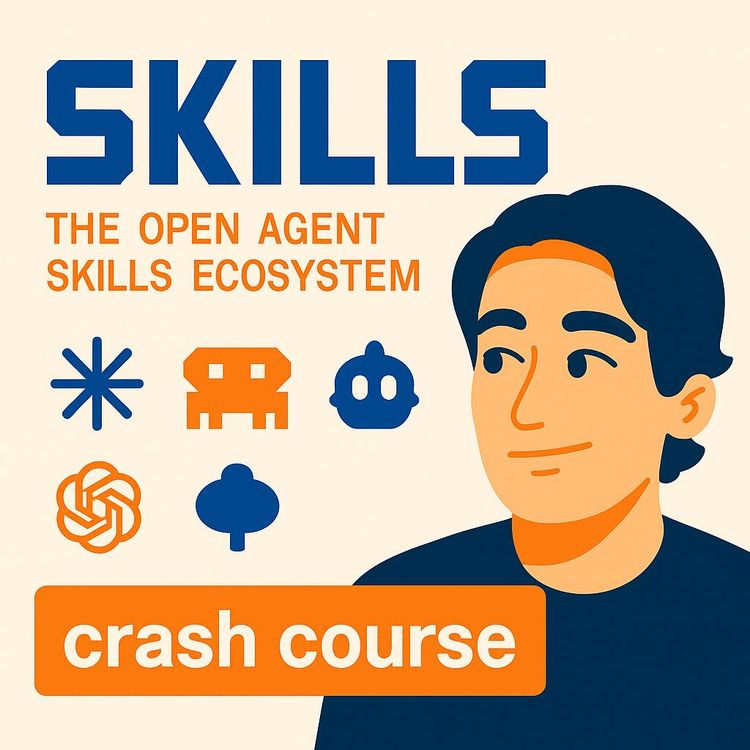
AI Agent Skills Crash Course with Claude Code and skills.sh (Video Course)
Teach Claude Code to work like a teammate. This fast course shows how to build and install AI skills with skills.sh, write clear YAML + steps, and turn fuzzy prompts into repeatable workflows,so your outputs stay consistent, fast, and more professional.
Related Certification: Certification in Building and Automating AI Agents with Claude Code & skills.sh
Also includes Access to All:
What You Will Learn
- Define and author AI Agent Skills with YAML headers and skill.md files
- Use the skills.sh CLI to discover, install, and manage skills (project vs global)
- Encode repeatable workflows with step-by-step instructions, guardrails, and acceptance criteria
- Build, share, and co-locate skills in GitHub repos for team-wide portability
- Apply advanced patterns: meta-skills, composed procedures, and validation checks
Study Guide
Claude Code Skills & skills.sh , Crash Course
You don't need a bigger model. You need a smarter way to teach it. This course shows you exactly how to do that with AI Agent Skills and the skills.sh CLI,so Claude Code (and other agents) can execute your workflows with precision, consistency, and speed.
We'll start from zero: what a "skill" actually is, why the YAML header matters more than you think, and how to install, create, and share skills across projects and teams. You'll see how a simple markdown file can turn a generalist AI into a specialist for web design, code generation, audits, reporting, and more. We'll move from fundamentals to advanced patterns: co-locating skills with your tools, meta-programming (using a skill to create skills), and building a private skills ecosystem for your company.
By the end, you'll know how to turn vague prompts into repeatable procedures, and how to make Claude Code feel like a team member who already knows your standards, your stack, and your style.
Why this course is valuable
Most people try to "prompt harder." The better move is to offload your process into a portable, documented format that an agent can load on demand. Skills give you:
- Consistency: fewer surprises, fewer rewrites.
- Portability: a skill you make today works across agents and projects.
- Collaboration: shareable expertise that your team (or the whole world) can use.
- Quality: outputs that feel professional,because they follow real procedures, not vibes.
What you'll learn (in plain English)
- What AI Agent Skills are and how they work in Claude Code.
- The anatomy of a skill: the YAML header, the markdown instructions, and supporting files.
- How to use the skills.sh CLI to discover, install, and manage skills (project vs global).
- Real examples: web design, code audits, data checks, releases, and more.
- How to create your own skills, iterate them, and share them via GitHub.
- Best practices that make agents reliable and safe to delegate to.
- Advanced patterns like meta-skills and co-located skills inside tool repos.
Part 1 , Fundamentals: What is an AI Agent Skill?
An AI Agent Skill is a small, focused package of procedural knowledge. It's usually a single file named skill.md with a YAML header at the top and step-by-step instructions underneath. Think of it as a snap-in "micro-manual" that your agent can load when a task calls for it.
Key idea: skills are portable, standardized, and agent-friendly. Claude Code, Cursor, and other compatible tools can discover and use the same skill, which means your work scales across platforms without rewriting everything.
The anatomy of a skill
- Core file: skill.md (markdown instructions the agent will follow).
- YAML frontmatter: name + description for discovery and routing.
- Body: clear steps, examples, constraints, and checklists.
- Optional supporting resources: scripts, templates, and references living in the same skill directory.
Example , Simple YAML header:
---
name: frontend-design
description: Professional guidelines for building modern, clean, and accessible web frontends including layout, typography, spacing, and component patterns.
---
Example , Another YAML header:
---
name: seo-audit
description: A step-by-step website SEO audit including structure, internal links, metadata, performance checks, and prioritized action items.
---
That description is critical. It's not fluff. It's what the agent reads first to decide whether to load the skill. If your description is vague, your agent might not use the skill when it should,or might load the wrong one.
Inside the skill: what to write
- Step-by-step instructions: short, precise, and ordered. Avoid ambiguity.
- Acceptance criteria: define "done" so the agent knows when to stop.
- Guardrails: what never to do (e.g., never overwrite env files; never push to main).
- Examples and templates: give the agent patterns, not only theory.
- References: link to sub-files for deeper context (e.g., references/design_system.md).
Example , "Do this, not that" snippet inside skill.md:
- Always confirm framework before coding (React, Vue, Svelte).
- If unspecified, ask 3 clarifying questions before proceeding.
- Never change package.json scripts without explicit permission.
Example , Acceptance criteria snippet:
- The component passes eslint and unit tests.
- The UI matches the design system spacing scale (4/8/12/16).
- Accessibility: keyboard focus states visible and alt text present.
Supporting resources (optional but powerful)
Skills can include scripts, templates, and references in sibling files. The agent can be instructed to read or run them (depending on your environment). This keeps your procedures executable and reusable.
Example , Skill directory structure:
skills/
frontend-design/
skill.md
templates/
hero.html
pricing.html
references/
design_system.md
Example , Another structure with scripts:
skills/
data-quality-checks/
skill.md
scripts/
inspect_csv.py
null_report.py
references/
profiling_guide.md
How agents discover and load skills
Discovery relies on the YAML header. The name and description are the signals your agent uses to decide if a skill is relevant. The description is often the only thing it reads before choosing to load the full file. This keeps context lean and fast.
Write your description like a routing rule: it should quickly answer "What task does this unlock?" and "When should it be used?"
Example , Good vs. vague descriptions:
Good: "Guides TypeScript React refactors with strict typing, safe migrations, and Jest coverage."
Vague: "Helps with code stuff."
Example , Discovery-oriented description:
"Automates CHANGELOG generation, semantic versioning, and Git tagging for Node projects."
Part 2 , Managing Skills with skills.sh (CLI)
The skills.sh CLI from Vercel is the package manager for AI skills. You'll use it to search, add, initialize, and manage installations for Claude Code and other supported agents. It runs via npx, so you don't have to globally install anything.
Core commands you'll use constantly
Example , Install a skill from GitHub:
npx skills add github_owner/repository_name
Example , Initialize a new skill in your repo:
npx skills initialize my-skill
(Some environments support: npx skills init my-skill)
Example , Search for public skills:
npx skills search
Example , List installed skills inside your agent:
/skills
The interactive installation flow
When you add a skill, the CLI starts an interactive session. You'll choose:
- Agent selection: which agent(s) to install for (e.g., Claude Code, Cursor).
- Installation scope: project vs global.
Project scope installs skills into a local hidden directory (often .cloud/skills) so they're only available for that project. Global scope makes a skill available everywhere on your machine.
Example , Project scope install (recommended for project-specific workflows):
npx skills add acme/ui-toolkit-skills
(Choose: Claude Code → Project)
Example , Global scope install (great for general-purpose skills):
npx skills add community/frontend-design
(Choose: Claude Code → Global)
What happens under the hood
- The CLI fetches the repository and discovers the top-level skills directory.
- It registers the skills with your agent(s).
- For project scope, files live inside the project's hidden skills directory (e.g., .cloud/skills).
- For global scope, a shared directory stores skills for all projects.
Daily workflow with Claude Code + skills.sh
Here's how it looks in real life:
- You open a repo in Claude Code.
- You run /skills to see what's available.
- You give a normal prompt; Claude decides whether to load a relevant skill based on the description fields.
- If needed, you install another skill via npx skills add … and run your prompt again.
Example , Using a frontend design skill mid-session:
/skills (review installed skills)
"Redesign the pricing page with a more engaging hero, better spacing, and accessible color contrast."
(Claude loads frontend-design and follows its instructions.)
Example , Using a release automation skill:
"Prepare a patch release: update CHANGELOG with fixes, bump version, create a tag, and draft release notes."
(Claude loads release-manager skill and executes the sequence you defined.)
Part 3 , Practical Application: Web Design Case Study
Let's compare two runs on the same prompt to see the tangible impact of a skill.
Scenario A , Without a skill:
You ask: "Make this landing page modern and appealing. Add a hero, features, pricing, and a CTA." The output is clean but generic. The spacing is inconsistent, typography is guesswork, and the components look like typical AI output.
Scenario B , With a skill (frontend-design installed):
Same prompt, different outcome. The agent applies spacing scales, color contrast rules, layout grids, and a consistent component library. The page looks like a professional built it. The difference is the skill carrying expert-level constraints and examples.
Example , What the skill might enforce:
- Use 8pt spacing scale; never hardcode random pixel values.
- Set typographic hierarchy with 1.25 ratio.
- Keep max content width to 72ch for readability.
- Use semantic HTML and accessible color contrast.
Example , Before/after difference to look for:
Before: Misaligned cards and inconsistent padding.
After: Consistent gutters, defined hierarchy, and crisp, predictable components.
Part 4 , Creating and Sharing Your Own Skills
You'll get the most leverage by encoding your best workflows into skills. Start small. Ship one precise procedure. Then iterate.
Required repository structure
All skills live inside a top-level skills directory in your repo. That's the convention the CLI expects, and it keeps things portable.
Example , Minimal structure:
my-project/
skills/
my-first-skill/
skill.md
Initialize a new skill with the CLI
From inside the skills directory, run initialize (or init, if your environment provides the alias).
Example , Initialize a skill:
cd skills
npx skills initialize video-editing
Example , Alternative init command:
cd skills
npx skills init video-editing
Use a meta-skill to write your skill (Skill Creator)
There's a skill designed to help you write other skills. It reads docs and turns them into clean, agent-ready instructions. This is an easy way to bootstrap your first drafts.
Example , Install a skill-creator skill:
npx skills add anthropic/skill-creator
Example , Prompt your agent to produce a new skill.md:
"Using the skill-creator skill, generate skills/video-editing/skill.md that teaches an agent how to use the CLI at https://example.com/cli-docs. Include setup steps, commands, and edge cases."
Populate the skill content
Write like you're teaching a sharp junior teammate. Direct, specific, unambiguous.
- Start with a precise YAML header (name + description).
- Define a repeatable process broken into steps.
- Add examples for inputs and outputs.
- Call out pitfalls and edge cases.
- Include scripts or templates if they make the task safer or faster.
- End with validation checks and an "exit criteria" section.
Example , Skill outline ("data-quality-audit"):
---
name: data-quality-audit
description: Procedures to profile CSV/Parquet datasets, summarize nulls, detect schema drift, and produce an executive report with remediation steps.
---
1) Confirm file format and size. If > 1GB, switch to streaming analysis.
2) Run scripts/inspect_csv.py to compute null counts and unique values.
3) Generate field-level notes: type guesses, outliers, and constraints.
4) Produce a report.md with sections (Summary, Findings, Risks, Actions).
5) Include reproducible commands and data paths.
Example , Skill outline ("release-manager"):
---
name: release-manager
description: Automates semver bumps, CHANGELOG generation, Git tagging, and release notes for Node projects with conventional commits.
---
1) Parse commit messages since last tag.
2) Determine bump (major/minor/patch). Confirm before proceeding.
3) Update package version and CHANGELOG.md.
4) Create Git tag and push branch+tag (never push to main without approval).
5) Draft release notes with highlights and breaking changes.
Co-locate skills with the tools they control
Power move: put a skills directory inside your CLI or library repo. Your users can install the tool and its knowledge in one go. This keeps the skill in sync with the tool. When you update your tool, you update the skill alongside it.
Example , Co-located layout:
my-cli/
bin/
src/
skills/
my-cli-usage/
skill.md
templates/
scripts/
Example , Instruction inside skill.md referencing local scripts:
"Run scripts/estimate_cost.py to size the job before execution. If cost exceeds budget_threshold in references/policy.md, stop and request approval."
Sharing your skill
Once you push your repository to GitHub, anyone can install your skills via npx skills add owner/repo. Keep your skills inside the top-level skills directory so the CLI can find them.
Example , Public install command you can share:
npx skills add your-org/your-skill-repo
Example , Multi-skill repo (users get all skills inside):
skills/
frontend-design/
seo-audit/
release-manager/
Part 5 , Best Practices That Make Skills Effective
Start small, ship early, and refine based on what the agent gets wrong. Here's the playbook:
- Be specific: narrow tasks produce better results than "do everything" skills.
- Write for an agent: short sentences, numbered steps, explicit checks.
- Make decisions easy: define defaults; ask for clarification only when needed.
- Add validation: the agent should verify outputs before returning them.
- Use project vs global wisely: general "always useful" skills go global; project-bound workflows stay local.
- Co-locate with tools: if your skill controls a CLI, keep skill + CLI in the same repo.
- Iterate in public if appropriate: publish skills that others can use; you'll get feedback and improvements.
Example , Good clarity pattern:
"If framework is unknown, ask: (1) React/Vue/Svelte? (2) TypeScript or JS? (3) CSS-in-JS or utility classes? Do not proceed until answered."
Example , Validation checklist:
- All commands executed without error.
- Lint/test pass.
- Output files updated and saved.
- Summary of actions appended to a log or PR comment.
Part 6 , Advanced Techniques
Once you've built a few skills, you'll want more leverage. These patterns help.
Meta-programming: use a skill to make skills
Install a skill like Skill Creator. Give it documentation for a tool you use. Ask it to write a skill that teaches an agent how to use that tool, including commands, edge cases, and examples. You've just bottled your knowledge and made it installable.
Example , Prompting a meta-skill:
"Create skills/docker-release/skill.md that automates container builds and pushes. Pull steps from https://example.com/docker-docs. Include tag strategy, rollback, and a verification phase."
Example , Meta-skill follow-up prompt:
"Add a troubleshooting section for failed image pulls and permission denied errors, with concrete commands to diagnose."
Compose procedures across multiple skills
You can create narrow skills and let the agent stitch them together, or write a "conductor" skill that calls out when to consult other skills. Keep each skill focused; avoid creating a bloated "do-it-all" monster.
Example , Conductor pattern:
"For frontend tasks, follow frontend-design. For content structure, follow seo-audit. Merge recommendations and summarize conflicts."
Example , Layered approach:
release-manager handles versioning; pr-quality-gate handles code review checks. The agent runs them in sequence.
Context efficiency: why descriptions matter
The agent often sees only the YAML name and description before deciding to load the skill. If your description doesn't contain the right keywords or doesn't describe the procedure clearly, the agent might skip it. Treat the description like a routing function.
Example , Effective description:
"End-to-end Cypress test scaffolding for React apps including setup, fixtures, and CI integration."
Example , Ineffective description:
"Testing help."
Safety and guardrails
The more powerful your skill, the more you want to constrain it. Add rules about what the agent can and cannot do. Require confirmation for destructive actions. Point to scripts that simulate or dry-run risky steps.
Example , Guardrails for deployment:
- Never deploy to production without an explicit "YES, DEPLOY NOW" confirmation.
- Always run dry-run first; paste the output for review.
- Confirm target environment and branch.
Example , Guardrails for data manipulation:
- Never overwrite source datasets; write to a /processed directory.
- Keep a timestamped backup before transformations.
- Log summary stats post-transform.
Part 7 , Real-World Use Cases and Patterns
This is where you get compound leverage. Encode the parts of your work that eat time, create inconsistency, or require tribal knowledge.
Example , Engineering:
- bug-triage: standardized steps for reproducing issues, labeling, and prioritizing.
- api-integration: scripts + steps to connect to a service with retries and timeouts.
Example , Data & Analytics:
- data-quality-audit: profiling, nulls, constraints, and remediation.
- dashboard-refresh: scripted pipeline to regenerate metrics and validate anomalies.
Example , Product & Marketing:
- seo-audit: site structure, metadata, internal links, and performance checks.
- content-brief: research queries, outline structure, and citation rules.
Example , Design & Frontend:
- frontend-design: spacing, grid, typography, accessibility rules, and templates.
- design-token-sync: instructions to update tokens across files safely.
Part 8 , Organizational Adoption
Skills turn undocumented habits into executable knowledge. That's valuable for teams and companies because it reduces onboarding time and errors, and it codifies how you want work done.
- Professional development: codify your workflows; let the agent handle the busywork while you handle exceptions and decisions.
- Knowledge management: internal skills for brand voice, coding standards, approval flows, and security practices.
- Open-source: include a skills directory in your repo so new users can "install how to use your tool."
- Education and training: skills act as living, interactive assignments and checklists your students can run with an agent.
Example , Internal branding skill:
"Always use the voice guide at references/brand_voice.md. Provide three variants: formal, casual, and technical. Never use unapproved taglines."
Example , Internal code standards skill:
"Follow lint rules at references/eslint_rules.md. Add JSDoc for public functions. Include 85% coverage with Jest before marking 'done'."
Part 9 , Actionable Recommendations (Start Here)
1) Explore existing skills. Install a few popular ones to see how they're structured and how they change output quality.
2) Identify one repetitive workflow you want to offload (e.g., weekly report, PR quality checks, release steps).
3) Build a starter skill with npx skills initialize and write the first draft. If helpful, use a skill-creator to bootstrap it.
4) Test it. Watch where the agent stumbles. Update the instructions with examples and guardrails.
5) Decide install strategy: global for general-purpose skills; project for codebase-specific steps.
6) Share with teammates (or the public) via GitHub.
Example , Discover and test:
npx skills search
npx skills add community/frontend-design
/skills
"Apply the frontend-design guidelines to refactor the landing page."
Example , Build your first custom skill:
mkdir -p skills && cd skills
npx skills init weekly-report
(Write a simple, 5-step process with output examples.)
Part 10 , Working Smoothly in Claude Code
Claude Code recognizes installed skills and uses them when relevant. You can list them, reference them in your prompts, and rely on their instructions to keep your outputs consistent.
- Use /skills to check what's active.
- Reference the skill by name in your prompt if needed.
- Keep skills updated alongside your project so Claude always follows the latest process.
Example , Prompt referencing a skill by name:
"Use the release-manager skill to prepare a minor release. Confirm version bump, update CHANGELOG, and create the tag. Show me the diff before pushing."
Example , Debug when the skill doesn't trigger:
"Use the data-quality-audit skill on data/orders_2024.csv. If you can't find it, let me know and I'll reinstall."
Part 11 , Troubleshooting and Edge Cases
Most issues fall into a few buckets: install location, description mismatch, or repository structure.
- The agent isn't using my skill: the description might be too vague. Rewrite it with the right keywords and task focus.
- The CLI can't find my skills: ensure your skills directory sits at the repo's top level and each skill has a skill.md.
- Project vs global confusion: you installed globally, but your agent was scoped to project (or vice versa). Reinstall with the intended scope.
- Scripts failing: add dry-run modes, permissions notes, and concrete troubleshooting steps inside your skill.
Example , Fix vague descriptions:
Before: "Helps with reports."
After: "Generates weekly sales reports from CSVs, computes MoM growth, detects anomalies, and saves to reports/weekly.md."
Example , Confirm install scope:
/skills (if it's not listed, reinstall with project scope)
npx skills add your-org/your-skill-repo → choose Project
Part 12 , Key Insights & Why They Matter
- Standardization unlocks sharing: a simple, open skill format means one skill can work across Claude Code, Cursor, and similar tools.
- Quality jumps when procedures are explicit: skills make your agent's output feel expert-level, not generic.
- skills.sh removes friction: searching, adding, and initializing skills is straightforward and repeatable.
- Iteration drives reliability: watch the agent's mistakes and harden your skill with edge cases and examples.
- Meta-programming accelerates scale: you can use a skill to write other skills, creating a loop of better documentation and automation.
- Context efficiency: the description field is the routing signal. Get it right and your agent picks the right skill at the right time.
Example , Iterative improvement:
V1: agent forgets to run tests.
V2: add "Run npm test and paste results" before marking done.
V3: require coverage threshold and a pass/fail summary.
Example , Simple open standard payoff:
You publish one repo with three skills. A teammate on another agent installs them instantly and gets the same behavior.
Part 13 , Authoritative Principles (Plain Language)
- A skill is just a markdown file with very clear instructions about one specific thing.
- The YAML header (name, description) is the first,and sometimes only,part the agent reads before loading the full skill.
- All your skills live inside a top-level skills directory. Keep that convention and everything "just works."
Example , Minimal viable skill:
skills/
commit-message-pro/
skill.md
Example , Agent-friendly header:
---
name: commit-message-pro
description: Creates clear, conventional commit messages from diffs with scopes and summaries.
---
Part 14 , Extended Examples (End-to-End)
To make this concrete, here are two complete flows.
Example , Build and use "pr-quality-gate" (end-to-end):
Goal: ensure every PR has linted code, tests, and a readable summary.
1) Initialize: npx skills init pr-quality-gate
2) Header: name + description focused on PR checks for Node/TS.
3) Steps: run eslint, run tests, measure coverage, generate PR summary.
4) Guardrails: if tests fail → stop and report. If coverage drops → request action items.
5) Validation: show summary with command outputs.
6) Use it: "Apply pr-quality-gate to this PR and paste the final summary."
Example , Build and use "customer-insights-report" (end-to-end):
Goal: produce a weekly customer insights doc from survey CSV + NPS data.
1) Initialize: npx skills init customer-insights-report
2) Header: description states data sources and outputs (report.md).
3) Steps: load CSV, compute NPS, summarize trends, extract top complaints, propose actions.
4) Add scripts: scripts/compute_nps.py, scripts/extract_topics.py.
5) Validation: ensure report includes metrics, charts links, and action items by priority.
6) Use it: "Run customer-insights-report with data/surveys.csv and export report to reports/week_42.md."
Part 15 , Practice and Self-Assessment
Test your understanding with a few quick checks.
Example , Multiple choice:
1) Primary file format for a skill?
A) JSON B) Python C) Markdown D) HTML → C
2) What does the agent read first in skill.md?
A) File name B) First paragraph C) Conclusion D) YAML header → D
3) Which command creates a new skill skeleton?
A) add B) init C) new D) search → B (init/initialize)
Example , Short answer (write your own):
- Difference between project and global installs?
- Purpose of a "skill-creator" skill?
- Standard directory structure inside a repo for skills?
Part 16 , Wrap-Up and Next Steps
You don't need to nag an agent into brilliance. You teach it,once,and reuse that expertise across projects and people. That's what AI Agent Skills and skills.sh make possible. A simple format (skill.md + YAML header) paired with a friendly CLI gives you a system to standardize quality, accelerate delivery, and reduce waste.
Key takeaways:
- Skills turn your best procedures into reusable building blocks for Claude Code and beyond.
- The YAML description is the routing signal; write it like a precise label for when to use the skill.
- skills.sh makes discovery, installation, and initialization dead simple.
- Start with one valuable workflow, write the steps, add guardrails, and iterate based on where the agent struggles.
- Package scripts and templates with the skill so the agent can do the work, not just talk about it.
- Share your skills. Co-locate them with your tools. Build an internal library for your team's way of working.
Most people throw prompts at problems. You'll have skills,clear, portable, executable knowledge. The difference shows up in your results. Install a couple of community skills, build one of your own this week, and watch how much smoother your sessions with Claude Code become.
Frequently Asked Questions
This FAQ is a practical reference for anyone using Claude Code with skills and the skills.sh CLI. It answers the most common questions,from basics and setup to advanced workflows, governance, and ROI,so you can move faster with fewer mistakes.
How to use this page:
Skim the section headings, jump to the question you need, and copy the examples to your environment.
Fundamentals of AI Agent Skills
What are AI Agent Skills?
Definition:
AI Agent Skills are instruction sets,usually written in Markdown,that teach an AI agent how to execute a specific task using clear steps, rules, and examples. They function like standard operating procedures the agent can follow.
Why it works:
General models are broad. Skills add narrow, procedural knowledge so the agent behaves like a trained specialist for that task.
Business impact:
You get more consistent outputs, fewer guesswork loops, and a repeatable workflow anyone on the team can use. For instance, a "PR review" skill can enforce your repo's checklist, coding style, and security gates,every single time,without relying on tribal knowledge.
What is the purpose of an AI Agent Skill?
Primary goal:
To increase accuracy, consistency, and speed for specialized tasks by giving the agent a vetted process.
How it helps:
Skills reduce rework, clarify expectations, and make quality repeatable. Rather than hoping the model "figures it out," you hand it a playbook it can execute step-by-step.
Example:
A "product requirements" skill can force structure (problem, scope, constraints, acceptance criteria) so every spec reads the same and misses fewer edge cases. This builds trust in outputs and shortens review cycles.
How did the concept of AI Agent Skills originate?
Origin story:
The idea emerged from the need to share procedural knowledge with AI coding agents in a simple, portable format. Anthropic introduced the approach with Claude Code skills, showing that plain Markdown could reliably guide agent behavior.
Why Markdown:
It's human-readable, easy to review, and version-control friendly. That makes skills collaborative artifacts your whole team can iterate on.
Result:
What started as a simple way to guide Claude became a broader practice adopted across ecosystems due to its practicality and portability.
What is the "open standard" for agent skills?
Concept:
Skills follow a shared, public convention so they're portable across compatible agents and tools, including platforms from major AI vendors and editor integrations.
Why it matters:
This makes skills reusable across teams, agents, and projects,no lock-in. You can create once, run anywhere that respects the format.
Outcome:
A healthy ecosystem of skills you can install, fork, and adapt, similar to how open-source packages thrive.
Skill Structure and Core Concepts
What is the basic structure of a skill file?
Core parts:
1) A YAML header with name/description, and 2) a Markdown body with the procedure.
Flow:
The agent scans the YAML to decide relevance, then loads the body when needed. The body includes steps, examples, checklists, and links to helpers (scripts/templates).
Tip:
Keep the body focused on one clear outcome. Use headings, numbered steps, do/don't rules, and success criteria to minimize ambiguity.
What is the role of the YAML header in a skill file?
Purpose:
The YAML header is the metadata the agent reads first to decide if a skill fits the current task. At minimum, include name and description.
Best practice:
Write the description like a search snippet: concise, outcome-focused, and scoped. Mention inputs, outputs, and constraints.
Example:
"name: frontend-design; description: Guidelines to produce modern, accessible UI with clear layout, spacing, and color rules for landing pages."
Can a skill include more than just a single Markdown file?
Yes:
Package helpers in the skill directory: scripts, templates, reference docs, and examples. Link to them from the main skill body.
Why this helps:
Complex workflows often need repeatable assets,CLI wrappers, boilerplates, or datasets. Keeping them with the skill ensures the agent can call or reference them consistently.
Example:
A "model-trainer" skill can include "inspect_dataset.py," "estimate_cost.py," and a "training_guide.md," all orchestrated by the main skill.
How are skills different from prompts or system messages?
Scope vs. instruction:
Prompts are one-off instructions; skills are reusable procedures.
Consistency:
Skills encode standards (steps, rules, edge cases) that persist across sessions and teammates, while ad-hoc prompts vary by person and memory.
Outcome:
Use prompts to ask; use skills to teach. For recurring work,code reviews, analytics queries, brand copy,skills keep quality stable.
How does the agent decide which skill to load and when?
Relevance check:
The agent evaluates the YAML description against your request. If there's a match, it loads the full skill and follows the steps.
Signals that help:
Clear naming, precise descriptions, and explicit inputs/outputs. Avoid vague titles like "general web help."
Tip:
Mention the skill by name in your request ("Use 'frontend-design' to refactor this landing page") to reduce ambiguity.
How long or complex should a skill be?
Guideline:
As short as possible, as long as necessary. Prioritize clarity and sequence over length.
Structure over volume:
Break long workflows into smaller skills (e.g., "dataset-prep," "training," "evaluation") to keep each unit focused.
Reality check:
Agents have context limits. Keep instructions lean, link to references, and use scripts/templates to offload verbose content.
Can a skill execute scripts or external tools?
Often yes:
When the agent environment supports tool use or a terminal, a skill can instruct the agent to run known-safe commands, scripts, or APIs.
Safety first:
Explicitly document what to run, expected outputs, and cleanup steps. Warn against destructive operations unless confirmed.
Example:
"Run 'python scripts/inspect_dataset.py --sample 1000'. If nulls >5%, branch to 'data-cleaning' skill."
Using and Managing Skills with skills.sh
What is skills.sh?
Definition:
skills.sh is a CLI from Vercel that helps you search, add, initialize, and manage AI skills from various sources. Think of it like a package manager for agent skills.
Value:
It standardizes install paths, supports global or project scope, and makes distribution straightforward for teams.
How do I install an existing skill using skills.sh?
Command pattern:
Run "npx skills add owner/repo" and follow the prompts to pick specific skills, target agents (e.g., Claude Code), and scope (project or global).
Example:
"npx skills add anthropic/skills" then select "frontend-design".
Tip:
Document installs in your project README so teammates can replicate with one command.
What is the difference between a project-level and a global installation?
Project scope:
Installed into the project folder (e.g., a hidden directory). Ideal for project-specific APIs, workflows, or tech stacks.
Global scope:
Available across all projects for your user account. Great for widely used skills like "skill-creator" or formatting guidelines.
Rule of thumb:
If it's tied to a repo's tooling, keep it project-scoped. If it's a generic competency, install globally.
How can I see which skills are installed for my AI agent?
Inside agents:
Many agent UIs expose a command to list active skills. In Claude Code, use "/skills" to view what's loaded for the current context.
Pro tip:
Keep a short README with your active skill set for onboarding and audits. Consistency saves time.
What are the prerequisites to use skills.sh?
Basics:
You'll need Node.js and permission to run NPX commands on your machine. You'll also need access to the Git repos that host the skills.
Agent compatibility:
Use an agent or IDE integration that recognizes skills (e.g., Claude Code).
Tip:
Test in a clean project first so you can confirm paths, scope, and agent detection before rolling out to your team.
How do I update or remove a skill installed with skills.sh?
Updating:
Re-run "npx skills add owner/repo" to pull newer versions, then regenerate your lock file to freeze the state. Review diffs,especially instructions that change agent behavior.
Removing:
Use the CLI's remove/unlink flow or delete the skill folder from your project/global location and refresh the agent.
Policy:
Adopt a simple changelog and approval step for team-wide updates.
Can I install skills from private repositories or internal registries?
Yes, with access:
If your Git host grants the right permissions, you can add skills from private repos using credentials or SSH.
Internal registries:
Some teams maintain a private catalog to enforce standards and security reviews.
Best practice:
Require codeowners and PR reviews for any skill that runs scripts or touches sensitive systems.
What happens if two skills overlap or give conflicting guidance?
Prevention:
Scope skills narrowly and name them clearly. Avoid "kitchen-sink" skills.
Resolution:
Define precedence (e.g., project skill overrides global, or "-pro" overrides base). Mention priority rules in your team README.
Fallback:
Call the skill by name in your prompt, or create a "router" skill that decides which sub-skill to use based on inputs.
How do global and project skills interact? Which wins?
Typical behavior:
Project-scoped skills generally take precedence over global ones for that workspace, because they're closer to the task context.
Good hygiene:
Don't duplicate skills at both levels. Keep project-specific details in project scope and generic skills in global scope.
Document:
Write down your precedence rules so new teammates avoid confusion.
How do I version and lock skills across a team for consistency?
Lock file:
Generate a lock file (e.g., skills.lock.json) after validation to pin exact versions. Commit it to source control.
Process:
When updating, test in a branch, update the lock, and merge after approval.
Outcome:
Every teammate gets the same behavior, reducing "works on my machine" issues.
Practical Applications and Examples
How can a skill practically improve an AI agent's output?
Before/after effect:
Without a skill, outputs can be generic. With a skill, the agent follows expert rules and guardrails.
Example:
A "frontend-design" skill enforces spacing scales, color contrast, semantic HTML, and component structure. The output feels like an experienced designer touched it,clean hero, feature grid, pricing, and CTA that aligns with brand tone.
Result:
Cleaner UX, fewer revisions, and faster handoff.
Where can I find pre-made skills to use?
Sources:
skills.sh's curated listings, GitHub repos, and hubs like Hugging Face for data/ML workflows.
Evaluation:
Check star history, update cadence, and clarity of instructions. Prefer skills with examples, scripts, and tests.
Tip:
Start with a small pilot and measure output quality before broad rollout.
What are some examples of advanced skills available?
Complex workflows:
"model-trainer" skills that fine-tune models end-to-end, including dataset checks, cost estimation, and training orchestration.
Engineering accelerators:
Refactoring, API integration scaffolding, performance profiling, and incident postmortems.
Business tasks:
Weekly KPI reports, sales email sequencing, or brand QA. These codify your best playbooks.
What are high-impact business use cases for skills?
Repeatable workflows:
Sales outreach frameworks, marketing copy with brand voice checks, finance variance analysis, support ticket triage.
Engineering:
PR reviews with security/lint gates, migration guides, observability setup.
Example:
A "weekly-reporting" skill can pull metrics, apply benchmarks, and generate a concise summary with risks and next actions.
Creating and Sharing Your Own Skills
How do I start creating my own skill?
Initialize:
Create a "skills" directory and run "npx skills initialize your-skill-name" (or "npx skills init"). Edit the generated skill.md.
Content:
Write steps, rules, examples, and edge cases. Add scripts/templates if helpful.
Advice:
Keep your first version small, then iterate based on real tasks.
What is the "skill-creator" skill and how is it used?
Meta-skill:
It teaches an agent how to author new skills. Install it, then ask your agent to draft a skill for your workflow,pointing at your tool's docs or internal wiki.
Benefit:
You bootstrap new skills faster, and the output follows the expected structure out of the box.
Use case:
"Create a 'deployment-checklist' skill using our platform's CLI docs."
How should I structure a repository to share my skills?
Convention:
Top-level "skills/" directory; each skill in its own folder with a skill.md, plus optional scripts/templates/references.
Why it helps:
Predictable paths make installs, updates, and reviews straightforward.
Include:
A README explaining scope, usage, and any prerequisites.
Is it better to create a separate repository for a skill or include it with existing code?
Co-locate when coupled:
If a skill supports a specific tool or repo, keep it in the same repo for easier updates.
Separate when general:
For reusable, cross-project skills, create a dedicated "skills" repo.
Rule:
Wherever maintenance will be easiest and most visible is usually the right choice.
How should I write skill instructions for clarity and reliability?
Write for action:
Numbered steps, explicit inputs/outputs, and "if/then" branches.
Reduce ambiguity:
Use "do/don't" lists, acceptance criteria, and examples.
Pattern:
Context → Steps → Checks → Edge cases → Examples → Hand-off notes. Keep verbs active and sentences short.
How do I test a skill before rolling it out company-wide?
Sandbox first:
Test with a small task set and compare outputs to a gold standard.
Checklist:
"Happy path" success, edge cases handled, safe behavior on tool calls, repeatability across users.
Scale-up:
After passing, lock the version, pilot with a small team, and track metrics (quality, time saved).
Certification
About the Certification
Get certified in AI Agent Skill Development with Claude Code and skills.sh. Show you can build and install skills, write clear YAML steps, and turn fuzzy prompts into reliable workflows so Claude Code works like a teammate.
Official Certification
Upon successful completion of the "Certification in Building and Automating AI Agents with Claude Code & skills.sh", you will receive a verifiable digital certificate. This certificate demonstrates your expertise in the subject matter covered in this course.
Benefits of Certification
- Enhance your professional credibility and stand out in the job market.
- Validate your skills and knowledge in cutting-edge AI technologies.
- Unlock new career opportunities in the rapidly growing AI field.
- Share your achievement on your resume, LinkedIn, and other professional platforms.
How to complete your certification successfully?
To earn your certification, you’ll need to complete all video lessons, study the guide carefully, and review the FAQ. After that, you’ll be prepared to pass the certification requirements.
Other AI Video Courses
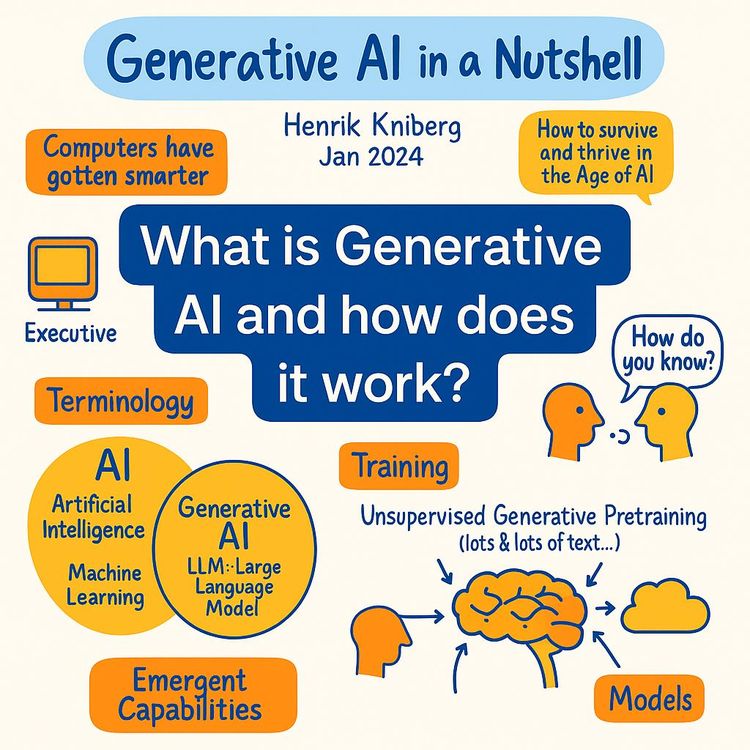
Video Course: What is Generative AI and how does it work?

Video Course: How to Use ChatGPT from Beginner to Professional
Video Course: How to Use Google Gemini for Google Workspace to Boost Productivity

Video Course: How to Use Claude 3.7 AI - Tips for Beginners!

Video Course: ChatGPT for Data Analytics: Full Course - from Beginners to Professional

Video Course: Generating Images and photos With ChatGPT?

Video Course: Generating Images & Photo's with MidJourney

Video Course: Generating Design's with Microsoft Designer and AI

Video Course: Generating Design's with Canva.com and AI
Join 20,000+ Professionals, Using AI to transform their Careers
Join professionals who didn’t just adapt, they thrived. You can too, with AI training designed for your job.