AI Agents Killed Courses: Teachers, Build AI Skills Instead (Video Course)
Teachers and creators: info is everywhere. This course shows you how to turn your methods into AI skills and pipelines that do the work,no code. Package process, sell outcomes, and run launches in parallel with human gates.
Related Certification: Certification in Designing, Building, and Deploying Classroom AI Agents
Also includes Access to All:
What You Will Learn
- Audit and map repeatable workflows with clear inputs, outputs, and success criteria
- Build conversational, no-code AI skills (SOPs) and include human-in-the-loop gates
- Integrate skills with connectors (WordPress, GitHub, CRM) to automate actions
- Orchestrate projects and parallel sub-agents to run productization pipelines and launches
- Package and monetize skills as standalone products, training, or subscription libraries
- Manage a portable skill library with version control, security, and maintenance rhythms
Study Guide
AI Agents Killed Course Creation (Teachers, Build This Instead)
Let's get straight to it. The game changed. Information is free, fast, and cloned at scale. Static courses and slide decks melted into an ocean of sameness the second generative AI went mainstream. If your business relies on selling information alone, the ground just shifted under your feet.
But here's the upside: when information commoditizes, implementation becomes priceless. The educators and creators who thrive from here won't just "teach." They'll package process. They'll sell outcomes. They'll deploy digital employees that do the work,on demand, without burnout, and at scale.
This course is a full, end-to-end guide to that transition. You'll learn how to turn your expertise into AI "skills" that agents can execute like standard operating procedures. You'll see how to chain skills into production pipelines that run entire launches in parallel. You'll understand exactly how to monetize this shift: training on implementation, premium skills, and subscriptions to a living library of automated workflows. And you'll build it without writing a line of code.
You're not here to push pixels around a slide deck anymore. You're here to architect systems that do work. By the end, you'll have the mindset, the blueprint, and the practical steps to pivot from selling content to selling capability.
The Value Shift: From Content To Process
Information used to be scarce. Creating a course meant hunting down ideas, packaging them, and releasing them as if they'd hold value forever. That time is over. AI can now spin up quality outlines, lessons, templates, and checklists in minutes. Competing at the level of "what" is a race to the bottom.
The new value lives in the "how." In automation. In taking your unique way of working and encoding it into skills that return time, energy, and attention back to your audience. You're moving from teacher to process architect. From content provider to solution provider.
Example 1:
A "Twitter Strategies 101" course becomes a "Twitter Skill Pack" that, when given a core idea, produces a week of threads, repurposes them for LinkedIn, and schedules them,complete with your brand voice and a cadence that fits your audience's rhythm.
Example 2:
A "Lead Magnet Masterclass" becomes a "Lead Magnet Generator" skill. Give it a product, ICP, and offer angle. It drafts the PDF, builds the landing page copy, and sends it to your CMS for review.
Tip:
Stop asking, "What should I teach?" Start asking, "What problem can I remove?" Problems are defensible. Information is not.
Core Concepts: AI Skills, Agents, and Projects
To build this new business, you need a shared language.
AI Agent:
An AI system that understands goals and executes tasks. Think of it like a digital employee. You say "deliver X," it figures out the steps. Tools like Anthropic's Claude act as the brain that runs your skills and projects.
AI Skill:
A structured, reusable SOP for an agent. It's a set of instructions, examples, and rules that tells the agent exactly how to perform a task to your standards. Skills are text-based, editable, and portable across platforms that support open standards.
Project or Plugin:
A higher-level orchestrator. Projects are "department managers" that coordinate multiple agents and skills across a complex workflow. They run sub-agents in parallel, collect outputs, and keep humans in the loop at the right moments.
Sub-agents:
Specialized workers spun up by a project to do tasks in parallel,copywriting, course generation, repo updates,so everything moves at once instead of in a slow line.
Connectors (MCPs):
Bridges to the real world. They let your agent post to WordPress, commit to GitHub, update a CRM, or push content to an LMS. This is where "ideas" become "actions."
Skill Library:
Your catalog of trained skills, categorized by function, difficulty, and business area. This is your IP. Curated. Searchable. Continuously updated.
Production Pipeline:
A chained or parallelized set of skills and sub-agents that take a new idea (like a brand-new skill) and turn it into a product with marketing assets, a checkout, documentation, and a mini-course,automatically.
Human in the Loop:
Intentional checkpoints where you approve, adjust, or decline. This keeps quality high and risk low.
Examples of each concept in motion:
1) Agents + Skills: A "Podcast Repurposer" skill runs on your agent to transform one episode into clips, a blog post, tweets, and a newsletter draft.
2) Projects + Sub-agents: A "New Cohort Launch" project triggers four sub-agents,one writes emails, one builds the sales page, one prepares the onboarding sequence, one updates the CRM,then routes everything to you for approval via a human-in-the-loop gate.
Your New Role: From Teacher To Process Architect
In the old model, your worth lived in your knowledge. In this model, your worth lives in your methods. Your job is to identify pain points in your niche, design skills that remove those pains, and deliver them as automated solutions with just enough guidance to make them effective in the real world.
You stop selling "lessons." You sell capability. Your courses become onboarding for the skills that do the work. You're the architect. The agent is the implementer. The audience gets outcomes without drowning in how-to videos.
Example 1:
As a writing coach, instead of a 6-hour course on "Nonfiction Systems," you release a "Nonfiction Pack" of skills: Research Synthesizer, Outline Builder, Draft Expander, and Voice Consistency Checker, bundled with a short training on deployment and customization.
Example 2:
As a fitness educator, instead of "Build Your Own Routine," you sell a Training Plan Skill that takes a user's time, equipment, goals, and injuries, and outputs a 12-week plan,plus a Content Pipeline Project that auto-generates weekly accountability prompts and progress recap emails.
The Practical Framework: Build A Skill-Based Business
This is your step-by-step. No fluff,just a repeatable process you can run.
Step 1: Identify And Organize Repeatable Workflows
Audit your life and business. Where are you doing the same 10 steps over and over? List everything. Content production, research, outreach, reporting, onboarding, community prompts, admin tasks. Tag them by function and difficulty.
Case Study:
An education business mapped 165 processes across producing, analyzing, marketing, admin, and community. They cataloged everything in a spreadsheet with columns for: process name, description, inputs, outputs, difficulty, dependencies, frequency, business area. Then they turned it into a searchable web app for quick deployment.
Example 1:
Marketing bucket: "Webinar To Sales Page," "FAQ Extractor From Chat Logs," "SEO Brief Generator," "Asset Renamer For File Hygiene."
Example 2:
Teaching bucket: "Weekly Discussion Creator," "Lesson Quiz Maker," "Syllabus Updater From New Research."
Tips:
Start with 5-10 high-friction tasks you do weekly. Define the exact inputs you'd hand a contractor. Define success criteria so your agent knows when it's "done well."
Step 2: Conversational Skill Creation (No Code Required)
Modern platforms let you "talk" a skill into existence. You describe the job. The AI asks clarifying questions. The agent writes the SOP as a structured skill file with logic, prompts, and rules. You install it with one click.
Case Study: The Weekly Discussion Creator
Initial Goal: "Generate one weekly discussion prompt for my community, plus 3-4 seed replies, and post it to the right forum."
Clarifications the AI requested: Which community space? Who is the audience? What prompt styles (topic, hot take, wins)? One prompt or a weekly batch? Should it generate seed replies?
Outcome: The agent compiled the full skill file,logic, prompt patterns, and execution rules,ready to install. Memory of previous interactions helped the AI tailor defaults for the community's voice and preferences.
Additional Example 1:
"Lead Magnet Generator" skill. Clarifies ICP, offer essentials, tone, formatting, and delivery. Outputs PDF content, landing page copy, and a follow-up email draft.
Additional Example 2:
"Podcast Repurposer." Clarifies episode length, personas, platforms, and cadence. Outputs show notes, newsletter, 5 tweets, 2 LinkedIn posts, and 3 short video scripts.
Step 3: Integration, Execution, And Refinement
Skills come alive when you connect them to tools via connectors (MCPs). With the right permissions, your agent can post to WordPress, push a commit to GitHub, create a product in your cart, or send drafts to Google Docs.
Case Study Continuation:
The Discussion Creator skill used a WordPress connector. It drafted the post and seed replies, then paused for approval. Initially, all replies posted as one comment. The user flagged it. The agent diagnosed a connector bug and fixed the step so each seed reply posted individually. This is the magic: build once, improve forever.
Additional Example 1:
A "New Client Intake" skill with a CRM connector that creates a deal, tags the contact, books a kickoff on Calendly, and sends a pre-call questionnaire via email.
Additional Example 2:
A "Research Library Organizer" skill with a Google Drive connector that renames files to your naming convention and updates a master index sheet.
Best Practices:
Always include a human-in-the-loop checkpoint before publishing or sending externally. Log every run with before/after diffs for traceability. Add a quick feedback loop ("Approve," "Revise with notes," "Reject") so the skill learns your preferences.
Anatomy Of A Skill File
Skills look like clean, structured text. Anyone can read and edit them. Here's what's inside:
Name:
Descriptive and searchable, like WeeklyDiscussionCreator or LeadMagnetGenerator.
Description:
One or two sentences on what it does, what it needs, and what it produces.
Prompt Template:
Persona, constraints, key rules, and output format. This is the exact instruction set your agent follows every time.
Workflow Logic:
Step-by-step instructions and branches. For example, "If style=HotTake, use AIDA structure with a contrarian opener. If style=Wins, ask for reflection and next-step commitment."
Connector Instructions:
Where to post, which repo to update, what filename to use, and what metadata to attach.
Examples:
1) The Outline Builder skill includes three example outlines at different depths so the agent learns pattern variety.
2) The Launch Email Writer skill includes positive and negative examples,"Do this, not that",to nail voice and cadence.
Tip:
Include "failure modes" inside the skill: "If you don't have enough context, ask for A, B, C. If the connector returns an error, retry once and alert the user."
Building And Managing Your Skill Library
Your library is your treasure chest. Treat it like a product in itself.
Organize by:
Function (Producing, Analyzing, Publishing, Admin), Difficulty (Basic, Intermediate, Advanced), and Business Area (Marketing, Teaching, Community, Ops).
Version Control:
Store skill files in GitHub. Commit messages should state what changed and why. Tag releases when a skill hits a significant quality level.
Metadata To Include:
Owner, last updated, required connectors, inputs, outputs, estimated runtime, risk level, and review cadence.
Examples:
1) A "Community Ops" folder with WeeklyDiscussionCreator, ModerationResponseDrafts, and MemberWelcomeSeries.
2) A "Launch Kit" folder with ProductPageWriter, EmailSequenceBuilder, SocialPostMixer, and Post-Launch Debrief Summarizer.
Tips:
Standardize naming ("VerbNounSkill"). Keep a CHANGELOG.md in the repo. Schedule monthly audits to retire or merge overlapping skills.
Connectors (MCPs): Bringing Skills Into The Real World
Connectors are how your agent acts beyond chat. They move from "draft" to "done."
Common Connectors:
WordPress or Webflow for publishing, GitHub for versioning, Google Drive/Docs for collaboration, a CRM like HubSpot, an e-commerce platform such as FluentCart, and an LMS like LearnDash.
Examples:
1) A "Blog To Newsletter" skill that drafts in Google Docs, routes through a human approval step, then publishes to WordPress and schedules the email in your ESP.
2) A "Skill Productizer" that zips the skill folder, writes a README, pushes to GitHub, and creates the product entry with pricing in your cart.
Security Tips:
Use least-privilege permissions. Require approval for publish-level actions. Log every connector action with timestamps and payload excerpts.
Orchestration With Projects And Sub-Agents
Projects are where scale happens. Instead of doing one task at a time, you parallelize. The project acts as a manager: it delegates, coordinates, and asks you to approve at key gates.
Example: New Skill Launch Pipeline
Trigger: "I have a new skill. Run the launch pipeline."
Sub-Agents in Parallel:
- Product Manager: Updates the master skill spreadsheet and commits the skill to GitHub. Packages a .zip and writes a README.
- Course Creator: Builds a 5-lesson mini-course: install, use-cases, customization, pitfalls, and advanced tips.
- Marketing Copywriter: Writes the product page, upsell copy, and checkout assets.
- Communications Manager: Drafts a 3-part email launch and multi-platform social posts.
Human Gate: You review and approve. On approval, the project pushes everything live.
Additional Example 1:
Client Intake To Proposal Project: One sub-agent extracts requirements from a form. Another drafts a proposal. Another estimates scope and timelines. Another formats the PDF and sends it for approval.
Additional Example 2:
New Product Launch Project: Sub-agents generate product description, create demo video scripts, write FAQs, and load assets into your CMS, all while a QA agent checks links and brand voice.
Tip:
Design your projects with clear SLAs for each sub-agent and a single source of truth for state (e.g., a project brief stored in Google Docs or a JSON state file).
Advanced Automation: The Productization Pipeline
The most potent asset you can build is a pipeline that turns a fresh skill into a market-ready product without manual grind.
What It Does In One Run:
Generates a mini-course on usage and customization. Writes the product description and creates the SKU in FluentCart. Produces a README and packages the skill as a downloadable ZIP. Updates your public or private skill library and commits to GitHub. Drafts social posts and an email series for launch.
Example Add-Ons:
1) Auto-generate a "Quickstart" loom script so you can record a 3-minute walkthrough in one take.
2) Create a "Support Cheatsheet" skill that answers common setup questions so your support inbox doesn't spike on launch.
Best Practices:
Include a "dry run" mode that writes everything to a staging environment. Require one human approval before anything publishes externally. Create a rollback plan: if something goes live incorrectly, a sub-agent runs the revert steps automatically.
Monetization Models That Work Now
Your revenue isn't from the lesson anymore. It's from access, implementation, and outcomes.
Model 1: Training As The Product
Give the base skills away. Charge for deep-dive training that shows people how to deploy them inside their stack, adapt them to their voice, and avoid failure modes. Upsell live workshops and office hours.
Model 2: Skills As The Product
Sell standalone high-value skills for a one-time fee. Bundle related skills into packs,"Social Media Pack," "Research Pack," "Launch Pack." Offer tiered versions: Basic, Pro (with connectors), and Enterprise (with customizations).
Model 3: Subscription Or Membership
Recurring access to your entire skill library, plus ongoing releases. Add community and implementation support. This is the smoothest way to compound value and stabilize revenue.
Examples:
1) A membership that ships two new skills a month, with monthly live calls on advanced orchestration and library curation.
2) A premium "Done-With-You" package that includes a custom audit, 5 bespoke skills, and a productization pipeline tailored to the client's stack.
Tip:
Price on outcome and time saved, not on file size or number of prompts. Your buyers pay to make headaches disappear.
Open Standards And Portability
Skills are built on text-based, open definitions. That means your assets can travel. Create in one platform, adapt for another. As ecosystems mature, portability will be a non-negotiable. Design with that in mind from day one.
Examples:
1) A skill authored for Claude that also runs with minimal edits on another agent platform that supports similar instruction formats.
2) A library export feature that bundles skills, READMEs, and connector configs into a zip so clients can import into their environment quickly.
Tip:
Keep model-specific hacks isolated in comments. The cleaner your core logic, the easier it is to port.
Capture Your Digital Exhaust
Every action can become assets. Record a live build. Transcribe it. Run through a chain of skills that turn it into tutorials, a checklist, a blog post, a newsletter, and social clips,automatically. One input, many outputs.
Examples:
1) A livestream where you build a new skill becomes a mini-course, a written guide, and a set of promotional posts,without you spending an extra day writing.
2) A coaching call recording becomes a case study, client testimonial prompts, and a "Patterns Learned" memo for the library.
Tip:
Standardize your capture: every build gets recorded, transcribed, summarized, and routed through your Content Repurposing Project. Consistency compounds.
Implications And Applications
For Individual Educators & Entrepreneurs:
This is your path to stand out again. Pick a niche. Identify top pains. Build skills that remove them. Then build a membership around a living library and real implementation support.
For Educational Institutions:
Build an internal library for admin tasks (enrollment follow-ups, syllabus updates, student outreach), personalized learning nudges, and community engagement prompts. Train staff on orchestrating projects safely with human-in-the-loop controls.
For Professional Development:
Move beyond prompt tips. Teach teams how to identify workflows, codify SOPs as skills, and run production pipelines with connectors to their stack.
Action Items & Recommendations
1) Audit Your Processes
Document 5-10 repeatable, time-consuming tasks you do. For each, define inputs, outputs, success criteria, and any tools required.
2) Build A Proof-Of-Concept Skill
Pick the easiest high-impact task. Use a conversational builder. Clarify the edge cases. Install it and run a test with a human gate in place.
3) Map A Productization Pipeline
Outline the steps from "new skill" to "sellable product." Include course creation, product page, email sequence, social posts, GitHub commit, and packaging.
4) Investigate Connectors
List the systems your agent needs access to: website, CRM, LMS, repo, storage. Research available MCPs or plugins. Start with read-only, then upgrade permissions as trust grows.
Detailed Walkthrough: Creating A Skill From Scratch
Let's go deeper with a real build you can mirror.
Goal:
Create the "Weekly Discussion Starter" skill that posts a prompt and 3-4 seed replies to your community space.
Conversation Flow:
You: "Build a skill that creates a weekly discussion prompt for my online community. It should include 3-4 seed replies and post to the Community → Discussions space."
Agent: "Who is the audience? What topics? Preferred tone? Post on a schedule or on demand? Should I auto-post or request approval first?"
You: Provide details: audience, tone, list of prompt types, desired cadence, posting destination.
Agent: "Do you want me to save these as defaults? Should I include a CTA? Any banned topics?"
You: Confirm defaults, add a CTA rule, define guardrails.
Agent: Creates skill with logic branches, error handling, and a connector call. Presents "Add to my skills."
First Run:
Agent drafts the post and seed replies. You review. Approve. The connector posts to WordPress. You notice replies were bunched. You flag it. Agent patches logic and validates tool behavior, then updates the skill file. Now each reply posts separately. Permanent upgrade.
Two More Skill Builds You Can Ship Tomorrow
Skill 1: Lead Magnet Factory
Inputs: Product details, target persona, desired promise, and preferred tone.
Outputs: A 5-7 page PDF draft, landing page copy with bullets and social proof prompts, a 3-email follow-up sequence with one case study request.
Connector Actions: Create a Google Doc draft, store assets in Drive, and create a draft page in WordPress.
Human Gate: Approve copy before page publish and email scheduling.
Skill 2: Client Onboarding Email Sequencer
Inputs: Client name, package, timeline, kickoff date, and communication norms.
Outputs: Confirmation email, expectations and tools overview, kickoff agenda, and a "week 1 check-in" template.
Connector Actions: Create CRM contact tasks, schedule kickoff, and send drafts via your ESP in "paused" state.
Human Gate: Approve messages before sending. Confirm calendar event details.
Best Practices For Reliable Automation
Human-In-The-Loop By Design:
Define where human judgment is non-negotiable,publishing, sending, pricing, or anything with legal/compliance risk.
Quality Gates:
Use checklists in the skill: "Verify links work," "Verify tone uses brand adjectives," "Flag claims that require citations."
Voice Calibration:
Create a brand voice card with positive/negative examples. Include it in your most-used skills.
Privacy And Security:
Mask PII where possible. Use separate staging credentials. Log all connector calls. Rotate keys.
Maintenance Rhythm:
Schedule monthly "skill rounds" to patch, merge, or retire. Prioritize the top 20% of skills that drive 80% of outcomes.
Measurement:
Track runtime, approvals vs. reworks, and time saved per run. Tie your pricing and case studies to those numbers.
Risks And How To Mitigate Them
Reliability Drift:
Models change. Your connectors update. Skills can drift. Mitigate with regression tests, a staging environment, and clear rollback steps.
Bias And Brand Misfires:
Protect your voice with explicit examples and guardrails. Include a "When unsure, ask" rule in every high-visibility skill.
Compliance Issues:
Add rules for claims, citations, and disclaimers. Keep sensitive workflows read-only until a human approves.
Vendor Lock-In:
Design for portability. Keep skill logic neutral. Store your library in GitHub with clean metadata and READMEs.
Advanced Techniques: Parallelization, Error Handling, And Scheduling
Parallelization:
Break big jobs into sub-agents. Example: During a product launch, run Email Writer, FAQ Builder, Social Mixer, and Cart Setup at once. Use a coordinator that merges outputs and flags conflicts.
Error Handling:
Each sub-agent retries once on failure, then escalates with context. The coordinator aggregates error logs and suggests fixes.
Scheduling:
Some skills should run on a schedule: weekly prompts, monthly reports, quarterly syllabus refreshers. Others run on triggers (new repo commit, calendar event added, form submitted). Plan both.
Quotes That Capture The Shift
"I don't think it's about the content anymore. I'm basically charging people for access to myself and/or the skill that I've discovered or that I use on a regular basis that maybe saves people some time. So, it has nothing to do with content."
"Think of skills as individual employees and I look at those plugins as department managers. It's just like hey I got a brand new skill that I just finished. Do your thing and all of these steps are going to be done automatically."
"What was traditionally a course, I'm not creating it. I'm going to have Claude... go and actually create it. So that was kind of the workflow that was there."
Use These As Anchors:
Sell outcomes. Design departments. Let the agent write the course while you architect the system.
Use Cases Across Contexts
Individual Creator:
Repurpose every podcast into 10 assets. Launch a productized service where clients get skills installed, trained, and supported.
Coach Or Consultant:
Turn your signature framework into a set of client-only skills with a guided setup intensive. Upsell a monthly "skills maintenance" retainer.
Institution:
Use a Skill Library to handle student outreach, course updates, and community engagement. Offer staff training on orchestration and governance.
Practice: Questions To Pressure-Test Your Understanding
Multiple Choice
1) What is the primary function of an AI skill?
a) Replace human creativity entirely.
b) Act as a reusable set of instructions for an AI agent to perform a specific task.
c) Write complex software code.
d) Browse the internet for information.
2) What is the advantage of using sub-agents in a production pipeline?
a) They are more creative than a single agent.
b) They require less human oversight.
c) They allow multiple tasks to be performed in parallel, increasing speed and efficiency.
d) They can work offline.
3) Which of the following is NOT part of a typical AI skill file?
a) A description of what the skill does.
b) A prompt template with rules and instructions.
c) A compiled binary executable file.
d) A workflow that defines the steps to be taken.
Short Answer
1) Explain "Human in the Loop" and why it matters in automated AI pipelines.
2) Describe two business models for monetizing a custom skill library.
3) What is a connector or MCP? Give an example of how it's used.
Discussion
1) Identify three repetitive tasks in your own work. How could you convert them into AI skills? Define inputs and outputs for each.
2) Do you agree that content is becoming a commodity while implementation holds more value? What does this mean for your business in the long run?
3) What are the risks of relying on automated agents and pipelines? How will you mitigate them?
Additional Resources And Further Study
Open Standards For Skills:
Look for documentation from platforms that support portable, text-based skills you can move between agent ecosystems.
Agentic Workflows:
Explore frameworks that handle multi-agent coordination and tool use. Pay attention to orchestration patterns you can mirror in your projects.
Multimodal Models:
Investigate how text, image, and audio inputs upgrade your skills. Example: a lesson update skill that scans a slide deck and transcript to propose revisions.
AI Engine For WordPress:
Study how plugins connect your model to your CMS so posts and pages can be created in draft or published on approval.
Coverage Check: Every Point From The Briefing, Addressed
Paradigm Shift From Content To Process:
Explained with examples and implications for educators.
Core Concepts (Skills, Agents, Projects):
Defined with multiple examples and their interplay.
Practical Framework (Steps 1-3):
Auditing workflows, conversational skill creation, integration with connectors, and human-in-the-loop refinement, including the Weekly Discussion Creator case study.
Advanced Automation,Productization Pipeline:
Detailed orchestration with sub-agents handling course creation, marketing, repository updates, and packaging.
Key Insights:
Value shift, monetization models, democratization via conversational building, orchestration power, open standards, and capturing digital exhaust,all covered with examples.
Quotes & References:
Included verbatim and contextualized.
Implications & Applications:
For individual educators, institutions, and professional development programs.
Action Items & Recommendations:
Process audit, proof-of-concept skill, productization map, and connector research,all expanded with practical guidance.
Quick Wins You Can Ship This Week
1) Build Your First Skill:
Pick a weekly task. Use the conversational builder. Add a human approval gate. Run it twice and patch once.
2) Start Your Library:
Create a repo. Add metadata. Commit your first skill with a clean README.
3) Draft A Mini Pipeline:
Chain two skills: Content Draft → CMS Draft Post. Add a single approval checkpoint.
4) Monetization Test:
Offer a free skill to your audience, then sell a live workshop on customizing it for their stack.
Putting Numbers Behind It
You don't need a 50-page case study to validate this. Track three things: how long a task took before, how long it takes now, and the approval rate on first pass. That's your proof. That's the story you tell in your sales pages and membership pitches.
Conclusion: Stop Selling Lessons. Start Selling Leverage.
You're not in the content business anymore. You're in the outcomes business. The people who win are the ones who can encode their methods into skills, stitch them into pipelines, and offer a library that saves their audience from the repetitive, the confusing, and the exhausting.
What used to take a week becomes a run of sub-agents that finish in an afternoon. What used to require a course now becomes a skill with a 10-minute onboarding. Your expertise still matters,more than ever. But now, it lives inside systems that work for you, not the other way around.
Start with one repetitive task. Turn it into a skill. Add a connector. Build your library. Then flip the switch on a productization pipeline and watch an idea become a product without the old drag.
Educators, creators, consultants,this is your new lane. Architect the process. Let the agent do the work. Monetize the leverage. And keep iterating, because every improvement you make today pays you back on every run tomorrow.
Frequently Asked Questions
This FAQ consolidates the most common questions business professionals, educators, and creators ask as they shift from static courses to reusable AI Skills. It explains what AI agents and skills are, how to build and organize them, how to deploy production pipelines, and how to turn this approach into a real business. Each answer is practical, example-driven, and moves from basic to advanced concepts so you can make smart decisions quickly.
Fundamentals of AI Skills
What is an AI Skill?
Definition:
An AI Skill is a structured set of instructions that tells an AI agent exactly how to perform a repeatable task or workflow. Think of it as a digital SOP for a "virtual employee." Unlike a one-off prompt, a skill is saved, reusable, and consistent. It captures your method,the steps, tone, guardrails, and output formats,so results are reliable across runs and users. For example, a "Podcast Brief Builder" skill can take a transcript and produce a show summary, key quotes, timestamps, and social captions in your brand voice. Why it matters:
Skills move you from "typing clever prompts" to productizing your processes. They reduce variance, cut ramp-up time for team members, and create assets you can package, sell, and integrate into automated pipelines.
How do AI Skills differ from simple prompts?
Short answer:
Prompts are ad hoc; skills are systems. Reusability: A skill is saved and can be triggered repeatedly, while a prompt must be retyped and recontextualized. Complexity: Skills can encode multi-step logic, conditionals, tool use, and approvals; prompts are usually single-shot. Consistency: Skills enforce your SOP and output format, reducing drift and random results. Example:
A simple prompt says, "Write a product description." A skill says, "Research competitors, propose 3 angles, draft a benefit-led description in 120-180 words, add 5 FAQs, format for Shopify, and log outputs to a Google Sheet for tracking." The second turns knowledge into a process that anyone (or any agent) can run.
Why are AI Skills a transformative concept for educators and entrepreneurs?
Shift from information to implementation:
Generic content is easy to produce. Results are not. AI Skills let you productize your process,the way you research, analyze, write, or sell,so clients get outcomes faster. Business impact: Sell skills, bundles, or memberships that include tools plus training and support. Internally, use skills to automate course outlines, launch campaigns, manage community prompts, or build briefs,freeing time for coaching and revenue work. Example:
Instead of teaching "How to plan LinkedIn content," sell a "LinkedIn Campaign Skill" that takes positioning, creates a 30-day calendar, writes posts, drafts comments, and logs performance. You're no longer selling information; you're selling throughput.
What platforms support this type of AI Skill?
Open-standard mindset:
Skills are moving toward interoperable formats so your work isn't locked to one tool. Current players include: Anthropic's Claude (skill creation and execution via conversational UI and desktop app), Meta's Manis.im (supports the same open standard), and Google's Gemini (anticipated support for open-skill standards). Why it matters:
Cross-platform compatibility protects your investment and expands distribution. Practical tip: Store skills in version control (e.g., GitHub) and use neutral file formats (Markdown/JSON/YAML) so they port cleanly. Example:
Create a "Weekly Discussion Starter" skill once and run it in tools that support the standard, or package it for clients regardless of their preferred interface.
Did AI agents "kill" course creation? What should teachers build instead?
Short answer:
They didn't end education; they changed what's valuable. Courses that only pass on information are easy to replicate. Build skills and systems that generate outcomes: SOP-driven AI Skills, mini-tools, templates, and short trainings that plug into real workflows. What to build: 1) Repeatable skills that apply your method. 2) Pipelines that chain skills into outcomes (e.g., research → draft → publish → promote). 3) Cohort or community support for implementation. Example:
Replace a 10-hour copywriting course with a "Offer Refiner Skill," "Landing Page Generator Skill," and a "Review Workflow" with human checkpoints,and a live call to tune conversions.
What does "digital employee" actually mean in practice?
Definition:
An AI agent that owns a job-to-be-done with clear success criteria. You give it a role, SOPs (skills), tools (connectors), and authority levels (approvals). Example org chart: "Research Analyst" skillset (collects competitor data), "Content Strategist" skillset (creates briefs), "Copywriter" skillset (drafts posts/emails), "Publisher" skillset (posts via WordPress/Buffer), and "QA Lead" skillset (runs checklists before go-live). Why it works:
Roles and SOPs make outputs predictable, delegable, and scalable. Humans step in for judgment calls, edge cases, and final approvals.
Creating and Managing Skills
What is the process for creating a new AI Skill?
Conversational build:
Use a tool like Claude's Skill Creator. 1) Initiate: State the intent ("Create a skill to generate weekly community prompts"). 2) Describe goals: Audience, tone, format, success criteria. 3) Clarify: The AI asks follow-ups (topics, batch size, automation level, seed replies). 4) Finalize: Review a summary with triggers, rules, and outputs. 5) Save: Add it to your library for reuse. Tip: Provide examples of great vs. bad outputs to anchor quality. Outcome: A reusable capability anyone on your team can trigger in seconds.
Can you give an example of the questions an AI might ask during skill creation?
Example: "Weekly Discussion Starter" skill
Expect questions like: topics and subtopics, tone (thoughtful, contrarian, playful), post length, call-to-action style, whether to create seed replies, batch vs. single, publish automatically vs. send for approval, where to post (community space, Slack, social), and how to track performance. Why it matters:
These inputs lock in your style and constraints so the skill feels on-brand and reduces rework. Pro move: Provide 3 examples of past posts you loved and 3 you didn't,this tightens the model's aim.
Can I edit or update a skill after it has been created?
Yes,treat skills like living SOPs.
Open your skills library (e.g., in Claude) and choose "Edit." You can adjust instructions, tone, tool permissions, outputs, and approval steps. Best practices: Version your changes (e.g., v1.2), log what changed and why, and test with a small batch before full rollout. Example:
After seeing low engagement on prompts, you update the skill to add a contrarian angle, shorten intros, and include a poll option. Track the before/after metrics to validate the update.
How can I organize a large collection of skills?
Two layers: Library + Repo.
Use an AI-friendly library UI to categorize by function (Marketing, Ops), persona (Analyst, Editor), and complexity (Basic, Advanced). Pair it with GitHub for version control, folders (Free, Premium), and changelogs. Pro tip: Add tags like "uses-GSheets," "publishes-WordPress," "requires-approval," and "batch-ready." Example:
A "Skills Library" web app lists tiles with descriptions, triggers, and buttons to run, edit, or open docs. The repo holds the YAML/JSON/Markdown skill files and README install guides.
What are the key components of a skill file?
Core structure:
1) Name and description. 2) Triggers/intent mapping. 3) Prompt template (persona, rules, style, constraints). 4) Workflow steps and conditionals. 5) Inputs/outputs (schemas, formats). 6) Tool permissions (connectors, scopes). 7) Guardrails (do/don't, approval gates). 8) Examples (good/bad). 9) Metadata (owner, version, tags). Example:
A "Lead Magnet Builder" skill defines: inputs (topic, audience), outputs (PDF outline, landing copy), steps (research → outline → design brief), connectors (Docs, Drive, WordPress), and a final "Human in the Loop" sign-off before publishing.
How do I choose which workflows to turn into skills first?
Pick high-frequency, high-friction tasks.
Use a simple matrix: volume x time spent x error cost. Start with jobs you repeat weekly (briefs, posts, reports), have clear inputs/outputs, and don't require deep subject judgment. Heuristic: If you can describe it in a checklist, it's skilliable. Example:
1) Repurposing a podcast into newsletter + LinkedIn + Threads. 2) Drafting a weekly "wins and accountability" community post. 3) Creating product page copy from a research brief. Each reduces 30-90 minutes of manual work to a 1-minute trigger.
What are best practices for prompt design inside a skill?
Constrain, exemplify, and format.
Define the persona, audience, and outcome. List rules as bullets ("No fluff," "Use active voice," "Max 180 words"). Provide 3 examples with commentary on why they're good. Force structure: Specify headings, JSON keys, or Markdown tables to reduce ambiguity. Add checks: Include a self-critique step ("verify claims, flag uncertainties"). Example:
"Write a benefit-led headline (≤12 words), 3 bullets (each ≤14 words), and a one-sentence CTA. Ban clichés. Cite sources for stats." That clarity boosts consistency.
What's the best way to test a new skill before going live?
Use a sandbox and golden datasets.
Create 5-10 representative test cases with expected outputs. Run the skill, diff results, and score quality. Checklist: Accuracy, tone, formatting, edge cases, tool permissions, and rollback steps. Staging only: Point connectors to test docs/sites first. Example:
Before your "Email Sequence Builder" touches your ESP, send outputs to a draft folder, review in Gmail, and route approvals through a Slack "✅ Approve / ❌ Revise" step.
How do I version and maintain skills over time?
Semantic versions + changelogs.
Use vMAJOR.MINOR.PATCH (e.g., 2.1.3). Log changes with rationale, link to issues, and tag releases in GitHub. Deprecate carefully: Keep old versions available for teams mid-campaign. QA gates: Require tests to pass before merging. Example:
"v1.4 → Added compliance disclaimers and reduced claims. v1.5 → Added Spanish output option." This keeps teams aligned and audits clean.
Using Skills and Advanced Automation
How do I use or "trigger" a skill I have created?
Natural-language commands.
Call the skill by intent like: "Create this week's discussion post," "Post a hot take on AI in education," or "Generate this week's wins and accountability post." The agent maps your ask to the saved skill and runs the workflow. Tip: Keep a "trigger phrases" section in the skill description to train your team. Example:
"Run 'Weekly Discussion Creator' with topic: community growth, tone: contrarian, and auto-schedule for Monday at 9am."
What are "Connectors" or "MCPs" and why are they important?
They let agents do real work.
Connectors (MCPs) bridge your agent to external tools: WordPress for publishing, GitHub for commits, Google Sheets for data, or your cart system for products. Concept: A skill defines "what" to do; a connector enables "doing." Example:
A "Community Feed Poster" skill drafts posts, then uses a connector to publish directly to Circle, Slack, or a forum,under a human approval gate if required. Without connectors, outputs stay stuck in chat.
What is the difference between a single skill and a "production pipeline"?
Single skill = one job. Pipeline = shipped outcome.
A skill might write a product description. A pipeline orchestrates many skills: create the skill, update inventory, zip files, write training lessons, draft emails, prepare social posts, and create an e-commerce listing. Why it matters: Pipelines collapse project timelines and reduce context switching. Example:
"New Skill Launch" runs multiple agents in parallel to ship everything from docs to marketing assets in one pass.
What are "sub-agents" and how do they improve efficiency?
Parallelized specialists.
In tools like Claude Co-work, a main agent spawns sub-agents to work different steps simultaneously. One writes emails, another builds course outlines, a third drafts social posts,then the main agent collects outputs for review. Benefit: Throughput jumps without adding headcount. Example:
For a product launch, three sub-agents finish in an hour what a single agent might do in four.
Certification
About the Certification
Get certified in building no-code AI agents and outcome-driven pipelines. Turn your methods into automations, add human gates, package processes as offers, and run parallel launches that deliver measurable results.
Official Certification
Upon successful completion of the "Certification in Designing, Building, and Deploying Classroom AI Agents", you will receive a verifiable digital certificate. This certificate demonstrates your expertise in the subject matter covered in this course.
Benefits of Certification
- Enhance your professional credibility and stand out in the job market.
- Validate your skills and knowledge in cutting-edge AI technologies.
- Unlock new career opportunities in the rapidly growing AI field.
- Share your achievement on your resume, LinkedIn, and other professional platforms.
How to complete your certification successfully?
To earn your certification, you’ll need to complete all video lessons, study the guide carefully, and review the FAQ. After that, you’ll be prepared to pass the certification requirements.
Other AI Video Courses
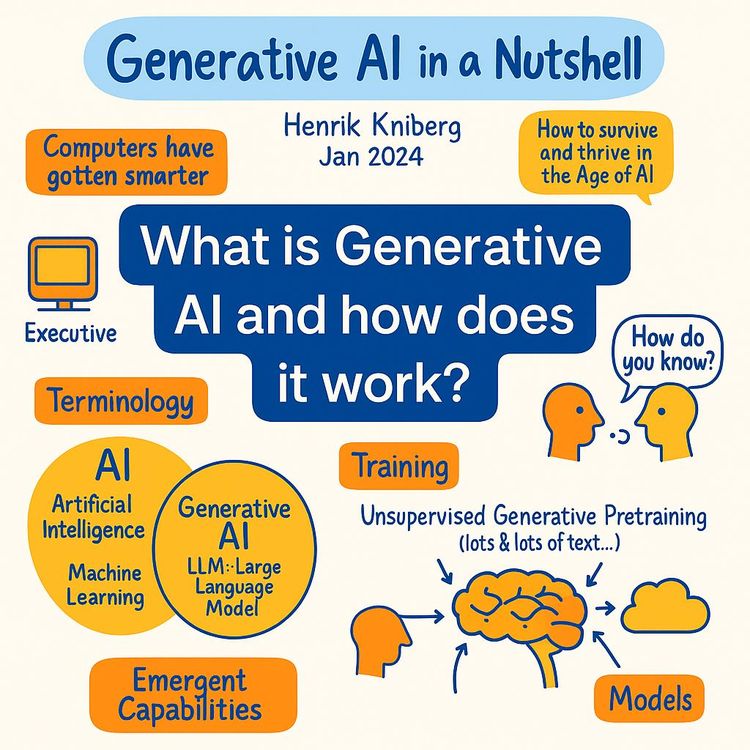
Video Course: What is Generative AI and how does it work?
Video Course: How to Use ChatGPT from Beginner to Professional
Video Course: How to Use Google Gemini for Google Workspace to Boost Productivity
Video Course: How to Use Claude 3.7 AI - Tips for Beginners!
Video Course: ChatGPT for Data Analytics: Full Course - from Beginners to Professional

Video Course: Generating Images and photos With ChatGPT?
Video Course: Generating Images & Photo's with MidJourney
Video Course: Generating Design's with Microsoft Designer and AI
Video Course: Generating Design's with Canva.com and AI
Join 20,000+ Professionals, Using AI to transform their Careers
Join professionals who didn’t just adapt, they thrived. You can too, with AI training designed for your job.