AI as Your PR Assistant: Create On-Brand Content in Minutes (Video Course)

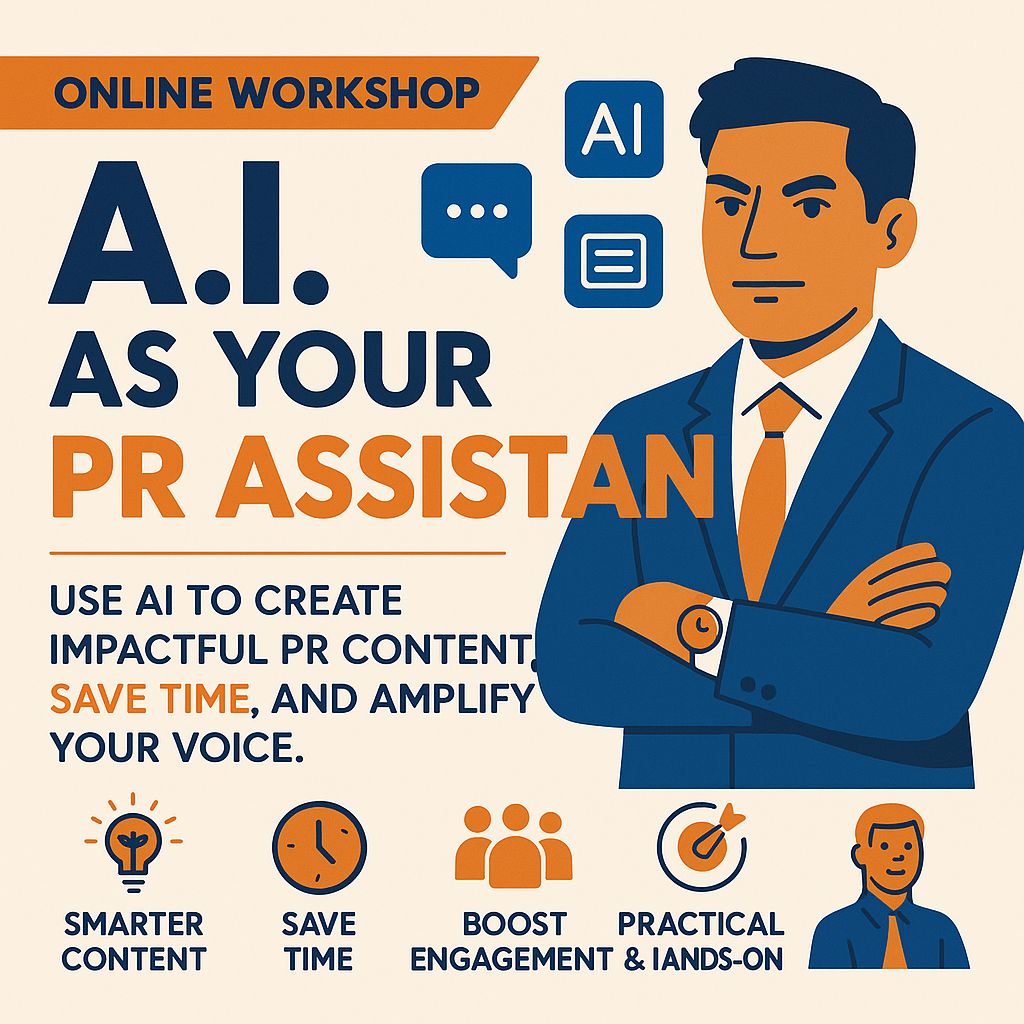
Tired of wrestling with design tools for your club's flyers and social posts? This course turns AI into your personal PR assistant. Learn the markdown file trick for built-in brand consistency, and go from blank page to polished, on-brand flyer in minutes.

Duration: 1.5 hours
Rating: 5/5 Stars
Beginner

Related Certification: Certification in Creating On-Brand PR Content with AI

AI as Your PR Assistant: Create On-Brand Content in Minutes (Video Course)
Access this Course

Also includes Access to All:

700+ AI Courses
700+ Certifications
Personalized AI Learning Plan
6500+ AI Tools (no Ads)
Daily AI News by job industry (no Ads)

Video Course

What You Will Learn

  • Understand LLMs and choose the right model for PR tasks
  • Manage tokens to control costs and craft efficient prompts
  • Create and use a markdown brand file for consistent outputs
  • Follow the AI PR workflow to draft, iterate, and finalize flyers
  • Ensure brand compliance and resolve common AI errors

Study Guide

Here is a comprehensive learning guide designed for Toastmasters members and PR teams, structured as complete video course content. It covers every point from your briefing in detail, written in a conversational, human style. ---

Introduction: Your New PR Assistant is Waiting

Let's be honest about something. Creating promotional material,flyers, social media posts, meeting announcements,can be a drag. It takes time, it takes design skills, and when you're busy juggling a career, a family, and your Toastmasters role, the last thing you want to do is wrestle with a design tool to make a simple poster. But you also know how important it looks. A shoddy flyer reflects poorly on your club. A great one can pull in guests and build your brand.

This course is about solving that problem. We're going to dive deep into how you can use generative AI as your personal PR assistant. This isn't about replacing your creativity; it's about giving you a power tool that handles the heavy lifting,the formatting, the brand compliance, the speed,so you can focus on the message and the impact. You'll learn the mechanics behind these tools, a clever technique called the "markdown file" that ensures brand consistency, and the practical steps to go from a blank page to a polished, on-brand flyer in minutes. This guide will cover everything from the basics of how these models think to advanced cost-saving strategies. By the end, you won't just be a user of AI; you'll be a director of it, getting exactly what you need, every time.


Section 1: The Engine Room - How Generative AI Actually Works

Before you start typing prompts, it helps to understand what's happening on the other side of the screen. You don't need a computer science degree, but you do need a mental model of how these tools operate. It will change how you talk to them.

Generative AI, at its heart, is a pattern-matching machine. It's been trained on an unfathomably large amount of text and images from the internet. When you give it a prompt, it's not "thinking" in the way a human does. Instead, it's predicting what the most likely next word, pixel, or design element should be, based on the patterns it learned. Think of it like the autocomplete on your phone, but on a massive scale. When you type "I am going to the..." your phone suggests "store" or "gym." An LLM does the same thing, but for entire paragraphs, images, and code. It's a sophisticated autocomplete engine.

The models we use,ChatGPT, Claude, Gemini,are called Large Language Models (LLMs). They are the engines that power this generation. Each has its own personality and strengths. For example, ChatGPT is a fantastic generalist and is excellent for creating marketing copy and flyers. Claude is often preferred for coding and technical projects. Gemini is Google's answer, deeply integrated with their ecosystem. There's also Copilot from Microsoft and a wave of newer, cost-effective models like DeepSeek and Kim K3 that are shaking up the market with their competitive pricing. The key takeaway here is that you're not locked into one tool. Your choice should depend on the task at hand and your budget. For our focus,creating flyers and social media posts,ChatGPT is currently the most effective and user-friendly option to start with.


Section 2: Tokens - The Currency of AI Interaction

Now we get to the nuts and bolts of cost and efficiency. When you use an LLM, you're not paying for words; you're paying for "tokens." This is a fundamental concept that will influence how you structure every single prompt.

A token is a piece of a word. It's the unit that the AI uses to process text. A simple word like "cat" is one token. A longer word like "unbelievable" might be broken down into three or four tokens. A good rule of thumb is that roughly 750 words of English text equals about 1,000 tokens. This matters because every interaction you have with the AI,both what you send (input tokens) and what it sends back (output tokens),consumes these tokens.

Here's the critical part about cost: not all tokens are created equal. Output tokens cost significantly more than input tokens,often two to six times more. The AI has to work much harder to generate new content than it does to read your instructions. This has a direct impact on your wallet or your free-tier quota. If you ask the AI to "create a flyer" without any constraints, it might generate a 2,000-word response, burning through 2,500+ output tokens. That's expensive. But if you say, "Create a 200-word social media post," you've just controlled the cost and gotten a more targeted result.

Managing token consumption is a strategic skill. Here are a few ways to keep costs down: - Choose the right model for the task: Don't use a premium model for a simple task like rewriting a sentence. Use a cheaper, faster model. - Keep your prompts concise but precise: Every unnecessary word in your prompt is a token you pay for. - Specify output length: Always tell the AI how long you want the response to be. - Start fresh conversations: This is a big one. The AI remembers all previous context in a conversation. If you have a long chat, all those past messages are re-sent as input tokens each time you make a new request. This causes your input token count to grow exponentially, making the conversation slower and more expensive. For each new piece of content, start a new chat. Your markdown file will ensure you don't lose the important context.


Section 3: The Foundation of Quality - Why Context is King

If you've ever gotten a generic, useless response from an AI, you know the pain. The problem is almost always a lack of context. The AI is a brilliant assistant, but it can't read your mind. It can only work with the information you provide. Garbage in, garbage out.

Let's illustrate. If you type "create a meeting flyer," the AI will give you a basic, generic template. It will have a place for a date, a location, and a time. It will be completely forgettable and useless to you. However, if you provide context,the club name, the meeting theme, the specific date and time, the venue, the names of the speakers, your brand colors, and the platform you're designing for,the AI can create something tailored and effective. The quality of your output is directly proportional to the quality of your input.

This context includes your brand guidelines. For Toastmasters, this is the official brand manual. It's a comprehensive document covering everything from the official color palette (like the specific red and gold) to typography, image usage, and the correct tone of voice. The problem? Uploading that entire PDF to an AI tool is a terrible idea. A 10 MB PDF contains thousands and thousands of tokens. On a free tier, this single upload could exhaust your entire quota in one shot. On a paid plan, it would eat a significant chunk of your monthly allowance. You need a more efficient way to give the AI this crucial context.


Section 4: The Master Key - The Markdown File Technique

This is the single most important technique you'll learn in this course. It's the difference between fighting with the AI every time and having it work for you effortlessly. The solution to the "brand manual problem" is a markdown file.

A markdown file is a plain-text document that uses simple formatting. But for our purposes, it's a condensed, structured repository of all your permanent information. It's a distillation of your brand manual, combined with the essential, unchanging details about your club. It's your "single source of truth."

Here's how to create one, and it's a one-time investment that pays off forever. First, upload your full brand manual PDF to your AI tool. Then, give it a simple instruction: "Read this brand manual and create a markdown file with the information I need for creating PR content." The AI will process the massive PDF and output a lean, structured text file containing the essential guidelines. It will include your brand voice, personality traits, a tone checklist, logo usage rules, specific color hex codes, and typography instructions. This condensed file uses roughly 200-300 times fewer tokens than the original PDF. It's a massive efficiency win.

But don't stop there. Now you need to expand this markdown file with your club's permanent information. This is the stuff that never changes. You should add: - Your club's official name and number. - The regular meeting schedule (e.g., "Meets on the 1st and 3rd Tuesday of each month"). - The physical meeting location and address. - If you're a hybrid club, the standard Zoom link, Meeting ID, and passcode. - Your club's social media handles (Facebook, Instagram, LinkedIn). - The contact email address for guests to reach out. - Any other recurring instructions you want the AI to always follow, like "Do not change any aspect of uploaded photos."

You can even ask the AI itself for suggestions on what to include. Say, "What other permanent information should I add to this club profile?" It will give you a great list. This file becomes your key. When you start a new session to create a flyer, you just upload this one small text file. The AI now has all the brand and club context it needs to produce compliant, accurate content without you having to repeat yourself or upload a huge PDF. It's like giving your assistant a detailed briefing book before you start working together.


Section 5: The AI-Powered PR Workflow - From Blank Page to Final Post

Now we get to the practical application. This is the step-by-step process you'll use every time you need to create content. It's designed to be efficient, consistent, and put you in control.

Step 1: Prepare Your Foundation. This is the one-time setup. You've already created your markdown file. You should also have your official club logo saved as a digital asset, ready to upload.

Step 2: Start a New Chat Session. Always begin with a fresh chat. This resets the token context and prevents your input costs from climbing. Upload your markdown file, your logo, and any photos you want to use (like a headshot of the Toastmaster of the Day).

Step 3: Provide the Variable Information. This is the information that changes from meeting to meeting. This includes the specific date and time of the event, the meeting theme (e.g., "Silence is Golden"), the name of the Toastmaster of the Day, and any special announcements. This is also where you specify the desired format, like "Create a square flyer for Instagram."

Step 4: Include a Critical Instruction. At the end of your prompt, add this: "Pick the rest of the details from the markdown file. Ask me if anything is missing." This is your safety net. It prevents the AI from making things up and ensures it has all the information it needs before it starts generating.

Step 5: Review the AI's Plan. Before the AI starts generating, it will often outline its plan. It might say, "I will create a square flyer using the brand's red and gold colors, feature the speaker's photo prominently, and use a bold, motivational headline." This is your chance to course-correct. If you don't like the direction, tell it now before it does the work.

Step 6: Generate and Iterate. This is where the real work happens. The first output is never the final output. It's a draft. You need to critically review it. Is it on-brand? Is the information accurate? Does it look professional? Then, use text prompts to request changes. You can say things like: - "Make the design 1:1 square so I can post it on Instagram." - "The photo is too dominant; make it smaller." - "Remove the logo watermark from the background,the official logo is already on the flyer." - "I don't like the text; replace it with something about the power of listening." - "Make the flyer less busy,remove some of the secondary information."

You can also use the "edit" button in tools like ChatGPT to directly modify specific parts of the generated image. And if you're using the mobile app, you can use voice dictation to give feedback quickly and naturally. The AI retains the context of the conversation, so you can make successive edits without re-entering all the parameters.

Step 7: Download and Deploy. Once you're happy with the design, download it. You can also ask the AI to create a companion social media post with a strong call to action. Then, you're ready to post it across your platforms.


Section 6: Brand Compliance in Practice - What AI Can and Can't Do

So, what can you actually expect from this process? With a well-crafted markdown file, the AI can generate a surprising amount of content. It can create meeting flyers that are compliant with your brand colors and fonts. It can write engaging social media posts. It can even repurpose a single design into different aspect ratios for different platforms (square for Instagram, portrait for Stories, landscape for a Facebook banner). It's a powerful content engine.

However, you need to be aware of the "AI aesthetic." AI-generated flyers often have a recognizable look. They can be clean, but also a bit generic. The layouts might feel formulaic, and sometimes there are distracting background elements. For example, an AI might generate a flyer with a subtle "Toastmasters" logo watermark in the background, even though you've already placed the official logo. This is where your role as the director comes in. You need to be able to articulate what's wrong and ask for changes. You can say, "Make this less busy" or "Remove the background graphic." Interestingly, telling the AI to "make it not look AI-generated" is often too abstract and produces worse results. It's better to give specific, actionable feedback.

There's also the question of cost. Free tiers are great for experimentation, but they have hard limits. In a live demonstration, a free-tier account was exhausted after generating a single flyer and required a 24-hour wait before it could be used again. If you're serious about using this workflow, you'll need to budget for a paid subscription. The $20/month plan offers sufficient capacity for a professional workflow. It's a small price to pay for the hours of design time you'll save.


Section 7: The Human Element - When to Use AI and When to Design Manually

Let's address the elephant in the room. There's a common criticism that AI-generated content feels fake or lacks creativity. And you know what? It can be true. The tools are incredibly fast and efficient, but they don't have your unique perspective, your club's personality, or your creative spark. This is why you need to develop judgment about when to use AI and when to take the manual route.

Use AI when: - You're on a tight deadline: You need a flyer in the next hour. AI is your hero. - You have high volume: You need to create multiple posts for a week of events. AI can handle the bulk. - Brand consistency is critical: You need to ensure every piece of content strictly adheres to the guidelines. The markdown file makes this easy. - You're facing a blank page: You have no idea where to start. AI can generate a starting point that you can then refine.

Design manually when: - Creativity is paramount: You have a unique, artistic vision for a project and the time to execute it. - You need precise control: You want to adjust every pixel, every line of text, and every element's position. - You find personal satisfaction in the creative process: For some, the act of designing is a joy, not a chore. - You're using advanced techniques: Things like complex transparency effects or custom illustrations are still difficult for AI to manage consistently.

The best approach is often a hybrid one. Use AI to generate a base design, then download it in an editable format (like PDF or Adobe Illustrator). Import it into a tool like Canva and use its features,like "magic layers",to fine-tune the elements. You can fix a distorted photo, adjust the text spacing, or swap out a background element. This gives you the best of both worlds: AI's speed and consistency, combined with your human judgment and creative control.


Section 8: Navigating the Pitfalls - Common Challenges and Solutions

No tool is perfect, and AI is no exception. You will run into problems. The key is to know what they are and have a plan to overcome them.

Challenge 1: Hallucination. This is when the AI makes up information that sounds plausible but is completely wrong. It might invent a speaker's name, get the meeting time wrong, or create a fake address. The solution is two-fold. First, use the "Ask me if anything is missing" instruction to force the AI to confirm details. Second, always review the AI's output for accuracy before you publish anything. You are the final check.

Challenge 2: Photographic Distortion. When you upload a photo, the AI doesn't see it as a fixed object. It interprets it as data. This can lead to subtle (or not-so-subtle) changes. It might alter a person's facial features, change the color of their shirt, or distort the image to fit its design schema. The solution is to be explicit in your markdown file. Add the instruction: "Do not change any aspect of the uploaded photos. Use them exactly as they are." This acts as a firm guardrail.

Challenge 3: Inconsistency Across Outputs. You might create a fantastic flyer for one meeting, and then the next month, you try to create a similar one, and the colors are slightly off, or the design is completely different. The solution is consistency in your inputs. Always use the same markdown file. Use the same variable inputs. And once you get a design you love, ask the AI to generate editable files so you can use the first successful output as a template for all future ones.


Conclusion: The Future is a Partnership

We've covered a lot of ground, from the basics of how LLMs function to the advanced strategy of managing token costs. The core takeaway is that AI is not here to replace you. It's here to be your assistant. It's a powerful tool that can handle speed, consistency, and scale, but it needs a director. It needs your judgment, your taste, and your final approval.

The markdown file technique is your master key. It unlocks a workflow where brand compliance is built-in, not an afterthought. It transforms the AI from a generic generator into a knowledgeable member of your PR team. By mastering tokens, you take control of your budget. By mastering iteration, you take control of the creative output.

The most effective communicators of the future won't be the ones who can design the fastest. They'll be the ones who can direct the tools the most effectively. They'll know when to let the AI run and when to step in with a human touch. They'll blend the efficiency of the machine with the emotional intelligence of the human. That's the partnership this course is designed to build. So go ahead, start building your markdown file, open a new chat, and start directing. Your new PR assistant is waiting for your first command.

Frequently Asked Questions

What is the purpose of this FAQ section for the AI PR Assistant course?

This FAQ consolidates the most common questions about using generative AI for public relations work, specifically for creating branded content like flyers, social posts, and announcements. It bridges the gap between the foundational concepts of AI and the practical application for Toastmasters clubs and similar organizations.

The goal is to give you a single, practical reference that answers questions from the very first time you open an AI tool to the advanced stages of managing token costs and brand compliance. It addresses the "how-to" and the "why," ensuring you understand not just the mechanics of prompting, but the underlying principles that save you time, money, and frustration.

This resource is designed to be your first stop for troubleshooting, whether you're stuck on a technical detail like creating a markdown file, or you're facing a strategic question about whether AI is even the right tool for a specific creative task. It turns the course's core lessons into easily searchable, actionable knowledge.

What is generative AI?

Generative AI refers to software that can produce new content,text, images, audio, or video,in response to user instructions. Instead of simply retrieving existing information, it generates original output based on patterns learned from vast amounts of data. You interact with it by typing or dictating a prompt, and it responds with an answer, an image, or another type of content.

Popular examples include OpenAI's ChatGPT, Google's Gemini, Anthropic's Claude, and Microsoft's Copilot. For PR purposes, this means you can ask for a complete meeting flyer design or a persuasive social media caption from scratch, rather than just searching for templates. The AI creates something new based on its training, which is a fundamental shift from traditional software that only manipulates data you provide.

What are large language models (LLMs) and how do they work?

Large language models are the engines behind generative AI. They are trained on enormous collections of text from books, websites, articles, and other sources. Once trained, the model predicts what token (word or part of a word) should come next in a sequence.

Think of an LLM as an extremely sophisticated autocomplete: when you give it a prompt, it generates the next word, then the next, and so on, until it completes a response. The same principle applies when generating images, because the model is predicting the next visual element based on your text instructions. This is why context and detailed prompts are so critical,they set the starting point for the autocomplete, steering it toward the specific output you need.

Which LLMs are commonly used for PR content creation?

Several LLMs are widely available and each has strengths:

ChatGPT (OpenAI) - Good general-purpose tool with a generous free tier and strong image-generation capabilities.

Gemini (Google) - Another general-purpose model, accessible at gemini.google.com.

Claude (Anthropic) - Excellent for coding, website design, and structured solution-building, though not typically the first choice for flyers.

Microsoft Copilot - Integrated into Microsoft products and often used for text and productivity tasks.

DeepSeek and Kimi K3 - Chinese models that have gained attention for being significantly cheaper than US-based alternatives while still producing solid results.

The "best" model depends on your specific needs, budget, and desired output quality.

What are tokens, and why should I care about them?

Tokens are the units that LLMs process. A token can be a short word, a whole word, or even a fragment of a longer word (for example, "faster" might be split into two tokens). As a rough guideline, about 750 words equal roughly 1,000 tokens.

Tokens function as a kind of currency for AI usage: every prompt you send and every response you receive is measured in tokens. Free tiers of AI tools will eventually run out of tokens, requiring you to wait to continue. Understanding tokens is essential for managing costs and avoiding unexpected limitations, especially if you plan to use AI for regular content creation.

How are tokens consumed and billed?

Tokens are used twice during every interaction:

Input tokens: The prompt you send, including any instructions, uploaded files, images, or attachments.

Output tokens: The content the AI generates in response.

Both count toward your total usage. Importantly, output tokens cost more than input tokens,often two to six times more. So, if you ask for a 2,000-word post when you only needed 200 words, you consume far more tokens and pay a higher price than necessary. This asymmetry is a core reason why specifying output length and keeping prompts concise is a critical cost-saving strategy.

How can I control token usage and keep costs down?

There are several practical strategies:

Use a cheaper or lower-tier model for simple tasks when you don't need sophisticated output.

Keep prompts short and precise. Extra words and repeated instructions add to your input token count.

Specify the desired length of the output (e.g., "Write a 200-word post").

Avoid running long conversations. Every exchange carries the entire previous context, so input tokens grow exponentially. If a conversation becomes too long, start a new chat and re-upload your essential files.

Create reusable reference files (such as a markdown file) so you don't have to repeat the same detailed instructions in every session.

These strategies work together to keep your token consumption predictable and your costs low.

Why is context so important when prompting AI?

AI responds best to specific, detailed instructions. A prompt like "create a meeting flyer" will produce a generic, generic-looking result because the model has to guess the club name, meeting theme, date, venue, and style.

To get useful output, you must provide context: the club name, the meeting theme, the date and time, the venue, and any relevant guidelines. Without this context, the AI either makes assumptions that may be wrong or asks for clarification. The more context you supply upfront, the closer the first draft will be to what you want. This is why the markdown file technique is so powerful,it provides consistent context without requiring you to re-type it every time.

What is a markdown file, and how does it improve AI-assisted PR work?

A markdown file is a plain, lightweight text file that contains formatted text using simple characters and symbols. It can be uploaded to an AI tool just like a PDF, but it is far smaller and uses far fewer tokens.

For PR purposes, you can create a markdown file that contains the essential guidelines from the official Toastmasters brand manual, condensed into a concise "cheat sheet" describing approved colors, fonts, voice, tone, logo usage, image styles, and other rules. Additionally, you can add permanent information about your club,name, meeting schedule, location, social media handles, contact details, and club mission.

This single file becomes your "source of truth," allowing you to generate consistent, on-brand content every time without re-typing the same instructions.

How do I create a markdown file from the full brand manual?

The easiest method is to let the AI do the work:

1. Upload the official brand manual (PDF) to your preferred LLM.

2. Give an instruction such as: "The attached document is the Toastmasters brand manual. Create a markdown file I can use for creating PR content. Include voice, personality, tone checklist, logo usage, and any rules I need to know."

3. Review the generated markdown file. It will be a condensed text version, perhaps 200-300 times smaller in token count than the original PDF.

4. Download or copy the markdown file for future use.

Because this is a one-time process, using the full PDF temporarily is acceptable. Afterward, you only upload the markdown file, which saves enormous token costs in every future session.

What club-specific information should I add to the markdown file?

Anything that stays consistent from one meeting to the next should be included. Typical examples:

Club name and number

District and area information

Regular meeting day and time (e.g., "first and third Monday of each month")

Meeting location (physical address and/or virtual meeting link)

Social media handles and website

Official contact email

Club mission statement

Preferred tagline or branding phrases

Do not include things that change each meeting, such as the theme, the Toastmaster of the Day, date, or special event details. Those will be supplied in each new prompt.

How do I generate a meeting flyer using AI and a markdown file?

Once your markdown file is prepared, the workflow is quick:

1. Start a new chat with your AI tool.

2. Upload the markdown file and any necessary visual assets, such as the official Toastmasters logo and a photo of the Toastmaster of the Day.

3. Write a short prompt that includes only the details that change for this specific meeting. For example: "Create a meeting flyer for 29 July 2027. Theme: Silence is Golden. Toastmaster of the Day: Ketan Burrito, DTM. Pick the rest of the details from the markdown file. Ask me if anything is missing."

4. The AI will read the markdown file for permanent details, fill in the variable information from your prompt, and ask clarifying questions if needed.

5. Confirm or adjust the plan, and the AI will generate a brand-compliant flyer.

Because the markdown file already contains the brand guidelines and club details, your prompt can be incredibly short,sometimes just the date, theme, and speaker.

Why should I tell the AI to "ask me if anything is missing"?

When you add that instruction, the AI will not silently assume values for anything you left out. Instead, it will list the missing details and ask for them (for example, the Zoom meeting ID or whether you want the flyer in a square or portrait format).

This prevents output that contains incorrect placeholders or unintended content. It also gives you a chance to finalize your requirements before the AI begins generating the image. This simple instruction acts as a safety net, catching gaps in your prompt that you might not have noticed.

Can I edit an AI-generated design after it is created?

Yes, and iterative refinement is expected. There are two main editing methods:

Prompt-based editing: Type or dictate changes to the design. For example: "The photo is too big; make it smaller" or "Replace the tagline with 'Find your voice.'"

In-image editing tools: Many AI tools offer an edit or selection button that lets you highlight a specific area of the image and describe what to change.

You can also request multiple versions of the design, such as different aspect ratios, and the AI will generate a new version accordingly. Remember that each edit consumes additional tokens, so it is more efficient to batch several change requests into one prompt whenever possible.

Can AI produce different aspect ratios and formats for different platforms?

Yes. If you initially generate a square flyer for Instagram, you can ask the AI to create a portrait version for stories or a landscape version for Facebook headers. The AI will rearrange the elements automatically, eliminating the laborious manual resizing that design tools often require.

You can also request editable file formats such as PDF, Adobe Illustrator, or even PowerPoint, which can then be opened in your preferred editing software for final tweaks. This flexibility makes it easy to repurpose a single design concept across all your communication channels without starting from scratch.

What is the best way to create a matching social media post?

Once your flyer is ready, simply prompt the AI with something like: "Create a social media post to accompany this flyer. The post should have a strong call to action for guests to join the meeting."

Because the AI already has the markdown file and your meeting details in context, it will write a post that includes the theme, date, venue, and a persuasive invitation. You can copy the text directly into your social scheduling platform or edit it as needed. This saves you from writing the post separately, ensuring the messaging is consistent across both the visual and textual elements of your campaign.

How can I prevent AI outputs from looking generic or "AI-generated"?

Many people can quickly recognize AI-generated content because it follows predictable patterns and lacks a human touch. To produce less generic results:

Refine your prompts with specific stylistic instructions, such as "use a minimalist design" or "favor negative space."

Ask the AI to "make the text more natural" or "rewrite this in a conversational tone."

Iterate multiple times, examining each draft and making targeted changes.

Include your own creative direction in the prompt; the AI is a starting point, not the final authority.

Use brand-specific details from your markdown file so the output aligns with your club's unique identity.

Some users intentionally say "make this not look AI-generated," but results vary widely. Adding a request for the AI to "make small imperfections" often produces unpredictable and sometimes unusable designs. It is usually more effective to guide the AI with constructive, specific changes.

Does AI-generated PR content always comply with Toastmasters brand guidelines?

Not automatically. If you upload the brand manual and include those rules in your markdown file, the AI will usually follow the primary requirements,colors, fonts, logo placement, and voice. However, pitfalls remain: the AI may generate a logo that is slightly distorted, create a QR code that doesn't scan, or choose a photo that violates style expectations.

Human review is still essential. Before publishing, check the flyer against the official guidelines and make any necessary corrections, either by prompting the AI again or by editing the final image in a design tool. Treat AI output as a strong draft that needs a final quality check, not as a finished product ready for distribution.

Why do AI tools sometimes distort faces or change uploaded photos?

In some cases, the AI's image generation pipeline treats an uploaded photo as a style suggestion rather than a fixed element. It might "touch up" the person's face, alter skin tone, or make other unwanted changes. This can happen especially when you ask the AI to edit the photo or when using a free tier with less precise control.

To minimize this:

Add an explicit instruction in your markdown file: "Do not change any aspect of uploaded photos."

When attaching a photo, state "Use this photo exactly as-is."

If distortion still occurs, download the AI-generated flyer and edit it manually in a tool like Canva, swapping in the original photo. This is a common workaround that preserves the AI's design while ensuring the photo remains authentic.

Is AI a replacement for human designers and PR volunteers?

AI is best viewed as an assistant, not a full replacement. It excels at producing a polished first draft quickly, especially when time is short. However, human oversight, creativity, and taste remain critical.

A designer may notice that a flyer lacks transparency, that a quote feels off-brand, or that an image needs a subtle adjustment,things an AI might miss. The ideal workflow is collaborative: use AI to generate a base version, then refine it with human judgment. In cases where you have plenty of time and a strong personal design vision, doing it manually may yield a more satisfying, creative result.

When should I avoid using AI and do things manually?

There is no absolute rule, but consider manual design when:

The project demands a high level of creative originality or emotional nuance.

The brand requires exact visual elements that AI tends to alter (e.g., specific photos, logos, or custom illustrations).

You have the time and skill to create a more refined result.

The AI output would be more expensive in tokens than the value it provides.

Conversely, use AI when you are on a tight deadline, need a first draft to work from, or lack design experience. Knowing when to use AI and when not to is an increasingly valuable skill. Both approaches can coexist,you might do the core design manually and use AI to generate copy, or use AI for layout and then adjust details by hand.

Do free versions of AI tools support the markdown file technique?

Yes. A markdown file is simply a text file, so you can upload it to most free tiers just as you would any document. However, free versions typically have strict token and upload limitations. You might only generate one or two flyers before being asked to wait until your allowance resets.

If you plan to use AI regularly, especially for iterative design work, a paid subscription (such as ChatGPT Plus) is usually worth the cost because it offers higher limits, faster response times, and access to more advanced models. The markdown file technique still works on free tiers, but your productivity may be limited by these constraints.

Can AI be integrated with design platforms like Canva?

Yes. Canva has its own built-in AI tools and also offers integrations with ChatGPT and other AI services. In some cases, you can generate content directly inside Canva or copy AI output and paste it into a Canva design.

Additionally, newer Canva features like Magic Layers can separate elements in an uploaded image, letting you edit an AI-generated flyer piece by piece. If you have Canva Pro or a business account, you can also use AI to generate text, remove backgrounds, and apply advanced edits. This hybrid workflow,generate with AI, refine in Canva,is a popular way to preserve design control while saving time.

What is "hallucination" in the context of AI-generated content?

Hallucination refers to the tendency of AI models to invent information that sounds credible but isn't true. For example, the AI might generate a flyer with the wrong date, a misspelled venue name, or a fabricated quote attributed to a club member.

This happens because the AI is predicting what text or elements are most likely to follow based on patterns, not verifying facts against a database. This is why human review of all AI output is essential. Always double-check dates, times, names, and contact details before publishing. The "Ask me if anything is missing" instruction helps reduce, but doesn't eliminate, the risk of hallucination.

Why is it important to start a new AI chat session for each new piece of PR content?

As a conversation grows, the AI retains all previous messages as context, causing input tokens to accumulate exponentially. This increases both cost and processing time.

By starting a new chat and uploading the markdown file (which contains all permanent information), each content-creation session begins with a manageable token footprint and only includes the variable information relevant to the current project. This practice keeps your costs predictable and your response times fast, especially when working on multiple flyers or posts in a single sitting.

What are the ethical implications of using AI for branded content?

The primary ethical considerations revolve around transparency, accuracy, and creative integrity. If you use AI to generate content that looks like it was created by a human designer, is that deceptive? Should AI-generated content be labeled as such?

There's also the question of accountability,if an AI-generated flyer contains an error that leads to a public relations issue, who is responsible? The human who published it, presumably.

Finally, there's the concern about homogenization: if everyone uses the same AI tools with similar prompts, will all branding start to look and sound the same? These are questions each organization must answer for itself, balancing efficiency gains against potential risks to brand identity and trust.

How do you build a quality assurance process for AI-generated PR content?

A robust QA process combines AI automation with human review checkpoints. Here's a practical framework:

1. Automated checks: Use the AI to self-review its own output. Ask it: "Check this flyer against the brand guidelines in the markdown file. List any violations."

2. Peer review: Have a second person review the content before it goes live. A fresh set of eyes can catch errors you might miss.

3. Brand compliance checklist: Use a standard checklist (colors, fonts, logo placement, contact details) and verify each item manually.

4. Test before publishing: If the content includes a QR code or a link, test it. If it's an event flyer, verify the date and time on a calendar.

This multi-layered approach ensures that AI-generated content meets your standards before it reaches your audience.

What is prompt engineering, and why is it a valuable skill?

Prompt engineering is the discipline of designing precise, effective AI instructions to maximize output quality while minimizing token consumption. It's about learning how to communicate with AI systems in a way that gets you the results you want on the first try, or close to it.

This skill is valuable because it directly impacts your productivity and costs. A well-crafted prompt can reduce the number of iterations needed, saving tokens and time. It also improves the consistency of your output, ensuring that your AI-generated content aligns with your brand guidelines every time.

As AI tools become more integrated into professional workflows, prompt engineering is becoming a standard skill for communicators, marketers, and designers, not just technologists.

What are token economics and how do they affect my AI budget?

Token economics refers to the cost structure of using AI models, where every interaction is measured in tokens. Understanding this structure is critical for budgeting your AI usage.

The key factors are: input token cost (what you send), output token cost (what the AI generates), and the fact that output tokens cost 2-6 times more than input tokens.

To manage your budget effectively, you need to be aware of how many tokens each task consumes. Creating a flyer with multiple iterations might use tens of thousands of tokens, while writing a short social post might use only a few hundred. Tracking your usage helps you allocate resources and decide when a paid subscription is more cost-effective than a free tier.

How can voice dictation improve my AI workflow?

Voice dictation allows you to speak your prompts and feedback instead of typing them. This can significantly speed up the iteration process, especially when you're refining a design.

Instead of typing "Make the photo smaller and move it to the left," you can simply say it. This is particularly useful when you're reviewing a design and want to give natural, conversational feedback.

Many AI tools have built-in voice input, or you can use your device's dictation feature. This hands-free approach allows you to work faster and can be a more intuitive way to communicate your creative vision.

What should I do when the AI doesn't follow my instructions?

AI systems are probabilistic, meaning they occasionally deviate from instructions for no clear reason. When this happens, don't get frustrated. Here's what to do:

1. Restate the instruction clearly in a new prompt. For example: "I asked you to use the brand colors from the markdown file. The current version does not use them. Please correct this."

2. Break the task into smaller steps. Instead of asking for a full flyer, ask for the layout first, then the copy, then the color scheme.

3. Check your markdown file. Make sure the instruction you want is clearly stated there. If it's not, add it.

4. Start a new chat. Sometimes the AI gets confused by a long conversation history. Starting fresh can reset its focus.

Remember that AI is a tool, and like any tool, it requires occasional adjustment to work correctly.

How can I create multiple versions of a flyer for different audiences?

Once you have a base flyer design, you can ask the AI to create variations for different audiences or purposes. For example:

For guests: "Create a version of this flyer that emphasizes the benefits of joining Toastmasters and includes a 'First visit is free' note."

For members: "Create a version that focuses on the theme and the Toastmaster of the Day, with less introductory text."

For corporate outreach: "Create a version that highlights the professional development aspects and includes a contact email for more information."

This allows you to tailor your message to different segments without starting from scratch each time. The AI uses the same base design and markdown file but adjusts the copy and emphasis based on your instructions.

Certification

About the Certification

Become certified in AI-Powered PR Content Creation. You'll prove you can build brand-consistent flyers and social posts using AI and markdown files,turning blank pages into polished, on-brand content in minutes.

Official Certification

Upon successful completion of the "Certification in Creating On-Brand PR Content with AI", you will receive a verifiable digital certificate. This certificate demonstrates your expertise in the subject matter covered in this course.

Benefits of Certification

  • Enhance your professional credibility and stand out in the job market.
  • Validate your skills and knowledge in cutting-edge AI technologies.
  • Unlock new career opportunities in the rapidly growing AI field.
  • Share your achievement on your resume, LinkedIn, and other professional platforms.

How to complete your certification successfully?

To earn your certification, you’ll need to complete all video lessons, study the guide carefully, and review the FAQ. After that, you’ll be prepared to pass the certification requirements.

Join 20,000+ Professionals, Using AI to transform their Careers

Join professionals who didn’t just adapt, they thrived. You can too, with AI training designed for your job.