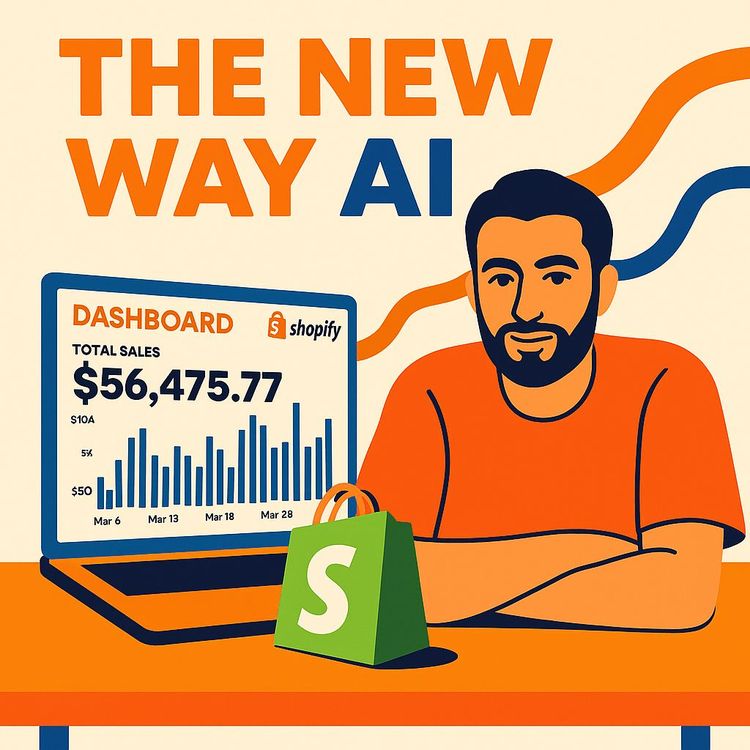
AI Dropshipping Blueprint: Build a Profitable Shopify Brand (Video Course)
Stop copycat stores. Build a one-product brand with crisp angles, fast shipping, and retention that sticks. This course gives you a clear, AI-assisted playbook: find real pains, test 3x3 ads, know your numbers, and scale with profit.
Related Certification: Certification in Launching Profitable AI-Powered Shopify Dropshipping Brands
Also includes Access to All:
What You Will Learn
- Use AI plus manual research to validate niches and craft unique angle-driven offers
- Build angle-specific, high-conversion landing pages and UGC ad creatives with 3×3 hook testing
- Vet suppliers, negotiate SLAs, and enforce operational policies to protect profit
- Implement email/SMS retention flows and upsells to boost LTV and repeat revenue
- Track core metrics (COGS, CPA, AOV, ROAS, LTV) and scale ads with a profit-first approach
Study Guide
Introduction: Why "Dropshipping Is Dead" , And What Replaced It
"Dropshipping is dead" doesn't mean e-commerce is over. It means the lazy version of it is. Copying a trending gadget, throwing up a generic store, and praying that cheap ads carry you to profit , that method flatlined the moment competition exploded and tracking got messy. The new model isn't a hack; it's a discipline. You win by building a one-product brand with a unique angle, world-class customer experience, and an AI-accelerated process that cuts research time in half and doubles the quality of decisions. This course gives you the exact system to do that, step by step, from zero to a resilient, profitable operation.
Here's what you'll learn: how the landscape evolved, how professionals pick products (and why it's not about products), how to build conversion-dense landing pages, how to test ads the right way, how to manage suppliers like a pro, and how to build retention systems that turn one-time sales into long-term revenue. You'll get prompts, frameworks, examples, pitfalls, and a practical workflow you can run immediately. No fluff. Just the playbook.
The Core Shift: From Product Arbitrage to Angle-Driven, AI-Augmented Brands
The old playbook was: see a trending product, copy an ad, drive cheap clicks, hope for the best. The new playbook is: find a sharp, problem-solving angle for a specific person, validate with real data, build a page that speaks to that person alone, test multiple hooks, iterate, and operate like a brand from day one. AI isn't the brain , you are. AI is your co-pilot: research, analyze, and speed things up, but you make the calls.
Example:
Old model: "Dog toothbrush toy" for everyone, generic ad, generic page, slow shipping, no retention. New model: "Self-brushing dental chew specifically for Great Danes with deep jaws," breed-specific landing page, responsive supplier, fast shipping option, email/SMS flows launched on day one.
Example:
Old model: "Anti-snoring device" blasted to a broad audience. New model: "Comfort-fit nasal dilator for side-sleepers who wake up groggy," landing page with side-sleeper testimonials, UGC showing morning energy wins, and a sleep-tracking bonus guide to increase perceived value.
Foundations: What Dropshipping Actually Is (And Isn't)
Dropshipping is a fulfillment method: your store sells; a third-party supplier ships directly to your customer. You don't hold inventory. That reduces risk, but it doesn't eliminate responsibility. Your job is to own the brand, the customer experience, and the systems that keep both running smoothly.
Key terms you'll use daily:
- Private Agent: A sourcing/fulfillment partner who secures better quality control, faster shipping, and custom packaging than generic marketplaces.
- UGC (User-Generated Content): Real-feeling videos and images made to look like normal people talking about your product. Converts better than polished commercials.
- CBO (Campaign Budget Optimization): Facebook allocates budget across ad sets to what's performing best.
- Marketing Angle: The story that sells the product to a specific person with a specific problem.
- Hook: The first 3 seconds of an ad that stops the scroll.
- Ad Spy Tool: Software that reveals competitor ad creatives, spend signals, and longevity.
- LTV (Lifetime Value): Total revenue a customer generates across their relationship with you.
- MRR (Monthly Recurring Revenue): Predictable revenue from subscriptions or repeat cycles.
Example:
Dropshipping done wrong: Copy a TikTok gadget, paste the product description, ship in a month, no follow-up, no brand voice, no numbers. Dropshipping done right: Pick a niche pain, craft a unique angle, vet a supplier, map retention flows, monitor profit daily.
Example:
Fulfillment clarity: Your store handles marketing, checkout, and service. Your supplier handles picking, packing, and shipping. Your brand owns the customer's trust , never outsource that.
How We Got Here: The Evolution of the Model (Without the Hype)
- Early Era: Cheap ads, easy virality, low expectations. Trendy gadgets flew off the shelves, despite slow shipping. Simple stores worked; professionalism didn't matter much.
- Maturation: Competition rose. One-product stores emerged. Suppliers improved; shipping got faster. The bar for store design and credibility went up.
- Privacy Disruption: Ad tracking accuracy dropped. Targeting became fuzzier. Creative quality and volume took over as the main growth lever. Average order value and funnels became survival tools. Private agents replaced mass marketplaces for serious players.
- UGC & Profit Focus: Native-feeling content became essential. Creative fatigue accelerated, forcing more frequent iterations. Entrepreneurs started caring about profit, not vanity revenue.
- Modern AI & Brand Era: AI is everywhere, which means generic stores are everywhere too. The winners are niche brands, angle-driven offers, and retention systems. Amazon has trained customers to expect fast shipping and easy returns. You must meet that standard , or lose.
Example:
What worked before: A flashy video of a car scratch remover, basic website, sold on impulse. What works now: "Clear-coat scratch pen for black SUVs," split tests on hooks, tight refund policy, and an onboarding email that teaches usage for best results.
Example:
What failed before and still fails: Multi-product general stores that scream "flea market." What wins now: A singular, coherent identity solving one obvious problem for one specific group.
Mindset: The Failing vs. Winning Approach (Read This Twice)
Failing looks like this: you ask AI for "winning products," you copy trends, ignore the customer's actual problem, quit after three unprofitable days, worship revenue screenshots, and forget to track costs. Winning looks like this: you use AI as a research assistant, find a unique angle, test methodically, adapt, and build for repeat business.
Example:
Failing: "Everyone is selling hair curlers; I'll sell them too." Winning: "Heatless overnight curl kit for fine hair that frizzes easily," angle-specific page, UGC showing next-morning results, email course on style maintenance.
Example:
Failing: Launch 1 ad, declare the niche dead. Winning: Spin 9 hooks across 3 angles, keep data, refine hooks that show good click or watch metrics, replace losers every few days, and keep compounding.
Your AI Co-Pilot: How to Use It Without Losing Your Edge
AI accelerates research, copy, and creative ideas. It scans reviews, digs for angles, drafts landing pages, and outlines scripts faster than you can. But it can't care. It can't know your customer like you can. It can't see nuance in a market the way you will after reading a hundred reviews. Treat AI like a high-IQ assistant, not a CEO.
Example:
Good prompt: "Act as an e-commerce market analyst. Identify 5 sub-niches in pet care where customers complain about daily hassles. Cross-reference with Amazon reviews and Reddit threads. Output: problems, top keywords, and 3 product concepts per niche."
Example:
Bad prompt: "Give me a winning product." You'll get the same junk everyone else got and join the losing pile.
The Five-Phase Product Research & Validation System
This is your blueprint for finding a product-angle pair that actually deserves your time and money.
Phase 1: AI-Powered Niche Ideation
Use a detailed role prompt to surface niches with observable demand signals. Ask for problems, not just products. Lean into forums, search trends, and Amazon category leaders.
Example:
Prompt for pets: "Identify problem-heavy sub-niches for owners of small dogs. Look for recurring headaches: dental care, anxiety, shedding. Surface 3-5 product concepts per problem with Amazon keyword volume."
Example:
Prompt for home fitness: "Find sub-niches where people struggle with consistency: compact equipment for small apartments, silent gear for shared spaces, form-correction tools. Provide buyer personas and keywords."
Tip: Save prompts and responses in a knowledge base. You'll reuse them across niches.
Phase 2: Manual Verification and Angle Discovery
Now you verify with your own eyes. Use Google, Amazon, Reddit, and Facebook Ad Library.
- Find top sellers on Amazon; read the titles, bullets, and reviews.
- Use Facebook Ad Library: search product terms, sort by impressions or engagement. Find real spenders, not randoms.
- Identify the leading angle from their ads and landing pages. Ask: Who are they speaking to? What problem are they solving? Where's the gap?
Example:
Dog dental care: Competitors push "dog toothbrush toy" for all breeds. Gap: breeds with unique jaw shapes don't get full cleaning.
Example:
Posture corrector: Everyone sells to office workers generically. Gap: "Gentle spine-aligning band for breastfeeding mothers with upper-back fatigue," or "lightweight posture band for gamers who hunch for hours."
Phase 3: Unique Angle Development with AI (Reviews = Gold)
Feed Amazon links into your AI and ask it to mine positive and negative reviews: what's missing, what's misunderstood, what frustrates people. Ask for segment-specific insights, not broad strokes.
Example:
Dog dental chew: Reviews reveal large-breed owners say "doesn't reach back molars" or "chew too small." Your angle: "Breed-specific sizes with back-molar ridges for extra-deep cleaning."
Example:
Self-watering planter: Reviews say "mold growth," "roots waterlogged," "hard to see water level." Your angle: "Dual-vent design that prevents mold, clear water-gauge window, and wicking cord caliber matched to pot size."
Phase 4: Hyper-Targeted Marketing Pitches
Use AI to flesh out the pitch by persona or use-case. The output should feel like it was written for one person's problem , because it was.
Example:
Large dog owners: "Deep jaws, back teeth hard to reach, hates toothbrushes." Pitch: "A chew toy that cleans while they play , designed for big jaws so back molars don't get ignored."
Example:
Apartment plant parents: "Overwatering fear, gnats, travel." Pitch: "A planter that waters for you, vents so soil breathes, and shows water level at a glance."
Tip: Have AI create 3 pitches per persona. Keep the best, test the rest as angles.
Phase 5: Final Validation with Ad Spy Tools
Before building, confirm money is flowing in the niche. Use an ad spy tool to find competitor brands, view creative longevity, and estimate spend patterns. If a brand consistently spends big, the market is active and likely profitable.
Example:
Find a brand pushing a dental chew with multiple actives and high engagement across several creatives over weeks. Estimate shows steady daily spend. Signal: Valid category.
Example:
See posture corrector brands with constant ad turnover and low longevity. Signal: Creative fatigue is high , angle differentiation or superior product required.
Tip: Don't copy creatives. Extract why they work: angle, promise, proof, structure, and hook patterns.
Angle vs. Hook: Don't Mix Them Up
- Angle = the story and who it's for.
- Hook = how you grab attention in the first 3 seconds.
Example:
Angle: "For Great Danes' deep jaws." Hook 1: "Your Great Dane hates toothbrushes? This fixes that." Hook 2: "Back molars finally clean , without the wrestling match."
Example:
Angle: "For breastfeeding moms with upper-back fatigue." Hook 1: "Nursing aches? Try this 2-minute reset." Hook 2: "Relief without bulky braces."
Building Offers People Actually Want (Not Discounts)
Your offer is more than price. It's product + angle + bonuses + guarantees + experience. Increase perceived value and average order value (AOV) with bundles, custom content, and risk-reversal.
Example:
Dog dental chew bundle: "Breed-sized chew + tartar scraper + vet-approved home checklist," with a "Clean-Teeth or It's Free" guarantee.
Example:
Self-watering planter: "Planter + gnats-prevention guide + 3-pack of wicking cords," plus "Plant-Health Support" via email with seasonal tips.
Tip: Add a limited, angle-specific bonus instead of blanket discounts. It preserves margin and improves differentiation.
High-Conversion Store Architecture: Angle First, Everything Else Second
Use AI page builders to move fast, then overwrite with your angle-specific copy. One product, multiple angles , each gets its own landing page. Clean design, fast load, social proof high on page, and frictionless checkout.
Example:
Dog dental chew: One product with variants by breed size. Separate pages: "For Great Danes," "For Mastiffs," etc. Each page features breed-specific benefits, UGC from owners, and size guidance.
Example:
Posture band: Separate pages for "Breastfeeding relief," "Gamer posture," and "Desk worker stiffness." Each page shows different context photos and testimonials.
Tips:
- Above the fold: one promise, one image, one CTA.
- Use 3-5 bullet benefits written like outcomes, not features.
- Show UGC and reviews before long spec sections.
- Add an "Is this right for me?" accordion with common objections.
Copy That Converts: Speak to One Person's Pain
Generic copy repels. Angle-first copy converts. Use plain language, specificity, and proof. Borrow the customer's words from reviews and forums.
Example:
Bland: "Our chew toy cleans teeth easily." Angle-led: "Your Great Dane's back molars finally clean , no more wrestling with a toothbrush."
Example:
Bland: "Improve posture." Angle-led: "Sitting for 6 hours? Two minutes with this band resets your shoulders , no bulky brace."
Tip: Rewrite every sentence to answer: "So what?" If it doesn't tie to a pain or outcome, cut it.
Trust and UX: Amazon Trained Your Customer
Fast shipping, easy returns, real-time tracking, and quick replies aren't "nice-to-haves." They're the baseline. Your store should signal legitimacy immediately.
Example:
Trust stack: Clear policy links in header/footer, live chat widget, tracking lookup page, and a "We answer within X hours" badge near the CTA.
Example:
Speed wins: Compress images, use a lean theme, lazy-load videos. Every second of load time kills attention and emotion.
Suppliers & Logistics: Treat Them Like Business Partners
Price is a factor. Reliability and quality are everything. Vet suppliers like you're hiring a key employee: communication, shipping options, QC, and policies.
Example:
Good supplier behavior: Replies within 24 hours, offers tracked lines with consistent delivery, shares factory photos, agrees to pre-shipment QC, sends samples fast.
Example:
Red flags: Vague shipping times, no samples, dodges questions, no clear return or refund policy, won't provide batch QC photos.
Tips:
- Order samples and film unboxing to evaluate packaging, instructions, and first impression.
- Negotiate SLAs: shipping timelines, defect thresholds, and replacement processes.
- Use a private agent for scale and custom packaging.
Operational Policies That Protect Profit
Document your returns, refunds, and replacements. Set expectations and stick to them. Train support to solve problems quickly and empathetically.
Example:
Return policy: 30-day window, product in original condition, customer covers return unless defect. Provide prepaid labels for defects and exchange options for sizing mistakes.
Example:
Replacement policy: If lost in transit, auto-reship once tracking shows no movement. If damaged, require a photo or 10-second video for QC and reship same day.
Advertising Framework: The Andromeda Method
You don't find a winning ad. You build it through structured iteration. Here's the plan.
Phase 1: Initial Test (Days 1-3)
- 1 CBO campaign.
- 3 ad sets = 3 distinct angles.
- Each ad set contains 3 videos identical in body but different 3-second hooks. That's 9 hooks across 3 angles.
- Goal: Diagnose which angle and hook families show promise via CTR, 3-second hold rate, and cost-per-click. Profit is a bonus here, not the target.
Example:
Angles for dog chew: "Breed-specific cleaning," "No-brush solution for stubborn dogs," "Play + clean = zero stress." Hooks vary: "Your Great Dane hates toothbrushes?", "Back molars finally clean," "Watch him clean his own teeth."
Example:
Angles for posture band: "Breastfeeding relief," "Gamer reset," "Desk worker stamina." Hooks: "Nursing aches solved," "Two minutes before your stream," "Beat the 2 PM slump."
Phase 2: Iteration & Scaling (Day 3+)
- Kill underperforming angles and hooks.
- Double down on the winning angle; introduce new hooks inside that ad set to dethrone the current champ.
- Rinse-repeat: refresh hooks frequently to prevent fatigue.
- As signals strengthen (add to cart, purchases), increase budget gradually and test new creatives against your benchmark.
Example:
Winning hook shows 1.8x CTR over others. Keep it, duplicate creative, change first 3 seconds: new opener, different first line, alternate visual proof. Aim to beat your own best.
Example:
Angle fatigue: Performance dips while CTR stays okay , swap the video body (new testimonials, new demo scenes) but keep the hook that still pops.
Tip: Think like a scientist. One variable at a time. Name assets clearly: Angle, Hook version, and Date Launched (internally for you; not displayed publicly).
Creative That Feels Real: UGC That Sells
Short, punchy, native. One promise, one demo, one proof, one call-to-action. Real people. Real outcomes. Real objections handled.
Example:
Dog chew UGC script: "My Great Dane used to fight brushing. This chew? Two weeks in , his back teeth look way cleaner. He actually begs for it. It's the size for big jaws, so he gnaws the right spots."
Example:
Planter UGC script: "I overwatered everything. This fixed it. The vents stop that swampy soil thing, and I can actually see water level. I left for 5 days , came back to happy plants."
Tips:
- Open with the pain in plain words.
- Show the product doing the thing, not just talking about it.
- Add a quick "before/after" or "I tried X, didn't work" contrast.
Know Your Numbers: Profit First, Always
Revenue doesn't pay you. Margin does. Track costs daily and build decisions on math, not moods.
Core metrics:
- COGS: Cost of goods plus packaging.
- Shipping: What you pay per order (by region).
- Fees: Payment processing, platform, apps, and taxes.
- CPA: Cost per acquisition (ad spend divided by orders).
- AOV: Average order value.
- ROAS: Revenue divided by ad spend.
- MER: Total revenue divided by total marketing spend.
- LTV: Revenue per customer over time.
Example:
COGS $12, ship $5, fees $2 = $19 base cost. Sell at $49. Margin before ads: $30. If CPA is $20, profit per order is $10. Scale only if you can hold or improve that spread via upsells or creative improvements.
Example:
Bundle test: Add a $15 upsell with 20% take rate. New AOV jumps from $49 to $52 (assuming the upsell margin is solid). That extra cushion can turn a borderline campaign into a winner.
Tip: Aim for overall store profit margins in the high teens to low twenties across a rolling window. If you're far below, your angles, pricing, or operations need work.
Retention Systems: The Quiet Engine Behind Profit
One-time sales build stress. Repeat sales build a business. Launch email and SMS from day one. Set up flows before you run a single ad.
Required flows:
- Welcome: New subscribers get a mini-story, the core promise, and a starter offer.
- Abandoned Cart: 2-3 messages over 24-48 hours. Handle common fears and show social proof.
- Post-Purchase: Thank you + usage guide + expectation setting + cross-sell after delivery.
- Review & UGC request: Ask for a photo/video and reward with a small incentive.
- Replenishment/Refill: Time-based reminder if the product is consumable or additive.
- Win-Back: For customers who haven't purchased in a while.
Example:
Dog dental chew: Post-purchase day 3: "How to introduce the chew without a fight." Day 14: "How to check back molars for plaque." Day 21: "Bundle deal on replacement chews."
Example:
Self-watering planter: Day 2: "How to set the wicking cord correctly." Day 10: "Prevent gnats 101." Day 20: "Upgrade to a 2-pack with a small loyalty perk."
Note: Proper retention can add a significant chunk to annual revenue. Build it in, and you'll sleep better.
Influencers and UGC Sourcing: Micro > Macro
You don't need celebrities. You need believable humans who match your angle.
Example:
Dog niche: Partner with breed-specific pages and micro-creators. Offer free product and a fee for whitelisted ads so you can run their content from your ad account.
Example:
Plant niche: Collaborate with small creators who do apartment plant care. Provide a simple brief: open with a pain, show the feature in action, end with a call-to-action.
Tip: Build a creator roster. Keep track of who delivers fast, who converts, and who needs more direction.
Competitive Intelligence: How to Spy Ethically and Think Better
Use ad libraries and spy tools to understand patterns: messaging, hooks, offers, and page structures. Don't steal , decode.
Example:
Notice a competitor running 5 angles but 1 dominates spend. That's your angle to study: how they frame the problem, claims they can make, and social proof type.
Example:
See a brand changing hooks weekly but the body stays consistent. That hints the body is strong; fatigue was only up top. Adopt that rhythm.
Compliance & Claims: Protect Your Ad Accounts and Brand
Don't make irresponsible promises. Especially for health-related products, claims need softening and proof. Avoid forbidden targeting language in ad copy ("you" + sensitive trait combos can trigger issues). Always follow the platform's ad policies.
Example:
Safer claim: "Supports deeper cleaning for large jaws" vs. "Cures dog dental disease."
Example:
Safer claim: "Helps you sit taller with gentle reminders" vs. "Fixes your back pain permanently."
Financial Systems: Track, Forecast, and Avoid Cash Flow Traps
Know your daily P&L. Forecast inventory/agent capacity. Plan ad budget scaling and buffer for refunds/chargebacks. Payment processors hold funds sometimes , plan for that too.
Example:
Daily dashboard: Revenue, orders, AOV, CPA, ROAS, COGS total, shipping total, fees, refunds, net profit. Update every morning; make decisions every afternoon.
Example:
Payback window: If it takes two weeks for ads to "pay back" after revenue clears payments and refunds, avoid over-scaling in week one of a new angle. Pace yourself to survive.
From Store to Brand: The Long Game Roadmap
Think phases, not miracles. Start scrappy, then polish. Replace "someday" with a sequence.
- Phase 1: Validate angle and offer. Small budgets, fast iterations, clean pages.
- Phase 2: Tighten operations. Faster shipping options, reliable packaging, baseline retention flows.
- Phase 3: Scale creative output. Creator roster, weekly hook testing cadence, seasonal angles.
- Phase 4: Deepen brand assets. Story, design system, community-building, loyalty perks, educational content.
- Phase 5: Expand SKUs or introduce subscriptions , but only after one hero product is truly working.
Example:
Dog chew: Start with breed pages, then introduce a dental gel add-on or monthly refill pack once retention data supports it.
Example:
Planter: After the hero pot wins, add matching sizes and a natural pest prevention kit as an upsell.
Actionable Recommendations (Do These Next)
- Adopt the multi-phase research method. Don't ask AI for winners , ask it for problems and missing features.
- Use the Andromeda ad testing structure: 3 angles, 3 hooks each, iterate on the winners.
- Vet suppliers beyond price: samples, QC photos, shipping options, and policy clarity.
- Build segmented landing pages, one per angle. Don't send Great Dane owners to a generic dog page.
- Install email/SMS today. Turn on welcome, abandoned cart, post-purchase, review request, and win-back.
Example:
Put this into motion: Pick a niche this week. Run the five-phase validation. Build one angle-specific page. Launch a 3x3 ad test. Turn on the core flows. Iterate next week.
Example:
Suppliers: Message five, order two samples, pressure-test communications. Choose the one who acts like a partner, not a listing.
Case Study Walkthrough: Two Niches, Same System
Example:
Niche A , Large-Breed Dog Dental Care
1) AI ideation surfaces "large breed dental struggles."
2) Manual verification shows generic toothbrush toys dominate , gap for breed-specific sizing.
3) AI review mining confirms "too small" and "won't reach back molars."
4) Angles: breed-specific sizing, no-brush solution, vet-backed cleaning routine. Hooks: "Back molars finally clean," "No more toothbrush wrestling."
5) Validation: Ad spy shows consistent spend and many creatives. Build pages per breed, test 3x3, iterate. Retention: refill bundle every 30-45 days, plus a dental health guide bonus.
Example:
Niche B , Self-Watering Planter
1) AI ideation shows "overwatering, mold, busy owners."
2) Verification: Many planters lack vents and clear level windows.
3) AI mining: complaints about mold and guessing water levels.
4) Angles: vented design prevents mold, transparent gauge, travel-proof hydration. Hooks: "No more swampy soil," "You can leave for days."
5) Validation: Spy tools reveal sustainable spend on similar products. Build a clean landing page, UGC demos, and educational emails. Retention: upsell 2-pack, seasonal plant care sequences.
Creative Production: Turning Angles into Scripts
Structure your UGC like this: Hook (pain or curiosity) → Demo (solve in real time) → Proof (before/after or review) → CTA (simple, direct).
Example:
Dog chew script beats: "I dreaded brushing → He plays with this instead → 2 weeks later, visibly cleaner teeth → 'Get the large-breed size here.'"
Example:
Planter script beats: "Every plant died on me → This container waters slowly and breathes → Two weeks, zero gnats and no droop → 'Grab the vented version here.'"
Tip: Shoot three hooks for the same script. Same body, different openers.
Scaling Without Burnout: Budget and Testing Rhythm
- Increase budgets only when the winning angle maintains stable CPA and solid on-site metrics (ATC, IC, purchase rate).
- Keep a weekly creative calendar: day 1 launch, day 3 evaluate, day 4-5 produce new hooks, day 6 relaunch tested variants, day 7 review results and plan.
- Use broad targeting with strong creatives. Let the algorithm find pockets, your job is to feed it angles and hooks.
Example:
If your best hook holds steady CTR and purchases after 3 days, scale budget 20-30% and add two new hooks to challenge it. Never scale without testing something new alongside.
Example:
Fatigue sign: Frequency rises, ROAS dips, CPC climbs. Swap hooks and refresh thumbnails before you touch the body of the video.
Conversion Rate Optimization (CRO): Small Levers, Big Wins
- Clarity over cleverness. The hero section should answer: what it is, who it's for, why it works, how to get it.
- Use collapsible FAQs for objections: shipping times, sizing, safety, returns.
- Place guarantee near the price.
- Add sticky "Add to Cart."
- A/B test headlines and first product images.
Example:
Headline test: "A chew that cleans Great Dane back molars , no toothbrush needed" vs. "The large-breed dental chew that actually reaches back teeth."
Example:
First image test: Dog in action gnawing vs. close-up of back-molar ridges. Whichever pulls higher ATC wins.
Customer Experience: Win Trust by Acting Like a Real Company
Faster replies, clearer communication, and honest resolutions turn complaints into loyalty. Train support with empathetic scripts. Use simple language, fast decisions, and visible progress.
Example:
Late shipment: "I checked your tracking, it hasn't moved in 5 days. I've sent a priority reship today and you'll get a new tracking link within 12 hours."
Example:
Defective item: "Thanks for the video , that helps our QC. I've sent a free replacement and a 10% credit on your next order. Here's how to avoid that issue in the future."
The Numbers You Must Master (With Simple Math)
- Breakeven CPA = AOV minus all non-ad costs (COGS + shipping + fees).
- Breakeven ROAS = AOV divided by total costs including CPA target.
- Pricing cushion: aim to price so that even average hooks can get you close to break-even while champions get you paid.
Example:
AOV $58. Costs: COGS $16 + ship $6 + fees $3 = $25. Breakeven CPA = $58 - $25 = $33. If your CPA averages $28, you have $5/order profit before retention and upsells. Push AOV to $62 with a bundle and your cushion grows instantly.
Example:
A/B test price points: $49 vs. $54. If conversion barely drops but AOV increases, keep the higher price. Margin over ego.
What Professionals Track Daily
- Orders and revenue by angle landing page.
- CTR and hook hold rates.
- Add-to-cart and checkout initiation percentages.
- CPA by angle and hook.
- Refund rates and reasons.
- Support response time and resolution time.
Example:
Angle A has lower CTR but higher purchase rate. Don't kill it too fast , it may attract fewer but better-intent visitors. Keep it; fix the hook.
Example:
Refund reason spike: "Too small for my dog." Add a breed-based sizing chart above the fold and a 30-second sizing video. Watch refunds drop.
Team and Tools: Build Your Lightweight Stack
Start simple: Shopify, a fast theme, email/SMS platform, one ad platform, an ad spy tool, and basic analytics. Add as you grow.
Example:
Starter stack: Shopify + a clean theme, Klaviyo or Omnisend, Meta Ads, a creator sourcing spreadsheet, and an ad spy tool.
Example:
Roles: You (strategy and numbers), a part-time creator manager, and a support rep trained in empathetic problem-solving.
Common Pitfalls and How to Fix Them
- Relying on AI to decide your product. Fix: Use it for research, not final choices.
- One generic page for multiple angles. Fix: Create segmented landing pages.
- Ignoring supplier quality. Fix: Samples, QC, shipping SLAs.
- Quitting after a few unprofitable days. Fix: Iterate angles and hooks methodically.
- Chasing revenue. Fix: Track profit daily and prioritize LTV.
Example:
Struggling CPA? Improve the hook, not the audience. Creativity beats targeting. Show the pain more viscerally in the first 3 seconds.
Example:
High bounce rate? Clarify the hero section. Replace glossy claims with plain outcomes and social proof above the fold.
Who This Playbook Serves (And How to Apply It)
- Entrepreneurs: A step-by-step blueprint that reduces guesswork, covers research, ads, operations, and retention.
- Marketers: A full-funnel method built on angles, UGC, and iterative creative testing.
- Educators & Students: A practical case in modern commerce where AI accelerates thinking, it doesn't replace it.
Example:
Entrepreneur applying this now: Pick niche → run five-phase validation → choose 1 angle → page → 3x3 ad test → iterate hooks → build flows → contact suppliers → turn on scale thoughtfully.
Example:
Agency marketer: Offer an "Angle & Hook Lab" service. You audit competitors, mine reviews, spin 3 angles, deliver 9 hooks, and produce 6 UGC scripts. Clients pay for clarity and speed.
Exercises: Cement the Skill
- Short Answer: Explain the difference between an angle and a hook using your product idea.
- Practical: Pick any Amazon product with 1,000+ reviews, paste 100 reviews into AI, and extract 5 missing features or frustrations. Turn each into a marketing angle.
- Creative: Write 3 UGC scripts that share the same body but different hooks. Film 30 seconds with your phone and analyze which hook holds attention.
Example:
Angle vs. hook for a foam roller: Angle: "For runners with tight IT bands." Hook 1: "Knee pain after runs?" Hook 2: "Two minutes to loosen your IT band."
Example:
Review mining: "Makes noise," "Too big," "Slips on hardwood." Angles: "Silent rollers for roommates," "Compact for travel," "Non-slip texture for hardwood floors."
Quotes You'll Want on Your Wall
- "This isn't a sprint. It's a compounding process."
- "Focus on profit, not vanity revenue."
- "A winning creative is built, not found."
- "Email and SMS can unlock a huge chunk of extra revenue , if you set them up early."
Checklist: Did We Cover the Critical Pieces?
- Evolution of the model and why low-effort dropshipping failed.
- AI as accelerator, not brain; prompts and review-mining workflow.
- Five-phase product research and validation: ideation, verification, review analysis, pitch development, spy tool confirmation.
- Professional vs. beginner approaches with concrete contrasts.
- High-conversion store principles with segmented landing pages.
- Supplier vetting, private agents, policies, and logistics best practices.
- Andromeda ad testing: CBO, angle-level ad sets, hook iteration, scaling rules.
- Numbers you must know: costs, CPA, AOV, ROAS, MER, LTV; breakeven math and examples.
- Retention systems: essential flows, examples, and expected impact.
- Influencers/UGC sourcing, creative scripting, compliance basics.
- Practical recommendations, exercises, and examples across niches.
Conclusion: The New Standard
The old version of dropshipping is gone. What replaced it is smarter, leaner, and far more resilient: an angle-driven, AI-augmented brand system. You're not searching for magic products. You're building unique offers around real problems, backed by data and relentless creative iteration. You're running segmented landing pages that speak to one person at a time. You're vetting suppliers like true partners. You're tracking profit daily and treating retention as a requirement, not an afterthought.
Do the work most won't do: mine reviews, listen deeper, write clearer, test hooks without ego, and handle your operations with pride. When you pair human judgment with AI speed, you stop guessing and start compounding. That's how you build a business that lasts , not a trend-chasing store, but a brand people remember, talk about, and buy from again and again.
Appendix: Prompt Templates You Can Copy
Market Research Prompt:
"Act as an elite e-commerce market research analyst. Identify 5 sub-niches where customers complain about daily hassles. Use Amazon reviews, Reddit threads, and search trends. Output: the top pains, 3 product concepts per niche, and keywords customers use to describe the problem."
Review Mining Prompt:
"Analyze the reviews from this product link: [URL]. Extract recurring complaints, missing features, and requests. Propose 5 unique marketing angles that address these gaps."
Angle-to-Pitch Prompt:
"Based on the angle '[ANGLE],' write 3 distinct 120-word pitches targeting [PERSONA] with [PAIN]. Each pitch must include a specific before/after outcome and a soft proof element (testimonial snippet, demo moment, or data point)."
UGC Script Prompt:
"Write a 30-second UGC script with: Hook (pain), Demo (visual solution), Proof (testimonial or result), CTA. Provide 3 alternate hooks for testing."
Advanced Tips & Best Practices (For When You're Ready)
- Build a "voice of customer" library. Copy/paste real phrases from reviews and DMs into a spreadsheet. Use them in your copy and hooks.
- Run periodic "Angle Lab" sprints: once a week, launch 2 new hooks on your best angle and 1 new angle with 2 hooks.
- Create a "why buy now" layer that isn't just discounts: expiring bonus, limited run of a color, or seasonal use-case reminder.
- For consumables or replaceables, test subscriptions lightly once you've nailed basic retention and support.
Example:
"Angle Lab" cadence: Monday launch 2 hooks; Wednesday cull losers; Thursday create 2 challengers; Saturday relaunch. Keep your best, always test one new thing.
Example:
"Why buy now" bonus: "Free dental health checklist for big breeds this week only," or "Spring plant care guide included with every 2-pack."
Final Word
If you take one thing from this course, take this: don't sell products , solve specific problems for specific people, loudly and clearly. That's the whole game. AI will speed you up, but it's your willingness to think, test, and iterate that wins. Start with one angle, one page, and one 3x3 test. Learn fast, move smart, and keep compounding. The "dead" version of dropshipping is gone. Good. What's replaced it is better , and it's yours if you put in the reps.
Frequently Asked Questions
This FAQ exists to answer the real questions people ask about "dropshipping is dead" claims and the AI-first method that replaced it. It moves from basics to advanced strategy, clarifies what actually works, and gives practical, step-by-step guidance you can use immediately. The goal: fewer guesses, cleaner execution, and a brand that earns repeat customers,not just one-off orders.
Section 1: Fundamentals
What is dropshipping?
Short answer:
Dropshipping is a fulfillment setup where you sell products you don't hold in inventory. A customer buys from your store, you forward the order to a supplier, and the supplier ships it directly to the customer.
Why it matters:
You avoid upfront inventory costs, warehouse space, and packing orders yourself. Your job becomes finding demand, presenting a clear offer, and managing customer experience.
Simple flow:
Customer orders on your store → Order auto-sent to supplier → Supplier ships to customer → You keep the margin between your sale price and your total costs (product + shipping + fees + ads).
Real-world example: A pet brand sells a "chew-and-clean" dog toothbrush toy. When an order hits Shopify, it's routed to a vetted supplier who ships on your behalf. You focus on branding, creatives, and support,not boxes and tape.
Why is dropshipping considered a good business model for beginners?
Lower barrier, faster learning:
You can test offers without buying inventory. That keeps risk low while you learn advertising, copywriting, and analytics,the real skills that drive sales.
Key benefits:
Low startup capital, flexible operations, and a wide product catalog you can test quickly. You only pay suppliers after you get paid. If a product flops, you move on without dead stock.
What to watch:
While the entry is easy, profit takes skill. Success depends on a strong angle, quality creatives, fast support, and clear numbers. Beginners who treat it like a brand,email flows, post-purchase upsells, clean policies,outlast those chasing viral gadgets.
What is the average profit margin for a successful dropshipping store?
Healthy target:
Many stores aim for roughly 18-23% net margin after product cost, shipping, platform fees, and ad spend. Your reality depends on niche, price point, and creative performance.
Think profit, not revenue:
High sales mean nothing if ad spend and refunds eat your margin. Track breakeven ROAS, contribution margin, and cash conversion cycle. Small tweaks (bundles, post-purchase upsells, email/SMS repeats) can lift profit more than chasing extra traffic.
Example:
A $39 product with $12 cost, $4 shipping, and a $10 CPA leaves $13 gross before fees. Add a $9 post-purchase add-on at 15% take rate and your effective order value rises, often turning an average ad set into a winning one.
Section 2: The Evolution and Modern Reality
How has dropshipping changed over time?
The shift:
It moved from quick-win gadgets and cheap ads to brand-driven offers, authentic creatives, smarter analytics, and customer experience as the moat.
Key eras (without dates):
Early phase: cheap ads, long shipping tolerated, viral trinkets worked. Branding phase: cleaner stores, one-product brands rose. Privacy phase: tracking got harder; creative quality and cash flow discipline mattered more. Creator phase: UGC dominated; constant creative refresh became essential. AI-first phase: AI speeds research and build-out, but human strategy sets the edge.
Bottom line:
What wins now is a focused offer, unique angles, quality media, and retention systems that grow lifetime value.
Why do many people fail at dropshipping today, even with AI tools?
Main issue:
Over-automation without judgment. People ask AI to pick the product, write the copy, and build the page, then wonder why it feels generic.
Common pitfalls:
Copying trends, skipping problem-solution fit, quitting before iteration, and neglecting brand signals (social proof, policies, fast replies). AI is a speed boost, not a substitute for thinking.
Fix it:
Use AI for research and drafts, then apply human edits, customer language, and clear angles. Validate with marketplace data and ad libraries. Iterate creatives, not just targeting. Treat support and operations like assets, not chores.
What are the key traits of a successful modern dropshipper?
Brand mindset over hustle mindset:
Winners pursue real problems, clear positioning, and ongoing systems for retention.
Traits that pay:
Deep customer insight, strategic AI use (accelerate; don't outsource judgment), strong single-product or tight-niche offer, standout creatives, disciplined tracking, and adaptability. They test hooks weekly, improve landing pages, and build email/SMS flows that lift LTV.
Example:
Instead of "pet toothbrush for all," they market "Large-breed dental toy designed for deep jaws," with specific proof, targeted UGC, and separate landing pages per angle.
Section 3: AI-Assisted Product Research
How can I use AI to find a winning product?
Use AI for curated idea sets, not answers:
Give a role-based prompt and require evidence (keywords, demand signals, review themes). Ask for niche clusters, not random gadgets.
Good prompt pattern:
"Act as an ecom analyst. List 5 problem-led niches with demand signals from search, marketplaces, and forums. Provide 3 product examples per niche and key complaints from reviews."
Next step:
Take AI's shortlist into manual validation across Amazon, the Facebook Ad Library, Reddit, and Google search trends. You're looking for problem clarity, price tolerance, and consistent buyer language you can build angles around.
Once AI suggests a niche, what's the next step?
Manual validation beats hype:
Confirm demand on Amazon (reviews, ratings), search interest, and active ad spend. In the Facebook Ad Library, filter by "active" and sort by impressions to see which creatives likely scale.
Check three things:
Proof of consistent demand, clear complaints to position against, and competitor positioning you can out-angle (not just underprice).
Example:
If AI suggests "small dog dental care," find top products, read critical reviews, and note friction: "too hard for tiny jaws," "dog won't chew long enough." Those lines become your ad hooks and product improvements.
Certification
About the Certification
Get certified in AI-powered Shopify dropshipping. Prove you can build a one-product brand, spot real customer pains, run 3x3 ad tests, optimize CAC/ROAS, ensure fast shipping, boost LTV, and scale profitably.
Official Certification
Upon successful completion of the "Certification in Launching Profitable AI-Powered Shopify Dropshipping Brands", you will receive a verifiable digital certificate. This certificate demonstrates your expertise in the subject matter covered in this course.
Benefits of Certification
- Enhance your professional credibility and stand out in the job market.
- Validate your skills and knowledge in cutting-edge AI technologies.
- Unlock new career opportunities in the rapidly growing AI field.
- Share your achievement on your resume, LinkedIn, and other professional platforms.
How to complete your certification successfully?
To earn your certification, you’ll need to complete all video lessons, study the guide carefully, and review the FAQ. After that, you’ll be prepared to pass the certification requirements.
Other AI Video Courses
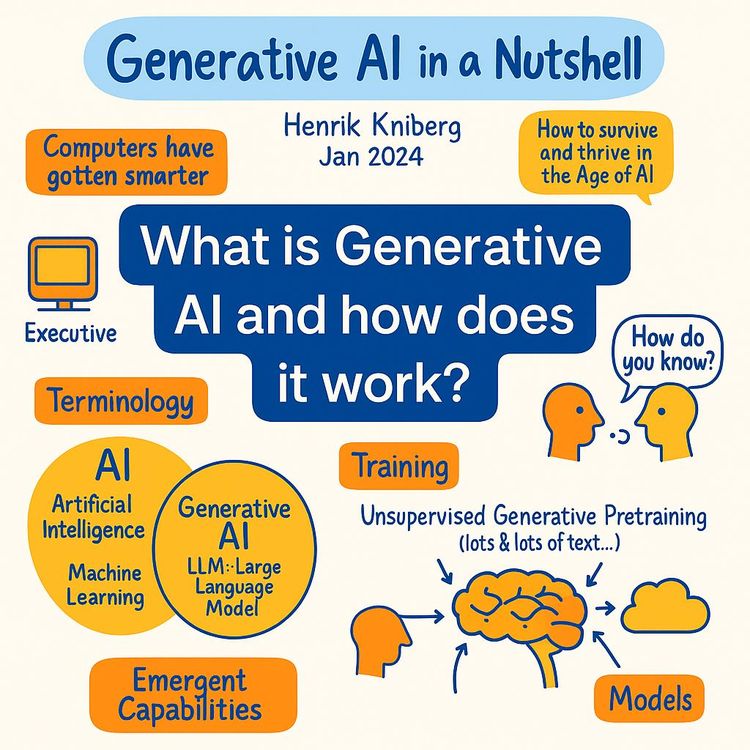
Video Course: What is Generative AI and how does it work?

Video Course: How to Use ChatGPT from Beginner to Professional
Video Course: How to Use Google Gemini for Google Workspace to Boost Productivity
Video Course: How to Use Claude 3.7 AI - Tips for Beginners!

Video Course: ChatGPT for Data Analytics: Full Course - from Beginners to Professional

Video Course: Generating Images and photos With ChatGPT?

Video Course: Generating Images & Photo's with MidJourney

Video Course: Generating Design's with Microsoft Designer and AI

Video Course: Generating Design's with Canva.com and AI
Join 20,000+ Professionals, Using AI to transform their Careers
Join professionals who didn’t just adapt, they thrived. You can too, with AI training designed for your job.