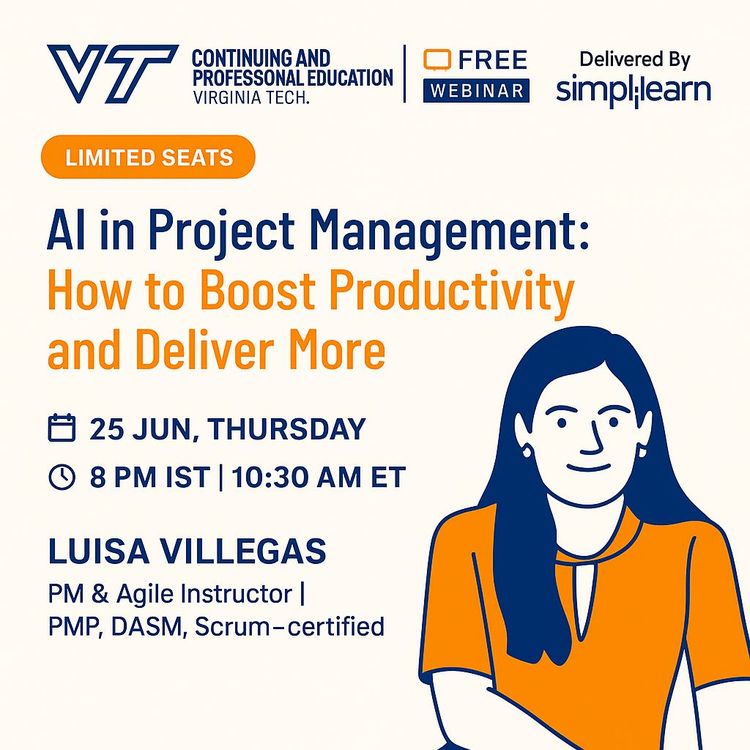
AI for Project Managers: Practical Skills for Project Management (Video Course)
AI is reshaping project management fast. 80% of PMOs will soon rely on it for decisions. This course shows you how to use AI to work smarter, protect your career, and focus on what only humans can do. Real examples and practical prompts included.
Related Certification: Certification in Applying AI for Project Management
Also includes Access to All:
What You Will Learn
- Use AI to create and refine project charters, WBS, schedules, and ROM budgets
- Apply the human-in-the-loop principle to validate and contextualize AI outputs
- Employ the five-part prompting method: role, context, data, constraints, output
- Leverage AI for monitoring: risk analysis, earned value forecasting, and pattern detection
- Generate audience-specific reports and meeting summaries from a single data source
- Position your career: resume/LinkedIn optimization, upskilling roadmap, and PMO adoption strategy
Study Guide
# AI For Project Managers: The Complete Transformation Guide ## Introduction: Why This Course Matters Right Now Let me be direct with you about something that's reshaping our profession in ways most project managers haven't fully grasped yet. The project management field is going through a fundamental shift, and it's happening faster than any previous technological change we've experienced. You remember how spreadsheets changed things. You remember how Microsoft Project became standard. Those were significant moments, but they were incremental improvements to how we worked. What's happening now with artificial intelligence is different in kind, not just in degree. Here's the reality: recent research from the Project Management Institute shows that 20% of project managers already possess strong practical AI skills. Two in five project professionals use generative AI in more than half of their project work,a figure that has doubled in just two years. And here's the number that should really grab your attention: 80% of Project Management Offices are projected to rely on AI-generated analysis for decision-making. That last statistic isn't about the distant future. It's about the immediate horizon. If you're a project manager, a team leader, a PMO director, or someone who wants to move into these roles, this transformation directly affects your career trajectory, your daily workflows, and your professional value. Now, I want to address the elephant in the room right away. There's a lot of fear around AI and job displacement. Let me give you the straight answer: AI is not coming to replace project managers. It's coming to amplify the capabilities of great project managers. The professionals who will thrive are the ones who treat AI as a strategic tool,deploying it to handle routine, repetitive, and data-intensive tasks while they focus on the uniquely human elements of the profession: stakeholder relationships, emotional intelligence, ethical judgment, and high-stakes decision-making. This course is designed to give you a complete framework for understanding and leveraging AI in your project management practice. We're going to cover the three professional mindsets toward AI, how AI adds value across every phase of the project lifecycle, what tasks AI handles versus what only you can handle, effective prompting techniques that actually work, practical applications you can implement immediately, and a roadmap for becoming an AI-powered project manager. Let's get into it. --- ## The Current State of AI in Project Management Before we dive into applications and techniques, you need to understand where we actually are in this transformation. Because I think a lot of the conversation around AI in project management is either too futuristic or too rooted in outdated assumptions. ### The Historical Pattern of Tool Adoption Project managers have always adapted to new tools. Think about the progression: paper calculations gave way to calculators, then spreadsheets became standard, then specialized software like Microsoft Project entered the scene. Each of these tools changed how we worked, but they were fundamentally assistive,they helped with specific functions like calculation or tracking. AI is different. It's not just assisting with specific functions; it's offering capabilities across every phase of project work. It compresses the time required for routine tasks dramatically, and it provides analytical capacity that exceeds human processing speed and pattern recognition. When you give AI a set of project data, it doesn't just calculate,it analyzes, identifies trends, generates drafts, and produces tailored outputs for different audiences. ### The Hard Numbers Let's look at what the data actually tells us: **20% of project managers currently use AI extensively or possess strong practical AI skills.** That means one in five of your colleagues is already operating with a significant productivity advantage. They're generating first drafts of documents in seconds, analyzing complex data sets in minutes, and producing customized reports for different stakeholders without starting from scratch each time. **Two in five project professionals use generative AI in more than half of their project work.** This number has doubled in the last two years. Think about what that means for the pace of adoption. Two years ago, most project professionals were still experimenting or not using AI at all. Now, 40% of them are using it for the majority of their work. The trajectory suggests this number will continue climbing rapidly. **80% of PMOs are projected to use AI in decision-making processes.** This is the statistic that should really wake you up. We're not talking about individual project managers choosing to use AI here and there. We're talking about entire Project Management Offices institutionalizing AI-driven decision support. When the PMO standardizes AI analysis for decisions, that's no longer an optional enhancement,it's the way the organization operates. **Usage rates have doubled in the last two years.** This tells us that AI adoption isn't an emerging trend. It's an established reality that's accelerating. The pace of change means that any survey data becomes outdated quickly. What's true today will likely be even more true six months from now. ### What This Means for You Here's the uncomfortable truth: the productivity gap between AI-equipped and AI-avoiding project managers is becoming a competitive gap. Two project managers with equivalent knowledge and experience,but different levels of AI proficiency,will produce dramatically different output rates. The one who uses AI effectively will complete tasks in minutes that take the other hours. Over time, that difference becomes visible in performance reviews, in leadership conversations, and in career advancement. The professionals who ignore AI are not going to be fired tomorrow. But they're going to become increasingly less relevant in organizational conversations because they can't process information at the same speed as their AI-augmented colleagues. They'll still deliver projects, but they'll do so with a growing productivity disadvantage that eventually becomes a career disadvantage. --- ## The Three Professional Mindsets: A Comparative Framework When I look at the project management profession right now, I see three distinct orientations toward AI. Each has different implications for career trajectory and project success. Understanding these mindsets,and honestly assessing which one you currently occupy,is the first step toward intentional professional development. ### Mindset One: The Project Manager Who Ignores AI This practitioner continues delivering projects using traditional methods and manual workflows. They might achieve successful outcomes, and they might even pride themselves on doing things "the right way" without relying on newfangled technology. But here's what's happening beneath the surface. They're spending hours on tasks that their AI-using peers complete in minutes. Drafting a project charter takes them half a day; their colleague generates a first draft in thirty seconds and spends the next hour refining it. Creating status reports for different stakeholders means manually reformatting the same information multiple times; their colleague produces customized reports from a single prompt. The productivity gap that emerges from this pattern becomes a competitive gap. When leadership conversations happen, the AI-using project manager comes prepared with more analysis, more options, more evidence. They've had time to think strategically because they haven't been buried in routine work. The ignoring project manager, through no fault of their knowledge or experience, can't keep pace. Over time, these professionals become less relevant in leadership conversations. They process information more slowly. They can't produce the same volume of analysis. Their project documentation takes longer and offers less depth. Not because they're less capable, but because they're working with outdated tools. ### Mindset Two: The Project Manager Who Fears AI This category includes practitioners who view AI use as "cheating" or who worry that the tool will replace their professional value. I understand this fear. When you've spent years developing expertise, the idea that a machine can generate some of your outputs can feel threatening. But let me give you an analogy that I think captures the situation perfectly. Fearing AI is like refusing to use a hammer and insisting on using a rock to drive a nail. You might eventually get the job done,the rock will work, after a fashion. But you're working far harder than necessary, and you're not producing better results. The hammer is the appropriate tool. It's not cheating to use it. Fearful project managers remain reactive to AI developments rather than becoming drivers of organizational adoption. They might even position themselves as obstacles to progress, arguing against AI implementation in their teams or organizations. This is a dangerous position because the organization will move forward with or without them. When they're the ones holding back progress, they become the problem rather than the solution. The missed opportunities here are significant. Every week that a project manager avoids AI is a week of routine work that could have been automated, a week of analysis that could have been deeper, a week of stakeholder relationships that could have been strengthened with the time saved. ### Mindset Three: The Project Manager Who Leads with AI This practitioner treats AI as a collaborative tool that handles routine work while they invest their time where it matters most. They use AI to generate first drafts, perform calculations, identify patterns, and produce reports. Then they take the saved time and invest it in analysis, expert judgment, relationship building, team empowerment, and the application of emotional intelligence. The project manager who leads with AI doesn't just use the tool,they direct it strategically. They use AI-generated evidence to back up their recommendations. They compare options and exercise professional judgment. They understand that the AI output is a starting point, not a finished product, and they invest their expertise in tailoring and refining. This orientation produces differentiated professional profiles. These project managers advance faster because they deliver more value. They're the ones who come to steering committee meetings with comprehensive analysis and prioritized recommendations. They're the ones who maintain strong stakeholder relationships because they have time for the conversations that build trust. They're the ones who spot risks earlier because AI has helped them identify patterns they might have missed. For those applying for project management roles, demonstrated AI comfort and fluency is increasingly a hiring prerequisite. Organizations want professionals who can bring the efficiency and productivity that AI enables. When you apply for a role and you can show that you've integrated AI into your practice, you're not just another applicant,you're someone who can hit the ground running. --- ## AI Applications Across the Project Life Cycle Now let's get into the practical substance of how AI adds value at every phase of project delivery. The five process groups,initiation, planning, execution, monitoring and control, and closing,each present distinct opportunities for AI augmentation. ### Initiation Phase: From Blank Page to First Draft The initiation phase is where projects are conceived and foundational documents are created. This is traditionally a phase where project managers face the barrier of the blank page. You have a project idea, maybe some brief meeting notes, and you need to produce a project charter or business case. AI eliminates that barrier entirely. Let me give you a concrete example. Imagine you've been asked to prepare a project charter for the acquisition of a new medical center. You have some basic information: the budget is around two million dollars, the timeline is six months, and the involved departments include legal, IT, and HR. You open your AI tool and provide this information along with a prompt like: "You are an experienced project manager. Create a two-page project charter for acquiring a new medical center. We have a budget of $2 million and a timeline of six months. The involved departments are legal, IT, and HR. Do not fabricate information,highlight assumptions instead." Within seconds, you have a draft charter that includes the project name and purpose, business need, objectives aligned to your constraints, in-scope and out-of-scope items, key stakeholders, major deliverables, milestones, and success criteria. The AI has even generated elements you didn't specify,like the need to minimize business disruption during the transition,based on its understanding of standard project requirements. Now here's where the human in the loop principle becomes critical. You review this draft and you notice something. The AI assumed that the target medical center has already been identified. But in reality, your project includes identifying and selecting the target facility. So you correct the AI: "The target has not been identified yet. The project includes identifying and acquiring a suitable medical center." The AI revises the charter accordingly, now including objectives and milestones related to market research and target identification. This back-and-forth conversation is where your project management expertise creates value. The AI provides the structure and the first draft; you provide the specific knowledge and context that transforms it into an accurate project document. The same pattern applies to business cases. From basic context about the project's purpose and expected benefits, AI can draft a persuasive business case that would otherwise require hours of crafting. ### Planning Phase: Structured Outputs at Scale Planning is where AI really demonstrates exceptional value. The planning phase involves creating work breakdown structures, schedules, resource plans, and budgets,all activities that benefit from AI's ability to generate structured outputs quickly. Let's talk about the Work Breakdown Structure, or WBS. If you're not familiar with the term, a WBS is a graphical representation of 100% of the work required to complete a project. It breaks the project down into manageable components, ensuring that no key activities are omitted. Creating a comprehensive WBS traditionally requires careful thought and consultation with experts. AI can generate a first draft based on your project information in seconds. Here's how it works in practice. You provide the AI with your project description, objectives, and any constraints. You prompt it to create a WBS. The AI generates a hierarchical breakdown of deliverables and work packages that covers the project comprehensively. You then review this draft, add items the AI missed based on your specific knowledge, and remove anything that doesn't apply to your context. Even if you're working in an Agile environment where you use product backlogs instead of WBS, AI can generate first drafts of backlogs efficiently. You provide your project goals and requirements, and the AI proposes user stories or backlog items that you can prioritize and refine. AI also assists with schedule creation. You provide the activities, dependencies, and resource constraints, and the AI proposes a timeline with sequences and durations. It can even flag potential scheduling conflicts or bottlenecks that you might not have noticed. For resource planning, AI helps identify resource requirements based on the project scope and timeline. You can ask it to suggest what types of resources you'll need, when you'll need them, and where potential constraints might arise. Budget estimation is another area where AI shines. During the initiation and early planning phases, you often need rough order of magnitude (ROM) budgets,high-level cost estimates with wide variance that give stakeholders a sense of financial scope. AI can generate these estimates based on your project parameters, historical data you provide, and industry benchmarks it knows. ### Execution Phase: Real-Time Support During active project delivery, AI serves as a real-time assistant that helps you stay on top of a constantly moving situation. One of the most valuable applications is summarizing updates. Project managers receive information from multiple sources: team members, stakeholders, status reports, tool notifications. Synthesizing all of this into a coherent picture of project health is time-consuming. AI can process these updates and produce concise summaries that highlight what's changed, what's on track, and what needs attention. AI also flags blockers early. When you provide it with status reports and output statistics, it can identify patterns that might indicate emerging problems. One expert described this capability as "spotting trends easier and earlier than most project managers would be able to do without support." If a particular task has been slipping for three consecutive reporting periods, AI will notice the trend and alert you before it becomes a crisis. During execution, AI also helps with meeting preparation and documentation. You can feed it your meeting agenda and relevant project data, and it can suggest discussion points, anticipate questions, and draft talking points. After the meeting, you can provide your notes and it can generate meeting minutes in a standardized format. ### Monitoring and Control: Enhanced Oversight The monitoring and control phase is where AI's analytical capabilities really come into their own. Risk analysis is a prime example. AI calculates risk scores by multiplying probability by impact, but it goes beyond simple calculation. It can analyze your risk register, identify correlations between risks, and suggest mitigation strategies based on patterns it recognizes from your data and its training knowledge. Earned Value Management is another area where AI provides deeper analysis. Traditional earned value calculations,planned value, earned value, actual cost, and the various derived metrics,are relatively straightforward. AI can perform these calculations and then go further, assessing what the trends indicate about project health and predicting future performance based on historical patterns. Pattern recognition is perhaps the most powerful monitoring capability. AI can process large volumes of project data and identify trends that would be difficult or impossible for a human to spot manually. If your project has certain types of issues recurring in specific contexts, AI will notice the pattern and alert you. Report generation is dramatically more efficient with AI. From the same set of project data, you can generate completely different reports for different audiences. One prompt produces a report for senior management focused on financial metrics and strategic risks. Another prompt produces a report for human resources focused on staff utilization and team health. A third produces a report for the project team focused on accomplishments and upcoming work. Instead of manually creating multiple versions of the same information, you create one data input and generate all the variations you need. ### Closing Phase: From Compliance to Knowledge Management The closing phase has traditionally been one of the most neglected aspects of project management. Lessons learned documents are often rushed, pro forma archival pieces that nobody reads after they're filed. AI transforms this dynamic. Instead of waiting until the end of the project and trying to remember what happened, you can feed AI tools with extensive project information throughout the delivery. At closing, you provide the AI with all of this information and ask it to synthesize the critical learnings. The result is a meaningful, actionable document that identifies what worked, what didn't, and,crucially,what to do differently next time. AI can prioritize the most important lessons, suggest implementation approaches, and even draft recommendations for organizational process improvements. This transforms closing documentation from a compliance activity into organizational knowledge management. Instead of archiving lessons learned that nobody reads, you're creating a resource that actually improves future project delivery. --- ## The Human-in-the-Loop Principle Now we need to discuss the most critical concept in AI-augmented project management: the human in the loop principle. ### What It Means The principle is simple: the project manager always retains the final word. AI-generated outputs serve as first drafts or analytical suggestions, never as final products without review. You must actively evaluate AI outputs, push back when information appears incorrect or incomplete, and inject proprietary knowledge that AI cannot possess. Let me give you an example of why this matters. When you generate a project charter using AI, the tool makes assumptions to fill information gaps. If you don't explicitly instruct it to highlight these assumptions, it will silently incorporate them into the document. You might not even notice that the AI assumed your target acquisition has already been identified, or that it assumed a certain regulatory approval process applies, or that it assumed a particular organizational structure. Skilled practitioners explicitly instruct AI tools to identify and highlight assumptions rather than silently incorporating them. This transparency allows you to evaluate whether the assumptions match reality and to correct them when they don't. ### The Context Injection Problem Here's a subtle but essential aspect of the human in the loop principle: AI tools cannot know your organizational context. They don't know that your board of directors emphasized cybersecurity as a top priority in their last meeting. They don't know that a particular stakeholder has a history of resisting change. They don't know about the political dynamics between departments. The value of AI outputs increases in direct proportion to the quality and specificity of human input. A practitioner who invests time in providing context, constraints, and feedback receives dramatically better outputs than one who simply prompts with minimal information. Let me illustrate this with a concrete example. You're a PMO director preparing for a steering committee meeting. You provide your AI tool with the project's RAID log,the document that tracks Risks, Assumptions, Issues, and Dependencies. You ask it to provide a high-level summary and identify the top two items that need to be addressed by the committee. The AI generates an executive overview of project status, highlights positive indicators, and identifies prioritized risks and issues. It's a solid output. But it doesn't know that your board of directors recently emphasized cybersecurity as their top concern. When you provide this context,"Our board of directors emphasized cybersecurity as a top concern in their last meeting",the AI revises its recommendations. Now it flags the cybersecurity-related risk as the top priority for committee attention, and it suggests specific actions aligned with the board's focus. This is the essence of the human in the loop. The AI provides the analytical capability and the first draft. You provide the organizational intelligence and the final judgment. ### Accountability Cannot Be Delegated There's one more dimension to the human in the loop principle that deserves emphasis: accountability. If you use AI and it fails to flag a risk that later materializes, you can't deflect blame by noting that AI didn't warn you. The tool supports your work, but you own the outcome. Project managers who miss risks cannot say, "The AI didn't tell me." That's not how accountability works. This is why the human in the loop principle is not just a best practice,it's an ethical and professional obligation. You are always the last word. You're vetting the information. You're customizing it. You're making the final decisions. AI is the tool, and you are the smart human. --- ## What AI Handles Versus What Only Project Managers Can Handle Understanding the division of labor between AI capabilities and uniquely human responsibilities is essential for effective adoption. Let me break this down clearly. ### What AI Handles **First drafts of everything.** AI generates first drafts of charters, plans, reports, timelines, schedules, work breakdown structures, and product backlogs. These drafts provide structure and completeness that would otherwise require hours of crafting. **Repetitive formatting and summarization.** AI handles meeting minutes, standardized documentation, and the formatting of information into consistent templates. It summarizes long documents and extracts key points. **Calculations.** AI performs activity duration estimates, risk scores (probability multiplied by impact), budget roll-ups, and earned value calculations. It handles these calculations quickly and accurately. **Advanced analytical processes.** AI goes beyond simple calculations to provide deeper analysis. For earned value management, it doesn't just calculate the metrics,it assesses what they indicate about project health and predicts future trends. **Pattern identification.** AI identifies patterns across large data sets that humans might miss. It spots trends in project data and flags anomalies. **Customized report generation.** From the same source data, AI generates different reports for different audiences. One prompt produces a financial-focused report for senior management; another produces a utilization-focused report for HR. ### What Only Project Managers Can Handle **Ultimate accountability for outcomes.** You cannot delegate responsibility to AI. If a project fails, you can't blame the tool. You own the outcome. **Stakeholder relationship development.** AI cannot build trust through face-to-face interaction, phone conversations, and genuine human connection. It can't read a room or adjust its tone based on subtle cues. **Application of emotional intelligence.** AI doesn't have emotional intelligence. It can't sense when a team member is struggling, when a stakeholder is losing confidence, or when the project sponsor needs reassurance. **Hard decision-making under ambiguity.** When information is incomplete, when the path forward is unclear, when you have to make a judgment call with imperfect information,that's human work. **Team guidance through difficult circumstances.** AI can't motivate a demoralized team. It can't help people navigate personal challenges that affect their work. It can't provide the human support that team members need. **Negotiation and facilitation.** AI can't negotiate with vendors, facilitate difficult conversations between stakeholders, or resolve conflicts within the team. **Escalation decisions.** Knowing when to escalate issues beyond project-level authority requires judgment about organizational dynamics and political context. AI can't make this call. **Ethical judgment.** Decisions about information sharing, AI usage boundaries, and organizational context require ethical reasoning that AI cannot replicate. ### The Bottom Line AI does not replace project managers,it amplifies the capabilities of great ones. Projects are made by humans, for humans, and human judgment remains irreplaceable. The project managers who thrive will be those who use AI to handle the routine and analytical work, freeing their time and cognitive capacity for the relational and judgment-based aspects of the role. This is not a reduction of the project manager's value,it's an elevation of it. --- ## Effective Prompting Methodology The art of prompting AI tools effectively has evolved significantly. While formal prompting courses were once considered necessary, the current generation of tools performs better with what I like to call "smart prompting" practices. ### The Five-Part Prompt Formula A well-structured prompt includes five components: **Role.** Every prompt should begin by establishing the AI's perspective. Examples include "You are an experienced HR recruiter" or "You are a PMO director preparing for a steering committee meeting." Role assignment shapes the language and priorities of the response. **Context.** Explain the situation. Are you applying for a job? Are you in a risk-averse organization? Is this a fast-paced startup environment? Context helps the AI understand what matters. **Project Data.** Prompt quality increases proportionally with data quality. Whether through file uploads in paid versions or copy-pasted text in free versions, AI needs specific information,resume content, job descriptions, project briefs, or RAID logs,to generate useful outputs. **Constraints.** Force constraints into prompts to produce practical outputs. Specifying "we only have a $2 million budget" or "our timeline is 6 months" ensures the AI works within real-world parameters rather than generating idealized scenarios. **Output Specification.** Explicitly define what the output should look like. Requesting "a project charter of no more than two pages" or "a timeline ready for Excel download" eliminates the need for subsequent formatting and extension requests. ### Practical Prompting Examples Let me show you how this works in practice with a resume optimization example. You're applying for a project management role and you want to optimize your resume for the specific job posting. Here's how you structure your prompts: First prompt: "You are an experienced HR recruiter. I'm applying for a Project Manager position at a technology company. Here is the job description: [paste the full posting]. Here is my current resume: [paste your resume]. Optimize my professional summary for this role and identify the top five changes I need to make for ATS optimization. Do not fabricate information,if there are information gaps, highlight them so I can provide more information." The AI analyzes the job description against your resume, identifies alignment with Applicant Tracking Systems requirements, and provides a revised professional summary with explanations of modifications. It also flags gaps,skills or experiences the job requires that your resume doesn't currently highlight. Second prompt: "Tell me what you are fixing and why. Explain your reasoning for each change you made to my professional summary." This is where the learning happens. The AI explains that it emphasized certain keywords from the job description, reordered your experience to highlight relevant achievements, and removed language that doesn't align with the role. You understand the logic, which helps you make better decisions about your resume. Third prompt: "Now let's work on the experience section. Here are the bullet points for my most recent role: [paste them]. Rewrite these to emphasize project management achievements and quantify results where possible. Do not fabricate metrics." Working chunk by chunk rather than asking for a complete rewrite reduces errors and maintains accuracy. You review each section carefully before moving to the next. ### Anti-Fabrication Instructions One of the most important prompting practices is including explicit anti-fabrication instructions. AI tools are designed to be helpful, which means they tend to fill information gaps with plausible-sounding content. If you ask AI to create a project plan and you haven't provided certain details, it will invent them. Including statements like "Do not fabricate information; highlight gaps for me to fill" prevents this. The AI will flag what it doesn't know and ask you to provide the missing information rather than silently inventing it. ### Iteration as Conversation Every AI output requires review, customization, and pushback. The conversation continues until the product reflects actual project conditions. Don't be afraid to challenge AI when outputs seem incorrect. Treat the tool as a collaborator that can respond to correction. If the AI generates a schedule that doesn't account for a known constraint, tell it. If the risk analysis misses a critical risk you know about, provide it and ask for a revised analysis. The best AI outputs come from iterative conversations where you provide feedback, inject additional information, and refine the direction. Your expertise drives the quality of the final product. --- ## Practical Applications: Career Growth Let me walk you through some concrete applications you can implement immediately, starting with career development. ### Resume Optimization with AI The job market for project managers is competitive, and most organizations use Applicant Tracking Systems to filter applications before a human ever sees them. These systems scan resumes for keywords and content that match the job description. AI can help you optimize your resume for these systems. Here's the process: 1. Find a job posting you're interested in. 2. Open your AI tool and assign the role: "You are an experienced HR recruiter." 3. Provide the full job description and your current resume. 4. Specify the output: "Optimize my professional summary and identify the top five changes I need to make for ATS optimization." 5. Request explanation: "Tell me what you are fixing and why." 6. Work chunk by chunk through your resume, optimizing each section. The AI will identify keywords from the job description that your resume should include, suggest rephrasing to emphasize relevant achievements, and flag gaps between your experience and the role requirements. This gives you a clear action plan for improving your resume. ### LinkedIn Profile Optimization The same approach works for LinkedIn. You can provide your current profile and ask AI to optimize your headline, summary, and experience descriptions for a specific target role. You can also ask it to suggest keywords that recruiters in your field are likely to search for. ### Interview Preparation AI can help you prepare for interviews. Provide the job description and ask the AI to generate likely interview questions based on the requirements. Then practice your responses, using the AI to provide feedback on your answers. --- ## Practical Applications: Project Delivery Now let's look at applications that directly improve your project delivery capabilities. ### Project Charter Creation from a Brief We covered this earlier, but let me reinforce the pattern because it's such a powerful demonstration of AI's value. From a simple brief,project description, budget, timeline, involved departments,AI generates a complete draft charter in seconds. The draft includes objectives, scope statements, stakeholders, milestones, budget estimates, and risk considerations. But here's what makes this valuable beyond the time savings: the AI generates relevant elements you didn't specify. It includes standard project requirements like minimizing business disruption, managing stakeholder communications, and establishing governance structures. These are elements that experienced project managers know to include, but AI ensures they're not forgotten even when you're working quickly. Through iterative conversation, you inject missing information and correct assumptions until the draft accurately reflects project conditions. The final document is more comprehensive than what you would have created from scratch, and it took a fraction of the time. ### RAID Log Analysis for Steering Committees For PMO directors and project managers who present to steering committees, AI transforms the preparation process. A RAID log documents Risks, Assumptions, Issues, and Dependencies. It's a critical project management tool, but analyzing it for executive presentation requires time and judgment. Here's how AI helps: 1. Provide the RAID log to the AI (upload the file or paste the content). 2. Specify the output: "Provide a high-level summary and identify the top two items that need to be addressed by the committee." 3. The AI generates an executive overview of project status, highlights positive indicators, and identifies prioritized risks and issues. But the real value comes when you inject organizational context. The AI doesn't know that your board of directors has emphasized cybersecurity as a top concern. When you provide this context, the AI revises its recommendations to align with strategic priorities. This demonstrates why the human element remains essential. The AI provides the analytical capability; you provide the strategic intelligence. ### Status Report Generation From the same set of project data, AI generates customized status reports for different audiences: - For senior management: financial metrics, strategic risks, milestone progress - For HR: staff utilization, team health, resource concerns - For the project team: accomplishments, upcoming work, recognition Instead of manually creating multiple versions of the same information, you create one data input and generate all the variations you need. --- ## Practical Applications: Strategic Analysis ### Risk Identification and Analysis AI excels at identifying risks that might escape human attention. When you provide project data, status reports, and historical information, AI can identify patterns indicating emerging risks. For example, if your project has had vendor delivery delays in three consecutive reporting periods, AI will flag the pattern and suggest it as a risk requiring mitigation. A human project manager might notice this too, but AI notices it earlier and more consistently. ### Earned Value Management AI performs earned value calculations and goes beyond them to assess project health. It analyzes the trends in planned value, earned value, and actual cost to predict future performance. It can also generate variance reports and suggest corrective actions. ### What-If Analysis AI supports scenario planning by analyzing different what-if scenarios. You can ask: "What happens to our timeline if we lose two developers for a month?" or "What's the budget impact if we need to accelerate the testing phase?" AI provides analysis based on your project data and constraints. --- ## AI Tools and Selection Strategy You have several options when it comes to AI tools, and the right choice depends on your needs and preferences. ### Comprehensive AI Platforms The major general-purpose AI tools,ChatGPT, Gemini, Claude,all offer strong capabilities for project management applications. They handle text generation, analysis, summarization, and conversation-based prompting well. When choosing between them, consider factors like: - User interface preferences - Integration with tools you already use - File upload capabilities (often in paid versions) - Data security features Many project managers find it useful to work with more than one tool, as different platforms have different strengths. Experiment with a few and see which produces outputs that best match your needs. ### Integration with Existing Tools Rather than purchasing specialized AI tools, first explore AI features in tools you already use. Many project management platforms have integrated AI functionality: - **Jira** has AI features for issue management and sprint planning - **Microsoft Project** includes AI capabilities for scheduling - **Primavera** supports AI integration for complex scheduling - **Canva** includes AI for visual content creation Leveraging these built-in features can provide efficiency gains without adding new tools to your workflow. ### The Paid Subscription Question Project managers who depend on AI for professional work should consider at least one premium AI account. Paid versions typically offer file upload capabilities, enhanced processing power, and access to more advanced features. The efficiency gains from these capabilities usually justify the cost for professionals who use AI regularly. --- ## The Case for Formal Upskilling While free tutorials and widely available AI tools make self-directed learning possible, formal upskilling programs offer advantages that self-paced learning cannot replicate. ### Structured Curriculum Formal programs are designed by certified instructional designers who understand how to sequence learning for maximum comprehension. They cover topics in a logical progression, ensuring you build foundational knowledge before moving to advanced applications. Self-directed learning, by contrast, tends to be ad-hoc. You learn what you happen to encounter, which means you might miss important topics or develop gaps in your understanding. ### Practical Application Good programs include guided demonstrations, independent assignments, and project work. You don't just learn about AI,you practice using it in realistic scenarios. This hands-on application is essential for developing genuine competence. ### Market Credibility Recognized credentials signal commitment and validated competence. When your resume shows a certification from a respected program, it tells employers that you've invested in your development and that your skills have been assessed by qualified evaluators. The distinction between learning and credentialed learning matters in competitive job markets. "Certified PMP" after your name conveys more than claiming project management experience alone. ### Networking and Mentorship Cohort-based learning creates opportunities for networking, study groups, job referrals, and professional connections. You learn alongside other professionals who can become part of your network. Many programs also provide access to mentors who can guide your development. ### Future-Focused Modules Formal programs typically cover emerging topics like generative AI, prompt engineering, and explainable AI. These are areas where self-directed learners might not know to focus their attention. --- ## Framework for AI-Enhanced Project Management Training If you decide to pursue formal training, here's what a comprehensive AI-enhanced project management program typically covers: ### Foundations - Project management fundamentals - The project lifecycle and process groups - Tailoring approaches for different project types ### Delivery Models - Agile and hybrid delivery models - Scrum and Kanban frameworks - When to use different approaches ### AI Integration - AI and digital tools in project management - Generative AI applications across the lifecycle - Prompt engineering for project management ### Advanced Topics - Risk, quality, and governance - PMO implementation and scaling - Earned value management with AI ### Career Support - Technical capability assessments - Interview preparation support - AI-powered profile optimization - Curated job opportunity access These programs bridge the gap between learning and professional advancement, preparing you not just to understand AI but to apply it effectively in your career. --- ## Roadmap to Becoming an AI-Powered Project Manager Let me give you a concrete roadmap for developing your AI fluency as a project manager. ### Step One: Audit Your Current Work Start by identifying the time-consuming, low-value tasks in your daily routine. Ask yourself: - Am I summarizing meeting minutes manually? - Am I creating documents from scratch repeatedly? - Am I performing repetitive calculations? - Am I reformatting information for different audiences? These are prime candidates for AI automation. Make a list of the top five tasks that consume your time without requiring your unique expertise. These are your first AI targets. ### Step Two: Get Hands-On with AI Tools Open an AI tool and start experimenting. Don't wait until you feel ready,just begin. Try different platforms to find the best fit for your needs. Start with simple tasks and gradually increase complexity. Note that AI tools learn your preferences over time; consistent use improves output quality. The key is to complete at least one project management task per week through conversation-based prompting. This consistent practice builds your skills and confidence. ### Step Three: Explore AI in Your Existing Tools Check if your project management software has AI functions. Many tools you already use have AI capabilities you might not be aware of. Leverage these features to integrate AI into your existing workflow without adding new tools. ### Step Four: Upskill Formally Pursue structured education to ensure comprehensive skill coverage. Formal programs provide curriculum design, practice opportunities, networking, and market credibility that self-study cannot replicate. Look for programs that combine practical applications with underlying conceptual knowledge, and that include career support like interview preparation and profile optimization. ### Step Five: Develop Strategic PM Skills AI fluency alone is insufficient. Continue developing the skills that differentiate you from anyone with access to an AI tool: - Emotional intelligence - Communication abilities - Decision-making capability - Facilitation skills - Strategic thinking These human skills become more critical as AI absorbs technical tasks,not less. ### Step Six: Position Your New Skills Once you've developed your AI capabilities, make sure they're visible: - Update your LinkedIn profile with AI-related skills and credentials - Refresh your resume to highlight AI competencies - Discuss your capabilities with your supervisor - Position yourself as an AI-fluent project management leader - Seek opportunities that reward your differentiated profile --- ## Key Takeaways Let me distill everything we've covered into the essential points you need to remember. **AI adoption has reached critical mass.** With 80% of PMOs projected to use AI for decision-making, AI fluency is becoming baseline competency rather than optional enhancement. **The productivity gap becomes a competitive gap.** Project managers with equivalent knowledge but different AI proficiency will produce dramatically different output rates, affecting their career trajectories and organizational value. **AI amplifies rather than replaces.** The technology handles first drafts, calculations, pattern identification, and report generation,freeing practitioners for relationship building, strategic judgment, and ethical leadership. **The human in the loop is non-negotiable.** Every AI output requires human review, validation, and customization. Project managers retain ultimate accountability regardless of AI involvement. **Prompt quality determines output quality.** Providing role context, project data, explicit output specifications, and constraints produces dramatically better AI results than minimal prompting. **Strategy knowledge is essential.** AI tools cannot know organizational priorities, cultural preferences, or stakeholder sensitivities. Only practitioners can inject this contextual intelligence. **AI strengthens human skill requirements.** Emotional intelligence, communication, facilitation, and decision-making become more critical as AI absorbs technical tasks,not less. **Ethical considerations accompany AI use.** Transparency, information security, and contextual judgment define professional AI deployment. **Self-directed learning has limits.** Structured certification programs provide curriculum design, practice opportunities, networking, and market credibility that self-study cannot replicate. --- ## Conclusion The transformation of project management through artificial intelligence is not a distant possibility,it's happening right now. The statistics are unambiguous: adoption rates are climbing rapidly, PMOs are institutionalizing AI-driven decision-making, and the productivity differential between AI-equipped and AI-avoiding practitioners is becoming a competitive chasm. But here's the message I want you to take from this course: this transformation is an opportunity, not a threat. AI is a tool in the tradition of previous project management technologies,calculators, spreadsheets, scheduling software,but it achieves unprecedented power and scope. It compresses routine work from hours to minutes. It provides analytical capacity beyond human processing speed. It generates first drafts that eliminate the barrier of the blank page. What it does not do is replace the judgment, emotional intelligence, ethical frameworks, and personal leadership that have always defined effective project management. The project managers who thrive will not be the ones who resist AI,they will be the ones who deploy it most effectively. The practical path forward requires action. Start experimenting with AI today, focusing on concrete tasks in your existing workflows. Develop strong prompting skills. Pursue structured learning that produces market-recognized credentials. And continue developing the human skills that differentiate you from anyone with access to an AI tool. The project managers, teams, and organizations who treat AI not aCertification
About the Certification
Become certified in AI for Project Managers and show employers you can put AI to work immediately. You'll gain practical skills: writing effective prompts, automating status reports, and using AI insights to make faster, smarter project decisions.
Official Certification
Upon successful completion of the "Certification in Applying AI for Project Management", you will receive a verifiable digital certificate. This certificate demonstrates your expertise in the subject matter covered in this course.
Benefits of Certification
- Enhance your professional credibility and stand out in the job market.
- Validate your skills and knowledge in cutting-edge AI technologies.
- Unlock new career opportunities in the rapidly growing AI field.
- Share your achievement on your resume, LinkedIn, and other professional platforms.
How to complete your certification successfully?
To earn your certification, you’ll need to complete all video lessons, study the guide carefully, and review the FAQ. After that, you’ll be prepared to pass the certification requirements.
Other AI Video Courses
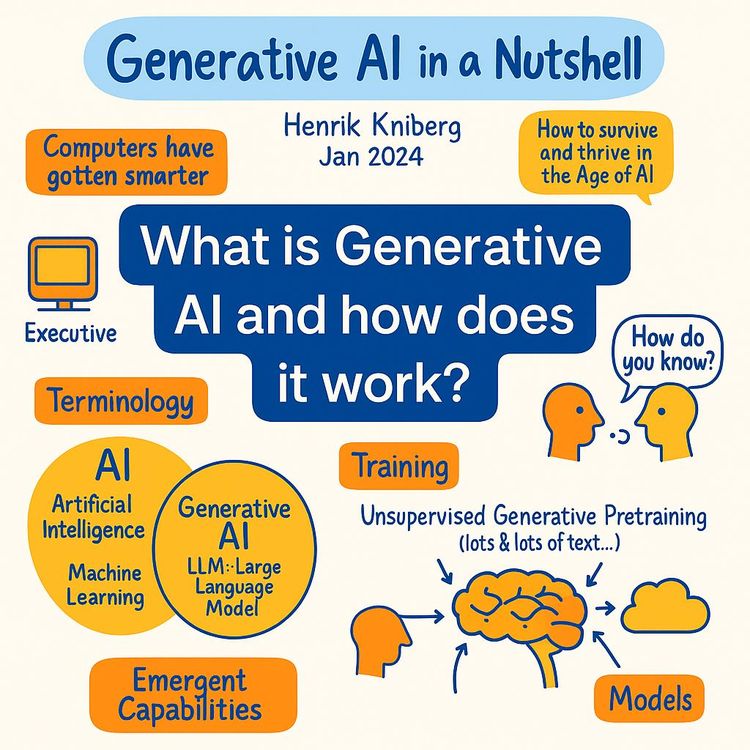
Video Course: What is Generative AI and how does it work?

Video Course: How to Use ChatGPT from Beginner to Professional
Video Course: How to Use Google Gemini for Google Workspace to Boost Productivity
Video Course: How to Use Claude 3.7 AI - Tips for Beginners!

Video Course: ChatGPT for Data Analytics: Full Course - from Beginners to Professional

Video Course: Generating Images and photos With ChatGPT?

Video Course: Generating Images & Photo's with MidJourney
Video Course: Generating Design's with Microsoft Designer and AI
Video Course: Generating Design's with Canva.com and AI
Join 20,000+ Professionals, Using AI to transform their Careers
Join professionals who didn’t just adapt, they thrived. You can too, with AI training designed for your job.