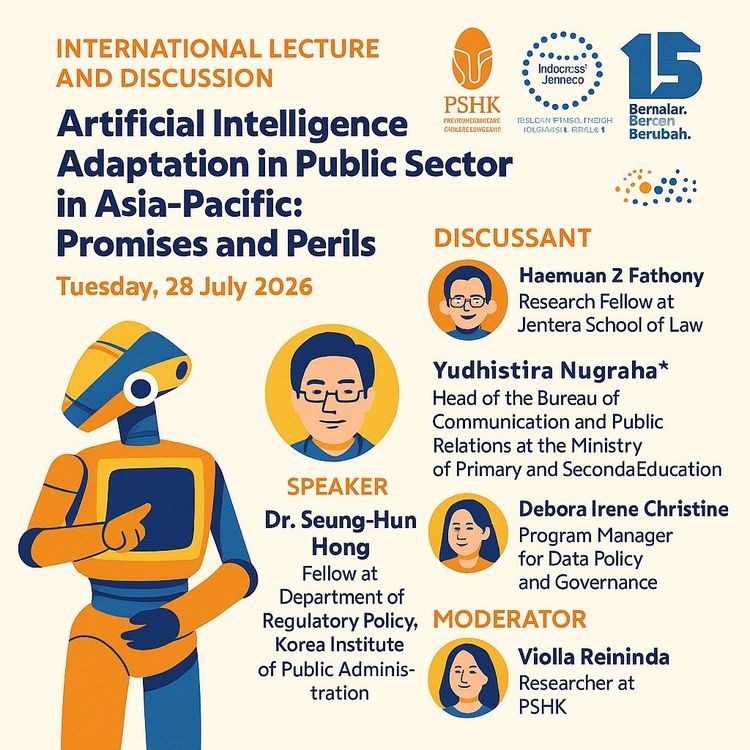
AI in Government: Promises, Perils, and Accountability (Video Course)
AI is already deciding who gets welfare, who gets audited, who gets a visa. This course examines real cases,life-saving successes and devastating failures,plus a governance toolkit so you can build systems that serve people, not dominate them.
Related Certification: Certification in Implementing Accountable AI in Government
Also includes Access to All:
What You Will Learn
- Explain real-world public-sector AI successes and catastrophic failures
- Identify the four channels of algorithmic domination (data exclusion, stigmatization, subordination, accessibility)
- Apply four governance principles: contestability, explainability, accountability, inclusive design
- Design continuous oversight: ex-ante and ex-post assessments with triple-loop human monitoring
- Evaluate institutional and procurement requirements (PDPA, ombudsman, internal capacity, sovereign data practices)
- Adapt AI governance to local contexts in the Asia-Pacific, with practical lessons from Indonesia and South Korea
Study Guide
Introduction: Why This Course Matters
Let's start with a simple truth: artificial intelligence is already running your government. Not in some distant future, but right now, in the systems that decide who gets welfare, who gets audited, who gets a visa, and who gets flagged for fraud. The algorithms are fast, tireless, and often invisible. And here's the uncomfortable part,most citizens have no idea how these systems work, what data they use, or how to challenge them when things go wrong.
This course walks you through the complete landscape of AI in the public sector. Not the hype, not the fear-mongering, but the actual reality: what works, what fails, and why the difference between the two often comes down to governance design rather than technical sophistication. You'll learn about documented successes that saved lives, catastrophic failures that destroyed them, and the philosophical frameworks that help us understand why public sector AI is fundamentally different from any private sector application.
By the end, you'll have a practical toolkit: four governance principles, a continuous assessment model, and a clear understanding of how to build AI systems that serve citizens rather than dominate them. This isn't academic theory,it's the operating manual for the next era of government.
Section 1: The Demonstrated Promise of Public Sector AI
Let's be clear about something from the start: AI in government isn't inherently bad. The successes are real, measurable, and in some cases genuinely remarkable. When deployed with clear objectives and human verification, these systems achieve things that were simply impossible with human hands alone.
Life-Saving Welfare Monitoring in South Korea
The Korea Electric Power Corporation built a system that analyzes patterns in electricity, telecom, and water usage to identify elderly citizens living alone who might be in danger. When usage suddenly drops and phone activity ceases, the system alerts social workers. Think about what this means: an elderly person falls, can't reach help, and their electricity usage pattern changes. The system notices. A social worker shows up. This program operates across eight local governments, covers roughly 13,000 people, and has been credited with saving at least 50 lives. Fifty people who would have died alone, unnoticed, are alive because an algorithm noticed something was wrong.
Round-the-Clock Tax Assistance in Singapore
Singapore's tax authority deployed a chatbot that answers citizen questions instantly, at any hour. No more waiting on hold, no more office hours. Citizens get answers about their tax obligations whenever they need them. The result: thousands of hours of waiting time eliminated, and compliance improved because people actually understood what they needed to do. It's not flashy, but it works.
Fraud Detection with Human Verification in France
France uses AI to analyze aerial photographs for undeclared swimming pools and buildings. This ensures tax fairness,people can't hide assets that should be taxed. But here's the critical detail: a human official reviews every single flag before any enforcement action occurs. The AI identifies potential issues; a person makes the final call. This is the difference between support and domination.
Anti-Corruption Procurement in Ukraine
Ukraine's AI-powered procurement system made public spending transparent and curbed corruption. It has saved hundreds of millions of euros by identifying suspicious patterns in government contracts. When public money is spent visibly and algorithms flag anomalies, corruption becomes harder to hide. This is AI as a tool for integrity.
Fiscal Risk Monitoring in Korea and Indonesia
Both South Korea and Indonesia run real-time systems to monitor fiscal risks, enabling earlier intervention and better resource management. These systems scan financial data for signs of instability or fraud, giving governments the ability to respond before problems become crises.
The common thread across all these successes: clear objectives, human verification of consequential decisions, and genuine improvement in service delivery or integrity. When AI is deployed as a tool that supports human judgment rather than replacing it, the results can be extraordinary.
Section 2: Systemic Failures,The Anatomy of Algorithmic Harm
Now we get to the hard part. For every success story, there's a failure that devastated lives. And these aren't isolated incidents,they follow patterns that reveal fundamental governance problems. Let's examine each case in detail because each one teaches us something different about how power operates through code.
Australia's Robodebt Scheme: The Mathematics of Injustice
Robodebt represents the most thoroughly documented public sector AI failure in the English-speaking world. The technical flaw was almost absurdly simple. Australia's welfare system calculates benefits based on precise fortnightly income reporting. Recipients declare what they earned every two weeks, and their payments adjust accordingly. The automated system took annual income data from the tax office and simply divided by 26 to derive a "bi-weekly average."
This completely ignored the economic reality of casual and seasonal workers. A fruit picker earns nothing in winter, then earns heavily during harvest season. A rideshare driver has wildly fluctuating income. The algorithm treated everyone as if they earned a steady, predictable salary year-round.
The consequences were devastating. Over 400,000 false debt notices were issued automatically. The government reversed the burden of proof,vulnerable citizens had to produce years-old payslips to prove they didn't owe money that the system claimed they did. Imagine being on welfare, receiving a letter saying you owe $5,000, and being told to find documentation from three years ago to prove otherwise. For people with limited literacy, cognitive disabilities, or mental health challenges, this was impossible.
The institutional failure was just as severe. When the Administrative Appeals Tribunal ruled these debts unlawful, the government exploited legal loopholes to prevent rulings from becoming public precedent. They quietly settled cases one by one, isolating victims and paralyzing collective legal action. The media remained unaware for years. Citizens were systematically denied justice through procedural manipulation.
Michigan's MiDAS System: Guilty Before Proven Innocent
The Michigan Integrated Data Automated System automatically identified alleged unemployment fraud. Its error rate was a staggering 85%,four out of five accusations were wrong. Despite this catastrophic inaccuracy, the system garnished wages and seized tax refunds before any human reviewed any case. Families were pushed into bankruptcy by false accusations they couldn't challenge in time. The system operated for years without adequate oversight or correction mechanisms. The lesson here: an automated system with an 85% error rate is not a fraud detection system,it's a random punishment generator.
Netherlands' Childcare Benefits Scandal: Discrimination by Design
The Dutch tax authority deployed a risk-scoring algorithm that treated dual nationality as a signal of likely fraud. Having a second passport made you suspect. This was explicitly discriminatory,a demographic characteristic treated as evidence of criminal intent. Tens of thousands of immigrant families were falsely accused and ordered to repay years of benefits. Families lost homes. Some lost custody of their children. The scandal's severity forced the entire Dutch government to resign. This case demonstrates how algorithmic stigmatization operates: systems that judge people not by what they do, but by who they are.
UK Home Office Visa System: The Self-Fulfilling Loop
The UK's immigration department secretly graded visa applicants by nationality, funneling citizens from certain countries into a high-risk "red lane." The algorithm created a self-fulfilling loop: higher refusal rates increased risk scores, which generated more refusals. It was a feedback mechanism for discrimination. The system was only dismantled following the first successful court challenge to a government algorithm in British history. This case shows how bias compounds itself when algorithms learn from their own biased outputs.
India's Aadhaar System: When Data Exclusion Means Starvation
To collect monthly food subsidies, Indian citizens had to pass fingerprint scans. The worn fingerprints of elderly people and manual laborers often failed to register. "No scan, no food" translated into systemic hunger for eligible citizens. One state canceled millions of ration cards to eliminate "ghost" beneficiaries,but research revealed that 88% of the canceled cards belonged to genuine qualifying families. This is data exclusion in its most brutal form: the system acts as if you don't exist because your biometric data doesn't cooperate.
Indonesia's Emerging Concerns
Indonesia is deploying one of the world's largest AI-assisted social aid systems, using facial recognition to verify beneficiaries with approximately $15 billion USD at stake. While not identical to the failures above, it raises critical questions about digital identity gaps that can exclude undocumented and indigenous populations. During the COVID-19 pandemic, some citizens faced barriers to vaccination because they were not registered in the national identification system. Digital exclusion compounds existing social marginalization,the people who need help most are often the ones the system can't see.
Section 3: The "No Exit" Problem and Neo-Republican Freedom
Let's think about what makes public sector AI fundamentally different from any private sector application. This distinction is the foundation of everything else in this course.
When a private algorithm fails you, you have options. Your bank treats you unfairly? Switch banks. A streaming service recommends terrible content? Cancel and try another. A chatbot gives you bad advice? Use a different one. The market provides alternatives, and the cost of switching is usually manageable.
Now consider the public sector reality. There is no alternative welfare service when a citizen is denied benefits. There is no other tax authority when an individual receives a disputed debt notice. There is no competing immigration system for those refused visas. You cannot opt out. You cannot switch providers. You are a captive user.
This captivity transforms the nature of power exercised through AI. To understand why, we need to look at a philosophical tradition that goes back centuries but has urgent contemporary relevance: neo-republicanism.
The core idea comes from thinkers like Philip Pettit at Princeton. Imagine living under a master who is kind, generous, and never raises a hand against you. Are you free? Neo-republicans answer no,because your entire life rests on the master's goodwill. The day the master changes mood, everything changes. Freedom isn't just being left alone; it's being free from arbitrary power. Power that can decide your fate without giving reasons and without any avenue for pushback.
This framework applies directly to algorithmic governance. An algorithm may be accurate 99% of the time, but if affected individuals cannot understand, challenge, or contest adverse decisions, they live at the mercy of the system. The "master's goodwill" becomes the training data and design decisions of programmers who answer to procurement contracts rather than democratic accountability. Citizens may not have experienced harm, but they live under the constant possibility of harm without effective recourse.
This insight explains why algorithmic domination is fundamentally a question of power rather than technical accuracy. Good intentions, sophisticated code, and efficient outcomes do not eliminate domination if citizens cannot push back against decisions that affect their livelihoods, homes, and families. The philosophy resonates across cultures,it has deep connections to the Indonesian concept of Negara Hukum (the state governed by law) and the fifth principle of Pancasila (social justice for all).
Section 4: Four Channels of Algorithmic Domination
Analysis of documented failures reveals four distinct mechanisms through which automated systems create arbitrary power over citizens. Understanding these channels is essential because each requires different safeguards.
Channel 1: Data Exclusion
When individuals are missing from databases, have incorrect records, or cannot verify their identity through biometric systems, automated systems effectively treat them as nonexistent. The Aadhaar case demonstrates this brutally: worn fingerprints of elderly and manual laborers failed to register, and "no scan, no food" meant systemic hunger for eligible citizens. One state canceled millions of ration cards to eliminate "ghosts," but 88% belonged to genuine qualifying families. Data exclusion isn't a technical glitch,it's a form of erasure that disproportionately affects the most vulnerable.
Channel 2: Algorithmic Stigmatization
Systems that treat demographic characteristics as predictive indicators create group-based discrimination. The Dutch childcare benefits system used dual nationality as a fraud signal,an explicitly discriminatory criterion. The UK visa system graded applicants by nationality, creating a self-fulfilling loop of refusals. In both cases, individuals were judged not by what they did but by who they were,by characteristics entirely beyond their control. This is stigmatization encoded in software, and it reproduces existing social hierarchies in automated form.
Channel 3: Algorithmic Subordination
Some systems operate from start to finish with no human hearing, and the burden of proof is reversed onto citizens. Robodebt is the canonical example: vulnerable people had to locate years-old documents to challenge an opaque system. MiDAS garnished wages before any human review occurred. In both cases, the citizen had to prove the machine wrong,a structurally impossible task for those with limited literacy, cognitive disabilities, or mental health challenges. The system doesn't just make decisions; it subordinates citizens to its authority with no intermediary.
Channel 4: Accessibility Exclusion
When services default to digital channels without adequate alternatives, citizens lacking digital skills, internet access, or language proficiency are systematically shut out. The UK's digital-by-default government services left approximately one in five adults without necessary digital skills. Elderly, disabled, and non-native speakers sometimes never learned alternative application methods existed. They gave up and abandoned legitimate claims to which they were entitled. Accessibility exclusion is silent,it doesn't produce error notices or false accusations. It simply makes people disappear from the system.
Section 5: Three Structural Vulnerabilities That Amplify Harm
Beyond the four channels, three aggravating factors transform technical problems into questions of democratic governance. These factors explain why even well-intentioned systems can become instruments of domination.
Factor 1: Benevolent Domination
Nearly every public sector AI system is developed with arguably good intentions,efficiency, wider reach, better service delivery. But good intentions do not cancel domination. In fact, benevolence makes domination more insidious because it obscures the structural relationship. A system cannot be considered genuinely serving citizens if they cannot understand or contest its decisions. The "kind master" analogy applies directly: a master who never harms you is still a master if you have no protection against changing whims. An algorithm that is usually right but cannot be challenged still dominates those it affects.
Factor 2: The Chilling Effect
When citizens understand they can be flagged by systems they cannot fight, they self-censor and modify behavior to avoid triggering automated suspicion. The system need not act,the mere possibility of action disciplines behavior. Citizens voluntarily curtail freedom before any enforcement occurs. This is governance by anticipated compliance. In contexts where significant portions of the population rely on state support, the chilling effect is amplified. People who fear exclusion from benefits shape their behavior to stay invisible to the system. They don't challenge, don't complain, don't ask questions,because they're afraid of being noticed.
Factor 3: Outsourced Domination
Most public sector AI is built and maintained by private technology firms under procurement contracts. In South Korea, most government AI systems are outsourced, required by law. This creates a disturbing accountability vacuum: even officials themselves often cannot explain decisions because the algorithms are proprietary. Power over citizens shifts to entities under no democratic control, and meaningful human oversight disappears by design. When the people operating the system can't explain it, and the people who built it answer to shareholders rather than citizens, you have domination without a face.
Section 6: Governance Principles for Responsible Public Sector AI
So what do we do about this? Effective governance must be grounded in institutional reality rather than aspirational frameworks. Imported templates from Brussels or Washington don't automatically work in Jakarta or Seoul. But four principles provide a universal starting point,testable hypotheses rather than conclusions.
Principle 1: Contestability,The Right to Push Back
Every automated decision must be open to genuine appeal, with reversal of the burden of proof. Once an individual contests a decision, the government must justify its determination rather than requiring citizens to prove error. This flips the dynamic: instead of the citizen fighting to prove innocence against an opaque system, the government must demonstrate why its decision was correct. A decision that cannot be effectively contested is not a public service; it is an arbitrary command.
Principle 2: Explainability,The Right to Understand
Citizens are entitled to real explanations of how specific decisions were reached. Not data dumps. Not thousands of pages of code. Not overwhelming technical documentation. Accessible descriptions of the reasoning applied to their situation. "Your application was denied because the system identified a discrepancy between your reported income and your bank deposits" is an explanation. "Your risk score exceeded the threshold" is not. The explanation must be comprehensible to the person affected, not just to the engineers who built the system.
Principle 3: Accountability,Someone Must Answer
Agencies cannot outsource responsibility to vendors or algorithms. Named humans with appropriate authority must own outcomes, and independent watchdogs should provide external oversight. The question of "who watches the watchers" must be answered by institutional design, not trust. When a system fails, there must be a person who can be called to account. Not a faceless committee, not a software vendor, not "the algorithm." A specific human being with the authority to explain, correct, and be held responsible.
Principle 4: Inclusive Design,Build for the Vulnerable
Systems should be designed from inception for the most marginalized users: the undocumented, the elderly, the disconnected. Not as an afterthought, not as a remedial patch, but as a foundational requirement. If a system works for someone with no internet access, no digital literacy, and no biometric data that scans cleanly, it will work for everyone. If it only works for the idealized average citizen, it will fail the people who need it most.
Section 7: Dynamic Oversight,Beyond One-Time Assessment
One of the most dangerous assumptions in AI governance is that a single pre-launch assessment is sufficient. The evidence says otherwise. Robodebt, MiDAS, and the Dutch benefits system did not fail at deployment,they failed in operation. Risks emerged as data drifted, new situations arose, and errors accumulated. The conventional "front door" approach to AI assessment misses this entirely.
Think about what happened with Robodebt. The system didn't break on day one. It churned out false debts month after month, year after year. The damage accumulated while the system was running. Any pre-launch review would have missed this because the problem wasn't in the initial design,it was in the ongoing operation.
The solution is a dual assessment model that operates across the full system lifecycle:
Ex Ante Assessment (Before Launch): Examine data quality and completeness, validate algorithmic logic, assess fit with existing legal frameworks and institutional capacity. This catches problems that exist before deployment,biased training data, flawed logic, legal conflicts.
Ex Post Reassessment (After Deployment, Continuously): Monitor for data drift, detect new situations and emerging errors, reassess on a regular schedule, reassess after any incident or major challenge, allow citizens to trigger reassessment. This catches problems that emerge during operation,the system behaving differently than expected, new edge cases, cumulative errors.
This continuous oversight approach embodies what's called the "triple loop" of human involvement:
First Loop,Human Oversight in the Data: Ensuring what is collected, how it is processed, and whether it accurately represents the population being served. Bad data produces bad decisions, and data quality requires ongoing attention.
Second Loop,Human Oversight in the Model: Examining how information is converted into predictions and categories. Are the variables appropriate? Is the logic sound? Are there hidden biases in the model's structure?
Third Loop,Human Oversight in Operation: Monitoring live performance and correcting course as new patterns emerge. A human watching the system in real-world conditions, catching problems that only appear in actual use.
The third loop is the one most often missing. Front-door assessment models check the first two loops, then assume everything will work. But systems operate in dynamic environments, and without continuous human oversight, problems compound silently.
Section 8: Regional Perspectives,Implementation in the Asia Pacific
The Asia Pacific region presents unique challenges and opportunities for AI governance. Institutional foundations vary widely, and what works in one country may fail in another. Let's examine the Indonesian context in detail, then look at lessons from South Korea.
Indonesia: Current Landscape and Challenges
Indonesia is in the early stages of AI governance. A draft presidential decree on AI is under development. The Personal Data Protection Law was enacted in 2022, but implementing regulations and the oversight body are not yet fully operational. There is no public registry of AI systems deployed in government,a significant transparency gap.
Known AI systems in the Indonesian public sector include: the Electronic Traffic Violation System (ETilang), which uses CCTV to detect traffic violations and has documented repeated false positives; Kartu Prakerja, an automated system for incentivizing workforce upskilling enrollments; the Supreme Court Case Early Detection system supporting judicial process management; biometric digital identity systems verifying citizens through facial and fingerprint recognition; and social aid verification using facial recognition to authenticate welfare beneficiaries.
The scale of the challenge is substantial. At least 27,000 applications are deployed across government. Data is fragmented across institutions,PDFs, incompatible formats, siloed databases. Interoperability is a major technical and governance challenge. Approximately 58% of the population is categorized as poor, vulnerable, or aspiring middle class who could fall into poverty. The stakes for social aid systems are existential for millions of people.
The responsive regulation framework offers a useful structure for thinking about governance. At the apex are red lines: prohibited uses of automated decision-making in certain public interest domains, strong legal separation between citizen data and government decisions regarding benefits, firewalling social support eligibility from algorithmic determinations. In the middle: AI impact assessments before deployment, continuous monitoring requirements, audit trails and reporting obligations. At the base: adoption of international guidance, best practice frameworks, and voluntary standards.
The sensing-understanding-acting framework provides practical guidance for agencies. First, sensing: the government must learn to listen before AI learns. This means data collection and quality assurance, integration across fragmented systems, and addressing the fundamental problem that incomplete data excludes people. Second, understanding: moving from data to insight. This requires data analytics capability building (descriptive to diagnostic to predictive to prescriptive), developing context-specific expertise,data scientists who understand education, transport, and flood management separately,and regular checking against bias. Third, acting: data-driven decision-making through problem-solving agents (document classification, complaint routing), knowledge-based agents (regulation and policy chatbots), and learning-based agents (early warning systems, anomaly detection).
The critical insight: a reliable AI system requires reliable data, and data quality requires investing in people,data engineers, data scientists with domain context, and organizational leadership who understand why data governance matters.
South Korea: Lessons from Experience
South Korea's Public AI Act took effect and established multiple ministries claiming jurisdiction over public AI governance. The National AI Committee, chaired by the president, and the Regulatory Reform Committee overlap in their mandates. Half of committee membership must come from civil society,a meaningful inclusion requirement. The system is still evolving, and whether independent oversight functions adequately remains an open question.
A notable example involved building an AI-assisted regulatory information system through phased implementation: first, creating a comprehensive regulation database with over 500,000 legal provisions; second, developing a vector database of all regulatory provisions; third, implementing comparison and analysis tools. The total cost was approximately $500,000,demonstrating that capacity building need not be prohibitively expensive.
Section 9: Institutional Requirements and the Procurement Question
Meaningful AI accountability requires three institutional pillars. Without these, principles remain words on paper.
Pillar 1: Personal Data Protection Authority
The PDPA oversight body must be quickly established and empowered. All AI systems processing personal data fall within its jurisdiction. Currently, the absence of this body means data protection obligations lack enforcement. Without a functioning authority, citizens have no one to complain to and no mechanism for redress.
Pillar 2: Environmental Impact Oversight
AI systems require massive compute power with significant environmental footprints. Data center regulation should address energy consumption and e-waste. The extractive nature of AI hardware supply chains requires governance. This is often overlooked in AI discussions, but the environmental cost of these systems is real and growing.
Pillar 3: Public Service Ombudsman with AI Mandate
Current ombudsman functions must extend to AI-mediated public services. Citizens need a clear point of contact for AI-related grievances. The ombudsman must have authority to investigate opaque automated decisions. This provides a non-judicial avenue for citizens who cannot navigate complex court processes.
The procurement question is equally critical. When governments outsource AI development, they lose internal capacity and accountability. Vendors leave after contracts end, taking their knowledge with them. AI governance requires cultivating internal capability,even if technical development is outsourced. The major development line should remain internal. Policy and technology experts must have daily conversations. If officials can't explain the systems they operate, they can't govern them.
The concept of sovereign AI,the ability of a nation to maintain control over its AI infrastructure,raises several key considerations. Data should be processed domestically where possible. Cloud services may transfer data across regions during synchronization,a governance risk. Domestic model development faces challenges competing with global providers. Building from scratch may be less viable than adapting existing open-source models. But data ownership and domestic processing remain achievable objectives.
Section 10: Practical Applications and Best Practices
Let's move from theory to practice. What does responsible AI governance actually look like in operation?
For Policymakers and Regulators: The analysis demands differentiated responses based on institutional realities. Preservation of administrative law principles,genuine hearings, reasoned decisions, and judicial review,must be maintained as AI systems are integrated into government services. Before deployment, governments should conduct rigorous impact assessments evaluating data quality, algorithmic design, and local institutional capacity. These must extend beyond pre-launch reviews to ongoing reassessment throughout a system's operational life.
For Public Administration: Procurement practices require fundamental reform. Standard outsourcing arrangements that shift responsibility to private vendors effectively transfer power over citizens to non-democratic actors. Governments must maintain genuine internal capacity, pairing policy expertise with technical knowledge so that officials can explain, evaluate, and correct automated decisions. Human oversight must be embedded in all stages,data, model, and operation,rather than as a final review gate.
For Civil Society Organizations: Scoping exercises and impact documentation, while challenging because of limited public data, perform essential accountability functions. The absence of public registries documenting government AI systems represents a significant transparency gap. Civil society documentation helps reveal patterns of harm and creates pressure for reform. Meaningful participation,not token consultation,must be integrated into system design and oversight.
For Legal Professionals: The existing legal framework provides foundations for contestation that must be preserved and extended to algorithmic decisions. Liability rules, whistleblower protections, and court systems may need adaptation to account for the opacity and complexity of automated systems. The possibility of independent AI ombudsman mechanisms should be explored where existing accountability institutions lack capacity to address technology-specific challenges.
For Technology Developers: Building explainability into systems from first principles,rather than as an afterthought,requires different technical approaches than those optimized solely for predictive performance. The practice of prompting models to provide reasoning trails is essential for auditability. Developers have a responsibility to design for the most vulnerable users, not for idealized average citizens.
Capacity Building: Starting Small
The South Korean regulatory information system demonstrates a practical path. Phase one: create a comprehensive database. Phase two: develop the technical infrastructure. Phase three: implement the analysis tools. Total cost: $500,000. You don't need billions to start building governance capacity. You need a clear plan and commitment to incremental progress.
Section 11: International Best Practices and the Limits of Imported Frameworks
Different jurisdictions have taken different approaches to AI governance, and each offers lessons. The United States and China lead in implementation,rapid deployment with light-touch regulation. The European Union leads in governance frameworks,the comprehensive AI Act with risk-based classification. Canada pioneered algorithmic impact assessment with over five years of operational experience.
But here's the critical point: importing regulatory templates wholesale doesn't work when institutional foundations are missing. Rules only bite if supporting institutions actually work. The EU AI Act's fundamental rights assessment assumes functioning courts, accessible regulators, reliable identity systems, and digital infrastructure. When those foundations are still developing, imported frameworks provide guardrails on paper, not real guardrails. It's more dangerous because rules that look strong but do nothing create false confidence.
The path forward requires reimagining AI governance beyond imported frameworks. The principles of contestability, explainability, accountability, and inclusive design must be operationalized through mechanisms suited to local laws, local institutions, and local needs. This isn't about rejecting international experience,it's about adapting it to local reality.
Conclusion: The Power Question
The transformation of public administration through artificial intelligence is inevitable and, in many respects, welcome. The promises are real: governments can serve citizens more effectively, allocate resources more fairly, and combat corruption more successfully. Yet the peril is equally real: without deliberate institutional design grounded in principles of democratic accountability, AI systems become instruments of arbitrary power,opaque, unaccountable, and beyond the reach of ordinary citizens.
The distinction between public and private AI cannot be overstated. When consumers are exploited by private algorithms, they can select alternatives. When citizens are wrongfully denied benefits, unjustly flagged for fraud, or excluded from services due to digital identity failures, they have no exit. This captivity transforms algorithmic errors from technical problems into violations of fundamental rights,including the right to live free from domination by arbitrary power.
As governments forge ahead with digital transformation, the architecture of AI governance must be developed locally, not imported wholesale from jurisdictions with different institutional histories and capacities. The principles of contestability, explainability, accountability, and inclusive design must be operationalized through mechanisms suited to local laws, local institutions, and local needs. Continuous impact assessment that monitors systems throughout their operational lives,not just at the front door,represents the most promising path forward.
The stakes are considerable precisely because the caseload is not symmetric: if citizens must eventually hold governments accountable for automated decisions gone wrong, the institutions required for that accountability must be created before harm occurs, not in the aftermath of scandal when the response is retrospective, excessive, and often punitive.
This is not a technical problem but a question of power,the oldest question in political philosophy, now wearing the new face of code and data. How it is answered will determine whether the AI revolution in government expands or contracts genuine human freedom in the decades to come. The same power that helps people can also inflict harm. When will the algorithm come back to one wrong, and who says sorry? These are the questions that matter, and they demand answers before the next system goes live.
Frequently Asked Questions
This FAQ gathers the most common and most useful questions about how artificial intelligence is being used in public sectors, what it promises, where it has gone wrong, and how it can be governed responsibly. It is meant as a reference you can return to whenever you need practical clarity,whether you work in government, advise it, supply technology to it, or your life is affected by automated public decisions.
What is the focus of this FAQ on AI in public sectors?
This FAQ focuses on how AI is being adopted in public sectors, with a special lens on its promises and perils. It covers core concepts, real case studies, governance principles, and practical steps for policy makers, civil servants, vendors, and business professionals who interact with government systems.
Key idea: Public sector AI is not just another technology trend. It reshapes how decisions about taxes, welfare, immigration, policing, and public services are made. That means questions about efficiency are always tied to questions about rights, accountability, and who has the final say. This FAQ gives you the vocabulary, examples, and frameworks to think clearly about those questions and to make better decisions in your own role,whether you are designing, approving, selling, or being subjected to these systems.
What is artificial intelligence in the public sector?
Public sector AI refers to systems used by government agencies to make or support decisions about people, money, or public resources. These systems range from simple rule-based tools to complex machine learning models that predict risk, classify applications, or route inspections.
Common examples include: welfare eligibility scoring, tax fraud detection, immigration and visa triage, electronic traffic enforcement, chatbot assistants for citizen questions, and predictive tools for health, education, or policing. Many of these are forms of automated decision-making (ADM): the system generates a recommendation or outcome that has legal or significant effects on someone's life. What makes this area sensitive is that decisions are backed by state authority: fines, debt notices, loss of benefits, or border refusals. So the bar for fairness, transparency, and recourse must be higher than in private apps or consumer tools.
What distinguishes public sector AI from private sector AI?
The sharpest difference is what many call the "no exit" problem. With a private company,a bank, a streaming service, a ride-hailing app,you can usually switch providers if you feel mistreated. You can close your account, delete the app, or stop paying.
With public sector AI you cannot simply walk away. You cannot choose a different tax authority, welfare agency, immigration office, or national ID system. If an automated welfare engine mislabels you as a fraud risk, there is no competing government service to move to. That makes citizens "captive users." Errors, bias, or opaque processes in public AI have uniquely serious consequences because people are stuck. This lack of exit turns design decisions, bugs, and procurement choices into questions about basic freedom and protection from arbitrary treatment, not just customer satisfaction.
What are the main promises of AI in public services?
AI in government can be genuinely helpful when it focuses on concrete public problems and keeps humans in control.
Examples of clear benefits include:
- Life-saving monitoring: A Korean utility analyzes electricity, telecom, and water usage to flag elderly people living alone whose activity suddenly drops. Social workers are alerted and have already intervened in dozens of critical cases.
- Faster service: Singapore's tax chatbot answers citizen questions at any time, freeing staff to handle complex issues instead of repeating routine explanations.
- Fairer enforcement: France uses AI on aerial images to spot undeclared pools and buildings. Every flagged case is still reviewed by a human officer before action is taken.
- Anti-corruption: Ukraine's AI-supported procurement platform made tenders transparent and saved large sums by reducing corrupt practices.
When AI is used this way,with clear purpose, human review, and transparency,it can extend the reach, speed, and consistency of public services.
What are the biggest risks and perils of AI in government?
The headline risk is not that AI makes occasional mistakes,that already happens with human officials. The deeper risk is that mistakes become scaled, invisible, and hard to contest.
Typical failure patterns include:
- Automated debt or fraud systems that flip the burden of proof onto poor citizens, as seen in Australia's Robodebt and Michigan's MiDAS.
- Risk-scoring tools that quietly penalize people for nationality, ethnicity, or neighborhood, as in the Dutch childcare scandal.
- Biometric ID and online-only portals that exclude elderly, disabled, undocumented, or digitally-poor citizens from food, health, or cash aid.
- Outsourced systems that even officials cannot explain, leaving no one clearly responsible.
Because people cannot exit public systems, these failures corrode trust, fuel fear, and can push already fragile households into crisis. That is why AI in government is as much about institutional design and legal safeguards as it is about data and models.
What does the "no exit" problem mean in public sector AI?
The "no exit" problem captures a simple but brutal fact: you cannot opt out of the state. You still owe taxes, you still live under immigration rules, and your access to social protection is mediated by public systems. When AI sits inside those systems, its decisions follow you everywhere.
In private life, exit is your last line of defense. Unfair bank? Change banks. Aggressive ad targeting? Use another platform. In public life, a flawed welfare algorithm can mislabel you as a debtor and there is nowhere else to claim benefits. A risk model can flag your visa application and there is no alternate border to try. That lack of exit turns technical design into a question of basic liberty: are you living under systems you can't see, can't question, and can't escape, even when they are wrong?
What is automated decision-making (ADM) in government?
Automated decision-making (ADM) means using algorithms to produce decisions or recommendations that have legal or significant consequences for individuals, often with little or no human review in each case.
In public sectors, ADM shows up in:
- Eligibility engines for welfare or scholarships
- Risk scores for tax audits or customs inspections
- Automated traffic fines based on camera footage
- Immigration and visa triage
- Social aid verification using facial recognition
ADM is attractive because it promises consistency and scale. But when used for fines, benefit cuts, or immigration refusals, the stakes are high. The key question becomes: does a human with real authority review the output before sanctions apply, and is there an easy way for affected people to challenge the result? Without those, ADM can quietly turn into a machine bureaucracy that feels impossible to fight.
What is "algorithmic domination" in public sector AI?
Algorithmic domination describes a situation where people live under automated systems they cannot see, interpret, or effectively contest, even if those systems are rarely used harshly. You may never receive a penalty, but you live with the awareness that an unseen score, risk label, or classification can hurt you without real recourse.
Key features are:
- Opacity: you do not know what the system tracks or how it classifies you.
- Imbalance: officials or vendors can impose decisions backed by state force; you face complex, slow appeal channels if any exist at all.
- Dependence: your income, legal status, or key services rely on staying in good standing with the system.
This is different from a simple "bad algorithm." It is about being under one-sided automated authority. Even a "kind" system can be dominating if you remain at its mercy without a clear path to challenge it.
What are the four channels of domination in public sector AI?
Researchers describe four main routes through which algorithmic systems can dominate citizens:
1. Data exclusion: If you are missing from databases or your record is wrong, the system acts as if you do not exist. Example: fingerprint failures in India's Aadhaar-linked food subsidies blocked real people from rations.
2. Algorithmic stigmatization: The system treats traits like nationality or neighborhood as risk signals. Example: the Dutch tax authority marked people with a second nationality as fraud risks.
3. Algorithmic subordination: The machine decides from start to finish, and you must prove it wrong. Example: Australia's Robodebt and Michigan's MiDAS issued debts before any human checked the case.
4. Accessibility exclusion: Digital-only systems shut out those without devices, skills, language, or connectivity. Example: "digital by default" services in the UK left many people unaware of offline options, so they abandoned claims entirely.
Why does "contestability" matter so much in democratic governance?
In a democracy, it is not enough that government means well. Citizens must be able to push back when decisions feel wrong. Contestability is the practical expression of that right.
For AI systems, contestability means:
- Clear, simple ways to challenge automated outcomes (debt notices, benefit cuts, rejections).
- The burden of justification flips: once you object, the agency must explain and defend the decision.
- People can reach a human with real authority, not just a helpdesk script.
Without this, an AI system becomes like a silent judge whose rulings arrive by text message, cannot be explained in plain language, and cannot be appealed in time to avoid harm. Contestability restores balance: algorithms can assist, but they do not have the final word when people's livelihoods and status are at stake.
Certification
About the Certification
Get certified in AI Accountability in Government. Prove you can assess automated decisions, spot bias, design human-centered safeguards, and implement oversight frameworks that keep public-sector AI fair, transparent, and defensible.
Official Certification
Upon successful completion of the "Certification in Implementing Accountable AI in Government", you will receive a verifiable digital certificate. This certificate demonstrates your expertise in the subject matter covered in this course.
Benefits of Certification
- Enhance your professional credibility and stand out in the job market.
- Validate your skills and knowledge in cutting-edge AI technologies.
- Unlock new career opportunities in the rapidly growing AI field.
- Share your achievement on your resume, LinkedIn, and other professional platforms.
How to complete your certification successfully?
To earn your certification, you’ll need to complete all video lessons, study the guide carefully, and review the FAQ. After that, you’ll be prepared to pass the certification requirements.
Other AI Video Courses
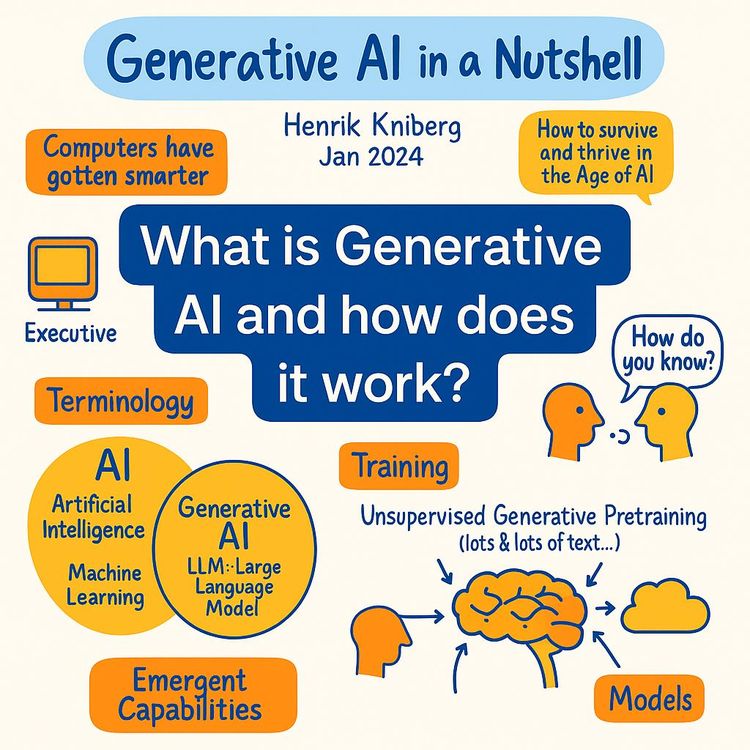
Video Course: What is Generative AI and how does it work?

Video Course: How to Use ChatGPT from Beginner to Professional

Video Course: How to Use Google Gemini for Google Workspace to Boost Productivity

Video Course: How to Use Claude 3.7 AI - Tips for Beginners!

Video Course: ChatGPT for Data Analytics: Full Course - from Beginners to Professional

Video Course: Generating Images and photos With ChatGPT?

Video Course: Generating Images & Photo's with MidJourney

Video Course: Generating Design's with Microsoft Designer and AI

Video Course: Generating Design's with Canva.com and AI
Join 20,000+ Professionals, Using AI to transform their Careers
Join professionals who didn’t just adapt, they thrived. You can too, with AI training designed for your job.