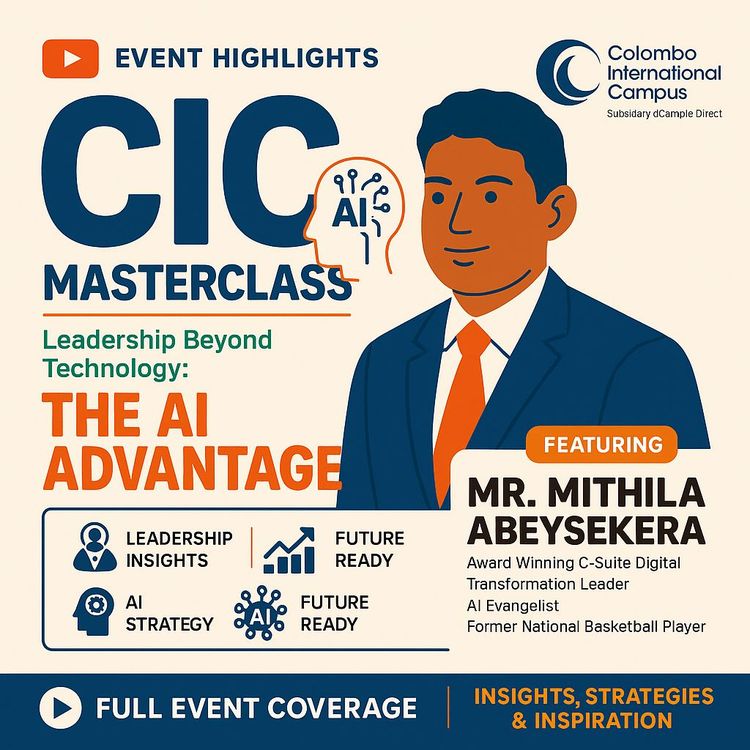
AI-Ready Leadership: Human-Centric Skills for the Future of Work (Video Course)
That moment when AI jargon fills the room and you nod along? This course is for you. Build practical AI fluency plus the human leadership depth machines can't touch,judgment, empathy, ethics. From a seasoned fintech CTO. No hype.
Related Certification: Certification in Leading Human-Centric AI-Ready Teams
Also includes Access to All:
What You Will Learn
- Explain core AI concepts: LLMs, tokens, context windows, fine-tuning, RAG, and hallucinations
- Distinguish AI strengths from its limitations and identify reliable verification practices
- Use the four-question framework to evaluate job resilience and career choices
- Lead effectively in the AI era with ethical judgment, empathy, adaptability, and accountability
- Apply practical tools: prompt design, no-code/low-code platforms, RAG workflows, and safe data practices
Study Guide
There's a moment every professional eventually faces. You're in a meeting, someone throws around terms like "large language model" or "retrieval-augmented generation," and you nod along, hoping nobody asks your opinion. Or maybe you're watching the news about another industry disrupted by automation, and you wonder quietly whether your own role will survive the next few years. This course exists for that moment.
Leadership Beyond Technology: The AI Advantage isn't about turning you into a programmer. It's not about chasing every new tool that drops. It's about something far more practical: building the twin competencies that will define the next era of work. First, enough technical fluency to converse credibly, make informed decisions, and leverage AI as a genuine accelerator. Second, the leadership depth that no algorithm can replicate , judgment, empathy, ethics, and the capacity to inspire people toward shared goals.
The ideas you'll find here come from a masterclass delivered to students, faculty, and industry professionals, led by a Chief Technology and Digital Officer with over two decades in financial services technology. The person behind some of the region's first AI-powered banking innovations , including an AI customer onboarding avatar and an award-winning WhatsApp transacting platform , walks through what actually matters when you strip away the hype.
This guide takes you through the whole journey. We'll start with the big historical picture, then build your AI vocabulary from the ground up. We'll look at where AI genuinely excels, where it falls embarrassingly short, and how to tell the difference. We'll examine the industries already being transformed, the careers most at risk, and the four questions you should ask before accepting any job. Then we'll move into leadership , the styles, the attributes, the habits , and finish with practical applications you can use this week, whether you're a student, an early-career professional, or a seasoned leader.
Here's the honest truth: the future belongs to people who know technology and understand people. This is how you become one of them.
Section 1: The Four Industrial Revolutions and the Acceleration of Change
To understand where we're heading, you need to see where we've been. Human civilization has moved through four distinct technological eras, each one fundamentally reorganizing how we live and work.
The First Industrial Revolution
Steam power, factories, and railways. This was the era that replaced muscle power. Suddenly, machines could do the physical work that humans and animals had done for centuries. Society shifted from agrarian to industrial, and the nature of labor changed forever.
The Second Industrial Revolution
Electricity and the assembly line. This era replaced manual production. Henry Ford's factories became the template for mass manufacturing, and electricity powered everything from factories to the lightbulb in your grandmother's kitchen. Production that once required skilled artisans could now be broken into repeatable steps performed by semi-skilled workers.
The Third Industrial Revolution
Computers and the internet. This era digitized information. Paper records became databases. Letters became emails. Physical stores gained digital counterparts. The internet connected the world in ways that made geography almost irrelevant for knowledge work.
The Fourth Industrial Revolution
Artificial intelligence and machine learning. This one is different from everything that came before. Previous revolutions replaced muscle, replaced manual production, replaced physical records. This revolution augments human intelligence itself. AI doesn't just store information or process it , it learns from data, identifies patterns, makes predictions, and generates entirely new content.
The speed of this transformation is worth pausing over. Each revolution arrived faster than the last. The gap between the first and second was measured in generations. The gap between the third and fourth was measured in decades. And within the fourth revolution itself, the pace keeps accelerating. Language models evolve so rapidly that declaring yourself an "AI expert" is practically obsolete within days. The field moves too quickly for static expertise.
Here's a principle that applies far beyond technology: learning and unlearning. Think about elite athletes. A tennis player who dominated with a particular serve style might need to completely rebuild that technique as the sport evolves. The same applies to professionals. Skills you acquire today may not remain relevant tomorrow. If you anchor your identity to a single tool, a single coding language, or a single methodology, you're building on sand. The professionals who thrive are the ones who stay adaptable, who can let go of yesterday's expertise and pick up today's without mourning the loss.
One more observation from this section that tends to stick with people: the world's most valuable companies are now AI-centric. That's not a coincidence or a bubble. It's a signal about where economic and industrial priorities have permanently shifted. You don't have to work at one of those companies, but you do have to understand what they represent.
Section 2: AI Fundamentals , Building Your Working Vocabulary
You don't need a computer science degree to have credible conversations about AI. But you do need to understand the core concepts. Think of this section as learning the language before you try to have the conversation.
Artificial Intelligence (AI)
At its simplest, AI is software that learns from data, identifies patterns, and makes predictions. You've been using it for years without thinking about it. The spam filter in your email. The recommendation engine on Netflix. The facial recognition that unlocks your smartphone. All of these are AI systems doing their quiet work behind the scenes.
Machine Learning
This is a subset of AI where systems learn from data without being explicitly programmed for each task. Instead of a human writing rules for every possible scenario, the system identifies patterns on its own and improves over time. The more data it sees, the better it gets.
Deep Learning
An advanced form of machine learning that uses neural networks , pattern-matching structures loosely inspired by the human brain. These networks consist of interconnected nodes that process information and adjust themselves through repetition. Each pass through the data refines the connections, much like a musician getting better with each rehearsal.
Large Language Models (LLMs)
This is where most of the recent excitement lives. Models like GPT, Claude, and Gemini are trained on vast datasets to predict the next word in a sequence. That simple-sounding task produces astonishing results: conversational responses, essay drafting, code writing, even creative fiction. The scale matters. Larger models require massive GPU computing power but deliver higher-quality outputs. Smaller models , in the range of one to three billion parameters , can actually run on a laptop.
Parameters
Think of parameters as the internal memory points within a model that store and organize learned information. More parameters generally mean better answers, but they also mean higher computational cost. It's a tradeoff between capability and resources.
Context Window
This is the amount of input text a model can process at once. A larger context window means the model can consider more information when generating a response, which produces more nuanced and coherent outputs. If you've ever pasted a long document into a chat interface and gotten a confused response, you've hit the edge of a context window.
Tokens
Text gets broken down into tokens before processing. A token might be a word, part of a word, or a punctuation mark. Input and output are both measured in tokens, which is why you'll see usage limits described in those terms.
Prompt
This is simply the user's instruction or question to the AI. Prompt engineering , the skill of crafting effective instructions , has become genuinely valuable. The difference between a vague prompt and a well-structured one can be the difference between a generic answer and an exceptional one.
Fine-tuning
This is the process of adjusting a pre-trained model for a specific domain or task. A general model might know a little about everything, but fine-tuning it on medical data, for example, makes it far more useful for healthcare applications. It's like taking a broadly educated generalist and sending them to medical school.
Hallucination
This is when AI produces confident but incorrect information. The model isn't lying , it's predicting what text should come next based on patterns, and sometimes those predictions are wrong. The output sounds plausible, which is exactly what makes it dangerous. You'll hear more about this later, but the takeaway is simple: verify everything.
Retrieval-Augmented Generation (RAG)
This technique feeds specific documents into a model so it can retrieve data from them and answer questions about that proprietary content. Instead of relying only on the model's general training, RAG lets you point the AI at your own documents , your company's policies, your research papers, your product manuals , and get targeted answers. This is how organizations use AI on their own knowledge without exposing sensitive data to the public internet.
There are a few more terms worth knowing. Generative AI refers to systems that create new content , text, images, code , based on patterns learned from training data. AI agents are systems that can perform tasks autonomously, like customer service chatbots that operate around the clock without coffee breaks. Vectorization is the process of converting text into numerical representations that AI models can process, allowing them to understand relationships between words and concepts. Human-in-the-loop is a design approach where humans remain involved in AI decision-making, particularly for high-stakes decisions. And AI governance is the framework of policies and practices that ensure AI is developed and used responsibly.
You don't need to memorize every definition. But when someone in a meeting says "we should fine-tune the model" or "we need to watch for hallucination," you should know exactly what they mean.
Section 3: What AI Does Well , and Where It Falls Short
Understanding AI's strengths and limitations is the difference between using it wisely and being burned by it. Let's be honest about both sides.
Where AI genuinely excels
Pattern recognition across large datasets is AI's home turf. Give it millions of data points and it will find correlations that would take a human team years to spot. It can summarize lengthy texts in seconds , a fifty-page report becomes a one-page executive summary before you finish your coffee. It drafts initial versions of documents, presentations, and code with remarkable speed. And it works relentlessly. AI call centers operate 24/7 without fatigue, without sick days, without needing a manager to check in on morale.
Where AI falls short
This list is just as important, if not more so.
Common sense. AI may not recognize that a hot cup of coffee could burn a hand. It has no physical intuition, no lived experience. It knows the words but not the world.
Judgment calls with real human consequences. AI cannot fully account for a person's background, their value to an organization, or the cultural context of a decision. It can process data about a person, but it can't understand them.
Knowing when it's wrong. AI does not reliably self-detect errors. It will confidently present a hallucination with the same certainty as a verified fact. This is why the human verification step is non-negotiable.
Empathy and genuine care. AI predicts words; it does not feel. Frontier models can simulate empathy convincingly , sometimes disturbingly so , but there's no authentic emotional connection underneath. When someone is grieving, or terrified, or celebrating a hard-won victory, a machine cannot truly be present with them.
Ethical judgment. Models trained predominantly on Western-centric data may recommend culturally inappropriate solutions. An AI might suggest immediate layoffs as the obvious answer to a financial problem, missing the cultural and relational dimensions that a human leader would weigh. The data says one thing; wisdom says another.
Now let's bust some myths, because these are circulating everywhere.
Myth: AI thinks and understands like humans.
Reality: Not yet. Artificial general intelligence , AI that matches human cognitive flexibility , remains aspirational. Today's systems are incredibly sophisticated pattern matchers, not minds.
Myth: AI is always accurate and objective.
Reality: AI hallucinates and inherits biases from its training data. It's a mirror of the data it was fed, including all the flaws in that data.
Myth: AI will simply replace all jobs.
Reality: Repetitive and specialized-repetitive jobs face the highest risk. Roles that require unique judgment, trust-building, and human relationships will persist. The nature of those roles may change, but they won't vanish.
Myth: Coding is required to use AI.
Reality: No-code and low-code tools have collapsed the barrier to entry. Anyone can now build and deploy AI solutions with natural language descriptions. We'll look at a striking example next.
Section 4: The Rise of No-Code Development and AI Companions
Recent developments illustrate just how far AI's reach has expanded , and how quickly the ground is shifting beneath us.
No-code and low-code development
Google's AI Studio lets users describe applications in natural language and receive functional software within minutes. This isn't a theoretical demo , it's happening now. In one striking example, a ten-year-old with no formal training developed a working game within ten minutes using this platform. No coding bootcamp. No six-month course. Just a clear idea and the ability to describe it.
Does this mean learning to code is pointless? Not at all. Understanding programming fundamentals remains valuable for debugging, for building complex systems, and for knowing what's actually happening under the hood. But the barrier to entry for basic software creation has collapsed. The differentiator is no longer syntax , it's creative ideation. The person who can imagine what to build now has an advantage over the person who can only build what they're told.
AI companionship
China's UBTech has begun taking pre-orders for full-size humanoid companion robots with emotional-interaction capabilities. These devices are initially marketed for companionship , for people who are lonely, for elderly individuals who need presence and conversation. But the trajectory is clear. These robots are rapidly gaining task-execution abilities. The companion you buy today for conversation could be the worker that displaces human service roles tomorrow.
Humanoid robotics
Tesla's Optimus project shows the path from novelty to functional utility. Elon Musk has made provocative projections , that Optimus robots could outperform human surgeons within a few years, that they might serve as the first settlers on Mars. Whether those specific predictions come true is almost beside the point. The direction is unmistakable. Humanoid robots are moving from science fiction to factory floors to everyday life.
The takeaway here isn't fear. It's urgency. If a machine can do the routine parts of your job, and a robot can do the physical parts, what's left for you? The answer is the subject of the next several sections.
Section 5: AI Applications Across Industries
AI isn't coming to these industries. It's already there. Let's walk through the sectors being transformed right now.
Financial services
Fraud detection systems analyze millions of transactions in real time, flagging suspicious activity in milliseconds. Credit scoring has become far more sophisticated, incorporating data points that traditional models missed. Customer insights drive personalized banking experiences. And AI-powered onboarding , like the digital eKYC systems that use liveness detection and face matching , has streamlined account opening from days to minutes. You might have experienced this yourself without realizing AI was behind it.
Healthcare
Personalized treatment plans are becoming standard practice. Diagnostic tools assist doctors in spotting conditions earlier and more accurately. Image-based screening is particularly advanced , AI can examine retinal scans, X-rays, and skin lesions with remarkable precision. Here's an example that captures the imagination: a fifteen-year-old innovator developed an AI device that detects autism risk with 90 percent accuracy from a photograph of the eye. A teenager, using AI, doing what medical researchers spent decades attempting.
Retail and e-commerce
Recommendation engines learn your taste better than your friends do. Demand forecasting helps retailers stock the right products in the right quantities. Customer service automation handles routine inquiries instantly, freeing human agents for complex issues.
Manufacturing
Predictive maintenance anticipates equipment failures before they happen, reducing downtime and saving millions. Quality control systems use computer vision to spot defects invisible to the human eye. Supply chain optimization routes materials and products with unprecedented efficiency.
Education
Personalized learning paths adapt to each student's pace and style. Automated grading gives teachers more time for actual teaching. Research assistance helps students and academics find and synthesize sources faster than ever.
Government
Service automation is making public services faster and more accessible. Document processing that once required weeks of manual work now happens in hours. Fraud detection protects public funds from abuse.
Cybersecurity
This one deserves special attention because the paradigm has fundamentally shifted. It used to be hackers versus security teams , humans on both sides. Now it's AI versus AI. Thousands of AI agents attack systems simultaneously while AI defenders respond at machine speed. Human security teams can't keep up with the velocity of machine-driven attacks. This has driven soaring demand for Chief Information Security Officers , people who understand both the technical landscape and the strategic implications of AI-powered threats.
Notice what these applications have in common. AI handles the pattern-based, repetitive, data-heavy work. Humans handle the judgment, the strategy, the ethics, and the relationships. That division of labor is the template for the future.
Section 6: AI-Proofing Your Career , Four Critical Questions
When you evaluate any job opportunity , whether it's your first role or your fifth career move , run it through these four questions. They'll tell you more about your long-term security than any job title or salary.
Question 1: Does this role involve judgment calls with real consequences?
Roles where decisions carry significant human impact will retain human oversight. A doctor diagnosing a patient. A judge weighing evidence. A manager deciding who gets promoted. These aren't just technical decisions , they carry moral weight. AI can inform them, but it can't own them. If your job involves consequential judgment, you're building on solid ground.
Question 2: Does it require building trust or relationships with people?
Think about private wealth management. The technical aspects , portfolio allocation, risk assessment , can be automated. But wealthy clients don't hand their life savings to an algorithm. They give it to a person they trust. Someone who understands their family, their fears, their goals. AI cannot replicate that personal trust. Any role built on relationships has a natural moat against automation.
Question 3: Does it involve navigating ambiguity?
Jobs that require daily adaptation and novel problem-solving are far safer than process-following roles. If your day consists of executing the same steps in the same order, a machine can do that. But if your day involves figuring out what to do when the steps don't apply, when the situation is unprecedented, when the rules are unclear , that's human territory.
Question 4: Am I directly competing with AI tools, or leveraging them?
This might be the most important question of all. Roles that use AI as an accelerator will thrive. A marketer who uses AI to generate campaign variants, analyze performance, and personalize content is leveraging the tool. A copywriter who refuses to touch AI and tries to out-produce it is competing against it. Guess who wins that race. The person who leverages AI will always outpace the person who ignores it.
Additional guidance for career resilience
Use AI visibly, not secretly, and disclose its use honestly. There's a temptation to hide your AI usage, to pretend everything is purely human output. That's a losing strategy. Transparency builds trust, and trust is your most valuable currency.
Master four to five tools deeply rather than many superficially. It's tempting to chase every new AI product that launches. Resist. Deep competence in a handful of tools will serve you far better than superficial familiarity with dozens.
Invest in continuous learning. Dedicate a daily hour to AI and leadership content. It compounds. An hour a day is seven hours a week, thirty hours a month, three hundred sixty-five hours a year. That's the equivalent of nine full-time work weeks of learning annually. Most people won't do this. That's precisely why it works.
Section 7: Leadership , The Human Advantage
Now we get to the heart of the matter. AI can process data, recognize patterns, and generate content. But it cannot lead. Leadership is the ability to guide, influence, and inspire individuals or groups toward a shared goal or vision. And the most admired leaders orient their efforts toward collective success rather than personal agendas.
Here's something that needs to be said clearly: leadership is not a rank. It's not a title. It's not the corner office. Simon Sinek put it well when he said that leadership is a skill you grow, not a position you hold. You can be at the bottom of an organizational chart and be a true leader. You can be at the top and be merely an authority figure , someone people obey because they have to, not because they want to.
Leadership styles
Different situations call for different approaches. Here's a map of the common styles, each with a recognizable example.
Autocratic leadership centralizes decision-making in one person. Elon Musk is the archetype , decisive, demanding, and willing to override consensus. This style works in crises where speed matters more than buy-in.
Democratic leadership is collaborative and consensus-driven. Satya Nadella transformed Microsoft's culture by inviting input and empowering teams. This style builds engagement but can be slower.
Delegative leadership trusts team members with responsibility and authority. Richard Branson built the Virgin Group by hiring capable people and getting out of their way.
Transformational leadership drives vision-led organizational change. Jensen Huang at Nvidia has transformed the company from a graphics card maker to the backbone of the AI revolution.
Transactional leadership operates on performance-based exchanges , clear expectations, clear rewards. Gordon Ramsay's kitchen hierarchy runs on this model, where excellence is recognized and failure is corrected immediately.
Servant leadership prioritizes employee welfare above all. Ratan Tata was legendary for putting his people first, and that loyalty came back to him many times over.
Situational leadership flexes the approach based on context. Sundar Pichai navigates Google's complex landscape by adapting his style to the situation at hand.
Coaching leadership focuses on mentorship and individual development. Bill Campbell, the "Trillion Dollar Coach," never held a CEO title but shaped more great leaders than most CEOs ever will.
Bureaucratic leadership adheres strictly to rules and procedures. Traditional Japanese firms often exemplify this style, valuing consistency and process over individual initiative.
Charismatic leadership relies on personal magnetism and inspiration. Steve Jobs could make people believe the impossible was merely difficult.
You're not locked into one style. The best leaders draw from multiple approaches, reading the situation and adapting. That flexibility itself is a leadership skill.
Critical leadership attributes in the AI era
Some qualities matter more than ever when machines are doing more of the cognitive heavy lifting.
Decision-making. This now includes choosing between AI-recommended strategies when the data conflicts. It means deciding when to trust the model and when to override it. And it means owning the outcomes regardless of AI's role , you can't blame the algorithm when a decision goes wrong. The accountability is yours.
Emotional intelligence. AI can tell you that an employee's productivity has dropped. It cannot tell you that the employee's mother just received a terminal diagnosis. Sensing disengagement before performance drops, delivering hard feedback constructively, building trust that no dashboard can measure , these are profoundly human skills. They are also the skills that make people want to work for you.
Ethical judgment. AI outputs can disadvantage certain groups without ever intending to. The bias is baked in from the training data. A leader must question those outputs, set boundaries on data use, and make decisions that are culturally informed and ethically sound. This isn't a compliance exercise , it's a moral responsibility.
Adaptability. Here's something worth appreciating: humans can unlearn and re-learn rapidly. AI models require retraining or complete replacement when the world changes. That flexibility is a core human advantage. The leader who can pivot, who can let go of yesterday's playbook, who can learn a new domain in weeks , that leader is irreplaceable.
Dedication and consistency. Success compounds through daily effort. Jocko Willink's framing is perfect: going to the gym for nine hours doesn't get you into shape. Working out every day for twenty minutes does. The same principle applies to leadership. Small daily increments , reading, practicing, reflecting , create a widening gap over competitors who wait for intensity spikes that never come.
Listening and empathy. Most people don't want a solution; they want to feel heard. This is counterintuitive for many leaders who pride themselves on fixing problems. But when someone comes to you with a complaint or a fear, the first job isn't to solve , it's to listen. Active listening and genuine empathy are the foundations of trust. And trust is the foundation of leadership.
Dreaming big. There's a story about circus elephants that captures this perfectly. When they're young, elephants are tied with a small rope that's strong enough to hold them. As they grow, they could easily break free , an adult elephant can uproot trees. But they don't even try. The rope is still there, but the real restraint is in their minds. They've learned that they can't escape. Many professionals are exactly like that. They've been conditioned by self-imposed limits, by old messages about what's possible, by the smallness of their own expectations. Breaking those mental shackles is essential to achieving extraordinary outcomes. The rope is an illusion. The strength to break it was always there.
Resilience. Jim Rohn called it the "4:00 AM courage" , the ability to persist when plans collapse, when you're tired, sick, and overwhelmed. This is the quality that separates those who succeed from those who quit. It's not about never falling. It's about the decision that nothing is going to stop you. Being unstoppable is a cultivated quality, built through repeated choices to keep going when quitting would be easier.
Kobe Bryant understood this better than most. He said that the game is the ice cream, and to some people on the outside, all the hard work looks like broccoli. He didn't care. He loved the work itself, and that love made the work sustainable. Find that same relationship with your craft, and resilience stops being a struggle.
Section 8: Practical AI Applications for Students and Professionals
Let's get concrete. Here's how to put all of this into practice, depending on where you are in your journey.
For coursework and learning
Use AI as a study partner, not a shortcut. The goal is to learn, not to cheat. Ask AI to explain concepts in multiple ways until one clicks. Generate practice problems and run Q&A sessions with yourself. Ask AI to identify gaps in your understanding , it's remarkably good at finding what you don't know. You can even photograph printed materials and upload them for summarization and analysis. The key is to treat AI as a tutor that's available at 2 AM, not as a ghostwriter.
For job searching and interviews
This is where AI becomes a genuine unfair advantage. Before your next interview, download the target company's annual report and upload it to an AI tool. Ask for tailored insights: financial performance, strategic vision, likely interview questions. Generate personalized talking points that align your strengths with the company's stated needs. You'll walk in with a level of preparation that most candidates can't match.
You can also use AI to prepare for difficult conversations. Draft what you want to say, then ask AI to stress-test it. What would a skeptical interviewer push back on? What objections might they raise? This rehearsal process makes you sharper and more confident when the real conversation happens.
For early-career professionals
You'll often get vague assignments , the kind where the scope is unclear and the expectations are murky. Use AI to clarify. Ask it to help you define scope, draft a proposal, and identify gaps you might have missed. You'll look more capable than your experience level suggests.
When you present AI-generated work, be honest about it. Something like: "I used AI tools to improve quality and speed, but I validate the output and own the results." That transparency builds trust, and trust accelerates careers.
Before major decisions, use AI to widen your thinking. Ask for perspectives you haven't considered. Ask for the strongest arguments against your position. The goal isn't to have AI decide for you , it's to make sure you're deciding with full information.
For leaders and managers
AI can make you a dramatically better leader if you use it deliberately. Create personalized growth plans for team members , AI can help you identify development opportunities tailored to each person's strengths and goals. Identify automation opportunities in your team's workflow to free staff for higher-value work. Use CV analysis to spot skill gaps across your team. Stress-test business plans before implementation by asking AI to play devil's advocate. And use AI to draft hard questions and prepare for critical discussions , the conversations you've been putting off become easier when you've already rehearsed them.
Guardrails for responsible AI use
These are non-negotiable.
Never let AI make the final decision. Humans must own outcomes. AI is a decision-support tool, not a decision-maker.
Verify AI outputs before trusting them. Hallucinations are real, and they're confident. A quick fact-check can save you from a costly error.
Disclose AI use honestly. Hidden AI usage is a trust bomb waiting to explode.
Protect sensitive and personal data. Never upload confidential information to public LLMs. That company financial report, that employee's personal file, that client's private details , keep them out of public AI tools. Use enterprise solutions with data protection guarantees, or don't use them at all.
Section 9: Case Studies in Technological Disruption
History has a way of teaching the same lesson over and over. Here are three examples worth internalizing.
Microsoft vs. Apple, 2007
When Steve Jobs unveiled the iPhone, the CEO of Microsoft publicly dismissed it. Too expensive. No keyboard. Unlikely to appeal to business customers. And to be fair, Microsoft's Windows Mobile devices were selling millions of units annually. The existing solution seemed dominant. Within a decade, Microsoft exited the device business entirely, while Apple sold hundreds of millions of iPhones. The lesson is brutal and clear: dismissing emerging technologies because current solutions appear dominant is a strategic error. The future rarely asks permission.
Jensen Huang's definition of "smart"
The Nvidia CEO has argued that technical programming skill is rapidly becoming commoditized. AI solves software problems more easily than any other domain. So what does "smart" mean in this new world? Huang's answer: somebody who sits at the intersection of being technically astute but with human empathy and the ability to infer the unspoken, the around-the-corners, the unknowables. That person might actually score horribly on the SAT. The point is profound. The metrics we've used to measure intelligence for generations are increasingly irrelevant. The future belongs to people who combine technical understanding with emotional depth and the ability to read between the lines.
The ten-year-old developer
We mentioned this earlier, but it bears repeating in context. A child with no formal coding training built a functional game in ten minutes using Google's AI Studio. This isn't a story about a prodigy , it's a story about the democratization of creation. The barrier to software creation has collapsed. What matters now is not whether you can code, but whether you can imagine what to build. Creative ideation is the new differentiator.
Implications for Different Audiences
Depending on where you sit, the application of these ideas looks different.
For educators and academic institutions
AI literacy should be integrated across disciplines, not confined to computer science departments. Students in every field need to understand AI fundamentals , LLMs, prompt engineering, ethical considerations. Human skills like communication, critical thinking, collaboration, curiosity, and emotional intelligence must be explicitly cultivated alongside technical skills. Institutions should model responsible AI use and establish clear policies on disclosure and academic integrity. And career counseling should incorporate the four-question framework for assessing job resilience.
For students and early-career professionals
Build AI fluency actively. Use free tools for coursework, interview preparation, and personal projects. Develop a portfolio of human skills , practice active listening, empathy, and ethical reasoning in real-world contexts. Seek mentorship early and remain teachable. Adopt a compounding learning habit; small daily increments add up dramatically over time.
For organizations and leaders
Deploy AI as a decision-support tool, not a decision-maker. Maintain human accountability for outcomes. Invest in AI literacy for all employees , democratize access across functions, not just in the tech team. Automate strategically, identifying repetitive tasks and redeploying talent to higher-value activities. Foster a culture of ethical AI use with clear data protection policies. And develop leadership pipelines that prioritize coaching, mentorship, and emotional intelligence.
Action Items , What to Do This Week
If you're a student, open free accounts on at least two AI platforms and practice daily use for two weeks. Upload your CV and ask for a gap analysis against your target career path. Download your target company's annual report and ask AI to generate tailored interview insights. Find one repetitive task in your routine and use AI to streamline it. And find a mentor , schedule a structured conversation about your career trajectory.
If you're an educator, incorporate AI literacy into at least one course. Develop assessments that evaluate critical thinking and judgment rather than rote recall. Model AI disclosure practices in your own work. Create opportunities for students to practice AI-assisted problem-solving in real-world contexts.
If you're an organizational leader, audit your team's roles against the four employment-resilience questions. Implement AI training for all staff levels. Establish data protection policies governing AI use. Identify three processes suitable for AI automation and pilot them. And create a reverse-mentorship program pairing junior AI-literate staff with senior leaders , the junior people know the tools, the senior people know the context, and both learn from each other.
Conclusion
Let's bring this home. The intersection of artificial intelligence and leadership represents both the greatest challenge and the greatest opportunity of the Fourth Industrial Revolution. AI is transforming industries, reshaping job markets, and redefining what it means to be smart. The old metrics of intelligence , test scores, memorization, technical trivia , are losing their predictive power. The new metrics are adaptability, judgment, empathy, and the capacity to inspire.
Here's what you should take from this course. AI is a tool, not an oracle. It hallucinates, inherits biases, and lacks common sense. It needs verification and human judgment at every step. But it's also an extraordinary accelerator , for learning, for decision-making, for productivity. The person who leverages AI will always outpace the person who ignores it.
Jobs that require judgment, trust, and navigating ambiguity are safest. Repetitive roles face the highest automation risk. Run every opportunity through the four questions. Master a few tools deeply. Use AI visibly and honestly. And never stop learning.
Leadership is a skill, not a title. It requires dedication, consistency, empathy, listening, and the willingness to own outcomes. The leaders who will excel in the AI era are those who use AI as a decision-support tool while retaining ownership of results and nurturing the human relationships that no dashboard can measure.
Compounding effort wins. Daily incremental practice , in skills, fitness, or knowledge , creates insurmountable competitive advantages over time. Self-imposed limits are the greatest obstacle. The circus elephant's rope is an illusion, and so are most of the limits you've accepted. Resilience is cultivated. The ability to persist through setbacks is the foundation of self-esteem and success.
And mentorship matters. Find mentors early. Remain teachable. And eventually become a mentor yourself. That's how leadership sustains itself across generations.
The future is bright for the person who knows technology and understands people. For the leader who leverages AI while remaining fundamentally, authentically human. That's the AI advantage. And it's yours to claim.
Frequently Asked Questions
What is this FAQ about?
This FAQ is a practical reference for leaders, professionals, and students who want to understand how artificial intelligence intersects with leadership. It answers the questions that actually matter when you're trying to figure out what AI means for your career, your team, and your organization. The content draws from a masterclass that covers everything from AI fundamentals to the human qualities that no algorithm can replicate. Whether you're trying to figure out what a large language model is, how to prepare for an interview using AI, or what leadership style works best in an automated world, this guide has you covered. The questions progress from basic concepts to advanced strategic thinking, so you can start wherever you are and work your way up.
What is artificial intelligence, and how does it work at a basic level?
Artificial intelligence is a technology that uses software to learn from data, identify patterns, and make predictions. At the highest level, AI systems ingest large volumes of information, recognize recurring patterns within that information, and then use those patterns to anticipate future outcomes or generate responses. Consumers already interact with AI daily through spam filters, Netflix recommendations, and phone face-unlock features. The recent wave of attention around AI stems from the accessibility of generative tools, but AI itself has been embedded in digital products for years.
What are the four industrial revolutions, and where does AI fit?
The first industrial revolution introduced steam power, creating steam engines, factories, and railways,replacing muscle power. The second revolution brought electricity, enabling assembly lines and mass production, with hardware as the dominant force. The third revolution introduced computers and the internet, digitizing information. The fourth revolution,the one we are living through now,uses AI to augment human intelligence. Unlike prior shifts, this revolution doesn't just replace physical or manual work; it enhances thinking itself. The pace of change has accelerated dramatically, with each technological milestone arriving faster than the last.
What is the difference between AI, machine learning, and deep learning?
Machine learning is a subset of AI where you teach a system about data, and it learns to understand and describe patterns from that data, adjusting its internal weights based on what it learns. Deep learning goes further,the model understands patterns at a more complex level, checks whether its output is correct (e.g., whether an image is a cat or not), and then adjusts and repeats until it improves. Neural networks form the underlying structure for deep learning, loosely inspired by the billions of neurons in the human brain. Data passes through these networks from node to node, similar to how signals travel through brain neurons, and this is how the model learns.
What are large language models (LLMs)?
Large language models are AI systems,like ChatGPT, Claude, and Gemini,that are trained on massive amounts of data and then used to predict text. Think of it as exposing a baby to enormous volumes of information and then asking it to guess the next word based on everything it has absorbed. LLMs process tokens (text chunks) and generate responses by predicting the most probable next token in sequence. These models are hosted on powerful computers with GPUs (graphics processing units),the same technology once used for video game graphics,because AI computation runs most efficiently on these processors.
What do terms like parameters, context window, and tokens mean?
Parameters are the internal memory points where a model stores learned information. Larger models have more parameters, which means they can store and retrieve more data,but they also require more power to run. Some small models have just 1-3 billion parameters and can run on a laptop; front-tier models run on massive cloud infrastructure.
Context window refers to the amount of text you can input and the quality of output the model can produce. Larger context windows allow you to feed in more data and get more nuanced answers. Smaller models have smaller context windows and produce less refined responses.
Tokens are how AI measures text in and out. A word like "hello" converts into one token; a full conversation converts into many tokens. The model sends tokens in and receives tokens out, then converts them back into readable language for you.
What is AI hallucination, and why does it happen?
AI hallucination occurs when a model produces incorrect or nonsensical information presented with confidence. Since LLMs generate responses through statistical prediction,picking the most probable word given the context,sometimes the prediction lands on a wrong but plausible-sounding word or fact. For example, a model might claim "Mount Everest is the tallest mountain on Mars" because the words assemble convincingly even though the fact is false. This is why any AI output should be verified before relying on it, especially for critical decisions or academic work. The conversational tone of AI can make errors seem credible, which is precisely what makes hallucination dangerous.
What is AI genuinely good at?
AI excels in four key areas: spotting patterns in enormous data sets that humans would miss; summarizing long text quickly and accurately; drafting first versions of nearly anything,from emails to presentations to proposals; and working relentlessly 24/7 without fatigue. AI agents, such as call-center systems, can operate around the clock, unlike human teams that work limited hours. The drafting capability is particularly powerful: AI can produce an 80% complete version of a deliverable in minutes, which a human can then refine.
Certification
About the Certification
Get certified in AI-Ready Leadership: prove you can cut through AI jargon, ask the right questions, and lead ethical, people-first AI adoption that actually improves team performance.
Official Certification
Upon successful completion of the "Certification in Leading Human-Centric AI-Ready Teams", you will receive a verifiable digital certificate. This certificate demonstrates your expertise in the subject matter covered in this course.
Benefits of Certification
- Enhance your professional credibility and stand out in the job market.
- Validate your skills and knowledge in cutting-edge AI technologies.
- Unlock new career opportunities in the rapidly growing AI field.
- Share your achievement on your resume, LinkedIn, and other professional platforms.
How to complete your certification successfully?
To earn your certification, you’ll need to complete all video lessons, study the guide carefully, and review the FAQ. After that, you’ll be prepared to pass the certification requirements.
Other AI Video Courses
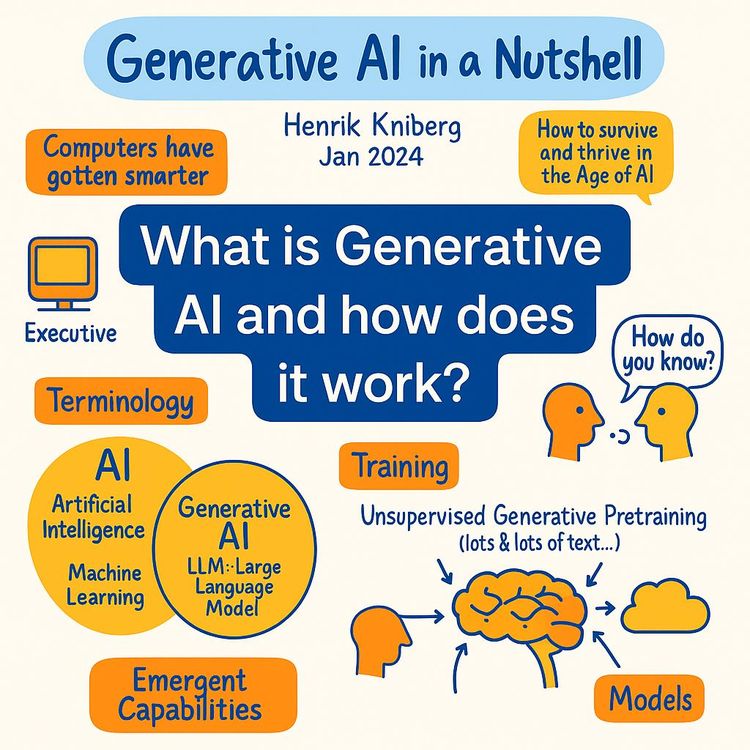
Video Course: What is Generative AI and how does it work?

Video Course: How to Use ChatGPT from Beginner to Professional
Video Course: How to Use Google Gemini for Google Workspace to Boost Productivity
Video Course: How to Use Claude 3.7 AI - Tips for Beginners!

Video Course: ChatGPT for Data Analytics: Full Course - from Beginners to Professional

Video Course: Generating Images and photos With ChatGPT?

Video Course: Generating Images & Photo's with MidJourney
Video Course: Generating Design's with Microsoft Designer and AI
Video Course: Generating Design's with Canva.com and AI
Join 20,000+ Professionals, Using AI to transform their Careers
Join professionals who didn’t just adapt, they thrived. You can too, with AI training designed for your job.