AI Trends: Reliable LLMs, Context Engineering, and Agents (Video Course)
Get a clear, engineer's view of where AI is headed in 2026,and how to ship systems that actually work. Learn when to pick DAGs over agents, nail context engineering, use agentic coding, design for voice, and turn demos into durable products.
Related Certification: Certification in Building Reliable LLM Apps, Context Engineering, and AI Agents
Also includes Access to All:
What You Will Learn
- Design deterministic DAGs and hybrid agent workflows for production reliability
- Apply context engineering: retrieval, re-ranking, schemas, and verification to reduce hallucinations
- Use agentic coding with spec-driven development to generate, test, and maintain code
- Build voice-first interfaces with streaming ASR/TTS, confirmations, and fallbacks
- Measure and monitor reliability: factuality, latency, cost, and audit logging
Study Guide
Introduction: Why This Course Matters Right Now
You're here because you want a clear, grounded view of where applied AI is actually headed,and how to build with it in ways that create real value. Not hype. Not benchmark graphics. Real systems that work in messy businesses, with real constraints, serving real customers.
As an AI engineer, the picture I see is simple: model capabilities keep improving, but the gap between demos and durable, revenue-generating products is still too wide. The people who win next are the ones who solve for reliability, not just creativity. They understand when to choose a deterministic workflow instead of a free-roaming agent. They treat context engineering like a core discipline, not a side quest. They use agentic coding to multiply output, without outsourcing judgment. And they prepare for a world where voice is the default interface, not a novelty.
This course is a full-stack guide to that future. We'll cover the technology, the engineering choices, the business implications, and the practical moves you can execute this quarter. You'll get a blueprint for building reliable AI systems, with examples, best practices, and the trade-offs nobody tells you about. We'll move from foundations to advanced patterns and finish with a concrete action plan you can put to work immediately.
The Big Picture: Capability vs. Reliability
AI models keep getting better on tests. That doesn't mean they're trustworthy in the wild. The core blocker to enterprise-grade adoption isn't creativity,it's hallucination and the hidden complexity that shows up when you ship to production: data variation, long-tail inputs, compliance rules, edge cases that only humans notice. The future favors builders who can bridge that gap.
Two truths to keep in mind:
- Benchmarks keep climbing while production value increases at a slower, steadier slope.
- The fundamentals for building with LLMs remain stable: the code you wrote years ago still works with minor upgrades. The game hasn't changed as much as the headlines suggest.
Example 1:
A customer support bot scores highly on public Q&A benchmarks. In production, it gives polished but incorrect refund policies when users ask edge-case questions (partial refunds combined with store credit). The benchmark didn't include those cases. The fix wasn't a bigger model; it was a deterministic policy lookup step and a narrow prompt that blocked generative filler text when rules existed.
Example 2:
A research assistant surfaces impressive citations in demos. In real use, it retrieves outdated or weak sources for niche queries and fabricates one bibliography entry per session. The team solves it with context engineering: a re-ranker over a vetted corpus, tight citation schemas, and a post-generation verification pass that pings the doc store to confirm URLs and dates before presenting results.
Limits of Current LLMs and Where the Research Is Pointed
Here's the uncomfortable truth: scaling current architectures has delivered useful gains, but it hasn't eliminated hallucinations or given us robust out-of-the-box reasoning. Tools help. Structure helps. Context helps. But if you expect a single model call to behave like a reliable knowledge worker, you'll keep being surprised.
There's active exploration of new approaches,hybrid systems, memory abstractions, world models, neurosymbolic elements, and training regimes that blend retrieval with reasoning. That's important. But while those breakthroughs mature, your edge comes from applied techniques that extend what's already working.
Example 1:
A product team expects "general reasoning" to solve data reconciliation between multiple ERPs. It fails when table schemas drift. The pragmatic solution uses a schema discovery step, a deterministic mapping function, and an LLM only to suggest candidate joins (which are auto-tested on sampled rows). Reliability returns without waiting on a new architecture.
Example 2:
A content ops team asks an LLM to produce brand-compliant copy end-to-end and gets tone violations. They switch to a multi-stage pipeline: (1) extract key facts, (2) generate raw copy, (3) enforce brand rules with a rule-based filter, (4) ask the LLM to rewrite specific violations. Same model, different system design. Results jump.
Recursive Language Models and Chained Reasoning
When context windows and single-shot reasoning hit limits, recursion helps. You can chain LLM calls to progressively refine, decompose, and validate work. Think: break big problems into digestible subproblems, preserve state, and keep the loop tight and observable.
Example 1:
Long-form market research: (1) generate a research plan, (2) fetch sources via retrieval, (3) summarize each source, (4) compare summaries for conflicts, (5) produce a synthesis, (6) run a verification pass that flags claims without strong citations. Each step is a bounded LLM task with structured I/O and optional human review.
Example 2:
Complex bug triage: (1) parse stack traces and logs, (2) propose hypotheses, (3) look up similar issues in a vector store of past fixes, (4) generate a minimal reproduction, (5) propose candidates patches, (6) run unit tests, (7) summarize outcomes and confidence. Recursive chaining transforms "guessing" into guided problem solving.
The Competitive Landscape: Why Full-Stack Ecosystems Matter
The center of gravity is tilting toward integrated stacks. Owning the model, the compute, the data, and the orchestration layers creates real advantages: performance predictability, cost control, better privacy options, and faster iteration. Google stands out here,competitive multimodal models, proprietary accelerators, deep data reservoirs, and a growing protocol layer for multi-agent cooperation.
Example 1:
A team building a video understanding pipeline chooses a vertically integrated stack: multimodal model APIs, storage aligned to the model's embedding schema, and accelerators that keep inference costs stable during peak demand. They avoid queue backlogs during launches because their stack isn't bottlenecked by third-party GPU shortages.
Example 2:
A data enrichment service needs consistent, low-latency responses for thousands of parallel entity-resolve tasks. They adopt a provider whose model, runtime, and routing fabric are co-optimized. Latency jitter drops, enabling stricter SLAs and a premium tier their competitors can't match.
Agent-to-Agent Protocols: Beyond Single-Tool Use
The next layer is coordination. Instead of a single agent juggling tools, you'll see specialized agents collaborating through a shared protocol. Google's A2A protocol is an example: interoperability, subtask delegation, and standards for message passing. This matters when one agent's output becomes another's input and you need consistent formats, handoffs, and auditability.
Example 1:
A media pipeline uses three agents: a transcription agent produces time-stamped segments, an editorial agent drafts highlights with fact references, and a compliance agent checks claims against a knowledge base. A2A-style contracts ensure each handoff contains IDs, evidence, and error states. If something breaks, you know where and why.
Example 2:
In procurement automation, a sourcing agent identifies vendors, a negotiation agent drafts emails, and a legal agent screens terms. A shared protocol standardizes "intent," "constraints," and "decision logs," so you can replay the conversation and justify choices to auditors.
Deterministic Workflows (DAGs) vs. Autonomous Agents
Here's the core engineering dilemma: predictable pipelines or flexible agents? The answer lives on a spectrum. For high-stakes tasks, choose a Directed Acyclic Graph (DAG) where each node is explicit and testable. For exploratory or collaborative tasks, an agent can navigate fuzzy goals,with a human in the loop to course-correct.
A simple rule that rarely fails: start with the simplest design that solves the job reliably. Only add autonomy when it's clearly required.
Example 1 (DAG):
Invoice data extraction for a finance system: (1) detect vendor template, (2) extract fields with regex/vision+LLM fallback, (3) validate with business rules, (4) post to ERP. Every step is deterministic or tightly constrained. No free-form agent needed because errors are expensive.
Example 2 (Agent):
Product discovery assistant for shoppers: users speak in ambiguous, changing requirements. An agent can explore options, ask clarifying questions, and use multiple tools. Mistakes are low-cost because the human user is steering.
Best Practices:
- Classify tasks by cost of error, ambiguity, and auditability needs.
- Wrap agents inside guardrails: schemas, tool whitelists, max-iteration limits, and confirmation prompts for risky actions.
- Turn agent learnings into DAGs over time: when you see stable patterns, harden them into deterministic steps.
Agentic Coding: Multiplying Developer Output
The most underrated productivity unlock is agentic coding: using AI to write, refactor, test, and maintain code inside an IDE or an AI-first editor. The key is structure. You don't "ask the model to build the app." You feed it specs, constraints, and examples so it can produce code that's consistent and testable. Spec-Driven Development is the cornerstone here.
Example 1:
You write a functional spec: API endpoints, payload schemas, error states, and performance requirements. The agent scaffolds a service, generates unit tests, and creates a CI config. You iterate by refining the spec and letting the agent regenerate only affected modules. No vibe coding. No wandering.
Example 2:
A legacy codebase needs a framework upgrade. You provide migration rules, a list of deprecated APIs, and target patterns. The agent proposes batched refactors, runs tests, and produces a diff summary. You review high-risk changes and ship faster with fewer regressions.
Tips:
- Write specs like contracts: inputs, outputs, invariants, and non-functional requirements (latency, memory, limits).
- Treat agents like junior developers with superpowers: give them context, examples, and tight feedback loops.
- Generate tests first. Use the agent to propose edge cases you might miss, then verify independently.
Context Engineering: The Skill That Changes Everything
Context engineering is the practice of giving a model exactly what it needs,no more, no less,at the right moment. It includes prompt design, retrieval-augmented generation (RAG), re-ranking, tool schemas, conversation memory, and output formatting. It's the most important lever you have to boost accuracy and reduce hallucination.
Example 1:
A healthcare assistant answers procedural questions from clinicians. Instead of asking the model to "explain the rule," your system retrieves the specific policy paragraph from a vetted corpus, adds a strict citation schema, and instructs the model: "Only answer using the provided excerpt. If uncertain, say so." Hallucinations drop dramatically.
Example 2:
A sales agent drafts proposals. It pulls client context (industry, goals, buying stage), product constraints, and past proposal snippets with high win rates. The prompt includes a "Do Not Assume" section and a checklist of required sections. Outputs become consistent and on-brand without manual cleanup.
Best Practices:
- Chunk your documents semantically; use a re-ranker to select the top-k passages most relevant to the question.
- Enforce structured outputs with JSON schemas and strict validators.
- Keep conversation memory short and focused; summarize long histories into task-relevant state.
- Add a "refusal rule" when context is insufficient. Reward abstention.
Voice as the Primary Interface
Voice is faster than typing. It's more natural for planning, brainstorming, and issuing commands while you're moving. The tech stack,streaming transcription, low-latency synthesis, and tool-calling,has crossed a threshold. Expect more products to lead with voice, then fall back to screens for precision and review.
Example 1:
A field technician uses a headset to report an equipment issue. The system transcribes in real time, extracts part numbers, checks inventory, and creates a work order,confirming aloud before actions are finalized. No clipboard. No extra typing.
Example 2:
An executive voice-drives a morning briefing: "What changed in our pipeline? Draft a note to the team if anything is off target." The assistant summarizes changes, proposes a message, and asks for confirmation. The process is seamless because voice is the starting point, not an afterthought.
Tips:
- Design for short, confirmable actions. Use voice for intent capture and coordination; use screens for final review of high-stakes outputs.
- Build in explicit confirmations for actions that spend money, change data, or affect customers.
- Provide smart fallbacks: when acoustic confidence is low, switch to a visual confirmation card.
Measuring Progress: Reliability Over Benchmarks
Benchmarks don't pay the bills. Reliability does. You need evaluation harnesses that reflect your use case: factuality, coverage, compliance, latency, cost, user trust. Test every step. Log everything. Treat the system like a machine you can tune, not a black box you hope will cooperate.
Example 1:
A knowledge assistant claims citations. You auto-verify each claim by checking if the cited doc includes the fact within a window around the quoted text. If not, you mark it as unverified and either redact or prompt the model to correct itself. Trust goes up because the system doesn't bluff.
Example 2:
An outbound sales writer is graded by conversion rate. You A/B test different prompting strategies and retrieval sources. Surprisingly, a smaller context window with a single highly relevant case study beats a broader set of generic proof points. Less is more when context is curated.
Security, Safety, and Governance You Can Actually Use
Enterprises want control. That means guardrails, auditability, and clear data pathways. You don't get a pass on safety because you're using the latest model. Bake it into the architecture from day one.
Example 1:
Prompt injection defense for a browser-enabled agent: the system sanitizes retrieved pages, strips scripts, and quarantines instructions embedded in content ("ignore previous instructions"). A safety filter flags suspicious prompts for human review and blocks tool calls when risk is high.
Example 2:
PII handling in customer support: redact sensitive fields before they hit the model, store keys separately, and log every tool invocation with hashed identifiers. A privacy officer can audit exactly what data flowed where, when, and why.
Best Practices:
- Prefer APIs or sandboxes for risky tools; never let an agent execute shell commands without strict constraints.
- Design for observability: trace IDs across every LLM call, tool call, and decision.
- Maintain model policies: allowed use cases, blocked categories, and escalation paths.
Cost, Latency, and Scale
Real products live under constraints. You'll balance cost per request, response times, and throughput. Great systems come from smart routing and caching, not just bigger budgets.
Example 1:
A content service uses a cheap model for rough drafts, then sends only the top 20% of drafts to a stronger model for refinement. Quality stays high, costs drop by half, and latency becomes predictable.
Example 2:
A chat experience streams partial responses for perceived speed. Behind the scenes, a secondary verification pass runs in parallel to catch obvious rule violations before the final token lands. Users feel it's instant, but it's still safe.
Tips:
- Cache aggressively: prompt+context caches can cut costs dramatically for repeated tasks.
- Route by difficulty: score tasks by complexity and send only the hard ones to heavy models.
- Quantize and distill where possible; keep your best model for the rare cases that need it.
From Demos to Durable Products: An Adoption Playbook
Most companies are at step zero. They have curiosity and scattered experiments. That's an advantage if you know how to run a clean rollout process: pick simple, reliable automations with clear ROI. Prove value. Build trust. Scale with structure.
For Engineers & Developers:
- Master context engineering and spec-driven workflows.
- Build a personal framework for choosing DAGs vs agents.
- Stay fluent with the latest agentic coding tools to keep velocity high.
For Business Leaders & Strategists:
- Start with deterministic pilots tied to outcomes (time saved, tickets resolved).
- Invest in data quality and retrieval infra. That's the engine behind every useful AI app.
- Treat AI as capability-building, not a one-off project.
For Product Designers & PMs:
- Prototype voice-first flows now. Get comfortable designing for confirmation and correction in conversation UX.
- Make "abstain gracefully" a feature, not a failure state.
- Instrument everything. Use data to refine prompts, context, and flows.
For Educators:
- Teach context engineering alongside core CS.
- Incorporate agentic coding and evaluation frameworks into assignments.
- Encourage hybrid projects: deterministic cores with agentic edges.
Example 1:
An HR team automates job description standardization. They build a deterministic pipeline: extract role details, enforce a style guide, validate legal phrases, and output structured data for the ATS. A small win,high adoption,fast proof of value.
Example 2:
A logistics company rolls out a voice dispatcher for route changes. It starts read-only: the assistant suggests adjustments but requires human confirmation. After trust builds and KPIs improve, limited auto-approval windows are enabled for low-risk routes.
Practical Builds: Blueprints You Can Adapt
RAG Pipeline (Reliable Q&A):
- Ingest: clean, chunk by meaning, embed with a domain-tuned model.
- Retrieve: semantic search + re-rank (e.g., cross-encoder).
- Prompt: strict instructions, schema-enforced outputs, citations required.
- Verify: check that cited text supports each claim; abstain if weak.
- Log: store retrieval context, final answer, and verification status.
Example 1:
Policy assistant for internal teams: retrieval from a secure knowledge base; answers include section IDs and confidence. If confidence is low, the assistant provides a link to the exact paragraph and asks the user to confirm interpretation.
Example 2:
B2B product comparison: retrieves spec sheets and pricing tiers, normalizes attributes, and produces a side-by-side table. If data is missing or conflicting, the system flags it and recommends contacting the vendor.
Agent-Hardened by DAG (Hybrid):
- Agent drafts plan → DAG executes known-safe steps → agent reviews results → human approves high-risk actions.
- The DAG enforces schemas, type checks, and API constraints; the agent handles ambiguous orchestration.
Example 1:
Marketing campaign setup: the agent proposes targeting and timelines; the DAG validates budgets, checks legal phrases, and schedules assets. Human signs off before launch.
Example 2:
Data cleanup: the agent identifies anomalies; the DAG applies transformations with versioned scripts and rollback. The agent produces a change log and summary for the data team.
Voice Agent with Tool-Calling:
- Wake word → streaming ASR → intent classification → slot filling → tool execution → TTS confirmation.
- Confirmation levels scale with risk; ambiguous intents trigger clarifying questions.
Example 1:
Appointment scheduling: "Find a slot next week with Dr. Lee and confirm." The assistant checks calendars, proposes options, confirms, then books,reading back details aloud.
Example 2:
Inventory updates on the warehouse floor: "Decrease pallet A12 by 4, reason: damaged." The system logs the change, attaches a photo, and sends a summary to the supervisor.
Decision Framework: Choosing DAGs vs Agents
Use this mental model to pick the right approach:
- Cost of Error: High → DAG. Low → consider Agent.
- Ambiguity: Low → DAG. High → Agent with human in the loop.
- Audit Requirements: High → DAG or Hybrid with strong logging.
- Variability of Inputs: Low → DAG. High → Agent or Recursive Chain.
- Time Pressure: Tight SLAs → DAG. Exploratory or interactive → Agent.
Example 1:
Contract clause detection: high audit needs, legal risk, and consistent input types. Choose a DAG: rule-based prefilters, LLM classification with schema, deterministic escalations.
Example 2:
Early-stage research for product strategy: goal is evolving, inputs are messy. Choose an agent with tool access, citations enforced, and human checkpoints.
Key Concepts You Must Know (and Use Precisely)
Large Language Model (LLM): A model trained on large text corpora to understand and generate language. It can follow instructions, reason to an extent, and call tools when connected to them.
Hallucination: Confidently generating content not grounded in input or retrieved knowledge. The main reliability blocker.
AGI (Artificial General Intelligence): Hypothetical systems that can learn and perform any task a human can across domains. Current LLMs are not that.
DAG (Directed Acyclic Graph): A structured pipeline where each step flows in one direction. Easy to test and audit.
Agent / Agentic Workflow: An autonomous system with a goal, tools, and the freedom to decide next actions iteratively.
Context Engineering: The practice of retrieving, selecting, and structuring the exact information an LLM needs to perform a task accurately.
A2A (Agent-to-Agent) Protocol: A standard for communication and delegation between agents. Focused on interoperability, not just single-agent tool calls.
Spec-Driven Development: Write detailed specs first; let the agent generate code that satisfies the spec. Order replaces chaos.
Example 1:
You build a spec template with sections for inputs, outputs, non-functional requirements, and test vectors. Every feature starts as a spec. The agent becomes a predictable code generator, not an improviser.
Example 2:
An A2A-like interface in your app defines message schemas for "task," "state," and "handoff." Specialized agents speak the same language. Failures are traceable.
Context Engineering Deep Dive: Patterns That Work
Think in layers: retrieval, selection, formatting, and control.
Retrieval: Use dense embeddings for recall, a cross-encoder for precision, and domain-tuned models for specialized jargon.
Selection: Limit to the minimum passages required. More context often reduces clarity.
Formatting: Use instruction blocks, examples, and schemas. Put constraints close to the task description.
Control: Add refusal rules and verification steps. Reward honesty over guessing.
Example 1:
Technical support triage: retrieve only the most similar three cases, include their resolutions, and ask the model to choose the best match or say "no match." Triage accuracy climbs because the model isn't drowning in noise.
Example 2:
Financial analysis: provide a small table of normalized metrics and ask for specific computations with explicit formulas. The model outputs JSON with numbers and references to input cells. Easy to test. Easy to trust.
Agentic Coding in Practice: Your Methodology
Work like a systems designer, not a prompt whisperer.
Workflow:
1) Write the spec. 2) Generate scaffolding. 3) Generate tests. 4) Fill functions. 5) Run CI. 6) Fix failures. 7) Document decisions.
Anti-Patterns:
- Letting the agent roam without constraints.
- Mixing requirements and casual commentary in the same prompt.
- Skipping tests "because the code looks fine."
Example 1:
You maintain a monorepo. The agent updates only affected packages identified via a dependency graph. The PR includes a summary: files changed, tests added, performance implications. You become the editor-in-chief, not the ghostwriter.
Example 2:
For infra as code, your spec includes IAM policies, network maps, and guardrails. The agent proposes Terraform updates and a plan. You review drift detection and blast radius before apply.
Voice UX: Designing for Confidence and Flow
Designing for voice is different. Users can't "see" state. You have to narrate it.
Patterns:
- Summarize intent after recognition: "You said … Is that right?"
- Confirm before committing: "I'm about to … Proceed?"
- Offer concise choices: "Option A or B?"
Example 1:
A traveler says, "Move my flight to late afternoon." The assistant replies: "I can switch to 4:30 or 6:10, same airline, no extra charge. Which one?" The user feels guided, not overwhelmed.
Example 2:
A clinician dictates notes; the system extracts structured fields (symptoms, meds, plan) and reads back a tight summary for confirmation. If something sounds off, the clinician corrects it in plain language.
What Actually Moves the Needle: Key Insights
Here are the truths that have held up across dozens of deployments:
- Optimize individual LLM calls for reliability before you roll out complex agentic loops.
- The "right" architecture depends on the use case. Rigid where accuracy is non-negotiable, flexible where exploration helps,and always start simple.
- Context engineering beats model swapping more often than not.
- Agentic coding augments developers. It doesn't replace senior judgment; it multiplies it.
- Voice-first design is the next big interface shift. Practice now and you'll feel at home when it's everywhere.
- Enterprise adoption is still early. If you build solid foundations today, the upside compounds.
Example 1:
A team spent weeks tweaking prompts for a summarizer. Gains were marginal. They switched to better retrieval and a stricter output schema. Quality jumped overnight.
Example 2:
A startup tried a fully autonomous agent for onboarding customers. It kept looping on ambiguous tasks. They rebuilt as a DAG with two agent-led clarifying steps. Onboarding time dropped, CSAT rose, and refunds disappeared.
Actionable Recommendations: Do This Next
For Organizations:
- Run an AI maturity assessment. Inventory processes ripe for deterministic automation. Start with low-risk, high-repetition tasks.
- Pilot projects with clear ROI and evaluations baked in from day one.
- Build context pipelines: clean data, retrieval infra, and re-ranking tuned to your domain.
For Engineers & Developers:
- Practice agentic coding with a spec-first habit. Treat your prompts like system design docs.
- Create a personal playbook: when to pick DAGs, when to add an agent loop, when to enforce refusal.
- Build an eval harness that mirrors reality: coverage, factuality, latency, and cost.
For All Professionals:
- Get fluent with voice tools. Use dictation, voice queries, and command confirmations in your daily flow.
- Learn to ask better questions of AI: specific constraints, desired formats, and examples of "good" vs "bad."
Example 1:
A legal ops team starts with clause extraction from NDAs. They build a DAG with schema validation and a reviewer UI. In three weeks, they cut review time by 40% and establish a playbook for more contracts.
Example 2:
An engineering org mandates spec-driven PRs for AI-generated code. Velocity increases, but so does predictability. Incidents drop because context and constraints are visible in every change.
Study & Practice: Questions to Test Your Judgment
Multiple Choice
1) The core trade-off between a DAG and an agent is:
A. Cost vs. Speed
B. Reliability vs. Flexibility
C. Scalability vs. Security
D. Data Privacy vs. Performance
Answer: B. Reliability vs. Flexibility
2) The single most powerful strategy to improve LLM applications is:
A. Using the largest model
B. Fine-tuning on custom data
C. Effective context engineering
D. Adding more tools
Answer: C. Effective context engineering
3) A key advantage of an agent-to-agent protocol like A2A is:
A. Faster inference
B. Text-only generation
C. Interoperability and task delegation across agents
D. Lower training costs
Answer: C. Interoperability and task delegation across agents
Short Answer
1) Define "hallucination" in LLMs and explain why it hurts reliability.
2) You're building a system to flag non-compliant legal clauses. DAG or agent? Why?
Discussion
1) Do you believe AI adoption is still early? Share observations from your industry.
2) With agentic coding rising, which human skills become more valuable?
Additional Resources to Go Deeper
Further Reading & Research:
- Alternative AI architectures and hybrid approaches that extend today's limits.
- Articles on building reliable agents, favoring simple, testable workflows first.
- Recursive language model techniques for handling long or complex tasks.
- Coding assistant best practices focused on structure and verification.
Tools & Platforms to Explore:
- Cursor for AI-first coding workflows.
- Google AI tooling for experimenting with multimodal models and orchestration.
Related Topics for Study:
- Spec-Driven Development as a default workflow.
- Multi-agent systems and coordination protocols.
- Advanced prompt and context engineering patterns.
Example 1:
Try a weekend build: a tiny RAG app with strict citation rules and a verification pass. You'll feel the difference that context engineering makes in a single evening.
Example 2:
Refactor a small internal tool using spec-driven steps. Measure before and after on defects and review time. Share the results and standardize the method.
What to Watch in the Competitive Arena
Integrated ecosystems have momentum: strong multimodal models, proprietary compute, and vast data reservoirs. Add in maturing multi-agent protocols and you get platforms that feel more coherent and dependable at scale. If you build on such a stack, you inherit some of that reliability and performance. If you compete with it, differentiate with domain focus, data quality, and a sharper product wedge.
Example 1:
A startup wins by owning a narrow vertical,clinical trial document automation,with a ruthlessly tuned retrieval index and medical-grade evaluations. They don't need to beat general models; they need to be indisputably correct in their niche.
Example 2:
A mid-market SaaS pairs an integrated model provider with its proprietary dataset and builds a voice-first assistant for its users. Two quarters later, the assistant drives upsell because it genuinely saves time.
From Fundamentals to Fluency: Your Skills Roadmap
Master the Fundamentals:
- Context engineering, end to end.
- Evaluations that reflect real outcomes, not just scores.
- Decision frameworks for DAG vs agent vs hybrid.
Level Up:
- Agentic coding with spec-driven habits.
- Voice-first UX design with confirmation flows.
- Multi-agent patterns with clear contracts and logging.
Stretch Goals:
- Build small, reliable "brains" that combine retrieval, reasoning, and verification.
- Create your personal library of prompts, schemas, and evaluation harnesses that you reuse across projects.
Example 1:
Compile a prompt cookbook with sections for summarization, extraction, transformation, and critique,each with schemas and test cases. This becomes your team's secret sauce.
Example 2:
Maintain a "model routing" module that picks models by task complexity and SLAs. It's one of the highest ROI utilities you'll ever write.
Common Pitfalls and How to Avoid Them
Pitfall: Betting everything on a fully autonomous agent from day one.
Fix: Start with a DAG, add agentic loops for ambiguity only where needed.
Pitfall: Overloading the context window with everything you've got.
Fix: Retrieve less, re-rank better, and enforce schemas strictly.
Pitfall: Treating "abstain" as failure.
Fix: Celebrate abstention when context is thin; route to a human or request more info.
Example 1:
A startup's agent keeps failing a complex onboarding flow. They split it into four DAG stages, each with clear success criteria, and let a small agent loop handle only clarifying questions. Completion rate jumps from 40% to 92%.
Example 2:
A knowledge bot returns long, meandering answers. They cut retrieved passages to the top two, enforce a bullet-point schema, and require a conclusion that cites one source per claim. Answers become short, accurate, and trusted.
Putting It All Together: A Day-in-the-Life Stack
Imagine your typical workday augmented by reliable AI:
- Your voice assistant briefs you on key metrics and drafts your morning messages,always asking before sending.
- Your coding agent turns specs into tested modules. You approve diffs, not blobs of code.
- Your research assistant pulls from a curated corpus with verifiable citations and self-checks claims.
- Your product agent proposes ideas, but your DAG deploys only what passes tests and policy checks.
- Your eval dashboards show factuality, latency, and cost per task, with drift alerts when performance drops.
Example 1:
You ship a feature starting with a one-page spec. By end of day, the agent has code, docs, and tests ready. You focus on naming, edge cases, and user experience.
Example 2:
You review an AI-generated plan for a feature rollout. The system simulates user flows, flags risk, and asks for final confirmation on changes that affect billing. Nothing goes live without your explicit yes.
Conclusion: Build What Works, Then Scale What's Proven
Here's the essence: the future belongs to builders who prioritize reliability. Get great at context engineering. Learn when to lock a process into a DAG and when to invite an agent into the loop. Use agentic coding to multiply your output, not replace your discipline. Start practicing voice-first design now,so you're fluent when conversation becomes the default. And remember: the industry is still early. Most value will be created by simple, dependable systems that quietly save time and reduce errors.
You don't need to predict the next breakthrough to win. You need to master the fundamentals that make current AI deliver real outcomes: tight context, strict schemas, clean evaluations, and clear interfaces. Build small, ship fast, measure ruthlessly, and expand from what works. That's how you turn AI from a demo into a durable advantage,one reliable system at a time.
Frequently Asked Questions
This FAQ clarifies how AI is evolving from an engineering lens: what works, what breaks, and how to apply it to real business problems. It starts with foundations, moves into architectures and tooling, then covers strategy, risk, and execution. Answers are concise, practical, and example-driven so you can make confident decisions without the fluff.
Bottom line: use this as a decision aid for what to build, buy, and prioritize.
Foundational Concepts and Current State
What are the primary limitations of current Large Language Models (LLMs)?
The biggest limitation is hallucination,confident, wrong answers that look convincing. You'll also see brittleness with long or ambiguous instructions, limited grounding in private data without retrieval, and sensitivity to prompt wording. Models are improving, but the integration patterns that make them dependable haven't fundamentally changed: good context, tool use, and guardrails still matter.
Practical impact: if the cost of a wrong answer is high, you must architect for control (deterministic steps, validation, approvals) instead of relying on a single model call.
Example: a sales Q&A bot that hallucinates pricing terms can cause revenue leakage; fix with retrieval from a curated price book and strict answer formatting with validations.
What does it mean for an AI to "hallucinate," and why is it a problem?
Hallucination happens when the model fabricates facts outside its context or training signal. It's not "lying" by intent; it's pattern completion without grounding. The risk is trust erosion and operational mistakes. In regulated or high-stakes environments, a single fabricated claim can trigger legal, financial, or safety issues.
Mitigation: retrieval-augmented generation, constrained decoding, verifiable references, human review, and automated checks.
Example: a legal assistant inventing a precedent. Add retrieval from your firm's knowledge base, require citations, and block responses that lack verifiable sources.
Are we approaching the limits of what the current LLM architecture can achieve?
Scaling improves benchmarks, but returns are tapering on reliability and grounded reasoning. Many researchers argue that new approaches may be needed to overcome core issues like hallucination. Until then, the pragmatic path is to engineer around limitations with retrieval, tools, and structure.
Key idea: treat the LLM as a reasoning and language interface, then surround it with deterministic systems that provide facts, enforce rules, and verify outputs.
Reality check: expect steady improvements, but plan assuming today's constraints persist.
What is the overall state of AI adoption in the business world?
Most companies are early. Individual teams use public tools, but end-to-end AI systems tied to KPIs are rare. The gap isn't awareness; it's integration, data readiness, and change management.
Opportunity: focus on clear use cases with measurable ROI, start small, and systematize wins.
Example: automate RFP analysis with a RAG pipeline, then expand to contract review once the evaluation loop and data governance are in place.
Building AI Applications: Architectures and Strategies
What is the difference between a DAG-based workflow and an AI agent?
A DAG is a fixed, testable sequence of steps (prompts, functions, validations). An agent is goal-driven with tool access and loops until it believes the goal is met. DAGs are predictable; agents are adaptable.
Trade-off: control and testability (DAG) vs. flexibility in open-ended tasks (agent).
Example: invoice extraction fits a DAG; research across multiple sources with synthesis fits an agent with retrieval and human approval.
How do I decide whether to use a deterministic DAG or a flexible agent for my application?
Start with error tolerance and auditability. If an error is expensive or must be explained, use a DAG with strict validations. If tasks are varied and a human can correct mistakes, an agent can speed progress. Many production systems blend both: DAG spine with agentic sub-steps.
Rule of thumb: begin simple; add autonomy only where it provides clear value.
Example: compliance checks (DAG) vs. market research summarization (agent with checkpoints).
What is "Context Engineering" and why is it a critical skill?
Context Engineering is selecting and structuring the exact information the model needs at the exact time it needs it. This includes instructions, retrieval chunks, examples, tools, and conversation state. It's the fastest way to boost quality without retraining.
Core moves: write specific instructions, retrieve only relevant facts, define tools precisely, and chain steps to scope the model's job.
Outcome: fewer hallucinations, higher accuracy, and consistent outputs across users.
What are some advanced techniques for managing context in LLM applications?
Use recursive calling to process large inputs in stages, hierarchical summaries to keep memory, and hybrid retrieval (semantic + keyword + metadata filters). Add citation-aware prompts and verification passes that compare claims to sources.
Pattern to copy: chunk, retrieve, reason, verify, and only then generate final output.
Example: for a 300-page report, create section summaries, synthesize across sections with citations, and run a claim-checker step before delivering the final brief.
Key Technological Trends and Players
Why is Google considered a rising leader in the AI ecosystem?
It aligns models, compute, data, and protocols in one stack. High-performing multimodal models, custom TPUs, vast data assets, and standards for agent collaboration position it well.
Why this matters: end-to-end control can reduce cost, increase speed, and enable features that rely on tight integration.
Business takeaway: evaluate ecosystems, not just single models, when choosing partners.
What is the A2A (Agent-to-Agent) protocol?
A2A is a framework for agents to communicate, delegate, and coordinate. Instead of one model calling tools, multiple agents with different skills can negotiate tasks and share context.
Value: complex workflows (e.g., research, procurement, compliance) can be split into specialized roles with clear handoffs.
Example: a research agent gathers sources, a fact-checker validates claims, and a writer synthesizes,with A2A-style conventions enabling smooth collaboration.
What is "agentic coding" and how does it affect software development?
Agentic coding treats the AI as a capable collaborator with tools: file editing, tests, linters, terminals. You assign high-level goals; the agent proposes changes, runs checks, and iterates.
Impact: faster delivery, better boilerplate, and more time for architecture.
Example: use an AI IDE to add feature flags across services, generate tests, and update docs while you review diffs and enforce standards.
What are some best practices for utilizing agentic coding tools effectively?
Master your AI editor's capabilities, use a hybrid of models for planning vs. generation, and keep strong fundamentals to review and debug. Pair agents with specs and guardrails.
Do this: write a clear spec, set unit tests first, let the agent implement, and you handle edge cases and integration.
Avoid: blindly accepting diffs without tests or reasoning notes.
What is "spec-driven development"?
You write a precise specification,requirements, API contracts, data models, acceptance tests,and feed it to the coding agent as the source of truth. The spec reduces ambiguity and aligns outputs with intent.
Why it works: the model follows structure; you get predictable code, faster reviews, and fewer rewrites.
Tip: treat the spec like code: version it, test it, and update it with each change.
Why is voice interaction considered the next major user interface?
Speaking is much faster than typing, and modern models can parse multi-step intents. With real-time speech-to-text, tool use, and confirmations, voice can trigger complex workflows.
Design constraint: latency and accuracy must be handled with progressive confirmations and undo options.
Example: "Book a flight Tuesday morning, aisle seat, under 600 budget" → agent confirms the itinerary, shows top options, and waits for a spoken "confirm."
For Developers and Professionals
How have the fundamentals of building LLM applications evolved?
Foundations remain steady: reliable context, deterministic scaffolding, and careful tool use. What changes is model capability and the surrounding toolchain. Many older architectures still work with newer models after prompt refinements.
Practical tip: refactor prompts, swap models, and add verification steps before rewriting entire systems.
Focus: reliability first, sophistication second.
Certification
About the Certification
Get certified in reliable LLM systems, context engineering, and AI agents. Prove you can choose DAGs vs agents, engineer context for accuracy, design for voice, build agentic features, and ship production AI from demo to deployment.
Official Certification
Upon successful completion of the "Certification in Building Reliable LLM Apps, Context Engineering, and AI Agents", you will receive a verifiable digital certificate. This certificate demonstrates your expertise in the subject matter covered in this course.
Benefits of Certification
- Enhance your professional credibility and stand out in the job market.
- Validate your skills and knowledge in cutting-edge AI technologies.
- Unlock new career opportunities in the rapidly growing AI field.
- Share your achievement on your resume, LinkedIn, and other professional platforms.
How to complete your certification successfully?
To earn your certification, you’ll need to complete all video lessons, study the guide carefully, and review the FAQ. After that, you’ll be prepared to pass the certification requirements.
Other AI Video Courses
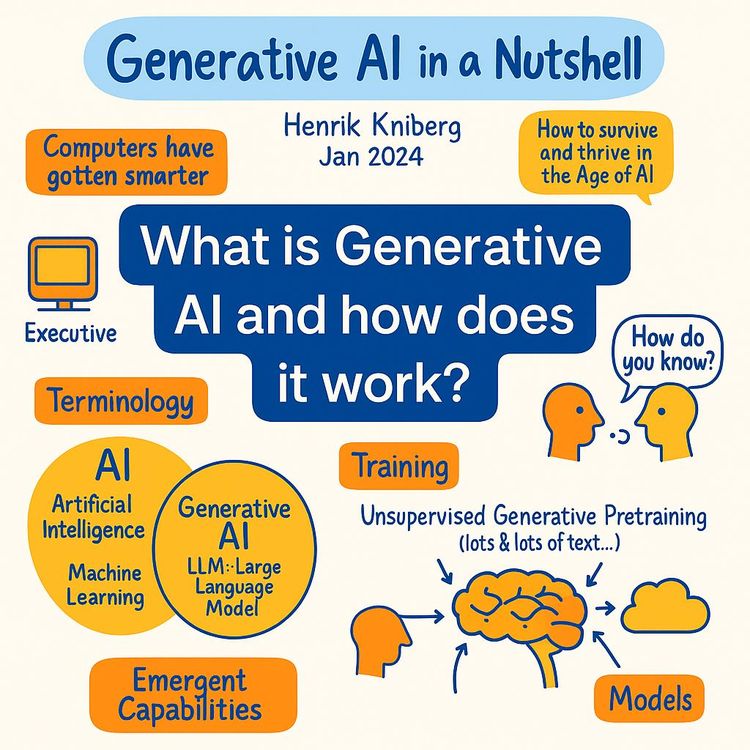
Video Course: What is Generative AI and how does it work?

Video Course: How to Use ChatGPT from Beginner to Professional
Video Course: How to Use Google Gemini for Google Workspace to Boost Productivity

Video Course: How to Use Claude 3.7 AI - Tips for Beginners!

Video Course: ChatGPT for Data Analytics: Full Course - from Beginners to Professional

Video Course: Generating Images and photos With ChatGPT?

Video Course: Generating Images & Photo's with MidJourney
Video Course: Generating Design's with Microsoft Designer and AI
Video Course: Generating Design's with Canva.com and AI
Join 20,000+ Professionals, Using AI to transform their Careers
Join professionals who didn’t just adapt, they thrived. You can too, with AI training designed for your job.