Amazon PPC Masterclass: Live Training Replay on Ads, AI & Scaling (Video Course)
Stop guessing with Amazon ads. In this 2025 live replay, you'll build a PPC system that plugs spend leaks, lifts CTR/CVR, and plays nice with Amazon's algorithm,using AI to speed analysis and creative so hours of work drop to minutes.
Related Certification: Certification in Optimizing and Scaling Amazon PPC Campaigns with AI
Also includes Access to All:
What You Will Learn
- Build a profitable, scalable Amazon PPC system
- Diagnose and fix funnel bottlenecks (PPC → CTR → CVR)
- Use AI for PPC audits, creative generation (JSON A+), and automation
- Implement audience-centric bidding and retargeting strategies
- Manage high-CPC keywords, Q4/tentpole tactics, and a repeatable operating rhythm
Study Guide
Amazon PPC Masterclass Replay: Ads, AI, and Scaling
Let's be honest: the old way of "set bids, add keywords, hope it works" is fading. Amazon PPC is getting smarter, pricier, and more automated. You can fight the tide, or you can learn the current and ride it. This course is your full walkthrough,start to finish,on how to build a profitable, scalable PPC system that works with Amazon's algorithms, not against them. We'll plug the holes that drain your ad spend, turn your listing into a click magnet, and use AI to do the heavy lifting across data analysis, creative, and operations.
By the end, you'll understand how to make decisions with clarity: where your money should go, when to scale, when to kill, how to design creatives that actually move the needle, and how to use AI to turn hours of work into minutes. This isn't theory. It's a practical playbook you can apply today to grow your brand.
Foundations: The Real Job of PPC and the Metrics That Matter
Think of PPC as the front door. That's it. Ads generate impressions. Your listing earns the click. Your product and offer win the sale. If any one of those pieces is weak, results tank. The trick is learning where the bottleneck is and fixing that first.
Key terms you'll use daily:
- PPC: You pay when someone clicks your ad. Its purpose is exposure, not conversion.
- CPC: What you pay per click. Expect it to rise in competitive categories.
- CTR: Clicks divided by impressions. Higher CTR = better traffic quality and often cheaper CPCs over time.
- CVR: Orders divided by clicks. The truth serum for your listing and offer.
- ACOS: Ad Spend divided by Ad Sales. Your ad efficiency score.
- TACOS: Ad Spend divided by Total Sales. The business-level view that includes organic impact.
Example 1:
A vitamin listing has great rankings but ACOS is rising. You notice CTR is 0.3% on your main keyword. That's a listing problem, not a bid problem. You test a new main image (angled bottle vs front-facing), add a clearer benefit in the title, and tighten price. CTR jumps to 0.8%, CPC drops, ACOS falls by double digits.
Example 2:
A premium dog bed has 3.5 stars and a high return rate. CVR is weak (3%). You improve materials, add a size guide image, and handle common objections in your bullets. CVR climbs to 9%. Now your PPC spend finally turns profitable at the same CPC.
The Evolving State of Amazon PPC
Amazon's ad system is becoming more algorithmic. It rewards what customers like and punishes what they ignore. That's the game now. Here's what that means for your daily work.
The Blurring of Keyword Match Types
Exact, phrase, and broad aren't behaving like they used to. Exact match can still trigger variants. Amazon's systems are picking up intent across related queries, even when you think you're tightly controlling it. Rigid match-type strategies won't save you,the search term report will.
What to do:
- Use search term reports weekly to see what actually triggered your ads.
- Add negatives aggressively in broad and phrase to prevent bleed.
- Keep exact match for ranking, but verify your traffic purity often.
- Build themes and clusters,analyze performance at the root keyword or topic level, not just individual targets.
Example 1:
You're bidding on [stainless steel water bottle] exact. Your search term report shows "metal water bottle" and "insulated steel bottle" slipping in. You spot higher CVR on "insulated steel bottle," so you spin it out as its own target with a separate budget and push ranking there.
Example 2:
Phrase match on "protein powder" pulls "protein powder scoop," "protein shaker," and "protein container." You negate "scoop" and "shaker" to prevent bleeding spend on irrelevant accessories, while you create a category targeting campaign for those accessory placements separately.
The Holistic Performance Funnel: PPC → CTR → CVR
Your ads show up. Your main image, title, price, and reviews earn the click. Your images, A+ content, bullets, and offer get the sale. That's the chain. Optimize the real bottleneck instead of forcing more spend through a weak link. Amazon rewards high CTR and CVR with better placement and, often, lower effective CPCs.
Best practices:
- Treat every keyword as a small funnel. Look at CTR and CVR per term.
- Run frequent A/B tests on your main image, title, and price points.
- Use benefits-first imagery and objection-busting A+ modules.
- Mine questions and reviews to inform imagery and bullets.
Example 1:
For "foam roller," CTR is decent but CVR is poor. You add a comparison chart in A+ to show why your density and surface ridges outperform typical rollers. You add a "how to use" image and a 60-day no-questions guarantee. CVR increases enough to unlock scale at the same CPC.
Example 2:
For "wireless earbuds," CTR is low. You test an image with a clear charging time callout and battery life badges. You change the title to front-load "Noise Cancelling, 40-Hour Battery." CTR rises, which feeds more data, which lets you scale bids profitably.
The Growth of Audience-Centric Advertising
You can now apply audience segmentation to Sponsored Products through Amazon Marketing Cloud. That means you can prioritize "new-to-brand" buyers and retarget differently. Spend isn't generic anymore,your audience determines the price you'll pay and the value you'll get.
Advantages:
- Allocate higher bids for new customers when LTV warrants it.
- Keep retargeting costs lean while staying visible.
- Analyze CAC vs LTV by audience segment.
Example 1:
A skincare brand pays more to acquire first-time buyers of a moisturizer because the LTV over six months is strong. New-to-brand campaigns get higher bids and budget caps. Retargeting ads nudge recent shoppers with low bids and product page placements.
Example 2:
A coffee brand splits Sponsored Products into two segments: "new-to-brand" and "repeat customers." The former pushes trial sizes at higher CPC; the latter nudges full-size bags with a subscribe & save offer at lower CPC.
AI as Your Force Multiplier
AI doesn't replace fundamentals. It accelerates them. Use AI for what it's best at: crunching data, iterating creative, and automating workflows. Keep humans in the driver's seat for strategy, judgment, and taste.
AI for Advanced PPC Data Analysis
Instead of combing through four reports manually, feed them to an AI and ask for a precise set of outputs. It will cluster, rank, and recommend. You decide and implement.
Workflow (do this monthly or biweekly):
1) Data Consolidation: Download these four reports,Search Term, Targeting, Placement, and Search Term Impression Share.
2) Upload: Put them into one Google Sheets file with separate tabs.
3) Prompting: In an AI like Gemini, use a detailed prompt explaining your goals, constraints, and what outputs you want.
4) Outputs: Ask for clustering, scale-up opportunities, fix-or-kill findings, placement/budget edits, and a 7-day action plan.
5) Sanity Check: Ask the AI to flag data anomalies (e.g., duplicate campaigns, mismatched dates).
Actionable outputs to expect:
- Clustered themes (branded, generic, competitor ASINs, long-tail).
- Scale Up: High CVR, low impression share targets with suggested bid increases (+X%).
- Fix or Kill: High spend, poor ACOS targets with historical notes and whether to negate, reduce bids, or test new placements.
- Placement & Budget: Where Top of Search outperforms Product Pages, and which campaigns cap out by noon.
Example 1:
AI clusters reveal that competitor ASIN targeting converts 2x better than generics. You reallocate 25% of generic budget to ASIN targets and raise Top of Search multipliers for those ad groups. ACOS drops while volume rises.
Example 2:
AI flags five terms with ACOS above your threshold and high spend. But it notices historically they convert on Top of Search, not Product Pages. You lower base bids and set Top of Search multiplier to +300%. ACOS normalizes without losing key placements.
AI for A+ Content and Creative Ideation (JSON Method)
Text prompts alone can be vague. Using JSON as a design blueprint gives AI concrete instructions on layout, hierarchy, and style. The result: faster, more accurate creative drafts you can refine with a designer.
Workflow:
1) Deconstruct: Upload a competitor A+ module image to an AI like Claude and ask it to output detailed JSON describing layout, spacing, color hex codes, fonts, icon styles, and text hierarchy.
2) Modify: Swap in your brand colors, product details, features, and benefits inside the JSON.
3) Generate: Paste the JSON into an image-generating AI and ask it to render exactly from the code.
4) Iterate: Edit the JSON for modules, captions, and benefits. Finalize with your designer.
Example 1:
You admire a hydration bottle A+ with clean feature blocks and lifestyle shots. Claude outputs a JSON map: two-column grid, muted pastel hex codes, icon style guidelines. You replace with your brand palette, add "fits in car cup holders," and render a draft. Your designer perfects shadows and reflections for the final upload.
Example 2:
For a pet grooming brush, you model a competitor's "Before/After" module and "How it works" steps. The JSON approach preserves spacing and typography, saving hours. You add a callout badge for "Gentle on sensitive skin" and a comparison chart. The finished creative lifts CVR by several points.
AI for Workflow Automation
Automation is about consistency and speed. Create small internal tools that team members can trust to run complex routines the same way, every time.
What to build:
- Custom GPTs: A GPT that merges your search term and advertised product reports, runs n-gram analysis, surfaces negative keyword ideas, and outputs a one-page summary plus a "kill or test" list.
- Claude Projects: A "Project Factory" that asks clarifying questions and then generates new, detailed project instructions (e.g., "build a SOP for monthly PPC audits" or "draft a LinkedIn content calendar").
- NotebookLM: A private knowledge base of your SOPs, briefs, and training videos. Ask questions and get answers only from your data.
Example 1:
Your Custom GPT ingests weekly reports, identifies duplicate keywords across campaigns, flags budget-capped winners, and produces a checklist for the media buyer to implement before noon on Mondays.
Example 2:
Claude Project Factory interviews your account manager about outreach goals, tone, and examples. It then produces a cold email sequence for prospective Amazon brands with clear value props and social proof, ready to A/B test.
AI for Product Research and Differentiation
Product differentiation solves most PPC headaches. AI can synthesize thousands of reviews to tell you exactly what the market wants and where competitors fall short.
Workflow:
1) Gather: Pull AI review summaries from tools or scrape top reviews for your product and 3-5 competitors.
2) Prompt: "You are a product R&D expert. Identify unmet needs, recurring complaints, and 10 actionable differentiation ideas that would materially improve CTR and CVR."
3) Prioritize: Rank by impact vs feasibility. Test offers, bundles, or packaging first if manufacturing changes take time.
Example 1:
Yoga mat reviews show constant complaints about slipping and odor. You upgrade the surface texture, add an odor-neutral material note in bullets, and shoot a "grip test" lifestyle image. CTR and CVR rise because you fix the big objections upfront.
Example 2:
Coffee grinder reviews mention noise and static. You test a "quiet motor" variation, add a cleaning brush in the box, and include a static-reduction tip in the A+ FAQs. Your product becomes the obvious choice for apartment dwellers.
Tactical Campaign Management Insights
Now let's talk strategy in the trenches. Your profitability lives and dies here.
Handling High-Cost Keywords ($7+ CPC)
High CPC isn't the enemy. Poor conversion is. If a pricey keyword produces profitable ACOS or drives organic rank growth, it may still be worth it. Precision and placement matter.
Approach:
- Improve listing elements that affect CTR and CVR first.
- For broad/phrase, add negatives aggressively to limit waste.
- For exact, lower base bids and use Top of Search multipliers to focus on the most valuable clicks.
- If the goal is ranking, accept short-term ACOS pain with a clear budget and timeframe.
Example 1:
Your main keyword costs $8 per click. You reduce the base bid, set a +400% Top of Search multiplier, and pause Product Page placement. CTR and CVR at the top spot carry the keyword profitably, while you avoid weaker placements that drain budget.
Example 2:
You split your "running shoes" campaigns: exact for ranking, phrase for exploration. You then add negatives for unisex and kids-related terms in phrase match to curb waste since your product is men's-only.
Q4 and Tentpole Event Strategy
Peak shopping windows amplify everything,traffic, CPCs, and window shoppers. You need a different playbook depending on whether you're running deals.
Guidelines:
- Don't run large tests during peak days. Your data gets noisy and expensive.
- Double down on proven winners with historical conversion.
- If you're not discounting or your item isn't giftable, pause or reduce spend to protect your budget.
- If you are discounting, go aggressive with budget on your top keywords and placements.
- Use Brand Analytics to pick a short, relevant list of seasonal terms (e.g., "stocking stuffer for runners").
Example 1:
A kitchen gadget brand with a deal badge triples budget on their top 10 converting keywords and adds a Sponsored Brands Video campaign aimed at those exact terms. Volume spikes and ACOS stays healthy due to improved CVR from the deal.
Example 2:
A premium non-gift product without a deal pauses Sponsored Brand Video and cuts Sponsored Products budget in half on the event day. They resume normal levels afterward to avoid paying inflated CPCs for low-intent clicks.
Managing Multi-SKU and Variation Listings
More SKUs can mean more leverage,or more confusion. Organize for speed and clarity.
If variations are on one listing:
- Group all child ASINs in one ad group to aggregate data quickly.
- Create separate campaigns for variation-specific keywords (e.g., "red ball ornament" vs "blue star ornament").
- At the ad level, pause child ASINs that get clicks without sales to let winners shine.
If variations are on separate listings:
- Treat each parent ASIN as its own landing page and run distinct campaigns.
- Don't panic about cannibalization. The system won't inflate your CPCs by making you bid against yourself across products.
- Let data decide which parent listing deserves most of the budget.
For aesthetic products (apparel, decor):
- Heavily leverage Auto and Category Targeting. Many shoppers browse visually, not by precise keywords.
- Use lifestyle images and color/style swatches in the main image to capture browsing intent.
Example 1:
A holiday ornament brand runs a general ornament campaign with all variations, and a "Santa ornament" campaign with only Santa-themed SKUs. The latter converts better for "santa ornament" and receives incremental budget.
Example 2:
A T-shirt brand puts each design on its own parent listing. Category Targeting plus Auto exposes it to browsing traffic. Keyword-only campaigns underperform, so they keep small budgets there and scale category placements where CVR is strongest.
Key Insights You Can Bank On
Fundamentals First:
Your product, listing, and structure beat any trick. Fix the offer and creative before you chase hacks.
Data Is Currency:
You "buy the data" to learn what works. Then scale what the data proves.
Holistic Optimization:
PPC, CTR, and CVR are one system. Improve one and the others often follow.
AI Is an Enabler:
Use it to compress time and surface insights. Keep humans in charge of strategy and taste.
Conversational Commerce Is Rising:
Start thinking about how your product info performs in a Q&A environment and across AI-driven discovery paths.
Strategy Is Contextual:
Seasonality, events, and CPCs change the plan. Adapt with a clear objective for each window.
Implications and Applications by Role
For Advertisers:
- Shift focus from granular bid micromanagement to funnel optimization. Your best wins are CTR and CVR lifts.
- Run monthly AI audits using the four-report method to find scale and cut waste.
Example 1:
You spot that "competitor-branded" clusters deliver outsized profit. You create a competitor conquesting plan with custom creatives and Top of Search focus.
Example 2:
Your AI audit finds three campaigns budget-capped before noon. You adjust budgets and add dayparting notes in your SOP to protect high-performing hours.
For Brand Managers:
- Use the JSON method to speed up A+ ideation. Create a template library for designers.
- Build a NotebookLM knowledge base with brand principles, voice, and FAQs for team training.
Example 1:
You deconstruct three best-in-class competitor A+ layouts and build branded variations your designer finalizes in a single sprint.
Example 2:
Your team uses NotebookLM to answer "How do we handle a high ACOS spike?" based solely on your internal SOPs,consistent answers, no guesswork.
For Agencies & Consultants:
- Standardize analysis with Custom GPTs and Claude Projects. Productize your thinking.
- Create a "Project Factory" to generate new SOPs from structured interviews.
Example 1:
Your agency's Custom GPT turns raw reports into client-ready insights and action plans formatted the same way, every week.
Example 2:
Claude interviews you about creative briefs and produces a reusable template portfolio, speeding client onboarding.
For All Sellers:
- Cover the basics before chasing shiny tools: Sponsored Brands, video ads, AB testing, great offers.
- Treat AI as a time-saver, not a crutch. The goal is smarter decisions, faster.
Example 1:
You hold off on a new trend and instead optimize your main image and video. CTR jumps, and your core campaigns scale with better unit economics.
Example 2:
You systemize a monthly rhythm,audit with AI, implement changes, AB test creatives, and review TACOS trendlines.
Action Items and Recommendations
1) Conduct a Full Funnel Audit:
Pick your top 10 keywords. For each, label the bottleneck: PPC (low impressions), CTR (low clicks), or CVR (low orders). Fix the bottleneck in order.
Example 1:
"Ceramic mug" has impressions but low CTR. You test an image with a hand holding the mug to add scale and warmth.
Example 2:
"Memory foam pillow" has solid CTR but weak CVR. You add a "choose your firmness" guide, a comparison chart, and a sleep position graphic.
2) Implement Audience Targeting:
Segment "new-to-brand" vs retargeting. Allocate higher CPC to new customers where LTV supports it.
Example 1:
Supplements: Push trial size to new customers; retarget with a subscription offer.
Example 2:
Pets: Pay more to acquire first-time buyers, then retarget with accessory bundles.
3) Schedule an AI-Powered PPC Audit:
Import the four reports and ask AI for cluster insights, scale-up moves, kill/fix targets, and a 7-day action plan.
Example 1:
AI finds generic terms with low impression share and high CVR. You raise bids 15% and increase budgets.
Example 2:
AI calls out a poor-performing placement. You cut Product Page exposure and load Top of Search.
4) Deconstruct a Top Competitor's Listing:
Use the JSON method to replicate layout logic. Swap in your brand and benefits.
Example 1:
You replicate a successful "How it works" module for a blender. You emphasize motor power and warranty.
Example 2:
You rebuild a strong FAQ section that addresses shipping, returns, and care instructions visually.
5) Automate One Repetitive Workflow:
Pick email follow-ups, n-gram analysis, or weekly reporting. Build a Custom GPT or Claude Project to handle it.
Example 1:
Your GPT outputs negative keyword recommendations weekly from search terms.
Example 2:
Claude auto-drafts two product-focused LinkedIn posts from your blog each week.
6) Formalize Your Q4/Tentpole Strategy:
Decide: Are you discounting? If yes, plan to go aggressive on proven winners. If not, protect budgets during peak days.
Example 1:
Running deals: Focus on your top converting 20 keywords and high-intent placements.
Example 2:
No deals: Maintain presence on branded terms and pause high-CPC generics during event peaks.
The Future of Amazon Search: Conversational Commerce and Rufus
Conversational search is being woven into the shopping experience. Ads already appear within conversational results. But the classic search bar isn't going away any time soon. Think of conversational tools as another discovery layer.
What matters now:
- Make your listings "answer-ready." Use clear benefits, specs, and FAQs that respond to real questions.
- Expect more nuance in queries. Think "blue dress for summer wedding" rather than "blue dress."
- Track how your content performs in multiple discovery paths, not just the SERP.
Example 1:
For a hiking backpack, you add a "What size should I buy?" image with torso length guidance and a "What fits inside?" layout. Your listing answers questions proactively, which helps in conversational paths.
Example 2:
For a water filter, you clarify compatibility with common fridge models and include an installation steps module. Fewer pre-purchase questions = higher conversion in any surface, conversational or traditional.
Important context:
Amazon has stated huge monthly user exposure numbers for conversational tools, but an independent poll of 500 shoppers reported under 4% active usage. Expect a broad definition of "utilize," and plan for gradual adoption rather than an overnight shift.
Practical Metrics and Decision Frameworks
When to scale:
- CVR is stable or improving; Impression Share is low to moderate.
- ACOS within target or supported by ranking objectives.
- Budget caps are reached mid-day with profitable KPIs.
When to cut:
- High spend with low CVR over a meaningful sample size.
- Repeated poor performance across placements after adjustments.
- Misaligned audience for your margin profile (e.g., expensive gifts when you're not discounting).
Example 1:
A keyword at 18% ACOS with 2% Impression Share is a green light. You lift bids 10-20% and set a Top of Search bias.
Example 2:
A campaign bleeds for 14 days at 70% ACOS, with most clicks on Product Pages. You switch to Top of Search focus; if it still underperforms after a week, you kill or park it.
Creative That Moves Numbers
Design isn't decoration. It's a sales tool. Treat images and A+ as your sales page. Use AI to speed up iteration; let humans refine.
Best practices:
- Main image: clarity over cleverness. Show what matters most to the buyer, fast.
- Title: front-load benefits and differentiators, not fluff.
- A+ content: teach, compare, remove objections.
- Video: demonstrate use, speed, and outcomes.
Example 1:
For a kitchen knife, you lead with a blade detail close-up and a sharpness test. In A+, you compare steel hardness and handle ergonomics. Shoppers feel the quality and convert faster.
Example 2:
For a desk lamp, you show brightness levels and color temperatures in the first secondary image. A+ features a "best for reading vs. best for work" guide. CVR improves because buyers see themselves using it.
Operating Rhythm: Turn This Into a System
Winning accounts run on cadence, not chaos. Build a weekly and monthly rhythm, and let AI compress the heavy work.
Weekly:
- Review budget caps and placement performance.
- Run quick n-gram analysis for negatives.
- Implement the 7-day AI action plan from the last audit.
- Launch one creative test (image, title, or video).
Monthly:
- Run the four-report AI audit and refresh the 7-day plan.
- Revisit audience segmentation and LTV-led bidding.
- Review TACOS trendlines and adjust organic/paid balance.
- Update SOPs in your knowledge base with what you learned.
Example 1:
Weekly AI flags that two campaigns hit daily budgets by 1 PM. You increase budgets, reduce Product Page multipliers, and hold Top of Search focus.
Example 2:
Monthly, you notice brand video CTR doubled on certain keywords. You duplicate winning video themes across related campaigns.
Noteworthy Quotes and Quick Stats
On Data-Driven Decisions:
"You have to buy the data. I wait until I spend a certain amount of dollars on a keyword and then I make a decision."
On the Role of PPC:
"Fundamentally, PPC does one thing and one thing only, and it just shows your product to people. That's it. It cannot get a click. It cannot get a sale."
On Product Differentiation:
"If you put yourself in a category of one... it solves 99% of your problems."
On Conversational Tools:
Amazon has cited 250 million monthly active users exposed to its conversational assistant, while an independent poll of 500 shoppers found under 4% had actively used it.
Practice Questions
Multiple Choice:
1) If impressions are high but CTR is low, what should you optimize first?
a) Bids
b) Main image and title
c) A+ Content
d) Backend search terms
2) What's the primary benefit of TACOS?
a) Measures profitability of a single keyword
b) Shows spend per click
c) Reveals how ad spend impacts total sales, including organic
d) Required for Sponsored Display campaigns
3) During a major sales event without a discount, what's recommended?
a) Double your budget
b) Pause or reduce spend to avoid high CPC and unprofitable clicks
c) Focus only on broad match
d) Bid only on branded terms
4) What's the main advantage of JSON-based image generation?
a) Only way for AI to create images
b) Granular control over design via editable code
c) Automatic translation of text
d) Guaranteed Amazon approval
Short Answer:
1) Explain the PPC performance chain and why all three parts matter.
2) Describe two strategies for handling a very high CPC keyword.
3) Name the four reports used in the AI-driven PPC analysis and why each matters.
4) What is the difference between Custom GPTs and Gemini for multi-step analytical and creative tasks?
Discussion Prompts:
1) You sell a $150 premium kitchen gadget. How would you structure PPC differently than a $15 impulse item? Consider high CPCs, audience targeting, and ACOS goals.
2) You're launching in a competitive category. Outline a three-step plan using AI to differentiate the product, create high-quality A+ content from a top competitor, and run the initial PPC analysis workflow.
3) What are the risks and benefits of leaning heavily on AI for PPC? Where should human oversight start and stop?
Additional Topics to Explore
- Amazon Marketing Cloud: audience creation and measurement best practices.
- Advanced prompt engineering: methods to tighten AI instructions and outputs.
- Vector databases: how multi-modal data can deepen insights.
- Google's AI ecosystem: NotebookLM and Workspace integrations to streamline ops.
- Creative merchandising principles: visual hierarchy, sales psychology, branding.
Complete Case Examples: From Insight to Implementation
Case 1: High-CPC Keyword Turnaround
Situation: "Electric standing desk" clicks cost $7-$9, ACOS at 55%.
Actions: Reduced base bid, set Top of Search to +300%, paused Product Page placement. Improved main image (angle shows cable tray and controller), added a weight-capacity badge, included a "30-minute assembly" image.
Outcome: CTR up 40%, CVR up 35%, ACOS down to 28%. Ranking improved, organic lift reduced TACOS.
Case 2: Seasonal SKU with Variations
Situation: Dozens of ornament variations; limited season to learn.
Actions: One ad group to aggregate data; spun out "Santa ornament" and "snowflake ornament" into own campaigns. Auto and Category Targeting for browsing traffic. Paused underperforming child ASINs within the general campaign.
Outcome: Faster identification of winners, efficient budget allocation, better overall profitability in a short season.
Case 3: AI Audit Reveals Hidden Scale
Situation: Flat growth despite broad keyword coverage.
Actions: Four-report AI audit clusters revealed competitor ASINs with high CVR and low impression share. Reallocated 20% of generic budget to ASIN targeting, boosted Top of Search multipliers.
Outcome: 22% increase in ad sales with improved ACOS and stronger category presence.
Case 4: A+ Content via JSON Method
Situation: Low CVR despite traffic. A+ lacked structure.
Actions: Deconstructed a top competitor's A+ via JSON and rebuilt a branded version with comparison charts and objection-busting FAQs. Rendered drafts with AI; designer finalized.
Outcome: CVR lifted by several points; improved engagement metrics across key pages.
Common Pitfalls (and How to Dodge Them)
Over-indexing on PPC alone:
Fix CTR and CVR first. PPC cannot sell a bad offer or a weak listing.
Ignoring search term reports:
Match types blur. Reality lives in the search term data. Negative early; negative often.
Testing during peak days:
Your costs rise and intent varies. Test before or after peak windows.
Spreading budget too thin:
Pick winners and feed them. Kill or park the rest.
Blind automation:
AI is a co-pilot. Review, adjust, and keep strategy human-led.
Putting It All Together: Your First 30 Days
Week 1:
- Run a full funnel audit (PPC → CTR → CVR).
- Tidy your structure: consolidate where data is thin, split where intent differs.
- Launch one listing AB test (main image or title).
Week 2:
- Run the four-report AI audit; implement the 7-day plan.
- Add negatives from n-gram analysis.
- Fix glaring placement mismatches (bias Top of Search where CVR is better).
Week 3:
- Apply audience segmentation for mature campaigns (new-to-brand vs retarget).
- Deconstruct a competitor's A+ via JSON; build a draft and hand off to design.
- Start one retargeting flow with conservative bids.
Week 4:
- Review TACOS trends; reallocate budget toward top clusters.
- Automate one repetitive workflow with a Custom GPT or Claude Project.
- Document wins and update your SOPs/NotebookLM for team training.
Conclusion: The New Standard for Amazon Growth
Winning on Amazon now comes down to mastering two things at once: timeless marketing fundamentals and smart use of AI. You tighten the offer, clarify the listing, and structure campaigns that feed clean data back into your decisions. Then you let AI analyze the mess, surface the next best move, and speed up creative iteration. The reward is a system that compounds: better CTR and CVR lower your costs, stronger rankings lift organic sales, and a consistent operating rhythm keeps you ahead of the algorithm.
We covered the core shifts (match types blurring, audience-centric campaigns), the performance chain (PPC → CTR → CVR), a full AI toolkit (data audits, JSON-powered creative, workflow automation), tactical management (high CPC, Q4/tentpoles, variations), the role of fundamentals, and how conversational commerce changes the discovery game. Use the action items to set your cadence. Buy the data, learn fast, and double down on what the market tells you works.
This isn't about chasing hacks. It's about building an engine that prints clarity and cash flow. Start with your top 10 keywords, run the AI audit, fix the bottlenecks, and let the flywheel build.
Frequently Asked Questions
This FAQ exists to answer the practical questions business owners and operators ask before, during, and after running Amazon PPC,spanning ads strategy, AI workflows, budgets, creative, analytics, and scaling. It progresses from fundamentals to advanced tactics, includes real-world examples, and gives you decision frameworks you can apply immediately.
Goal:
Turn guesswork into systems so your ad spend compounds into ranking, profit, and repeatable growth.
Section 1: PPC Fundamentals & Core Concepts
What is the fundamental purpose of Amazon PPC advertising?
Short answer:
PPC's core job is visibility. It buys impressions so the right people actually see your product. Clicks and sales are earned by your listing, not your bid.
Why it matters:
If your main image, title, and price are weak, more spend only amplifies a weak pitch. Treat PPC as the top of your funnel: it feeds traffic, while CTR and CVR convert that attention into revenue. For example, if two similar products run the same bids, the one with a crisper hero image and tighter price usually wins the click. Then the better product page (A+ content, reviews, FAQs) wins the sale. Focus your energy on strengthening all three links,visibility (PPC), click intent (CTR), and purchase intent (CVR),so every dollar you spend works harder.
What is the critical "metric chain" all sellers must understand?
The chain:
PPC → Click-Through Rate (CTR) → Conversion Rate (CVR).
Key idea:
PPC creates the opportunity; CTR and CVR monetize it. If CTR is low, fix your main image, title, and price. If CVR is low, improve your product page: images, bullets, A+ content, reviews, video. Example: You increase PPC spend by 20%, but sales don't move. After swapping in a clearer hero image and tightening the title, CTR jumps from 0.4% to 0.9% and CVR rises from 8% to 12%. Suddenly the same spend produces more orders at a lower ACOS.
Takeaway:
Scaling PPC without improving CTR and CVR caps your growth and burns cash.
What is the most critical piece of advice for launching a first PPC campaign?
Mindset:
Expect your initial targeting to be off. Treat launch as paid research.
Approach:
Start with Auto, Broad, and Phrase to "buy the data." Pull Search Term Reports every few days, keep what sells, negate what wastes spend, and spin out Exact match on proven terms. Avoid betting big on obvious head terms out of the gate,new listings with no reviews rarely win those auctions profitably. Example: A new mint brand bidding on "mints" will pay premium CPCs with weak CVR due to few reviews. Instead, harvest narrower terms from Auto (e.g., "sugar-free breath freshener travel pack"), earn cheap wins, then scale.
Rule:
Iterate weekly. PPC is never "set and forget."
How can you determine if a keyword is relevant if high bids don't always yield impressions?
Reality:
Amazon applies internal relevance. A high bid won't override a low relevance score.
Two paths:
1) Exploratory: Run Auto/Broad/Phrase, mine Search Term Reports, push winners to Exact. 2) Research-based: Use Brand Analytics, Product Opportunity Explorer, and third-party tools to seed a test list.
Decision rule:
Buy enough data to decide. For instance, spend up to ~50% of your product price on a term before calling it. If it doesn't convert after that threshold, pause or negate.
Example:
Price $30. If a term spends $15 with zero sales, cut or re-evaluate listing appeal. Let customers vote with their wallets,predictions lose to data.
How do I set initial budgets and pacing without overspending?
Baseline:
Set daily budgets you're comfortable "paying for data" with, then scale by what converts.
Practical setup:
- Create 3-5 campaigns: Auto, Research (Broad/Phrase), and a small Exact for branded/obvious long-tails.
- Start with conservative bids anchored to your break-even ACOS (see next FAQ).
- Use portfolio caps to prevent runaway spend.
- Review Search Term Reports every 3-4 days at launch.
Example:
If you can afford $50/day for two weeks to learn, allocate $20 Auto, $20 Research, $10 Exact. Shift budget to the campaign producing the lowest ACOS or best TACoS impact.
Tip:
Early on, limit testing to what you can actually analyze each week. Depth beats breadth.
How do I calculate break-even ACOS and set target ACOS?
Break-even ACOS:
(Unit margin ÷ Price) × 100. Unit margin = Price - COGS - Amazon fees - average shipping/fulfillment.
Example:
Price $30; total costs $18; margin $12. Break-even ACOS = $12 ÷ $30 = 40%. If ACOS is below 40%, you profit on the ad-attributed sale.
Target ACOS strategy:
- Launch: Accept higher ACOS near break-even (or slightly above) to build rank and reviews.
- Scale: Lower ACOS target as organic rank improves and TACoS drops.
- Mature: Optimize toward profitable ACOS and protect TACoS.
Note:
TACoS shows whether total sales are outpacing ad spend,a key sanity check for long-term health.
Section 2: Modern PPC Strategy & Targeting
What is the current trend regarding keyword match types (Exact, Phrase, Broad)?
Trend:
Lines are blurring. Exact isn't perfectly exact anymore; related terms often match.
Implication:
Control has shifted toward Amazon's matching logic. You must read your Search Term Reports to see what you're truly buying and add negatives where needed. Exact is still useful for ranking, but you'll see overlap.
Playbook:
Use Broad/Phrase for discovery with tight negatives. Promote proven terms to Exact for precision. Review weekly for cross-campaign duplication and wasted spend.
Example:
If "blue ceramic coffee mug" Exact pulls "navy coffee mug," decide whether that variation converts for you; if not, negate it.
How has the rise in Cost-Per-Clicks (CPCs) affected PPC strategy?
Shift:
Higher CPCs punish sloppy testing. You need better inputs and tighter targeting.
Action:
- Do better pre-research with Brand Analytics, Product Opportunity Explorer, and competitive audits.
- Start specific: long-tails, ASIN/category targets, and niche intents.
- Focus on improving CTR/CVR so you can afford the market CPC.
Example:
Instead of gambling on "coffee mug," start with "12oz ceramic coffee mug with lid" and high-fit ASIN targets. Harvest winners, then carefully step up to broader terms when your listing can convert them.
What is the best way to use negative keywords without blocking growth?
Principle:
Cut waste, not opportunity. Negatives should remove irrelevant traffic, not healthy adjacency.
Workflow:
- Weekly: Add exact negatives for proven wasters (high spend, zero sales).
- Thematic cuts: If "plastic" never converts for your "ceramic" product, add "plastic" as a phrase negative in discovery campaigns.
- Protect Exact: Add "exact match" negatives in discovery campaigns to avoid internal competition with your Exact ranking campaigns.
Tip:
Don't over-negative early. Let Auto/Broad gather enough data to reveal surprise winners, then prune.
How should I structure Auto campaigns (close/loose/substitutes/complements)?
Structure:
Split Auto targets by group to control bids and read performance cleanly.
Setup:
- Close match: Stronger intent; set a higher bid.
- Loose match: Lower intent; test with a lower bid.
- Substitutes: Your direct competitors; often convert well if your offer is stronger.
- Complements: Cross-sell opportunities; bid modestly.
Example:
For a premium water bottle, close match and substitutes outperform loose/complements. Lower bids on loose/complements to prevent bleed, mine the winners, then move them into Exact or ASIN campaigns.
Section 3: Audience, AMC, and B2B
What is the impact of Amazon Marketing Cloud (AMC) and audience segmentation?
Opportunity:
Audience targeting for Sponsored Products changes the game for intent and efficiency.
Use cases:
- Target "new-to-brand" to justify higher CPCs for acquisition.
- Segment by recency/frequency to control spend on existing buyers.
- Build full-funnel structures inside Sponsored Ads.
Example:
Paying $6 CPC can be profitable if that click is new-to-brand and your LTV is strong. AMC lets you bias spend toward these cohorts, lowering blended CAC while growing LTV.
What is a valuable recent development in campaign strategy (B2B advertising)?
Why B2B:
Business buyers have different needs and bigger baskets.
Actions:
- Enable business pricing and quantity discounts.
- Run B2B-focused campaigns and creatives (e.g., "bulk packs," "office-friendly," "industrial-grade").
- Target category placements where business shoppers compare.
Example:
If you sell cleaning wipes, a "case pack" with B2B pricing and Sponsored Products targeting "janitorial supplies" can open a profitable channel many ignore.
How do Sponsored Brands and Sponsored Display fit with Sponsored Products?
Roles:
Sponsored Products = conversion workhorse; Sponsored Brands = brand lift and multi-ASIN exposure; Sponsored Display = retargeting and audience reach.
Simple mix:
- Use SB for branded terms and category banners to own real estate.
- Use SD to retarget PDP viewers and cart abandoners; bid conservatively and cap budgets.
- Keep SP as your primary scaling vehicle.
Example:
A shopper clicks SB headline ad to a Storefront, discovers your bundle, and later converts via SP. SD retargeting brings back PDP visitors who didn't buy on first touch.
Section 4: Campaign Optimization & Management
How can you optimize a keyword with a very high CPC?
Lens:
High CPC is fine if math works or if it drives rank. Don't judge in isolation.
Levers:
- Improve CTR/CVR via images, title, price, and social proof.
- Lower base bid; use aggressive Top-of-Search multipliers if that placement converts best.
- Separate "ranking" vs. "profit" campaigns; accept short-term loss if it secures organic gains.
- Target new-to-brand audiences to justify higher CPCs.
- Add negatives to cut waste in Broad/Phrase.
Example:
If Top-of-Search CVR is 2x Product Pages, set base bid low and +300% for Top to concentrate spend where it closes.
How can you track if advertising is improving organic sales without a third-party tool?
Use TACoS:
(Total Ad Spend ÷ Total Sales) × 100.
Signal:
If total sales rise faster than ad spend, TACoS falls,often a sign of stronger organic rank. Also watch Ad Sales ÷ Total Sales; a shrinking share suggests organic is taking over.
Example:
Ad spend flat, total sales up 25%, TACoS drops from 14% to 10%. Likely your ranking improved due to paid velocity and listing upgrades. Pair this with glance views and keyword rank checks for confirmation.
What is the best way to structure campaigns for products with many variations?
If variations share one listing:
Group into one ad group to aggregate data fast; pause underperforming child ASINs. Create separate groups/campaigns for variation-specific intents (e.g., "red," "Santa," "matte").
If separate listings:
Treat each parent as its own landing page with dedicated campaigns. Don't fear "cannibalization",Amazon won't inflate your own CPCs.
Visual-first products:
Lean into Auto and Category targeting to win on PDPs where browsing is visual and cheaper than head terms.
Example:
For ornaments, run a general "Christmas ornament" group plus "Santa ornament" and "reindeer ornament" groups with only relevant SKUs.
Certification
About the Certification
Get certified in Amazon PPC Strategy & AI-Driven Optimization. Prove you can plug spend leaks, raise CTR/CVR, align with Amazon's algorithm, automate analysis and creatives, scale profitably, and hit ACOS/ROAS targets with repeatable systems.
Official Certification
Upon successful completion of the "Certification in Optimizing and Scaling Amazon PPC Campaigns with AI", you will receive a verifiable digital certificate. This certificate demonstrates your expertise in the subject matter covered in this course.
Benefits of Certification
- Enhance your professional credibility and stand out in the job market.
- Validate your skills and knowledge in cutting-edge AI technologies.
- Unlock new career opportunities in the rapidly growing AI field.
- Share your achievement on your resume, LinkedIn, and other professional platforms.
How to complete your certification successfully?
To earn your certification, you’ll need to complete all video lessons, study the guide carefully, and review the FAQ. After that, you’ll be prepared to pass the certification requirements.
Other AI Video Courses
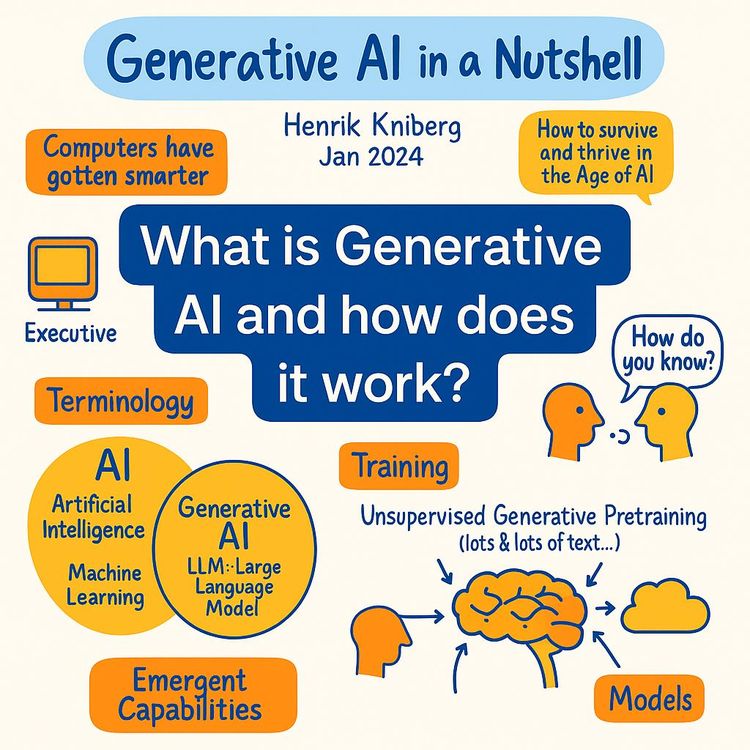
Video Course: What is Generative AI and how does it work?

Video Course: How to Use ChatGPT from Beginner to Professional
Video Course: How to Use Google Gemini for Google Workspace to Boost Productivity
Video Course: How to Use Claude 3.7 AI - Tips for Beginners!

Video Course: ChatGPT for Data Analytics: Full Course - from Beginners to Professional

Video Course: Generating Images and photos With ChatGPT?

Video Course: Generating Images & Photo's with MidJourney
Video Course: Generating Design's with Microsoft Designer and AI

Video Course: Generating Design's with Canva.com and AI
Join 20,000+ Professionals, Using AI to transform their Careers
Join professionals who didn’t just adapt, they thrived. You can too, with AI training designed for your job.