Automate Your Business with AI: My No-Code 10x Faster Workflow (Video Course)
Steal the exact prompts, tools, and playbooks I use to compress weeks of work into minutes. Build your AI stack, automate content, spin up no-code mini-apps, and deploy agents like teammates. Leave with a repeatable workflow you can use right away.
Related Certification: Certification in Designing and Deploying No-Code AI Business Workflows
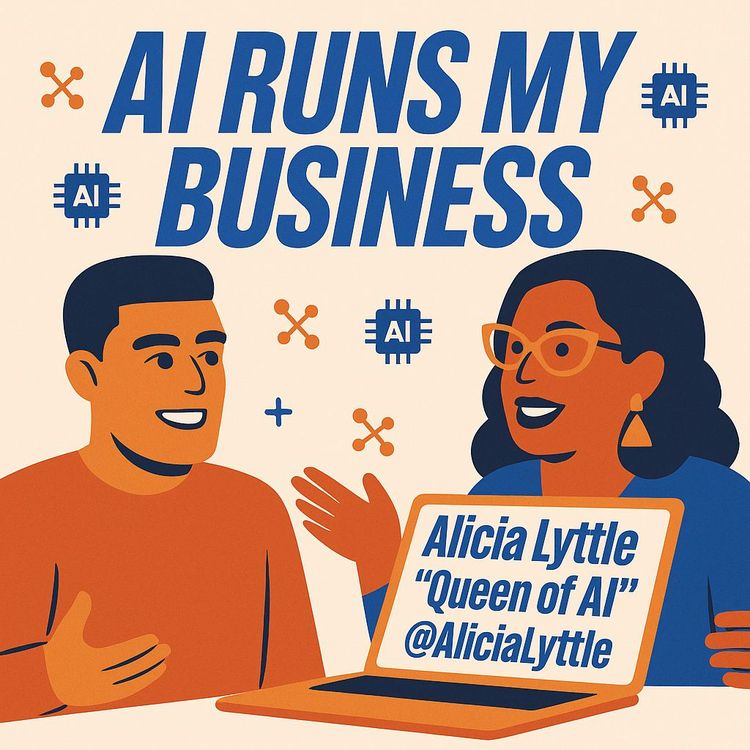
Also includes Access to All:
What You Will Learn
- Adopt an "AI First" mindset to automate 80% of routine work
- Map and choose the right tools for each task (Gamma, Opus Clip, Canva AI, BIGVU, etc.)
- Generate polished presentations instantly using Gamma.app
- Repurpose long-form video into dozens of short, captioned clips with Opus Clip
- Build and publish simple no-code web apps as lead magnets with Canva AI
- Design AI agents, establish an AI Integrator role, measure ROI, and enforce ethics
Study Guide
How I Use AI to Automate My Business & Work 10X Faster (My Full Workflow)
If you feel like your to-do list breeds overnight, welcome. You don't need more hours in the day,you need leverage. AI gives you that leverage. This course shows you the exact workflows, prompts, and tools I use to compress weeks of work into minutes, automate repetitive tasks, and scale output without hiring a small army.
We'll start with the "AI First" mindset,the lens that turns problems into systems. Then we'll build your AI operating stack: instant presentations, video repurposing, no-code app building, automated research and newsletters, faceless video creation, and AI agents that function like specialized team members. Finally, I'll show you how to implement this across your business with an "AI Integrator" role, measure ROI, avoid common pitfalls, and roll out your own automation plan.
The goal isn't to drown you in tools. It's to give you a strategic map so you always know which tool to use, for which task, in which order. By the end, you'll have a full, repeatable workflow you can deploy the moment you close this guide.
The AI-First Mindset: Your New Operating System
Most people treat AI like a last resort. They do the work manually, get overwhelmed, and then "ask the robot" at the end. That's the old way. "AI First" is the opposite: before touching a task, you ask, "How can AI do 80% of this for me?"
Why this matters:
- Time compression: Idea to execution goes from days to minutes.
- Skill democratization: You don't need a designer, developer, or editor to produce elite work.
- New bottleneck: The constraint is no longer labor; it's tool selection and prompt clarity.
Key terms to anchor this section:
- AI First Mindset: You default to automation before manual effort.
- Prompting: Giving the AI a clear, specific instruction to get a precise outcome.
- Generative AI: Models that create net-new text, images, code, presentations, or audio from instructions.
- AI Agent: An autonomous or semi-autonomous AI configured to handle recurring tasks or specialized functions (researcher, editor, consultant, etc.).
- AI Integrator: The role that scouts, tests, and implements AI across the business.
Example:
Instead of writing a client proposal from scratch, drop your notes into ChatGPT to draft the structure and copy, run the visual deck through Gamma.app, and then tweak the 10-20% that needs your expertise.
Example:
Before researching a topic for a webinar, ask an AI agent to compile sources, summarize insights, and generate an outline with key talking points. You start at "polished outline," not "blank page."
Tips for prompting effectively:
- Be concrete: define audience, goal, format, length, constraints.
- Give one-sentence context plus bullet details.
- Ask for 3 variations or angles to choose from.
- Add "assume role" framing: "Act as a B2B SaaS product marketer…"
Tool Mapping: Choose The Right AI For The Job
Most frustration comes from using the wrong tool. Here's the high-level map you'll keep coming back to:
- Presentations, docs, webpages from a one-line idea: Gamma.app
- Repurpose long video into dozens of clips: Opus Clip
- Create simple web apps with natural language: Canva AI (code generation)
- Scripted talking-head videos with perfect "eye contact": BIGVU
- Voice cloning for audio or narration: 11 Labs
- Avatar videos without filming: HeyGen
- Image generation with clean text: Ideogram.ai
- Faceless video and scheduling: Syllabi.io
- Research, writing, strategy, agents, and tasks: ChatGPT
Example:
Need a pitch deck by noon? Use Gamma.app to generate the entire deck, then polish a couple of slides. Export to PowerPoint or PDF.
Example:
Have a 60-minute podcast recording? Upload it to Opus Clip and get 20+ edited, captioned shorts with a "viral score" to prioritize what to post first.
Automating Content & Presentations (From Idea To Asset In Minutes)
Content is leverage. The problem is it traditionally eats your calendar. AI solves that by automating research, writing, editing, design, and formatting.
Generating Presentations Instantly With Gamma.app
Gamma.app turns a one-sentence idea into a full, well-designed presentation. It handles content structure, slide writing, visuals, and export.
How to use it step-by-step:
1) Enter a one-line brief about the presentation (topic, audience, goal).
2) Gamma generates a slide-by-slide outline; you edit for focus and flow.
3) Choose a theme, or set brand colors and fonts for consistency.
4) Generate the full deck,slide content, images, and layout arrive instantly.
5) Export as PowerPoint, PDF, or share as a webpage.
Example:
"The three keys to leveraging AI for entrepreneurs and why they need to get in now." Gamma creates an outline, then drafts each slide with stats, case studies, and imagery. You publish and move on.
Example:
Investor update deck. Input: "Q2 performance review for a bootstrapped SaaS: MRR growth, churn, roadmap, asks." Gamma assembles the structure with charts and talking points you refine.
Best practices:
- Provide audience and outcome (e.g., "decision-making deck for executives").
- Ask Gamma to include data visuals or placeholders for your numbers.
- Generate 2-3 versions with different angles (strategy, product, or growth). Choose the best and merge slides if needed.
Repurposing Long-Form Video With Opus Clip
One podcast can fuel a month of social content. Opus Clip automates the chunking, editing, captioning, and scoring.
Workflow:
1) Input a YouTube link or upload your video file.
2) AI scans for interesting, high-retention segments.
3) It generates dozens of vertical clips with dynamic captions, graphics, and emojis.
4) Each clip gets a "viral score" so you prioritize posting the best ones first.
5) Export in platform-specific formats and aspect ratios.
Example:
A 45-minute webinar becomes 18 short clips with hooks like "3 mistakes killing your lead gen." Captions and emojis added automatically, ready for Reels and Shorts.
Example:
A founder interview turns into a series: story clip, tactical clip, mindset clip. Opus suggests titles, and you schedule the content out over several weeks.
Tips:
- Front-load hooks: start each clip with the "ah-ha" moment, not the warm-up.
- Keep brand fonts/colors consistent in caption templates.
- A/B test 2 caption styles for watch-time impact; let data decide.
Scripted Talking-Head Videos With BIGVU (Eye Contact Fix)
Most people avoid video because they hate memorizing lines. BIGVU solves that with an AI-enhanced teleprompter and an eye-contact correction that makes your videos feel natural and direct.
Workflow:
1) Draft your script in ChatGPT (aim for punchy sentences and a strong hook).
2) Paste it into BIGVU and record while the script scrolls.
3) Use the AI eye contact fix so it appears you're looking directly into the lens.
4) Export and post.
Example:
A 60-second "micro-lesson" on pricing psychology. You read a tight script, and the eye contact fix makes it feel live and confident.
Example:
A product demo with steps on screen. You record once, BIGVU handles your gaze alignment, and your final video looks professionally shot.
Pro tips:
- Keep scripts conversational; read them out loud once before recording.
- Use short sentences and line breaks,teleprompter reading should feel like speaking.
- Record 2 takes; small delivery differences can increase retention.
Bonus Content Accelerators (Faceless, Images, Scheduling)
Sometimes you don't want to be on camera. Or you need images with clean text. Or you need your content calendar handled for you. A few extra tools round out the stack.
Example:
Faceless videos via Syllabi.io. Input your script or bullets, pick a template, and generate short videos using stock footage, voiceover, and captions. Great for daily posting without filming.
Example:
Visuals with text using Ideogram.ai. Generate images that actually display clean, readable text (thumbnails, social graphics, product mockups) without janky letters.
Tip: Pair Syllabi.io for faceless videos + Opus Clip for repurposed shorts + Gamma for slide decks, and you've got a full-stack content engine.
Build Custom Software Without Code (Canva AI)
You no longer need a developer to build simple tools that delight your audience, capture leads, or speed up internal workflows. Canva AI can write code from natural language and publish a working web app in minutes.
Core workflow:
1) Describe the tool you want in plain language: functions, fields, outputs, and buttons.
2) Canva's AI writes the HTML/CSS/JS (often hundreds of lines) and renders a live preview.
3) You test it inside Canva and publish as a standalone webpage with a sharable URL.
Example:
Marketing Prompt Generator. You specify: role dropdown (e.g., Social Media Manager, Email Strategist), channel dropdown (Social, Email, Ads), company info input, and a "Generate Prompt" button that outputs a perfectly formatted ChatGPT prompt. Canva builds and deploys it.
Example:
ROI Calculator. Inputs: ad spend, conversion rate, product price. Output: projected CAC, ROAS, break-even point. Add "Download PDF" and "Email Results" buttons for lead capture.
Best practices:
- Define inputs, logic, and desired output format up front.
- Keep v1 simple; get it live, gather feedback, then iterate.
- Add a hook: "Get your custom strategy in 10 seconds",that copy sells the tool as a lead magnet.
Advanced Automation & AI Agents
Beyond one-off tasks, your real leverage comes from AI agents: specialized, semi-autonomous workflows that gather information, summarize, write, and even advise you strategically.
Scheduled Research And Newsletters With ChatGPT Tasks
Configure an AI task to compile daily updates and deliver formatted outputs you can use immediately. Depending on your setup, you can pair ChatGPT with automations (e.g., Zapier/Make) to send emails or push the content to your CMS.
Workflow example:
1) Define a recurring schedule (e.g., early morning).
2) Provide a clear brief: sources, topics, summary style, links, and additional assets (e.g., scripts for social).
3) Set the delivery method: email draft, Google Doc, Notion page, or CMS post via integration.
Example:
AI industry digest: scrape official blogs and top newsletters; summarize top 5 updates; include source links; generate a TikTok script with a 5-second hook and CTA; send to your inbox.
Example:
Competitor watch: monitor 3-5 competitor blogs and product update pages; summarize changes; suggest response tactics for your team; push into Slack and Notion.
Tips:
- Use strict formatting instructions: headings, bullet points, reading grade level.
- Include "what this means for us" analysis so the task doesn't just report but advises.
- Log outputs to a spreadsheet for tracking and later repurposing.
AI As Your Business Consultant (LLM Strategy)
If you feed an LLM with your numbers, products, audience insights, and assets, it can act like a virtual consultant. That means real plans, real prioritization, and specific actions tailored to your business.
Setup:
- Provide your revenue, margins, audience segments, products, funnels, and distribution channels.
- Add your content samples, offers, and positioning docs so it understands your brand voice and strategy.
- Ask for a plan with goals, KPIs, and step-by-step execution.
Example:
"Increase monthly revenue from 5K to 10K." The AI returns a 90-day plan with weekly sprints: add a low-ticket tripwire, launch a mini-course, spin up a lead magnet tool in Canva AI, run an email reactivation sequence, and post daily clips from your long-form content.
Example:
"Audit our funnel." It identifies bottlenecks in your landing page, email sequences, and offer stack, then suggests copy edits, social proof placement, and A/B testing ideas for headlines, CTAs, and pricing.
Tip: Ask the AI to present its plan in "one-page, executive brief + detailed SOPs" so leadership gets the overview and the team gets step-by-step tasks.
Voice & Avatar Agents (Scale Content Without Filming)
Audio and video used to be a bottleneck. Not anymore. Create voiceovers and on-camera content on demand, without booking a studio or even showing up.
Example:
11 Labs for voice cloning. Feed it clean samples of your voice. Then convert your newsletter or blog post into a narrated audio version in minutes. Repurpose as a podcast episode or Instagram audio reel.
Example:
HeyGen for avatar videos. Upload your script (or have ChatGPT write it), pair with your cloned voice, and generate a face-to-camera video. Perfect for course lessons, onboarding modules, or product explainers when you're tight on time.
Pro tips:
- Always disclose when a video or voiceover is AI-generated if there's any chance of confusion.
- Keep a pronunciation dictionary for brand terms and names to improve quality.
- Use consistent backdrops and branding so the content looks like it's from the same world.
My End-To-End Workflow (What A Productive Week Actually Looks Like)
Here's how these tools stack into a real system you can copy.
1) Research & idea generation: ChatGPT drafts 10 content angles based on audience questions and market updates.
2) Long-form content: Record a 30-minute talk (or write an article). If you're short on time, have ChatGPT outline the script and BIGVU guide the recording.
3) Presentation: Use Gamma.app to instantly create a slide deck for the talk. Export for webinars, sales calls, or internal training.
4) Repurpose: Feed the recording to Opus Clip and generate shorts with captions and viral scores. Pick the top 10 to schedule first.
5) Faceless variants: Use Syllabi.io to turn key bullet points into B-roll-driven videos for daily posts.
6) Tools as lead magnets: Build a simple Canva AI tool (e.g., prompt generator or ROI calculator) and gate it behind email capture.
7) Distribution: Schedule the top clips, post the deck as a webpage, publish the tool, and send an email roundup.
8) Strategy & review: Ask your consultant agent for next steps based on performance metrics from last week.
Example:
Webinar sprint: Gamma deck for the webinar, BIGVU for promo teasers, Opus Clip for post-event clips, Canva AI tool as a bonus resource, and a ChatGPT agent to send a follow-up sequence and summarize Q&A.
Example:
Client pitch: Gamma deck from a one-line brief, ChatGPT writes the proposal body, Canva AI produces a micro-tool customized for the client's use case, and an avatar video (HeyGen) introduces the offer.
The AI Integrator Role (Operationalizing Across Your Business)
To scale this beyond a one-person show, you need an AI Integrator: someone responsible for identifying high-value automations, testing tools, building SOPs, training the team, and tracking ROI.
Responsibilities:
- Audit workflows across departments; pick the top 3 automation targets per quarter.
- Build and document AI playbooks (prompts, edge cases, rollback plans).
- Train the team and create templates so adoption is easy.
- Monitor metrics: time saved, throughput, quality, and business impact.
- Manage compliance and ethical guidelines.
Example:
Marketing org: Integrator sets up Opus Clip for repurposing, Syllabi.io for faceless posts, and Gamma for all internal and external decks. Result: triple output, same headcount.
Example:
HR org: Integrator deploys a resume screen agent, drafts job descriptions with ChatGPT, and uses a Canva AI onboarding app to personalize new-hire checklists.
Tip: The Integrator should run small pilots, measure results, then scale what works. Simple beats fancy.
Action Items & Recommendations (Do These And You Win)
These are the non-negotiables pulled straight from the playbook:
1) Adopt an AI First mindset: Before you start, ask, "How can AI do most of this?" Then only do the part AI can't.
2) Establish an AI Integrator role: Even if it's part-time at first, make someone accountable for this.
3) Prioritize practical experimentation: Use ChatGPT, Gamma, Canva AI, and Opus Clip on real work this week.
4) Invest in knowledge, not just tools: Learn how to prompt and map tools to tasks. That's where the compounding returns are.
5) Automate content repurposing: If you create long-form, Opus Clip goes into your stack immediately. No exceptions.
Measuring ROI (Prove It Works)
Executives and solopreneurs both ask the same thing: "Is this worth it?" Here's how you answer with data.
Key metrics:
- Time saved per task (minutes/hours).
- Throughput (assets/week).
- Quality (engagement, watch time, conversion).
- Cost per asset (software + time).
- Revenue per employee or per hour.
Example:
Gamma deck creation: Old process = 6 hours across research, design, revisions. New process = under a minute to generate + 30 minutes to polish. Savings: 5+ hours per deck. If your hourly value is 100, that's 500 saved per deck.
Example:
Opus Clip repurposing: Old process = 2-3 days for a team to cut, caption, and format clips. New process = 7 minutes. That's days of effort converted to a single coffee break.
Authoritative stats you can cite in conversations:
- "We went from four days and at least two to three people to seven minutes and just AI."
- "You can build a six or seven figure business with maybe one other person and all AI."
- MIT Sloan analysis reports revenue lifts up to 39% from AI adoption.
- Chatbots can reduce support costs by up to 85%.
Ethics, Risk, And Policy (Protect The Business While You Move Fast)
Speed is useless if you burn trust. Put simple guardrails in place.
Guidelines:
- Data privacy: Don't paste confidential info into tools without approved controls. Use redacted datasets or secured enterprise-grade versions where necessary.
- Accuracy: LLMs can hallucinate. Require human review for any public-facing data claims, pricing, or legal content.
- Bias: Ask AI to identify potential bias in outputs and suggest neutral alternatives.
- Disclosure: If content includes AI-generated voice or avatar, disclose it where appropriate.
- Consent: Get explicit permission for voice cloning or portraying a person via avatar.
Example:
Voice cloning policy: Written consent required, approved scripts only, and mandatory disclosure in video descriptions.
Example:
Financial content: Analyst reviews all figures generated by an AI plan before publishing.
Common Pitfalls To Avoid
Shortcuts are great until they cut corners that matter. Avoid these:
- Over-automation: If humans can't explain your process, you can't fix it when it breaks. Keep a human-in-the-loop for critical steps.
- Prompt bloat: Long, messy prompts cause inconsistent results. Keep them structured and scoped.
- Brittle workflows: If a process depends on one file format or layout, it will crash. Define fallbacks and manual override steps.
- Ignoring brand voice: Train a content agent on your tone and examples. Consistency is compounding.
Example:
Broken repurposing flow: Video filenames change and automations fail. Fix: include a renaming step in your SOP and a weekly check.
Example:
Off-brand content: You skipped the brand voice training. Fix: feed the agent your best five pieces and create a style guide prompt.
Master Prompts & Templates (Use, Tweak, Repeat)
Gamma.app presentation brief:
"Create a presentation for [target audience] titled '[Title]'. Goal: [goal]. Tone: [tone]. Include [number] slides with headlines, 3 bullets per slide, and visuals. Add a final slide with a CTA to [action]. Use [brand colors/fonts]."
Opus Clip repurposing guidance:
"From this video, generate 20 vertical clips optimized for [platforms]. Prioritize segments with clear hooks and actionable takeaways. Add dynamic captions in [brand style], include key emojis sparingly, and output with titles and a one-line hook. Provide a performance score for prioritization."
BIGVU script starter:
"Hook: [bold claim or question]. Then 3 short points: [Point A], [Point B], [Point C]. Close with clear CTA: [action]. Keep sentences under 15 words. Conversational tone."
ChatGPT daily newsletter task:
"Every morning, compile the top 5 updates from [sources] in the last 24 hours. For each: headline, 2-sentence summary, link, and a 60-second social script. Format as HTML email + text version. Add a 'Why this matters' note under each item. Send to [destination or workflow]."
Consultant agent brief:
"Act as a growth strategist for a [business model]. Current revenue: [amount]. Margins: [percent]. Audience: [segments]. Offers: [list]. Assets: [content, tools]. Goal: [specific revenue target]. Provide a 90-day plan with weekly sprints, KPIs, and SOPs. Then list 3 high-leverage experiments."
Canva AI app prompt (Marketing Prompt Generator):
"Build a web tool titled 'Marketing Prompt Generator'. Inputs: role dropdown (Social Media Manager, Marketing Strategist), channel dropdown (Social, Email, Ads), company info textarea. Button: 'Generate Prompt'. Output: formatted, copyable prompt with variable placeholders. Add 'Open ChatGPT' button that opens a new tab."
Canva AI app prompt (ROI Calculator):
"Create a 'Campaign ROI Calculator'. Inputs: ad spend, CTR, conversion rate, AOV. Outputs: leads, customers, CAC, ROAS, profit. Include 'Download PDF' and 'Email Results' buttons. Clean, mobile-friendly layout."
Implementation Plan (7, 30, And 90 Days)
Speed beats perfection. Here's a rollout plan you can actually follow.
Next 7 days:
- Pick one long-form asset (article, webinar, podcast). Run it through Opus Clip and schedule 10 shorts.
- Build one Canva AI tool as a lead magnet. Put it behind an email gate.
- Create one Gamma.app deck for your next meeting or offer.
- Draft your daily newsletter task and wire it to your delivery method.
Example:
Mini-sprint: Publish a Gamma deck + 10 shorts + launch an ROI calculator tool. Announce all three in one email and pin them on your socials.
Example:
Internal sprint: Automate your weekly team update with a ChatGPT task that summarizes metrics and meetings into a Notion page.
Next 30 days:
- Nominate an AI Integrator (even if it's you).
- Document SOPs for the content engine (research → long-form → repurpose → schedule).
- Train a consultant agent on your numbers and content.
- Standardize brand voice across AI tools.
Next 90 days:
- Add 2 more Canva AI tools for your audience.
- Build a client onboarding flow that uses Gamma decks, BIGVU intros, and a custom checklist app.
- Formalize ethics and consent policies for voice and avatars.
- Track ROI and reallocate budget toward the winners.
Applications By Role (Where This Lands In Real Life)
For entrepreneurs:
- Launch and iterate ideas fast, with minimal capital.
- Build micro-tools to collect leads and serve your audience instantly.
Example:
Solopreneur creates a "Content Angle Generator" in Canva AI and grows their list by offering it as a free tool.
Example:
Course creator uses Gamma to build a slide deck, then Opus Clip to feed daily content for 30 days post-launch.
For marketers and content creators:
- Automate the repetitive (editing, captioning, formatting).
- Spend your time on messaging, narrative arcs, and distribution.
Example:
Brand turns one webinar into a month-long content calendar using Opus Clip and Syllabi.io, saving days of editing time.
Example:
Agency ships on-brand decks in minutes with Gamma, then reinvests the saved hours into creative strategy.
For educators and consultants:
- Generate high-quality course materials and client deliverables fast.
- Create proprietary tools that add value and differentiate you.
Example:
Consultant builds a "Pricing Strategy Calculator" in Canva AI and uses it as a sales asset during discovery calls.
Example:
Educator records lessons with BIGVU, ensures eye contact, and uses HeyGen to deliver additional modules without filming.
For corporate leaders:
- Assign an AI Integrator to drive adoption across departments.
- Build an AI policy, training track, and scorecard for ROI.
Example:
Ops team automates weekly reporting via a ChatGPT task, saving dozens of hours per month.
Example:
Customer service deploys a chatbot to deflect repetitive inquiries, achieving major cost reductions without hurting customer experience.
Checkpoints & Exercises (Practice To Lock It In)
Multiple Choice:
1) Which tool generates entire presentation decks from a single prompt? a) Opus Clip b) ChatGPT c) Gamma.app d) BIGVU
2) What does BIGVU's eye contact feature do? a) Adds captions b) Makes your eyes look into the camera c) Writes scripts d) Scores virality
3) Canva AI lets you build a tool by: a) Dragging code blocks b) Describing it in natural language c) Using templates only d) Integrating with a coding platform
Short Answer:
1) Explain the "AI First" mindset and give one daily example.
2) Describe the Opus Clip process and list three outputs it creates.
3) Define an "AI Agent" and explain how a consultant agent could help a company scale.
Discussion Prompts:
1) You're launching a personal finance coaching mini-course. Map out how you'd use Gamma, Canva AI, and Opus Clip to build the course, create a lead magnet, and market it.
2) How will widespread AI adoption change creative and admin roles? Which skills become more valuable?
3) Brainstorm a simple web tool for your industry and write the Canva AI prompt to build it.
Additional Resources (Tools You'll Actually Use)
- ChatGPT: Research, writing, code help, strategy plans, and building custom agents.
- Gamma.app: Generate presentations, docs, and webpages from one-line prompts.
- Canva AI: Describe a tool in plain language; get working code and a published web app.
- Opus Clip: Turn long-form video into dozens of shorts with captions and performance scores.
- BIGVU: Teleprompter with AI eye contact correction for professional-looking videos.
- Ideogram.ai: Generate images with clean text for banners, thumbnails, and social posts.
- Syllabi.io: Create faceless videos and schedule content across platforms.
- 11 Labs: Clone voices and create high-quality text-to-speech for podcasts and videos.
- HeyGen: Produce avatar-driven videos using scripts and cloned voices.
Case Studies & Scenarios (From Theory To Reality)
Example:
From podcast to omnichannel: Record a 30-minute episode. Gamma turns key ideas into slides for a carousel. Opus Clip cuts 20 shorts. Syllabi.io makes 10 faceless variants. ChatGPT drafts captions and newsletter copy. Canva AI tool becomes the lead magnet. Result: one recording → one month of content + lead capture.
Example:
Product launch in a week: Build a micro-tool (ROI calculator) in Canva AI, generate the launch deck in Gamma, create promo scripts with ChatGPT, record teasers via BIGVU, and push daily shorts with Opus Clip. Consultant agent adjusts the plan based on early metrics.
FAQ (Short, Honest Answers)
Q: Will this replace my team?
A: Not if you want quality and resilience. It will multiply them. The best people will produce more, with less friction.
Q: What if the outputs sound generic?
A: Train the tools on your voice, feed them your best samples, and tighten the prompts. Generic input → generic output.
Q: Where do I start if I'm overwhelmed?
A: Pick one long-form asset, one deck, one Canva tool. Ship them this week. Momentum beats perfection.
Quick Wins You Can Ship Today
Example:
Take your last Zoom recording, run it through Opus Clip, and schedule the top 5 clips. You just created a week's worth of content in under an hour.
Example:
Describe a simple tool in Canva AI (prompt generator or calculator) and publish it as a lead magnet. Post it with a CTA linking to a Gamma-generated explainer deck.
Recap: What Actually Matters
- Adopt AI First: default to automation before manual effort.
- Map tool to task: Gamma for decks, Opus for clips, Canva for micro-apps, BIGVU for camera presence, 11 Labs/HeyGen for scalable media.
- Build agents: scheduled research, consultant strategy, and content creation helpers.
- Install an AI Integrator: responsible for piloting, training, and measuring ROI.
- Keep ethics tight: privacy, accuracy, consent, disclosure. Trust compounds like revenue.
Conclusion: The Edge Goes To The Implementers
You don't need more hustle. You need leverage. AI lets you compress time, increase output, and redirect your attention toward the work that actually moves the business forward. With these workflows, you can go from a one-line idea to a presentation, a month of daily posts, a working web tool, and an email-ready newsletter,all before lunch.
Remember the core truth: the bottleneck isn't the tech anymore. It's knowing which tool to use and how to orchestrate them into a clean, repeatable system. Start small, ship something this week, and build from there. The people who take an "AI First" approach,not next year, not later,get compounding advantages in speed, cost, and creativity. That's how you work 10X faster without burning out. And that's how a tiny team produces outsized results, consistently.
Frequently Asked Questions
This FAQ distills the core questions business professionals ask about automating work with AI, from first steps to advanced workflows. It explains what to automate, which tools to use, and how to measure results, while addressing risks, ethics, and implementation. Use it to shorten the gap between idea and output, build repeatable systems, and ship faster with fewer resources.
Foundational Concepts of AI in Business
Why is AI a critical tool for businesses and entrepreneurs right now?
Why it matters:
AI gives you leverage,more output with less input. It speeds up research, content, customer service, analytics, and product creation so you can focus on decisions and growth.
What changes:
Manual tasks that required teams (copywriting, design, repurposing, outreach) can be automated in minutes, cutting costs and cycle times. A solo operator can operate like a small agency.
Real example:
A local fitness coach used ChatGPT for weekly content, Opus to clip live trainings into shorts, and Canva AI for landing pages,going from sporadic posts to daily output and doubling consult bookings in a month.
Bottom line:
AI removes bottlenecks, compresses timelines, and compounds your consistency. The earlier you integrate it into workflows, the faster you build a durable advantage.
What does it mean to adopt an "AI First" mindset?
Simple rule:
Before starting any task, ask "Can AI do this fully or partially?" Then design your workflow around that answer.
How it looks in practice:
Draft with ChatGPT, generate slides with Gamma.app, repurpose with Opus, publish via schedulers, and review only where human judgment adds value.
Result:
You move from doing to directing. Your time shifts from production to strategy, positioning, and relationship-building.
Micro-example:
Brainstorm → Ask ChatGPT to structure it → Get a checklist → Use it to execute. One mental switch, exponential speed.
How can AI significantly reduce the time and cost of business operations?
Automation compounds:
AI collapses multi-step workflows,research → draft → design → edit → publish,into a few prompts.
Examples:
Content: A flyer that once took multiple roles and revisions is now one ChatGPT prompt and an image generator request.
Video: An hour-long podcast becomes 30-40 captioned clips via Opus in minutes rather than days.
Hidden savings:
Fewer handoffs, fewer revisions, less project management, faster iterations.
Takeaway:
Automate repetitive tasks, keep humans for quality decisions. That's where the cost and speed curves bend in your favor.
What is the role of an "AI Integrator" in a company?
Core function:
An AI Integrator maps business processes, identifies automation leverage, selects tools, implements workflows, and trains the team.
Deliverables:
Process blueprints, prompt libraries, tool stack governance, SOPs, and performance dashboards.
Why it works:
Most teams dabble with tools but lack system design. An integrator turns scattered experiments into a cohesive operating system.
Example:
Marketing: content engine + repurposing + scheduling.
Sales: AI-assisted outreach + CRM updates + call summaries.
Support: knowledge-base chatbot + escalation rules.
How much time should a person dedicate to learning AI?
Start lean, repeat often:
3-5 focused hours can get you productive if you practice daily.
Best approach:
Pick one workflow (e.g., weekly newsletter), master it end-to-end, then expand.
Daily reps:
Draft emails, summarize docs, outline meetings, generate images, test prompts. Practical use beats passive learning.
Momentum tip:
Keep a running prompt library and a simple "wins" log to reinforce progress and refine your systems.
AI for Presentations and Content Creation
How can I create professional presentations quickly without design skills?
Use AI-native slide generators:
Gamma.app builds complete decks from a one-sentence prompt,outline, content, visuals, and theme,ready to present or export.
Workflow:
Write a targeted prompt → Approve/edit outline → Apply brand theme → Generate deck → Light edits → Export to PDF/PPT/Slides.
Use cases:
Sales demos, webinars, internal trainings, investor overviews.
Benefit:
You spend time refining ideas instead of fighting slide formatting.
What are the key features of a presentation tool like Gamma.app?
Speed + structure:
Prompt-based generation with automated outlines, branded themes, and instant slide content.
Visuals included:
Built-in images/graphics aligned to your topic.
Editing and export:
Revise slides inline, then present from the web or export to your preferred format.
Outcome:
Idea-to-deck in under a minute, then iterate like a writer, not a designer.
Has AI replaced the need for professional copywriters?
Shift, not replacement:
AI drafts fast; humans direct strategy, nuance, and voice. The best copywriters use AI to 10x throughput and focus on messaging that converts.
Smart workflow:
Use AI for research, first drafts, and variants; humans test angles, refine offers, and align to brand.
Business upside:
Higher volume, lower cost, better iteration. Quality still depends on clear positioning and proof.
Are newsletters still effective, and how can AI automate their creation?
Newsletters still convert:
Email builds trust and drives sales when it's consistent and useful. AI keeps it consistent.
Automation idea:
Use ChatGPT Tasks to research sources on a schedule, draft summaries, add links, and send a formatted draft via integrations.
Example:
Daily industry roundup at 6:00 a.m. with a matching TikTok script, ready for review and send.
Tip:
Keep a style guide and approved sources so quality stays on-brand.
How can AI help create scripts for videos and improve on-camera performance?
Script-to-camera pipeline:
Draft with ChatGPT → Load into BIGVU → Record with teleprompter → Apply eye contact fix for natural delivery.
Why it works:
Reduces retakes, keeps pacing tight, and improves confidence if you prefer structured delivery.
Use cases:
Shorts/Reels, course lessons, sales videos, internal updates.
Result:
Professional videos without studio overhead.
AI for Video Repurposing and Social Media
How can AI repurpose long-form video content (like podcasts) for social media?
Automate the mining:
Upload or link your video to Opus. It analyzes the full episode, extracts engaging moments, and edits vertical clips.
Deliverables:
Multiple shorts with captions, emojis, titles, and performance predictions so you can pick winners fast.
Impact:
Turn one asset into weeks of social content in minutes, not days,no editor required.
What features does a tool like Opus offer for creating social media clips?
What you get:
30-40 clips from a one-hour video, auto-captions, emojis, suggested titles, and a "viral score" to prioritize.
Convenience:
Direct scheduling to platforms, consistent formatting for TikTok/Reels/Shorts, and smart hooks.
Why this matters:
Removes technical barriers and keeps your content flywheel spinning daily.
Can AI create unique images and animated content for social media?
Yes,fast and on-brand:
Use ChatGPT (with DALL.E 3) or Ideogram.ai for images; Cling AI and Syllabi for animated or faceless videos.
Practical uses:
Ad creatives, carousels with embedded text, explainer animations, and voiceover-driven shorts.
Tip:
Create a brand style prompt (colors, fonts, tone) and reuse it for consistency across campaigns.
Advanced AI Applications and Strategy
Is it possible to build custom software applications without coding knowledge using AI?
Yes,describe, then ship:
Canva's AI features can interpret a plain-language description and generate functional web tools with HTML/CSS/JS.
Use cases:
Calculators, prompt generators, checklists, quote builders,simple tools that solve one problem well.
Upside:
Instant prototypes, quick lead magnets, and micro-products without hiring devs.
What is the process for creating a tool with Canva's AI?
3 steps:
Describe your idea in detail → Canva AI writes the code in real-time → Test and publish as a live site.
Example:
A marketing prompt generator that collects role, channel, and company info, then outputs a refined prompt and opens ChatGPT.
Outcome:
From idea to working tool in minutes, ready to share with your audience.
What kind of tools can be built with Canva's AI, and how can they be monetized?
Tool ideas:
Prompt generators, onboarding checklists, niche calculators, recipe planners, content brief builders.
Monetization:
Sell custom builds, gate access for leads, bundle with your services, or offer freemium tiers.
Tip:
Pick a narrow niche problem and solve it cleanly,simplicity sells.
What are "AI agents" and how can they be used to scale a business?
Persistent digital teammates:
Agents retain context, follow instructions over time, and handle recurring tasks.
Examples:
Content agent trained on brand voice, 11 Labs voice agent for audio, HeyGen avatar for video, phone agent for call handling, and a consultant agent trained on your company data.
Value:
Less manual production, more consistent execution, faster strategic feedback loops.
How can I use AI to develop a strategic business plan for growth?
Treat AI like a strategist:
Provide your business model, revenue goals, offers, audience, assets, and links. Ask for a 90-day plan with priorities, channel strategy, content map, and KPI targets.
Iteration loop:
Run weekly reviews,what worked, what didn't, what to test next.
Outcome:
A living plan that adapts as your data comes in.
Implementation & Workflow Design
Which processes should I automate first?
Start where volume and repetition live:
Content drafting, social repurposing, meeting notes, inbox triage, and reporting.
Prioritization filter:
High frequency, low judgment, clear rules, measurable output.
Quick win example:
Weekly newsletter + social clips system: research → draft → review → schedule → measure. You'll see time savings within one cycle.
How do I map a repeatable AI workflow?
4-step blueprint:
Define the outcome → Break into steps → Assign AI/human per step → Create prompts, SOPs, and a QA checklist.
Tools to glue it:
Use schedulers, cloud docs, and task boards; add Zapier/Make for handoffs.
Success signal:
The process runs on schedule with predictable quality and minimal intervention.
How do I train AI on my brand voice?
Create a voice kit:
Provide 5-10 strong samples, tone descriptors, forbidden phrases, audience profile, and formatting rules.
Prompt pattern:
"Use the brand voice kit below to produce [asset]. Follow structure, length, and CTA guidelines." Paste the kit.
Pro tip:
Keep a living style guide and refine it with examples of "good vs. needs improvement."
How do I measure ROI of AI automation?
Track three metrics:
Time saved per task, cost per output, and output quality (conversion, engagement, error rate).
Simple formula:
(Hours saved x hourly cost) + (lift in revenue) - (tool cost + setup time).
Example:
Clipping automation saves 10 hours/week at a $50 internal rate = $500/week. Tool costs $30. Net time ROI is clear before counting content lift.
Prompting & Content Quality
What is a proven prompt structure for consistent results?
RACI prompt frame:
Role, Audience, Context, Instruction,plus Constraints, Examples, and Format.
Template:
Role: You are [role]. Audience: [who]. Context: [facts/assets]. Task: [do X]. Constraints: [tone, length]. Examples: [2 samples]. Format: [bullets/table/JSON].
Why it works:
Clarity in → quality out. Few-shot examples anchor style.
How do I reduce AI hallucinations and errors?
Guardrails:
Provide source links, require citations, ask for "I don't know" when uncertain, and include a verification step.
For internal knowledge:
Use retrieval (RAG) with your docs and knowledge base to ground outputs.
QA habit:
Always add a human final review for public content and legal/compliance items.
How do I make AI content original and on-brand?
Feed it your raw thinking:
Bullet your viewpoints, frameworks, client stories, and objections. Ask AI to reorganize and sharpen,not invent.
Differentiate:
Add proprietary frameworks and data. Consistency beats novelty for brand memory.
Data, Privacy, and Ethics
Certification
About the Certification
Get certified in no-code AI workflow automation. Prove you can build an AI stack, ship prompt-driven automations, spin up mini-apps, and deploy agents as teammates,compressing weeks of work into minutes and delivering content at scale.
Official Certification
Upon successful completion of the "Certification in Designing and Deploying No-Code AI Business Workflows", you will receive a verifiable digital certificate. This certificate demonstrates your expertise in the subject matter covered in this course.
Benefits of Certification
- Enhance your professional credibility and stand out in the job market.
- Validate your skills and knowledge in cutting-edge AI technologies.
- Unlock new career opportunities in the rapidly growing AI field.
- Share your achievement on your resume, LinkedIn, and other professional platforms.
How to complete your certification successfully?
To earn your certification, you’ll need to complete all video lessons, study the guide carefully, and review the FAQ. After that, you’ll be prepared to pass the certification requirements.
Other AI Video Courses
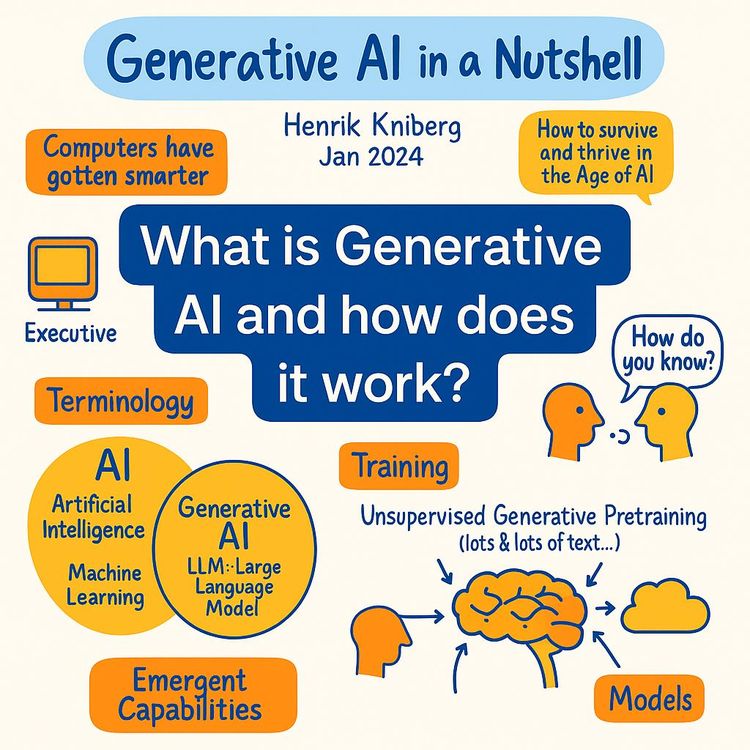
Video Course: What is Generative AI and how does it work?

Video Course: How to Use ChatGPT from Beginner to Professional
Video Course: How to Use Google Gemini for Google Workspace to Boost Productivity
Video Course: How to Use Claude 3.7 AI - Tips for Beginners!

Video Course: ChatGPT for Data Analytics: Full Course - from Beginners to Professional

Video Course: Generating Images and photos With ChatGPT?

Video Course: Generating Images & Photo's with MidJourney
Video Course: Generating Design's with Microsoft Designer and AI

Video Course: Generating Design's with Canva.com and AI
Join 20,000+ Professionals, Using AI to transform their Careers
Join professionals who didn’t just adapt, they thrived. You can too, with AI training designed for your job.