Build a No-Code AI Agent from Scratch: Beginner SDR Assistant (Video Course)
Stop just prompting AI. Learn to build a complete, no-code AI agent that researches companies, finds prospects, and drafts personalized emails. This hands-on tutorial shows you how to automate a real sales workflow and gain a strategic edge.
Related Certification: Certification in Building No-Code AI SDR Agents
Also includes Access to All:
What You Will Learn
- Explain the AI stack: models, data infrastructure, and orchestration
- Differentiate agentic AI from traditional automation
- Design agents with the five core components: role, goal, instructions, model, knowledge/tools
- Orchestrate multi-agent patterns (manager-subagent, sequential, hierarchical)
- Build, ground, and deploy a no-code SDR Outreach Assistant with Gmail draft integration
Study Guide
Alright, let's get into it.Introduction: Beyond the Prompt
Most people think using AI means typing a prompt into ChatGPT and hoping for the best. That's like owning a high-performance engine and using it to power a bicycle. The real transformation happens when you build the entire vehicle. That's what agentic AI is all about , moving from asking a model a question to giving a system a goal and letting it figure out the path, use the right tools, and get the job done.
This guide is your complete walkthrough for building a no-code AI agent from scratch. You won't write a single line of code. Instead, you'll learn how to think about AI systems the way a product manager or an architect does. We'll build a real, production-ready SDR (Sales Development Representative) Outreach Assistant , a multi-agent system that researches target companies, identifies the right prospects to contact, drafts personalized outreach emails, and even creates drafts in your Gmail for review.
But this isn't just a technical tutorial. It's a strategic look at how work itself is changing. When you understand how to build these systems, you understand where the value in your own role is heading. The ability to capture what you know about your industry, your customers, and your workflow, and translate that into an AI system that acts on it, is becoming one of the most valuable skills in the modern economy. Let's get to work.
Section 1: The Big Picture , Understanding the AI Technology Stack
Before you can build an agent, you need to understand the ground it stands on. The entire AI industry can be visualized as a stack of layers, each one building on the last. Knowing where agent platforms fit helps you make better decisions about models, tools, and data.
Layer 1: Compute and Models
At the very bottom is the physical infrastructure. This starts with energy and the semiconductor manufacturing process. Companies like NVIDIA design the chips , the GPUs , that do the heavy lifting for AI training and inference. These chips are manufactured by companies like TSMC. Then you have the massive cloud providers , AWS, Azure, Google Cloud , that buy these chips in bulk and rent out the computational power. On top of that sit the AI companies like OpenAI and Anthropic, who use that compute to train their foundation models. There are also fine-tuning companies that take a base model and specialize it for a specific industry, like a model fine-tuned on financial documents.
There's also an important philosophical split here between closed-source and open-source models. Closed-source models, like GPT and Claude, are proprietary. You access them through an API, but you don't know exactly what's happening under the hood. Open-source models, like those you find on Hugging Face, have their architecture and weights publicly available. This allows for transparency and customization. For a business, the choice between them often comes down to data privacy, cost, and the ability to modify the model for specific needs.
Layer 2: Data Infrastructure
Moving up the stack, you hit data. This is where the real strategic value lies. Data comes in two main forms. Structured data lives in databases like MySQL or PostgreSQL, managed by platforms like Databricks. It's organized, easily searchable, and perfect for deterministic queries. Unstructured data , PDFs, images, emails, media files , is the messy stuff. To make this usable for an LLM, it needs to be converted into a vector format, which is a numerical representation of the data that allows for semantic search. Companies like Salesforce and HubSpot, who own massive amounts of proprietary data about customers and deals, have a huge advantage here. This data is the "system of record" that AI applications are built upon.
Layer 3: Deployment and Orchestration
The top layer is where the actual building happens. This is the realm of agent tool frameworks like Lizer, LangChain, and AutoGen. Think of this layer as the kitchen. The models are your ingredients, the data is your pantry, but the framework is the kitchen itself , it provides the stoves, the knives, and the recipes. Key functions in this layer include orchestration, which is routing tasks to the right model or agent; prompt management, which is maintaining and optimizing the instructions that guide the AI; and observability, which is monitoring your agents in production to see how they're performing and where they're failing.
The key takeaway here is that the platform you choose matters. A vertically integrated platform that owns the entire pipeline , from agent creation to deployment , can offer a much smoother experience than trying to stitch together a bunch of different tools. The "last mile" of deployment is where most of the value is created, and it's also where most of the challenges lie.
Section 2: The Core Shift , From Automation to Agency
Let's be crystal clear about what makes an AI agent different from traditional automation. This is the single most important concept to grasp.
Traditional automation, like Robotic Process Automation (RPA), follows a hardcoded journey. You have to map out every single step in advance. For example, if you wanted to automate the research of a company, you'd write explicit rules: "Go to Google, fetch the top three results. If not found, go to Crunchbase. If not found, check LinkedIn." The system is just executing a predetermined path. It's doing, not deciding.
An AI agent is fundamentally different. You give it a single input , "research this company" , and you connect it to a set of tools and an LLM. The agent then decides what to do next. It might start with a web search, then decide to fetch a specific page, then cross-reference that information with another source. It's not following a script; it's reasoning about the best path to achieve its goal. This shift from "doing" to "deciding" is the defining characteristic of the current AI wave.
Here's a useful analogy to keep in mind: LLMs are like beautiful, abundant water. They're incredibly powerful and generative, but they're also shapeless. Agents are what give that water shape. An agent adds structure through short-term memory (the context of the current session), long-term memory (persistent knowledge across sessions), tool calling (the ability to interact with the outside world), and conversation context (understanding the flow of a dialogue). It also includes safeguards like hallucination checks and output formatting rules.
So, an agent is essentially composed of four pillars: the data it draws from, the LLM that powers its reasoning, the tools that let it take action, and the modules , like memory and context , that shape its behavior.
Section 3: The Anatomy of an Agent , Five Essential Components
When you open up an Agent Studio, you'll see that every agent is defined by five core components. Getting these right is the difference between a system that feels magical and one that feels like a broken toy.
1. Role
This is the agent's identity and professional persona. It's the "who" of the system. Instead of just saying "you are a writing assistant," you'd say "you are an expert B2B cold outreach copywriter with 10 years of experience crafting personalized emails that get responses from C-level executives." The role sets the tone, the perspective, and the level of expertise the agent will bring to the task.
2. Goal
This is the primary objective the agent is working toward. It's the "what" the agent is trying to achieve. The goal should be clear, measurable, and aligned with the user's needs. For example: "Draft personalized cold outreach emails that are grounded in the user's company knowledge base and the prospect's specific situation." This is the north star that guides all of the agent's decisions.
3. Instructions
This is the "how" of the system. It's the detailed workflow rules, input specifications, and output formatting requirements. This is where you capture your domain expertise. You might specify the steps the agent should take, the tone it should use, the length of the output, or even the structure of the response. For instance, you could instruct the agent to "always start with a subject line, then a greeting, then the body, then a call to action, and end with a signature." This is also where you define the quality bar , what makes a good output versus a bad one.
4. Model
This is the underlying LLM that powers the agent. You have a choice of models, from OpenAI's GPT to Anthropic's Claude to open-source options. The choice matters. A fast, lightweight model might be perfect for simple tasks like classifying an email, while a frontier model like Claude Opus is better suited for complex reasoning and nuanced content creation. You also need to set parameters like Temperature, which controls the creativity of the output. A temperature of 0.1 to 0.2 produces consistent, deterministic results, perfect for tasks where accuracy is critical. A temperature of 0.8 or higher produces more varied and creative responses, which is great for brainstorming or ideation. Top P is another parameter that limits the probability sample set from which the model selects its outputs, giving you another lever to control the randomness.
5. Knowledge and Tools
This is what connects the agent to the real world. Knowledge is the external data it can draw from , PDFs, CSVs, databases, or web content. This is what grounds the agent in your specific reality. Tools are the actions it can take , sending an email, posting to Slack, searching the web, or querying a database. This is what allows the agent to move from generating text to actually doing things.
Let's look at a practical example. Imagine you're building a customer support agent for a software company. You'd define its role as "a friendly and knowledgeable customer support representative." Its goal would be "to resolve user issues quickly and accurately." Your instructions would include the company's tone of voice, the steps to troubleshoot common issues, and when to escalate to a human. You'd choose a model that balances speed and accuracy, and you'd set a low temperature to ensure consistency. Finally, you'd connect it to a knowledge base of help articles and a tool that allows it to create a ticket in your support system.
Section 4: Orchestration , When One Agent Isn't Enough
A single agent is great for a single task. But the real power of agentic AI comes when you connect multiple agents together into a coordinated system. This is called orchestration, and there are a few established patterns.
The Manager-Subagent Pattern
This is the most intuitive pattern because it mirrors how human organizations work. You have a "manager" agent whose job is to delegate tasks to specialized "sub-agents" and coordinate their outputs. The manager doesn't do the work itself; it figures out what needs to be done, assigns it to the right specialist, and then synthesizes the results. This is the pattern we'll use for our SDR assistant.
The Sequential or Handoff Pattern
In this pattern, the output of one agent becomes the input for the next. It's a linear pipeline. For example, a research agent gathers information, then hands it off to a prospect agent who identifies people, who then hands it to a writer agent who drafts the email. Each agent is a specialist in its own step.
The Hierarchical or Supervisor Pattern
This is a more complex version of the manager-subagent pattern. A supervisor agent routes tasks to appropriate sub-agents and can even implement rollback or retry loops. If a sub-agent fails, the supervisor can detect the failure and try a different approach or route the task to another agent.
Hybrid Approaches
It's also worth noting that not every workflow needs to be fully agentic. In fact, the best systems often combine deterministic, rule-based workflows with agentic reasoning. For example, in a financial setting where you need zero hallucination, you might hardcode the data retrieval from a database and then use an agent to interpret the results. This gives you the best of both worlds: the reliability of code and the flexibility of an LLM.
So when should you use a multi-agent system? Here are a few prime use cases:
Lead Scoring and Automated Outreach (SDR Workflows): This is our main example. You need to research, identify, and personalize , three distinct tasks that can be handled by three different agents working in sequence.
Content Creation Pipelines: You could have an agent that researches trends, another that selects a topic, another that drafts the content, and another that publishes it to your CMS. Each agent has a specific role and a specific goal.
Recruiting: You could have an agent that sources candidates from LinkedIn, another that screens their resumes, another that schedules interviews, and another that sends follow-up communications. This automates a huge amount of administrative work.
Fundraising: You could have an agent that answers investor questions, another that manages the data room, and another that generates investment memos. This allows a startup to handle a large volume of investor interest without a huge team.
Section 5: The No-Code Build , Creating Your SDR Outreach Assistant
Now for the main event. We're going to build a real system. The goal is to create an app that, given a target company, will research that company, identify the best prospects to reach out to, and draft personalized outreach emails , all grounded in your own company's knowledge base. This is a classic B2B sales problem, and it's a perfect example of how agentic AI can handle a complex, judgment-based workflow.
The Problem We're Solving
Sales Development Representatives (SDRs) spend a huge amount of time on repetitive tasks. They manually search for prospects, assess fit against an ideal customer profile (ICP), research individual decision-makers, draft personalized outreach, and manage follow-ups. Most of these tasks don't require human judgment , only the decisions around them do. The SDR assistant automates the repetitive parts, freeing up the human to focus on strategy and relationship building.
The Solution Architecture
We'll use a manager-subagent pattern with four specialized agents, all coordinated by a manager agent called the "Outreach Coordinator."
1. The Research Agent: This agent's job is to gather company intelligence. It takes the target company name as input and uses a live web search tool, like Perplexity Sonar Pro, to gather information. It analyzes the company's overview, industry size, and recent signals like funding announcements, key hires, product launches, and expansion plans. Crucially, it also infers 3-5 business pain points that the company is likely facing. This is the raw material for personalization.
2. The Prospect Agent: This agent takes the company research and maps it to relevant departments and decision-makers. It uses a model like Claude to reason about which roles would be most likely to own the problem we're solving. It provides a selectable list of prospect profiles, including their roles and departmental context. For example, if we're selling an AI agent platform, it might suggest the "Global Head of AI" or the "Chief AI Officer" as key targets.
3. The Outreach Writer Agent: This is where the magic of personalization happens. This agent takes the research and the prospect profiles, and it drafts the outreach email. The critical part is that it grounds all its claims in the user's own uploaded knowledge base. This ensures the email references your actual product, value proposition, and positioning, rather than generic statements. It generates a subject line, an email body, and 2-3 alternative hooks to give the user options.
4. The Gmail Draft Agent: This agent connects to the user's Gmail account and creates email drafts from the generated content. This is a deliberate "human-in-the-loop" design choice. The email is created as a draft, not sent automatically. This allows the user to review the content, verify accuracy, and make adjustments before hitting send. If you wanted full autonomy, you could modify this agent to "send email" instead of "create draft," but for most enterprise use cases, a human review step is essential for trust and quality control.
The Orchestration Flow
The manager agent, the Outreach Coordinator, doesn't do any of the specialized work. Instead, it determines the proper sequence and routes information between the agents. It first triggers the Research Agent, then hands the research output to the Prospect Agent, then passes both the research and the prospect selection to the Outreach Writer, and finally triggers the Gmail Draft Agent. This is a perfect example of how a manager agent coordinates a complex workflow.
Section 6: The Build Process , From Prompt to Production
So how do you actually go about building this system? You don't write code. You write a prompt. The platform, which we'll call "Architect," is a prompt-based application builder that automates the entire development lifecycle.
Step 1: Craft a Structured Prompt
The quality of your application depends on the quality of your initial prompt. A well-structured prompt includes several key elements. First, the Goal: briefly state what the application should achieve. For example, "Given a target company the user wants to sell into, research that company, identify the best prospects to reach out to, and draft personalized outreach , all grounded in the user's own company details from an uploaded knowledge base." Second, the Agent Specification: define the agents you want created. If you're not sure, you can skip this and let the platform figure it out. Third, the Input Specification: describe what inputs the application will receive, like knowledge base documents and target company names. Fourth, the Flow Definition: outline the expected workflow steps. Fifth, the Output Requirements: specify what the final output should look like. And finally, the UI/UX Expectations: describe the desired interface, like a single-screen, two-column layout with a clean, professional appearance.
Step 2: The Platform Takes Over
Once you submit your prompt, the platform works its magic. It will first ask you a few clarifying questions to fill in any knowledge gaps. For example, it might ask "How should the knowledge base be handled?" or "Will this app need persistent data?" After you answer, it automatically generates a complete Product Requirement Document (PRD). This PRD includes user stories, an agent architecture table (specifying each agent's type, name, description, tools, trigger, provider, model, and temperature), user flow specifications, UI/UX specifications, and integration requirements. It even generates a UI mockup of the application.
Step 3: Iterate and Refine
You can then iterate on the design conversationally. You could say, "Can you change the theme from light to dark mode?" or "Can you add a third column to the layout?" The platform will update the PRD and the mockup accordingly. This is the power of prompt-based development , the entire design and architecture is fluid and changeable.
Step 4: Build the Application
Once you're happy with the design, you initiate the build. The platform automatically constructs all the agents and the complete application. It wires up the UI, connects the tools, and configures the models. This is where the "no-code" magic really shines. What would have taken a team of engineers weeks to build is generated in minutes.
Step 5: Upload Knowledge and Test
The next step is to upload your knowledge base. For our SDR assistant, this would be a document containing details about your company, your product, your value proposition, your ideal customer profile, and your pricing. This is the critical grounding data that will make your outreach emails specific and relevant. Once uploaded, you can enter a target company name and trigger the research workflow. The app will run the entire multi-agent pipeline and present you with the company research, the prospect list, and the draft emails.
Step 6: Connect Gmail and Deploy
Finally, you connect your Gmail account via a simple OAuth authentication flow. Then you can deploy the application. The platform will provide you with a unique, publicly accessible URL. You can share this URL with anyone, and they'll be able to use your application without needing an account.
Section 7: The Power of Grounding , Why Your Knowledge Base Matters
The difference between generic outreach that gets ignored and personalized outreach that gets responses comes down to grounding. A knowledge base is what gives your agents the specific, accurate, contextual information they need to generate high-quality output.
Think about it from the recipient's perspective. If you receive an email that says, "I noticed your company is doing interesting things and I think our product could help," you'll delete it immediately. But if you receive an email that says, "Congratulations on your recent announcement about expanding your GenAI practice into supply chain manufacturing. Building industry-specific agents at scale is exactly where execution complexity compounds fast , that's precisely the problem we're built for," you're much more likely to read on. That second email is grounded in specific, relevant information.
For our SDR assistant, the knowledge base contains the user's own company details. This includes what the company does, its products, its value proposition, its ideal customer profile, and its pricing. When the Outreach Writer agent drafts an email, it uses this knowledge base to make accurate claims and to connect the prospect's pain points to the user's specific solution. Without this grounding, the agent would be forced to make things up, leading to hallucinations and generic, useless output.
Here's another example. Let's say you're building a legal research agent. Your knowledge base would contain all the relevant case law, statutes, and regulations. The agent would use this to answer questions and draft memos, ensuring that every claim is backed by a legitimate source. This is the difference between a tool that's a novelty and a tool that's a trusted professional assistant.
Section 8: Tools and Actions , Connecting Your Agent to the World
An agent that can only generate text is a chatbot. An agent that can take action is a game-changer. Tools are the external integrations that let your agent do things in the real world.
In our SDR assistant, the Gmail integration is the key tool. It allows the agent to create email drafts in the user's Gmail account. This is a simple but powerful action. But the possibilities are endless. You could connect an agent to Slack to post updates, to Salesforce to log activities, to a database to query information, or to Zapier to trigger any of thousands of other workflows.
When you connect a tool, you're typically going through an authentication flow. For Gmail, this is OAuth. The user clicks "Connect," logs into their Google account, and grants the platform permission to access their Gmail. Once connected, the agent can then perform actions like "create email draft" or "send email."
There's also a broader ecosystem of tools emerging. The Model Context Protocol (MCP) is an emerging standard for connecting AI systems to external tools and data sources. This is a significant development because it standardizes the way agents interact with the world, making it easier to build portable and interoperable systems.
The key design principle here is the human-in-the-loop. For external communications, it's almost always a best practice to have a human review step before an action is taken. Our SDR assistant creates drafts, not sent emails. This is a deliberate choice that builds trust and ensures quality. Full autonomy might be the goal eventually, but it should be implemented gradually, based on demonstrated reliability.
Section 9: Debugging and Iterating , The Conversation is the Interface
Things will go wrong. That's a fact of life with any software, and AI agents are no exception. The beauty of prompt-based development is that the debugging process is also prompt-based.
If you get an error, you don't have to dig through log files. You take a screenshot of the error message, paste it into the Architect chat interface, and explain what was happening when the error occurred. For example, you might say, "I am getting this error while generating outreach content." The platform will then diagnose the issue, examine its own logs, identify the root cause, and implement a fix automatically. It will even explain the reasoning behind the solution.
This dramatically reduces the technical barrier for non-developers. You don't need to understand the underlying code. You just need to be able to describe the problem. This conversational debugging loop is one of the most powerful features of no-code agent platforms.
Here's another example of iteration. Let's say you've built your SDR assistant, and you realize that the emails are too long. You could go back to the Architect chat and say, "Make the emails more concise, around 100 words." The platform would update the Outreach Writer agent's instructions and rebuild the application. The entire process is fluid and conversational.
Section 10: Deployment and Distribution , The Last Mile
Building the agent is only half the battle. The "last mile" , deployment, integration, and governance , is where most of the value is created. A great agent that's stuck in a development environment is useless. It needs to be productionized.
Our no-code platform makes deployment straightforward. Once you've tested your application, you can deploy it with a click. The platform will generate a unique URL that you can share with anyone. This is a fully hosted web application, accessible to anyone without needing an account.
You also have options for distribution. You can publish your application to a marketplace, making it discoverable by the broader community. This is a great way to showcase your work and build a reputation. You can also attach a custom domain for professional branding.
For developers who want more control, the platform offers code portability. You can connect a GitHub repository to grab all the generated code. You can also download the entire project as a zip file. This allows you to take the application to a local development environment, modify it with tools like Cursor or Claude Code, and push changes back to the platform. This bridges the gap between no-code and traditional development.
The strategic takeaway here is that the "last mile" is where the real work happens. It's easy to build a demo. It's hard to build a system that's reliable, secure, and integrated into your business processes. This is why we're seeing such high demand for "forward-deployed engineers" who can bridge the gap between AI capabilities and real-world business needs.
Section 11: Real-World Applications , Beyond the SDR Assistant
The SDR assistant is just one example. The pattern we've built , research, analyze, generate, act , can be applied to countless business problems. Let's look at a few real-world case studies to illustrate the breadth of possibilities.
Marketing Content Agent ("Scott"): One company built an internal agent that aggregates signals from competitor articles, community discussions on Discord and Reddit, internal Slack conversations, and HubSpot data. It uses this to generate data-driven content ideas, providing trend analysis, comparative content, and SEO-focused suggestions. The system even publishes directly to WordPress, with a human approval step in the loop. This agent doesn't just generate content; it acts as a strategic research assistant for the entire marketing team.
HR Agentic OS: Inspired by a nine-box framework for performance reviews, this system automates employee onboarding, resume filtering, recruitment coordination, and offboarding. It connects to Workday, Greenhouse, Gmail, and Google Calendar. It even enables natural-language queries like "which requisitions have been open and why?" This transforms HR from a reactive, administrative function into a proactive, data-driven one.
Accenture Spotlight (Corporate Venture Capital): This is a more complex example. Built for Accenture's venture capital arm, this system evaluates startups using a 28-point framework covering enterprise readiness, founder and cap table quality, market, and technology maturity. It delivers investment readiness scores, summaries of strengths and weaknesses, automated founder interviews via voice agents, and generates investment memos. The backend runs 200 agents, processes 40,000 data points, and generates 5 billion contextual signals. This is agentic AI at a massive scale.
Fundraising Agent ("Shiva Claw"): This system was used during a Series B funding round to answer investor questions about the company's technology, financials, and partnerships. It registered interest from 131 investors, with 17 advancing to the final round. This is a perfect example of how an agent can act as a 24/7 front-line representative, handling a high volume of inquiries and qualifying potential investors.
HFS Research Implementation: This research firm deployed agents to go beyond semantic keyword search. Users can now query "what is the trend in the SaaS sector?" and receive synthesized answers across thousands of research articles. This represents a shift from document retrieval to reasoning and trend identification. The agent doesn't just find documents; it synthesizes them into a coherent answer.
Section 12: The Strategic Advantage , Domain Expertise and the Future of Work
We're standing at an inflection point. The ability to build agents is becoming democratized. No-code platforms are making it accessible to anyone. So, what does this mean for you and your career?
The most important shift is from "prompt engineering" to "context engineering." Prompting is still relevant, but it's no longer the key skill. The real competitive advantage comes from the ability to provide agents with rich, structured context , documentation, company-specific knowledge, workflow specifications, and domain nuance. The quality of your agent's output is directly proportional to the quality of the context you provide.
This is where domain expertise becomes the new superpower. As agent-building tools become accessible to everyone, those who deeply understand specific industries , legal, finance, healthcare, sales , and can translate that knowledge into agent instructions will win. Let's look at the example of Harvey, a legal AI company valued at over a billion dollars. Half of its 700-person team are lawyers acting as product managers. They're not writing code; they're capturing legal domain nuance and translating it into instructions for AI agents. That's the model for the future.
So, what should you do? Here are some action items for individual professionals. First, build a personal agent. Identify one repetitive workflow in your daily work , cold emails, meeting notes, research synthesis , and use a no-code platform to automate it. Personal investment drives learning. Second, develop context engineering skills. Move beyond basic prompting to understand how to structure knowledge bases, design agent instructions, and select appropriate models for specific tasks. Third, document your workflow knowledge. Write down the steps, rules, and examples that govern your domain expertise. This documentation becomes the raw material for agent instructions. Fourth, study industry use cases. Review publicly available agent implementations to understand orchestration patterns and architectural decisions.
For organizations, the path forward is also clear. You need to identify agent-ready workflows , tasks with clear input/output structures and decision points. You should assign a domain champion, a subject-matter expert who can translate organizational knowledge into agent instructions. Start with hybrid workflows that combine deterministic rules with agentic reasoning. Implement governance frameworks with human approval checkpoints for external communications. And most importantly, invest in workforce training. Provide employees across all functions, not just engineering, with foundational and practical agentic AI training.
The roles most in demand are already shifting. We're seeing a huge need for AI/agentic engineers, forward-deployed engineers, and AI product managers. Even non-technical roles like marketing analysts and project managers are increasingly requiring skills in multi-agent systems, prompt engineering, RAG, MCP, and workflow automation. The question isn't whether you'll be working with AI agents; it's whether you'll be leading that work or following it.
Conclusion: The Destination is Clear
We've covered a lot of ground. We've gone from the foundational layers of the AI stack to the anatomy of a single agent, to the orchestration of multi-agent systems, and finally to a complete, no-code build of a production-ready SDR assistant. The key takeaways are clear.
First, decision-making is the new frontier. Traditional automation executes predefined steps. AI agents decide what to do next. This is a fundamental shift in how we think about software and work.
Second, agent architecture follows organizational structure. The most effective multi-agent systems mirror how human teams operate, with managers delegating specialized tasks and coordinating outputs. This makes agentic AI intuitive to design and implement.
Third, domain expertise is the new competitive advantage. As building tools become accessible to everyone, those who deeply understand specific industries and can translate that knowledge into agent instructions will win. Capturing nuance is where you win.
Fourth, last-mile deployment creates the most value. Building a demo is easy. Productionizing an agent , deployment, governance, security, people management , is where the real challenges and rewards lie.
Fifth, human-in-the-loop remains essential. Most enterprise deployments retain human review points, particularly for external communications. Full autonomy exists, but it should be implemented gradually based on demonstrated reliability.
The path forward involves pragmatic steps: select a meaningful problem, build a prototype, iterate based on feedback, and gradually expand scope. The "last mile" of AI deployment remains challenging, but the destination is clear: a workplace where AI agents handle the routine and humans focus on what genuinely requires human judgment. The tools are here. The knowledge is here. The only question is, what will you build?
Frequently Asked Questions
What exactly is an AI agent?
An AI agent is a software system that uses a large language model (LLM) as its core "brain" to accomplish tasks autonomously. Unlike a simple chatbot that only responds to prompts, an agent can:
Reason about a goal and plan the steps needed to achieve it. It can decide which actions to take at each stage, use tools such as web search, email, APIs, and databases, and access knowledge bases to ground its responses in specific information. It also has memory to remember context from short-term and long-term storage.
For example, if you ask an agent to "research Company X and draft a personalized outreach email," it will decide to search the web for information about Company X, identify key decision-makers, consult your product knowledge base for value propositions, and compose a tailored email,all without you specifying each individual step.
How is an AI agent different from traditional automation or RPA?
Traditional robotic process automation (RPA) and rule-based automation follow hardcoded journeys. You must explicitly program every step: *Go to Google, search for this, if you don't find it go to Crunchbase, if not there check LinkedIn.* The system has no ability to adapt when conditions change.
AI agents, by contrast, operate with goal-based autonomy. You provide a single instruction,"Get me information about this company",and connect the agent to relevant tools. The agent itself determines where to look, in what order, how to prioritize the information found, and how to present it. This fundamental shift from "doing the steps" to "deciding what to do next" is the defining difference between automation and agentic AI.
What is agentic AI and how does it relate to a single AI agent?
Agentic AI refers to the broader ecosystem and architecture in which AI agents operate autonomously with minimal human supervision. The key distinction is:
An AI agent is a single unit: one LLM connected to tools, memory, and a knowledge base, tasked with a specific responsibility.
Agentic AI systems involve multiple agents working together, often in orchestrated workflows where one agent's output becomes another agent's input. These systems feature persistent memory, inter-agent communication, and coordinated task delegation.
Think of it as the difference between hiring one employee versus building an entire department. Agentic AI is the organizational structure; individual agents are the workers within it.
What are the core components of every AI agent?
Every AI agent consists of four essential building blocks:
1. Data - Structured data (databases, spreadsheets) and unstructured data (PDFs, images, web pages) that the agent can access and reason over.
2. LLM (Large Language Model) - The reasoning engine. Models like GPT, Claude, Gemini, or Llama process inputs and generate outputs. The choice of model affects speed, cost, and quality.
3. Tools - External integrations that enable action. These can include web search APIs, Gmail, Slack, databases, CRMs, and custom connectors.
4. Modules - Supporting systems that shape agent behavior: short-term memory, long-term memory, role/goal/instructions, and hallucination checks.
What is the difference between an LLM and an AI agent?
An LLM is a prediction engine. Trained on vast amounts of text data, it predicts the most probable next word, sentence, or paragraph based on your input. If you type "My cat is ___," it predicts the next word based on statistical probabilities learned during training.
An AI agent wraps around the LLM and adds structure, purpose, and capability. The agent defines *what the LLM should accomplish*, *what tools it can use*, *what information it can access*, and *what format the output should take*.
A useful analogy: an LLM is like abundant water, while an agent gives that water shape and direction through a container,memory, tool access, and defined responsibilities.
What is a multi-agent system?
A multi-agent system is an architecture where multiple specialized AI agents collaborate to accomplish tasks that would be too complex for a single agent. Each agent has a specific role, much like employees in a company:
- One agent handles research - Another manages data retrieval - A third drafts content - A coordinator agent delegates tasks between them
These agents can operate in different patterns: sequentially (output of one feeds the next), hierarchically (a manager agent distributes work to sub-agents), or collaboratively (agents communicate back and forth to solve problems). Multi-agent systems mirror how human organizations function, which makes them intuitive to design.
What are the common multi-agent orchestration patterns?
Several patterns have emerged for connecting multiple agents:
Sequential pattern - Agent A completes its task and passes the result to Agent B, which passes to Agent C, and so on. Common for linear workflows like lead generation → qualification → outreach.
Manager/sub-agent pattern - A "manager" agent understands the overall goal and delegates specific tasks to specialized sub-agents, then synthesizes their outputs. This is the pattern used in the SDR outreach assistant.
Self-improving/cyclical pattern - If Agent B fails or produces insufficient output, the workflow routes back to Agent A for revision, creating an iterative loop.
Sub-ecosystem pattern - A complex task is broken into smaller subtasks, each handled by its own cluster of agents that communicate internally.
The choice of pattern depends on the problem. A straightforward linear process may only need sequential agents, while an enterprise workflow with multiple departments might require a hierarchical structure with several layers.
What does "no-code AI agent building" mean and how is it possible?
No-code AI agent building means creating functional AI agents and agentic applications without writing programming code. Visual platforms accomplish this by abstracting away the technical complexity through:
- Prompt-based generation - You describe what you want to build in plain English, and the platform generates the agents, workflows, and user interface automatically.
- Visual configuration - You select models, connect tools, and upload knowledge bases through point-and-click interfaces rather than code.
- Automated infrastructure - The platform handles LLM API calls, data storage, authentication, and deployment behind the scenes.
You define the *what* (goals, inputs, outputs, constraints) while the platform handles the *how* (technical implementation, model selection, tool integrations). This democratizes AI development, enabling marketers, sales professionals, product managers, and business analysts to build production-ready AI systems.
How do you build an AI agent from a simple prompt?
The process typically follows a structured flow:
1. Write a detailed prompt describing your goal, the agents or functionalities you need, inputs, outputs, and desired user interface.
2. Answer clarifying questions - The platform asks about specifics like whether you need authentication, databases, or live web search capabilities.
3. Review the generated plan (PRD) - The platform produces a Product Requirement Document detailing agent architecture, user flow, integrations, and UI specifications.
4. Iterate on the design - You can request changes,"make the UI dark mode," "add a fourth agent",and the platform updates the plan accordingly.
5. Build the agents - The platform automatically creates each agent with appropriate roles, goals, instructions, model selections, and parameters.
6. Test and refine - You upload knowledge bases, run test workflows, and fix any errors by pasting screenshots of issues back into the platform and asking it to resolve them.
7. Connect tools and deploy - Finally, you connect external services like Gmail, generate a shareable URL, and publish your application.
What is an SDR outreach assistant and what problem does it solve?
An SDR (Sales Development Representative) outreach assistant is an AI agent system that automates the manual work of sales prospecting and outreach. Traditional SDRs spend hours on repetitive tasks:
- Manually researching which companies fit their ideal customer profile - Identifying the right contacts within those companies - Researching company pain points and recent signals - Drafting personalized outreach emails - Sending follow-ups
The AI agent version automates this entire pipeline. You provide a target company name, and the agent system:
1. Researches the company,its overview, industry, size, recent news, funding, and hiring signals 2. Identifies prospects,the right people to contact within that organization 3. Drafts personalized outreach,emails grounded in both the prospect's company context and your own product's value proposition 4. Saves or sends communications,optionally creating email drafts in your Gmail for human review
This solves the "blank page problem" that plagues sales professionals and dramatically accelerates pipeline generation.
How does the manager/sub-agent pattern work in an SDR assistant?
The SDR assistant typically uses a manager/sub-agent orchestration pattern with three to four specialized agents:
Research Agent - Conducts live web searches to gather company intelligence: overview, industry size, recent news, funding, hiring signals, and inferred business pain points. It uses a model optimized for real-time search (e.g., Perplexity Sonar).
Prospect Agent - Takes the research output and identifies the best individuals to contact within the target company,people whose roles align with your product's value proposition.
Outreach/Writer Agent - Grounded in both the research findings and your knowledge base, this agent drafts personalized cold outreach emails with subject lines and alternative hooks.
Gmail Draft Agent - Connected to your Gmail, it handles the final step of creating an email draft for human review before sending.
A coordinator (manager) agent oversees the flow, determining which agent should act at each stage and ensuring the correct handoffs occur between them.
Certification
About the Certification
Get certified in building no-code AI SDR assistants. Prove you can design agents that research accounts, qualify leads, and draft personalized outreach to automate prospecting and boost sales team efficiency.
Official Certification
Upon successful completion of the "Certification in Building No-Code AI SDR Agents", you will receive a verifiable digital certificate. This certificate demonstrates your expertise in the subject matter covered in this course.
Benefits of Certification
- Enhance your professional credibility and stand out in the job market.
- Validate your skills and knowledge in cutting-edge AI technologies.
- Unlock new career opportunities in the rapidly growing AI field.
- Share your achievement on your resume, LinkedIn, and other professional platforms.
How to complete your certification successfully?
To earn your certification, you’ll need to complete all video lessons, study the guide carefully, and review the FAQ. After that, you’ll be prepared to pass the certification requirements.
Other AI Video Courses
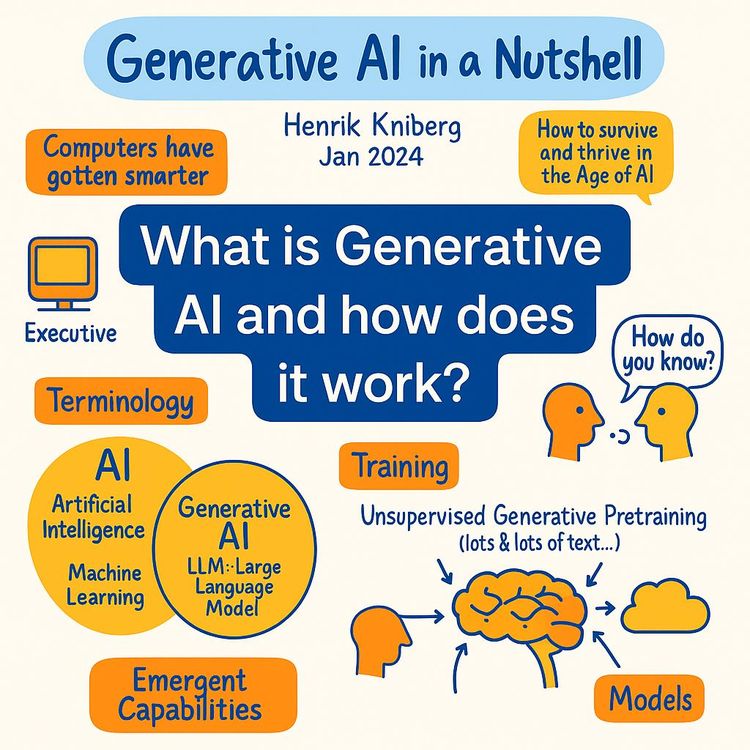
Video Course: What is Generative AI and how does it work?
Video Course: How to Use ChatGPT from Beginner to Professional
Video Course: How to Use Google Gemini for Google Workspace to Boost Productivity

Video Course: How to Use Claude 3.7 AI - Tips for Beginners!
Video Course: ChatGPT for Data Analytics: Full Course - from Beginners to Professional

Video Course: Generating Images and photos With ChatGPT?

Video Course: Generating Images & Photo's with MidJourney
Video Course: Generating Design's with Microsoft Designer and AI

Video Course: Generating Design's with Canva.com and AI
Join 20,000+ Professionals, Using AI to transform their Careers
Join professionals who didn’t just adapt, they thrived. You can too, with AI training designed for your job.