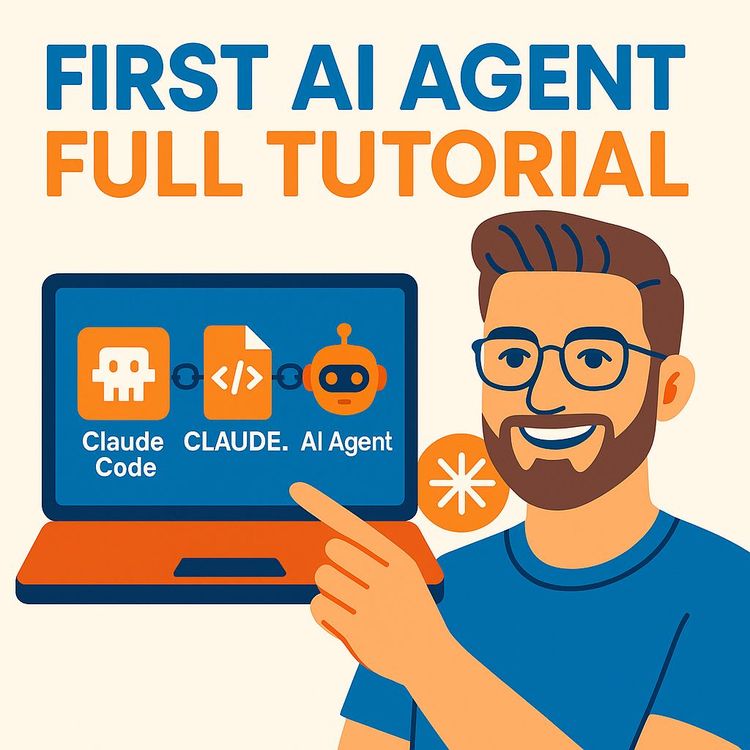
Build AI Agents in Claude: A No-Code Guide to Automation (Video Course)
Stop asking AI for answers,delegate entire projects. This hands-on course shows you how to build real agents with Claude Code, no programming needed. Walk away with two working workflows and a system you can scale.
Related Certification: Certification in Building No-Code AI Agents for Automation
Also includes Access to All:
What You Will Learn
- Build zero-code AI agents inside the Claude desktop workspace
- Create a persistent Claude.md to store context, rules, and folder structure
- Enforce planning mode and require clarifying questions before execution
- Write reusable workflow files (research agent and content-repurposing agent)
- Scale reliably by iterating one workflow at a time and avoiding common mistakes
Study Guide
Introduction: Stop Asking AI Questions. Start Delegating Outcomes.
Here's a question that changes everything: what if you stopped treating AI like a search engine and started treating it like an employee?
Most people sit at their computers, type a question into Claude, copy the answer, and repeat. That's it. That's the extent of their "AI strategy." They're using one of the most powerful tools ever created as a slightly smarter Google. And honestly? It works fine for getting definitions and quick summaries. But fine isn't the goal.
This course is about the gap between what most people do with AI and what's actually possible. You're going to learn how to build AI agents that don't just answer questions,they complete entire projects. You give them a goal, they figure out the steps, they ask you clarifying questions when something's unclear, they execute each phase in order, they review their own work, and they hand you a finished result. No code. No programming background. No technical wizardry.
This is the difference between asking and delegating. And it's a skill that compounds.
Here's what we're covering: the three levels of AI interaction, what actually makes something a "real" agent, how to set up a zero-code agent workspace using the Claude desktop app, the single most important file in your entire setup, how to build two complete agent workflows from scratch,a research agent and a content repurposing agent,the five mistakes that derail most implementations, and a practical path for scaling from one workflow to an entire system of agents.
By the end, you won't just know what an AI agent is. You'll have built one. And more importantly, you'll understand the underlying framework well enough to build a dozen more.
The Three Levels of Working with AI
Before you build anything, you need to know where you currently stand. There's a hierarchy of how people interact with AI, and most people never climb past the first rung. Understanding these three levels is the foundation of everything else in this course.
Level One: Basic Chat
You ask a question. The AI answers. You copy the response, paste it somewhere, and move on with your day. This is how most people use AI, and it's genuinely useful. Need a definition? A quick summary of a dense article? A simple explanation of a complex concept? Basic chat handles it. But here's the limitation: functionally, this is a very sophisticated search engine. You're extracting information, not creating anything. No artifacts are produced. No work gets done. You're still doing all the heavy lifting,thinking about what to ask, evaluating the answer, figuring out what to do next.
Level Two: Builder Mode
This is where things start getting interesting. You move from asking for information to requesting output. "Write me a script." "Draft an email." "Analyze this document." "Create a presentation outline." Now the AI is producing real artifacts,actual deliverables you can use. This is a massive step up from chat. But notice what hasn't changed: you're still in full control of every next step. You decide what to ask for, you review each output, you manually carry the project forward. You're the project manager, the quality control, and the driver. The AI is just a really fast pair of hands.
Level Three: Agentic Work
This is where the paradigm shifts. Instead of handing the AI a task, you hand it a complete outcome. A goal. A destination. And then you get out of the way. The AI thinks through the task, breaks it into phases, asks you clarifying questions when something's unclear, executes each phase in sequence, reviews its own work, adjusts course when needed, and delivers a finished product. You're not in the loop for every micro-decision. You set the destination, and the agent drives.
Let me give you a concrete example of the difference. At Level One, you'd ask: "What are the key trends in AI agents right now?" and get a list. At Level Two, you'd say: "Write me a 1,500-word report on AI agent trends." and get a document you'd likely need to edit heavily. At Level Three, you'd say: "Research the current state of AI agents,what's actually working, what's overhyped, and where things are heading. Ask me anything you need to know about my audience and preferences first, then plan your approach, get my approval, and deliver a finished report saved to my output folder." The agent handles everything from research to formatting to file management.
Here's the uncomfortable truth: most workers are still operating at Level One. They don't know Level Two exists, let alone Level Three. And that's not a criticism,it's an opportunity. Every hour you spend learning to delegate to an agent is an hour you get back, repeatedly, forever.
What Qualifies as a True AI Agent
Now, here's where people get confused. They hear "AI agent" and assume it means any sophisticated prompt. It doesn't. A genuine agent workflow is something fundamentally different from a cleverly worded chatbot request. Three characteristics separate real agentic behavior from standard chatbot responses.
Characteristic One: An agent follows a process, not just a message.
A chatbot gives you one reply per message. That's it. There's no accumulation of context, no sequential logic, no multi-stage execution. An agent, on the other hand, moves through defined stages. It gathers context first. Then it forms a plan. Then it executes step by step. Then it reviews its output. Then it adjusts if something went wrong. The agent operates within an organized system, not in isolated exchanges.
Think of it this way: a chatbot is someone answering questions at a party. An agent is a project manager who's read the standard operating procedure and is now executing it, start to finish, with checkpoints and quality control built in.
Characteristic Two: An agent makes decisions under uncertainty.
Here's something you've probably noticed: when a chatbot doesn't fully understand your request, it guesses. It pattern-matches to the most probable answer and gives you something that sounds confident but might be completely wrong. A real agent doesn't do that. A real agent stops and asks for clarification. It adapts its approach based on new information. It corrects course when an initial direction proves wrong. The ability to reason through ambiguity,rather than just predicting the most likely next word,is what separates an agent from an elaborate autocomplete mechanism.
Let me give you a practical example. You ask a chatbot to "write a summary of this document." It produces a generic summary that misses the point because it didn't know you needed it for an executive audience. An agent, properly built, would pause and ask: "Who's the audience for this summary? What length do you need? Should I focus on financial implications or operational details?" That clarification step is where the quality of the final output is determined.
Characteristic Three: An agent clarifies before it executes.
This is worth emphasizing because it's the root cause of most bad AI output. The vast majority of poor results happen because the model misunderstood what you actually wanted. It assumed an audience. It assumed a format. It assumed a scope. It assumed a tone. A well-designed agent treats your initial request as the starting point for a brief conversation, not as a complete specification to execute immediately.
Here's the pattern: the agent asks questions, you answer, the agent adjusts its understanding, and only then does it act. This clarification phase is where most of the quality of the final output lives. Skip it, and you're gambling on the model's assumptions. Build it in, and you're directing the agent's intelligence toward exactly what you need.
One more thing worth noting: these three characteristics work together. Process gives the agent structure. Decision-making under uncertainty gives it adaptability. Clarification before execution gives it accuracy. Remove any one of them, and you're back to having a chatbot with extra steps.
Setting Up Your Zero-Code Agent Workspace
Alright, enough theory. Let's get your hands dirty. The practical starting point is the Claude desktop application, which includes something called a code workspace. Despite the intimidating name, you don't need to write a single line of code to use it. Think of it as an office for your AI,a dedicated space where projects live, files get organized, and agents do their work.
Here's the setup process, step by step.
Step One: Get the Claude desktop app.
Search for "Claude desktop app" and download it directly from Anthropic. It's the official application, and it includes the code workspace built in. No developer tools required. No command line. No installation of programming languages.
Step Two: Create your project folder.
Open the code workspace and create a new project folder. Call it something like "agent workspace" or anything that makes sense for what you're building. This folder is your agent's operating environment,its office, if you will. Everything the agent creates, organizes, and references lives inside this folder. You can start with an empty folder. That's perfectly fine.
Step Three: Create the Claude.md file.
This is the single most important file in your entire setup. I cannot overstate this. Most people who struggle with AI agents fail because they skip this step. They try to build elaborate workflows without giving Claude any context about who they are, what they want, or how they like to work. The result is generic output that requires constant correction.
Here's what's remarkable: creating this file requires zero technical knowledge. You literally type into the chat: "Create a file called Claude.md in the root of this project." Claude generates it instantly. And here's the magic: Claude automatically reads this file at the start of every session within the project. It's an onboarding document that persists across all your conversations. Write it once, and the agent remembers your preferences forever.
Let me show you what a well-structured Claude.md file looks like. It has four key sections.
Section One: Project Context.
Two or three sentences describing what this workspace is for. Here's an example:
"This workspace is used for AI-assisted research, content creation, and workflow automation. Outputs are primarily for non-technical audiences who want practical, actionable information about AI tools."
That's it. A few sentences that tell the agent what kind of work happens here and who it's for.
Section Two: About Me.
This is where you tell the agent about yourself,your background, your audience, your preferred tone. Example:
"I create practical AI content for everyday users. I prefer concise, direct explanations over academic or jargon-heavy language. Every output should feel like advice from a knowledgeable friend, not a corporate report."
Notice what this does: it encodes your voice into the agent's behavior. Every output, from a research report to a social media post, will carry that tone.
Section Three: Rules.
These are explicit working preferences the agent applies automatically in every session. Typical rules include things like: always ask at least three clarifying questions before starting a complex task. Always show your plan before executing. Keep written outputs concise and never pad. Use lowercase filenames with hyphens instead of spaces. These rules seem small, but they eliminate the need to re-explain your preferences every single time you open a new conversation.
Section Four: Folder Structure.
Define the directories the agent should use. For example:
workflows , for instruction files
output , for completed work
resources , for reference material
This gives the agent a clear map of where things live and where to place finished items. No more hunting through random folders for deliverables.
Here's the bottom line: a well-written Claude.md file provides more value than most prompt engineering tricks you'll find online. It transforms every session from a blank slate into a contextual continuation. The agent knows who you are, what you want, how you talk, and where things go. That context is the foundation of everything else you'll build.
Planning Mode: The "Show Your Plan First" Habit
There's one habit that will save you more time and frustration than any other technique in this course. It's called planning mode, and the principle is simple: never let the agent execute immediately.
Here's why this matters. When an AI agent starts working autonomously, it commits to a direction. It creates files. It structures content. It makes assumptions. If any of those initial assumptions are wrong,which happens more often than you'd think,you end up wasting time correcting a half-finished project instead of steering a clean one. It's much harder to redirect a car that's already halfway down the wrong road than to check the map before you start driving.
Planning mode requires the agent to present a written plan before it takes any action. That plan should show you:
How the agent interpreted your goal.
What steps it intends to take.
What files it plans to create.
What questions it still has.
You review that plan. Maybe you adjust something. Maybe you approve it as is. Either way, you're catching misinterpretations and flawed assumptions before they cost you time. The review takes about two minutes. It routinely saves ten minutes of cleanup on the back end. That's a trade you should make every single time.
Here's the beautiful part: enforcing planning mode takes one line in your Claude.md file. Add this rule:
"Always present a written plan and wait for approval before beginning any multi-step task."
Once that rule is in place, Claude defaults to showing its thinking before acting. You review, you approve, and only then does execution begin. This single habit will prevent more costly errors than any other practice in this course.
The Anatomy of an Agentic Workflow
Now that your workspace is set up and planning mode is enforced, it's time to understand how agentic systems are actually built. Most of them consist of three components working together. Once you understand this architecture, you can design workflows for virtually any task.
Component One: The Workflow File.
This is a written document,usually in Markdown,that describes the process for a specific type of task. It covers the goal, the steps, the rules, the expected output format, and contingency instructions for when things go wrong. Think of it as a standard operating procedure written in plain English. No code. Just a clear process description that anyone could read and follow.
Component Two: The Agent Itself.
That's Claude. The agent reads the workflow file, understands the objective, and acts as the coordinator. It decides what to do at each step, which questions to ask, when to proceed, and when to pause for your input. It functions like a project manager who has read the standard operating procedure and is now executing it.
Component Three: The Tool Set.
These are the capabilities available inside the code workspace: reading files, creating files, organizing folders, searching documents, analyzing and editing text. For most beginner and intermediate workflows, these built-in tools are more than sufficient. You don't need external integrations or APIs. You don't need to connect third-party services. The built-in tool set handles the vast majority of what you'll want to do.
Now here's the central insight that changes how you should think about building agents: the most important component is the workflow file, not the tool set. A thoughtfully designed workflow with basic tools will outperform a poorly designed workflow with sophisticated integrations every single time. The intelligence of an agentic system lives in its instructions, not in its technology stack.
That's encouraging news. Because it means you don't need to be a developer, an engineer, or a technical wizard to build powerful agents. You need to be able to write clear instructions. And anyone can learn to do that.
Building a Research Agent: A Complete Walkthrough
Let's put all of this into practice. We're going to build a research agent,a system that takes a topic from you and handles the entire research and report-writing process from start to finish. This is the perfect first workflow because it's self-contained, immediately useful, and relatively low-risk.
Phase One: Designing the Workflow.
Open a new conversation in your code workspace. Here's the key move: don't give the agent a research topic yet. Instead, tell it what kind of system you want to build. Something like this:
"I want to design a research workflow. When I give you a topic, you should first ask me clarifying questions about scope, audience, and desired depth. Then form a written plan. Once I approve the plan, you research the topic thoroughly, organize your findings into clear sections, and save a structured report to the output folder. Before we build this, show me your plan for the workflow itself."
Notice what you've done here. You've described the behavior you want, and you've asked the agent to plan the workflow before building it. That's planning mode applied to the design process itself.
Claude will propose a workflow structure. It typically looks something like this:
A clarification phase with specific questions it will always ask.
A research phase broken into logical subtopics.
A synthesis step that connects findings across sources.
A review step before saving the final file.
Once you approve the structure, Claude creates the actual workflow file,something like research-agent.md,and stores it in your workflows folder. This file is plain language, fully editable, and reusable for any future research topic. You've just built a system, not a one-time response.
Phase Two: Running the Workflow.
Now the real magic happens. In a new session within the same workspace, you activate the research workflow with a specific topic. Let's say: "the current state of AI agents,what's actually working, what's overhyped, and where things are heading."
If the workflow is built correctly, the agent does not immediately start writing. The first action is to ask clarifying questions. It wants to know who the audience is, what tone you prefer, how long the report should be, what specific angle matters most to you.
You provide precise answers. Let's say: "Audience is non-technical professionals who are curious about AI but don't have a developer background. Tone should be conversational and practical, focused on tools and workflows people can actually use. Length should be around 1,500 words."
The agent then forms a written plan. It shows you the sections it will cover, the structure it will follow, the sources it intends to consult. You review it. Maybe you adjust something. Then you approve.
And then the agent executes. It researches. It synthesizes. It writes. It formats. It saves the finished report to your output folder. You didn't manage any of the individual steps. You set the destination, and the agent drove.
Phase Three: The Persistent Context Advantage.
Here's where things get really interesting. After the report is produced, you decide you want changes. Maybe the executive summary is too long. Maybe you want a comparison section added. Here's the key: the agent doesn't need to start over. Because it retains full context of what it created, you can simply say: "Trim the executive summary to three key points" or "Add a section comparing the top three AI agent tools by use case." The agent modifies only the relevant portion, preserving the existing structure and tone.
This is the compounding effect of working in a persistent workspace. Each session builds on the last. Your body of work becomes a living thing that the agent understands deeply, rather than a series of disconnected interactions where you have to re-explain everything from scratch.
Building a Content Repurposing Agent
Let's build a second workflow, and this one has serious weekly time-savings potential. It's a content repurposing agent that takes one long-form script and converts it into multiple content formats. If you create content in any capacity, this workflow will feel like cheating.
The Input and Output.
You place a single long script into an input folder. Then you give one instruction. The agent reads the entire script, identifies the three strongest standalone moments, and writes three separate 60-second short video scripts,each with its own hook and payoff. It also drafts a social media pack: an X thread, a LinkedIn post, and an Instagram caption. Then it converts every artifact into PDF format and saves all outputs to the output folder.
One script in. Three short video scripts plus a full social media pack out. In under two minutes.
Writing the System Prompt.
The design approach is identical to what we did with the research agent. You describe the role, the inputs, the steps, and the output format. Something like this:
Role: content repurposing specialist.
Input: a single long-form script in the input folder.
Steps: read the script, identify three standalone moments that work as shorts, write each with its own hook and payoff, draft platform-specific social posts that match the host's voice.
Output: four Markdown files converted to PDF and saved to the output folder.
That's it. The agent handles the rest. And because you've already built your Claude.md file with your tone and preferences, the outputs will sound like you,not like generic AI sludge.
Here's why this workflow is so valuable: it takes the most tedious, repetitive part of content creation,repurposing one piece of content into multiple formats,and automates it completely. The agent isn't just generating ideas. It's reading source material, making editorial judgments about which moments are strongest, writing in your voice, and delivering publication-ready files.
The Five Mistakes That Derail Most Agent Implementations
Let's talk about failure. Because most people who try to build AI agents don't fail because the technology doesn't work. They fail because they make the same handful of mistakes. Here are the five most common ones, and how to avoid them.
Mistake One: Skipping the Claude.md file.
Without persistent context, the agent has no knowledge of who you are, what you prefer, or what standards you expect. Every session starts from zero. Quality is inconsistent. And you end up spending more time correcting output than you save. The solution is simple: write the Claude.md file before you build anything else. It's the foundation, not an afterthought.
Mistake Two: Using vague goals.
"Do some research on AI" produces generic, encyclopedic output that reads like a Wikipedia article. "Research how non-technical marketing professionals are using AI agents for content production, focusing on tools with free tiers, written for an audience that has never written a line of code" produces something you can actually use. The specificity of your goal determines the quality of your output. This is true at every level of AI work, but it matters most in agent workflows because the agent is running multiple steps based on that initial goal.
Mistake Three: Skipping plan review.
The temptation is to let the agent run and fix problems later. But correcting a half-finished multi-stage workflow is far harder than adjusting a plan before execution. Two minutes of review up front saves ten minutes of cleanup. Always approve the plan first.
Mistake Four: Not requiring clarifying questions.
If your workflow file doesn't explicitly require the agent to ask questions before acting, it will make assumptions. And those assumptions are the source of most mediocre output. Build the clarification step into every workflow. Make it non-negotiable.
Mistake Five: Trying to build everything at once.
Enthusiasm is great, but it leads people to try building a research system, a content planner, a CRM workflow, an email responder, and an analytics dashboard all in the same week. The result is five half-working systems that none of them get used. The correct approach is to build one workflow, run it until it's reliable, then build the next. One reliable workflow is worth more than five broken ones.
Scaling Your Agent Capability
Once you have one or two workflows running well, you'll probably want more. Here's a progression that actually works,a path from simple tasks to a full system of interconnected agents.
Stage One: Simple, Self-Contained Tasks.
Start with research reports, content outlines, document summaries. These have clear inputs and clear output formats. They offer immediate feedback on whether the workflow is working. And they carry low risk if the output is imperfect. This is where you build your confidence and refine your instruction-writing skills.
Stage Two: Iterative Workflows.
Progress to workflows where the agent produces a first draft and then refines it based on multiple rounds of feedback. Script writing and editing workflows are strong examples. You provide a rough draft and specific criteria for improvement. The agent revises. You give more feedback. It revises again. This is where you learn to work with the agent as a collaborator rather than just a tool.
Stage Three: Multi-Workflow Systems.
This is where things get powerful. In this stage, one workflow triggers or informs another. For example, your research agent produces a findings report. Then your content planning agent reads that report and generates video ideas based on the research. One workflow feeds the next. This sounds complex, but it's not as hard to build as you might think,as long as each individual workflow is solid first.
Here's the key principle: agent capability is not unlocked all at once. It's built incrementally, one reliable workflow at a time. And the overall system grows more powerful as each component becomes refined. Even building one reliable workflow puts you ahead of the vast majority of people who talk about AI agents without ever implementing one.
Who This Matters For
This framework isn't just for tech people. It has real applications across business, education, and organizational leadership.
For business professionals and consultants, agentic workflows can replace repetitive multi-step tasks like drafting research briefs, summarizing meetings, or producing campaign-ready social content from a single source document. Persistent project files allow teams to maintain consistent tone, branding, and quality standards across all AI outputs. And the zero-code approach means non-technical staff can create customized agents without waiting on a development team.
For educators and trainers, the three-level framework provides a useful curriculum for teaching AI literacy. Learners can progress from question-answering to output generation to full delegation. Building a Claude.md file is an excellent exercise in articulating audience, tone, and standards,transferable skills for any academic or professional writing. And the planning mode habit aligns with best practices in project management: always plan before executing.
For organizational leaders and policymakers, establishing governance guidelines around agentic AI should include persistent context and review points. The Claude.md approach is effectively a documentation standard that can be audited. Organizations can encourage incremental adoption: begin with low-stakes research or writing tasks, measure performance, then expand to integrated pipelines. And the emphasis on clarification and plan review mitigates the risks of autonomous AI making unchecked decisions in public-facing or compliance-sensitive contexts.
Putting It All Together: Your Action Plan
You now have the complete framework. Here's what to do next.
First, download the Claude desktop application and familiarize yourself with the code workspace. Second, create a project folder and immediately build your Claude.md file. Include project context, an About Me section, a small set of working rules, and a folder structure. Don't build any workflows until this file is in place. Third, enforce planning mode by adding that one line to your rules. Fourth, start with one simple agentic workflow,the research agent is perfect. Define the process in plain language, specify the clarifying questions it must ask, and define the output format. Fifth, test it on a real project. Review the clarifying questions, the proposed plan, and the execution. Adjust the workflow file based on what you observe.
Then, once that first workflow is reliable, add a second high-value workflow like the content repurposing agent. And only after each component performs well independently should you move to multi-workflow pipelines. Maintain your Claude.md file as a living document. Update it as your role, audience, or preferences evolve. Revisit the rules section periodically to make sure it still reflects your needs.
Here's what I want you to remember above all else: the most significant productivity gain isn't in asking the AI better questions. It's in designing systems that allow the AI to complete whole outcomes autonomously. The intelligence of an agentic system lives in the instructions, not the technology stack. A simple workflow with basic built-in capabilities will beat a poorly designed workflow with sophisticated integrations every time.
And one more thing: the relationship between humans and AI is shifting. We're moving from asking questions to delegating outcomes. From managing tasks to setting destinations. This is a skill you can learn, and it's a skill that will pay dividends for as long as you use AI.
So start small. Build one workflow. Make it reliable. Then build the next. Before you know it, you'll have a stack of AI agents handling the work you used to dread,and you'll wonder how you ever operated any other way.
Frequently Asked Questions
Introduction
This FAQ addresses the questions that surface most frequently when people begin building AI agents with Claude Code. The questions are organized from foundational concepts through advanced implementation details, so you can work through them in order or jump directly to the topic that matters most to you. Each answer focuses on practical application,what to do, why it works, and where the common pitfalls hide. Whether you're evaluating whether agents are worth the effort or troubleshooting a workflow that's producing mediocre results, the answers below reflect the patterns that separate working agent systems from abandoned experiments.
Getting Started with AI Agents
What exactly is an AI agent, as opposed to a regular chatbot?
An AI agent is a system that works toward a complete goal by following a defined process, rather than merely responding to individual messages. While a chatbot provides a single reply per message, an agent gathers context, forms a plan, executes steps sequentially, reviews its own output, and adjusts course when needed. It makes decisions under uncertainty,pausing to ask clarifying questions rather than guessing,and treats your initial request as the starting point for a brief discovery conversation before executing.
The fundamental difference: you set the destination and the agent drives.
How do the three levels of working with AI differ?
There are three distinct levels of AI usage:
Level One: Basic Chat , You ask questions and the AI responds with information. It works like a sophisticated search engine. Useful for definitions, summaries, and explanations, but limited to producing answers rather than deliverables.
Level Two: Builder Mode , You ask the AI to create things: scripts, emails, document analysis, and similar outputs. You receive real artifacts, but you still manage every step yourself, reviewing outputs and deciding what comes next.
Level Three: Agentic Work , You hand the AI a complete outcome and it figures out how to reach it. It breaks the task into phases, asks questions when unclear, executes each phase, reviews its own work, and delivers a finished result. You are not involved in every micro-decision.
What makes Claude particularly accessible for building agents?
The Claude desktop app includes a built-in code workspace that gives users a project-based operating environment for agent workflows. It does not require any developer setup, external APIs, or infrastructure configuration. You can create projects, manage files, and run agentic workflows using plain-language instructions.
Previously, this capability required serious technical infrastructure; now it functions on a desktop application.
Do I need any coding experience to build AI agents with Claude Code?
None whatsoever. The entire agent-building process happens through natural language conversation. You describe what you want the agent to do, Claude writes the workflow file in plain English markdown, and you review and approve the plan before anything executes. The workflow files are essentially standard operating procedures written in prose,anyone who can write a clear instruction manual can build an agent. The code workspace handles all the file management and organization behind the scenes.
The skill that matters is instruction writing, not programming. If you can articulate a process clearly, you can build an agent that follows it.
What do I need to run Claude Code?
You need the Claude desktop application installed on your computer. The app is available directly from Anthropic's website, and the code workspace is built into the application,there's no separate installation or configuration required. You'll need a Claude account with access to the desktop app. Beyond that, a standard modern computer with a stable internet connection is sufficient.
No developer tools, APIs, or infrastructure setup are necessary. The entire agent environment lives inside the desktop application.
How do I know when I'm ready to move from builder mode to agentic work?
You're ready when you notice yourself repeatedly asking the AI to perform the same multi-step process. If you find yourself saying "write this report, then format it, then save it" more than a few times, that's a workflow begging to become an agent. The transition also makes sense when you're comfortable with the AI's output quality and trust its judgment on intermediate steps. Start with a single task type you perform regularly,research reports, content outlines, document summaries,and build one agent for that task.
If you can describe the process in writing, you can automate it as an agent.
The Claude.md File and Project Setup
What is the Claude.md file and why is it the most important part of an agent setup?
Claude.md is a plain-text markdown file stored in the root of your project folder. Claude automatically reads this file whenever it begins working inside that project, making it an onboarding document for the AI that is applied on every session. Without it, every session starts from zero and the AI lacks context about who you are, what you are trying to accomplish, or how you want work done,leading to generic output and inconsistent quality.
Most people who struggle with AI agents do so because they skip this file.
What should go into a well-constructed Claude.md file?
A strong Claude.md file contains four primary sections:
Project Context , two or three sentences describing what the workspace is for (e.g., research, content creation, workflow automation) and the intended audience.
About Me , who you are, your background, your audience, and the tone you prefer. Example: "I create practical AI content for everyday users and prefer concise, direct explanations over jargon-heavy academic language."
Rules , encoding your working preferences so they apply automatically. Examples: always ask at least three clarifying questions before complex tasks; always show a plan before execution; keep outputs at or under requested length; use lowercase hyphenated filenames.
Folder Structure , a map of directories such as workflows/ for instruction files, output/ for completed work, and resources/ for reference material.
How do you create the Claude.md file?
You do not need to open a text editor or manipulate the file system. Type a prompt into the Claude chat interface, such as "Create a file called Claude.md in the root of this project," and Claude will create it within seconds. Then you fill in the content through conversation or by editing the file directly.
Can I edit the Claude.md file after creating it?
Absolutely, and you should treat it as a living document. As your work evolves, your preferences change, or your projects expand, update the file to reflect those shifts. You can ask Claude to add a rule, modify the project context, or restructure the folder map through a simple conversation. The file is plain text, so you can also open it in any text editor and make changes directly.
The file's value comes from staying current with how you actually work. A Claude.md file written once and never revisited will become stale quickly.
What if I work on multiple projects,do I need a separate Claude.md for each?
Yes. Each project folder in your code workspace should have its own Claude.md file because the file is scoped to the project root. This is actually a feature: it means each project gets its own context, rules, and folder structure without cross-contamination. A research project can have rules about citation format, while a content creation project can have rules about brand voice,each Claude.md applies only when Claude works within that specific project folder.
Think of each project folder as a separate office with its own operating manual.
Agentic Work vs. Ordinary Prompts
What three characteristics separate a genuine agent workflow from a sophisticated prompt?
1. Process orientation , A real agent follows a system: gathering context, forming a plan, executing step by step, reviewing output, and adjusting based on results. A chatbot simply gives one reply per message.
2. Decision-making under uncertainty , An agent stops and asks when it does not understand a request, and it corrects course if an initial direction proves wrong. A chatbot will guess and push forward regardless.
3. Clarification before execution , A well-designed agent asks questions before beginning work, treating the initial request as the start of a brief conversation. Most poor AI output stems from assumptions about audience, format, scope, and tone,clarification prevents those assumptions.
Why is planning mode essential for agent workflows?
Planning mode means you never let the agent execute immediately,you require it to present a written plan that shows how it interpreted your goal, what steps it will take, which files it will create, and what questions it still has. This costs about two minutes of review but routinely saves ten minutes of cleanup by preventing the agent from committing to wrong assumptions and creating half-finished work.
You can encode this behavior with one line in the rules section of Claude.md: "Always present a written plan and wait for approval before beginning any multi-step task."
How do I know if I'm actually using an agent or just a well-crafted prompt?
The test is simple: does the AI manage the process from start to finish, or are you managing each step? If you're feeding the AI one instruction at a time, reviewing each output, and deciding what to do next, you're in builder mode. If you hand the AI a complete goal and it asks clarifying questions, presents a plan, executes the plan, reviews its own work, and delivers a finished artifact without you intervening at each step,that's agentic work.
Another indicator: a genuine agent can run in a new session with the same workflow file and produce consistent results because the process lives in the workflow, not in your prompting.
What's the difference between agentic work and automation tools like Zapier?
Automation tools like Zapier connect predefined triggers to predefined actions,when event X happens, perform action Y. They follow rigid, deterministic paths with no room for judgment. An AI agent, by contrast, makes decisions at each step. It can interpret ambiguous input, ask questions, adjust its approach based on intermediate findings, and produce different outputs for different inputs even when following the same workflow file.
Automation replaces repetition; agents replace judgment. If your process has fixed rules, automation works fine. If it requires thinking, you need an agent.
Agent System Architecture
What are the three components of an agentic system?
1. The Workflow File , a written markdown document describing the process for a specific type of task, including goal, steps, rules, expected output format, and what to do if something goes wrong. It is effectively a standard operating procedure written in plain English.
2. The Agent (Claude) , reads the workflow file, understands the objective, and acts as coordinator. It decides what to do at each step, what questions to ask, when to proceed, and when to pause for input,functioning like a project manager running a process.
3. The Tool Set , the capabilities Claude can use in the code workspace: reading and creating files, organizing folders, searching documents, and analyzing text. For most beginner and intermediate workflows, these built-in capabilities are sufficient.
Which component matters most, and does that surprise people?
The workflow file is the most important component,not the tools. A thoughtfully designed workflow with basic tools outperforms a poorly designed workflow with sophisticated integrations every time. This is counterintuitive to many people, but it is good news because instructions are something anyone can write.
The intelligence of the system lives in the instructions, not the technology stack.
Do I need external tools, APIs, or integrations to build useful agents?
For the vast majority of beginner and intermediate workflows, no. The built-in capabilities of the code workspace,reading files, creating files, organizing folders, searching documents, and analyzing text,are enough to build research agents, content creation agents, document processing workflows, and content repurposing systems. External integrations become relevant when you need to connect to other systems like CRMs, databases, or specialized APIs.
Start with the built-in tools and add integrations only when a specific workflow demands them.
What happens when an agent encounters an error mid-task?
A well-designed workflow file includes contingency instructions for exactly this situation. It should specify what the agent should do when something goes wrong,whether that means pausing and asking the user, trying an alternative approach, or documenting the issue and continuing with what it can complete. The workflow file should also include a review step where the agent checks its own output before delivering it.
If your agent fails without explanation, the workflow file likely lacks error-handling instructions. Add a line like "If you encounter an error, explain what happened and ask the user how to proceed."
What are the limitations of the built-in tools in the code workspace?
The built-in tools cover file operations, text analysis, and document organization, but they don't include external connectivity. You can't pull data from the web directly, call third-party APIs, or interact with other applications without additional setup. For tasks that require real-time data, external database queries, or integration with other software, you'll need to either bring that data into the workspace as files or explore integration options.
For most content and research workflows, the built-in tools are more than enough. The limitation is rarely the tools,it's usually the workflow design.
Building a Research Agent
How do you create a research agent that handles a topic from start to finish?
Open a new conversation in the Claude code workspace and describe the system you want to build. A prompt like: "I want to design a research workflow. When I give you a topic, you should first ask me clarifying questions about scope, audience, and desired depth. Then form a written plan. Once I approve the plan, you research the topic thoroughly, organize your findings into clear sections, and save a structured report to the output folder. Before we build this, show me your plan for the workflow itself."
The key is that you are designing the system that will handle the task, not jumping straight to a task. Claude will propose a structure with phases,clarification, research, synthesis, review, and file saving,and once approved, it writes a reusable workflow file (e.g., research-agent.md) in the workflows folder.
What should you do when running the research workflow for the first time?
Open a new session in the same workspace and state that you want to run the research workflow on a specific topic. A well-designed workflow will not begin writing immediately,it asks clarifying questions first. Answer those questions specifically, including audience, tone, focus areas, and target length. Claude then forms a written plan with sections and structure. You review, adjust if needed, and approve. At that point the agent runs through the phases sequentially and saves the completed report to the output folder.
Certification
About the Certification
Become certified in building AI agents with Claude Code, no programming required. You'll prove you can automate entire projects, create two working workflows, and scale a system that delegates real work,not just answers.
Official Certification
Upon successful completion of the "Certification in Building No-Code AI Agents for Automation", you will receive a verifiable digital certificate. This certificate demonstrates your expertise in the subject matter covered in this course.
Benefits of Certification
- Enhance your professional credibility and stand out in the job market.
- Validate your skills and knowledge in cutting-edge AI technologies.
- Unlock new career opportunities in the rapidly growing AI field.
- Share your achievement on your resume, LinkedIn, and other professional platforms.
How to complete your certification successfully?
To earn your certification, you’ll need to complete all video lessons, study the guide carefully, and review the FAQ. After that, you’ll be prepared to pass the certification requirements.
Other AI Video Courses
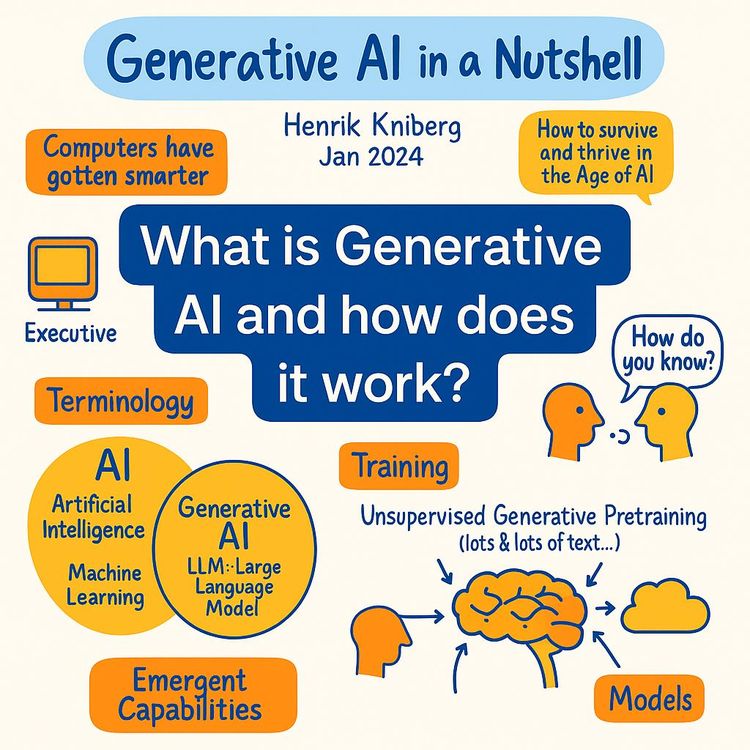
Video Course: What is Generative AI and how does it work?

Video Course: How to Use ChatGPT from Beginner to Professional
Video Course: How to Use Google Gemini for Google Workspace to Boost Productivity

Video Course: How to Use Claude 3.7 AI - Tips for Beginners!
Video Course: ChatGPT for Data Analytics: Full Course - from Beginners to Professional

Video Course: Generating Images and photos With ChatGPT?

Video Course: Generating Images & Photo's with MidJourney

Video Course: Generating Design's with Microsoft Designer and AI

Video Course: Generating Design's with Canva.com and AI
Join 20,000+ Professionals, Using AI to transform their Careers
Join professionals who didn’t just adapt, they thrived. You can too, with AI training designed for your job.