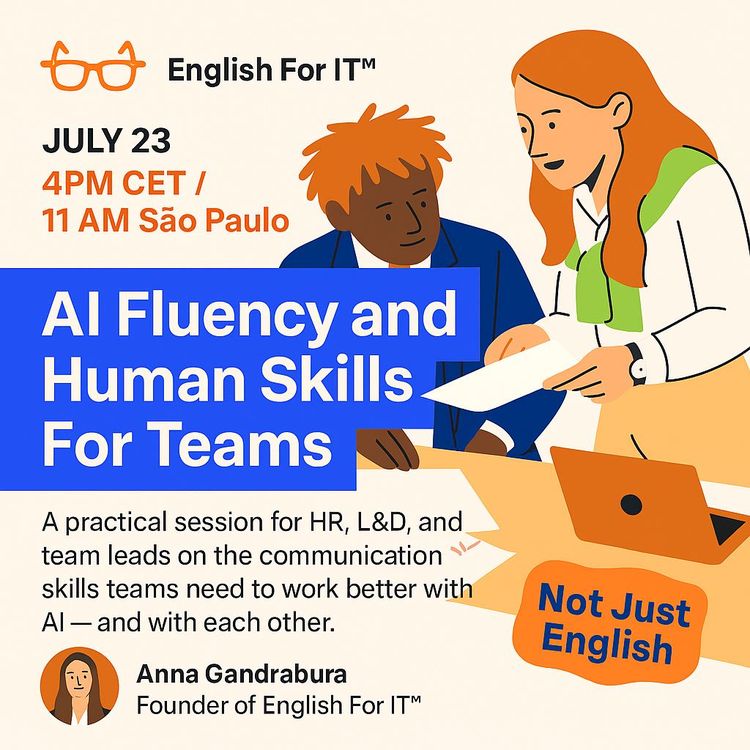
Build AI Fluency + Human Power Skills for Team Success (Video Course)
Most AI training fails because it's passive. This program flips that. You build real tools for your actual work, then learn to present them, defend them, and collaborate around them. That's how adoption sticks and value shows up.
Related Certification: Certification in Driving Team Success with AI Fluency and Human Power Skills
Also includes Access to All:
What You Will Learn
- Build a role-specific AI workflow or automation for immediate use
- Design and implement project-based AI training that integrates human skills
- Present and demo AI solutions in clear business terms to secure buy-in
- Manage up and disagree constructively to influence decisions
- Give and receive actionable feedback and ask questions without fear
- Audit usage and sustain AI fluency with ongoing communities of practice
Study Guide
Introduction: The Training Gap Nobody Wants to Admit
Here's an uncomfortable truth hiding in plain sight. Companies are pouring serious money into AI subscriptions and training programs. Leadership sends down the mandate: "Make our teams AI-fluent." HR and L&D teams scramble to design something. Webinars get scheduled. Enterprise tool licenses get distributed. And then... nothing changes.
Check the usage logs a month later. A significant chunk of employees never logged in once. The ones who did logged in, clicked around, and went back to their trusted old workflows. Leadership looks at the investment and calls it a sinkhole. Employees roll their eyes and call it another pointless corporate initiative.
The problem isn't that people are lazy or that AI tools aren't powerful. The problem is the training approach. Most AI training is passive, generic, and disconnected from the work people actually do. And there's a second, deeper issue: even when organizations get the AI training right, they ignore the human skills that turn AI fluency into real performance. You can teach someone to build a brilliant AI workflow, but if they can't present it, defend it, collaborate around it, or explain it to a skeptical stakeholder, the value evaporates.
This guide is for anyone who's tired of watching that pattern repeat. Whether you're in HR, L&D, leadership, or you're an individual professional trying to stay relevant, you need a better model. The model is this: pair hands-on, project-based AI fluency training with deliberate human skills development. Not as separate initiatives, but as one integrated learning experience. That's what we're going to break down here.
Section 1: The AI Training Mandate and the Failure Loop
Walk into almost any HR or talent team meeting and you'll hear the same directive: "Roll out AI training." It comes with healthy budgets, paid subscriptions to ChatGPT, Claude, Gemini, and a dozen other platforms. On paper, it looks like the organization is serious about the future.
But here's the question nobody asks before spending the money: what kind of training should it actually be?
A webinar? A live demo? A series of role-play exercises? Individual self-paced tasks? A section in the employee development plan? Most teams default to whatever is easiest to produce, usually a one-hour webinar or a recorded demo of the latest model's capabilities. That's where the trouble starts.
The pattern is so consistent it's almost a law of corporate gravity. The training happens. The attendance list gets checked off. The budget gets approved for another round. And then the usage data comes in, and it's brutal. Half the team never engaged with the paid tools at all. Of the half that did, a large portion gave up within weeks. The tools are still being paid for, but nobody's using them.
Leadership's conclusion: the training was worthless, and the budget was wasted.
But that conclusion misses the real problem. The training wasn't worthless because AI is overhyped. It was worthless because of how it was designed. Let's be specific about why.
Unclear formats.
When the mandate is vague, the execution is vaguer. Should this be a synchronous workshop or an asynchronous course? Should it be mandatory or optional? Should it focus on tool usage, strategic thinking, or ethical considerations? Without clear answers, organizers pick the path of least resistance: a generic overview that applies to nobody.
Low engagement.
Employees show up because they have to. They sit through the session. They nod along. And they retain almost nothing because they never used the tool themselves in a context that mattered to them.
Wasted investment.
The invoices for enterprise subscriptions keep coming. The training budget is spent. But the observable change in behavior inside the company is close to zero. That's not an AI problem, that's a training design problem.
Tool abandonment.
This is the most visible symptom. People download the desktop app, log in once, and never return. The software sits there like a gym membership that gets used twice in January.
Here's the core insight: knowledge about AI does not translate into adoption. Watching a demonstration of what a tool can do is not the same as building something with that tool. Real fluency comes from doing, not from observing.
Section 2: Why AI Training Fails , The Five Root Causes
Let's dig into the specific reasons most programs crash. Once you see them, you'll start spotting them everywhere.
1. Lack of relevance.
A software engineer, a finance analyst, an operations manager, and an HR business partner all face different challenges. A generic demo that tries to speak to all of them speaks to none of them. The accountant watches a demo about automating code reviews and thinks, "This has nothing to do with my life." The engineer watches a demo about drafting marketing emails and thinks the opposite. When training isn't tailored to the actual daily workflow of each role, employees mentally check out.
Think about the quiet frustration of a finance professional who has spent years perfecting their spreadsheet workflows. Suddenly they're told to watch a presentation about prompt engineering for chatbots. There's nothing in that presentation they can use tomorrow morning. It's dead on arrival.
2. The demo trap.
This is the most common mistake. Someone gets on stage and shows all the amazing things a tool can do. The audience is entertained. Maybe even impressed. But nobody gets to practice. The demo is a one-way broadcast, and the viewers are passive consumers. They don't struggle with a real problem. They don't make mistakes. They don't feel the thrill of solving something themselves. Without that hands-on friction, the information evaporates as soon as the session ends.
3. The effort barrier.
Adopting a new tool is hard in the short term. You have to learn the interface, debug your prompts, restructure your workflow, and tolerate being slower for a while. For someone who's done the same task the same way for years, the math looks terrible in the moment. They ask themselves, "Why should I invest hours of struggling now for a payoff that might not even show up?" That's a rational hesitation, and most training programs never address it.
4. Fear and security concerns.
Some employees actively avoid AI because they're scared. They worry about data privacy. They worry about violating company policies. They worry that if they input sensitive information into a public tool, they'll be personally responsible for a disaster. In environments where the company has provided approved AI solutions, this fear often comes from a lack of education about what's safe and what isn't. Nobody took the time to explain the security architecture, so people default to avoidance.
5. The job loss narrative.
There's a lingering belief out there that AI is a threat to jobs. That AI will eliminate the need for teams. This fear doesn't always show up in group training sessions, but you'll hear it in one-on-one conversations. Employees think, "If I become too good at using AI, I'm training my replacement."
The truth is more nuanced. AI is not taking jobs. AI is transforming roles. Every role that involves digital tasks will change. Some responsibilities will shrink, and others will expand. The professionals who refuse to engage with AI are the ones who will struggle, because their roles will be redesigned around AI capabilities whether they like it or not. The risk isn't AI. The risk is staying still.
Section 3: What Actually Works , Project-Based AI Fluency
So if the old models are broken, what does effective AI fluency training look like?
The answer is wrapped up in a simple rule: people become fluent by doing things that are real to them. You don't learn to swim by watching someone else swim. You don't learn to build AI workflows by watching someone else build them. You build your own.
An effective AI training program is a hands-on, project-based experience where every participant creates something they will genuinely use in their own role. The end product might be a workflow, an automation, an agent, a template, or a custom tool. The exact nature of the product doesn't matter. What matters is that it's real, it's personal, and it plugs directly into their daily work.
Let's break down the core principles that make this approach succeed.
Project-based.
Each person doesn't just absorb information, they build. A finance person creates a workflow that automates their monthly reporting drudgery. An operations person builds an agent that handles recurring tickets. A software engineer develops an advanced tool that plugs into their development pipeline. The act of building forces engagement. You can't coast through a project-based program. The final deliverable is proof of learning.
Role-specific.
Content is tailored to each employee's actual function. This is non-negotiable. When the training connects to what the employee does from 9 to 5, relevance skyrockets. When it connects to their biggest pain point, it becomes something they actually want to do.
Practical outcome.
Whatever they build gets used. It moves into their workflow immediately after the program ends. It is not an exercise to be graded and forgotten. It's an improvement to how they work, and that's why it sticks.
Department-wide inclusion.
This is not an engineering thing. The whole company participates. HR, finance, operations, marketing, engineering, everyone. The organization becomes AI-first only when every department is fluent, not just the technical teams.
Scaled complexity.
Here's something that surprises people. The level of technical sophistication doesn't matter. A finance analyst who builds a simple automation for reconciling invoices is just as valuable as an engineer who builds an agent that reviews code. Both learners solved a real problem in their own domain. Complexity is relative. The principle is simple: everyone works at the edge of their current capability.
An AI-first company, then, is not one where a single leader or a technical department uses AI. It's an organization where every employee, from the accountant to the people operations coordinator to the product manager, is AI literate and applies AI to their professional duties. AI becomes part of the company's wiring, not a hammer that one team owns.
Section 4: A Case Study That Proves the Model
Here's a concrete example to make this real.
A technology company of about fifty employees decided they wanted to become genuinely AI-first. Not a marketing label. An actual operational reality. Their leadership committed to a three-month, company-wide AI program, and every department was included. No exemptions. People operations, finance, operations, and engineering all participated.
The structure was simple but powerful. Employees worked with the company's approved AI tools, plus any additional tools that made sense for their specific functions. The core challenge: every single employee had to build something that would help them in their day-to-day work. Not a hypothetical case study. Not a toy example. A real tool, workflow, or automation.
The results looked different across the company, and that's exactly the point.
The software engineers built advanced technical tools and agents that integrated into their development workflows. They were building at a high level of complexity, many of them creating things that genuinely accelerated their output.
The finance staff took a different path. They developed automated workflows and templates that streamlined their reporting and data handling. They didn't need to write complex code. They found ways to apply AI to the recurring pain points of their daily grind. One finance person built an automation that aggregated data from multiple systems into a clean report, shaving hours off a weekly task.
The operations personnel built agents and automations that resolved recurring operational issues. Things that used to require manual follow-up and email chains just started getting handled.
The HR and people team created processes that made their own department more effective. They automated routine communication and built onboarding resources that saved time for the whole company.
Why did this program succeed where so many others fail? First, the tasks were authentic. No one was inventing a fake use case. They were solving their own problems. Second, the results were immediately applicable. The tools weren't theoretical; they got folded into real workflows the very same week. Third, the definition of success was real-world utility, not an abstract quiz score.
There was one more mechanism that made the difference. At the end of the program, each participant had to present and demo their tool to the rest of the company. That public demonstration created two things: cross-pollination of ideas, as everyone got to see what other departments had built, and a moment of vulnerability. Engineers who were brilliant at coding suddenly faced the challenge of explaining their work to people outside their team. Finance people had to talk to engineers about automations. This experience revealed something important. People were AI-fluent, but their presentation skills lagged.
That gap became the foundation for the human skills component of the program, which we'll get to shortly.
For now, the takeaway is this: when you turn employees into creators who build real things, learning deepens. The usage data problem disappears, because people don't abandon tools they've built themselves.
Section 5: The Blind Spot , Human Skills in an AI-First World
Here's the paradox that's quietly hurting organizations. In the rush to build AI fluency, companies are forgetting that AI proficiency and workplace effectiveness are not the same thing.
You can train someone to build sophisticated AI workflows. You can fill your organization with agents and automations. But if that same person freezes up when they have to present their work to a leadership team, if they can't persuade a stakeholder to adopt their approach, if they can't handle a cross-cultural misunderstanding with a teammate in another region, then the business outcome still collapses.
For years, companies invested in language training, communication skills, leadership development, and emotional intelligence. There was a general understanding that these competencies mattered. Then AI arrived, budgets shifted, and these programs started getting deprioritized. It's a dangerous trade-off, because human skills have become more important, not less.
Let's be clear about what AI can't do. AI can help you prepare for a big conversation. It can draft questions. It can research the person you're meeting with. It can anticipate objections and suggest responses. But when the actual conversation happens, when you're sitting across from a client or speaking on a video call, AI can't show up for you. In the moment of interaction, your human skills are all you have.
AI is a rehearsal partner, not a performer.
An employee who can build a brilliant AI agent but can't ask a clarifying question in a meeting is going to struggle. An employee who can't disagree respectfully with their manager will quietly implement a bad idea, even if their AI analysis points to a better path. A team that can't give honest feedback will stall, no matter how many automations they deploy.
"AI fluent" does not equal "effective at work." That's the blind spot.
Section 6: The Five Human Skills That Define High-Performing Teams
Let's get specific. There are five human skills that matter most in the age of AI. Master these, and your AI fluency becomes a force multiplier. Ignore them, and you'll watch your training ROI evaporate.
1. Presenting and demoing.
If you're building things, you need to talk about them. This is the skill that turns work into impact. In technical teams especially, there's a crucial sub-skill: translating technical language into business language. A brilliant engineer can build a powerful tool, but if they demo it with jargon-laden language, a non-technical executive won't understand why it matters. The demo fails, not because the tool is bad, but because the communication is. You have to adapt your explanation to your audience. Does it save time? Where's the money attached? What problem does it solve in business terms?
A finance professional who presents a data model to the CFO is delivering value. An operations manager who explains an automated workflow to stakeholders is delivering value. That's presentation skill in action. Presenting isn't a perky TED talk, it's the ability to make your work legible to other people.
2. Managing up and disagreeing well.
There are going to be moments when you believe the direction is wrong. Maybe leadership is pushing an automation strategy that the data doesn't support. Maybe your AI analysis turned up something that contradicts the official plan. What do you do? Quietly go along with it, or say something?
Constructively challenging leadership is a mark of professional maturity. It's not about being contrarian. It's about telling a leader what they need to hear, even when it's uncomfortable. Suppressing disagreement out of deference or fear is a decision with real consequences for the organization. But how you do it matters. Careful language, the right timing, and private conversations over public challenges are all part of the craft. Group settings are riskier, so you choose your mode carefully. The professional who can disagree without damaging the relationship is worth more than five workers who just nod.
3. Cross-cultural communication.
This skill is exploding in importance. Global teams are the norm, and AI cannot read the room. A tool might translate words, but it will not interpret the unspoken dynamics of a multicultural meeting. In some cultures, silence means agreement. In others, silence means deep skepticism. In some regions, an assertive tone is a sign of commitment; in others, it's perceived as aggression. Professionals from Latin America, the Middle East, Asia, and Europe all conduct business differently.
Two people could say the same sentence with completely different meanings depending on where they come from. Your ability to navigate those differences determines whether you close deals, retain talent, and build trust across borders. AI translates. Humans interpret.
4. Asking for, giving, and receiving feedback.
Feedback is the hidden engine of improvement. Teams that master the full feedback cycle know when to ask for input, how to phrase it helpfully, and how to receive it without defensiveness. This is how you correct course before something becomes a crisis. In AI-heavy environments, the feedback loop becomes especially important because AI output can contain subtle errors, and your team's ability to review and critique that output determines quality.
Constructive feedback isn't criticism. It's technique. It's a precise description of what happened, an explanation of its effect, and a conversation about what to try next. A team that does this well will not stagnate. A team that avoids it will make the same mistakes repeatedly.
5. Asking questions without fear.
Have you noticed how often people stay silent when they're confused? They don't ask the question because they're worried it sounds stupid. This self-silencing is a quiet killer. It leads to misunderstood objectives, wasted work, and slow learning. Normalizing question-asking is a cultural shift. Training programs can reinforce it by making it safe to say "I don't understand, can you walk me through that again?" Leaders reinforce it by responding with patience instead of judgment. When people ask questions, they learn. And teams that learn together evolve together.
All five of these skills share something. They can't be automated away. They're inherently human.
Section 7: The Integrated Training Model
Now comes the part that changes the game. The most successful approach combines AI fluency and human skills training into one coherent initiative. These aren't two separate tracks to be run in parallel but ignored each other. They're woven together.
Think about the case study company again. Their three-month program layered human skills directly onto the AI work. Because employees had to present their AI tools, presentation and demo skills were taught. Because employees needed to participate in demos and feedback sessions, question-asking and constructive challenge were taught. Because the company had non-native English speakers who needed to present and participate with confidence, language and pronunciation coaching was provided.
It wasn't that the human skills training existed in a vacuum. It was attached to a real, pressing need that employees felt immediately. The same principle that made the AI training effective applies to human skills training: people learn by doing things that matter to them.
So the engineer learns presentation skills because they need to demo the agent they built. The finance analyst learns to articulate business impact because they need to justify a new automation to their director. The ops manager learns cross-cultural communication because they work with a team in three different countries. The relevance is built into the structure.
This ensures human skills aren't abstract theory. They are immediately applied in an authentic context.
The formula looks like this: AI fluency gives you capability. Human skills give you delivery. Combine them, and you have a team that can not only produce results but communicate them, defend them, and get buy-in for them. You have an unstoppable team.
Section 8: Building Your Own Program , A Practical Action Plan
Let's translate all of this into a step-by-step plan you can actually use. Whether you're an HR leader, a founder, a manager, or an individual contributor, here's how to close the training gap in your sphere of influence.
Step 1: Audit what already exists.
Look at your current AI training honestly. Check the usage data on your paid tools. How many licenses are active? How many employees logged in after the initial training? Are people still using the tools three months later, or did the enthusiasm die? Gather employee feedback about previous training experiences. What stuck and what faded? If your program was a webinar and nothing changed, that's not a moral failure, that's a design problem. Now you can fix it.
Step 2: Do a needs assessment.
The people on your team know their biggest pain points better than anyone. Ask them. What part of their work is repetitive and soul-crushing? What tasks are they still doing manually that could be automated? What's the skill they're most embarrassed about not having? What's the tool they wish they could use but haven't bothered to learn? One-on-one conversations can disclose fears that surveys miss. Then figure out what the gap is between where people are and where they need to be. Ask directly, and listen.
Step 3: Pick one gap to tackle first.
Here's where most programs fail before they even start: they try to fix everything at once. That's overwhelming. Pick the single skill that will create the most leverage in the next quarter. Is it AI fluency across your team? Is it presentation skills for your technical staff? Is it feedback culture? Whatever it is, design one focused intervention. Get that working, study the results, and then build on the momentum.
Step 4: Redesign AI training as a project-based experience.
Kill the one-hour lecture. No more death by slides. Design a structured program, at a realistic length, where every employee builds a real tool or workflow that makes their own work easier. Include every department. Make the final deliverable something they will use next week. If you want to go deeper, add a group meeting and checkpoints where people can share their progress and problem-solve together. The social pressure and support will carry people through the hard parts.
Step 5: Layer human skills alongside the AI training.
When people are building, they will eventually have to present, explain, ask for input, and give feedback to peers. That's your moment to teach the human skills. Organize a demo day where everyone presents what they built. Teach presentation skills right before that day. Teach people how to respond in a room full of unfamiliar faces. Teach them how to turn a confusing technical feature into a clear business story. This integration is what builds your team up in both directions at the same time.
Step 6: Provide self-paced human skills resources.
Not everyone feels comfortable role-playing in front of a group. Some learners prefer to work through video-based interactive courses on their own time. Offer asynchronous resources, so people can practice presentation, communication, and cultural skills at their own pace. This isn't a replacement for live training; it's an amplifier for it. Some people need to observe, to rest, to absorb before they try things out loud.
Step 7: Build feedback mechanisms into the training cycle.
Don't let the program end without structured feedback. Demo sessions and peer reviews are the perfect vehicle. When people present, others ask questions, offer suggestions, and acknowledge what worked. This teaches feedback skill naturally because it's necessary for the task at hand. Also create a final retrospective. What did everyone learn? What would they do differently? This closes the loop and models the practice of continuous improvement.
Step 8: Plan for long-term integration.
AI fluency is not a one-time event. It's a muscle that needs ongoing conditioning. Keep the momentum going with a community of practice. Establish a shared space where employees can share prompts, workflows, and AI discoveries. Offer refresh sessions and advanced workshops. Keep your people stretching. The pace of change isn't slowing down, so the learning path never really ends.
Section 9: Whose Job Is This Anyway
If you're in HR or L&D, the mandate to roll out AI training is more than a logistical task. It's a strategic chance to redesign workforce development. Don't just check the box. Advocate for integrated programs that pair AI fluency with human skills. And measure success not by completion rates, but by usage data, project outcomes, and observable changes in workplace behavior. When someone creates a workflow that saves hours per week, that's your real scoreboard.
If you're in leadership, recognize that AI adoption is a cultural transformation, not a technical upgrade. Your role is to model adoption and to create a psychologically safe environment. People need to feel that asking questions is a strength, not a weakness, and that raising concerns is valued as a contribution. If you punish people for challenging ideas, everyone will validate bad ones.
If you're a professional, regardless of your role, you don't have to wait for your company to figure this out. You have the freedom to practice. Build a personal project using AI tools. Try to improve one skill from the list above. Present your work to people and ask for feedback. You'll acquire skills that are marketable no matter what organizational changes come your way.
If you're a trainer or educator, design your curriculum around authentic projects. Make your students build something real, in public, with the inevitable struggles and self-corrections that come with that. That's where the learning lives. And remember that integrating human skills into AI training isn't a nice addition. It's part of the core architecture of a good program.
Section 10: The Habits That Separate Learning from Motion
There's a difference between doing something and looking like you're doing something. Companies that hold training sessions are not automatically learning organizations. They're often just busy organizations. Here are a few habits to solidify the approach we've discussed, so learning becomes a durable pattern.
Question your own competence.
If you assume you're already AI-fluent, you'll stop pushing. Ask a hard version of the question: "What would I build if I had to improve my weekly workflow by thirty percent?" Then build it.
Repeat the demo cycle.
Humans learn by showing others what they know. Build something. Explain it to someone else. Listen to their questions. Go back and improve it. The loop of creating, presenting, receiving feedback, and revising is how skill gets welded into your brain.
Disagree twice a week.
Set a personal rule. Once or twice a week, you will find a point in a meeting or a document that you genuinely think is wrong, and you will voice it professionally. This isn't about being difficult. When you practice disagreeing, you get better at the language of disagreement. You become someone whose opinions your team can't ignore.
Ask at least one question every day.
One person's quiet confusion is usually a whole team's confusion. When you ask the question, you push the conversation closer to the truth and you unblock everyone else. Make this a daily habit.
Feedforward, not feedback only.
Feedback can get stuck in the past. Shift the emphasis to feedforward, in which you ask people what you should do moving forward, rather than how you've performed so far. It's easier to hear, easier to use, and keeps teams looking ahead.
Section 11: Questions People Always Ask
What if our budget only covers the AI training?
Then build the human skills into the AI training itself. The act of presenting, demoing, and asking questions reinforces human skills as a byproduct. You can cover presentation skills in the same session where people learn to demo their workflows. You don't need a separate budget line to teach someone the basics of persuasive communication. But if you do want serious results, try to protect some budget for the human side. Explain it to your stakeholders as the thing that makes the AI investment produce returns. Nobody can put a dollar value on a brilliant AI project that nobody adopts because the presenter couldn't sell it.
Should we use AI to teach human skills?
Yes, but not exclusively. AI is excellent for role-play scenarios. You can practice a difficult conversation with a virtual counterpart and get instant feedback on your tone. That's a safe place to rehearse. But the ultimate test is still a real person, in a real room, with real stakes. AI alone is like practicing sparring against a punching bag and then walking into a boxing match. It's useful, but it's not the real thing. You still need to practice with humans.
What about people who resist or get defensive?
Resistance usually comes from fear. That fear is understandable, and a little skepticism isn't bad. But make it clear that refusing to change comes with its own consequences. The world doesn't slow down for people who want to stick to the old way. You can make a strong case with career logic: learning to work with AI makes you more relevant, not less. You're not being replaced by AI. You are being replaced by professionals who know how to use AI. That's the distinction that matters.
Where's the proof this actually works?
Look at the case study of the fifty-person company. Engineering produced advanced tools, finance streamlined their reporting, operations automated recurring work, and HR improved their processes. They didn't just get more efficient, they got better at communicating about their work. The combination produced tangible outcomes that satisfied the leadership without requiring any dramatic simulation of value. People were creating value directly out of their own roles.
Conclusion: The Road Forward Is Blended
We've covered a lot, so let's bring it home with the ideas that matter.
AI training fails when it's passive. Lectures and demos don't change behavior. Hands-on, project-based learning does. If you want your team to be fluent, you have to make them builders, not spectators.
Relevance is non-negotiable. Training must connect to each employee's specific role, daily tasks, and real workflows. When the connection is obvious, engagement follows. When it isn't, you're spending money on entertainment at best.
An AI-first company is one where everyone is AI-literate, not just the technical teams. The accountant, the operations coordinator, the HR generalist, the finance analyst, they all use AI in their own domains. That's the definition that produces change.
And here's the part that too many organizations miss. AI fluency is a tool, but human skills get you the outcome. You need both. A technically fluent team without human skills is a Ferrari with no driver. It's all power and no destination.
The five essential human skills, presenting, disagreeing well, cross-cultural communication, feedback, and asking questions, are not old-school nice-to-haves. They are the differentiation that makes technical work visible and usable. They are amplified in importance because as AI handles more of the mechanical work, the human-to-human interactions become the competitive edge. Machines can compute. Machines can generate text. Machines cannot read the room, cannot persuade a skeptical stakeholder through the subtle dance of trust and logic, and cannot give feedback in a way that makes a colleague feel encouraged.
So here's the bottom line. AI fluency gets teams to the table. Human skills determine what they achieve once they arrive.
Teach people to build real AI tools and workflows. Then teach them to present those tools, to defend them, to ask questions about them, and to cooperate with colleagues who see the world differently. Do those two things together, and you get the kind of team that doesn't just use AI, but actually benefits from it. You get a team that looks at change as the way things work. And that, more than any subscription or model release, is what separates the organizations that stall from the organizations that keep moving.
The best time to start was before the training mandate landed. The second best time is right now. Pick one gap in your own team, in your own skill set, and take the first step. The tools are ready. The methods are clear. All that's left is to do the work.
Frequently Asked Questions
About This FAQ
This resource answers the real questions behind building a team that's genuinely fluent in AI without losing the human edge. It goes beyond "what is AI" to tackle the practical, messy, and often ignored issues: why training fails, why soft skills determine your ROI, and how to make change stick on a Monday morning. This is for leaders who want straight answers that translate into action.
______________________________________________________________________ ## PART ONE: FOUNDATIONS OF AI FLUENCYWhat is AI fluency and why is it essential for modern teams?
AI fluency is the ability to understand, use, and critically evaluate artificial intelligence tools in a way that is directly relevant to one's job. It goes beyond knowing that AI exists; it means knowing which tools can help, how to integrate them into daily workflows, and how to assess their outputs.In today's workplace, AI fluency is essential because AI is already transforming roles across every department. Employees who are AI-literate can automate mundane tasks, gain faster insights from data, and focus on higher-level problem-solving. For organizations, having a team that is AI-fluent is the foundation of becoming an "AI-first company." That means it's not a technical elective,it's quickly becoming a core professional competency, like writing an email or running a meeting.
Which professionals should be concerned with AI fluency in an organization?
AI fluency is not just for software engineers or technical staff. In a truly AI-first company, every employee,from finance and operations to people teams and sales,should be able to leverage AI for their specific responsibilities. The way AI is used will differ by role: an engineer might build a sophisticated tool, while a finance professional might create an automated expense-reporting workflow, and an HR specialist might develop a prompt-based interview helper.The common denominator is that each person should be able to identify an AI application that solves a real, everyday problem in their work. This universal adoption prevents AI from becoming a divisive tool that only benefits a few. If only one department uses it, you don't have an AI company; you have a department that uses AI.
What is the difference between AI literacy and AI fluency?
Think of it as the difference between reading about a language and speaking it. AI literacy is the baseline knowledge: understanding what generative AI is, knowing the names of major tools, and being aware of common use cases. It's passive knowledge. AI fluency, however, is active and applied.Fluency is the ability to take a specific problem in your daily work and build a working solution using AI. It's the difference between watching a demo and creating a workflow. Many organizations stop at literacy,they run a webinar and check the box. But that doesn't change behavior. Fluency only comes from the friction of trial and error, building something tangible, and integrating it into your routine until it becomes second nature.
What is an "AI-first company"?
An AI-first company is an organization where AI is heavily used, not just by a few individuals at the top, but by everyone who works there. Every team member is AI-fluent and AI-literate, and they use AI to improve their professional output. Being an AI-first company is not about buying the most expensive AI subscriptions; it is about creating a culture where every employee,from the accountant to the operations manager,has the skills and confidence to apply AI tools to their responsibilities. In an AI-first company, adopting AI is not a one-time project but a continuous practice embedded in daily routines. It's a state where AI isn't a topic of conversation; it's a standard part of the infrastructure, like email or Slack.
______________________________________________________________________ ## PART TWO: WHY AI TRAINING FAILS AND HOW TO FIX ITWhy do so many AI training initiatives fail to produce lasting results?
Most AI training fails because it is delivered in a passive, generic format. Employees sit through a one-hour webinar or watch a live demo of a tool like ChatGPT or Gemini, but they are never given a reason to actually use the tool in their own role. The information is often too basic for experienced professionals, and the use cases presented are not relevant to the specific work each employee does. After a few months, companies check usage data and discover that a significant portion of the team never even logged in to the tools they were trained on. The training is ticked off as "done," but leadership sees wasted budget. The fundamental problem is that people do not become fluent by watching,they become fluent by doing.
What is the "usage data problem" and what does it tell us?
The "usage data problem" is the measurable gap between investment and adoption. A company pays for enterprise licenses for AI tools, rolls out an impressive-looking training program, and then checks the backend analytics months later. The data shows a sobering reality: half the team never logged in, and those who did used the tool sporadically before defaulting back to their old workflows. This is a direct indictment of the training format, not the employees. It tells us that webinars and demos don't create habits. It proves that when training is generic and passive, it fails to give employees a compelling, job-specific reason to change their behavior. This problem is the primary driver behind the shift to project-based learning.
How can HR and L&D professionals determine the right format for AI training?
Leadership often issues a mandate to "provide AI training" without specifying the format, leaving HR and L&D to guess. The mistake is defaulting to what's easy,a webinar or a vendor demo,instead of what works. Before choosing a format, assess the audience and the goal. Are you aiming for awareness or behavior change? If it's awareness, a short session might suffice. If the goal is fluency and adoption, the format must be hands-on, project-based, and role-specific, extending over a period of weeks or months. Ask yourself: will this format require the employee to think, build, and apply the tool to their specific pain points? If not, it fails the test. A longitudinal program with "office hours" and checkpoints will always outperform a single day session.
What are the distinguishing features of an effective AI training program?
An effective AI training program is hands-on, project-based, and role-specific. Instead of a lecture or a demo, the training should give every employee the task of building something they can actually use in their day-to-day work. This could be a small automation, a custom prompt library, a workflow, or a simple agent. The key is that the output is personal and immediately applicable. The program should also be designed so that employees from different technical backgrounds can participate at their own level. A developer can build a complex application, while a non-technical colleague can create a useful template or automated process using no-code tools. This kind of training embeds AI into existing workflows, which is the only way it becomes a lasting habit.
How can employees in non-technical roles meaningfully participate in AI training?
Non-technical employees can participate by focusing on workflow-level solutions rather than code. They might build an automated email response system, design a template for weekly reports, create a structured prompt that helps analyze client feedback, or use AI to streamline data entry and meeting notes. These tasks require no programming knowledge, but they deliver immediate value. In the example of a three-month company-wide training program, a finance person might build a tool that automates invoice categorization, while an HR professional might create an AI-powered interviewer training simulator. The key is to let each employee choose a challenge from their own domain. That relevance drives engagement and ensures that even non-technical staff see AI as a personal productivity tool, not an abstract technology.
What role does hands-on project-based learning play in AI fluency?
Hands-on project-based learning is the cornerstone of true AI fluency. Watching a demo can educate, but it does not change behavior. When people are asked to build something real,something that solves a problem they face weekly,they become invested. They encounter obstacles, experiment with prompts, learn to troubleshoot, and eventually internalize the tool's capabilities. This is how fluency is developed, the same way language fluency is developed by speaking, not by reading grammar rules. A project-based approach also creates a natural showcase: at the end of the program, employees present what they built to peers. This presentation element forces them to articulate their process and results, deepening their understanding and promoting cross-team learning.
Why does "demo fatigue" happen and how can we avoid it?
Demo fatigue happens when an organization relies on passive demonstrations to teach AI. The format feels productive because everyone is watching a screen and nodding along. But it's actually inert. Participants watch a tool perform tricks without any reference point to their own occupational context, so nothing sticks. They leave the room informed but unmotivated and unequipped to apply it. To avoid this, you must disconnect learning from observation and connect it to creation. If we can observe a tool, we can imagine its potential use. But unless people are given time to break it, fix it, and adapt it to their own job requirements, they will always revert to their old, comfortable workflows. Replace the "watch me" format with "build your own."
What does a company-wide, project-based AI fluency program look like in practice?
There is a powerful example of a company of roughly 50 people that committed to actually becoming AI-first. They ran a three-month, company-wide program where the central task was that every single employee,from finance to operations to engineering,had to build something useful for their own role. A finance person automated a painful financial process. An operations person created a template agent for their daily issues. The software engineer built a more sophisticated technical tool. The crucial element was that employees met together in group settings to demo their work, learn from each other, and troubleshoot together. It didn't matter if one person wrote zero code and another built a complex system; the relevance of the project to their day-to-day work was the engine of engagement and success.
What is "role-specificity" and why is it the make-or-break factor for training?
Role-specificity is the principle that effective training must directly map to the exact tasks and responsibilities of the individual's job. Generic training is abstract and has low transferability to an employee's day-to-day routine. When a finance person sees a demo for coding, or an engineer sees a demo for marketing, they lose interest because it doesn't solve their problems. They think, "What does this do for me?" and the training loses its value. Effective training flips this. It challenges a finance person to build a finance-specific workflow and an engineer to build an advanced technical tool. The level of technical sophistication doesn't matter; the relevance does. When training is relevant, engagement follows, and adoption becomes a natural outcome.
______________________________________________________________________ ## PART THREE: THE HUMAN SKILLS GAPCertification
About the Certification
Become certified in AI Fluency and Collaborative Leadership. You'll build AI tools for real workflows, present and defend your approach, and facilitate team adoption. Show employers you can turn AI potential into practical, measurable team results.
Official Certification
Upon successful completion of the "Certification in Driving Team Success with AI Fluency and Human Power Skills", you will receive a verifiable digital certificate. This certificate demonstrates your expertise in the subject matter covered in this course.
Benefits of Certification
- Enhance your professional credibility and stand out in the job market.
- Validate your skills and knowledge in cutting-edge AI technologies.
- Unlock new career opportunities in the rapidly growing AI field.
- Share your achievement on your resume, LinkedIn, and other professional platforms.
How to complete your certification successfully?
To earn your certification, you’ll need to complete all video lessons, study the guide carefully, and review the FAQ. After that, you’ll be prepared to pass the certification requirements.
Other AI Video Courses
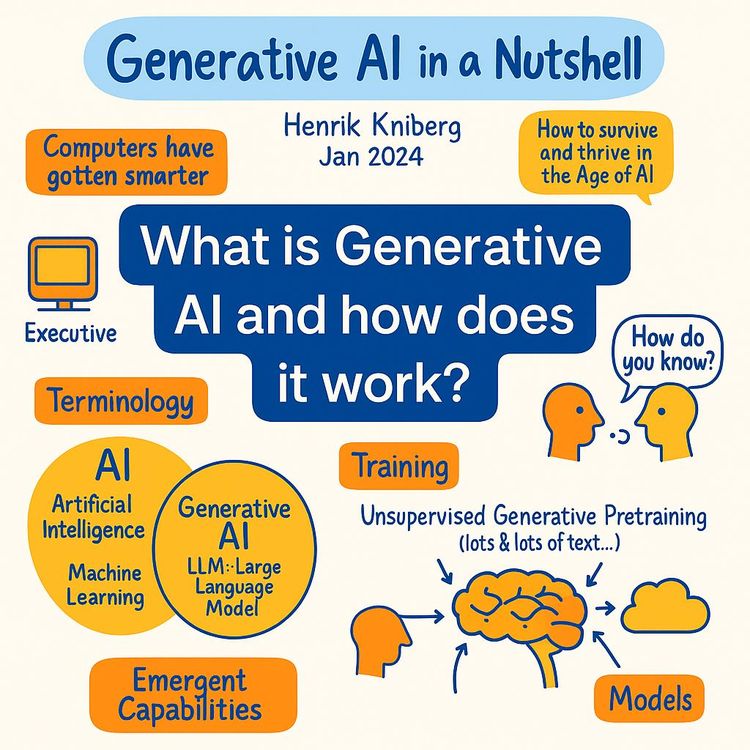
Video Course: What is Generative AI and how does it work?

Video Course: How to Use ChatGPT from Beginner to Professional
Video Course: How to Use Google Gemini for Google Workspace to Boost Productivity

Video Course: How to Use Claude 3.7 AI - Tips for Beginners!
Video Course: ChatGPT for Data Analytics: Full Course - from Beginners to Professional

Video Course: Generating Images and photos With ChatGPT?

Video Course: Generating Images & Photo's with MidJourney
Video Course: Generating Design's with Microsoft Designer and AI
Video Course: Generating Design's with Canva.com and AI
Join 20,000+ Professionals, Using AI to transform their Careers
Join professionals who didn’t just adapt, they thrived. You can too, with AI training designed for your job.