Build Your First AI Agent: A Simple Guide (Video Course)
AI is shifting from giving advice to doing the work. This guide shows you how to build your first agent from scratch,no coding required. You'll get a simple framework and a repeatable system to delegate routine tasks. These are skills you already have.
Related Certification: Certification in Building and Deploying AI Agents

Also includes Access to All:
What You Will Learn
- Write a clear, measurable Definition of Done and use reverse prompting
- Create three identity files (soul, identity, user) and explicit guardrails
- Equip agents with context, playbooks, connectors, and subprocess prompts
- Design specialized subagents, a manager/orchestrator, and match model tiers
- Deploy with staged trust: approval stages, scheduled runs, and ROI tracking
Study Guide
# You're Not Behind (Yet): How to Build Your First AI Agent (Full Guide) ## Introduction: Why This Matters Right Now Let me ask you something. When was the last time you felt that twinge of panic reading about some new AI capability? That feeling that everyone else seems to have figured this out and you're somehow already obsolete? Here's the truth: most people are in exactly the same boat. The technology is moving so fast that nobody has it fully figured out. What separates the people who will thrive from those who won't isn't technical brilliance. It's understanding one fundamental shift that's happening right now. We're moving from AI that talks to AI that does. You've probably used ChatGPT or Claude or Gemini. You ask a question, get an answer, maybe draft an email. That's conversational AI. It's useful, sure. But it's like having a brilliant consultant who gives you advice but never actually does the work. AI agents are different. They're not consultants. They're employees. An agent doesn't just tell you what to do. It diagnoses problems, builds plans, takes action, checks its own work, and improves over time. It runs entire workflows without you hovering over every step. It's the difference between asking someone for directions and handing them the car keys. This guide is going to walk you through building your first AI agent from absolute scratch. No coding required. No technical degree needed. Just clear thinking and a willingness to delegate. The framework we'll use is simple to remember: AGENT. Aim for a specific outcome. Give it an identity. Equip it with context and tools. Narrow its scope. Trust it gradually. By the end of this, you won't just understand what agents are. You'll have a practical, repeatable system for building them. And you'll realize that the skills required,defining outcomes, designing identities, managing context, building trust,are fundamentally human skills you already possess. Let's start. --- ## Section 1: Chatbots vs. Agents,The Foundational Distinction ### What a Chatbot Actually Does Imagine you're in a meeting with a really smart consultant. You ask a question. They give you a thoughtful answer. Then you have to decide what to do with that answer. Want more detail? You ask another question. The consultant never leaves the room. They never go implement anything. They never follow up to see if their advice worked. That's a chatbot. You prompt it. It responds. The interaction ends. You take whatever action is needed. Every single time. Chatbots are great for certain things. Need a draft of an email? Need to understand a complex concept? Need to brainstorm ideas? A chatbot can help with all of that. It buys back time in small increments. Maybe fifteen minutes here, half an hour there. But here's the limitation: the workload still sits on you. The chatbot is a tool you use. It doesn't own the task. ### What an AI Agent Actually Does Now imagine hiring an employee. You sit down with them on day one and say, "Here's what I need accomplished. Here's what success looks like. Here are the resources available. Here are your boundaries. Go figure out the rest." The employee doesn't ask you for permission at every step. They analyze the situation, make decisions, execute, and come back to you with results. If something goes wrong, they adjust. If they're uncertain, they ask. But they own the outcome. That's an agent. An agent is a system that executes a full workflow on your behalf. It makes decisions. It takes action in the real world,sending emails, updating databases, generating reports. And critically, it evaluates its own performance and gets better over time. Think about the time difference. A chatbot saves you a few minutes per task. An agent allows you to delegate entire areas of your work. That's not a small difference. That's a fundamental change in how you operate. ### The Agentic Loop: Diagnose, Assemble, Take Action, Assess Here's what makes an agent genuinely agentic rather than just another automation. It's a continuous loop of four activities. Diagnose. The agent looks at the situation and figures out what needs to happen. It doesn't just wait for instructions. It identifies problems and opportunities on its own. Like an independent consultant walking into your office and saying, "Here's what I see, and here's what I think we should do about it." Assemble. Once it understands the problem, the agent builds a plan. It gathers the tools, resources, and information needed. It designs the approach. Think of this as the architect phase, where the blueprint gets drawn. Take action. This is where things get real. The agent executes. It sends the emails. It updates the spreadsheet. It generates the report. It makes the phone calls through whatever integrations exist. It's the worker who gets things done. Assess. After taking action, the agent evaluates its own output. Did this achieve the goal? Could it be better? What should change next time? This self-review loop is what separates agents from simple automation. Here's the key insight: without this loop, you just have automation. A script that does the same thing every time without learning. With the loop, the agent behaves like a person. It gets better. It catches its own mistakes. It adapts to new situations. Let me give you a concrete example. Imagine an inbox management agent. It diagnoses that you have forty unread emails, three of which are urgent. It assembles a plan: sort everything, draft replies to the routine ones, flag the urgent ones for your attention. It takes action by actually sorting and drafting. Then it assesses: "I drafted five replies. Two of them might be too formal for the sender. Let me adjust my tone guidelines for next time." That feedback loop compounds. Every cycle makes the agent slightly better at representing you. ### The Rule of R: What Should You Automate? Not everything should be turned into an agent. If you try to automate everything, you'll waste enormous time building systems that don't pay for themselves. You need a filter. That filter is the Rule of R. Three questions to ask about any task. Repetitive. Do you do this task on a regular basis? Daily? Weekly? Monthly? If it's a one-time thing, an agent is probably overkill. You'd spend more time building it than you'd ever save. Rules-based. Does this task follow a consistent pattern? Same type of input producing the same type of output? If every instance of the task is completely different and requires novel creative thinking, an agent will struggle. If there's a clear process, even a complex one, an agent can learn it. Return on time. This is the pragmatic question. How much time will you save versus how much time will you invest? If the task takes two minutes and happens once a week, it's probably not worth a two-week automation project. But if the task takes an hour every single day, even a significant build effort pays off quickly. Let me give you two examples to make this concrete. Good candidate: Weekly invoice processing. You receive the same type of invoice from the same vendors every week. You have a standard process for verifying amounts, categorizing expenses, and filing them. This takes you about two hours each week. Building an agent to handle it might take a weekend. After a month, you've saved eight hours. After six months, you've saved fifty. That's a strong return. Bad candidate: Designing a new marketing campaign for a product launch. This is creative, novel, and different every time. There's no consistent input-output pattern. An agent might help you brainstorm or draft copy, but trying to automate the whole thing would be a disaster. Here's a useful heuristic: if you can explain the task to another person clearly enough that they could do it without asking many questions, an AI agent can probably do it too. --- ## Section 2: The AGENT Framework,Your Complete Building System ### Why You Need a Framework Building an agent without a framework is like building a house without blueprints. You might get something standing, but it'll probably be crooked, unstable, and require constant patching. The AGENT framework keeps you honest. It forces you to think through each critical element before you start building. It prevents the most common failure modes: vague goals, unclear roles, cluttered context, overbroad agents, and premature delegation. Here's the whole framework at a glance. Five steps, each building on the last. Aim for a specific outcome. What exactly should the agent accomplish? This is the vision, the destination, the definition of success. Give it an identity. Who is this agent? What's its personality? What are its values and boundaries? An agent with a clear identity performs dramatically better than one without. Equip it with context and tools. What information does it need? What systems does it need access to? How does it learn your preferences and processes? Narrow the scope. What's the one job it should focus on? Resist the urge to build a mega-agent that does everything. Specialization wins. Trust it gradually. How do you safely delegate autonomy? Trust is built in stages, not given all at once. Let's go through each step in depth. --- ## Section 3: Step One,Aim for a Specific Outcome ### Start With the Destination, Not the Route Most people approach AI agents backwards. They think about the steps first. "I want it to check my email, then sort messages, then draft replies, then..." That's process thinking. And it's a trap. When you hire an employee, you don't micromanage their every move. You describe the outcome you want. "I need our customer response time under two hours." "I need our monthly reporting done by the third." Then you let them figure out how to get there. Agents work the same way. They need the destination clearly defined. Then they can navigate the route themselves,often better than you would have instructed them. Here's the deeper reason: when you explain the why behind a goal, the agent can make smart decisions when it encounters unexpected situations. If you just say "manage my inbox," the agent doesn't know what you actually value. Speed? Tone? Completeness? But if you say "I need to spend less time managing my email inbox," the agent understands the real objective is reclaiming your time. When it faces a choice between a perfect response and a quick one, it knows which to prioritize. ### The Definition of Done This is the most important tool in your agent-building toolkit. The Definition of Done,call it the DOD,is a single, specific, measurable statement of what success looks like. A weak DOD is vague. "Handle my emails properly." What does properly mean? The agent can't hit a target it can't see. A strong DOD is specific and measurable. Something like: "Done means every morning at 9:00 a.m., the inbox is empty, replies are drafted in my voice, and anything that needs me is flagged to the top and nothing important slips." Let me give you another example. Say you want an agent to handle customer support tickets. A weak DOD: "Respond to customer inquiries." A strong DOD: "Every customer inquiry receives an initial response within one hour during business hours. Routine questions are fully resolved without human intervention. Complex issues are escalated to a human with all relevant context attached." You can see the difference immediately. The strong DOD tells the agent exactly what to aim for. It can check its own work against that standard. Here's a useful rule: if you can't state the outcome in one sentence, you're not ready to build. The agent's ability to plan is only as good as the clarity of the destination. ### The Power of Reverse Prompting Here's a technique that will save you enormous time and frustration. Instead of trying to plan out every detail yourself, use reverse prompting. Tell the agent what you want to achieve, then instruct it to ask you the questions it needs to build a complete plan. Your prompt might look like this: "I want to build an AI agent that runs my inbox. My goal is to spend less time managing email. Ask me any questions you need, then build a plan." The AI will ask about your priorities, your communication style, your volume of email, what you want escalated, and so on. Then it will produce a much stronger starting point than you could have drafted alone. Why does this work? Because the AI knows what information it needs. It's asking you for exactly the missing pieces. You're not guessing what matters. You're letting the system pull the relevant details from you. I've seen people use this technique to go from a vague idea to a detailed agent specification in a single conversation. It's like having a consultant who knows exactly what questions to ask to scope a project properly. The key mindset shift: stop trying to control the process. Define the outcome, provide the constraints, and let the system figure out the path. --- ## Section 4: Step Two,Give It an Identity ### Why Identity Matters More Than You Think Here's something that surprises most people. A raw AI model, out of the box, knows a little about everything but nothing specifically well. It's like a brilliant generalist who's never specialized in anything. When you give an agent an identity, you focus all that general intelligence into a specific expertise. The tighter the identity, the better the agent performs. This isn't theoretical. There's a famous experiment with an airline customer support agent. The agent had rule books and a defined identity. Its success rate was 33%. Researchers removed the identity and rule books,keeping the same model and the same task,and the success rate dropped to 11%. Think about that. The agent was three times less effective simply because it forgot who it was. Same underlying intelligence. Same task. But without identity, it floundered. Identity provides focus. It tells the agent what to prioritize, how to behave, and when to ask for help. It's the difference between a general-purpose employee and a specialist who knows exactly how to handle their domain. ### The Three Identity Files The practical way to create an identity is to build three plain-English files. You don't need any technical format. Just clear descriptions. The Soul File defines how the agent behaves. This is its personality, tone, values, and quirks. For an inbox agent, it might say things like: writes in my voice, concise and direct, zero corporate fluff, calm and reassuring, never pushy or salesy, avoids phrases like "I hope this email finds you well," and when unsure, flags items instead of guessing. The soul file is what makes the agent feel like an extension of you rather than a generic AI. It's the difference between a reply that sounds like it came from a robot and one that sounds like it came from a colleague. The Identity File defines who the agent is. This includes its name, role, and boundaries. For example: Name: Amelia Emailia. Role: Personal Inbox Manager. Job: Read, sort, and draft replies to every new email. Parameters: Inbox only. Never touch the calendar. Never touch money or anything outside email. Those boundaries matter enormously. Without them, agents drift into territory you didn't want them in. The identity file keeps them in their lane. The User File provides context about who the agent works for. This is information about you,your goals, preferences, priorities, and background. For a founder, it might say: receives about one hundred emails per day, prioritizes team members, current clients, and VIP list, runs multiple companies, prefers direct communication over pleasantries. Why does this matter? Because the agent needs to tailor its behavior to its principal. An agent working for a busy founder should behave differently than one working for a meticulous lawyer. The user file gives the agent that context. ### Let the AI Write Its Own Files Here's a counterintuitive tip: don't write these files manually. Use reverse prompting to have the AI generate them. Your prompt might be: "I want to build an AI agent that runs my inbox. Create its three identity files: a soul file, an identity file, and a user file. Ask me any questions you need to fill these in accurately, then write all three." The AI will interview you. It'll ask about your communication style, your priorities, your boundaries. Then it'll produce a complete set of files that you can refine. In practice, this gets you about ninety-nine percent of the way there. You just review and tweak. Trying to write everything from scratch yourself is slower and usually produces worse results, because you'll forget important details that the AI knows to ask about. Let me give you a concrete example of how this plays out. Say you're building an email agent. The AI asks: "What's your typical email volume?" "How do you want to handle newsletters and promotions?" "Are there senders you always want to see personally?" "What tone should replies use?" Each answer feeds into the identity files, building a complete picture of who this agent is and who it serves. --- ## Section 5: Step Three,Equip It with Context and Tools ### Context Is the Moat Here's a phrase worth remembering: context is the moat. The quality of your agent's output is directly determined by the quality of the context you provide. An agent without good context is like a brilliant new employee who's been given no training, no background information, and no access to the systems they need. They might be smart, but they can't do the job. Garbage in, garbage out. Cluttered context produces confused behavior. Clean, organized context produces sharp, reliable performance. ### The Desk Model of the Context Window Imagine your agent as a genius sitting at a desk. The desk is the context window,the working memory the AI can actively use at any moment. On the desk, you place the things the agent needs to do its job. Playbooks: documented processes and procedures explaining how to do the work. Identity files: the agent's constitution, defining who it is and who it serves. Tools: connectors, logins, APIs, and software access. Loops: schedules and recurring tasks that tell the agent when to act. Under the desk, there are filing cabinets. That's memory and external storage. Information that doesn't need to be active right now but can be retrieved when needed. The problem is context rot. When the desk gets cluttered with too many irrelevant files, the agent becomes slower, less precise, and less confident. It can't find the right information quickly. It gets confused about priorities. You need to keep the desk clean. Only put what's necessary for the current work. Archive everything else. Let me give you an example. An inbox agent doesn't need your entire company's HR policies on its desk. It needs the style guide, the priority list, and the escalation rules. Everything else should be in the filing cabinet, retrievable on demand. ### How to Capture Processes Your agent needs to know how to do the work. This means you need documented processes. There are two main ways to create these. The Camcorder Method is straightforward. Record yourself performing the task while narrating what you're doing and why. "I'm checking the sender first. If it's from accounting, I open it immediately. Otherwise, I sort by subject line..." Then feed that recording to an AI and have it convert your narration into a structured playbook. This works well for tasks you already perform manually. You're essentially transferring your expertise to the agent through demonstration. The Reverse Engineering from Source method is often even better. Instead of recording yourself, connect the agent to the system where you already do the work and let it study your history. For an inbox agent, you might connect to your email and prompt the AI to: "Read fifty messages I've sent. Study how I write, my tone, greetings, sign-offs, sentence length, and phrases. Then write a style guide capturing my voice. Draft replies to unread emails in that voice and allow me to correct them." This is powerful because it doesn't rely on your self-perception. You might think you write one way, but your actual behavior might be different. The agent learns from your real patterns, creating an authentic representation. ### System Prompts for Subprocesses Once the agent has general knowledge, break its work into discrete subprocesses and create a system prompt for each. For an inbox agent, these might include: Sort, Reply, Forward, Escalate, Daily Report. Each system prompt contains clear templates, step-by-step instructions, and examples specific to that function. The Sort prompt might say: "Check sender against priority list. Flag anything from the VIP list for immediate human review. File newsletters in the Reading folder. Route invoice-related emails to the Finance folder." The Reply prompt might say: "Use the style guide. Keep responses under one hundred words unless more detail is genuinely needed. Acknowledge the sender's specific question or concern. Never commit to timelines without checking the calendar." Each system prompt is a reusable instruction set for a specific subprocess. Together, they turn the agent from an informed generalist into an equipped specialist. --- ## Section 6: Step Four,Narrow the Scope ### The Mega-Agent Trap Here's the most common mistake I see people make. They build one massive agent that tries to handle everything. "I want an agent that manages my email, schedules my meetings, does my research, writes my reports, and handles my social media." This always fails. Why? Because each of those tasks requires different context, different tools, and different expertise. When you cram them all into one agent, the context window gets overwhelmed. The agent becomes a jack of all trades and master of none. Think about how you'd staff a company. You don't hire one person to be the receptionist, the accountant, the marketer, and the operations manager. You hire specialists. Each one has a narrow scope and does their job exceptionally well. Agents work the same way. One agent, one lane. ### Specialized Subagents Instead of building a mega-agent, build multiple specialized agents. Each one handles a single domain. For example: one agent writes code. A separate agent reviews code. Another agent manages email. Another handles research. Each agent has its own identity files, its own context, its own tools. This approach has several advantages. Each agent's context window stays clean and focused. Each agent can be optimized for its specific task. And you can scale up by adding more subagents as needed, without disrupting existing systems. Let me give you a concrete example. A founder might have four agents: an email agent that manages the inbox, a research agent that gathers competitive intelligence, a content agent that drafts blog posts, and a social agent that schedules posts. Each one is narrow. Each one is excellent at its job. ### Manager Agents and Orchestration Once you have multiple subagents, you need coordination. That's where manager agents come in. A manager agent doesn't do the work itself. It coordinates. It assigns tasks to the appropriate subagents, monitors their progress, fixes issues when they arise, and reports back to you. Here's a useful manager prompt: "You are my manager agent. You never do any task yourself. When work comes in, you only move it to the dedicated subagents. Hand them the task, let them run, then coordinate and report back to me." In practice, this creates a hierarchy. You interact with one agent,the manager. The manager interacts with all the specialized subagents. This keeps your interaction surface simple while allowing for complex multi-agent workflows. I've seen this work beautifully in practice. An orchestration agent named Kai creates other agents as needed, coordinates research agents, relationship agents, coding agents, and reporting agents, then synthesizes the results for the human user. The human interacts with one interface while a whole team of agents works behind the scenes. ### Choosing the Right Model for the Job Different tasks require different levels of model capability. And different models have different costs. Using the most expensive model for every task is like using a race car to drive to the grocery store. Here's a practical way to think about model tiers. Compact models are best for simple, high-volume tasks. Sorting, labeling, quick drafts. They're the cheapest option and perfectly adequate for routine work. Mid-tier models handle day-to-day work well. Research, writing, most code. They're the workhorses that run defined workflows reliably. High-capability models excel at complex reasoning, complex builds, and managing other agents. When you're constructing a new agent or solving a novel problem, this tier is worth the cost. Orchestrator-class models are for long-running, complex, ambiguous tasks. They handle the most challenging coordination problems and are the most expensive. The cost differences are dramatic. One user estimated a code refactor would cost about one hundred fifty dollars using a high-power model. The same task cost one dollar fifty using a compact model. That's a hundredfold difference. The practical implication: match the model to the task. For a recurring inbox agent that runs every fifteen minutes, you don't need the most powerful model available. The workflow is already defined. A mid-tier model handles it perfectly at a fraction of the cost. Use the high-end models during the build phase, when you're designing the agent and working through complex problems. Once the agent is running smoothly, you can often downgrade the model and save substantially. --- ## Section 7: Step Five,Trust It in Stages ### The Hard Part Isn't Building Here's the truth that nobody tells you: building the agent is the easy part. The hard part is letting it act without constant supervision. When you're building, you're in control. You're testing, tweaking, refining. But eventually, you have to let go. You have to let the agent send emails that represent you. Let it make decisions that affect your work. That's scary. The goal of delegation is to free your time, not to create a new job of babysitting. If you're reviewing every single action, you haven't actually delegated anything. You've just added an extra step. But you also can't go from zero to full autonomy overnight. That's reckless. You need a graduated approach. ### The Four Stages of Delegation Stage one: Set guardrails first. Before the agent does anything, define what it's allowed to do. This goes in the identity files. Can it spend money? Can it make decisions without approval? Can it send messages? Or can it only draft, suggest, and escalate? The agent should know its limits before it takes its first action. For an email agent, guardrails might include: drafts only, no sending without approval, never touches the calendar, never accesses financial accounts. Stage two: Approve everything at first. Never launch an agent into full autonomy on day one. Instead, ask it to show what it would do. Review the results. Provide feedback. Let it try again. This is like hiring a driver and sitting in the passenger seat with your hand near the wheel. You're not letting them drive freely yet. You're watching, correcting, and building confidence. For an inbox agent, this might mean it drafts replies and shows them to you. You approve or edit each one. After a week of this, you start to see patterns. The agent learns from your corrections. Stage three: Loosen the leash gradually. As the agent demonstrates competence, give it more responsibility. Not all at once, but step by step. For an inbox agent, the progression might look like this: Stage one, sort emails only. Stage two, draft replies for review. Stage three, send certain types of emails, like forwarding routine messages to finance or team members. Stage four, manage the entire inbox without you opening it. Each step builds on the previous one. You're testing the waters before diving in. Stage four: Give it a heartbeat. A heartbeat is a schedule that lets the agent run on its own. Instead of waiting for you to initiate, the agent runs every fifteen minutes or every morning at nine a.m. This is where the real time savings happen. The agent isn't just a tool you use when you think about it. It's a system that operates continuously, handling work as it arrives. ### A Real-World Example Let me tell you about an executive assistant who initially feared losing her job when an inbox agent was introduced. She was worried that the AI would replace her entirely. In practice, the opposite happened. The agent took over the routine work: sorting emails, drafting replies, daily triage. This freed her to manage higher-level projects, coordinate complex schedules, and do the judgment-based work that requires human insight. The same system was then rolled out to the whole team. Everyone benefited from having the routine burden removed. This is the pattern that actually plays out in organizations. Agents don't replace people. They remove the routine burden so people can focus on higher-value work. The assistant didn't lose her job. She got promoted, in effect, to a more strategic role. The lesson: when you delegate to agents, you're not eliminating human work. You're elevating it. --- ## Section 8: Worked Example,Building an Inbox Management Agent ### Putting It All Together Let me walk you through a complete example so you can see how all the pieces fit together. We'll build an inbox management agent using the full AGENT framework. Step one: Aim. The outcome statement is simple: "I need to spend less time managing my email inbox." The Definition of Done is specific: "Every morning at 9:00 a.m., the inbox is empty, replies are drafted in my voice, anything that needs me is flagged to the top, and nothing important slips." Step two: Give it an identity. Use reverse prompting to generate the three identity files. The soul file captures your voice and personality: concise, direct, personal, calm, never salesy, flags uncertainty rather than guessing. The identity file names the agent and defines its boundaries: Amelia Emailia, Personal Inbox Manager, inbox only, never touches calendar or money. The user file provides context about you: founder with one hundred emails per day, priorities include team and current clients, runs multiple companies. Step three: Equip it. Connect the agent to your email using a connector. Have it read fifty sent messages and create a style guide. Draft test replies to unread emails for your review. Create system prompts for sorting, replying, forwarding, escalating, and reporting. Step four: Narrow the scope. Use separate subagents for sorting, drafting, and escalation. Create a manager agent to coordinate them and report back to you. Step five: Trust it. Start with sorting only. Approve drafts manually. Allow forwarding to finance and team. Then schedule the agent to run every fifteen minutes. ### The Result After this process, you have a system that handles your email continuously. It sorts, drafts, escalates, and reports. It operates on a schedule without you initiating anything. It represents your voice accurately because it learned from your actual writing. And critically, you've built it in stages. You didn't hand over full control on day one. You tested, reviewed, and gradually expanded its authority as it demonstrated competence. This same framework applies to almost any workflow. Customer support triage. Report generation. Meeting scheduling. Lead qualification. The steps are identical. Define the outcome. Give it an identity. Equip it with context and tools. Narrow the scope. Trust it gradually. --- ## Section 9: Action Items,Your Next Steps ### Start Now, Start Small The biggest mistake you can make is waiting until you feel ready. You'll never feel ready. The technology is moving too fast for anyone to feel fully prepared. Instead, start now with a small, high-value agent. Pick one workflow that's repetitive, rules-based, and offers a clear return on time. Apply the full AGENT framework. Here are concrete actions to take. Audit your workflow for agent opportunities. Write down the tasks you do repeatedly. For each one, ask the Rule of R questions. Which tasks are repetitive? Which are rules-based? Which would offer the best return on time? Start with one high-value agent. Don't try to automate everything at once. Choose a single well-defined process,inbox triage, meeting scheduling, report generation,and build it properly. Write the outcome first, not the steps. Use the Definition of Done template. Practice reverse prompting by asking the AI to identify its own clarifying questions before execution. Create the three identity files. Use AI to generate initial drafts, then refine them. Ensure the files include explicit boundaries and guardrails. Capture institutional knowledge. Use the camcorder method or reverse-engineering from existing data to document processes that can be handed to agents. Deploy with graduated trust. Begin in approval mode. Review outputs rigorously. Then progressively increase autonomy and add a recurring schedule. Structure agents hierarchically. Don't build mega-agents. Create specialized subagents for discrete functions and implement a manager agent to coordinate them. Select models based on task complexity. Match model tiers to job requirements to control costs while maintaining quality. Train your team. Treat agent-building as a core competency, not a specialist skill. Provide workshops and document best practices for outcome definition, identity creation, and trust escalation. Track measurable outcomes. Before deployment, establish baseline metrics for time saved, error rates, and task completion. Measure the impact of agent adoption on productivity and staff satisfaction. ### The Mindset Shift Here's what I want you to internalize. You're not behind. You're not late to the game. Most people are exactly where you are,trying to figure this out in real time. The people who will succeed aren't the ones who mastered every AI tool. They're the ones who learned to direct intelligent systems effectively. They can define outcomes clearly. They can design identities and boundaries. They can manage context and tools. They can build trust in stages. These are fundamentally human skills. You already know how to hire employees, set expectations, and delegate work. You're applying those same skills to a new kind of worker. The time to start is now. Not because you're behind, but because every day you wait is a day of routine work that could be handled for you. Every day you wait is a day of higher-value work not getting done because you're buried in the mundane. Build your first agent this week. Start small. Follow the framework. And watch what happens when you hand the car keys to a driver you've trained well. --- ## Conclusion: The Future Is Delegation Let me leave you with the big picture. We're witnessing a fundamental shift in how work gets done. We're moving from conversational AI that gives advice to autonomous agents that take action. From tools we use to employees we manage. From buying back minutes to delegating entire areas of work. The framework you now have,Aim, Give identity, Equip, Narrow scope, Trust,is your complete system for building agents. It demystifies the process and makes it accessible to anyone who can think clearly about outcomes and boundaries. The essential message is one of empowerment. Building an AI agent is far easier than it appears. The skills required,outcome definition, identity design, context management, and staged trust,are skills you already possess from managing people and projects. The organizations and individuals who succeed won't be the ones with the deepest technical expertise. They'll be the ones who learn to define outcomes, create identity frameworks, and manage fleets of specialized agents. They'll treat agent-building as a core competency, not a specialist skill. And here's the comforting truth: you don't need to master everything at once. Start with one small agent. Learn the loop. Build your confidence. Then expand. The acceptance that you'll always feel somewhat behind in AI is actually a healthy mindset. The goal isn't mastery of every tool. The goal is proficiency in directing them. And you've just taken a massive step toward that proficiency. The time to start building is now. Not as a race, but as a deliberate, strategic evolution. By applying these principles, you can transform uncertainty into opportunity and build a future where humans and AI work together effectively and meaningfully. Your first agent is waiting to be created. Go build it.Frequently Asked Questions
What is the difference between an AI chatbot and an AI agent?
An AI chatbot responds to queries in a back-and-forth conversation. You ask a question, and it provides an answer. Think of it like a meeting,you engage, get what you need, and leave. A chatbot can't take independent action or complete multi-step processes without guidance.
An AI agent, by contrast, works like an employee. You define an outcome, and the agent figures out how to achieve it. It can diagnose problems, assemble plans, take action, and assess its own work in a continuous improvement loop. Rather than simply responding to prompts, it pushes work forward autonomously, checking in only when needed.
Example: A chatbot might tell you how to sort your emails. An agent will sort them for you, draft responses in your voice, flag what matters, and learn from your corrections.
What does the "DATA" framework for understanding AI agents mean?
DATA is an acronym describing the four core capabilities every effective AI agent needs:
D - Diagnose: The agent identifies problems and figures out solutions on your behalf, much like a consultant.
A - Assemble: It builds a plan and designs tools or processes, working like an architect who knows all the pieces needed to complete a project.
T - Take Action: The agent executes tasks directly, like an operations specialist.
A - Assess: It reviews its own work, finds gaps or errors, and improves its performance,essentially, it checks its own homework.
These four abilities form a "loop." Without the loop, an AI that completes one task and stops is simply an automation. The assessment capability is what makes it an agent,it learns and improves continuously.
How do I know if a task is suitable for an AI agent? (The Rule of R)
The "Rule of R" is a simple evaluation framework with three criteria. If a task meets all three, it's a strong candidate for an AI agent:
1. Repetitive: You perform the task on a weekly (or more frequent) basis.
2. Rules-based: The task takes the same input and generates the same output every time,it follows a clear process.
3. Return on time: Automating the task will actually save you more time than it costs to build and maintain the agent.
Important: If a task takes only two minutes but would take you two weeks to automate, just handle it manually! The rule of R applies only when the ongoing time savings clearly outweigh the setup investment.
What is the first step in building an AI agent?
The first step,nicknamed "A" in the AGENT framework,is to aim for a specific outcome. Before you write a single prompt or connect any tools, clearly define what success looks like. This means:
- Stating the why before the how so the agent can make smart decisions on its own.
- Writing a Definition of Done (DoD),a specific, measurable, one-sentence statement of what completion looks like.
Example: For an email management agent, a weak outcome is "Handle my emails." A clear outcome is: "Every morning at 9:00 AM, my inbox is empty, replies are drafted in my voice, and anything needing my attention is flagged at the top,and nothing important slips through."
If you can't articulate the outcome in one sentence, you're not ready to build yet.
What is "reverse prompting" and how does it work?
Reverse prompting (also called "starting with the end") is a technique where you tell the AI the result you want, then ask it to ask you questions to gain full clarity. Instead of guessing what you need, the agent gathers precise context through targeted questions.
How to use it: After stating your desired outcome, add something like: "Ask me any questions you need to fill in the details accurately, then build my prompt."
This flips the dynamic,instead of you trying to anticipate every detail, the AI guides you through what it needs to succeed. This approach typically leads to significantly better agents because the AI identifies gaps in context or instructions you might not have considered.
Why does giving an AI agent an identity improve its performance?
Out of the box, AI knows a little about everything but nothing specifically well. Giving an agent an identity focuses its power into a specific area of expertise. The tighter the definition of who the agent is, the better it performs.
The impact is profound. In one documented case, customer support AI agents running on the same model dropped from a 33% success rate to just 11%,a threefold drop,simply because the agent's identity files were removed. Same model, same task, same request, but significantly worse results.
Think of it this way: an AI agent is like a genius sitting at a desk. Until you tell that genius what their job is, they'll sit there doing nothing. Once you provide a role, rules, and context, their potential becomes focused, powerful, and useful.
What are the three "identity files" every AI agent needs?
Every well-designed agent should have three separate identity files:
1. The Soul File (How it Behaves):
This defines personality, values, communication style, and quirks. For example: "Writes in my voice, concise and direct, zero corporate fluff, calm and reassuring, never pushy, flags when unsure instead of guessing."
2. The Identity File (Who it Is):
This is the agent's DNA,its name, role, and job description. Example: "Name: Amelia. Role: Personal Inbox Manager. Job: Read, sort, and draft replies to every new email. Lane: Inbox only,never touch my calendar or finances."
3. The User File (Who it Works For):
This provides context about you,your goals, preferences, and how you like things done. Example: "A founder receiving 100 emails a day; prioritizes messages from team, current clients, and VIP list; runs multiple companies including X, Y, and Z."
Pro tip: Don't write these files yourself. Prompt the AI to interview you with targeted questions, then generate all three files for you.
What is the "context window" and why does it matter?
Imagine a fully equipped desk. You (the AI) are sitting at the desk, with your tools arranged around you. That desk is your context window,everything available to you while you work.
- On the desk: Playbooks (procedures), identity files, and tools (connections to other systems).
- Above the desk: Your "loops",schedules and routines ensuring you know when things are due.
- Under the desk: Filing cabinets representing memory, where less frequently needed information is stored without cluttering your workspace.
A clean context window means everything important is easy to find and reference. Context rot occurs when the desk becomes cluttered with unnecessary files,the agent gets confused, loses clarity, and makes more mistakes. That's why "garbage context in equals garbage context out." Keeping context clear and focused is essential for high-quality outputs.
How do I capture my processes to give to an agent?
There are two primary methods:
Method 1: The Camcorder Method (Observation)
Record yourself performing the task while talking through your thinking. Share that video with AI and ask it to create a step-by-step playbook. This is ideal for processes you can demonstrate but haven't documented.
Method 2: Reverse Engineering from Source Data (Recommended)
Connect the AI to the actual system where the work happens and let it learn from historical data. For example, if building an inbox agent, connect to your email and say:
"Connect to my email, read 50 messages I've sent, and study how I write,my tone, greetings, sign-offs, sentence length, and most-used phrases. Then write a style guide that captures my voice and tone."
This creates a rich, accurate playbook that reflects your actual style. Ask the AI to draft a reply to your newest unread email based on what it learned, then give it feedback to refine the playbook.
What does "narrow the scope" mean and why is it important?
A narrow scope means each agent is focused on exactly one specialized job,not because the AI can't multitask, but because its performance degrades when it tries to do too much. This is the "N" in the AGENT framework.
Why it matters:
- Better accuracy: A specialist agent gets confused far less often than a generalist.
- Cleaner context: Each agent's context window stays focused and relevant.
- Easier maintenance: If one agent fails, you know exactly where to look.
Real-world example: Instead of one grand agent that writes code, reviews code, manages relationships, and does research, create separate agents for each task. They can work together and even report through a manager agent,but each stays in its lane.
What is a "manager agent" and when should I use one?
A manager agent is an orchestration layer that coordinates other specialized sub-agents without performing tasks itself. Its job is to:
- Receive or identify work
- Route tasks to the appropriate specialized sub-agent
- Monitor progress and troubleshoot if an agent gets stuck
- Compile and report results back to you
Example prompt: "You're my manager agent. You never do any task yourself. When work comes in, you route it to the dedicated sub-agents. Hand off the task, let it run, and then coordinate the results. You're the one who communicates with me."
Use a manager agent as soon as you have more than three or four sub-agents. It reduces your cognitive load and ensures nothing falls through the cracks.
How do I choose the right AI model for my agent?
Different tasks need different levels of AI capability,and different price points. You don't need a high-powered model for simple, repetitive work. This isn't one-size-fits-all, but the concept applies universally:
- Simple/High-Volume Tasks: Use a lighter, faster, cheaper model for things like sorting and labeling. These are ideal for repetitive work with defined parameters.
- Day-to-Day Tasks: Mid-tier models work well for research, writing, and coding.
- Complex Reasoning: Use a powerful model for building the agent itself, complex problem-solving, and managing other agents.
- Orchestration: Top-tier models work best for long-running tasks with little initial information or context.
Real-world cost example: One user needed a significant code refactor. Using a premium model would have cost $150. By using a lighter model for the task instead, the cost dropped to just $1.50,a 99% savings with identical outcomes.
Certification
About the Certification
Become certified in building AI agents without writing code. You'll prove you can design automated workflows, delegate routine tasks, and launch a working agent from scratch,practical skills you can apply right away.
Official Certification
Upon successful completion of the "Certification in Building and Deploying AI Agents", you will receive a verifiable digital certificate. This certificate demonstrates your expertise in the subject matter covered in this course.
Benefits of Certification
- Enhance your professional credibility and stand out in the job market.
- Validate your skills and knowledge in cutting-edge AI technologies.
- Unlock new career opportunities in the rapidly growing AI field.
- Share your achievement on your resume, LinkedIn, and other professional platforms.
How to complete your certification successfully?
To earn your certification, you’ll need to complete all video lessons, study the guide carefully, and review the FAQ. After that, you’ll be prepared to pass the certification requirements.
Other AI Video Courses
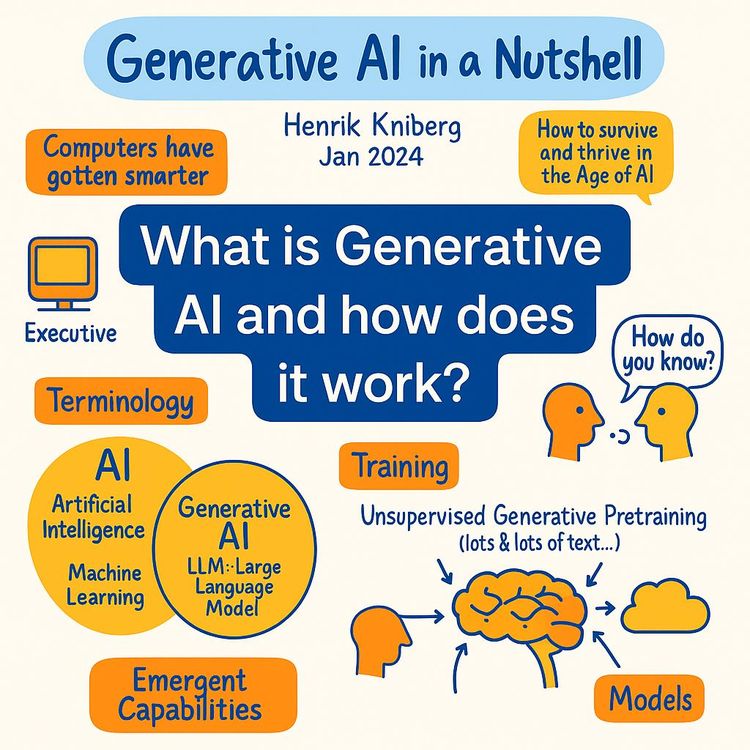
Video Course: What is Generative AI and how does it work?

Video Course: How to Use ChatGPT from Beginner to Professional
Video Course: How to Use Google Gemini for Google Workspace to Boost Productivity

Video Course: How to Use Claude 3.7 AI - Tips for Beginners!

Video Course: ChatGPT for Data Analytics: Full Course - from Beginners to Professional

Video Course: Generating Images and photos With ChatGPT?

Video Course: Generating Images & Photo's with MidJourney

Video Course: Generating Design's with Microsoft Designer and AI

Video Course: Generating Design's with Canva.com and AI
Join 20,000+ Professionals, Using AI to transform their Careers
Join professionals who didn’t just adapt, they thrived. You can too, with AI training designed for your job.