Claude Co-work AI Agent Course: Zero to Working AI Employee (Video Course)
Stop chatting with bots and start getting work shipped. This course shows you how to set up Claude Co-work as a real teammate,scaffold projects, automate routines, keep a tight daily loop,and consistently turn goals into files, code, and results.
Related Certification: Certification in Building Working AI Employees with Claude

Also includes Access to All:
What You Will Learn
- Install and configure Claude Co-work and create a secure home-base folder
- Define persistent context with claude.md and point the agent to the right files
- Build reusable skills and package plugins to automate repeatable tasks
- Run a daily operational loop ("Good morning" / "I'm done") to maintain momentum
- Design reliable pipelines using precise context, quality inputs, and human checkpoints
Study Guide
Claude Co-work Full Course: Zero To Working AI Employee
You don't need another chatbot. You need an assistant that actually does things. That's what Claude Co-work is: an AI agent that lives inside a secure folder on your computer and turns your goals into files, code, docs, and finished work. Instead of telling you what to do, it does the work with you. This course walks you from zero to a functioning AI coworker that runs projects, automates routines, and helps you ship real results. We'll start from the basics,installing, organizing, and giving Claude the right context,then move into building custom skills, chaining skills into systems, and running a daily operating rhythm that compounds progress.
By the end, you'll have a structure that makes your AI useful on command. You'll teach it your preferences, give it a defined workspace, and deploy it like a productive team member. No fluff. Just practical steps, mental models, and patterns that make the machine produce real work product you can use.
What You'll Learn and Why It Matters
Most people treat AI like a vending machine for advice. That caps your upside. Co-work flips that model. It turns a large language model into a problem-solving partner that writes code, organizes projects, and automates workflows inside a sandboxed folder you control. You'll learn how to build that sandbox, how to feed it the right inputs, and how to create reusable skills that multiply your time. You'll also learn the four levers that drive quality outputs every time: precision of context, quality of inputs, human checkpoints, and iteration.
Agent vs. Chatbot: The Shift You Need To Make
A chatbot answers questions. An agent executes. Claude Co-work is an agent that reads and writes files, runs structured workflows, and operates with persistent context inside a folder you point it to. The more you treat it like a coworker,clear goals, defined responsibilities, documented processes,the better it performs.
Example:
A chatbot tells you how to structure a newsletter. A Co-work agent creates the folder, drafts the newsletter in markdown, pulls in references from your research folder, and saves versions for review.
Example:
A chatbot gives you code snippets. A Co-work agent scaffolds a small app inside the project folder, writes the README, creates environment files, and logs bugs in a issues.md file for follow-up.
The Foundational Principle: AI as a Problem-Solving Partner
Here's the workflow that unlocks real leverage. You and Claude work in a loop: define a goal, list problems, reason from first principles, design tactics, execute, and iterate. Every step lives in files and folders so the agent can keep track and act with continuity.
1) Define a Goal
Make it specific and observable. "Grow my business" is fuzzy. "Book five new discovery calls per week for local clients" is clear.
Example:
"Launch a simple landing page that collects emails for my fitness guide and reach 100 signups."
Example:
"Publish three high-quality Instagram reels weekly that drive at least 30 profile visits each."
2) Identify Problems
Ask Claude to help you list obstacles. You'll get a map of what's in the way.
Example:
For the landing page: "I need copy, a basic design, a no-code tool, and a simple email capture."
Example:
For Instagram: "I need topics, filming workflow, editing templates, caption system, and posting schedule."
3) Analyze First Principles
Don't copy random tactics. Pull out the unchanging truths that drive outcomes and design from there.
Example:
Lead capture principle: people opt in when the benefit is immediate, specific, and low-friction. Tactic that follows: offer a 1-page quickstart with a direct promise and a two-field form.
Example:
Content principle: humans attend to faces and pattern breaks; algorithms reward completion and engagement. Tactic that follows: tight hooks in the first two seconds, face-forward framing, punchline within 15 seconds, call-to-save at the end.
4) Develop Tactics and Solutions
Translate principles into concrete steps and assets. Have Claude draft templates, checklists, and scripts inside your project folder.
Example:
Claude creates a /landing-page folder with copy.md, layout.md, integration-steps.md, and an assets subfolder.
Example:
Claude creates a /content-system folder with hooks.md, b-roll-guide.md, reel-template.capcut, and weekly-runbook.md.
5) Iterate and Execute
Run the play, review results, refine, repeat. Claude keeps a daily-log.md and status.md so momentum doesn't die between sessions.
Example:
After publishing the landing page, conversion is 1.8%. You ask Claude to A/B test headlines and reduce image weight; it ships two variants and logs results.
Example:
Reel watch time dips. Claude reviews retention curves from your notes, proposes tighter cuts, trims silence in the edit list, and updates the editing SOP.
Installing and Configuring Claude Co-work
Set it up once, then let it work. The sequence below prevents 90% of headaches.
Installation and Account
Download the desktop app and sign in. Verify your account and select a plan that unlocks Co-work's agent features. You'll use the same app for Chat, Code, and Co-work modes.
Interface Overview
Three modes live in one place: Chat for quick answers, Code for development tasks, Co-work for agent operations inside folders. The sidebar offers New Task, Customize (for skills and plugins), and Settings (account, privacy, billing, usage).
Example:
Use Chat to brainstorm positioning, switch to Co-work to create the actual positioning.md in your brand folder, and hop into Code to generate a small script that bulk renames assets.
Example:
Use Chat to outline a course, use Co-work to scaffold the course structure inside /projects/course-name, and use Code to lint Python snippets Claude wrote for your automation lesson.
Workspace Creation: Your "Home Base" Folder
Co-work only acts where you allow it. Point it to a specific folder,the sandbox. This is your security boundary and your context source. Organize it so the agent can find what it needs fast.
Recommend a Simple Structure
/home-base
/projects
/skills
/daily-logs
/resources
Example:
Point Claude to /home-base. It can read /projects when you're working, but it won't touch your Downloads or Desktop unless they're inside the sandbox.
Example:
Create /projects/instagram-growth. Claude reads overview.md, suggests subfolders (hooks, scripts, assets), and builds them. All activity is contained.
Automating Setup with a Starter Plugin
Skip manual scaffolding. Install a starter pack plugin to auto-create your folder structure and baseline skills.
How To
Customize → Personal Plugins → Add Plugin → upload .zip → enable. Then run /setup inside your chosen folder.
What It Does
Creates claude.md, projects, daily-logs, and a getting-started note. It may include skills for setup, logging, and project creation.
Example:
You upload starter-pack.zip. In Co-work, you type /setup. Claude asks your name, goals, and tone (formal, concise, casual), saves them to claude.md, and creates a daily-log template.
Example:
You later add a content-ops plugin that includes publish-to-notion.md and clip-and-transcribe.md skills. Claude now can run your content pipeline with a single request.
Daily Operational Loop: The Two Sentences That Run Your Week
You'll anchor continuity with two phrases: "Good morning" and "I'm done for the day." This builds a daily cadence and a clean memory trail.
Morning Kickoff
Say "Good morning." Claude scans daily-logs, recaps open tasks, and proposes a focused plan. It updates today's log with priorities and a timeboxed list.
Evening Wrap
Say "I'm done for the day" or "Let's wrap it up." Claude summarizes progress, records blockers, and writes tomorrow's kickoff notes.
Example:
Morning: "Good morning." Claude replies with a three-item plan, links to issues.md, and suggests a 30-minute review block. It creates 2024-06-04.md in daily-logs with checklist items. (Note: in your files, use your own date format.)
Example:
End of day: "I'm done for the day." Claude logs what shipped, what's pending, and drafts a crisp 3-sentence brief you can send to a client to report status.
Case Studies: Project Creation and Execution
Projects are where Co-work shines,clear goals, structured files, continuous iteration. Here are three concrete builds.
Social Media Growth for a Small Business
You: "I want to grow my social media." Claude asks: "Project name? What does 'done' look like? What problems must we solve?" You answer. It creates /projects/instagram-content with overview.md capturing goals, KPIs, and obstacles (shooting basics, editing flow, branding). It researches a tripod for your camera, drafts a content calendar, and sets up a reel-template.md that locks in hook, body, CTA, and caption format.
Example:
Claude generates 30 hooks in hooks.md and then creates scripts.md with three variations per hook tied to your offer.
Example:
Claude sets up a review.md file and a system: you drop raw footage into /assets/raw; it produces /assets/edits and a posting-notes.md with captions and hashtags.
Personal Diet and Fitness Tracking
You: "Create a new project called Diet Tracker." Claude collects motivations, preferences, constraints. It builds /projects/diet-tracker with overview.md, recipe-bank.md, grocery-list.md, and habit-tracking.md. It estimates caloric needs, proposes a 2-week rotating meal plan, and links each recipe to a grocery list.
Example:
Claude integrates a weekly check-in: at wrap-up, it asks for weight, energy, and mood; logs trends to progress.md; and adjusts macros.
Example:
Claude drafts a Sunday prep SOP (prep-sop.md) and a quick "substitutions" guide for eating out, kept in pocket-guide.md.
Client Reporting Automation (Bonus)
Goal: Reduce reporting time for client analytics. Claude creates /projects/client-reports with templates/report-template.md, a data-drop folder, and a transform-notes.md. You paste metrics, it formats charts (as markdown tables or image links), writes a narrative, and exports a polished report.md for each client.
Example:
Claude asks for your voice and style guidelines, stores them in claude.md, and enforces them across every report.
Example:
Claude builds a checklist: import data → sanity-check → trend analysis → executive summary → next actions. It enforces it on every run.
Core Concepts That Make Co-work Powerful
When you understand these pieces, you control output quality and speed.
Context Window
Think of it like a whiteboard for the current conversation. It holds a finite number of tokens (little chunks of text), so stuffing it with irrelevant info degrades performance. Give it exactly what it needs, nothing extra.
Example:
If you're writing a proposal, load the brief, client preferences, and examples of past proposals,not your entire research folder.
Example:
If you're fixing a bug, feed the error log, the affected file, and the function signatures,not the whole codebase at once.
Tokens
Tokens are the units the model reads. Long messages = more tokens = higher cost and potential confusion. Use summaries, references, and tight prompts to keep the context clean.
Example:
Replace a 30-page paste with a 1-page summary plus links to local files the agent can open as needed.
Example:
Swap a rambling request for a clear instruction with acceptance criteria and an example output.
Markdown Files (.md)
Fast to read, edit, and version. Use them for plans, notes, logs, and skills. Claude reads and writes markdown exceptionally well.
Example:
overview.md contains goals, KPIs, constraints, stakeholders, and "definition of done."
Example:
daily-log.md captures what happened, decisions made, and what's next,so tomorrow's "Good morning" is accurate.
YAML Front Matter
A tiny block at the top of a markdown file that labels purpose and metadata. It helps Claude understand intent fast without loading the whole file into active context.
Example:
At the top of report-template.md:
---
type: template
use: monthly_client_report
voice: friendly-professional
---
Example:
At the top of a skill file:
---
type: skill
name: summarize-meeting
inputs: transcript.md
outputs: summary.md, action-items.md
checkpoint: human_review_before_send
---
Folders
Folders are filing cabinets. Point Claude at the right cabinet for each project. Clean structure creates clarity and speed.
Example:
/projects/course-build with subfolders: outline, scripts, assets, marketing, and a status.md that tracks progress.
Example:
/resources/research holds PDFs and notes; Claude pulls summaries from there when relevant, rather than pasting everything into chat.
Skills
A skill is a markdown SOP that tells Claude how to do a repeatable task. You trigger it with a phrase or include it in a plugin. Good skills include inputs, steps, outputs, formatting rules, and checkpoints.
Example:
Skill: transcribe-and-timestamp.md → takes a video file, produces transcript.md and timestamps.md with clickable markers.
Example:
Skill: write-cold-email.md → inputs: offer.md, icp.md; outputs: 3 variants with subject lines, preview text, and personalization tokens.
Plugins
Bundles of related skills packaged for broader workflows. Install once, reuse everywhere.
Example:
"Setup & Ops" plugin: /setup onboarding, /daily-log, /new-project scaffolder.
Example:
"Content Ops" plugin: idea generation, script formatting, clip selection, caption crafting, and packaging for publish.
The Special claude.md
This "golden" file auto-loads whenever you open a new chat in that folder. It holds persistent instructions: who you are, how to talk to you, project intent, and non-negotiables. Keep it short and potent.
Example:
claude.md includes your name, summary of current goals, your voice guidelines, and a reminder to ask for a checkpoint before sending anything external.
Example:
Project-specific claude.md sets the definition of done, files that matter, and rules like "use British spelling," or "max 400 words for executive updates."
Security, Access, and API Keys
Co-work is powerful because it can act. Set boundaries to keep it safe and useful.
Sandboxing
Only point Co-work to folders you want it to touch. Keep sensitive files elsewhere unless necessary. Build trust gradually.
API Keys
If you connect external tools (like Google or design platforms), use API keys stored in local .env files. Treat keys like passwords. Grant minimum permissions.
Example:
Use a read-only sheet for analytics aggregation; store the key in /projects/client-reports/.env and reference it in integration-notes.md.
Example:
Keep personal finance docs in a separate folder not connected to Co-work; copy only needed summaries into the sandbox when required.
Principles of AI-Driven Problem Solving (Deep Dive)
Here's how to consistently get valuable work from an agent.
Define the Goal Clearly
Focus on concrete outcomes and constraints (timeline, budget, quality bar).
Example:
"Draft a 1-page partnership proposal that wins a call with GymCo. Keep it under 300 words, friendly-professional, with a specific offer and two case studies."
Example:
"Produce a 10-slide pitch deck: simple design, one message per slide, two data points max per slide, export as PDF."
Identify Problems Together
Ask Claude to list blockers and unknowns. Decide what to research, what to prototype, and what to skip.
Example:
For the deck: "We need brand colors, logo, relevant case studies, and current metrics." Claude asks you to drop those into /assets.
Example:
For the proposal: "We need GymCo's challenges and past vendors." Claude drafts a quick research brief and places it in research.md.
First Principles Over Tactics
Identify the physics behind the outcome, then engineer tactics from those truths.
Example:
Cold outreach principle: relevance drives reply rate; personalization must be specific, fast to read, and obviously useful. Tactic: 3-sentence emails with a sharp first line tied to their recent work.
Example:
Course creation principle: attention decays quickly; learning sticks with short loops of input → immediate action → feedback. Tactic: micro-lessons with built-in exercises and review checkpoints.
Develop an Execution Plan
Claude writes the SOPs, checklists, and file templates. You review the plan before execution.
Example:
Plan.md includes milestones, owners (you vs. Claude), and definitions of done for each artifact.
Example:
Review.md lists exactly what you'll check,accuracy, voice, compliance,before anything ships.
Iterate Fast
Run small loops: ship something tiny, review, adjust, repeat. Save lessons learned in notes.md.
Example:
Three subject lines tested for open rate; the winner informs next batch. Claude logs outcomes for future skills.
Example:
Two versions of a landing page copy; Claude keeps a/b-results.md with conversion data and recommended next tweaks.
Creating Your Own Skills (Your Compounding Asset)
Every time you teach Claude how to do something, save it as a skill. That's your real IP.
Design a Basic Skill
Pick a task, define the output, walk it manually with Claude, then save the final recipe.
Example:
Skill: summarize-meeting.md
Inputs: transcript.md
Outputs: summary.md (bullets, max 200 words), action-items.md (owner, due date), decisions.md
Example:
Skill: draft-proposal.md
Inputs: offer.md, client-notes.md, case-studies.md
Outputs: proposal.md (max 300 words, two proof points, CTA to book call)
Tips for Writing Strong Skills
- Start with YAML front matter that declares type: skill, inputs, outputs, and checkpoints.
- List steps clearly. Include formatting rules and "do not do" rules.
- Add a human review checkpoint before sending or publishing.
- Include 1-2 example outputs at the end to set the bar.
Example:
At the bottom of draft-proposal.md, include a model example of an ideal proposal so Claude has a gold standard.
Example:
In summarize-meeting.md, include a bad example and label what's wrong (too long, vague owners, missing dates) so Claude avoids it.
Advanced Systems: Combining Skills Into Pipelines
Chain multiple skills for complex workflows. Keep each step focused with precise context. Insert human checkpoints where needed.
Content Pipeline
Skills: ideate → script → edit-list → caption → thumbnail-brief → publish-notes → archive. Each step reads from previous outputs and writes new files.
Example:
Claude runs ideate.md to create 20 hooks, uses script.md to write three scripts, uses edit-list.md to cut to a 20-second flow, and drafts publish-notes.md for each platform.
Example:
Before publish, Claude triggers a checkpoint asking you to approve messaging accuracy and brand-safe language.
Client Onboarding System
Skills: intake-form → brief-builder → contract-drafter → kickoff-agenda → status-report. Claude reads client-intake.md and produces a personalized project brief and first-week plan.
Example:
Claude drafts a kickoff-agenda.md tailored to the client's goals and constraints, with timeboxes for each section.
Example:
Claude generates a weekly status-report.md with metrics, narrative, and next steps, pulling from daily logs.
The Four Keys to High-Quality Outputs
When things go sideways, it's almost always one of these.
1) Precise Context
Only load what's relevant to the task. Point to files instead of pasting entire libraries.
Example:
For a brand one-pager, load brand-values.md, voice.md, and one strong example,not the entire archive.
Example:
For debugging, load error.log, the target file, and dependency versions,not every file in /src.
2) Quality Inputs
Garbage in, garbage out. Provide clean examples, clear goals, and crisp constraints.
Example:
Share two top-tier proposals and highlight why they're great; Claude mirrors the patterns.
Example:
Provide a well-formatted dataset with labeled columns; Claude analyzes accurately and explains assumptions.
3) Human Checkpoints
Build review gates where taste and judgment matter.
Example:
Before client emails go out, you approve tone and claims. Claude waits for your "approved" note in review.md.
Example:
Before publishing a report, you skim the executive summary and top charts for sanity checks.
4) Frequent Iteration
Small loops beat big bets. Tighten the SOP with each run.
Example:
Update skill files when edge cases appear; add a "gotchas" section to avoid repeating mistakes.
Example:
After three runs, consolidate the best patterns into a single template and archive older versions.
Using Co-work's Interface With Intent
Make the app serve your workflow, not the other way around.
New Task
Start a fresh thread with a precise objective and a pointer to the right folder. Avoid dragging yesterday's context into a new problem.
Customize
Install personal plugins, add skills, and manage versions. Keep your skills library tidy.
Settings
Review usage, manage privacy, and control file access defaults.
Example:
Spin up New Task → "Create a client pitch deck from /projects/deck-build, using brand-guidelines.md and case-studies.md only."
Example:
In Customize, you disable a deprecated skill and enable a refined "report-writer-v2.md" across all projects.
Designing Your Home Base for Speed
A clean structure is a silent productivity multiplier.
Keep Names Predictable
Use consistent names: overview.md, status.md, daily-logs, skills. Claude can find and reuse reliably.
Centralize Reusables
One /skills folder for global skills; copy project-specific variants into the project folder.
Example:
Global skill "write-cold-email.md" lives in /skills; a project-specific variant "write-cold-email-for-agencies.md" lives under that project.
Example:
Global voice.md lives in /resources/brand; a project overrides it with voice-overrides.md for a specific audience.
Deep Context Mastery: Working With Tokens and Files
Claude is fast with local files. Use that to your advantage.
Reference, Don't Paste
Ask Claude to open local files instead of pasting walls of text. Save token space and reduce noise.
Summarize Long Inputs
Ask Claude to create a summary.md of a long doc, then use the summary for future tasks.
Example:
"Open /resources/research/whitepaper.pdf, create summary.md with key findings, then draft a 2-paragraph LinkedIn post."
Example:
"Scan /projects/app-build/src for occurrences of 'paymentIntent' and list the files and functions where it appears."
First Principles Thinking: Practicals
Turn fuzzy goals into engineered processes.
Social Content
Principle: attention is earned by clarity, novelty, and human elements. Tactic: face-forward openings, visible transformation, and a crisp promise in the first two seconds.
Example:
Claude rewrites your hooks to force a clear benefit in 12 words or less and logs A/B test results in hooks-tests.md.
Example:
Claude reorders a script to front-load the punchline, then trims filler words in the edit list.
Diet Systems
Principle: adherence beats optimization; friction is the enemy. Tactic: two-week rotating meal plan, batch grocery list, portable snacks.
Example:
Claude converts recipes into a standardized grocery-list.md grouped by store aisle.
Example:
Claude builds a substitutions.md so business lunches don't break your plan.
From Manual to Automated: Turning Workflows Into Skills
Do it once with Claude, refine, then say: "Make this a skill." Now it's a button press.
Meeting Pipeline
transcribe → summarize → action items → decision log → follow-up draft email.
Example:
Claude detects owners from names in the transcript and assigns due dates based on your default cadence in claude.md.
Example:
Claude generates a follow-up email using the summary and action items, then pauses for your review.
Research Pipeline
define questions → collect sources → extract key points → write synthesis → create cites.md.
Example:
Claude builds a sources.md with links, short notes, and credibility scores you define.
Example:
Claude produces a 1-page brief that answers each question with supporting quotes.
Human-in-the-Loop: Where You Add the Magic
Never outsource taste, trust, or final judgment. Claude excels at labor; you own direction.
Checkpoint Types
- Accuracy reviews for facts and numbers.
- Tone checks for brand and relationship dynamics.
- Risk checks for compliance or sensitive topics.
Example:
Before sending client emails, Claude inserts a [REVIEW REQUIRED] tag; you edit tone, remove internal notes, and approve.
Example:
Before publishing a public doc, Claude asks you to confirm claims and references; it won't ship until you confirm "approved."
Quote to Remember
"The goal isn't to automate everything. It's to automate what a human shouldn't ever have to do."
Applications and Playbooks by Domain
Use these as starting points and adapt to your world.
Business & Entrepreneurship
- Market research briefs, competitive analyses, offer sheets, client onboarding, reporting, and light prototyping.
Example:
Claude builds a competitor matrix with features, pricing, and positioning pulls, then drafts a short "wedge" strategy for your offer.
Example:
Claude automates monthly client reports from pasted metrics, creating narrative, charts, and next steps.
Education & Research
- Organize notes, summarize articles, transcribe interviews, and maintain literature maps.
Example:
Claude creates a literature-review.md with key claims, disagreements, and open questions.
Example:
Claude generates an interview-summary.md with quotes and themes, then drafts follow-up questions.
Software Development
- Boilerplate generation, file scaffolding, basic debugging, and doc writing.
Example:
Claude scaffolds a Next.js app with routes, a README, and environment notes.
Example:
Claude reads an error log, pinpoints a misconfigured environment variable, and drafts a fix in a patch.md.
Personal Productivity
- Task triage, routine planning, habit tracking, and life admin docs.
Example:
Claude turns a messy brain dump into a clean weekly plan with realistic time blocks.
Example:
Claude builds a travel checklist with packing, itinerary, and local recommendations.
Action Plan: Six Steps To Deploy Your AI Coworker
Here's the shortest path to real value.
1) Install and Set Up Your Workspace
Install the desktop app, sign in, select a plan that unlocks agent features, and create a /home-base folder. Point Co-work there.
2) Utilize a Starter Pack
Upload a starter plugin (.zip) via Customize → Personal Plugins. It creates folders, claude.md, and essential skills.
3) Personalize Your Agent
Run /setup. Answer the questions honestly,goals, preferences, communication style. Claude saves this to claude.md.
4) Adopt the Daily Workflow
"Good morning" at start, "I'm done for the day" at end. This habit fuels continuity and compounds momentum.
5) Start With a Small, Real Problem
Pick something annoying and frequent. Solve it with Claude once, end-to-end.
6) Develop Your First Custom Skill
Say, "Make this into a skill." Claude writes the SOP. You refine, save, and reuse. You just minted time.
Example:
Small problem: converting meeting notes into action items. Claude builds a skill that outputs action-items.md before you leave the room.
Example:
Small problem: drafting LinkedIn posts from PDFs. Claude creates a skill that extracts quotes, writes a hook, and formats a post in 200 words or less.
Design Patterns for Reliable Systems
Build like an engineer. Small parts, clean interfaces.
Pattern: Single Responsibility Skills
Each skill does one thing well and passes crisp outputs to the next step.
Example:
split-transcript.md → condense-transcript.md → extract-actions.md rather than one giant "do-everything" skill.
Example:
research-collect.md → research-summarize.md → research-synthesize.md.
Pattern: Explicit Inputs and Outputs
Declare inputs and outputs in YAML. Enforce naming conventions so downstream skills can find files.
Example:
"inputs: transcript.md" not "some notes somewhere."
Example:
"outputs: summary.md, action-items.md" not "I'll just write something."
Pattern: Human Gates
Add checkpoints where errors are expensive.
Example:
Before sending proposals, require human_review: true in YAML.
Example:
Before deleting or moving files, Claude must generate a proposed-changes.md for approval.
Common Pitfalls and How To Avoid Them
Most issues come from messy context or unclear expectations.
Overloading the Context
Stuffing everything into one message makes Claude less precise. Reference local files instead.
Vague Goals
"Make this better" leads to random results. Define success criteria up front.
Example:
Add "definition-of-done.md" to each project: length, tone, constraints, and examples.
Example:
Create "avoid-list.md" to document topics, phrases, or claims to never use.
Strategic Mindsets That Keep You Winning
Tools change. Principles hold.
Systems Over One-Offs
Any time you do something twice, make a skill or template.
Compound Your Library
Refine skills after each run. Small upgrades over time produce big capability leaps.
Example:
After each campaign, append lessons to lessons-learned.md and update the outreach skill accordingly.
Example:
Turn your best reports into templates; turn your best templates into skills; turn your best skills into plugins.
Using claude.md Like a Pro
Keep it short, sharp, and alive. It auto-loads every time,so make every line count.
What To Include
- Who you are and what you're doing now.
- Voice and formatting preferences.
- Default checkpoints and guardrails.
- Pointers to the most important files.
Example:
"I prefer concise answers, bullet points, and a quick recap of trade-offs. Always ask for a checkpoint before anything external."
Example:
"If you're unsure about a claim, mark it [VERIFY] and propose two ways to confirm."
Quote to Remember
"Productivity is not a number of outputs. It's tangible progress towards your goal."
Leveling Up: Prompt Craft Inside Co-work
Prompts are better when they're grounded in files, examples, and constraints.
High-Signal Prompts
"Using brand-guidelines.md and case-studies.md, draft a 2-paragraph email to Acme. Max 150 words. Friendly-professional tone. CTA: 15-min intro call next week."
Example:
"Open transcript.md and produce summary.md with 5 bullets, then action-items.md with owners and due dates. Use the 'owners' list in team.md."
Example:
"Open hooks.md, pick three that fit offer.md, and write scripts at 120-150 words each."
Metrics and Feedback Loops
Measure what matters in simple files so results improve.
Track Leading Indicators
Response rates, conversions, watch time, and turnaround time.
Example:
Claude logs a weekly scorecard.md for outreach: emails sent, replies, meetings booked, and notes what subject lines worked.
Example:
Claude logs content metrics: hooks tested, completions, saves,then updates the hook formula in your skill.
Weekly and Monthly Cadence
Give your system a heartbeat.
Weekly Review
Claude compiles highlights from daily-logs into a weekly-review.md with wins, misses, and next bets.
Monthly Audit
Claude lists stale skills, proposes deletions, merges, and upgrades. You approve and keep the library clean.
Example:
Claude flags redundant skills (report-writer-v1 vs v2) and proposes a unified version with a changelog.
Example:
Claude detects unused assets in /assets/raw older than 60 days and proposes an archive plan.
Study Guide Essentials Integrated
You've now touched all core concepts from the study guide, woven into practice:
Key Concepts & Terms
- AI Agent vs. chat; why Co-work acts; tokens and context window; markdown and YAML; skills and plugins; claude.md; API keys for tool integrations.
Interface Fluency
- Chat, Code, Co-work modes; sidebar: New Task, Customize, Settings; selecting the working folder.
Structured Workflow
- /setup once; daily "Good morning" and "I'm done for the day."
First Principles
- From core truths to tactics; avoid cargo-cult tactics.
Skill Creation and System Design
- From manual to automated; chaining skills; checkpoints; iteration.
Practice: Test Your Mastery
Multiple Choice
1) What is the primary function of claude.md?
A) Store large videos
B) Provide persistent, high-level instructions in a folder
C) Track token usage
D) Delete old files
Correct: B
2) Which phrase starts a session with continuity?
A) /setup
B) new project
C) good morning
D) run diagnostics
Correct: C
3) Why select a specific working folder?
A) Grant full-computer access
B) Increase processing speed
C) Organize music playlists
D) Limit access for security
Correct: D
Short Answer Prompts
- Explain "first principles" vs. "tactic" with an example.
- List and describe the four keys to high-quality outputs.
- Define a context window and how to manage it.
Discussion Prompts
- Pick a repetitive task from your life. Outline how you'd turn it into a skill. What inputs and outputs would you define?
- "Automate what you don't enjoy doing." Which tasks should be automated in your world? Which stay human? Why?
Going Further: Build Your Second Brain With Claude
You'll get more out of Co-work when your digital world is organized.
Second Brain Systems
Use simple frameworks like PARA (Projects, Areas, Resources, Archives) inside your home base.
Prompt Craft
Refine prompts with constraints, examples, and references to local files.
Knowledge Management
Use markdown tools like Obsidian to maintain your vault; Claude thrives on clean markdown, so the two complement each other well.
Example:
Organize /resources by topic with evergreen notes; Claude pulls from these to write faster with more accuracy.
Example:
Store canonical examples of "great work" for each artifact; Claude mirrors style and format on command.
Troubleshooting: When Outputs Miss the Mark
Don't guess. Diagnose with the four keys.
Checklist
- Was the context precise enough?
- Were the inputs high quality?
- Did a human checkpoint exist before shipping?
- Did we iterate small and fast?
Example:
Bad report? Provide a gold-standard example, tighten the constraints, and add a review gate. Update the skill.
Example:
Messy code? Point to the exact files, add acceptance tests, and require Claude to explain the change in patch-notes.md.
Ethical and Practical Guardrails
Trust is built with boundaries.
Privacy
Keep sensitive data out of the sandbox unless necessary. Anonymize where possible.
Transparency
Disclose AI assistance where appropriate. Keep a changelog for important assets.
Example:
Use sample or masked data when building automations; swap to real data only after review.
Example:
Maintain a /project/changelog.md so teammates understand what changed and why.
Recap of Key Insights
- Agent vs. chatbot: Co-work performs tasks in your folder, not just conversations.
- Context is king: precise inputs drive precise outputs.
- Systems beat one-offs: skills and plugins automate your best work.
- Human-in-the-loop: you provide strategy, taste, and approval; Claude handles the heavy lifting.
Quote to Remember
"Better inputs, better outputs. If Gordon Ramsay was given moldy tomatoes, moldy cheese, stale bread, his pizza would be bad. No matter how good of a cook he is, the pizza would suck."
Conclusion: Turn Claude Into Your Working AI Employee
You now have the blueprint to turn Claude Co-work into a real coworker: a secured home base, a daily cadence, clear goals, focused context, and a growing library of skills. Start small. Pick one real problem. Solve it with Claude end-to-end. Then capture the solution as a skill. Next week, chain two skills. The week after, package them as a plugin. This is how you build leverage,one repeatable win at a time.
Remember the partnership model. Claude executes. You direct, refine, and approve. Treat your folder structure, skill files, and daily logs as your operating system. Keep it clean. Keep it evolving. In a short time, you'll have a dependable AI employee that frees your mind for the decisions only you can make,and handles the work no one should have to do twice.
Before You Go,Verify You've Covered the Brief
- Agent vs. chatbot distinction and benefits? Covered with examples.
- Setup: installation, plan, workspace, starter plugin, /setup? Covered step-by-step.
- Daily loop: "Good morning" and "I'm done for the day"? Included with examples.
- Project creation case studies? Social media, diet tracker, client reports? Yes.
- Core tech: context window, tokens, markdown, folders, skills, plugins, claude.md, YAML? Yes with examples.
- Advanced design: precise context, quality inputs, checkpoints, iteration? Deep dive with patterns.
- Applications across domains? Business, education, software, personal productivity? Yes.
- Action items and recommendations? All six, with how-tos.
- Human-in-the-loop, quotes, and takeaways? Included and emphasized.
Now, open Co-work, point it to your new home base, and say: "Good morning." Then get to work,together.
Frequently Asked Questions
This FAQ distills the most asked questions about setting up, running, and getting results from Claude Co-work as a working AI teammate. It covers fundamentals, daily operations, safety, advanced systems, and business strategy so you can move from curiosity to consistent output with fewer missteps and clearer wins.
What is Claude Co-work?
Claude Co-work is an AI agent that operates on your computer and takes action, not just chat. It can read/write files in a chosen folder, run scripts, and interact with apps to execute your instructions. Think: "do the task with me," not "tell me about it."
Compared to a typical chatbot, Co-work becomes your hands for repeatable work: creating assets, organizing data, and maintaining project structure. You control scope by selecting a Home Base folder per project so access stays limited and auditable. Bottom line:
Use Co-work to move projects forward,research, drafting, formatting, analysis, and packaging,while you provide direction, checkpoints, and final judgment.
How is Claude Co-work different from a standard AI chat like ChatGPT?
The difference is agency. A chat model talks; an agent acts. Co-work can operate within a designated folder, run commands, and use skills/plugins you provide. Key capabilities:
- Read/write files and folders
- Run scripts and code (with your approval)
- Use custom skills to perform multi-step tasks
- Integrate with tools via APIs
This turns the AI from advisor to collaborator. Example: Instead of "suggest 10 blog ideas," you can say "create 10 ideas, select the best 3 using this scoring rubric, draft outlines, and file them under /projects/Q3-content." Result:
Less context-switching, tighter feedback loops, and outputs you can ship.
What are the "Chat," "Code," and "Co-work" modes?
- Chat:
Fast brainstorming, Q&A, summaries, and planning.
- Code:
Focused environment for writing, reading, and debugging code with clear diffs and explanations.
- Co-work:
Agent mode that combines chat clarity with on-computer actions. Ideal for workflows, documentation, file ops, and task execution. Practical use:
Use Chat for thinking, Code for deep technical tasks, and Co-work when you want AI to create artifacts and manage files in a structured folder. Many users ideate in Chat, prototype in Code, then scale recurring work in Co-work using skills.
Is a paid subscription required to use Claude Co-work?
Yes. Co-work's full capabilities run on paid plans that allocate sufficient usage (tokens) and enable agent actions. Why it matters:
Agent work often involves reading files, creating documents, and multi-step reasoning,all of which consume tokens. A paid plan ensures reliability, speed, and continuity for real projects. Tip:
Map plan costs against hours saved. If Co-work consistently removes 3-5 hours of grunt work per week (drafting, formatting, data wrangling), the subscription typically pays for itself quickly.
How do I install and set up Claude Co-work?
- Download:
Install the desktop app for your OS.
- Create account:
Sign in and verify via phone.
- Choose plan:
Select a paid tier to enable agent actions.
- Home Base:
Create a folder where Co-work can operate.
- Onboarding:
Provide your preferences, goals, and initial projects. Example:
Create ~/Claude/home-base with subfolders: /projects, /skills, /logs. Start a new task and point Co-work to this folder so everything the agent creates remains contained and auditable.
Certification
About the Certification
Get certified in Claude Co-work AI Agent setup. You've proven you can turn Claude into a real teammate,scaffolding projects, automating routines, and shipping goals as files, code, and tangible results.
Official Certification
Upon successful completion of the "Certification in Building Working AI Employees with Claude", you will receive a verifiable digital certificate. This certificate demonstrates your expertise in the subject matter covered in this course.
Benefits of Certification
- Enhance your professional credibility and stand out in the job market.
- Validate your skills and knowledge in cutting-edge AI technologies.
- Unlock new career opportunities in the rapidly growing AI field.
- Share your achievement on your resume, LinkedIn, and other professional platforms.
How to complete your certification successfully?
To earn your certification, you’ll need to complete all video lessons, study the guide carefully, and review the FAQ. After that, you’ll be prepared to pass the certification requirements.
Other AI Video Courses
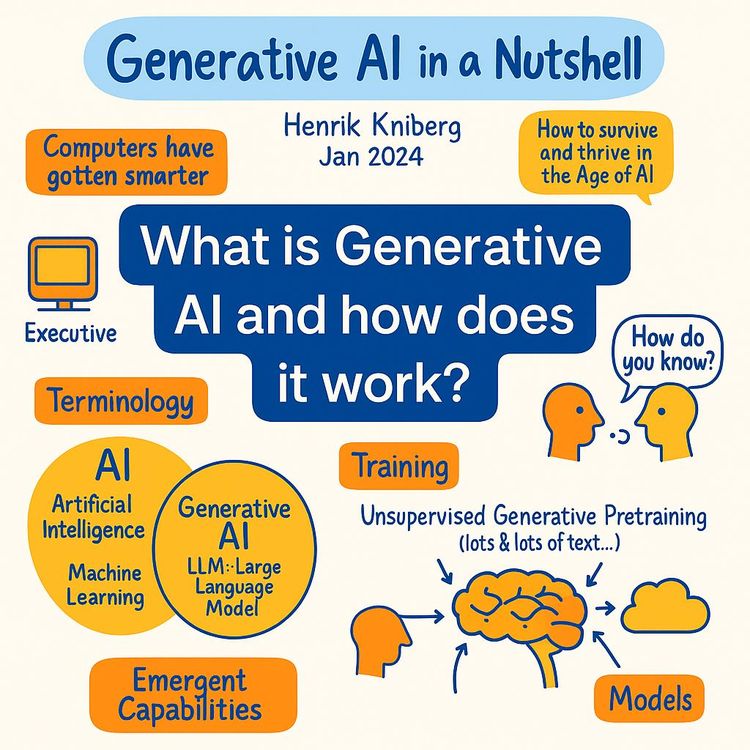
Video Course: What is Generative AI and how does it work?

Video Course: How to Use ChatGPT from Beginner to Professional
Video Course: How to Use Google Gemini for Google Workspace to Boost Productivity

Video Course: How to Use Claude 3.7 AI - Tips for Beginners!

Video Course: ChatGPT for Data Analytics: Full Course - from Beginners to Professional

Video Course: Generating Images and photos With ChatGPT?
Video Course: Generating Images & Photo's with MidJourney
Video Course: Generating Design's with Microsoft Designer and AI

Video Course: Generating Design's with Canva.com and AI
Join 20,000+ Professionals, Using AI to transform their Careers
Join professionals who didn’t just adapt, they thrived. You can too, with AI training designed for your job.