Claude Code for Business: Build Your AI Employee in 3 Hours (Video Course)
Most business owners never see the money sitting in their inboxes. This course gets Claude Code working for you,responding to customers, drafting quotes, building tools, all without code. Real examples, over a crore found, ready by tomorrow.
Related Certification: Certification in Building AI Employees for Business Automation
Also includes Access to All:
What You Will Learn
- Install and configure Claude Code and choose the right model and plan
- Create a one-page CLAUDE.md induction file to teach your business rules, prices, tone, and customers
- Extract chats and build a lead sheet to discover and quantify missed revenue
- Train and refine skills (e.g., quotation generation) to produce formatted PDFs and repeatable workflows
- Connect Gmail/Drive/Netlify, schedule morning reports, and use sub-agents to automate batch tasks
Study Guide
# Putting Claude Code to Work in Your Business ## A Complete Training Course for Business Owners ### Introduction Let me ask you something. When was the last time you actually looked at every single customer inquiry that came into your business? Not the ones you remember. Not the ones that made it to your inbox. I mean every single one. The WhatsApp messages that came in while you were in a meeting. The email that landed while you were driving home. The inquiry that arrived at 11 PM when you were already asleep. Here's what most business owners discover when they actually look: there's money sitting in those conversations. Real money. Money that was asked for, that was ready to be spent, and that never got a response. This course is about fixing that. Not with some complicated technical system. Not with a team of developers. Not with expensive software. With an AI employee that costs about the same as a decent dinner out, works around the clock, and never forgets a single rule you teach it. I'm going to walk you through the complete journey of hiring, training, and deploying an AI employee for your business. We'll use real examples from actual businesses. We'll look at the exact prompts that work. We'll cover the mistakes people make and how to avoid them. By the end of this course, you'll have a working system that processes your customer conversations, generates quotations, follows up on stale leads, produces morning reports, and even builds customer-facing tools for your business. All without writing a single line of code. Let's get started. --- ### Part One: Understanding the Three Types of AI Workers Before we talk about what Claude Code can do, you need to understand something fundamental. There are three different Claude products, and they serve three completely different purposes. Most people never get past the first one, which is why they think AI is just a fancy chatbot that gives generic advice. Think of it this way. You wouldn't hire a plumber to do electrical work. You wouldn't ask your accountant to design your website. Each person has a specific role. The same logic applies to AI tools. **The Adviser: Claude Chat** Claude Chat is what most people have used. You open a browser, type a question, and get an answer. It's like having a really smart friend who's always available to give you advice. You might ask it things like "Should I raise my prices?" or "Is this contract acceptable?" or "What's the best way to structure a payment plan for a large project?" The key thing to understand about the adviser is this: it gives you answers, but you still do the work. It tells you what you should do, but it doesn't do it for you. If you need to draft a contract, it can tell you what good contracts include. But you're the one who writes it. This is where most people stop. They use Claude Chat for a few weeks, get some decent advice, and conclude that AI is a nice-to-have but not a game-changer. They're wrong. They just haven't met the other two workers yet. **The Assistant: Claude Co-Work** Claude Co-Work is a step up. This is the assistant who takes files and a task, then returns a completed piece of work. You give it a pile of documents and say "Read these quotations and tell me which one is the best deal." It reads them, compares them, and gives you a summary. Or you give it a recording of a meeting and say "Turn this into action items." It does that. The assistant is great for one-off tasks. It ends in a document. A summary. A report. A comparison. You hand over copies of your files, it processes them, and you get something back that you can use. But here's the limitation. The assistant doesn't remember you. It doesn't know your business. Every time you use it, you have to explain everything from scratch. And it has limits on how much you can give it at once. The assistant is useful. But it's not going to transform your business. For that, you need the third worker. **The Employee: Claude Code** Claude Code is the one that changes everything. This is not a chatbot that gives advice. This is not a tool that processes a document. This is an employee that you train, that you connect to your business systems, and that you give ongoing responsibilities. Here's what makes Claude Code different. You teach it your prices, your rules, your communication style, your processes. You connect it to your Gmail, your Google Drive, your other business tools. You give it a job, and it works autonomously. It checks its own work, fixes its own mistakes, and keeps going until the job is done. And here's the part that really matters. It can build things. Customer-facing web applications. Automated reports. Systems that run while you sleep. The decision rule for choosing among these three is simple. Ask yourself what the job ends in. If it ends in an answer, use Chat. If it ends in a document, use Co-Work. If it ends in something that runs permanently, something that becomes part of your business infrastructure, use Code. Let me give you a concrete example. You want to know if your prices are too high. That's an answer. Use Chat. You need a summary of your last quarter's invoices. That's a document. Use Co-Work. You want a system that automatically analyzes every new customer inquiry, updates your lead tracking sheet, and sends you a morning report. That's a system that runs. Use Code. The rest of this course is about that third worker. The employee. --- ### Part Two: Hiring Your AI Employee **Setting Up Claude Code** The first step is getting Claude Code on your computer. You'll download the Claude desktop app from the official website. It installs like any other software. No command line. No technical setup. If you can install a word processor, you can install this. Once it's installed, you'll log in and choose your subscription. There are a few options, but let me give you the practical breakdown. The free plan is good for exploring, but it doesn't give you full access to Claude Code's capabilities. You'll want at least the Pro plan. This costs roughly twenty dollars a month, or about twenty-four hundred rupees if you're in India. Think about that for a second. That's less than what most businesses spend on coffee in a week. For that price, you get an employee who never takes a day off, never complains, never forgets what you taught it, and works at a speed that no human could match. If you find yourself hitting the limits of the Pro plan regularly, there's a Max plan that costs about a hundred dollars a month. But for most small and medium businesses, Pro is more than enough to start. **Choosing the Right Model** Within Claude Code, you'll have access to different models. Think of these as different seniority levels. Sonnet is your standard employee. It handles everyday tasks efficiently. This should be your default for most business work. Haiku is the junior employee. It's fast and good for simple, quick tasks. If you need a quick answer or a simple document, Haiku can handle it. Opus is the senior employee. It does complex research and thorough analysis. The output is exceptional, but it's slower and consumes your usage quota faster. For most business work, Sonnet is the sweet spot. It's capable enough for almost anything you'll throw at it, and it doesn't burn through your monthly usage limits the way Opus does. **Setting Up Your Workspace** Here's a simple but important step. Create a folder on your computer for your business data. Call it something like "claude-code-course" or "AI-employee" or whatever makes sense to you. This is where you'll keep the files that your AI employee works with. In our real-world example, this folder contained WhatsApp chats. The business owner had exported their customer conversations from WhatsApp and saved them as individual files. Thirty-three files. Thirty-three customer conversations. Messy, unstructured, real. You don't need to clean up your data before giving it to Claude Code. It works with raw, messy, real-world data. That's the whole point. You're not preparing data for a computer. You're giving an employee access to your business files. **The First Task: Building Your Lead Sheet** Now we get to the good stuff. The first task you'll give your AI employee is analyzing your customer conversations and building a lead sheet. Here's why this matters. Every business has conversations happening that the owner hasn't fully processed. Customer inquiries that came in, got partial responses, and then went cold. Quotes that were sent but never followed up. Leads that asked to buy but never got a response. In the real example we're working with, the business owner had thirty-three WhatsApp conversations with potential customers. They had a vague sense that there was money sitting in those conversations, but no clear picture of what was actually there. The prompt to the AI was straightforward: "Read every chat in this folder. Each file is one customer inquiry or WhatsApp. Build me a lead sheet. One row per customer with their name, area, what they asked for, budget if they mentioned, who sent the last message (me or them), their current status,are they hot, waiting for us, did you quote them but they've been silent, never answered, wrong fit,and the next thing we should do for them. Then tell me the three things in this inbox that I need to see." That's it. Plain English. No technical jargon. No special formatting. Just a clear description of what you want. Here's what happened. The AI read all thirty-three files. It extracted the customer names, their areas, what they asked for, their budgets if they mentioned them. It determined who sent the last message in each conversation. It classified each customer by their status. It even calculated how many days had passed since the last contact. Then it created a spreadsheet. A real, structured Excel file with one row per customer. You could open it, sort it, filter it, share it with your team. But the real magic was in the three things it surfaced. The things the business owner needed to see. First, there was a customer who had been promised a quote four days ago. The quote was never sent. And this customer was meeting with another design firm that weekend. That's a live, urgent, revenue-critical issue. Second, there were three inbound leads that never received any reply at all. Not even an acknowledgment. Three people reached out to this business and got nothing back. Third, there were two live quotes that were overdue on the business's side. The customer had done their part. The business hadn't. None of this was new information. It was all sitting there in the chats. But no human had been able to see it. Not because they were lazy, but because no human can hold thirty-three simultaneous conversations in their head. **The Revenue Discovery** Once the lead sheet was built, the next step was quantifying the opportunity. The business owner asked the AI to analyze the lead sheet for revenue potential. The AI categorized the opportunities. Already-quoted deals that were still open. Verbal price discussions that hadn't become formal quotes. Customer-stated budgets with no quote sent. And wrong fits that shouldn't be pursued. The numbers were staggering. Ninety-two lakh rupees in already-quoted open deals. Twenty-one lakh in verbal pricing discussions. Fourteen lakh in stated budgets with no quote sent. Total across all open opportunities: over one crore ten lakh rupees. The business owner's original estimate was thirty lakh. The reality was nearly four times that. Thirteen customers had asked to buy and never received a response. Thirteen people who were ready to spend money with this business, and the business never got back to them. This is not a people problem. Nobody in the business was being lazy. This is just what happens when a business grows. The conversations multiply. The follow-ups stack up. And no human can keep track of all of it. **The Agentic Loop** Let me explain something important about how Claude Code works. It's not a chatbot that gives one answer and stops. It operates on what's called the agentic loop. The agentic loop goes like this. The AI takes a job. It does the work. Then it checks its own work. If it finds errors, it fixes them. Then it checks again. It repeats this cycle until the job is complete. In the lead sheet example, the AI didn't just read the chats and produce a spreadsheet. It cross-validated its own formulas. It recalculated the revenue figures. It confirmed zero errors before presenting the results. This is the difference between an AI that answers questions and an AI that does work. The agentic loop is what makes real delegation possible. **The Key Habit: Working with Drafts** Here's a mindset shift you need to make. Treat the first output from your AI employee as a draft. Just like you would with a new human hire. When you hire someone new, you don't expect them to get everything right on the first try. You give them feedback. You show them how you want it done. You correct their mistakes. Over time, they learn. The same applies to your AI employee. The first lead sheet might not be perfect. Maybe you want different columns. Maybe you want it formatted differently. Maybe you noticed it missed something. Instead of asking the AI to redo the entire job, give specific feedback and ask for targeted changes. In the real example, the business owner asked for a revenue potential tab to be added. Then they asked for the reply formatting to be changed. Then they updated the pricing rules. Each time, the AI made the change in seconds. This is how you work with an AI employee. Iteration. Feedback. Correction. Not starting from scratch every time. **The Mediation Trap** Here's a mistake that most people make when they start working with AI. They copy one customer message at a time into the AI and ask for a response. Then they copy the response back to the customer. Then the customer replies, and they copy that back to the AI. This is the mediation model. And it makes you the bottleneck. You're not the manager anymore. You're the messenger. You're the one who has to be awake, available, and responsive for every single interaction. The better approach is to feed the AI the entire pile of data at once. All the chats. All the invoices. All the reviews. Give it the full context and let it do the batch work. This is what separates efficient businesses from overwhelmed ones. The efficient ones feed the whole pile. The overwhelmed ones mediate one message at a time. --- ### Part Three: Training Your Employee **The Problem with AI Memory** Here's something you need to understand about how Claude Code works. Each chat session is like one working day. When you close the chat, the day ends. When you open a new chat, you get a fresh employee who remembers nothing from the previous session. This sounds like a limitation. And it is, if you don't know how to work around it. But there's a simple solution. You create an induction document. A file that the AI reads at the start of every session, so it always starts with your business knowledge. In Claude Code, this file is called CLAUDE.md. The .md stands for markdown, which is just a simple way of formatting text. But you don't need to worry about the technical details. All you need to know is that this file is your AI employee's orientation manual. **What the Induction Document Contains** Think about what you would tell a new employee on their first day. You'd tell them what you sell and what it costs. You'd tell them who your customers are. You'd tell them how you talk to customers. You'd walk them through your processes step by step. And you'd tell them the rules. Especially the things you never do. That's exactly what goes into the CLAUDE.md file. The five essential questions your induction document must answer: One. What do you sell and what does it cost? Real numbers. Real prices. Including the extras and add-ons. If you charge extra for premium materials, write that down. If you have different pricing for different package levels, write that down. Two. Who is your customer? And just as importantly, who is not your customer? This is how the AI spots inquiries that should be declined. If you only serve a specific geographic area, write that down. If you don't take projects under a certain budget, write that down. If you only work with homeowners and not commercial clients, write that down. Three. How do you talk to customers? Are you formal or friendly? Do you use short messages or detailed explanations? Do you use emojis or keep it strictly professional? The best way to capture this is to paste examples of your actual messages. Let the AI learn your voice from real examples. Four. How does your work happen? What are the steps from first contact to delivery? When does the customer pay? When does the work start? What's the handoff process? Write it out step by step. Five. What are your rules? This is the most valuable section. The things you always do. The things you never do. Your rules exist because of past mistakes. Every rule is a lesson you learned the hard way. Write them down so your AI employee doesn't make the same mistakes. **Creating the Induction Document** There are two ways to create your CLAUDE.md file. The first is the interview method. You ask the AI to interview you about your business. It asks questions one at a time, learns your business, and then writes the document itself. Here's the prompt to use: "Interview me about my business one question at a time so you can work for me properly. I want you to learn what we sell, our prices, who our customers are, who they're not, how we talk to customers, how our process runs step by step, and our rules, especially the things we never do. You've already seen our customer chats in the folder, so don't ask me what you can work out from those details already. When you have enough, write it all to a CLAUDE.md file in this folder so you can start every future chat already knowing my business." The AI will skim the existing chats to extract what it can. Then it will ask you targeted questions about the things it couldn't figure out. Answer honestly. Answer completely. This thirty-minute conversation becomes your permanent employee training. The second method is direct documentation. If you already have price lists, brochures, old quotations, or any other business documentation, put them in the folder and let the AI compile the essentials. **The One-Page Rule** Here's a critical piece of advice. Keep your CLAUDE.md file to about one page. The AI reads this file before every response. If it's a fifty-page manual, the AI will miss details. It will prioritize some parts and ignore others. The file becomes useless. One page. That's it. The essential facts about your business. The rules. The prices. The tone. The process at a high level. Detailed job processes don't go in the induction file. They go in skills, which we'll cover in a later section. The induction file is for the big picture. The identity of your business. **The Rules Section** Let me emphasize this again because it's so important. The rules section is the most valuable part of your induction document. Rules are the things you always do and the things you never do. They exist because of mistakes you've made in the past. They're the expensive lessons you've already paid for. Here are some examples of rules a design studio might have. Never discount design fees. Never start work before payment. Never promise dates that aren't confirmed. Never share pricing in text messages. Always visit the site before quoting. Always include a payment schedule in the quotation. Write these down. Put them in your CLAUDE.md file. Put the rules section at the top of the document, marked "Read this first." **Proving the System Works** Let me show you what a difference this makes. In the real example, the same customer message was given to the AI before and after training. Before training, the AI didn't know the business. A customer asked about pricing for a 3BHK project. The AI responded with questions. "What's your actual flexibility on price?" "What scope of work are you expecting?" It was making guesses because it had no information. After training, the same message got a completely different response. The AI recalled that the price of ten lakhs reflects the actual scope. It recalled that discounts are against policy. It offered cash-flow-friendly payment structuring. All without a single clarifying question. That's the power of documentation. The AI didn't get smarter. It just got informed. **Updating Rules** Your business will change. Prices will go up. Policies will change. When that happens, you need to update your induction document. Here's how simple it is. You just tell the AI. "Our 3BHK full interior price has gone from ten lakhs to twelve lakhs. Make this a rule going forward." The AI updates the CLAUDE.md file. All future responses reflect the new pricing. Make a habit of this. Anytime you correct the AI, say "Make this a rule going forward." Anytime you notice a mistake, say "Update the skill." Every correction compounds into a smarter system. --- ### Part Four: Answering Customers at Scale **The Next Task: Drafting Replies** Once your AI employee knows your business, it's time to put it to work on customer communication. In the real example, there were twenty-six customer threads that needed responses. Some had never been answered. Some had gone stale. Some needed gentle follow-ups. The task was to draft replies for every single one. In the business's tone. With the business's prices. With the business's rules. **The Plan Mode Approach** Before letting the AI draft anything, the business owner used plan mode. This is a Claude Code setting that requires the AI to read everything and present a step-by-step plan before executing. Here's why this matters. For high-stakes customer communication, you don't want the AI to just start firing off responses. You want to see its approach first. You want to review the strategy. You want to make corrections before anything goes out. The prompt was something like this: "Some of the customers in the inbox are still waiting to hear back from us. I want every one of them to have a reply ready to send,in our tone, with our prices, with our rules. I want to read each one myself before anything goes out." In plan mode, the AI examined the lead sheet. It read the customer chats. It asked clarifying questions. For example, it asked whether to include prices in text messages. The business owner had a rule against that, so the AI needed to know. You answer these questions thoughtfully. They become your rules. The AI learns from every interaction. Once you've reviewed and approved the plan, the AI switches to auto mode and executes. It reads each customer's conversation context. It applies the rules from the CLAUDE.md file. It drafts every response. And it saves them all in a single file for your review. **The Results Were Remarkably Human** Let me show you some examples of what the AI produced. These are real responses drafted for real customers. To a customer who was promised a quote but never received it: "I owe you an apology,this fell through the cracks on my end, and that's on me, not you. I don't want to just fire off a number over text after making you wait. Can we do a quick 15-minute call today or tomorrow?" To a referred customer who was ignored for ten days: "So sorry,yes, this is the right number. I'm sorry it took so long to confirm something that simple. Are you free for a call this week to talk through your September move-in?" These don't read like AI-generated messages. They read like a human being taking responsibility, apologizing sincerely, and moving the conversation forward. **The Editing Process** Here's something important. The AI writes. The human edits and sends. During the first week, you should read and approve every message. This is the same supervision you'd give any new employee. You're not looking for the AI to be perfect. You're looking for it to be good enough that you can gradually increase its autonomy. If you want changes across all the messages, you can instruct the AI once and it applies the change everywhere. For example, the business owner said: "Make the conversations more human. Maybe add some smileys. Not a lot, but to make it more human. Maybe add a few dot-dot-dots as well." The AI rewrote the entire file accordingly. This is the efficiency advantage. You're not editing twenty-six messages one at a time. You're giving one instruction and the whole batch gets updated. **The Five-Step Response System** Let me give you a general methodology you can apply to any business data pile. Step one: Point the AI to the pile of data. This could be customer inquiries, invoices, reviews, anything. Step two: Ask for a plan before any work starts. Review the approach. Make corrections. Step three: Check the first piece of work carefully. This is your quality check. If the first one is wrong, fix it before the AI does the rest. Step four: Let it work through the entire pile autonomously. Walk away. Do something else. Let the AI do the batch work. Step five: Read everything before it goes out. You're the editor. You're the approver. You're the one who ultimately takes responsibility for what goes to your customers. --- ### Part Five: Teaching Specific Skills **What Is a Skill?** Your CLAUDE.md file defines who your business is. A skill defines how a specific job is done. Think of a skill as a training document for one particular task. It teaches the AI employee how to perform a job according to your exact specifications. What goes into the output. The order of steps. What must never happen. In the real example, the skill we're going to look at is quotation generation. This is the most important revenue document in a design business. A quotation that's wrong can lose a client. Worse, it can commit the business to unprofitable work. **The Skill Creation Process** Creating a skill follows a five-step process. Step one: Find your best example. You need one good quotation that represents your standard. In the real example, there was a proposal for a client named Diva. It was a hand-crafted, high-quality quotation that the business owner was proud of. Step two: Teach the AI from that example. Here's the prompt: "There's a proposal in this folder that we wrote by hand for a client. The one with Diva's name on it. Study it properly. Then interview me one question at a time about how we write quotations. What goes in it? In what order? Where prices come from? What we always include? What we never do? Only ask what the proposal and our files don't already answer. Then save everything you've learned as a skill. Whenever I ask for a quotation from now on, you follow it without me explaining anything. Also, a finished quotation is always a PDF built from the proposal template in this folder." Step three: Let it save everything as a skill. The AI studies the example, asks its questions, and creates a skill document. It might also create an HTML/CSS template that matches your existing proposal style. It might install necessary tools, like PDF generation libraries. Step four: Test it on a real job in a new chat. Don't mention the training. Just ask for a quotation and see if the skill gets picked up. In the real example, the business owner opened a new chat and said: "Create a quotation for Manoj Sarjapur." The AI identified that the quotation skill was relevant. It located Manoj's data from the lead sheet. It read his chat history. It generated a formatted PDF quotation that matched the Diva proposal's style. Step five: Feed corrections back into the skill. When you find mistakes, instruct the AI to update the skill. "When you do quotations, always include the payment schedule in the same order as the Diva proposal." The AI updates the skill document. Future quotations don't repeat the error. **The Results** The AI-produced quotation was virtually indistinguishable from the human-created original. Same structure. Same personal touch. Same pricing logic. Here's one detail that shows how sophisticated this system is. The Diva proposal had a payment schedule that differed from the standard rules. The AI noticed this discrepancy. It flagged it for the business owner instead of blindly copying the example. That's the kind of judgment you want from an employee. The AI also declined to invent data. When it needed site-findings information that didn't exist, it marked it as "to be confirmed on the site visit" instead of making something up. The time difference was dramatic. The human version took two to three hours. The AI version took four minutes. **Skills vs. CLAUDE.md** Let me clarify the difference between these two files. CLAUDE.md contains business facts. Prices. Rules. Who you are. It's read at the start of every session. A skill contains job procedures. How to do one specific thing. The steps. The order. The constraints. It's read when that specific job is requested. Use facts in CLAUDE.md. Use steps in skills. **The Rule of Thumb for Skill Creation** Here's when you should create a skill. Have you done this job at least three times? Do you want it done the same way every time? If yes, build the skill. If the job is a one-off or you don't care about consistency, just ask conversationally. Don't build a skill for everything. Skills take time to create. They earn their keep only for repeatable processes. --- ### Part Six: Connecting to Business Tools **What Are Connectors?** Claude Code can connect to your business tools. Gmail. Google Drive. Slack. Netlify. These connections are called connectors, and they work through something called the Model Context Protocol, or MCP. You don't need to understand the technical details. All you need to know is that a connector is like a key that grants the AI access to a specific tool. The setup process is as simple as signing into an app. You go to settings, find the connectors section, and sign in with your business account. No code. No installation. No technical setup. **What the Connectors Can Do** The Gmail connector lets the AI read emails and create drafts. Here's an important detail: it can read and draft, but it cannot send. Emails sit in drafts until you press send. This is a safety feature that keeps you in control. The Google Drive connector lets the AI create new files. It can upload documents, spreadsheets, and reports. In the real example, the AI uploaded the updated lead sheet as a native Google Sheet so the team could access it from anywhere. The Netlify connector lets the AI publish web pages to the internet. This is how we'll deploy customer-facing applications in a later section. **A Real Workflow** Let me walk you through a real workflow that demonstrates how connectors work together. The AI was asked to check the studio's Gmail inbox for customer emails. It read the emails and identified a new lead. It added this lead to the lead sheet automatically. Then it updated the existing spreadsheet with the new data. Finally, it uploaded the updated sheet as a native Google Sheet. All of this happened with a few simple prompts. No manual data entry. No copying and pasting between systems. **Security Guidance** Here's what you need to know about staying safe with connectors. First, connect only business accounts. Never connect your personal accounts. Your personal email, your personal drive, your personal social media. Keep the AI's access limited to business systems. Second, hand over only the keys that the job needs. If you're working on a project that requires email access, connect Gmail. Don't connect everything just because you can. The principle of least privilege applies here. Third, know what each key can and cannot do. The Gmail connector reads and drafts but never sends. The Google Drive connector can create files but can't edit existing ones directly. Understand the limitations before you rely on the capabilities. Fourth, take connectors only from official sources. Don't install connectors from random websites. Stick to the official integrations. Fifth, keys can be revoked at any time. If you're concerned about access, disconnect the connector. The AI loses access immediately. --- ### Part Seven: Multiplying Output with Sub-Agents **The Team Model** Here's where things get really interesting. Your AI employee can hire helpers. These helpers are called sub-agents. When you have a pile of similar work, the main AI can spawn multiple sub-agents to work in parallel. Each sub-agent handles one task. They all work simultaneously. The batch gets completed in a fraction of the time. **The Real Example** In the real example, the business owner had eleven customers who had been given a price verbally but never received a proper quotation document. Each one needed a personalized quotation. The prompt was: "Open the lead sheet and take the quiet list. All 11 customers, each was given a price but never received a proper quotation document. Build one for each. Read their chat and prepare their quotation the way we always do. Use only what they have told us. Anything we don't know yet, mark 'to be confirmed on the site visit.' Do not invent details. Use 11 sub-agents, one per customer, working in parallel. Save each quotation in a folder named 'quotations.'" Here's what happened. The main AI read the lead sheet and identified the eleven customers. It spawned eleven sub-agents. Each sub-agent read the quotation skill. Each sub-agent read its assigned customer's chat history. Each sub-agent generated a formatted PDF quotation. All eleven worked simultaneously. The entire batch was completed in under ten minutes. Work that would take a human team one to two full days. **When to Use Sub-Agents** Use sub-agents when you have a pile of similar work and speed matters. Eleven quotations. A hundred Google reviews to respond to. Three supplier quotes to compare. Don't use sub-agents when each step depends on the previous step completing. If task B requires the output of task A, you can't parallelize. That's sequential work, and it needs to happen in order. **The Cost Consideration** Here's something to keep in mind. Sub-agents consume your monthly usage limits faster. Calling ten helpers means ten times the usage. This is like hiring additional staff. The capacity is there, but it costs more. Use sub-agents strategically. For big batch jobs where speed matters. Not for every small task. --- ### Part Eight: Automated Morning Reports **Setting Up Recurring Work** One of the most valuable things your AI employee can do is work on a schedule. This is where the AI becomes truly autonomous. In the real example, the business owner set up a morning report that would arrive at 7:00 AM every day. Here's the prompt: "Every morning at 7:00, go through the leads inbox and the lead sheet and write me a short morning report. Cover three things: what came in since yesterday, who we should call first today and why, and what's moved on the quiet list,including any quotation still waiting to go out. Keep it short enough to read over tea. Save it as a new file with the date in its name in a folder called 'morning reports,' and save a copy to the studio's Google Drive so I can read it on my phone." The AI created a scheduled task. It created the morning reports folder. It set up the recurring schedule. **What the Report Contains** The morning report covers three things. One. What came in since yesterday. New leads from WhatsApp, new emails from the Gmail inbox. The AI summarizes everything that arrived. Two. Who should be called first today, and why. The AI prioritizes. Maybe there's a hot lead that's gone cold. Maybe there's a quote that's overdue. Maybe there's a customer who's meeting with a competitor this weekend. Three. What's moved on the lead list. Any quotations still waiting to go out. Any status changes. Any follow-ups needed. The report is capped at "short enough to read over tea." A few paragraphs. The essentials. No fluff. **The Practical Limitations** Here's what you need to know about scheduled tasks. First, scheduled tasks only run while the desktop app is open. The machine has to be on. If your computer is off at 7:00 AM, the report won't generate. Second, the first run requires manual approval. The AI needs you to grant connector permissions the first time it accesses Gmail or Google Drive on a schedule. Third, cloud-based alternatives exist. If you need the report to run reliably without your machine being on, you'll need to explore cloud scheduling options. **The Proof** The morning report proved its value almost immediately. On its first scheduled run, it flagged something important. There was a new inquiry from Mumbai. But the studio only served Bangalore. The AI had internalized this rule from the CLAUDE.md file. It recommended declining the inquiry. This is the system working exactly as designed. The AI knows the rules. It applies them without being reminded. It protects the business from wasting time on wrong-fit customers. --- ### Part Nine: Building Customer-Facing Applications **The Enablement Opportunity** Here's where we go from automating internal processes to building customer-facing tools. Think about the most common question your business receives. For most businesses, it's "How much does it cost?" This question comes in through WhatsApp, through email, through your website contact form. And most businesses answer it poorly. Either they give a vague response that doesn't help the customer, or they don't respond at all because they're busy. Or they respond but don't capture the lead properly. An instant cost calculator solves this. A visitor lands on your page. They select their home type. They indicate the approximate size. They choose a finish level. They see an honest starting price range. And they submit their details for follow-up. This works at 2 AM on a Sunday. When the customer is researching and the business is closed. **The Prompt** Here's the prompt used to build the cost calculator: "Build a one-page instant cost calculator. A visitor picks their home type,2BHK or 3BHK,roughly how big it is, and a finish level (standard or premium). Show them an honest starting price range based on our pricing. Not one fixed number, but with one line on what's included at that price under the result. Also have one button 'chat with us on WhatsApp' that opens WhatsApp with a message already including their selections. Design for phone screen first,people usually open it on their phones. Keep it warm and simple, using plain language a homeowner would understand, not complex jargon." **The Development Process** The AI started in plan mode. It reviewed the pricing files, the skill documents, and the brand assets. It asked clarifying questions. How should visitors indicate home size? A slider or options? What should the WhatsApp message contain? Once the plan was approved, the AI built the HTML file. It used a slider for square footage. It added a standard and premium toggle. It calculated price ranges from the business's actual pricing rules. During the process, the AI encountered a conflict. The business had a rule: "Never state prices in text replies." But the calculator needed to show price ranges. The AI flagged this conflict and asked for clarification. The business owner confirmed that the rule applied to text replies, not to the calculator. The AI proceeded. This is the kind of business reasoning you want from an employee. The AI didn't just blindly follow the rule. It recognized the conflict and asked for guidance. **Deployment** Deployment means taking a file from your computer and putting it on the internet. The AI used Netlify, a free web deployment service. The process was simple. Create a Netlify account. Connect the Netlify connector in Claude settings. Instruct the AI to publish the calculator. The AI deployed the file, troubleshooting any issues that came up along the way. The site received a public URL. Something like studio-terrain-cost.netlify.com. Live on the internet. Accessible from any device, anywhere in the world. **The Lead Capture Problem** The calculator needed to capture leads. The original plan had a WhatsApp button that would open WhatsApp with a pre-filled message. This works well for capturing leads with phone numbers. But the business owner also wanted an email option. The AI raised an important concern. A plain email button loses the phone number that WhatsApp captures. The business would have no easy way to call back. The AI suggested adding name and phone fields to the email form. This way, even email leads could be contacted by phone. This is the AI thinking like a business partner, not just a code generator. It's identifying potential problems and proposing solutions. **The Form Service** There was another technical challenge. A simple mail-to link would only work if the visitor had a mail app configured on their device. Many people don't. The AI recommended using a form-to-email service called Web3Forms. The sign-up process was simple. Create an account. Get a form access key. Provide the key to Claude. The AI wired the form to submit directly to the service. The final product: a live web application at a public URL, receiving real inquiries, delivering them to the business's email, running 24/7 without any human intervention. All of this was built and deployed in under thirty minutes. No developer. No designer. No code. --- ### Part Ten: The Complete System **Putting It All Together** Let me show you how all the pieces fit together into a complete system. Your AI employee starts each day by reading the CLAUDE.md file. It knows your business. Your prices. Your rules. Your tone. Throughout the day, it processes customer conversations. It updates the lead sheet. It drafts responses. It generates quotations using the skills you've taught it. At 7:00 AM, it produces a morning report. New leads. Who to call first. What's stalled. It saves the report to your Google Drive so you can read it on your phone. Your customers can use your cost calculator at any hour. They get honest price ranges. They submit their details. The leads flow into your email. You're the editor. You're the approver. You're the strategist. You review the AI's work. You make corrections. You update the rules. And every correction compounds into a smarter system. **The Institutional Knowledge Problem** Here's the deeper insight. Every business has institutional knowledge trapped in the founder's head. Rules learned from expensive mistakes. Tone developed through years of customer interactions. Processes refined through trial and error. When the founder is unavailable, this knowledge is unavailable. When the founder leaves, the knowledge leaves. When the business grows, the knowledge doesn't scale. The AI employee framework solves this. The interview process extracts the knowledge. The CLAUDE.md file documents it. The skills capture the procedures. The system scales it across every customer interaction. **The Documentation Habit** Let me emphasize this one more time because it's the key to everything. Every AI answer that you've ever hated. The generic ones. The ones that sound like they could be from any company. That was not bad AI. It was missing one file. The businesses that get real work out of AI are not the ones with some secret trick. They're not using a better model or spending more money. They're the ones who took an evening and wrote down how they want their work done. The documentation habit is simple. When you correct the AI, say "Make this a rule going forward." When you notice a mistake, say "Update the skill." Every correction builds institutional memory. **The Cost-Benefit Analysis** Let me do the math for you. The Pro plan costs about twenty dollars a month. In India, that's around twenty-four hundred rupees. For that price, you get an employee who processes your customer conversations, builds your lead sheets, drafts your customer responses, generates your quotations, produces your morning reports, and builds your customer-facing tools. In the real example, this employee identified over one crore rupees in unaddressed revenue. It generated eleven quotations in under ten minutes. It deployed a live web application in under thirty minutes. The return on investment is not measurable in percentages. It's measurable in multiples. --- ### Part Eleven: Best Practices and Common Mistakes **The Draft Mindset** Treat every first output as a draft. This is how you work with any employee. You don't expect perfection on the first try. You give feedback. You iterate. You improve. The alternative is asking the AI to redo entire jobs from scratch. This wastes time and frustrates you. Give specific feedback and ask for targeted changes. **The Whole Pile Principle** Don't feed the AI one message at a time. Feed it the entire pile. All the chats. All the invoices. All the reviews. The mediation model makes you the bottleneck. You become the messenger between customer and AI. The whole pile model makes you the manager. You give one instruction and the AI does the batch work. **The Supervision Period** During the first week, read everything before it goes out. This is the same supervision you'd give any new employee. The AI writes. You edit. You approve. You send. Over time, as the AI proves itself, you can gradually increase its autonomy. **The Rule Documentation Habit** Anytime you correct the AI, make it a rule. Anytime you notice a mistake, update the skill. The businesses that get the most out of AI are the ones that document their rules. The ones that write down how they want work done. The ones that treat every correction as an investment in the system. **The Listening Habit** Here's something that might surprise you. Your AI employee will sometimes push back. It will flag conflicts. It will raise concerns. It will ask for clarification. Listen to it. In the real examples, the AI flagged when a rule contradicted a one-off example. It declined to invent data when none existed. It noticed that a plain email button would lose phone numbers. It recognized that a rule about not stating prices in text replies conflicted with the calculator's need to show price ranges. These are not bugs. These are the AI thinking like a good employee. Smart employers listen to their AI's objections. **The Skill Creation Test** Before you create a skill, ask two questions. Have I done this job at least three times? Do I want it done the same way every time? If yes, build the skill. If no, just ask conversationally. **The Connector Security Checklist** Connect only business accounts. Hand over only the keys that the job needs. Know what each key can and cannot do. Take connectors only from official sources. Revoke keys when you're concerned. **The Sub-Agent Usage Rule** Use sub-agents for piles of similar work where speed matters. Don't use them when each step depends on the previous step. Remember that sub-agents consume usage limits faster. **The Scheduled Task Reality** Scheduled tasks only run while the desktop app is open. The machine must be on. The first run requires manual approval. Cloud alternatives exist if you need reliability without your machine. --- ### Conclusion Let me bring this all together. You now have a complete framework for deploying an AI employee in your business. You understand the difference between the adviser, the assistant, and the employee. You know how to hire your AI employee, train it on your business knowledge, and hand over significant operational responsibilities. You've seen the real results. Thirty-three WhatsApp threads processed in minutes. Over one crore rupees in unaddressed revenue identified. Thirteen customers who asked to buy and never received a response. Eleven quotations generated in under ten minutes. A live web application deployed to the internet in under thirty minutes. The pattern is consistent. The AI's value scales with documentation. Every generic AI response is a missing induction document. Every rule you write down is a mistake the AI won't make. Every skill you create is a process that runs without you. The broader implication is transformative. Every business has institutional knowledge trapped in the founder's head. Rules learned from expensive mistakes. Tone developed through years of customer interactions. Processes refined through trial and error. The AI employee framework offers a way to extract that knowledge, document it permanently, and scale it across every customer interaction. This is not about replacing judgment. It's about multiplying it. You remain the editor. The approver. The strategist. But now, for the first time, you have a workforce that never sleeps, never forgets, and always follows the rules you wrote down. Here's what you should do next. Download the Claude desktop app. Subscribe to the Pro plan. Export your customer conversations. Give the AI the lead sCertification
About the Certification
Become certified in building your own AI employee with Claude Code. You'll know how to automate customer replies, generate quotes, and construct business tools with zero coding,skills that turn forgotten inbox money into found revenue.
Official Certification
Upon successful completion of the "Certification in Building AI Employees for Business Automation", you will receive a verifiable digital certificate. This certificate demonstrates your expertise in the subject matter covered in this course.
Benefits of Certification
- Enhance your professional credibility and stand out in the job market.
- Validate your skills and knowledge in cutting-edge AI technologies.
- Unlock new career opportunities in the rapidly growing AI field.
- Share your achievement on your resume, LinkedIn, and other professional platforms.
How to complete your certification successfully?
To earn your certification, you’ll need to complete all video lessons, study the guide carefully, and review the FAQ. After that, you’ll be prepared to pass the certification requirements.
Other AI Video Courses
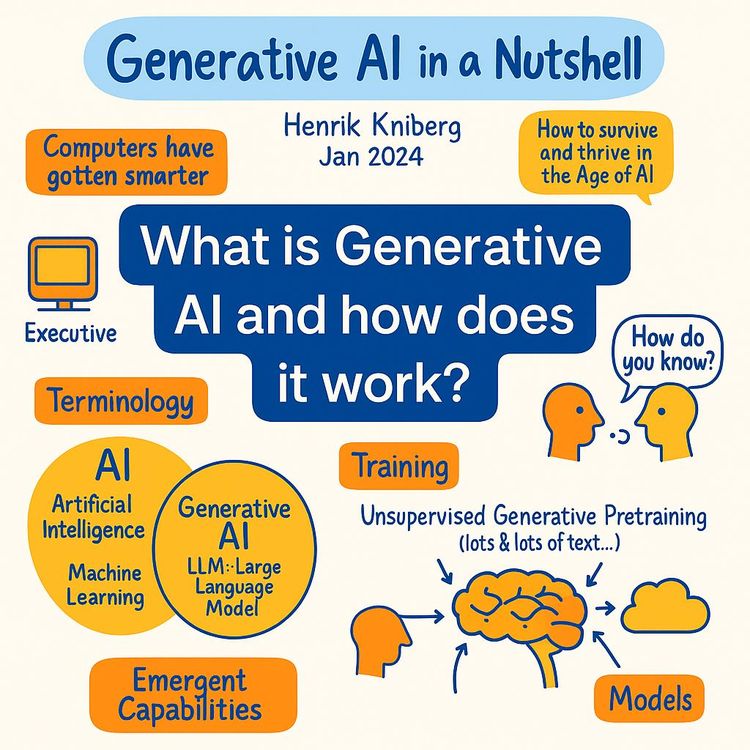
Video Course: What is Generative AI and how does it work?

Video Course: How to Use ChatGPT from Beginner to Professional
Video Course: How to Use Google Gemini for Google Workspace to Boost Productivity

Video Course: How to Use Claude 3.7 AI - Tips for Beginners!

Video Course: ChatGPT for Data Analytics: Full Course - from Beginners to Professional

Video Course: Generating Images and photos With ChatGPT?

Video Course: Generating Images & Photo's with MidJourney
Video Course: Generating Design's with Microsoft Designer and AI

Video Course: Generating Design's with Canva.com and AI
Join 20,000+ Professionals, Using AI to transform their Careers
Join professionals who didn’t just adapt, they thrived. You can too, with AI training designed for your job.