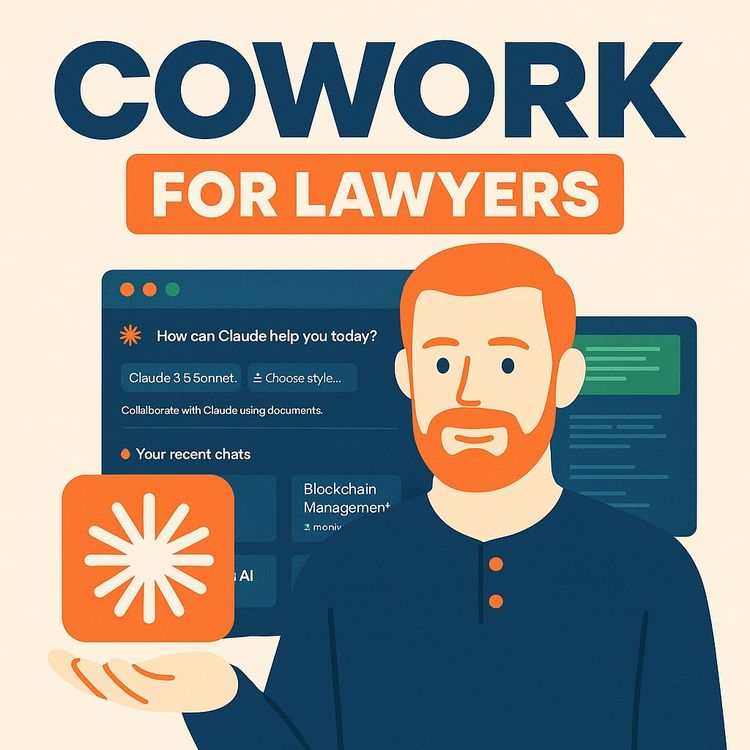
Claude Cowork for Lawyers: Automate Repetitive Legal Work (Video Course)
Your paralegals are doing clerical work in a suit. Claude Cowork does that work for them,reads documents, fills forms, enters data. Setup takes under an hour. And almost no firm has adopted it yet. That's your advantage.
Related Certification: Certification in Automating Legal Workflows with Claude AI
Also includes Access to All:
What You Will Learn
- Set up Claude Cowork enterprise workspace with the four-folder architecture
- Create an About Me file and configure global instructions for persistent firm context
- Install the Claude Chrome extension and connect core software via secure connectors
- Build, run, and convert an automated citation-processing workflow into a reusable skill
- Apply security, governance, and best practices for handling client-confidential data
Study Guide
The Legal Industry's Open Secret: Work That Doesn't Need a Lawyer
Walk into any law firm and you'll see the same scene. Paralegals typing the same data into the same systems. Associates reformatting the same documents. Staff members copying information from one place to another, hoping they don't make a typo. This isn't legal work. It's clerical work wearing a suit.
The legal profession runs on repetition. Client intake forms, traffic citations, court documents, discovery responses, case management entries,every single one requires someone to read information, extract the relevant details, and input them somewhere else. Fifteen minutes here, twenty minutes there. Multiply that by a hundred documents a month and you've lost an entire workweek to tasks that require zero legal judgment.
This course is about eliminating that waste. Not with some abstract AI strategy, but with a specific tool that's available right now. Claude Cowork from Anthropic is an agentic AI platform that doesn't just answer questions,it does work. It reads documents, extracts data, fills forms, submits entries, and organizes files. All without you standing over its shoulder.
Here's what we're going to cover. First, we'll break down what agentic AI actually means and why it's fundamentally different from the chatbots you've probably tried. Then we'll dig into the strategic picture,why this matters for your firm's survival, not just its efficiency. We'll walk through the security architecture you need, the exact folder structure to set up, how to build an About Me profile that gives the AI permanent knowledge of your firm, and how to connect it to the tools you already use. Then we'll get into the real-world stuff: a complete workflow for automating citation processing, how to turn that workflow into a reusable skill, and the broader applications that go far beyond the example.
The core message is simple. The tools exist. The setup takes under an hour. And the firms that figure this out now will have an advantage that late adopters simply won't be able to close. Let's get into it.
The Fundamental Shift: From Chatbots to Agents
You've used ChatGPT. Maybe Gemini. Probably Claude Chat. These tools are impressive in their own way,they can draft emails, summarize cases, brainstorm arguments. But here's the thing nobody tells you: they're glorified search engines. You ask a question, they give you an answer. The interaction ends there. You still have to take that answer and do something with it. Copy it into a document. Format it. Input it into your system. The AI does the thinking, but you do the work.
Agentic AI flips this entirely. Instead of a query-response loop, you get task delegation. You tell the system what outcome you want, and it figures out the steps to get there. It reads files, makes decisions, interacts with software, and delivers a finished product. It's not answering questions about work,it's doing the work.
Claude Cowork operates in this agentic paradigm. It's a desktop application that can access your local file system, manipulate documents, interact with external applications through secure connectors, and even operate a web browser through the Claude for Chrome extension. When you give it a task, it doesn't just talk about doing it. It actually does it.
Consider the difference in practical terms. A traditional chatbot can tell you what data should be extracted from a traffic citation. Claude Cowork extracts it, enters it into your case management system, verifies the entry, moves the file to a processed folder, and tells you what it did. The chatbot gives you instructions. The agent gives you results.
This distinction matters because it changes what's possible. With a chatbot, you can get advice faster. With an agent, you can eliminate entire categories of work. The first is a productivity tool. The second is a workforce.
Why This Matters Now: The First-Mover Window
Here's a statistic that should stop you in your tracks. Out of a representative sample of 1,000 people globally, 840 have never used AI in any form. Another 139 have only used the free version of ChatGPT. That leaves exactly 4 people out of 1,000 who have ever touched a paid, professional-grade AI tool like Claude Cowork.
Let that sink in. 99.6 percent of the population has never experienced what agentic AI can do. And that includes lawyers. Most law firms have never even heard of Claude Cowork, let alone implemented it. This isn't a crowded market. It's an empty one.
What does that mean for you? It means there's a window of opportunity right now,a period where you can build capabilities that your competitors don't have. This isn't about keeping up with industry trends. It's about getting ahead while the getting is good.
The competitive logic is brutal and simple. If your firm processes intake documents, citations, discovery responses, and client correspondence at a fraction of the labor cost and time of a competing firm, you have options that they don't. You can price more aggressively. You can respond faster. You can take on more cases with the same headcount. You can invest the savings into marketing, hiring, or your own bottom line.
The firms that use AI effectively will absolutely outcompete the ones that don't. This isn't hyperbole,it's arithmetic. When one firm processes a citation in two minutes and another takes fifteen, the first firm's staff time goes further. When one firm can handle 200 cases with the same team that another firm uses for 100, the first firm's revenue per employee doubles.
And here's the uncomfortable part. This is the worst AI is ever going to be. The technology is at its historical minimum in terms of capability. It will only get better. The firms that start now, build their workflows, and develop institutional knowledge about how to use these tools will be positioned to capitalize on every improvement. The firms that wait are betting that their competitors will wait too. All evidence suggests they won't.
The Security Question: Can You Trust AI With Client Data?
Before we get into the mechanics of setting up Claude Cowork, we need to address the elephant in the room. You're a lawyer. You have ethical obligations around client confidentiality. The idea of handing client data to an AI system probably makes you nervous. That's appropriate. It should.
Here's what you need to know. Claude Cowork is available at multiple tiers, and for law firms, the enterprise tier is the appropriate choice. This isn't just a marketing distinction. The enterprise tier comes with a signed contract with Anthropic stating that your data will not be used to train their AI models. That's a legal guarantee, not a settings toggle.
The enterprise tier also includes enhanced security features beyond what consumer-grade offerings provide. Attorneys who have reviewed the enterprise offering generally conclude that it meets the standards necessary for client-confidential data. The contractual no-training guarantee is the key differentiator,it transforms the AI from a black box that might absorb your client's information into a tool with clear legal obligations.
That said, you should do your own due diligence. The technology landscape evolves rapidly. Security policies change. Product offerings shift. Before deploying Claude Cowork in your firm, review Anthropic's current documentation and consult with your own IT advisors or legal counsel. Don't take anyone's word for it,including mine.
Beyond the contractual protections, practice good data hygiene. Use redacted or sample documents when you're testing new workflows. Limit the AI's access to the minimum data necessary for each task. Review automated entries for accuracy before they become part of your official records. Maintain clear audit trails for automated actions. The enterprise tier gives you a secure foundation, but your own practices determine whether you stay secure.
Setting Up the Workspace: The Four-Folder Architecture
Claude Cowork is a desktop application, and it works best when it has a structured environment to operate in. The recommended starting point is a parent folder,call it "Claude Cowork" or something similar,containing four dedicated subfolders.
The first folder is called About Me. This is the repository for organizational identity, brand voice, personal preferences, and contextual information about your firm. It's where the AI's knowledge of your practice lives. We'll get into the specifics of what goes in here shortly.
The second folder is Inputs, sometimes called Projects. This is where you store source documents and files that need processing. If you have a batch of traffic citations to enter into your case management system, they go here. If you need to extract data from a stack of medical records, they go here. You can create subfolders within Inputs for different projects or practice areas,one for citations, one for intake forms, one for discovery documents.
The third folder is Outputs. This is the destination for AI-generated deliverables. When Claude creates documents, presentations, PDFs, or processed files, they go here. Keeping outputs separate from inputs prevents confusion and makes it easy to review what the AI has produced.
The fourth folder is Templates. This holds reference materials that Claude should use when generating new content. Contract templates, standard forms, intake questionnaires, formatting guides,anything that represents your firm's standard approach to a document type.
This structure matters because it gives the AI clear boundaries and expectations. When you tell Claude to process citations, it knows to look in Inputs. When it finishes, it knows to put results in Outputs. When it needs to draft a document, it knows to check Templates for the standard format. The folder structure is the AI's mental model of your firm's workflow.
You can also designate a default folder in Claude Cowork. If you're going to use the same folder structure for most tasks, star it as the default working directory. This ensures every new task starts in the correct workspace without you having to specify it each time.
The About Me File: Your Firm's Persistent Memory
Here's the problem with most AI tools. Every conversation starts from zero. You explain your firm, your practice areas, your preferences, your procedures,and then the AI forgets everything as soon as the conversation ends. The next time you open the tool, you start over.
The About Me file solves this. It's a markdown document that contains everything Claude needs to know about your firm, and it persists across sessions. Create it once, and the AI has permanent knowledge of your organization.
What goes in the About Me file? Practice areas and jurisdictions. Firm identity, branding, and voice guidelines. Operational preferences and procedural rules. Personal information relevant to work output. Company details, including affiliated entities. Formatting and communication style preferences. Anything that helps the AI produce work that sounds like it came from your firm.
The creation process is an interactive interview. Claude asks you a structured series of questions about your firm, processes your responses, and generates a formatted markdown file that lives in the About Me folder. The interview takes about 10 to 15 minutes of your attention, but it's a one-time investment that pays dividends indefinitely.
The richness of your answers matters. When Claude asks about practice areas, don't just say "personal injury." Say something like, "Our firm mostly handles personal injury and family law, but we do about 10 percent immigration cases. Occasionally we take estate planning cases, and we're beginning to move into criminal defense." That kind of context gives the AI a much better understanding of your firm than a simple list ever could.
Voice input tools like Whisper Flow can make this process faster and more thorough. Instead of typing out detailed answers, you speak them. Voice is faster than typing, and it encourages you to provide richer context. The quality of your About Me file directly determines the quality of the AI's work, so it's worth investing the time to get it right.
Configuring Global Instructions: Making Context Automatic
Creating the About Me file is only half the battle. You also need to make sure Claude actually reads it before every task. Otherwise, you're back to square one,explaining your firm's context every time you start a new session.
The solution is a global instruction configured in Claude Cowork's settings. Here's how it works. Open Claude Cowork, navigate to Settings, select Cowork, and click Edit in the instructions field. Then enter something like this:
"I usually start my cowork session by pointing you to my cowork folder. Before any and every single task, you must read every file in the About Me folder."
Save that instruction, and from then on, Claude will automatically load your firm's context before beginning any task. It will read the About Me file, understand who you are and how you work, and apply that knowledge to whatever you ask it to do.
This dual configuration,the default folder designation plus the global instruction,creates a persistent organizational memory. Every session starts with full context automatically loaded. You never have to re-explain your practice areas, your brand voice, or your procedural rules. The AI just knows.
The beauty of this system is that it scales. As your firm grows and changes, you update the About Me file. Add a new practice area, and Claude knows about it. Change your branding, and the AI's output reflects that. The file is a living document that evolves with your organization.
Connectors: Bridging Your Software Ecosystem
A law firm runs on software. Case management systems, email, calendars, document storage, communication tools. For Claude Cowork to be truly useful, it needs to interact with these systems. That's where connectors come in.
Connectors are secure, one-click integrations that allow Claude Cowork to operate external applications directly. The connector library includes productivity tools like Microsoft 365, Gmail, Google Calendar, Google Drive, Notion, and Slack. Communication platforms like Zoom and Fathom for call recordings. Design tools like Canva and Adobe. AI tools like Otter.ai for voice transcription. Specialized platforms like BrightLocal and HubSpot.
The setup process is straightforward. Open Claude Cowork, select Customize, click Connectors, then Browse Connectors. Search for the tool you want to connect, click the plus sign to add it, then click Connect and authorize access through the provider's standard OAuth flow. Once connected, the AI can use these tools on your behalf,reading from, writing to, and manipulating data within connected services.
Why does this matter? Because it eliminates the friction of moving data between systems. Instead of exporting data from one tool and importing it into another, Claude can read directly from one system and write directly to another. Connect Otter.ai, and Claude can access meeting transcripts and call recordings. Connect Google Forms, and Claude can submit data to forms automatically. Connect your calendar, and Claude can schedule appointments and manage deadlines.
The strategic value here is compound. Each connector you add expands what the AI can do. Connect five tools, and you can automate workflows that span your entire software ecosystem. The AI becomes a central nervous system, coordinating activity across all your firm's digital tools.
Browser Automation: The Chrome Extension That Changes Everything
Some tasks require interacting with web pages. Your case management system might be web-based. Your CRM might live in the cloud. The forms you need to fill might be online. For Claude to handle these tasks, it needs to operate a browser.
The Claude for Chrome extension makes this possible. It allows Claude to use Google Chrome just like a human user would. It can navigate to websites, read the contents of web pages, fill in form fields, submit forms, and interact with cloud-based software.
Installation is simple. Open Google Chrome, search for "Claude for Chrome extension," click Add to Chrome, and confirm the installation. Once it's installed, Claude can use Chrome to execute browser-based tasks.
During execution, Claude will ask for permission before using the browser on specific websites. You can grant permission for each session, or set it to "always allow" for trusted domains. This gives you control over where the AI can operate while enabling the automation you need.
This capability is what unlocks legacy systems. Many law firms use case management software that doesn't have a public API or modern integration options. With the Chrome extension, Claude can interact with these systems exactly as a human would,navigating the interface, filling in fields, clicking buttons. No API required. No custom development. Just the AI operating the browser.
The Real-World Workflow: Automated Citation Processing
Let's get concrete. We're going to walk through a complete automation workflow, step by step. This is the example that brings everything together.
The scenario: your law firm receives 75 to 100 traffic citations every month. Each citation requires an employee to manually extract essential data fields and enter them into the firm's case management system. This process takes about 15 minutes per citation. Do the math,that's 18.75 to 25 hours of staff time every month, just on data entry.
The automation starts with organization. Create a project folder structure within your Inputs folder:
Claude Cowork/Projects/Citation Extraction/New/ Claude Cowork/Projects/Citation Extraction/Processed/
The New folder holds citations that haven't been processed yet. The Processed folder holds citations after the data has been entered into the system. As citations arrive, you drop them into New.
Next, you give Claude a plain-language instruction. It should include the location of the project folder, the names of the New and Processed subfolders, the data points to extract, the destination system, and the post-processing requirement. Something like this:
"Go into the Citation Extraction project folder. Read every citation in the New folder. Extract all relevant data from each citation, including the defendant's name, offense, date, court, and case details. Enter the data into our case management system using the form URL I've provided. After submitting the form, move each citation file from the New folder to the Processed folder. Before you begin, tell me what you plan to do and let me know if you have any questions."
What happens next is where the magic occurs. Claude loads your firm context from the About Me file. It checks the project folder structure. It reads the first citation and reports what it found. If the task requires browser access, it asks for permission to use Chrome on the relevant website. Then it extracts the data.
Here's a critical detail. When the citation contains redacted fields,date of birth, street address, phone number,Claude doesn't fabricate the data. It flags the absence and asks you how to proceed. This is the appropriate behavior for legal contexts where accuracy is non-negotiable. The AI knows what it doesn't know, and it doesn't pretend otherwise.
Once the data is extracted, Claude fills the form. It matches citation data to form fields, one by one. Then it submits the form. You can choose whether Claude should submit automatically or wait for your review. For initial runs, you might want to review. Once you trust the workflow, you can let it run autonomously.
After submission, Claude moves the processed citation from New to Processed. Then it moves on to the next citation in the New folder. It repeats the process until every citation has been handled. Finally, it reports what was processed, where the data went, and any issues it encountered.
This workflow scales. Drop 25 citations in the New folder, and Claude processes all 25 in a single session. What used to take over six hours of staff time takes minutes of AI execution with minimal oversight.
Turning Workflows Into Skills: Institutional Knowledge That Persists
Once a workflow succeeds, you don't want to reinvent the wheel every time. You want to capture what you've learned and make it reusable. That's what skills are for.
A skill is a saved set of instructions that Claude can load at any time. It's stored as a markdown file, similar to the About Me file. After a workflow has run successfully, you can ask Claude to "turn this into a skill." Claude cleans up the instructions, removes any task-specific details, and saves the general process.
From then on, activating the skill is as simple as typing a forward slash and selecting the skill name. A skill called "Citation Extraction" would contain all the instructions needed to locate the correct project folder, read unprocessed citations, extract the required data, enter it into the case management system, and move processed files to the correct folder.
The benefits of skills go beyond convenience. They encapsulate institutional knowledge. When a paralegal who knows how to process citations leaves your firm, the skill remains. When you hire a new team member, they can use the skill without years of on-the-job training. The process knowledge lives in the system, not in people's heads.
Skills also ensure consistency. Every time the skill runs, it follows the same steps in the same order. No variation, no shortcuts, no mistakes from fatigue or distraction. The AI does it the same way every single time.
Any successful workflow can become a skill. Client intake processing. Contract creation. Conflict checks. Court form drafting. Meeting notes from call recordings. The more skills you build, the more your firm's operations become automated. Each skill is a piece of your firm's operational playbook, encoded and ready to execute on demand.
Beyond Citations: The Broader Applications
The citation processing example is just one application. The underlying principles apply to any repetitive documentation workflow in your practice. Once you understand the pattern,organize inputs, define the extraction rules, specify the destination, handle exceptions, move files,you can apply it across your entire firm.
Consider intake automation. When a new client comes in, their information comes from multiple sources: referral documents, medical records, initial consultation forms. Someone has to extract the relevant details and enter them into your case management system. That's a perfect automation candidate. Claude can read the source documents, pull out the client's name, contact information, case details, and any other relevant data, and enter it into your system automatically.
Discovery processing is another high-value application. Produced documents need to be read, categorized, and logged. This is tedious, time-consuming work that doesn't require legal judgment. Claude can process documents in batches, extract key information, categorize them according to your specifications, and log them in your discovery database.
Document generation is a natural fit. Standard letters, pleadings, correspondence,these follow templates with variable data. Claude can use your Templates folder to generate documents with the correct format, insert the relevant case information, and produce a finished product ready for review.
Meeting output processing is valuable for firms that use call recording tools. Connect Fathom or Otter.ai, and Claude can access meeting transcripts and call recordings. It can process these into case notes, action items, and follow-up tasks. No one has to listen to the recording and take notes,the AI does it automatically.
Scheduling and calendar management is another area where automation pays off. Claude can coordinate court dates, deadlines, and client appointments across connected calendars. It can check availability, schedule meetings, and send confirmations. The administrative burden of calendar management disappears.
The common thread is repetition. Any task your firm performs more than a few times, with a consistent structure, is a candidate for automation. The question isn't whether you have tasks that can be automated. It's which ones you'll automate first.
The Strategic Implications for Your Firm
Let's zoom out and think about what this means strategically. AI adoption in law firms should be treated as a priority initiative, not an optional technology experiment. The compounding effect of automating 20-plus hours of monthly staff time across multiple workflows creates meaningful capacity expansion without headcount increases.
Think about what that means for your firm's economics. If you automate five workflows, each saving 20 hours a month, you've created 100 hours of additional capacity. That's the equivalent of adding two and a half full-time employees, without the salary, benefits, or management overhead.
Where does that capacity go? Into revenue-generating work. More cases handled. More client meetings. More time for business development. The firms that automate their back-office operations free up their people to do the work that actually moves the needle.
There's also a client experience dimension. When your firm can respond faster, process cases more quickly, and produce documents with fewer errors, clients notice. Speed and accuracy are competitive advantages in any service industry. AI gives you both.
The governance piece matters too. Firms should develop AI use policies covering data security, client confidentiality, and human oversight. Establish vendor evaluation criteria for AI platforms. Define which workflows are appropriate for automation versus requiring attorney judgment. Create procedures for verifying AI output accuracy in client-facing work.
And assign an AI champion. Designate a team member responsible for learning, documenting, and evangelizing AI workflows. This person builds the skills, trains the team, and ensures the firm continues to extract value from the technology. AI adoption isn't a one-time project,it's an ongoing capability that needs a steward.
Getting Started: Your Action Plan
You have the knowledge. Now you need a plan. Here's how to get started, step by step.
First, verify your firm qualifies for and subscribes to Claude Cowork's enterprise tier. This ensures you have the data protection guarantees necessary for client-confidential information. Don't skip this step.
Second, complete the one-time setup. Create the four-folder architecture,About Me, Inputs, Outputs, Templates. Run the About Me interview process. Configure the default folder and the mandatory About Me reading instruction. This takes 15 to 20 minutes, and it's the foundation everything else builds on.
Third, install the Claude for Chrome extension. This enables browser-based task execution, which you'll need for web-based systems and forms.
Fourth, connect your core tools. Add connectors for the software your firm uses daily. Microsoft 365, Gmail, Google Calendar, your case management platform if a connector exists. Start with the tools you use most.
Fifth, inventory your repetitive tasks. Document the top 5 to 10 workflows that consume staff time and follow a consistent, repeatable structure. These are your automation candidates.
Sixth, pilot a single workflow. Select one high-volume, structured task,like the citation process,and build the automation. Keep human oversight during initial runs. Review every entry for accuracy. Make adjustments as needed.
Seventh, convert successful workflows to skills. Once a process runs reliably three or more times, convert it to a reusable skill. Start building your library of firm automation tools.
Eighth, expand gradually. Add one new automated workflow per week or per month. Scale as your confidence builds. Each new skill compounds the value of the system.
This isn't complicated. It's a series of small steps that build on each other. The hardest part is starting.
The Bottom Line
The legal industry is at an inflection point. The tools for transforming law firm operations are available right now, and almost nobody is using them. Out of 1,000 people, only 4 have ever touched a professional-grade AI tool. That's not a crowded market,it's an open field.
Claude Cowork represents a new category of legal operations tool. It's not a chatbot that answers questions. It's an agentic workforce that completes routine back-office work with speed and consistency. It reads documents, extracts data, fills forms, submits entries, and organizes files. It does the work that consumes your staff's time and delivers nothing but overhead.
The setup is modest. A one-time investment of under 30 minutes. A structured folder system. An About Me file that gives the AI permanent knowledge of your firm. A few connectors to bridge your software ecosystem. A global instruction that makes context automatic.
The payoff is compounding. Every workflow you automate represents hours of staff time returned monthly, indefinitely. Every skill you build becomes institutional knowledge that survives staff turnover. Every hour saved becomes capacity for revenue-generating work.
The firms that act now will establish the workflows, build the skills, and develop the institutional competence that late adopters will struggle to match. The firms that wait are betting their future on the hope that competitors will also wait. All evidence suggests they won't.
This is the worst AI is ever going to be. The technology will only get more capable. The question isn't whether law firms will use AI. It's which law firms will use it first,and best.
The window is open. The tools are available. The security protocols for enterprise use are acceptable. The competitive stakes couldn't be higher. The only question left is whether you'll walk through the door.
Frequently Asked Questions
Introduction
This FAQ compiles the questions legal professionals ask most frequently about Claude Cowork, from basic concepts to advanced implementation. The answers cover setup, security, integrations, practical workflows, and troubleshooting. Each question is answered directly, with practical guidance you can apply immediately. If you're evaluating Claude Cowork for your firm or already using it and want to go deeper, the questions below are organized to take you from fundamentals to advanced workflows.
Fundamental Concepts
What exactly is Claude Cowork and how does it differ from standard AI chatbots like ChatGPT?
Claude Cowork is an agentic AI tool, meaning it goes beyond simple question-and-answer interactions. Standard AI chatbots (including ChatGPT, Gemini, and even the standard Claude Chat interface) operate essentially as advanced search engines: you ask a question, and they provide an answer. Claude Cowork, by contrast, can actually perform tasks. It has the ability to access your computer's file system, read and create documents, navigate web browsers, and interact with external software applications. For example, it can read a client document, extract all relevant data points, and then directly input that information into your case management system,all without requiring you to copy, paste, or manually type anything.
What is agentic AI and why is it relevant to legal work?
Agentic AI refers to artificial intelligence systems that can take actions autonomously to complete designated tasks, rather than merely generating responses. In the context of legal work, this means the AI can handle the tedious, repetitive processes that consume hundreds of hours of staff time annually,entering data into CRMs, processing intake forms, organizing case documents, and populating templates. The key distinction is that agentic AI executes tasks end-to-end, flawlessly, and without requiring constant human supervision. For law firms, this represents a shift from using AI as a reference tool to using AI as a member of the operational team.
Is AI going to eliminate the legal profession?
While AI will not eliminate the legal industry, the competitive environment is changing dramatically. The clearest way to understand this is through the law of competitive advantage: firms that adopt and leverage AI effectively will outperform those that do not, potentially to the point of driving them out of business. Current adoption statistics paint a compelling picture,of 1,000 people representing the global population, 840 have never used AI at all, 139 have only tried the free version of ChatGPT, and merely four have used a paid AI tool like Claude Cowork. This means that 99.6% of legal professionals have not yet adopted advanced agentic AI tools. This creates a first-mover advantage opportunity: the firms that invest in these capabilities now will establish operational efficiencies that competitors will struggle to match.
What are the three modes in the Claude desktop application?
The Claude desktop application has three modes: Chat, Cowork, and Code. Chat is the conversational interface for questions and answers,similar to what you'd get from a standard chatbot. Cowork is the agentic mode where Claude performs tasks on your computer, manages files, and uses connectors. Code mode focuses on writing, reviewing, and debugging code. For law firm operations, Cowork is the mode that matters most, since it handles the document processing, data entry, and file management that consume staff hours. The three modes serve different purposes, and you'll likely use all three at different points in your workflow.
How does Chat mode differ from Cowork mode?
Chat mode operates like a conversation: you ask, Claude answers. It's useful for research, brainstorming, and drafting ideas. Cowork mode, however, operates on your actual computer. It reads files, creates documents, fills forms, moves files between folders, and interacts with connected applications. The distinction matters for law firms because Chat mode saves time on thinking tasks, while Cowork mode saves time on doing tasks. Most firms find that the majority of their time savings come from Cowork mode, since data entry and document processing are where the hours go. You'll use both modes regularly, but they serve fundamentally different purposes.
What is the Code mode used for?
Code mode is designed for software development tasks,writing code, reviewing code, debugging, and refactoring. For most law firms, this mode has limited direct application. However, if your firm has internal tools, scripts, or automation that need maintenance, Code mode can help. Some firms also use it to create simple scripts that complement their Claude Cowork workflows. For the typical legal professional, Chat and Cowork modes will cover the majority of day-to-day needs. Code mode is there when you need it, but you shouldn't feel pressure to use it if your firm doesn't do software development.
Privacy and Security
Is it safe to use Claude Cowork with confidential client information?
Privacy and security are legitimate concerns when introducing AI into a legal practice. The recommended approach is to use the enterprise tier of Anthropic's service, which includes specific privacy protections.
Key features of the enterprise level include a contractual agreement with Anthropic stating they will not train their models on your data, plus enhanced security features beyond what standard consumer tiers provide. Legal professionals who have adopted the enterprise level report confidence in trusting client data with the platform. However, as with any technology, firms should conduct their own due diligence, review the specific terms of their agreement, and consult with their own technology advisors to ensure compliance with their jurisdiction's ethical obligations regarding client data.
What precautions should a law firm take before implementing Claude Cowork?
Before implementing Claude Cowork, law firms should: (1) ensure they are on the enterprise subscription tier to secure the privacy guarantees and contractual protections; (2) review the data processing agreements and understand exactly how client information will be handled; (3) establish clear internal policies about which types of client matters and documents can be processed through the tool; (4) train staff on proper usage, including what information should never be uploaded; and (5) conduct a pilot program with non-sensitive data before deploying with real client information. These steps create a framework of accountability that protects both the firm and its clients.
How does Claude handle data privacy during browser automation?
When Claude uses the Chrome browser, it only interacts with websites you've authorized. It asks for permission before accessing new domains, and you can restrict it to specific sites. The enterprise tier adds contractual protections against training on your data. For additional safety, use dedicated test environments when building new workflows, and limit browser access to only the systems Claude needs to complete its assigned tasks. You maintain control over which websites Claude can access and what actions it can take on those sites.
Setup and Configuration
What are the system requirements for using Claude Cowork?
Claude Cowork is available exclusively on the desktop version of the application,it is not accessible through a mobile browser interface. The platform requires a desktop computer and works in conjunction with local file folders that the AI accesses during task execution. Additionally, for tasks involving web-based applications (like entering data into a CRM system), users will need to install the Claude for Chrome extension, which enables the AI to operate the Chrome browser as though it were a human user. A stable internet connection is also necessary for cloud-based features and connectors.
What folder structure should I create to organize Claude Cowork?
An effective Claude Cowork setup uses a base folder (typically named "Claude Cowork") containing four standard subfolders:
About Me: This folder houses all files containing information about you and your law firm,including your main "about me" file, identity documents, company information, and brand voice guidelines.
Inputs (sometimes called "Projects" or "New"): This folder holds documents and files that need to be processed or that serve as source material for tasks. You can create subfolders for individual projects or categories.
Outputs (or "Processed"): When Claude Cowork creates files,such as PowerPoint presentations, documents, or PDFs,it saves them to this folder. It also serves as the destination for completed work items.
Templates: This folder stores reference materials such as contract templates or standard forms that Claude Cowork should use when creating documents.
Within project-based workflows, you may create additional subfolders, such as separate "New" and "Processed" folders, to track the status of documents moving through an automated workflow.
What is the "About Me" file and why is it essential?
The About Me file is a markdown (.md) document that provides Claude Cowork with comprehensive context about you, your law firm, your preferences, and your operational parameters. It functions as a persistent memory bank that prevents you from having to re-enter the same contextual information with every task. The file typically contains details about your practice areas, jurisdictions, brand voice, staff information, and company policies. Once created and configured as the default context, Claude Cowork will read this file before every task, ensuring it always understands your specific requirements without needing to be told repeatedly.
How do I create the About Me file?
The recommended method is to let Claude Cowork interview you. You can use a pre-made prompt (available through various AI training resources) that instructs Claude Cowork to ask you a structured series of questions about your firm. The interview typically takes 10-15 minutes. During this process, you can provide as much detail as you like,for instance, rather than simply checking "personal injury" as a practice area, you can explain that your firm handles personal injury and family law, does about 10% immigration work, and is beginning to explore criminal defense. The AI takes all this information and generates a comprehensive markdown file that becomes your About Me document.
Is there an easier way to provide answers during the interview process?
Yes. A recommended approach is to use a speech-to-text tool like WhisperFlow, which allows you to speak your answers rather than typing them. This dramatically speeds up the interview process because people can speak far faster than they can type, and you can provide much richer context orally than you typically would in written form. For example, instead of selecting options from a checkbox list, you could say, "Our firm mostly does personal injury and family law, but we do about 10% immigration and occasionally take estate planning cases, and we're starting to get into criminal defense but haven't launched that yet." The AI captures this nuanced information directly into your profile.
How do I make sure Claude Cowork always references my About Me file?
There are two configuration steps. First, you can set your Claude Cowork folder as the default working folder by clicking the star icon next to the folder name when starting a new task. This ensures every new task begins in the correct directory. Second, you can add a custom instruction in the application's Settings (under the Cowork section) that explicitly directs the AI to read all files in the About Me folder before every task. A typical instruction reads: "I usually start my co-work session by pointing you to my co-work folder. Before any and every single task, you must read every file in about me." This configuration ensures consistent access to your firm's context and preferences.
What are the costs associated with Claude Cowork?
Claude Cowork is available through Anthropic's subscription tiers. The enterprise tier, which is recommended for law firms, includes the privacy protections and administrative controls needed for client data. The cost varies based on the number of seats and the specific enterprise agreement. Firms should compare the subscription cost against the hours saved,if a staff member spends 15 minutes per citation across 100 citations monthly, that's 25 hours of labor saved per month, which typically justifies the subscription cost many times over. The return on investment becomes clear when you calculate the labor savings across all automated workflows.
Can I use Claude Cowork on multiple devices?
Claude Cowork is a desktop application, so it runs on your computer. You can install it on multiple devices, but you'll need to ensure your file structure and connectors are set up on each machine. The About Me file and skills can be synced across devices if stored in a shared location, such as a cloud-synced folder. For most firms, it makes sense to designate specific workstations for Claude Cowork tasks rather than installing it everywhere. This keeps your setup consistent and reduces the chance of configuration drift between devices.
How do I create project-specific folders?
Within your main Claude Cowork folder, create subfolders under Inputs or Projects for each client matter or practice area. For example, create a "Citation Extraction" folder with "New" and "Processed" subfolders. When you start a task, direct Claude to the specific project folder. This keeps work organized and ensures Claude processes the right documents. For firms handling multiple practice areas, this structure lets you maintain separate workflows for each area without mixing documents or confusing the AI about which context applies.
What should I include in my About Me file?
Include your firm's practice areas, jurisdictions, attorney licensing states, brand voice, client intake preferences, internal policies, and any standard operating procedures. The more context you provide, the better Claude's outputs will match your firm's standards. You can also include information about your target clients, common opposing counsel, and preferred communication styles. Think of it as an employee handbook for the AI,everything a new staff member would need to know about how your firm operates.
What is the difference between the free, pro, and enterprise tiers?
The free tier provides basic chat access with limited usage. The pro tier offers more usage, access to more capable models, and some additional features. The enterprise tier adds contractual guarantees that your data won't be used for training, administrative controls, and enhanced security features. For law firms handling client data, the enterprise tier is the recommended starting point. The cost difference is justified by the privacy protections and the ability to use the tool with real client information. The free and pro tiers are fine for personal experimentation, but they don't provide the safeguards required for client confidentiality.
How long does it take to set up Claude Cowork?
The initial setup,creating your folder structure, building the About Me file, and configuring global instructions,typically takes 30 to 45 minutes. Adding connectors takes another 10-15 minutes. Building your first automated workflow takes an additional 30-60 minutes, depending on complexity. Total setup time is typically 1-2 hours. After that, you can start automating tasks and creating reusable skills. The setup investment pays for itself quickly, especially for firms that handle high volumes of repetitive document work.
Connectors and Integrations
Certification
About the Certification
Become certified in Claude Cowork for Lawyers. You've proven you can automate document review, form filling, and data entry,freeing paralegals for real legal work. Stand out as the lawyer who's already ahead.
Official Certification
Upon successful completion of the "Certification in Automating Legal Workflows with Claude AI", you will receive a verifiable digital certificate. This certificate demonstrates your expertise in the subject matter covered in this course.
Benefits of Certification
- Enhance your professional credibility and stand out in the job market.
- Validate your skills and knowledge in cutting-edge AI technologies.
- Unlock new career opportunities in the rapidly growing AI field.
- Share your achievement on your resume, LinkedIn, and other professional platforms.
How to complete your certification successfully?
To earn your certification, you’ll need to complete all video lessons, study the guide carefully, and review the FAQ. After that, you’ll be prepared to pass the certification requirements.
Other AI Video Courses
Video Course: What is Generative AI and how does it work?

Video Course: How to Use ChatGPT from Beginner to Professional
Video Course: How to Use Google Gemini for Google Workspace to Boost Productivity

Video Course: How to Use Claude 3.7 AI - Tips for Beginners!

Video Course: ChatGPT for Data Analytics: Full Course - from Beginners to Professional

Video Course: Generating Images and photos With ChatGPT?

Video Course: Generating Images & Photo's with MidJourney

Video Course: Generating Design's with Microsoft Designer and AI

Video Course: Generating Design's with Canva.com and AI
Join 20,000+ Professionals, Using AI to transform their Careers
Join professionals who didn’t just adapt, they thrived. You can too, with AI training designed for your job.