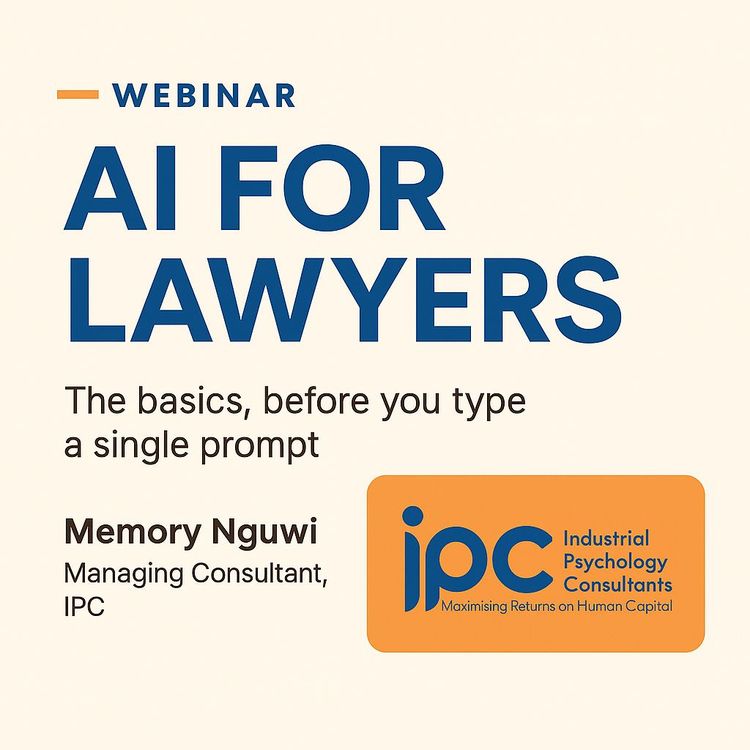
Claude for Lawyers: AI for Every Stage of Legal Work (Video Course)
Turn Claude into a tireless junior associate for every part of your legal practice,research, drafting, contracts, records. Learn to work faster without gambling your license, with verification habits that actually protect you.
Related Certification: Certification in Applying AI to Every Stage of Legal Work
Also includes Access to All:
What You Will Learn
- Construct an end-to-end AI workflow for real client matters
- Match Claude, ChatGPT Work, and model choices to tasks
- Implement security, de-identification, and ethics for client data
- Draft and verify pleadings, heads, and client opinions with AI
- Summarize records, identify contradictions, and extract litigation leverage
- Create firm Skills, Projects, agents, Dispatch schedules, and automations
Study Guide
Introduction: Why "Claude for Lawyers" Is Worth Your Time
You're not learning "AI tools." You're learning how to bolt a tireless, brilliant, risk-free junior associate onto every part of your legal workflow.
Not a fanciful idea. A very practical one.
Used properly, Claude (and tools like ChatGPT Work) can:
- turn vague client instructions into court-ready drafts
- compress hundreds of pages of records into sharp, strategic summaries
- surface the riskiest clauses in a contract and suggest fixes
- generate research plans that would take a junior an afternoon, in minutes
But there's a catch: the tool never carries the risk. You do.
That's the frame for this course: treat AI as a brilliant junior who never gets tired, but also never signs the pleadings.
In this guide, you'll learn,step by step,how to use Claude across the entire legal work cycle:
- research, planning, and strategy
- drafting pleadings, heads, and opinions
- reading and summarizing records
- contract review and negotiation support
- building firm-specific skills and project environments
- security, confidentiality, and ethics that actually protect you
- advanced workflows with multiple AIs "reviewing" each other
By the end, you'll have something better than scattered tips: a complete, end-to-end AI workflow you can run every day in real client work, without gambling your professional license.
Section 1: Your AI Posture As a Lawyer
If your mindset is wrong, the tools will make you faster at making mistakes.
Every major tool in professional life started out suspicious. Calculators. Email. Online research databases. Yet the people who leaned in early gained years of compounding advantage over those who waited "until the dust settled."
AI is no different,except the efficiency jump is much bigger.
Example: A partner gives you a 60-page supply agreement and says, "I need a risk assessment and revised clauses by tomorrow." Without AI, that's a late night. With Claude: a ranked risk table, proposed redrafts, and a crisp summary… in under an hour, with your time spent on judgment instead of scanning boilerplate.
Example: You receive a 400-page trial record for an appeal. Traditionally, you'd spend days just getting oriented. With Claude, you can have a witness-by-witness breakdown, contradiction table, and a shortlist of leverage points for cross or argument,before lunch. You still read the key portions yourself, but you're starting from a map, not a jungle.
Here's the key: research with consultants has shown that average performers improved their output quality by roughly forty percent with AI support, while top performers still improved but by a smaller margin. That means:
- AI raises the floor for everyone
- the new differentiator is not who can draft the fastest, but who verifies, interprets, and strategizes the best
So the posture you need is this:
- open, curious, willing to experiment
- skeptical about outputs, especially citations
- aware of the model's blind spots in your jurisdiction
- ruthless about verification and responsibility
Example: You ask Claude for authorities on a local labor statute. It responds confidently,but you know most models are trained heavily on foreign common law. Instead of copy-pasting, you treat the list as hypotheses: you cross-check each case in your own database and discover two are slightly misdescribed, and one doesn't exist. You've just seen why verification is non-negotiable.
Example: A colleague proudly says, "I wrote this entire bail heads with AI in twenty minutes." The judge spots a fictitious authority in paragraph 12. Which name is on the roll? Not Claude's. The lawyer's. This is exactly what you avoid by deciding, up front: AI can draft, but it never decides what leaves your desk.
Section 2: What Large Language Models Actually Do
To use Claude wisely, you need a simple mental model of how it works.
A large language model (LLM) is not retrieving truth from a legal database. It's predicting the next most likely word based on patterns it learned from massive text data.
That's why it feels like a conversation with a very well-read person. And also why it can say things that sound authoritative and fluent… and be completely wrong.
Example: You ask, "What did the court hold in Smith v Brown on concurrent causation?" The model "remembers" lots of tort cases with similar names and writings on causation. It stitches them into a plausible answer. If that exact case never existed, it might still produce a detailed, fake summary that feels real.
Example: You paste a section of a criminal statute and ask, "What's the maximum penalty?" If training data around that section included commentary referencing an outdated version, the model may confidently describe the older penalty regime. It doesn't "know" it's outdated,it's just following the strongest pattern.
A few core concepts you'll lean on:
LLM (Large Language Model).
Predicts the next token (piece of text). Great at language, not inherently grounded in fact.
Hallucination.
When the AI generates something plausible but false,like a case that never existed or a statute section with the wrong wording.
Prompt.
The instruction you give the model. Good prompts produce structured, verifiable work. Vague prompts produce vague answers.
Token.
A chunk of text the model reads or writes. Longer, more complex tasks use more tokens (and usually require stronger models).
Hypothesis testing.
The disciplined approach: treat every answer as a testable hypothesis, not as "the law."
Example (bad prompt): "Tell me everything about unfair dismissal." , You'll get a generic lecture that's hard to use, likely referencing foreign law, and maybe out of step with current local practice.
Example (good prompt): "You are my labor law research assistant in [jurisdiction]. I'll paste a client scenario. Turn it into (1) precise legal questions, (2) governing statutes and sections to verify, (3) sub-issues I must research, and (4) suggested search terms. Do not answer the questions yet." , Now you get a research plan, not a pseudo-opinion.
Section 3: Choosing and Setting Up Your AI Workspace
For lawyers, not all AI platforms are equal. Three matter most right now:
Claude (with Cowork desktop app).
Best overall for legal output. Strong formatting, clear structuring, and very capable models like Sonnet and Opus. The Cowork desktop app can work directly with files and folders on your machine.
ChatGPT Work.
Very capable, especially with drafting. Offers plugins, apps, and advanced voice. Formatting often needs more nudging, but you can tune it. Works well as a "second reviewer" for Claude's work, and vice versa.
Google Gemini / NotebookLM.
Useful when you want to upload specific documents and chat about them, but generally behind Claude and ChatGPT for full-cycle legal workflows.
The bigger difference isn't just between platforms; it's between how you access them.
- Web chat: great for quick questions, learning a concept, or experimenting.
- Desktop / Cowork / Work apps: where serious legal workflows live.
Example: In Claude Cowork, you select your "Mining Disaster Matter" folder on your laptop. You tell it: "Open the 'Instructions' file and the 'Statutes' folder. Build a research plan on potential culpable homicide exposure for the directors." Claude reads documents directly from your machine, creates a structured memo, and saves it back into that folder.
Example: In ChatGPT Work, you connect Gmail, Calendar, and your document system. You instruct: "Every morning, summarize my unread emails, highlight anything urgent related to litigation deadlines, and propose draft responses for anything that mentions 'settlement'." That's not science fiction; it's a connector plus a scheduled task.
Within Claude Cowork, the core interfaces you'll actually use are:
Chat.
General Q&A, explanations, brainstorming, quick checks.
Cowork.
Local file access, working on documents, drafting and saving into folders, working with email and system actions.
Projects.
Self-contained environments for specific matters or practice areas, with their own instructions and context.
Schedule.
Automated tasks: daily briefings, case law updates, email digests.
Dispatch.
Remote delegation: your office machine stays on, you call tasks in from your phone or laptop, and work runs on the desktop.
Skills / Customize.
Firm-specific abilities baked into the AI: drafting styles, templates, checklists, plugins.
On top of that you choose a model for each task:
- use heavier models like Opus for complex analysis, long documents, or delicate drafting
- use lighter models like Sonnet or similar for quick summaries or brainstorming
The pattern: match model to task instead of just clicking whatever is default.
Section 4: Security, Confidentiality, and Ethics Baseline
Here is the unfiltered reality: the fastest way to get yourself, your firm, and your client into trouble is to treat AI like a toy app rather than an extension of your practice infrastructure.
You have three big categories of risk:
- data leakage
- misunderstanding of account types
- lazy verification of AI-generated content
Data leakage.
Any time you paste information into a system, you're potentially exposing it. That includes client names, passport numbers, trust account details, bank accounts, draft deal terms, and confidential strategies.
Example: A junior uploads an entire due diligence report,including client identities and sensitive financial terms,into a free AI account to "make it read nicer." That account uses data for training. You've just effectively published elements of a confidential transaction to an unknown training pipeline.
Example: You connect your email to an AI through an unverified third-party browser extension to "help" with inbox management. Hidden prompts on malicious emails could instruct the AI to forward messages, download attachments, or click links automatically. You thought you installed a productivity tool; you actually opened a channel into your correspondence.
To manage this, understand the account tiers:
Free accounts.
Usually store your data and use it to improve models. Completely inappropriate for identifiable client information.
Personal paid accounts.
Often let you turn off training use in settings, but data may still be retained for some time. Some lawyers use these for de-identified work or personal learning.
Business / Team / Enterprise accounts.
Contractual guarantees that your data is not used to train models. Better deletion, retention, and admin controls. This is where real client work should live.
Then layer on technical controls:
Incognito / temporary modes.
Sessions that aren't stored in long-term history and are deleted after a short retention window. Use this for especially sensitive, even if de-identified, matters.
Training toggles.
Explicitly turn off "use my data to improve models" in settings. Check periodically; don't assume defaults are safe.
The next habit: de-identification by default.
Before you paste anything:
- strip names and replace with roles: "Client", "CEO", "Minority shareholder"
- remove passport numbers, account numbers, national IDs
- avoid including exact case numbers unless essential
- if you need context like amounts, keep them, but keep who/where abstract unless absolutely necessary
Example: Instead of "On 14 March 2026, at XYZ Mine, our client Tendai Harington diverted US$4.8 million…", you write: "On a specific date, at a large mine operated by Company A, the chief executive approved diverting a large capital expenditure related to a tailings facility to repay bank debt." That's plenty for legal analysis, without giving the AI a biography.
Example: Instead of uploading a signed contract with parties and account details, you paste the key clauses into Claude with parties renamed "Buyer" and "Seller," and remove bank details. You still get a precise risk analysis and suggested clauses.
A simple information classification helps:
Green (safe):
Your own generic drafting, clause wording, formatting, learning requests, anonymized hypotheticals. Fine for any account.
Amber (sensitive):
Real but de-identified contracts, draft pleadings with facts, strategy memos with roles but no names. Only in business/enterprise accounts, with training disabled and ideally incognito.
Red (do not paste):
Client names, IDs, trust account or bank details, passwords, tokens, highly sensitive regulatory info. These never belong in prompts.
On top of that, build "ten habits that cover most of your risk":
1. Use only firm-approved business or enterprise accounts for client work.
2. Turn off data-for-training in settings and verify periodically.
3. Classify content (green/amber/red) before you paste anything.
4. De-identify client information by default; treat full identification as a rare exception.
5. Verify every citation, figure, and factual assertion before it leaves your desk.
6. Never let AI make the final judgment on a document that goes to a client or court.
7. Avoid installing unknown extensions or connectors; if you can't name the owner, don't trust it.
8. Assume anything you paste could become visible to someone else; act accordingly.
9. If you make a mistake, stop immediately, document what was shared, delete the conversation, and escalate internally.
10. Follow your firm's incident response plan, including notifying any required regulator or client if a notifiable breach occurred.
Underneath all this sits one ethical rule you should write on a sticky note above your screen:
Never cite a case you have not personally read in a credible report or database. AI doesn't change that. It just makes both the temptation and the consequences bigger.
Section 5: Legal Research with Claude Across the Work Cycle
Legal research with AI is not "ask a question, get an answer." That's how you invite hallucinations. Instead, you use Claude to:
- define the questions
- identify statutes and sections
- map sub-issues
- suggest search terms
Then you verify and deepen using your own tools.
Start with environment setup:
1. Put all matter documents into a clearly named folder on your computer (e.g., "Zambezi Mining Disaster - Research").
2. Open Claude Cowork and attach that folder.
3. Identify the file containing raw questions or instructions (e.g., "05 - Issues for Research").
4. Tell Claude its role and the jurisdiction.
5. Specify the exact structure of the output you want.
Example prompt:
"Open the folder '01 Legal Research' and open file '05 Issues and Questions for Research.' You are my legal research assistant in a [jurisdiction] law firm. The file lists raw research questions in a mining disaster matter. Take only questions on possible culpable homicide charges and on minority shareholder oppression. For each question, give me four things: (1) the precise legal question in one sentence, (2) the governing statute and exact section (mark them clearly so I can verify), (3) the sub-issues I must research, and (4) search terms I could use in our case law databases. Do not answer the legal questions yet and do not cite any case."
Claude will typically respond with a structured plan:
- clear, one-sentence legal questions ("Whether the conduct of the CEO, in approving the diversion of funds from critical safety infrastructure, amounts to culpable homicide under the criminal code.")
- named statutes and sections (clearly highlighted for your manual verification)
- sub-issues ("foreseeability of harm," "personal vs vicarious liability of directors")
- search keywords for your own research tools
Example (culpable homicide sub-issues):
- Mental element: What level of negligence is required?
- Causation: How direct must the link be between the diverted budget and the deaths?
- Corporate context: How do courts treat decisions of boards and CEOs in workplace death cases?
Example (minority oppression sub-issues):
- Whether the diversion of funds and failure to invest in safety amount to oppressive conduct towards minority shareholders.
- Available remedies (buy-out orders, derivative actions, appointment of inspectors).
- Procedural requirements: notice, standing, and evidentiary thresholds.
You now have a roadmap. Next steps:
- run the suggested search terms in your own databases
- cross-check every section number and statutory title
- ask Claude to help you organize the results into a memo or opinion once you have the real cases
Example workflow:
1. Use the research plan to pull five leading cases on occupational deaths.
2. Upload those judgments into the matter folder.
3. Ask Claude: "Summarize each case in one paragraph and create a comparison table of how courts assessed foreseeability and causation. Do not invent any case not in these files."
4. Use that table to frame your opinion or heads of argument.
Example workflow (statutory analysis):
1. Paste the relevant sections of the companies and criminal statutes into Claude within the project.
2. Instruct: "Explain how these sections interact in the context of workplace fatalities. Give me arguments for the prosecution and the defense, and flag any ambiguities courts are likely to resolve."
3. Use that two-sided analysis as the backbone of your written advice.
Section 6: Drafting Pleadings, Applications, and Court Documents
Drafting is where AI feels like magic,until you realize it still needs a supervising lawyer with taste and judgment.
The pattern is always:
- you give it the facts, jurisdiction, and form
- it produces a structured draft
- you verify law, adjust strategy, and polish language
Start with combined summons and declarations.
Example prompt (combined summons):
"Open the folder '02 Drafting Pleadings' and open file '01 Client Instructions - Deceased Workers' Families.' You are my drafting assistant. I act for the families of seven workers killed when a mine collapsed. I am suing the mine owner in the High Court for damages for loss of support. Using only the facts in that file, draft a combined summons and declaration in proper High Court form under the current High Court Rules. The declaration must: (1) plead the duty of care, (2) plead the negligence and causal link to the deaths, (3) plead the loss of support suffered by each family, and (4) end with a prayer for the relief claimed. Wherever a figure or fact is not in my instructions, insert a clearly marked blank in square brackets. Do not invent any facts."
Claude will typically:
- generate the case heading with parties and court
- set out numbered paragraphs under "Particulars of Claim"
- plead duty, breach, causation, and damages in an ordered way
- end with a structured prayer for relief
- leave [BLANK] fields for missing data (dates, amounts, addresses)
Example (follow-up):
You then ask: "Now draft a notice of appearance and plea for the defendant, denying liability and putting plaintiffs to the proof, but admitting jurisdiction and the occurrence of the accident." Claude will:
- produce a notice of appearance in proper form
- draft a plea that responds to each paragraph of the declaration, clearly stating admissions, denials, and "no knowledge" paragraphs
- include a prayer for dismissal with costs
For applications and heads of argument, the pattern is similar.
Example prompt (bail heads):
"You are my drafting assistant for a bail application in the Magistrates' Court. I will paste the charge sheet and my client's instructions. Draft heads of argument for the defense. Structure them as: (1) introduction and issues, (2) applicable constitutional and statutory provisions on bail, (3) application of law to the facts, (4) proposed bail conditions, and (5) conclusion. Flag every case you cite as 'to be verified'."
Claude can:
- outline the presumption of innocence and right to liberty
- set out the legal test for bail in your jurisdiction
- apply those principles to the specific risk factors in your case
- suggest realistic bail conditions (reporting, sureties, surrender of passport)
- give you a clean, structured document ready for your fine-tuning
Example (internal notes):
Ask Claude: "From this draft bail heads, create a one-page internal note to instructing attorneys: what must they still collect, which facts are weak, and which evidence would strengthen our argument?" You now have a communication scaffold for your team.
To push quality higher, use two-AI review:
Example workflow (two-AI review):
1. Claude drafts the combined summons and declaration.
2. You paste that draft into ChatGPT Work with the instruction: "Act as a senior partner in a litigation team. Review this draft for legal weaknesses, missing elements, and formatting issues. Do not rewrite the whole document; produce a numbered list of issues and suggestions."
3. Apply or reject suggestions with your own judgment, then finalize.
Example workflow (reverse):
1. ChatGPT Work drafts extensive heads of argument.
2. You paste them into Claude and say: "Review these heads as if you were opposing counsel. Identify arguments that are vulnerable, authorities that are inapplicable, and any misstatement of law."
3. Use that as a stress-test of your own case.
Section 7: Mastering Records, Evidence, and Transcripts
One of the most brutal drains on a litigator's time is simply reading: trial bundles, witness statements, correspondence, discovery. AI doesn't replace your reading; it turns it from raw effort into targeted attention.
The core capabilities you want here are:
- organized summaries of each witness or document
- precise lists of contradictions, with references
- distilled "top leverage points" for cross-examination or argument
Example prompt (trial record):
"Open the folder '03 Trial Record' and read all numbered witness statements. For each witness, give me: (1) a detailed summary of their evidence in more than four sentences, (2) a list of every internal contradiction in their statement with page and paragraph reference, and (3) a list of every contradiction between this witness and any previous witness, also with references. Then give me the three contradictions most useful to the defense, with a one-sentence explanation for each. Do not overstate differences; if a point is only arguably a contradiction, say so."
Claude will generally:
- organize by witness name
- summarize examination-in-chief and cross-examination
- identify points where a witness contradicts themselves or others
- distinguish hard contradictions from debatable discrepancies
- highlight the three best points for your client
Example (criminal case):
- Witness A says the accused was at the mine all evening.
- Witness B, a security officer, logs the accused leaving two hours before the accident.
Claude flags this as a direct contradiction, with page references and commentary on why it matters for intent and opportunity.
Example (commercial dispute):
In a shareholder oppression case, one director claims all safety expenditures were approved unanimously. Minutes from a key meeting show the minority shareholders voted against diverting funds from safety to debt repayment. Claude surfaces that inconsistency and tags it as a central point for minority oppression and director liability.
You can use similar patterns for other document-heavy contexts:
Example (arbitration bundle):
"Summarize the key factual story from these witness statements and emails. Then list five emails that most strongly support our client's version, with short quotes and references."
Example (discovery review):
"From this folder of documents, identify: (1) any document that mentions 'inspection' or 'safety audit,' (2) any email where budget constraints are used as a reason to delay safety work, and (3) any document that refers to prior near-miss incidents. Produce a table with filename, date, author, recipient, and a one-line summary."
Section 8: Contracts, Opinions, and Client Advisory Work
Contract review and client opinions are where a lot of your value as a lawyer lives. AI doesn't replace that; it gives you a sharper lens and faster hands.
For contracts, your ideal workflow is:
- AI identifies and ranks risk issues
- AI suggests revised clauses
- you decide what's commercially and legally acceptable
Example prompt (supply agreement):
"Open the folder '05 Contracts' and open '01 Equipment Supply Agreement.' Review this agreement from the perspective of the purchaser. Identify all clauses that expose the purchaser to legal or commercial risk. Rank the issues by severity (critical, high, medium, low). For each issue, explain in plain language why it is risky and propose revised wording that better protects the purchaser. Note any clauses that are likely unenforceable under general contract principles or consumer protection law."
The output tends to include:
- an overall risk rating ("This agreement is high risk for the purchaser.")
- a ranked table of issues (lack of specification, harsh acceptance clauses, warranty exclusions, liability caps, unilateral variation rights, etc.)
- suggested revised clauses that tilt risk back toward your client
- commentary on likely enforceability
Example (critical clause identified):
The contract requires full payment of several million dollars, describes the equipment vaguely, deems acceptance within three days of delivery "regardless of whether the equipment has been tested," offers a short warranty that excludes water damage, and excludes liability for flooding, injury, or death even in cases of gross negligence. Claude ranks this as critical and suggests replacing the clause with:
- a detailed technical specification schedule
- acceptance after successful commissioning tests
- a warranty that covers foreseeable operating conditions
- liability carve-outs for gross negligence and personal injury
Example (likely unenforceable provision):
A clause that purports to waive all the supplier's liability for any losses "however arising," including those caused by the supplier's deliberate misconduct. Claude flags this as a clause courts might refuse to enforce and suggests narrower, more realistic liability limitations.
You can replicate this process for other contract types:
Example (commercial lease):
Ask Claude to identify issues for a tenant: repair obligations, rent escalation, early termination, subletting rights, and security deposit treatment, then propose tenant-friendly wording.
Example (SaaS agreement):
For an in-house counsel, instruct Claude to review data processing, uptime commitments, service credits, IP ownership, and indemnities from the company's perspective and highlight negotiation priorities.
For legal opinions and client advice, Claude is your structuring engine.
Example prompt (criminal opinion):
"Open the folder '06 Opinions' and open '01 Facts - CEO Mining Disaster.' You are counsel instructed to advise the CEO. Write a legal opinion that: (1) identifies each charge, (2) analyzes the strength of the state's case on each element, (3) sets out any available defenses, and (4) gives a candid assessment of overall prospects. Flag all cases and statutes for my verification and do not assume facts not in the file."
Claude will usually produce:
- an introduction with instructions summarized
- a statement of the relevant facts
- a section on the applicable law (with authorities you must verify)
- element-by-element analysis of each charge
- clear, plain-language advice to the client
A powerful pattern is to ask Claude for the single strongest defense thesis.
Example (reasonable doubt thesis):
You instruct: "Assume the prosecution says diverting funds from a tailings facility to debt repayment caused the collapse. Give me the single strongest reasonable doubt argument we can make, and explain it in two paragraphs." Claude might respond: the state cannot prove, beyond reasonable doubt, that the facility would have held if the funds had been spent as planned. Without that causal certainty, culpable homicide fails, regardless of what the court thinks of the CEO's ethics.
Example (shareholder oppression thesis):
For minority shareholders who opposed the fund diversion, you ask: "What is the single clearest way to frame oppression?" Claude might say: the majority used their power to prioritize short-term debt relief over known safety risks, ignoring repeated minority objections, thereby exposing the company to existential risk and destroying the minority's legitimate expectation of prudent management.
You don't copy these paragraphs blindly; you use them as scaffolding for your own drafted opinion, after checking every reference against real law.
Section 9: Custom Skills, Projects, and Firm Knowledge Systems
If you want Claude to feel like your junior associate instead of a generic chatbot, you need two things: skills and projects.
Skills are custom instruction sets that teach the AI how your firm does things.
Projects are contained environments for specific practice areas or matters, with their own context and tools.
To create a skill, you don't need to code. You just talk.
Example (Labor Advisor skill):
1. In Claude, go to Skills → Create Skill.
2. Type: "I want to create a skill called 'Labor Advisor.' Ask me multiple-choice questions to clarify what it should do."
3. Answer questions: jurisdiction, types of matters (disciplinary hearings, dismissals, retrenchments), tone (formal, plain-language), output formats (letters, pleadings, checklists).
4. Provide sample documents that reflect your style.
5. Save the skill.
Now, whenever you mention "labor" or "unfair dismissal" in a relevant project, the Labor Advisor skill kicks in automatically and produces outputs in your preferred structure and tone.
Example (Firm Drafting Style skill):
Create a skill that encodes your firm's preferences: how you draft prayers, how you number paragraphs, your headings, whether you avoid Latin phrases, how you write internal memos. Feed it a few anonymized examples. From then on, every draft is closer to your house style out of the gate.
Projects bundle everything needed for a practice area into one sandbox.
Example (Labor Law Project):
1. Create a project called "Labor Advisor - [Jurisdiction]."
2. In the project instructions, describe who you are and what you do: "I am a labor lawyer advising employers and employees in [jurisdiction]. Help me run cases in line with local labor law and best practice."
3. Upload your relevant statutes, regulations, codes of conduct, and key judgments as context documents.
4. Attach the Labor Advisor skill and your Firm Drafting Style skill.
5. Add a Schedule: weekly briefings of new labor judgments, daily calendar and email digests.
6. Use that project for all labor briefs, so the AI stays within your curated materials.
Example (Commercial Litigation Project):
Set up a project for commercial litigation with:
- rules of court
- standard pleadings templates
- key authorities on exceptions, summary judgment, security for costs, etc.
- skills for "Pleadings Drafting" and "Heads of Argument Template"
Now when you say, "Draft a plea to this summons," Claude reads from your uploaded rules and templates, not from some random online precedent.
Projects give you:
- isolation: the AI stays inside your provided materials unless you explicitly ask otherwise
- consistency: skills and templates are applied to everything in that project
- scale: new team members can step into an existing project and benefit instantly from your setup
Section 10: Advanced Workflows, Agents, Dispatch, and Voice
Once you're comfortable with prompts, skills, and projects, you can start building semi-autonomous workflows that run while you sleep or travel.
One powerful pattern is using different AIs as each other's reviewers.
Example workflow (two-AI loop):
1. In Claude Cowork, set a Schedule: "Every evening, for any new document in the 'Draft Pleadings' folder, produce a first draft plea or heads based on the file name and contents."
2. At a later time, have a separate automation in ChatGPT Work that reads each new draft and produces a "Senior Partner Review" memo: legal risks, missing authorities, technical defects.
3. In the morning, you open the folder: each draft is paired with a review memo. Your job is to read, verify, and finalize.
Example workflow (agents for contract review):
1. Agent A (Claude) reviews every new contract dropped into a "To Review" folder, produces a risk table and proposed redlines.
2. Agent B (ChatGPT) reads that output and checks it against a "Firm Risk Policy" skill to see whether any firm "deal breakers" appear.
3. If deal breakers are found, Agent B drafts an internal email: "We recommend rejecting this contract unless clauses X, Y, Z are renegotiated."
4. You receive that email with attached analysis for manual decision.
Dispatch adds a new dimension: remote delegation to your office machine.
Example (dispatch from your phone):
You're in a taxi on the way home. Your desktop at the office is on and connected. Through the Claude app, you trigger Dispatch: "On my office computer, open the 'Bail Application' folder. Draft updated heads incorporating yesterday's judgment I just emailed you. Save as 'Bail Heads - Revised' and send me a summary via email when done." The work runs on your office machine while you're traveling.
Voice and dictation simplify how you communicate with the system.
Example (dictated instructions):
You leave court and dictate into Claude or ChatGPT: "We just got an adverse ruling on the admissibility of the expert report in the Zambezi matter. I'm going to talk through what the judge said. Capture this as a file note and then generate a list of follow-up research questions on appealability and alternative evidentiary routes." You speak; the AI transcribes, structures, and suggests next steps.
Example (live voice exploration):
You're reviewing a complex statutory scheme and ask the AI in voice mode: "Walk me through how these three sections interact. Where could a court interpret them differently? Speak as if you're explaining to a junior associate." You can interrupt, ask follow-up questions, and refine your intuition in real time.
Scheduled briefings extend this leverage to your calendar and inbox.
Example (daily briefing):
Every morning at a set time, Claude reads your email and calendar and sends you a summary: key deadlines, any mention of "hearing," "settlement," or "urgent," plus a short list of tasks you should prioritize.
Example (weekly case law update):
Within a Project for commercial litigation, schedule: "Every Friday, search our connected databases for new judgments containing keywords 'summary judgment', 'exception', 'business rescue'. Summarize three most relevant decisions and attach full judgments to the project." You open your project and you're always up to date.
Section 11: Implementation for Individuals, Firms, Educators, and Regulators
This isn't just about your personal productivity. AI adoption shifts how firms, law schools, and regulators operate. You want to be ahead of that curve, not dragged by it.
For individual practitioners, a simple plan:
1. Choose Claude as your primary drafting and research environment; set up ChatGPT Work as your secondary reviewer and brainstorming partner.
2. Get onto a business or enterprise plan,personally or through your firm,before using AI on real matters.
3. Turn off training use in settings, and learn where incognito/temporary modes live.
4. Build two or three core skills: general legal research, your jurisdictional drafting style, and your main practice area (e.g., labor, commercial litigation).
5. Design a verification checklist you run on every AI-assisted document: statutes, cases, key facts, dates, numbers, logic of argument.
6. Adopt de-identification as second nature whenever you prompt.
7. For critical documents (appeals, major contracts), build a two-AI review habit.
8. Set up at least one scheduled briefing (email + calendar) and one matter-specific research schedule (new case law in your area).
9. Gradually move recurring matters into Projects so you benefit from accumulated context.
10. Keep a short "AI log" where you note what works, what doesn't, and how you're refining your prompts and skills.
For law firm management:
1. Draft an AI policy that defines approved tools, account types, de-identification standards, and forbidden practices (e.g., using free accounts for client data).
2. Provide enterprise licenses for lawyers and key staff; lock down access to consumer versions for work devices.
3. Run structured training: not just "how to use Claude," but how to prompt for research, drafting, contract review, and how to verify outputs.
4. Develop a firm-level checklist of safe habits similar to the ten described earlier, and make them part of performance expectations.
5. Create a simple incident response playbook: what to do, who to tell, how to document, and how to notify clients or regulators if necessary.
6. Encourage teams to build shared Skills and Projects so firm knowledge compounds instead of living in individual notebooks.
7. Measure outcomes: turnaround times, error rates, client feedback, and use that to refine training.
For legal education and continuing development:
- Integrate AI literacy into core subjects: research, writing, ethics, advocacy.
- Teach students to draft prompts, verify hallucination-prone outputs, and use AI to understand complex judgments instead of just reading headnotes.
- Run supervised exercises where students must find and correct AI mistakes in citations and statutory analysis.
- Emphasize the same principle you live by: if you can't own it, you don't submit it.
For regulators and bar associations:
- Publish clear guidance on acceptable and unacceptable uses of AI in legal practice, especially around citation verification and confidential information.
- Make it explicit that sanctions for citing fictitious authorities apply regardless of whether AI was involved.
- Encourage the publication of judgments and legislation in accessible, machine-readable formats so models can eventually handle local law more reliably.
- Offer or endorse training programs that cover both technical and ethical dimensions of AI use.
Section 12: Practice, Reflection, and Next Steps
You've covered a lot. To make this real, you need to move from "conceptual understanding" to "muscle memory."
So before you close this, run through three small practice tasks in your own environment.
Exercise 1 - Build a mini research plan.
Pick a current matter with at least one thorny issue. In Claude Cowork, attach the matter folder and create a prompt that asks for:
- precise legal questions
- statutes and sections (to verify)
- sub-issues
- search terms
Then take that plan into your own databases and start verifying.
Exercise 2 - Draft and review a pleading.
Take existing client instructions (de-identified) and ask Claude to draft a pleading in proper form. Then paste that draft into ChatGPT Work with the "senior partner review" instruction. Compare both outputs against your own version. Notice where AI saves you time, and where your judgment is irreplaceable.
Exercise 3 - Run a contract risk scan.
Choose a contract you've worked on recently. Strip identifying details, then ask Claude for a ranked risk review and redrafted clauses. Ask yourself:
- Did it spot anything you missed?
- Did it overreact anywhere?
- How will you adjust your prompts next time?
As you practice, keep the core principles alive:
- AI is an assistant, not an authority.
- Every AI answer is a hypothesis, not a holding.
- Your license, reputation, and client trust are on the line,not the model's.
- Verification is cheap compared to the time AI saves you.
- The better your prompts, skills, and projects, the more the tool feels like a true member of your team.
Conclusion: The Lawyer Plus Machine Era
You don't need to become a programmer to thrive in the AI era. You need to become a better architect of legal work.
Claude and its peers give you leverage: the ability to move large, tedious parts of the legal workflow with far less effort. Research plans appear in minutes. Drafts appear while you sleep. Records that took days to digest now come to you as clean maps, with the terrain already marked up.
But tools don't replace judgment. They amplify it,or they amplify your blind spots.
If you:
- use business-grade accounts
- de-identify client data
- build firm-specific skills and projects
- run two-AI review on high-stakes work
- refuse to cite anything you haven't personally verified
…then you get the upside with controlled downside. You free yourself from repetitive drafting and endless scanning so you can spend more time on what only you can do: strategy, persuasion, negotiation, and counsel grounded not just in law, but in wisdom.
The profession is moving, with or without you. The opportunity isn't to "keep up with AI." It's to redefine what a competent, effective lawyer looks like when assisted by a tireless, brilliant, risk-free junior who never sleeps and never complains.
Use that assistant well, and your future practice will feel very different: less time on mechanical tasks, more time on deep thinking, and a level of output speed and quality that, without AI, would look almost unfair.
That's the point. Not to replace you,but to make your best work your default, every day.
Frequently Asked Questions
The FAQ below collects the most common questions lawyers ask about using Claude and similar AI tools across the legal work cycle. The goal is simple: help you use AI to do better work in less time, without risking your licence or your clients.
It moves from basic concepts and platform choices, through research, drafting, contracts, and litigation, into security, ethics, skills, projects, and autonomous workflows. Use it as a reference: skim what you know, slow down where you feel resistance, and adapt the examples to your own practice.
General Questions About AI in Legal Work
What is the fundamental role of AI in a law practice?
Think of AI as a brilliant junior who never takes the risk, never gets tired, and never signs the pleadings.
Claude can draft documents quickly, read large bundles without fatigue, and structure content in a way that often looks like a seasoned associate prepared it. It is excellent at turning messy notes into clear opinions, pleadings, and client emails. But it has no skin in the game. The human lawyer remains fully responsible for everything that leaves the office. That means you supervise it exactly as you would a very fast, very confident junior: give clear instructions, check sources, and apply your own judgment before anything reaches a client or court. Used this way, AI becomes a force-multiplier, not a liability.
Why should lawyers embrace AI rather than resist it?
The market rewards speed, quality, and cost-efficiency - AI boosts all three.
Every major tool in professional history met resistance. Calculators, email, electronic research - all were seen as threats to "real" work. Today they are basic infrastructure. AI sits in the same category but with a sharper edge: research shows professionals using it can increase output quality by well over a third, and even top performers see significant gains. If your competitors use AI well while you ignore it, they deliver opinions, contracts, and court papers faster and cheaper. That compounds over time into lost clients, weaker margins, and fewer opportunities for your juniors. Embracing AI is less about chasing novelty and more about refusing to compete with a self-imposed handicap.
Certification
About the Certification
Get certified in AI-driven legal practice: use Claude as a reliable junior associate for research, drafting, contracts, and records, with verification habits that keep work fast, accurate, client-ready, and ethically sound.
Official Certification
Upon successful completion of the "Certification in Applying AI to Every Stage of Legal Work", you will receive a verifiable digital certificate. This certificate demonstrates your expertise in the subject matter covered in this course.
Benefits of Certification
- Enhance your professional credibility and stand out in the job market.
- Validate your skills and knowledge in cutting-edge AI technologies.
- Unlock new career opportunities in the rapidly growing AI field.
- Share your achievement on your resume, LinkedIn, and other professional platforms.
How to complete your certification successfully?
To earn your certification, you’ll need to complete all video lessons, study the guide carefully, and review the FAQ. After that, you’ll be prepared to pass the certification requirements.
Other AI Video Courses
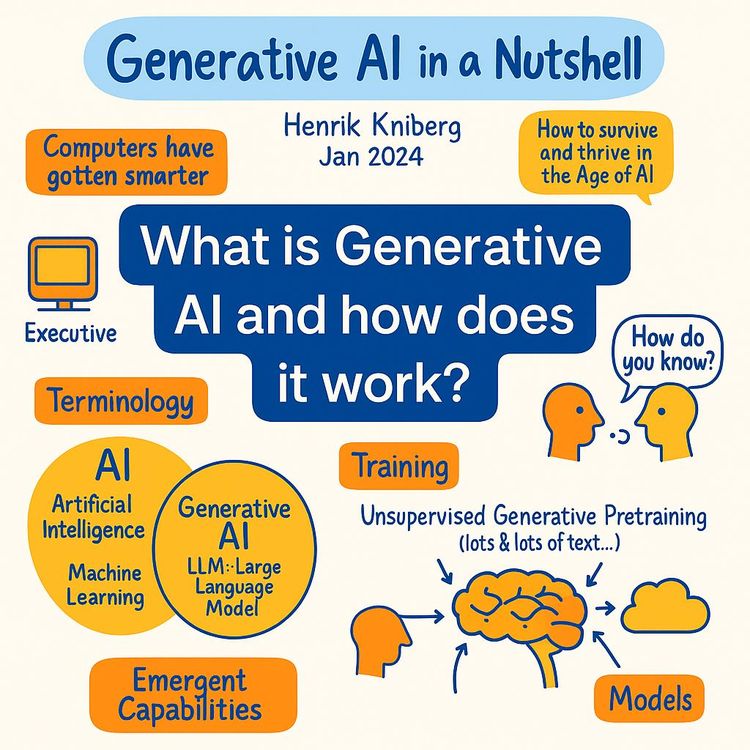
Video Course: What is Generative AI and how does it work?

Video Course: How to Use ChatGPT from Beginner to Professional
Video Course: How to Use Google Gemini for Google Workspace to Boost Productivity
Video Course: How to Use Claude 3.7 AI - Tips for Beginners!

Video Course: ChatGPT for Data Analytics: Full Course - from Beginners to Professional

Video Course: Generating Images and photos With ChatGPT?

Video Course: Generating Images & Photo's with MidJourney
Video Course: Generating Design's with Microsoft Designer and AI

Video Course: Generating Design's with Canva.com and AI
Join 20,000+ Professionals, Using AI to transform their Careers
Join professionals who didn’t just adapt, they thrived. You can too, with AI training designed for your job.