Essential AI Skills: Prompt Engineering, Agents, Open-Source AI (Video Course)
Turn AI from buzzword into career leverage. Learn prompt craft, tool fluency (no-code and dev), and build agents that actually do work,safely. Clear frameworks, hands-on drills, and open-source options so you ship faster with fewer mistakes.
Related Certification: Certification in Designing Prompts, Building Agents & Deploying Open-Source AI
Also includes Access to All:
What You Will Learn
- Apply the six-part prompt framework and advanced prompting to get reliable outputs
- Use AI tool fluency: "vibe code" prototypes and leverage AI-assisted coding for developers
- Design, build, test, and measure AI agents with safety guardrails and monitoring
- Implement responsible AI: data privacy, bias mitigation, verification, and governance
- Choose and integrate open-source vs closed models for cost, control, and performance
Study Guide
Essential AI Skills For The Near Future
You've heard the noise. AI is everywhere. But here's the signal: the people who learn to partner with AI don't just save time,they multiply output, reduce their stress, and gain leverage in their careers. This course is your full-spectrum training wheelset to do exactly that.
We're going to build from zero to advanced: the language of prompting, practical tool fluency for both non-technical and technical professionals, how to design and deploy AI agents that actually do work for you, and the mindset and guardrails of responsible AI use. We'll also cover the surge of open-source AI,why it matters, when to choose it, and how to use it without drowning in complexity. Along the way, you'll get examples, blueprints, and practical moves you can apply immediately.
If you're willing to practice, you'll walk away with a skill stack that turns AI from a vague buzzword into a real competitive advantage.
How To Use This Course
This isn't theory for theory's sake. Read a section, apply a small piece, iterate. Treat AI like a teammate who learns when you do. The first output is rarely perfect. Tight feedback loops win here. Keep a prompt library, log what works, revisit it weekly, and test in the context of your real work.
The Four Pillars You'll Master
Everything in this course runs through these pillars:
1) Prompt Engineering: the language of AI. Clear inputs produce useful outputs.
2) AI Tool Fluency: building with AI as a non-coder ("vibe coding") and amplifying as a developer (AI-assisted coding).
3) AI Agents: moving from "AI that suggests" to "AI that does" via multi-step, tool-using automation.
4) Responsible AI: critical thinking, data literacy, and ethical oversight to keep your work accurate, private, and safe.
We'll also embed the open-source AI trend across these pillars because it changes the economics and control you can have over AI in your stack.
Pillar 1: Prompt Engineering , The Language Of Leverage
Prompt engineering is the new business literacy. If you can't ask clearly, you won't get anything useful back. The good news? It's learnable and repeatable.
Core Principles Of Effective Prompting
- Specificity and Clarity: vague inputs produce vague outputs. Tell the model exactly what you want, in what format, and with what boundaries.
- Iterative Refinement: treat prompting like a conversation. Your first draft is guidance for better drafts.
- Prompt Library: keep your greatest hits,prompts you can reuse across projects and contexts.
Example 1:
Weak: "Write a marketing plan."
Strong: "You are a senior SaaS marketer. Create a 1-page launch plan for a task management app. Include ICP description, three pain points, three messaging pillars, two channel strategies (email + LinkedIn), and a 6-step timeline. Keep the tone concise and practical."
Example 2:
Weak: "Summarize this report."
Strong: "Act as a management consultant. Summarize the attached 20-page report into: Executive Summary (5 bullets), Risks (3 bullets), Financial Impact (table format in text), and Recommended Next Steps (5 bullets). Keep it under 300 words."
The Six-Part Prompt Framework
Use this structure to produce consistent, high-quality results. It's especially useful when you're building workflows or agents.
1) Role: define the expertise you want the AI to emulate.
2) Task: the primary objective, stated clearly.
3) Input: what you'll provide now (and later).
4) Output: format, tone, structure, length.
5) Constraints: what to avoid, rules to follow.
6) Reminders: critical instructions to keep top-of-mind.
Example 1 (Client Email):
Role: "You are a professional business communication specialist."
Task: "Draft a follow-up email to a client after our first meeting."
Input: "I'll paste the meeting notes next."
Output: "Write a polished email with greeting, recap of decisions, 3 next steps with owners and deadlines, and a friendly closing."
Constraints: "Avoid slang; don't promise discounts."
Reminders: "Keep the tone warm but professional; confirm the next meeting date."
Example 2 (Project Plan):
Role: "You are a senior project manager in software."
Task: "Create a 6-week project plan for adding SSO to our app."
Input: "Tech stack: React, Node, PostgreSQL, Auth0."
Output: "Timeline by week, owners, dependencies, risks, and mitigation. Provide a simple text Gantt."
Constraints: "Keep it under 500 words; no vendor lock-in."
Reminders: "Highlight security review and rollback plan."
Advanced Prompting Techniques
- Chain-of-Thought (CoT): ask the model to show its reasoning steps for harder problems.
- Tree-of-Thought (ToT): prompt the model to consider multiple approaches and then choose the best path.
- Retrieval-Augmented Generation (RAG): enrich prompts with relevant documents or data so the AI relies on your sources, not only its training.
Example (CoT):
"Walk through your reasoning step-by-step to calculate the breakeven point for this pricing change. Show assumptions, formulas, and a final recommendation."
Example (RAG):
"Using the three PDFs I uploaded (our policy, last quarter's audit, and the compliance checklist), generate a compliance gap analysis. Cite which document each recommendation comes from."
Prompt Pitfalls To Avoid
- Overloading one prompt with 10 competing goals.
- Asking for creativity and rigid structure in the same breath without prioritizing one.
- Forgetting constraints (e.g., "don't include sensitive client info" or "limit to one screen").
Practice: Build Your Prompt Library
- Create folders by function: Sales, Marketing, Ops, Finance, Engineering.
- Save at least three prompts per function this week; label each with "Goal," "Best Output Received," and "Notes to Improve."
- Reuse, remix, and refine. That's where the gains compound.
Pillar 2: AI Tool Fluency , Build With And Through AI
This pillar splits into two tracks. If you're not a coder, AI is your new cofounder. If you are a coder, AI is the strongest teammate you've ever had,fast, tireless, and surprisingly good at boilerplate.
Track A: "Vibe Coding" For Non-Technical Pros
"Vibe coding" is giving natural language instructions to build working prototypes, workflows, and simple applications. You describe what you want; the tool assembles it.
What this unlocks:
- Designers generate interactive site or app prototypes from a mood board and a written spec.
- Product managers test user flows with a working mockup,today, not next month.
- Entrepreneurs spin up a basic MVP without hiring a dev team.
- Analysts build dashboards, query data, and automate reporting without engineering help.
Example 1 (No-Code Automation):
"When a new lead fills our Typeform, enrich it with Clearbit, score it based on ICP rules, create a new CRM record, send a personalized intro email, and notify the rep in Slack with next steps."
Example 2 (Prototype In Hours):
"Build a clickable prototype for a mobile habit tracker: screen 1 (daily checklist), screen 2 (progress graph), screen 3 (streaks and rewards). Use a clean, minimalist theme. Add fake user data."
Vibe Coding: Best Practices
- Start with a one-page spec: audience, user story, required screens/steps, and success criteria.
- Build in slices: one workflow at a time; test after each step.
- Keep data privacy in mind: don't pipe sensitive data into unstable or unvetted tools.
- Expect constraints: niche features and deep customization still require engineering.
Vibe Coding: Common Limitations
- Scalability: prototypes may not handle heavy traffic or complex logic.
- Black-box behavior: autogenerated code can be hard to debug without technical skills.
- Vendor constraints: you're limited by what the tool supports.
Track B: AI-Assisted Coding For Developers
AI doesn't replace you; it removes friction. Think of it as an intelligent pair programmer that works across your entire lifecycle,requirements, scaffolding, integration, testing, documentation, and refactoring.
From Old Workflow To AI-Accelerated Workflow
- Searching forums → Describe context; get tailored code with explanations.
- Copy/paste snippets → Ask for idiomatic code that matches your stack and constraints.
- Manual debugging → Use AI to hypothesize root causes and propose fixes.
- Writing boilerplate and tests → Autogenerate tests, docs, and scaffolding in minutes.
- Context switching between tools → Keep a conversational loop inside your IDE and terminal.
Example 1 (API Integration):
"Given this Node/Express app and the Stripe docs, generate endpoints for creating a checkout session and handling webhooks. Add Jest tests and TypeScript types. Explain where to store secrets and how to retry failed webhooks."
Example 2 (Legacy Refactor):
"Refactor this 800-line monolithic function into smaller pure functions. Preserve behavior. Add unit tests for edge cases. Provide a benchmark script and a short doc explaining the new structure."
Developer Best Practices With AI
- Prime the assistant: paste your conventions, architecture, and constraints upfront.
- Think in prompts, review in diff: request code with reasoning, then review diffs like you would a PR.
- Always verify: run tests, validate logic, and check for hallucinated APIs or insecure defaults.
- Document as you go: ask AI to summarize design decisions after each session.
Security And Reliability Considerations
- Beware secrets: never paste API keys or credentials; use mock values.
- Validate dependencies: AI can suggest packages with licensing or security issues,check them.
- Performance: ask for time/space complexity estimates and profiling guidance.
Pillar 3: AI Agents , From Suggestion To Execution
Agents are AI systems that don't just answer,they act. They perform multi-step workflows, use tools, and chase goals with minimal oversight.
What Makes An Agent An Agent
- Autonomous Action: can decide next steps toward a defined goal.
- Multi-Step Workflows: chain tasks like research → draft → review → send.
- Tool Use: call APIs, update databases, read/write files, post to apps.
Example 1 (Sales Research Agent):
Goal: "Find the top 50 target accounts in mid-market SaaS, identify buying committee contacts, draft personalized outreach, schedule follow-ups." The agent searches, enriches data, drafts emails, and queues sequences for review.
Example 2 (Support Agent):
Goal: "Resolve common tickets end-to-end." The agent classifies the ticket, queries the knowledge base, drafts a response, triggers refunds or resets if allowed, and escalates complex cases.
Agent Architecture In Plain Language
- Planner: figures out the next best action from the goal and context.
- Memory: stores context, past actions, and outcomes.
- Tools: functions or APIs the agent can call (CRM, email, spreadsheets, web browser, databases).
- Executor: runs actions, checks results, and loops until done or escalation is needed.
- Guardrails: constraints, approval steps, and safety checks.
Blueprint: Build Your First Agent
1) Select a high-friction, high-volume workflow (e.g., weekly reporting, prospecting, onboarding).
2) Map the steps by hand, including inputs, decisions, actions, and outputs.
3) Choose tools: LLM, connectors (Zapier/Make/n8n), data sources, and any specialized APIs.
4) Write prompts using the six-part framework for each decision/action block.
5) Add guardrails: validation rules, human approval on risky steps, logging.
6) Test with synthetic inputs; run with a small live batch; monitor errors.
7) Iterate on weak points; expand scope only when stable.
Example 1 (Data Analysis Agent):
"Pull monthly revenue by product from the data warehouse, clean missing values, calculate month-over-month changes, generate visuals, and email a summary to the leadership list." The agent connects to the warehouse, runs SQL, creates charts, drafts insights, and sends for approval.
Example 2 (HR Onboarding Agent):
"For each new hire, create accounts (email, Slack, project tools), assign training, schedule a manager intro, and send a customized welcome pack." The agent triggers from the HRIS, uses admin APIs, checks completion, and reports status.
Measuring Agent Performance
- Effectiveness: task completion rate, accuracy of outputs, stakeholder satisfaction.
- Efficiency: time saved, cycle time reductions, cost per task.
- Reliability: error rate, rollback behavior, and escalation rate.
Agent Risks And How To Mitigate
- Action Misfires: require approvals on destructive actions (refunds, deletions).
- Tool Hallucinations: whitelist tools and validate outputs with schemas.
- Data Leakage: constrain data access, mask sensitive fields, log every action.
- Drift: schedule reviews of prompts, tools, and outcomes to keep performance steady.
Pillar 4: Responsible AI , The Skill That Protects Your Results
AI is powerful, but it isn't perfect. Your edge is knowing when to trust it, when to verify, and how to design workflows that protect people and data.
Critical Thinking And AI Literacy
- Treat AI outputs as drafts, not gospel.
- Verify facts, numbers, and names before sharing externally.
- Ask the model to show its sources or reasoning when stakes are high.
Example 1:
"Cross-check these three claims with cited sources. If no reliable source is found, flag them and suggest neutral phrasing."
Example 2:
"Identify assumptions and potential biases in this hiring rubric. Recommend changes for a fairer evaluation."
Data Privacy And Security
- Redact PII before sending data to third-party services.
- Prefer private or on-prem deployments for sensitive workloads.
- Use role-based access controls for agents; log and review actions regularly.
Example 1:
Replace exact customer emails with hashed IDs in agent workflows; decode only inside your secured environment.
Example 2:
Run an internal Q&A assistant over your policy documents using a private vector database and an on-prem model to avoid external data transfer.
Bias, Fairness, And Guardrails
- Provide balanced context in prompts to reduce biased outputs.
- Evaluate outputs across demographics where relevant.
- Insert human review for decisions that affect people's lives (hiring, lending, healthcare).
Governance In Practice
- Prompt and Agent Registry: track versions, owners, and change history.
- Approval Workflows: require sign-off for new agents or high-risk actions.
- Incident Playbooks: define rollback steps, alerts, and communication paths.
The Open-Source AI Shift , Cost, Control, And Customization
Open-source models are advancing quickly. The performance gap with premium closed systems has narrowed substantially while offering affordability and control. That changes how you budget, where you run models, and how deeply you can customize them.
Why Open Source Is Winning Ground
- Cost-Effectiveness: run small to mid-size models locally or in your cloud for a fraction of the cost.
- Control: tune models on your data; keep logs and weights under your governance.
- Privacy: keep sensitive workloads off third-party infrastructure.
- Rapid Innovation: a global community, including major teams in Asia,pushes improvements weekly, with a growing ecosystem of tools.
Example 1 (Private Summarization):
Deploy a compact LLM on a private server to summarize internal meeting transcripts and draft action items, never leaving your network.
Example 2 (Specialized Assistant):
Fine-tune an open model on your support tickets to improve intent classification for your specific product vocabulary.
Tradeoffs And Considerations
- Operational Overhead: you'll manage hosting, scaling, and updates.
- Talent: you may need MLOps skills for deployment, monitoring, and cost control.
- Performance Fit: closed models can still outperform on certain tasks; choose wisely per use case.
Choosing Models And Architectures
- Model Size: bigger isn't always better. Small models are cheap and fast for narrow tasks.
- Quantization: run models efficiently on commodity hardware with minimal quality loss.
- RAG vs. Fine-Tuning: RAG for freshness and control; fine-tune for style and domain depth.
Example (Hybrid Stack):
Use a closed API for creative brainstorming and an open model for private document Q&A. Route requests based on sensitivity and complexity.
What The Market Is Saying
Leaders expect deep AI integration in their operations within the near term. Developers report completing tasks up to three times faster with AI assistants. Investors report that a large majority of new AI startups pitch them with open-source foundations. The takeaway: rise with the wave, don't argue with it.
Critical Workplace Skills For An AI-Integrated Role
Technical skills get you leverage. Human skills keep it pointed in the right direction.
Data Literacy
- Read dashboards: understand distributions, outliers, and basic stats.
- Question data pipelines: where did the data come from, and how clean is it?
- Validate: sample outputs and check against ground truth.
Example 1:
Before trusting an agent's churn prediction, check the training window, target leakage, and whether class imbalance was handled.
Example 2:
When a model recommends a price change, ask for a sensitivity analysis to understand revenue downside if assumptions fail.
Workflow Integration
- Map your week: highlight repetitive steps, handoffs, and delays.
- Insert AI where it cuts a bottleneck, not where it creates new ones.
- Start with human-in-the-loop, then graduate to full autonomy where safe.
Example 1:
Replace manual lead research with an agent that enriches and scores leads overnight. Sales reps review and approve before outreach.
Example 2:
Automate report generation, but keep a manager approval step before publishing to the exec Slack channel.
Continuous Learning
- Maintain a "what changed this week" log for your stack.
- Run small experiments monthly: new prompt pattern, new tool, new agent step.
- Share learnings inside your team to compound improvements.
From Concept To Application: Deep-Dive Examples
Deep-Dive 1: Marketing Content Engine
Goal: cut content production time by two-thirds while improving consistency.
Steps:
- Prompt Library: create prompts for briefs, outlines, first drafts, and repurposing.
- RAG: feed product docs, voice guides, and customer interviews into a vector store.
- Agent Workflow: brief → outline → draft → legal check → publish queue.
Example Prompts:
- "Act as our brand voice editor. Rewrite this draft to match the voice guide. Keep technical accuracy, shorten by 20%, and add two examples relevant to SMB owners."
- "From these interviews, extract top five pains, desired outcomes, and common objections. Output as a messaging matrix."
Deep-Dive 2: Finance Reporting Agent
Goal: reduce weekly close reporting from a day to an hour.
Steps:
- Data Connectors: read ledger, CRM, and billing exports.
- Cleaning: define mapping and validation rules ("if missing SKU, flag; if negative revenue, alert").
- Output: a standardized report with charts, variance analysis, and commentary.
Example Checks:
- "Validate totals by source; if variance > 1%, halt and request human review with suspected causes."
- "Annotate major changes with likely drivers (seasonality, refunds, price tests)."
Deep-Dive 3: Recruiting Flow Agent
Goal: accelerate hiring while removing bias and noise.
Steps:
- Intake: standardize role requirements and competency rubrics.
- Screening: anonymize resumes; match to rubrics; draft initial assessments.
- Scheduling: propose times to candidates automatically; log into ATS.
- Compliance: store decisions and justifications with structured data.
Ethics Guardrail:
"No hiring decision without human approval. Require justification tied to competencies, not personal attributes."
Action Items & Recommendations , Your Shortlist
1) Develop Prompting Proficiency
- Learn the six-part framework; practice daily on real tasks.
- Build a personal prompt library with tags (e.g., "email," "analysis," "summarize").
- Iterate: paste the output back with notes,"Shorter intro, more data, cite sources."
2) Explore AI-Powered Building
- Non-technical: try a no-code automation (Zapier, Make, n8n). Start small: "When a meeting ends, summarize transcript and email action items."
- Developers: adopt an AI assistant (e.g., Copilot or Cursor). Use it to write tests first, then scaffolding, then refactors.
3) Identify Automation Opportunities
- Review your calendar and task list. Anything repetitive and rules-based is fair game.
- Write out steps, inputs, decision points, and outputs. That's your agent spec.
4) Stay Abreast Of Open-Source
- Track a handful of models and repos in your domain.
- Pilot a private deployment for one sensitive workflow (summarization, doc Q&A).
- Compare cost, latency, and quality versus closed APIs.
5) Cultivate Critical AI Literacy
- Build the habit of verifying. Ask: "What would make this wrong?"
- Red-team your own prompts to reveal blind spots.
- Keep privacy top-of-mind. If you wouldn't email it publicly, don't paste it into a public model.
Common Questions, Clear Answers
Q: How do I know if my prompt is good?
A: You get the output you expected, in the format you specified, with minimal follow-ups. If not, tighten role, task, and constraints.
Q: When do I choose open-source vs. closed?
A: Use open-source for cost control, privacy, and deep customization; choose closed when you need top-tier general reasoning or minimal setup.
Q: What should I automate first?
A: High-frequency tasks with clear rules and a measurable outcome. Reporting, research, and templated communications are great starting points.
Skill Drills: Practice That Builds Muscle
Drill 1 , Prompt Upgrade:
Take a weak prompt you used this week. Rewrite it using the six-part framework. Compare outputs. Note what improved.
Drill 2 , Micro-Agent:
Build a simple agent: "When a call ends, generate a summary, extract action items with owners and due dates, and post to the project channel for approval." Add one guardrail.
Drill 3 , Open-Source Test:
Deploy a small local model for private note summarization. Compare cost and latency to a closed API on the same task.
Expanded Examples By Pillar
Prompt Engineering , Extra Scenarios
Example (Legal Review Aid):
"You are a contract analyst. Compare these two versions, list redlines by clause, describe material risk, and suggest neutral alternatives."
Example (Customer Insights):
"Analyze these 100 support tickets. Categorize into themes, quantify each theme, and output three product suggestions with potential impact."
Vibe Coding , Extra Scenarios
Example (Customer Journey Map):
"Create an interactive customer journey map with stages, touchpoints, drop-off points, and recommended fixes, pulling from our last quarter surveys."
Example (Internal Knowledge Bot):
"Build a bot that answers employee policy questions using our handbook PDFs and links each answer back to the exact source page."
AI-Assisted Coding , Extra Scenarios
Example (Performance Tuning):
"Profile this Python ETL job. Identify bottlenecks, propose vectorized alternatives, and provide a benchmark plan with expected gains."
Example (Security Review):
"Scan this PR for security risks. Highlight insecure defaults, input validation gaps, and missing auth checks. Suggest fixes with code."
AI Agents , Extra Scenarios
Example (Renewal Risk Agent):
"Monitor product usage and support sentiment. Flag accounts with risk signals, draft outreach for CSM review, and schedule a check-in."
Example (Procurement Agent):
"When a team requests a tool, check vendor security pages, extract SOC status, compare pricing tiers, and prepare a summary for approval."
Responsible AI , Extra Scenarios
Example (Bias Audit):
"Evaluate interview summaries for biased language. Flag phrases and suggest neutral alternatives based on our DEI guidelines."
Example (Privacy Guard):
"Before sending customer data to an external API, anonymize identifiers, mask emails, and strip free-text fields of PII."
Metrics That Matter
- Adoption: percentage of team using the assistant/agent weekly.
- Time Saved: hours reclaimed per user per week.
- Quality: error rate before vs. after; stakeholder satisfaction scores.
- Cost: cost per task vs. manual; API and infra spend under control.
- Reliability: success rate of automations; mean time to recovery on failures.
Implementation Roadmap , Phase By Phase
Phase 1 , Foundations:
- Learn the six-part prompting framework; build your prompt library.
- Non-technical: automate one daily task with a no-code tool.
- Developers: adopt an AI assistant; use it for tests and scaffolding.
- Create a lightweight governance doc: what data is allowed, where, and why.
Phase 2 , First Agent In Production:
- Pick a workflow with high payoff (prospecting, reporting, onboarding).
- Map it, build it with guardrails, and run a pilot with a small group.
- Measure outcomes (time saved, quality, reliability) and iterate.
Phase 3 , Scale And Secure:
- Catalog automations and agents; prevent duplicates; share wins.
- Evaluate open-source for sensitive workloads; compare TCO.
- Formalize reviews, logging, and incident response; train more owners.
Notes On Choosing Your Stack
- Start where you are: maximize the tools your team already uses (Google/Microsoft ecosystems, your CRM, your data warehouse).
- Choose the smallest model that gets the job done. Latency and cost matter.
- Document the why behind every tool choice. Future you will be grateful.
Practical Validation Techniques
- Golden Sets: keep a small set of known-correct inputs/outputs to test after any change.
- A/B: compare old manual process vs. agent output for a few cycles.
- Shadow Mode: run the agent silently alongside the human process before flipping live.
Risk Playbook
- If an agent fails a validation check, halt and notify the owner with the payload and suspected cause.
- Rollback to the previous stable prompt or version with one click.
- Keep humans in the loop for anything that touches money, legal, or customers,until failure rates are near zero.
Checkpoint: Did We Cover The Brief?
- Prompt Engineering: core principles, six-part framework, examples, and pitfalls,covered.
- AI Tool Fluency: vibe coding for non-technical pros and AI-assisted coding for developers,covered with examples, best practices, and limitations.
- AI Agents: definitions, architecture, real-world applications, build blueprint, measurement, and risk mitigation,covered with multiple examples.
- Responsible AI: critical thinking, bias, governance, privacy, and data literacy,covered with examples and checklists.
- Open-Source AI: cost, control, privacy, innovation trends, tradeoffs, and selection,covered with deployment examples and hybrid guidance.
- Workplace integration, learning habits, and implementation roadmap,covered.
- Statistics and insights: adoption expectations, 3x developer productivity, and open-source momentum,covered.
If you've worked through the drills, you're not just informed,you're capable.
Practice Questions To Lock It In
Multiple Choice:
1) What's the primary difference between a chatbot and an agent?
a) Agents use bigger models.
b) Agents can take autonomous action and use tools; chatbots mainly respond to prompts.
c) Agents require open-source models.
d) Chatbots are better at creative tasks.
2) Which is NOT a core principle of effective prompting?
a) Be specific and clear.
b) Use the shortest prompt to save cost.
c) Iterate and refine based on outputs.
d) Build a library of templates.
3) A key advantage of open-source models is:
a) They're always more powerful than closed models.
b) They're only supported by large US tech companies.
c) Greater control, privacy, and customization.
d) They require no technical skills at all.
Short Answer:
- Describe three components of the six-part framework and why each matters.
- Explain "vibe coding." Who benefits and what's a key limitation?
- List two workflows an agent could automate and the steps it would take.
Discussion:
- Pick a repetitive task you do. Draft a simple agent design to automate it. What tools and data are needed?
- Discuss the benefits and risks of the open-source AI surge, including international contributions.
- Do you agree that AI should eliminate grunt work, not thinking? Give an example.
Pro Tips And Best Practices
- Make the model your collaborator: ask for alternatives, tradeoffs, and critiques of its own output.
- Constrain with structure: request JSON or bullet formats to make downstream automation easier.
- Force citations when stakes are high: ask for links, page numbers, and quoted passages.
- Borrow from yourself: every great prompt today is time saved tomorrow.
Mini-Library: Ready-To-Use Prompt Templates
Stakeholder Update:
"You are a program manager. Create a weekly update for executives: 5 bullets max,wins, risks (with owners), timeline status, budget variance, and asks. Keep it candid and concise."
Customer Email Draft:
"Act as a CSM. Draft a follow-up for a customer who reported a bug. Include: apology, fix timeline, workaround, and a check-in offer next week."
Product Spec:
"You are a product lead. Turn these notes into a one-page PRD: problem, goals, non-goals, user stories, acceptance criteria, and open questions."
What Success Looks Like
- You spend less time hunting information and more time making decisions.
- Your prompts and agents feel like assets, not experiments.
- Colleagues start asking, "How did you get that done so fast?"
Conclusion , This Is Your Edge
Let's keep it simple. The people who learn to think with AI, communicate clearly through prompts, and design small systems that do their work for them will rise. Not because they know more buzzwords, but because they deliver more value in less time, with fewer mistakes.
Master the four pillars. Build a prompt library. Automate one workflow. Deploy one useful agent. Compare open-source and closed options with your eyes open. Keep your standards high: verify facts, guard privacy, and design for humans first.
Start small. Improve weekly. The compounding returns will surprise you. And the next time someone says they're "experimenting with AI," you'll be able to smile and say, "I'm shipping with it."
Frequently Asked Questions
This FAQ exists to answer the real questions professionals ask before, during, and after learning Essential AI Skills. It moves from basics to advanced use cases, highlighting what to learn, how to apply it at work, and how to make smart decisions about tools, data, and ethics. Expect clear language, practical steps, and examples you can copy into your workflow today.
Why have AI skills become non-negotiable in the modern workplace?
AI is now a baseline skill set because it makes individuals and teams faster, smarter, and more effective. Productivity:
Professionals using AI report significant gains on writing, analysis, coding, and research. Career upside:
Job postings list AI fluency as a requirement across roles, from marketing to finance to operations. Resilience:
Those who apply AI to automate repetitive tasks and accelerate thinking keep their edge as work changes.
Example:
A sales manager uses an AI assistant to research accounts, personalize outreach, and draft follow-ups,freeing hours for live conversations and strategy. The manager closes more deals without working longer hours.
What are the four essential pillars of AI skills?
The core pillars form a practical roadmap for professionals and teams. Prompt Engineering:
Communicate with AI clearly to get consistent, high-quality outputs. AI Tool Fluency and "Vibe Coding":
Use natural language to build prototypes, apps, and workflows,even without traditional coding. AI Agents:
Move from AI that replies to AI that acts across multi-step processes. Responsible AI Use:
Audit accuracy, address bias, protect privacy, and make ethical choices.
Example:
A product leader uses strong prompts to draft specs, vibe codes a clickable prototype, launches an agent to collect user feedback, and applies a review checklist to ensure data is handled correctly.
What is prompt engineering and why is it considered the most fundamental AI skill?
Prompt engineering is the practice of giving AI clear, specific, and contextual instructions. Why it matters:
The output quality mirrors the input quality. Good prompts mean less editing and faster results. Core habit:
Treat prompting like a conversation: clarify, iterate, and lock in templates. Impact:
Better prompts reduce rework and prevent vague, generic results.
Example:
"You are a B2B copywriter. Draft a 150-word LinkedIn post about our new analytics feature. Tone: confident, concise. Include a CTA to book a demo. Avoid buzzwords. Provide 3 headline options."
What are the core principles of effective prompting?
Three principles make prompts reliable. Be Specific:
Define task, context, audience, format, tone, length, and constraints. Iterate:
Improve with feedback loops,ask for versions, critique, and revisions. Build a Library:
Save high-performing prompts and reuse them as templates.
Example:
A recruiter keeps a prompt library for job descriptions, outreach messages, and screening questions,adjusting role details while keeping structure and quality consistent.
Is there a universal framework for creating high-quality prompts?
Yes,the six-part framework increases consistency and reduces rework. Role:
Define the AI's persona. Task:
State the job clearly. Input:
Share the data or context you'll provide. Output:
Specify format, tone, and structure. Constraints:
What to avoid or rules to follow. Reminders:
Any style or quality notes to keep top of mind.
Example:
"You are a financial analyst. Summarize this earnings call. Output: 5 bullet highlights, risks, opportunities, and 2 follow-up questions for the CFO. Avoid jargon. Keep under 200 words."
Can't you just ask an AI to prompt itself?
AI can improve a draft prompt, but you must set direction. Human intent sets the goal:
If you don't know what you want, the AI can't invent your intent. AI can amplify:
Use it to expand, tighten, or format your prompt once you set the objective. Ownership:
You remain accountable for clarity, constraints, and outcomes.
Example:
Start with "Write a 2-paragraph customer apology email for a missed delivery." Then ask the AI: "Improve my prompt. Add tone, structure, and constraints."
Should prompts be tailored to each specific AI model?
General prompts work across top models, but optimization can help for complex builds. Good baseline:
Clear, structured prompts perform well broadly. Optimize later:
For agents or high-stakes tasks, tune prompts per model to gain a few extra percentage points in accuracy. Trade-off:
Model-specific prompts add maintenance overhead as models change.
Example:
Keep a standard content prompt for most tasks, but maintain a model-optimized version for your legal review workflow where precision matters.
What is "vibe coding"?
Vibe coding is building apps, workflows, or code by describing what you want in natural language. Who benefits:
Non-technical professionals turn ideas into working prototypes quickly. Focus shift:
From syntax to clarity of vision and user outcomes. Impact:
Faster validation and iteration before involving engineers for scale and complexity.
Example:
"Create a lead capture site with a landing page, form, email confirmation, and a Google Sheet integration." The tool generates a functional MVP you can test immediately.
How does vibe coding empower professionals without a technical background?
It removes gatekeeping between ideas and execution. Designers:
Turn mockups into clickable prototypes. Product managers:
Test user flows with real users sooner. Entrepreneurs:
Launch an MVP and validate demand. Analysts:
Build dashboards without waiting on engineering.
Example:
A marketing lead builds a pricing calculator with a form, embedded logic, and a PDF output,collecting leads while the dev team focuses on the core product.
What are the limitations of vibe coding?
It's ideal for prototypes and first versions, but less so for scale and edge cases. Scaling:
Handling high traffic and reliability needs custom engineering. Customization:
Niche features or complex logic may exceed platform limits. Platform lock-in:
Portability can be limited.
Example:
Use vibe coding to build a pilot onboarding tool; bring in developers to refactor the backend and harden authentication once adoption grows.
How does AI-assisted coding change the workflow for developers?
It turns the editor into an intelligent partner. Faster creation:
Generate boilerplate, tests, and docs on demand. Smarter debugging:
Explain errors and propose fixes in context. Focus on architecture:
Spend more time on design and edge cases, less on grunt work.
Example:
"Write a TypeScript function to validate and normalize phone numbers across EMEA. Include unit tests and edge cases." Then iterate with the AI on failures the tests reveal.
What is an AI agent, and how is it different from a chatbot?
Chatbots respond. Agents act. Chatbot:
Answers questions; you perform the steps. Agent:
Pursues goals, uses tools (APIs, databases, email), and completes multi-step workflows with oversight. Outcome:
From "draft the email" to "find the contact, draft, send, and log in CRM."
Example:
A support agent triages a ticket, searches the knowledge base, drafts a response, triggers a refund via API if needed, and updates the ticket status.
What are some real-world applications of AI agents in business?
Agents create leverage across teams. Customer support:
Handle tickets end-to-end with human escalation. Sales research:
Enrich leads, personalize outreach, schedule follow-ups. Data ops:
Pull, clean, analyze, and report across sources. HR:
Automate onboarding tasks and training reminders.
Example:
A finance agent reconciles transactions, flags anomalies, drafts a variance report, and emails a summary to stakeholders.
Do you need to be an expert coder to build an AI agent?
No. You can orchestrate agentic workflows with no-code/low-code tools. How:
Connect apps with Zapier, Make, or n8n; call LLMs for reasoning; add approvals. What matters:
Clear steps, tool selection, error handling, and monitoring. When to code:
For custom integrations, security, and scale.
Example:
Build a "sales assistant" that watches inbound leads, enriches data, drafts emails, books a calendar slot, and posts updates to Slack for review.
What is the difference between open-source and closed-source AI?
It's about control, cost, and transparency. Closed-source:
Proprietary models accessed via vendor apps/APIs; limited visibility into internals. Open-source:
Downloadable, modifiable models you can run privately and customize. Trade-offs:
Closed often offers convenience; open offers control and cost efficiency.
Example:
Use a closed model for general writing tasks; run an open model privately for processing confidential documents.
Why is open-source AI gaining popularity?
Performance is catching up while costs drop. Cost savings:
Lower inference spend at scale. Customization:
Fine-tune on your data for task-specific gains. Privacy:
Keep sensitive data on your infrastructure.
Example:
A healthcare team runs an open model in a private environment to summarize clinical notes without sending PHI to third parties.
Are there security risks with using open-source AI, including models developed internationally?
Open-source lowers certain risks by running locally or in your cloud. Data control:
Prompts and documents stay in your environment. Transparency:
You can inspect and configure behavior. Security work still required:
Apply standard security: access controls, logging, patching, and dependency review.
Example:
Deploy an open model in a private VPC with audit logs, role-based access, and encryption at rest and in transit.
Beyond technical skills, what "soft skills" are crucial for working with AI?
Four skills separate good from great. Data literacy:
Read, question, and validate data. Critical thinking:
Don't accept outputs at face value. Continuous learning:
Update your stack and habits often. Workflow integration:
Know where AI fits and where humans must decide.
Example:
A project manager validates AI-created timelines against constraints, updates risks, and uses AI to draft status reports with clear owner/action/ETA.
How will developing these AI skills impact career growth?
It makes you the person people rely on. Visibility:
You deliver faster with fewer resources. Advancement:
You own higher-impact work and systems. Optionality:
Build solo products or augment your role with automation.
Example:
An ops lead builds agents to reconcile invoices and chase POs, saving the team dozens of hours each month,and earns a larger scope as a result.
What is the single most costly mistake a professional can make regarding AI today?
Waiting. Skill compounding:
Small daily reps stack into big advantages. Market signal:
Hiring managers filter for applied AI skills. Opportunity cost:
Every manual task left unautomated taxes your time and attention.
Example:
Start with one workflow,weekly report generation. Use AI to pull data, write commentary, and email stakeholders with charts. Iterate from there.
Certification
About the Certification
Get certified in AI prompt engineering, agents, and open-source workflows. Prove you can craft prompts that drive results, build safe, working agents, integrate APIs and no-code tools, and ship automation faster with fewer errors.
Official Certification
Upon successful completion of the "Certification in Designing Prompts, Building Agents & Deploying Open-Source AI", you will receive a verifiable digital certificate. This certificate demonstrates your expertise in the subject matter covered in this course.
Benefits of Certification
- Enhance your professional credibility and stand out in the job market.
- Validate your skills and knowledge in cutting-edge AI technologies.
- Unlock new career opportunities in the rapidly growing AI field.
- Share your achievement on your resume, LinkedIn, and other professional platforms.
How to complete your certification successfully?
To earn your certification, you’ll need to complete all video lessons, study the guide carefully, and review the FAQ. After that, you’ll be prepared to pass the certification requirements.
Other AI Video Courses
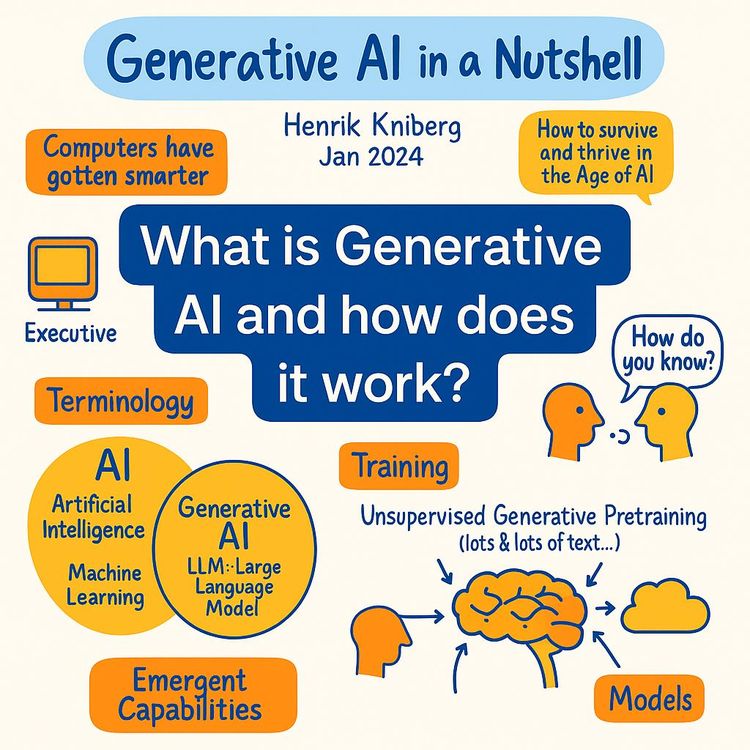
Video Course: What is Generative AI and how does it work?

Video Course: How to Use ChatGPT from Beginner to Professional
Video Course: How to Use Google Gemini for Google Workspace to Boost Productivity

Video Course: How to Use Claude 3.7 AI - Tips for Beginners!

Video Course: ChatGPT for Data Analytics: Full Course - from Beginners to Professional

Video Course: Generating Images and photos With ChatGPT?

Video Course: Generating Images & Photo's with MidJourney
Video Course: Generating Design's with Microsoft Designer and AI

Video Course: Generating Design's with Canva.com and AI
Join 20,000+ Professionals, Using AI to transform their Careers
Join professionals who didn’t just adapt, they thrived. You can too, with AI training designed for your job.