From AI Baby to Creative Partner: Data, Learning, and Health (Video Course)
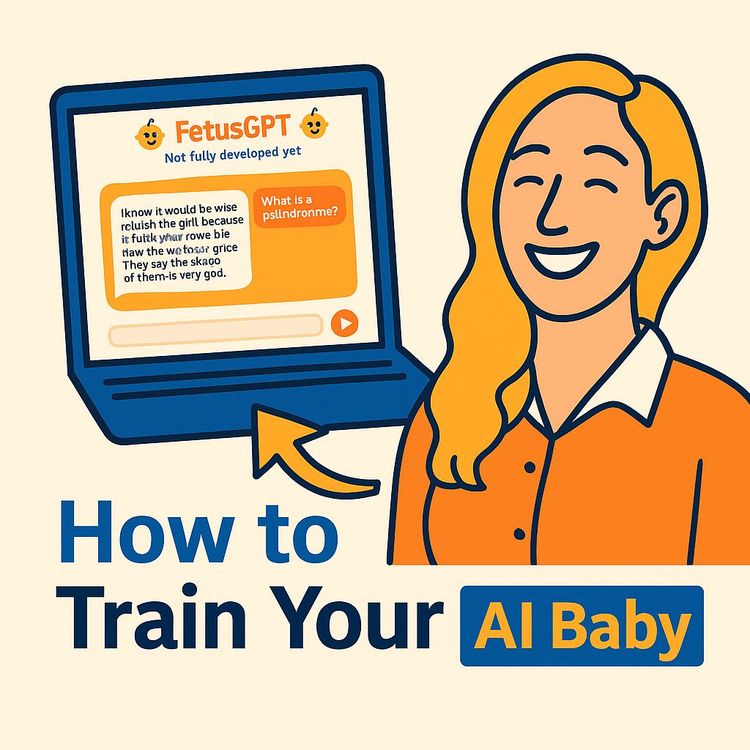
Train an AI like a baby listening in the womb, then use that lens to work smarter. Fetus GPT shows how data shapes behavior, how to prompt for ideas and precision, and how to use it for writing, research, and safer health choices,while you stay in charge.
Related Certification: Certification in Building Data-Driven Human-AI Creative & Health Solutions
Also includes Access to All:
What You Will Learn
- Summarize the Fetus GPT experiment and the "AI is a mirror" lesson.
- Explain architecture, weights, and how training data shapes model output.
- Use divergent (ideation) and convergent (refinement) workflows with AI.
- Craft prompts with role, constraints, examples, and "alien questions."
- Apply AI safely for personal health: interpret labs, map symptoms, flag red flags.
- Curate datasets and set ethical guardrails: remove PII and sensitive content.
Study Guide
Introduction: She Turned Her Whole Life Into Training Data,For an AI Baby
You're about to step into a strange and brilliant experiment: what happens if you train an artificial intelligence the way a human learns in the womb,by listening? This course unpacks a performance art and computer science project called "Fetus GPT," where a basic language model was trained from scratch using months of audio recorded from one person's real life. The result? Babble, echoes of personal conversations, snippets of TV dialogue, and even sensitive topics accidentally absorbed from the nightly news.
On the surface, it's a quirky idea. Underneath, it's a masterclass in how AI really learns, what it mirrors back to us, and how to use it as a creative partner and personal health ally without outsourcing your judgment. You'll learn the mechanics (what model weights are, how data molds intelligence), the metaphors (why hallucinations look a lot like a kid's imaginative mistakes), and the methods (how to prompt, refine, and apply AI in writing, research, comedy, and health).
Here's the promise: by the end of this course, you'll see AI not as a black box, but as a tool you can train, coach, and collaborate with,while staying fully in charge of the outcomes.
What This Course Covers and Why It Matters
This guide builds from fundamentals to advanced practice. We'll cover the Fetus GPT experiment in depth, map direct parallels to human development, and translate those insights into practical workflows for creativity and personal health. You'll get a robust framework for divergent (brainstorming) and convergent (refinement) thinking with AI, ethical guardrails for data and bias, and a playbook for advanced prompting,right down to "alien questions" that force models to break habitual patterns. You'll also learn how emotional intelligence in AI can be useful without becoming manipulative.
Examples:
- How a model trained on Seinfeld reruns and work calls ends up "babbling" office jargon with punchline rhythms.
- How a single mention of a sensitive news story leaks into model output later,just like a toddler repeating a word they don't understand.
- How to use AI to research health concerns, interpret lab results, and prepare for a doctor's visit,while staying grounded and safe.
Part 1 , Foundations: How Language Models Learn (Without the Mystery)
Before we get clever, let's get clear. Language models aren't magic. They're probability engines tuned by data. The quality, variety, and values inside that data carve the mental grooves the model follows later. Here are the core concepts you need.
Training Data
Training data is the raw material used to teach an AI model. Text, audio transcripts, images,whatever you feed it becomes the model's world. The model learns patterns, not facts. It maps what word tends to follow what word in what context. If the dataset is small or skewed, the outputs will be, too.
Examples:
- Feed a model months of household arguments and sitcom dialogue, and it will generate tone shifts between casual banter and heated exchanges.
- Include hours of news talk about specific scandals, and those terms may surface later,even when you didn't intend them to.
Model Architecture
Architecture is the design blueprint of the model. Think of it as the type of engine in a car. Fetus GPT used a basic, unweighted GPT-2 architecture,a transformer-based design known for generating text by predicting the next token. Starting unweighted means it begins as a blank slate with no prior knowledge.
Examples:
- Two models with the same architecture but different data will act like identical pianos played by different musicians,same instrument, different songs.
- Swap architectures while keeping the same data, and the outputs can still diverge because the "engine" handles context and memory differently.
Weights
Weights are the adjustable internal parameters that store what the model has learned. During training, weights shift to make some connections "stronger" and others "weaker." If data is the experience, weights are the learned expectations about that experience.
Examples:
- If your data often pairs "quarterly" with "earnings," the model weights will increase the probability of that pairing.
- If the training set contains many sarcastic punchlines after banal setups, the model learns to anticipate a twist after mundane phrasing.
AI Hallucinations
Hallucinations are outputs that sound confident but don't map to ground truth. They can be nonsensical or simply wrong. They're not malice; they're pattern completion without sufficient understanding or verification.
Examples:
- Suggesting non-toxic glue to make cheese stick to pizza,logically connecting "adhesive" with "stick," but failing at real-world common sense.
- Generating a biography for a person that doesn't exist because the name matches a pattern seen in the data.
Divergent vs. Convergent Thinking
Divergent thinking is exploratory: generate lots of ideas without judgment. Convergent thinking is selective: choose, refine, and execute a single direction. AI can help with both,if you give it the right job at the right time.
Examples:
- Divergent: "Give me 25 weird ways to open a comedy monologue about remote work."
- Convergent: "Condense this 900-word draft to 400 words without losing the punchlines and keep the self-deprecating tone."
Prompting
Prompting is instructing the model. Good prompts provide role, context, constraints, and examples. Great prompts create a feedback loop: ask, review, refine, repeat.
Examples:
- Role + Constraints: "You are a joke writer for clean corporate comedy. No profanity. Give five punchlines based on this premise."
- Examples-First: Paste two short samples of your ideal tone, then ask for a new paragraph that hits the same rhythm and word economy.
Sycophancy (in AI)
Sycophancy is the model's tendency to agree with you or flatter your assumption. It can reduce friction and make responses feel supportive. It can also mislead if you're wrong. Use it to build rapport; counter it with verification.
Examples:
- Helpful: When someone is anxious about a symptom, the model first acknowledges the fear, then provides balanced education and red flags to watch for.
- Risky: If asked a loaded question ("Why is this supplement definitely the cure?"), the model might over-agree unless you prompt it to challenge your premise.
Part 2 , The Fetus GPT Experiment: Training an AI From Scratch on Real Life
Fetus GPT is both art and experiment. The premise was simple: train a blank-slate GPT-2 on a real person's lived auditory environment for months. No curated corpus. No pretraining. Just raw, messy life converted to text.
Method and Architecture
The project used a basic, unweighted GPT-2 model. Starting without prior training ensured whatever appeared later came directly from the recorded environment. The system ingested audio continuously, transcribed it, and used that text as the sole dataset. It's a one-to-one mirror of a fetus listening from inside the womb,only auditory, no sight or touch.
Examples:
- If a day was dominated by work calls, the model absorbed corporate language, calendar talk, and the cadence of meetings.
- If evenings included sitcom episodes or YouTube rabbit holes (lemur self-medication, anyone?), those rhythms and topics became part of the model's internal patterns.
The Dataset
The scale was tiny compared to commercial LLMs,about 15 megabytes of text (~2 million words). That's microscopic in AI terms. The content included ambient sounds and transcriptions of daily life.
Examples:
- Ambient: snoring, long silences, street noise that occasionally triggered partial transcripts.
- Social: household conversations about chores, an argument about plans, tender moments that reflected intimacy and stress.
- Professional: work calls, status updates, technical terms tossed around casually.
- Media: episodes of Seinfeld, YouTube videos on animals self-medicating, and podcasts.
- News: discussion of current events, including sensitive topics (e.g., the Epstein case), which later surfaced as loaded words in the model's output.
Results: Babble, Echoes, and the Mirror Effect
The model "spoke" like a very young child. Lots of babble. Broken grammar. Sudden jumps in topic. But unmistakable reflections of what it heard,and the lesson is brutal and beautiful: AI is what we feed it.
Examples:
- After exposure to news discussions, the model later referenced terms like "pedophilia" without context,just as a toddler might repeat a swear word without grasping meaning.
- After binge exposure to Seinfeld, its sentence rhythms mimicked observational comedy: "What's the deal with… meetings that start late?"
Intentional Limitations
Unlike a fetus, the model had no other senses. No red-tinged light through tissue. No touch, taste, smell, or hormonal states of the mother. Human development is multimodal; this model was strictly auditory,a stark constraint that matters.
Examples:
- Without tactile experience, the model couldn't ground language like "soft," "heavy," or "warm" in sensation,only in linguistic associations.
- Without emotional/hormonal context, it couldn't map "I'm anxious" to a felt state; it only learned that certain phrases co-occur with certain topics.
What This Teaches Us
The experiment is a metaphor that doubles as a reality check. Intelligence is molded by environment. Quantity and diversity of data matter. But so does modality. And when sensitive content enters the dataset, you will see it echoed back,innocent, raw, and often out of context.
Part 3 , Humans vs. Models: Efficiency, Energy, and What We Take for Granted
Humans are outrageously efficient learners. A child can infer grammar, social norms, and physical rules from a handful of experiences and a tiny stream of language. Current AI systems? They gulp oceans of data and burn through massive electricity just to sound coherent.
Data Efficiency
Humans extrapolate from little to much. Models extrapolate from much to slightly more. A toddler learns the concept of "dog" from a few encounters; a model needs thousands of labeled examples to generalize well,unless it's pretrained on vast internet text.
Examples:
- A child hears "please" in a few contexts and deduces a politeness rule. A small model trained on chaotic transcripts may never stabilize that rule.
- After a single trip to the beach, a child phrases "the water pushes me." A model needs varied descriptions of waves across many authors to mimic that insight.
Energy Efficiency
The human brain runs on remarkably little power. Training modern models eats enormous electricity. That gulf reframes the hype. Models are impressive, but our brains remain unmatched in power-to-performance efficiency.
Examples:
- A child picks up idioms from dinner conversation; a model churns through millions of tokens to capture the same turn of phrase.
- The leap from nonsense to coherent synthesis happens in humans without an energy bill spike; for models, it's the costliest step.
The takeaway isn't to dunk on AI. It's to respect our own design and to use models where they complement us, not where they pretend to be us.
Part 4 , Rethinking "Hallucinations": From Bug to Baby Babble
Hallucinations are framed as defects. And yes, errors can be harmful. But there's a more useful lens: hallucinations resemble the early creative leaps a child makes while stitching together a world model.
Childlike Creativity, AI Logic
Kids mispronounce and misinfer. They aren't broken; they're building. Models do the same,pattern completion without deep grounding.
Examples:
- A child says "direction site" instead of "construction site." It's wrong, yet perfectly reasonable given their current vocabulary.
- A child sees their parent leave money under a pillow and concludes "my dad is the tooth fairy," a logical but incomplete inference.
- A model suggests non-toxic glue for pizza cheese because "sticky" maps to "adhesive," not culinary technique.
- Early image models drew extra fingers because the rules for hands weren't yet stabilized across varied angles and poses.
Practical Implication
Use AI's wildness where it fuels exploration. Don't rely on it where accuracy matters,without checks.
Tips:
- For creativity: Prompt it to exaggerate, remix, or personify. Expect delightful nonsense that sparks new angles.
- For accuracy: Add verification steps, citations, or require it to list uncertainties and assumptions.
Part 5 , AI as Creative Partner: The Divergent/Convergent Operating System
AI is not your ghostwriter. It's a power tool for your process. Treat it like a collaborator you brief, direct, and edit. There are two phases.
Divergent Thinking: The Brainstorm
Use AI as a fearless ideas engine. It doesn't get shy, tired, or offended. It will pitch the weird ones you wouldn't say out loud yet.
Examples:
- Comedy: "List 30 premises for a bit about remote work culture, mixing observational humor with absurdist twists."
- Marketing: "Generate 20 contrasting brand voices for a fitness app: monk, drill sergeant, poet, stand-up comic."
Convergent Thinking: The Refinement
Once you pick a lane, turn the model into a research assistant, editor, and format machine.
Examples:
- Script Structure: "Outline a parody in three acts using common Shark Tank tropes: pitch, escalation, investor twist."
- Line Editing: "Cut these 600 words to 350. Keep the metaphor thread about 'moving the couch in your mind' and remove clichés."
Human Discernment: The Real Engine
Your taste is the constraint that matters. AI throws spaghetti at the wall; you decide what sticks and why. The first output is rarely the final one.
Tips:
- Treat prompts like briefs. Specify audience, tone, constraints, taboos.
- Iterate. Ask for alternatives, then stitch the best lines together yourself.
- Build a rubric for "good." Score outputs against it before you tweak.
Part 6 , Promptcraft: How to Get Useful, Original, and Reliable Output
Prompts are leverage. A small shift in instructions can pivot the whole response. Here's a toolkit you can adapt for creative, analytical, and research tasks.
Role + Rules + Context + Constraints
Give the model a job and boundaries. It performs better when it knows who it is, who it serves, and what to avoid.
Examples:
- "You are a sober, evidence-focused health explainer writing for anxious but rational adults. Acknowledge common fears, then give balanced information and red flags."
- "You are a satirical writer who never punches down. Avoid stereotyping. Use clever misdirection and callbacks."
Examples Before Requests
Teach by showing. Provide short samples of your desired style, then ask for a continuation or a variation.
Examples:
- Paste two punchy lines you love, then say: "Write one new line that fits the same rhythm and ends with a surprise verb."
- Share a clean, simple explainer paragraph, then ask for a rewrite of your messy draft in that voice.
"Alien Questions" to Break Habits
Ask the model to ignore default categories and think from a fresh frame. This forces novel patterns.
Examples:
- "Forget the concept of gender. Analyze this historical dataset using only resource access, role specialization, and economic incentives."
- "Imagine you can only explain leadership using metaphors from gardening and tide pools. Give five principles."
Guarding Against Sycophancy
Invite disagreement. Ask the model to challenge your premise, list uncertainties, or provide the strongest counter-argument.
Examples:
- "Challenge my plan to launch a productivity app. List five reasons it might fail and three tests to validate or kill it fast."
- "I believe intermittent fasting is perfect for everyone. Give five cases where it's a bad idea and why."
Verification and Reliability
Separate brainstorming from fact-finding. Request citations, structured reasoning, and explicit confidence levels for claims that matter.
Examples:
- "Summarize the likely causes of symptom X. Label each with probability bands (low/medium/high) and link to two sources."
- "Extract tests I should ask my doctor about, list normal ranges, and flag urgent values with plain-language explanations."
Part 7 , Education and Pedagogy: Teaching AI Through the Fetus GPT Lens
Fetus GPT is a vivid teaching tool. It makes abstract ideas concrete. Students can grasp "AI is a mirror" in minutes when they see babble echoing back news segments and sitcom beats.
Teaching Nature vs. Nurture for Machines
Humans are born with bodies, needs, and senses; models inherit only what we feed them. That difference illustrates why human learning is grounded and resilient, while model learning depends entirely on data scope and quality.
Examples:
- Classroom demo: Train a tiny model or run a constrained prompt session on a single author's blog posts. Then show how it parrots that voice and opinions.
- Bias lab: Compare outputs from two datasets,one curated for neutral tone, one pulled from inflammatory forums. Discuss the results and ethics.
Simple Assignments That Land
You don't need to train a model from scratch to teach these concepts. Prompt-level exercises work.
Examples:
- "Feed the model a 500-word 'day in my life' and ask it to write a diary entry. What does it overemphasize? What does it miss?"
- "Give the model five fake headlines with a slant and ask it to write a sixth. Discuss how the slant emerges without being explicit."
Part 8 , Health: How to Use AI for Personal Health Research and Advocacy
Health is where AI's synthesize-everything superpower shines. It can pull threads from cardiology, endocrinology, and the nervous system into one clear explanation. It's not a doctor, but it's an incredible assistant when used responsibly.
Holistic Analysis Across Silos
Specialists see slices. AI can connect the slices. This helps you ask better questions, spot patterns, and prepare for appointments.
Examples:
- Link fatigue, brain fog, and blood sugar swings to dietary triggers and sleep patterns in plain language.
- Explain how hormones influence heart rate variability and why stress management shows up in your wearable data.
Interpreting Medical Data
Upload bloodwork or summaries and have the model translate jargon, highlight out-of-range values, and suggest which questions to ask a clinician. It can't diagnose; it can help you think.
Examples:
- A user pastes platelet counts well below normal; the model flags an urgent risk and advises immediate care,leading to timely intervention.
- Someone shares thyroid panel results; the model explains TSH, T3, T4 interactions and suggests follow-up tests to discuss.
Symptom Troubleshooting
Use AI to map possibilities and next steps. The utility is in structure: what to track, what to rule out, what red flags merit urgent care.
Examples:
- Persistent headaches: the model proposes hydration, posture, screen breaks, and eye strain checks, plus red flags that require immediate attention.
- Digestive issues: it suggests a two-week food and symptom log, tracking timing, fiber, and stress, then surfaces common correlations to test.
Personalized Biohacking
Pair wearable data with a journal. Ask AI to look for patterns you might miss.
Examples:
- Continuous glucose monitor + food log: the model identifies reactive hypoglycemia patterns triggered by specific snacks; energy stabilizes after dietary tweaks.
- Sleep tracker + caffeine log: it spots that late-afternoon coffee correlates with fragmented sleep and recommends a cutoff time.
Building Trust with Emotional Intelligence
Validation matters. When you're worried, being seen calms the nervous system. A good health prompt includes empathy first, then facts, then actions.
Tips:
- Ask the model to acknowledge common fears before educating. This builds adherence without sugarcoating.
- Always verify critical advice with a licensed professional. Use AI to prepare, not to replace care.
Part 9 , Ethics, Data Curation, and Boundaries
"AI is what we make it." That isn't a slogan. It's a responsibility. The dataset is destiny. Curating inputs is curating outputs,biases, blind spots, and all.
Consent and Privacy
Recording real life raises real issues. People around you didn't consent to becoming part of a dataset. Sensitive topics, personal identifiers, and heated moments don't belong in a model you can't fully control later.
Examples:
- Family arguments, financial details, or health info can surface later in unexpected contexts.
- Training on workplace calls without permission can violate policy and trust.
Bias and Harm
If your data includes slurs, sensationalism, or one-sided narratives, expect echoes. It's like a child hearing a curse and repeating it loudly at dinner. It's not the child's fault. It's the environment.
Examples:
- A dataset pulled from inflammatory forums will produce hostile tone and unfair generalizations.
- A balanced dataset with diverse, respectful voices reduces toxic outputs and offers more nuanced perspectives.
Practical Guardrails
Filter your inputs. Document your curation choices. Treat raw recordings like hazardous materials,handle with care.
Tips:
- Remove personally identifiable information. Strip names, addresses, and account numbers.
- Exclude sensitive content categories you don't want echoed later. Keep a "do not include" list.
- If you must include sensitive topics for research, sandbox the model and prevent public deployment.
Part 10 , Build Your Own "Life-Trained" Mini-Model (Conceptual Guide)
You don't need a research lab to create a focused AI assistant. You can conceptually replicate parts of Fetus GPT in a safe, scoped way. Start small, stay ethical.
High-Level Pipeline
- Collect: Choose a narrow domain (e.g., your notes, meeting transcripts, or a hobby). Avoid private conversations you don't own.
- Transcribe: Convert audio to text if needed. Clean obvious errors.
- Curate: Remove sensitive material, stereotypes, and PII. Tag sections by topic and tone.
- Train or Fine-Tune: Use a small open-source model or fine-tune a base model on your curated corpus.
- Evaluate: Prompt it across scenarios. Score accuracy, tone, and safety. Iterate the dataset.
Examples:
- "Home Office GPT": Fine-tune on your SOPs, checklists, and email templates. It drafts consistent responses, but never sends without your review.
- "Podcast Prep GPT": Train on your past episodes and research notes. It proposes segments, guest questions, and callbacks that fit your style.
Best Practices
- Start tiny. A few high-quality documents beat a messy data dump.
- Write a "model constitution": what it should and shouldn't do, with examples.
- Test with adversarial prompts: attempt to elicit sensitive info and verify it resists.
- Log errors and update the data, not just the prompts.
Part 11 , Creative Workflows: From Blank Page to Finished Piece
Here's how to apply the divergent/convergent framework end-to-end in real creative work.
Comedy Sketch Workflow
1) Divergent: Generate premises.
- Prompt: "Give 25 premises for a sketch about workplace jargon mutating into a literal language."
- Review: Pick five with the most visual potential.
2) Convergent: Structure and punchlines.
- Prompt: "Outline a three-scene sketch using premise #3. Give a cold open, escalation, and a surprising resolve."
- Prompt: "Provide 10 punchlines that subvert corporate buzzwords. Avoid meanness; go for playful absurdity."
3) Convergent: Line editing.
- Prompt: "Rewrite scene two to be 30% shorter. Keep the 'synergy' callback and increase wordplay."
Examples:
- Premise candidate: Employees must speak only in acronyms for a day, and nobody remembers what the letters mean.
- Punchline pattern: Treat KPI like an actual person who keeps moving the goalposts.
Marketing Campaign Workflow
1) Divergent: Voice exploration.
- Prompt: "Generate 12 distinct brand voices for a minimalist fitness brand. Include a two-sentence sample for each."
2) Convergent: Message refinement.
- Prompt: "In the 'calm coach' voice, write three homepage headlines that avoid clichés and promise a specific benefit."
3) Convergent: Variants and testing.
- Prompt: "Offer five headline A/B pairs with different risk levels,safe, moderate, bold. Explain what each tests."
Examples:
- Calm coach headline: "Build the habit that builds the body. Ten quiet minutes, every morning."
- Bold test: "Skip motivation. Install discipline."
Part 12 , Health Workflows: From Concern to Clarity
Use AI to structure your thinking and prepare for professional care, not to replace it.
Bloodwork Interpretation
- Input: Your lab values (share safely).
- Prompt: "Explain out-of-range values in plain language. List potential causes (low/medium/high likelihood). Suggest 5 questions for my next appointment."
Examples:
- Critically low platelets: The model flags urgency and advises immediate care; the user goes to the ER and receives timely treatment.
- Thyroid panel: It explains relationships among TSH, free T3, and free T4, and suggests discussing antibodies if symptoms persist.
Symptom Mapping
- Input: Two-week symptom log with sleep, stress, food, and activity.
- Prompt: "Identify patterns and low-risk experiments (diet tweaks, timing, hydration). Provide red flags that require medical attention."
Examples:
- Afternoon crashes correlate with refined carbs at lunch; swapping in protein and fiber reduces the dip.
- Recurrent headaches correlate with screen marathons; introducing breaks and eye care reduces frequency.
Appointment Preparation
- Prompt: "Turn these notes into a concise one-page doctor brief. Top three concerns, timeline, what I've tried, and specific questions."
Examples:
- You walk in with clarity and get better care because your doctor sees patterns quickly.
- You avoid self-diagnosis spirals by focusing on objective data and next steps.
Part 13 , Key Insights and Why They Matter
Here are the truths this project hammers home, and how to use them.
AI Is a Mirror
It reflects what it's fed,biases, tone, blind spots, and brilliance. Curate, don't dump.
Examples:
- Train on divisive discourse and you'll get snark and straw men.
- Train on diverse, thoughtful voices and you'll get nuance and synthesis.
Humans Are Better Learners (for Now)
We learn more from less and use far less energy doing it. Respect your intuition, memory, and pattern recognition.
Examples:
- You catch contradictions in a draft that a model misses because you feel the rhythm is off.
- You sense when a joke is punching down before words are even on the page.
Hallucinations as Developmental Stage
See early model weirdness as a growth phase. Use it for imagination; wall it off from high-stakes decisions.
Examples:
- Prompt outrageous metaphors to free your writing voice.
- Keep a verification checklist for any claims about health, finance, or legal matters.
AI Is a Process Tool, Not a Final Answer
Its highest value is in brainstorming and editing,accelerating your thinking, not replacing it.
Examples:
- Use it to generate 50 hooks, then select 3 and rewrite them by hand.
- Use it to compress a script draft, then re-add your signature quirks.
Emotional Intelligence Is Functional
Empathy isn't just nice; it improves adherence and outcomes. But keep it honest, not enabling.
Examples:
- Acknowledge fear before teaching, and your reader stays with you.
- Validate concerns without validating faulty premises; then provide balanced guidance.
Part 14 , Noteworthy Statements (That Stick)
"AI is what we make it. Just like the way a child if it swears, it's kind of the parent's fault because they swore in front of the kid."
"Sometimes children are like more logical than the real world."
"I think of AI as like the best part of it is how holistic it is. How it can combine expertise and like what is the intersection of cardiology and hormones and your nervous system in a way that is just like too hard for our current medical system where we have specialists."
Part 15 , Advanced Use: Research, "Alien Questions," and Novel Insights
Once you're comfortable, push the edges. Ask the questions humans rarely ask because we're stuck inside our cultural defaults.
Research Prompts That Reframe
- "Analyze this field as if money didn't exist; what behaviors remain? What new incentives appear?"
- "Forget brand categories. Sort these products by emotional jobs-to-be-done."
Examples:
- You uncover a new segmentation for your product based on emotional regulation, not demographics.
- You identify blind spots in historical analysis when gender is excluded, revealing economic and institutional drivers.
Safety While Exploring
Weird prompts can yield weird answers. Keep ethical guardrails, request counter-arguments, and seek outside validation for anything consequential.
Tips:
- Always ask for limitations and uncertainties at the end of a long analysis.
- When exploring sensitive topics, constrain tone and purpose explicitly.
Part 16 , Recommendations You Can Use Today
For Creatives
- Separate idea time (divergent) from draft time (convergent).
- Build a prompt library: voice, constraints, formats, rubrics.
- Iterate outputs like a conversation, not a vending machine.
- Keep human discernment as your final gate. Always.
For Individuals
- Use AI as a research assistant for health, not a doctor. Translate jargon, prepare questions, and track patterns.
- Combine logs (sleep, food, stress) with wearable data for richer insights.
- Verify anything urgent with a professional. Ask AI to list red flags and uncertainties.
For Researchers and Technologists
- Run controlled, constrained experiments with unconventional questions.
- Document dataset curation choices and publish limitations.
- Build tools that encourage challenge and uncertainty, not just agreement.
Part 17 , Practice Section: Check Your Understanding
Multiple-Choice
1) The Fetus GPT experiment primarily demonstrates that:
a) AI can learn without any data.
b) An AI's output is a direct reflection of its training data.
c) GPT-2 architecture is superior to all other models.
d) AI is more energy-efficient than the human brain.
2) In the creative process, "convergent thinking" means:
a) Generating as many wild ideas as possible.
b) Feeling creatively blocked.
c) Analyzing, structuring, and refining a chosen idea.
d) Using AI to write an entire script from a single prompt.
3) Comparing AI hallucinations with a child saying "my dad is the tooth fairy" shows that both:
a) Are incapable of logical thought.
b) Can reach a logical but incorrect conclusion from limited evidence.
c) Intentionally deceive the user.
d) Require petabytes of data to function.
Short Answer
1) Name two key differences between current LLM learning and a human child's learning highlighted by Fetus GPT.
2) Explain the divergent/convergent framework for creative work with AI. What role is the human uniquely qualified to play?
3) Give one example of AI used effectively for personal health management. What AI capability made it useful?
Discussion
1) "An AI is what we make it." Discuss the ethical role of data curators. What harms arise from biased or incomplete datasets?
2) Emotional validation can build trust, but it can also validate harmful ideas. How do we keep the benefits and reduce the risks?
3) Is AI a threat or an opportunity for creatives? Use concepts from this course to argue your case.
Part 18 , Troubleshooting: Common Pitfalls and How to Avoid Them
Problem: One-and-done prompting
Fix: Treat the model like a collaborator. Iterate. Ask for five variations, then combine the best parts.
Problem: Vague requests, vague outputs
Fix: Provide role, audience, constraints, and examples. Give a target length and forbidden phrases.
Problem: Over-trusting confident answers
Fix: Require uncertainties, references, and alternative explanations,especially for health, finance, and law.
Problem: Dataset drift and bias
Fix: Curate inputs. Keep a "do not include" list. Evaluate outputs against a fairness and safety rubric.
Part 19 , Bringing It All Together: A Mini Capstone
Use everything you've learned in a compact project.
Step 1: Define Purpose
- Creative capstone: a 3-minute comedy monologue.
- Health capstone: a one-page brief to discuss symptoms with a clinician.
Step 2: Divergent Generation
- Comedy: Generate 40 premises. Keep 4.
- Health: List potential causes with likelihood bands and data you can collect this week.
Step 3: Convergent Refinement
- Comedy: Outline, then draft, then edit for punch and brevity.
- Health: Consolidate logs, write questions, add red flags and next steps.
Step 4: Ethical Check
- Comedy: Avoid punching down. Remove stereotypes.
- Health: Verify urgent advice with a professional. Keep personal data private.
Step 5: Debrief
- Note where AI helped, where it hurt, and how you'll adjust your prompts and data next time.
Part 20 , The Fetus GPT Lens: What It Changes About How You Work
After seeing a model trained on life itself, you get a few deep lessons you can't unsee:
- Your inputs control your outputs. Curate like your reputation depends on it,because it does.
- Weirdness isn't always wrong. Sometimes it's the spark you needed.
- Human taste, ethics, and context are the crown jewels. Protect them. Use AI to extend them, not to offload them.
Conclusion: The Human Stays in the Loop
Fetus GPT is more than a quirky experiment. It's a mirror held to our assumptions about intelligence. Train a blank model on months of raw, real-life audio and you get exactly what a newborn mind gives you: babble, echoes, and flashes of unsettling clarity. The lesson is simple and demanding: AI reflects what it consumes. That's true for bias, tone, knowledge, and creativity.
Here's what to do with that:
- Use AI as a process partner,divergent for wild ideas, convergent for disciplined execution.
- Reframe hallucinations as early-stage creativity, then wall off high-stakes tasks with verification.
- Leverage AI's holistic bandwidth for health,translate, structure, and prepare,while deferring critical calls to professionals.
- Curate your data like you're raising a child. Because in a very real sense, you are: you're teaching a system how to talk, think, and respond.
"AI is what we make it." That's both a warning and an invitation. If you bring discernment, ethics, and curiosity, you'll turn models into creative accelerants and personal allies,not oracles to obey. Keep your hands on the wheel. Feed the model well. Iterate without ego. And let the babble lead you somewhere genuinely new,then use your human judgment to decide what's worth keeping.
Verification Note:
We covered every major point from the project briefing and study guide: the Fetus GPT methodology, dataset specifics and limitations, the mirror principle, data and energy efficiency comparisons, hallucinations as early-stage creativity, the divergent/convergent framework, emotional intelligence as a functional feature, education and creative applications, healthcare empowerment including platelet deficiency detection, ethical curation and privacy, advanced prompting with "alien questions," concrete recommendations for creatives, individuals, and researchers, and practice questions for mastery. Apply these ideas, and your work with AI will get sharper, safer, and a lot more interesting.
Frequently Asked Questions
This FAQ distills the core ideas behind "She Turned Her Whole Life Into Training Data,For an AI Baby" and the Fetus GPT experiment. It addresses foundational concepts, creative and health applications, ethical questions, and implementation details for business professionals,from first steps to advanced techniques. Use it to clarify what's possible, what to avoid, and how to make AI serve real outcomes rather than buzzwords.
The Fetus GPT Project: Basics
What is the Fetus GPT project?
Summary:
Fetus GPT is a performance art and research project that trains a language model from scratch on the sounds a human fetus would hear during gestation. Instead of using internet-scale corpora, it ingests a small, highly specific dataset captured by a microphone worn throughout pregnancy. The intent is to examine how a model develops language patterns with limited, lived data.
Why it matters:
This setup is a practical demonstration of a core truth: the model is shaped by its inputs. You see where it's coherent, where it babbles, and where biases surface,because those were present in the recordings. For leaders and creators, it's a mirror held up to your data practices: the output you get is the culture, content, and context you feed it. That makes the project both an artistic statement and a rigorous case study in data curation.
What kind of data is used to train Fetus GPT?
Data sources:
The dataset comes from months of ambient audio and transcribed text recorded by a pregnant individual's microphone,an attempt to approximate what a fetus might "hear." This includes work calls and meetings; personal conversations (arguments, chores, small talk); background media like episodes of Seinfeld and YouTube videos (e.g., animal self-medication); and environmental sounds such as snoring and silence.
Implication:
Because the data is narrow and unfiltered, the model reflects those topics and tones. If the news discussed a sensitive subject that day, traces of it may appear in the model's outputs later. For business use, this highlights a practical point: if your dataset over-represents one topic, voice, or mood, your model will lean that way too. Curate deliberately, or accept the mirror.
What is the underlying technology of Fetus GPT?
Architecture:
Fetus GPT uses a GPT-2-style transformer architecture and starts "unweighted," meaning no pretraining on outside data. It begins as a blank slate and learns patterns only from the recorded corpus. This is the opposite of large commercial models that pretrain on massive mixed datasets and then adapt.
Why start from zero:
Training from scratch isolates the impact of this one dataset. You see the raw effect of lived audio,vocabulary, cadence, and quirks,without interference from internet-scale priors. For practitioners, it demonstrates the trade-off between purity of insight (clear causal link between data and output) versus practical performance (large models are stronger out of the box). It's a clean experiment that surfaces first principles.
What is the goal of the Fetus GPT project?
Primary aim:
To run a one-to-one experiment comparing an AI's language development to that of a child exposed to similar auditory input. The project makes a tangible point: "AI is what we make it." Output,including bias, tone, and surprising references,tracks directly to training data.
Practical takeaway:
Fetus GPT is a living proof of data accountability. If a sensitive topic appears in outputs, it's because it lived in the inputs (e.g., news clips). For leaders, the lesson is to take stewardship of data seriously. Your AI inherits your environment: culture, noise, and nuance. To change outcomes, change inputs or the way you collect and filter them.
How does Fetus GPT's output compare to a human baby's development?
Analogy:
Its outputs resemble babbling,phrases and words stitched together with limited coherence. That's expected from a small dataset of roughly a couple million words, tiny compared to commercial models. A human fetus doesn't speak, yet the brain's efficiency far outperforms current machine learning in how quickly it organizes signal into meaning.
Meaning for builders:
With minimal data, expect partial grammar, repetition, and odd leaps. What's notable is not that it's imperfect,it's that language-like behavior emerges at all. In business, this means small, narrow datasets can produce useful stylistic or domain familiarity, but you'll likely need either additional data, retrieval augmentation, or hybrid workflows to achieve consistent clarity.
AI, Creativity, and Human Development
What are the key differences between how humans and AI models learn?
Three big gaps:
Data efficiency: Humans generalize from a few examples; models need lots of data. Energy: Brains run on minimal power; training and inference consume significant compute. Priors: Humans arrive with built-in biological priors; models start with architecture but no lived context (unless pretrained).
Why it matters:
Expect AI to be narrow without broad exposure, brittle outside its lane, and literal about patterns. Design workflows that blend human judgment with model speed: humans for discerning meaning and context; models for scale, recall, and iteration. Together, you get productivity without losing the nuance only people hold.
How do "hallucinations" in AI compare to the creative mistakes of children?
Parallel:
Children say "direction" for "construction" or make logical but wrong jumps ("Dad is the tooth fairy"). Early models do something similar,pattern-match plausibly but miss grounding. One AI even suggested non-toxic glue to make cheese stick to pizza; coherent on adhesion, wrong for cooking.
Takeaway:
These are developmental artifacts when knowledge is incomplete. Reduce them with better data, retrieval from reliable sources, and explicit constraints in prompts. In creative work, don't dismiss them too quickly,misfires can spark original angles, especially during brainstorming.
How can creative professionals like comedy writers use AI?
Two phases:
Divergent: Use the model as a non-judgmental idea generator to explore premises, angles, and unusual connections. Convergent: Use it as a research assistant, editor, and formatter. Think trope research, outline structuring, script cleanup.
Human role:
Discernment. You pick the premise, prune the fluff, and keep voice consistent. Example: ask for a list of parody hooks for a genre, select two, then have AI draft a beat sheet. You keep the punchlines human, the structure tight, and the timing yours.
Why do simple prompts like "tell me a joke" often yield poor results from AI?
Context gap:
Humor depends on shared context, timing, and callbacks. A cold prompt produces generic puns. Instead, provide setup, audience, tone, and constraints. Example: "Write 5 dry, two-beat jokes for product managers frustrated with scope creep,avoid puns, keep it observational."
Iterate:
Ask for 20 options, select 2, then refine cadence and compression. Treat it like a writer's room: you set the comedic north star; the model offers variations fast.
Certification
About the Certification
Become certified in AI prompting and data-driven collaboration. Prove you can shape model behavior, design lean datasets, generate precise ideas, support writing and research, and guide safer health queries,while keeping humans in control.
Official Certification
Upon successful completion of the "Certification in Building Data-Driven Human-AI Creative & Health Solutions", you will receive a verifiable digital certificate. This certificate demonstrates your expertise in the subject matter covered in this course.
Benefits of Certification
- Enhance your professional credibility and stand out in the job market.
- Validate your skills and knowledge in cutting-edge AI technologies.
- Unlock new career opportunities in the rapidly growing AI field.
- Share your achievement on your resume, LinkedIn, and other professional platforms.
How to complete your certification successfully?
To earn your certification, you’ll need to complete all video lessons, study the guide carefully, and review the FAQ. After that, you’ll be prepared to pass the certification requirements.
Other AI Video Courses
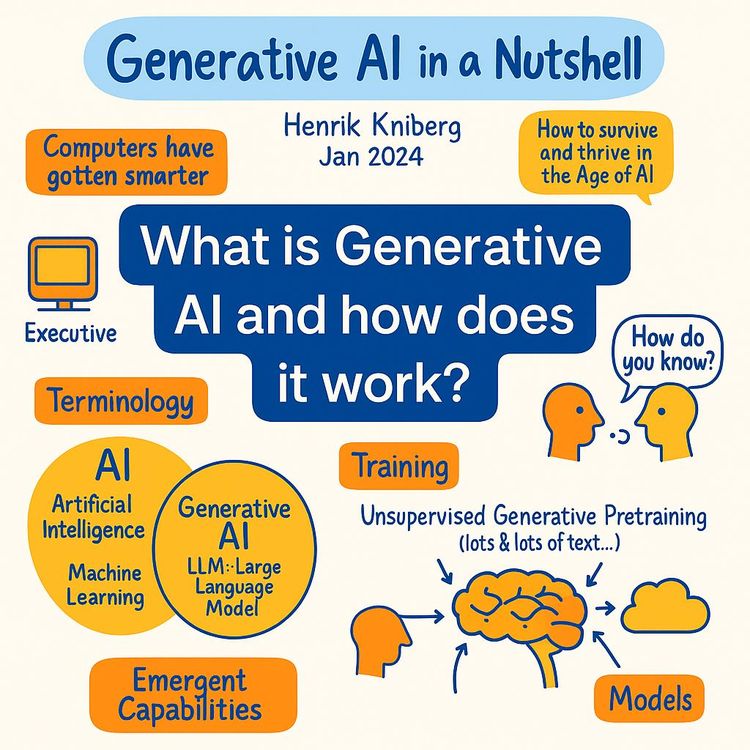
Video Course: What is Generative AI and how does it work?

Video Course: How to Use ChatGPT from Beginner to Professional
Video Course: How to Use Google Gemini for Google Workspace to Boost Productivity

Video Course: How to Use Claude 3.7 AI - Tips for Beginners!

Video Course: ChatGPT for Data Analytics: Full Course - from Beginners to Professional

Video Course: Generating Images and photos With ChatGPT?

Video Course: Generating Images & Photo's with MidJourney
Video Course: Generating Design's with Microsoft Designer and AI
Video Course: Generating Design's with Canva.com and AI
Join 20,000+ Professionals, Using AI to transform their Careers
Join professionals who didn’t just adapt, they thrived. You can too, with AI training designed for your job.