Google Anti-gravity AI No-Code Course: Build, Test & Deploy Apps (Video Course)
Go from idea to live app in hours. This course shows you how to direct AI agents in Google Antigravity to plan, code, test, and deploy, integrate Netlify, Superbase, Stripe, and ship polished UIs,using plain English. Less grind, more shipped work.
Related Certification: Certification in Building, Testing & Deploying No-Code Google AI Apps
Also includes Access to All:
What You Will Learn
- Direct a multi-agent AI IDE to build and deploy full-stack apps from plain English
- Convert vague ideas into Vibe Coding prompts and use the Goldie Gravity workflow
- Install and configure Anti-gravity locally and choose Gemini/Claude/GPT models by task
- Integrate MCPs for Netlify deploys, Superbase auth/data, and Stripe/PayPal payments
- Create reusable Agent Skills, use community kits, and pair with Claude Code for UI polish
- Verify work with artifacts and follow security, versioning, and team collaboration best practices
Study Guide
Google Antigravity FULL COURSE (Build & Automate Anything)
Let's be blunt: the moment you stop trying to write every line of code yourself and start directing capable AI agents, you multiply your output. Google Anti-gravity is the vehicle for that jump. It's an agent-first, AI-powered IDE that takes natural language and turns it into real software,end to end. Planning, coding, testing in a live browser, debugging, and deploying to the web… all inside one environment you talk to.
In this course, you'll learn how to go from idea to deployed, full-stack application using only plain English. You'll get comfortable orchestrating specialized AI agents, choosing the right language model for the job, integrating external services like databases and payments with Mission Control Platforms (MCPs), and teaching your AI reusable Skills so it behaves like a trained member of your team. You'll also discover how to use kits from the community to instantly upgrade your UI quality and development speed, and how to pair Anti-gravity with coding agents like Claude Code for pixel-perfect front-ends.
This is more than a tutorial,it's a playbook. You'll walk away with a complete workflow for building internal business tools, polished marketing sites, MVPs for startups, and automation that used to require a small dev team. Your ability to describe what you want becomes the most valuable asset in your stack.
Course Promise and Outcomes
After you complete this program, you'll be able to:
- Direct a multi-agent AI development environment from scratch, even if you don't write code.
- Move from vague ideas to clear prompts (Vibe Coding) that produce working software in minutes.
- Install, configure, and run Anti-gravity locally; choose the right model (Gemini, Claude, GPT) for speed, quality, or cost.
- Use the Goldie Gravity method to plan, build, test, and verify with confidence through visual artifacts.
- Deploy live apps with Netlify MCP, add authentication and data with Superbase MCP, and integrate payments via Stripe/PayPal MCPs.
- Create reusable Agent Skills so the system learns your brand voice, UI standards, and workflows.
- Combine Anti-gravity with Claude Code or Open Code in the built-in terminal for elite UI/UX and deep debugging.
- Adopt best practices for privacy, security, team collaboration, and versioning of your agentic workflows.
Mindset Shift: From Coder to Director
You're not here to memorize syntax,you're here to run a studio of AI specialists. Your leverage is clarity, decision-making, and quality control.
Quote: "Your ability to clearly describe what you want is now more valuable than technical coding skills."
Quote: "Technical knowledge is built directly into the AI agents. The user's role is to define what to build, not how to build it."
Quote: "A system of multiple specialized agents will outperform a single, generalist AI by a significant margin. Orchestrate specialists, don't just prompt a chatbot."
Getting Set Up: Installation and First Run
Here's how to get Anti-gravity running locally so you can build immediately.
- Download: Go to the Anti-gravity site and grab the installer for your OS.
- Install: Run the installer. It's straightforward,no manual dependencies needed.
- Open a Project Folder: Create a new folder for your work (e.g., "ai-automation-suite"). Inside Anti-gravity, open that folder. This is where the agents will create files, install packages, and run the app.
- Select a Model: In the chat, pick a model profile. Gemini Flash for speed and prototyping, Gemini Pro or Claude Sonnet for balanced quality, Claude Opus for complex reasoning and nuanced code, GPT options for compatibility or specific libraries. You can switch models per task.
Example , Model Selection Strategy:
- "Use Gemini Flash to scaffold a Next.js app with Tailwind and a pricing page."
- "Switch to Claude Opus for refactoring the authentication flow and adding rate limiting."
Example , First Prompt in a Fresh Project:
- "Create a clean landing page for 'AI Profit Boardroom' with a bold headline, three benefit bullets, a testimonial slider, and an email signup form. Use Tailwind, a modern palette, and ensure responsive design."
- "Set up a minimal Express API with two endpoints: /leads (POST) and /leads (GET). Store data temporarily and add a simple admin page to view submissions."
Core Concepts and Terminology
Let's define the common language you'll use with Anti-gravity.
Integrated Development Environment (IDE):
A workspace that contains your project files, terminal, and tools. Anti-gravity is an AI-first IDE that not only edits files but plans, builds, tests, and deploys through agents.
Vibe Coding:
Describing what you want with high-level intent instead of writing code. You lead with function, feel, and constraints; the agents translate your vibe into architecture, components, and logic.
AI Agents:
Specialists that collaborate. Planner maps the project, Builder writes code, Testing agent runs a live browser to click around, Debugger fixes errors automatically.
Skills:
Reusable knowledge packs in a markdown file (skill.md) plus optional assets. They make agents domain experts in your standards,brand voice, UI rules, data handling, SEO, anything repeatable.
Mission Control Platforms (MCPs):
Plugins that let agents connect to external services,deploying to Netlify, creating databases with Superbase, processing payments via Stripe/PayPal, pulling research with Google NotebookLM, and syncing tasks with Notion or Atlassian.
Artifacts:
Proof of work. Agents generate checklists, screenshots, and screen recordings of the testing agent using your app. You can verify progress and catch issues visually.
Why this matters: You're not delegating blindly. You're directing, reviewing artifacts, and iterating fast.
Agent-First Architecture: How the Machine Works
Anti-gravity is built around a multi-agent system that moves a project from request to reality with minimal manual intervention.
Natural Language Interface:
You chat with the IDE. If you can describe outcomes, the system can handle implementation. The more specific you are, the better the output.
Example Prompts:
- "Build a personal finance tracker with categories, monthly budget targets, charts, and CSV import. Add Google login."
- "Create a landing page for a mobile app, animated hero section, feature grid, pricing, FAQ, and a dark mode toggle."
Multi-Agent System:
- Planner Agent: Converts your prompt into a full implementation plan with milestones and file structure.
- Builder/Coding Agent: Writes HTML, CSS, JavaScript, Python/Node/Go code as needed, installs dependencies, and creates scripts.
- Testing Agent: Spins up a sandboxed browser, clicks buttons, fills forms, triggers edge cases, and records the session.
- Debugger Agent: Reads error logs and testing artifacts, updates code, and re-runs tests until green.
Example , Planner Output:
- "Create Next.js project with pages: /, /pricing, /login. Components: Navbar, Footer, TestimonialCarousel, PricingTable. Integrate email signup via a serverless function."
- "Set up Superbase MCP for auth and leaderboard. Tables: users, scores. Routes: /api/submit-score, /api/top-scores."
Multi-Model Support:
Use the right brain for the job. Anti-gravity can route tasks to models like Gemini Pro/Flash, Claude (Sonnet/Opus), and GPT variants. Pick speed for scaffolding, depth for architecture, and creativity for UI/UX polish.
Example , Model Choices by Task:
- "Use Gemini Flash to bootstrap a CRUD dashboard and write unit tests."
- "Switch to Claude Sonnet to overhaul the UI with accessible color contrast, tidy state management, and semantics."
Verification Through Artifacts:
You'll get proof for every major step,task checklists, screenshots of screens and states, and video captures of the testing agent clicking through your app. This closes the loop between intent and output.
Example , Artifact Review Flow:
- Review a screen recording showing the sign-up flow, failed validation states, and success redirect.
- Compare before/after screenshots after a UI tweak to confirm the pixel changes you requested.
Screenshot Editing:
Annotate a screenshot with a note like "increase CTA size, change to electric blue, add shadow," and the agent understands context, updates code, and re-tests.
Example , Visual Edits:
- Upload a screenshot and annotate: "This card layout feels cramped. Increase spacing, round corners, and add hover elevation."
- Point to a chart: "Labels overlap. Rotate 45 degrees, increase font size, and add a legend."
The Goldie Gravity Method: A Four-Step Workflow
Use this mental model to move cleanly from idea to shipping product.
Step 1: Ground (Provide Clear Instructions)
Start with specifics: audience, features, pages, style, integrations, constraints. Clarity multiplies output.
Example Ground Prompts:
- "Build a course sales page with a sticky navbar, hero with testimonial chips, curriculum section with accordions, pricing table with toggle (monthly/annual), FAQ, and footer with social links. Tailwind + responsive design."
- "Create a marketing analytics dashboard: charts for traffic, conversion, and CAC by channel. CSV upload, filters by date range, export to PNG. Use React + Recharts."
Step 2: Rise (Let the Agents Plan)
Switch to Planning mode. The Planner Agent breaks the prompt into a project blueprint. Review it. Add missing constraints or remove fluff.
Step 3: Orbit (Watch the AI Build)
Approve the plan. The agents code, install dependencies, spin servers, and start testing. You'll see real files appear in your project folder.
Step 4: Verify (Trust but Check)
Study the artifacts: task lists, screenshots, and recorded browser sessions. Mark issues and request changes in natural language or via annotated screenshots.
Example Verify Requests:
- "The mobile menu feels slow. Make it open instantly and add a subtle scale animation."
- "Form error messages should be top-aligned and red, with accessible ARIA attributes."
Your First Build: From Prompt to Live URL
Let's make your first complete loop with deployment.
Step A , Build a Landing Page:
Prompt: "Create a landing page for 'AI Profit Boardroom' with bold hero, three benefits, lead capture, and social proof. Use Tailwind. Add a serverless function to capture emails."
What you'll see: Planner proposes file structure, Builder creates Next.js app, Testing Agent opens a browser and fills the form, Debugger patches minor issues, and artifacts show the form working end to end.
Step B , Review Artifacts:
Open the recorded session and ensure the form validation works, the success state is visible, and the UI looks clean on mobile. If not, annotate a screenshot with your tweaks.
Step C , Deploy with Netlify MCP:
Install the Netlify MCP in Anti-gravity. Then instruct the agent: "Deploy this project to a new subdomain using Netlify MCP." The agent authenticates, configures the build, and publishes your site.
Example Deployment Requests:
- "Set environment variables for API keys and ensure serverless function paths are correct for Netlify."
- "Generate a preview URL and post it in artifacts. Then map it to a custom domain."
Adding a Backend: Authentication and Data with Superbase MCP
Let's extend the landing page into a full-stack app with login and persistent data.
Superbase Integration Steps:
- Install Superbase MCP from the MCP Servers menu.
- Prompt: "Add email/password login, OAuth with Google, and a user profile page. Create a 'leads' table with fields id, email, source, timestamp. Use Superbase MCP for auth and data."
- The agents create tables, update API routes, wire up login, and re-run tests. Artifacts will show screen recordings of login, logout, and data writes.
Example Backend Enhancements:
- "Add a leaderboard with top 10 users by points. Include pagination and search."
- "Track user progress through a course module: create tables for modules, lessons, and completion status; add progress bars to the UI."
Tips:
- Always ask the agent to output the Superbase schema as a markdown artifact for easy review.
- Request unit tests or schema validation (e.g., Zod) for critical endpoints.
Artifacts in Practice: Making Quality Visible
Artifacts are your evidence that the app works as promised. Use them to speed up QA and decision-making.
Types of Artifacts:
- Task checklist: shows what's done and pending.
- Screenshots: desktop, tablet, mobile states, and specific components.
- Screen recordings: the testing agent clicking through flows (onboarding, error states, purchase).
- Optional logs: dependency versions, build output, error traces.
Example Uses:
- "Attach a recording of the payment flow including declined card and retry."
- "Provide before/after screenshots of the pricing table after A/B variant changes."
Best Practices:
- Ask for artifacts whenever you request a significant change.
- Compare artifacts across iterations to track improvements and prevent regressions.
Screenshot Editing: Visual Feedback that Updates Code
When words aren't enough, mark up the UI and let the agent translate visuals into code changes.
How to Use:
- Take a screenshot inside the IDE or upload one.
- Use annotations like arrows and text notes, e.g., "Make this button larger," "Increase contrast," "Add space between cards."
- The agent reads the context, changes the code, and re-tests.
Example Edits:
- "CTA overlaps on small screens. Reduce font size at 375px, increase line-height, and add 16px padding on the container."
- "Charts need gridlines and tooltips with two decimals. Update global chart config."
Agent Skills: Turn Your Standards into Reusable Expertise
Skills are the lever that make your agents feel trained by you. They encode process, tone, and rules into a reusable package.
Skill Structure:
- A folder with a skill.md file that explains when to use the skill and how to perform the task step by step.
- Optional subfolders with reference PDFs, code snippets, brand assets, and scripts.
- Scope can be workspace-specific (just this project) or global (available everywhere).
Creating a Skill:
Prompt: "Create a global skill called 'Brand Voice & SEO' that writes landing page copy in our tone: concise, action-driven, jargon-free. Include H1/H2 structure, keyword placement best practices, and internal link suggestions. Add examples of good vs bad copy."
Using a Skill:
Prompt: "@Brand Voice & SEO Rewrite the hero and benefits sections for the homepage to increase clarity and add an internal link to /pricing."
Example Skills:
- "UI Review & Accessibility" skill with rules for color contrast, focus states, ARIA roles, and keyboard navigation checks.
- "Data Hygiene & Import" skill with CSV validation, duplicate detection, and schema mapping rules.
Best Practices for Skills:
- Include checklists and definitions of "done."
- Add failure modes and how to handle them (e.g., "If OAuth fails, fall back to email link.")
- Keep examples inside the skill so the agent can copy patterns without guessing.
Mission Control Platforms (MCPs): Full-Stack Power Without the Pain
MCPs let agents talk to external services through clean integrations. You describe what you want; the agent handles the API calls and setup.
Key MCPs and What They Do:
- Netlify: One-click deploy to a live URL with environment variables and build settings.
- Superbase: Database, auth, storage, and row-level security,created and configured via the agent.
- Google NotebookLM: Research assistant that pulls structured info right into the IDE.
- Stripe / PayPal: Payment processing, test transactions, webhooks for fulfillment.
- Notion / Atlassian: Create tasks, sync release notes, and update boards automatically.
- GitHub: Repo initialization, commits, branches, pull requests, and CI setup.
Example MCP Commands:
- "Deploy to Netlify with a preview URL and then set custom domain to aipb.io."
- "Use Superbase MCP to create tables for users, organizations, and memberships. Add a role system: owner, admin, member."
Advanced Uses:
- "Connect Stripe MCP, add checkout for monthly and annual plans, and store subscription status in Superbase. Create a webhook to downgrade users on failed payments."
- "Use NotebookLM to gather the top ten best practices for onboarding, summarize them, and propose an in-app checklist."
Security Tips:
- Keep secrets as environment variables managed by the MCP. Avoid hardcoding keys.
- Request an artifact listing all secrets and where they're used for quick audits.
Community Enhancements & Kits: Instant Upgrades
You can supercharge Anti-gravity with installable kits from community repositories.
Anti-gravity Kit:
Adds a library of specialist agents (SEO Specialist, Game Developer, Backend Architect), prebuilt Skills, and workflows for rapid bootstrapping.
UI Pro Max Kit:
Contains hundreds of design rules, dozens of UI styles, curated color palettes, and font pairings. It's the easiest way to jump from "functional" to "polished and unique."
Example Uses:
- Install the Anti-gravity Kit and prompt: "Spin up an ecommerce store with product grid, cart, checkout, and admin inventory page. Use the Backend Architect agent to set up schema and the SEO Specialist for product descriptions."
- Install UI Pro Max and prompt: "Redesign the dashboard using 'Neo Minimal' style with a blue-accent palette and soft shadows. Ensure accessible contrast and include a style guide page."
Tips for Kits:
- Ask the agent to output a "Design System" artifact,buttons, inputs, cards, typography, spacing tokens,before building complex screens.
- Keep your brand palette and logo in a shared assets folder that Skills and kits can reference.
Pairing with Claude Code and Open Code in the Terminal
Anti-gravity gives you a command center. Claude Code and Open Code give you surgeons for precise interventions.
Recommended Hybrid Workflow:
- Use Anti-gravity to plan architecture, set up infrastructure, generate boilerplate, and integrate MCPs.
- Open a terminal tab inside Anti-gravity and run Claude Code for UI/UX detail work, refactoring, and tricky bugs. Use Open Code to bypass occasional API rate limits and keep momentum.
Example Flow:
- "Anti-gravity: scaffold SaaS dashboard, set up Superbase auth, seed sample data, and deploy preview."
- "Claude Code: refine table components with virtualization, add keyboard navigation, and implement optimistic UI updates."
Local LLMs with client and Ollama:
If you need offline work or extra privacy, integrate local models. You'll trade some raw capability for control and cost savings. Great for internal tools with sensitive data.
Example Local Use:
- "Run a local model for log analysis and quick refactors. Reserve cloud models for complex planning and design."
- "Use a local model to generate test data and fixtures for large tables."
Designing for Quality: UI, UX, and Accessibility
Great software feels effortless. Teach agents to build that way by asking for explicit design rules and accessibility standards.
Prompts for Better Design:
- "Adopt an 8pt spacing system, consistent radius tokens, and a semantic color scale. Output a style guide artifact."
- "Ensure WCAG AA contrast. Add visible focus rings, skip links, and proper ARIA attributes."
Example UI Upgrades:
- "Implement animated micro-interactions for hover and focus states. Keep transitions under 200ms."
- "Replace generic icons with a coherent icon set. Add skeleton loaders for async content."
Using UI Pro Max Kit:
Ask the agent to pick a style preset, then refine with screenshot annotations if anything looks off. Iterate until artifacts match your taste across breakpoints.
Testing and Debugging with the Agents
Instead of manually clicking through features, rely on the Testing and Debugger agents to do the heavy lifting,then verify the results.
What to Ask For:
- "Create end-to-end tests for sign-in, sign-out, password reset, and role-based access."
- "Generate a test plan artifact describing edge cases, then run them and record a video."
Example Debug Sessions:
- "Form submission throws a CORS error on Netlify. Diagnose, fix headers, and re-deploy."
- "Chart flickers on rerender. Optimize with memoization and stable keys."
Best Practices:
- Always request a summary of what changed and why after a debug session.
- Keep a CHANGELOG artifact auto-updated by the agents for team visibility.
Security, Privacy, and Governance for Agentic Workflows
Agents can touch your file system and terminals. Treat them like powerful assistants: enable access deliberately and log everything.
Guidelines:
- Principle of least privilege: Only enable MCPs and keys needed for the current project.
- Use environment variables, not hardcoded secrets. Ask for a secrets audit artifact.
- Review dependencies. Ask agents to produce a dependency list with known vulnerability checks.
- Keep artifacts and logs. They're your audit trail.
Example Safeguards:
- "Generate an artifact listing all outbound network calls the app makes."
- "Scan dependencies with a security tool and propose patched versions."
Collaboration and Team Workflows
Anti-gravity is not just for solo work. With the GitHub MCP, you can align agent output with your team's repository, PR flow, and reviews.
Team Setup:
- Initialize a repo with GitHub MCP, create branches per feature, and auto-generate PRs with artifacts embedded.
- Store shared Skills in a separate repo, version them, and pull updates into each project.
Example Team Prompts:
- "Open a PR titled 'feat: onboarding flow' with a summary, checklist, and artifact links to screen recordings."
- "Apply the global 'Accessibility Standards' skill to this repo and run an audit across all pages."
Implications and Applications by Persona
Business:
- Build internal dashboards (finance, ops, sales) without waiting on engineering. Connect to Superbase, deploy to Netlify, and control access by role.
- Create marketing assets,landing pages, quizzes, calculators,and A/B test variants in days.
Examples:
- "Generate a CRM-lite tool that tracks leads by source, automates follow-ups with templated emails, and exports to CSV."
- "Launch a viral quiz with result personas, email capture, and automated follow-up sequences."
Entrepreneurs & Startups:
- Prototype MVPs rapidly. Validate ideas with real users and payments without big budgets.
- Iterate design and features daily through artifact-driven feedback loops.
Examples:
- "Build a niche job board with listings, search, Stripe checkout for featured posts, and an admin panel."
- "Create a micro-SaaS for social post scheduling with calendar view, queue management, and analytics."
Developers:
- Offload boilerplate, infrastructure setup, and repetitive tasks. Focus on architecture, performance, and critical logic.
- Use Claude Code or Open Code inside Anti-gravity for precise refactors and advanced debugging.
Examples:
- "Have Anti-gravity set up a monorepo with shared components and CI. Then refine performance-critical modules manually."
- "Delegate feature scaffolding and keep ownership of the domain model and security design."
Education:
- Teach system design, prompt clarity, and project management instead of syntax drills.
- Let students see how planning translates into code, tests, and deployments through artifacts.
Examples:
- "Assign students to build a full CRUD app using only natural language, then present the artifact trail."
- "Compare outcomes using different models and Skills to learn how orchestration changes results."
Model Selection Playbook
Pick models based on the job at hand, not brand loyalty.
When to Use What:
- Gemini Flash: Fast scaffolding, quick iterations, simple pages and endpoints.
- Gemini Pro: Balanced for larger scaffolds and moderate complexity.
- Claude Sonnet: Excellent code quality, UI/UX nuance, and careful refactors.
- Claude Opus: Deep reasoning, architecture planning, and tough debugging.
- GPT models: Compatibility with specific libraries or when you want diverse perspectives.
- Local via Ollama: Offline tasks, privacy, and cost control.
Example Routing:
- "Gemini Flash for setting up project and generating tests; Claude Sonnet for UI polish; GPT for copy variants."
- "Opus for planning a multi-tenant architecture; Flash for CRUD endpoints; Open Code for heavy code edits during rate-limited windows."
Working with NotebookLM, Stripe/PayPal, Notion, Atlassian
Expand your app's reach and intelligence with these MCPs.
NotebookLM:
"Research the top three onboarding patterns for analytics tools and summarize them. Then propose a step-by-step user checklist and embed it in the app."
Stripe/PayPal:
"Integrate checkout with monthly and annual plans, handle webhooks for upgrades/downgrades, and sync subscription status in Superbase."
Notion/Atlassian:
"Create tasks for each roadmap item, link artifacts, and update statuses automatically when deployments succeed."
Example Pairings:
- "Stripe MCP for payments + Notion MCP for release notes = automated billing and communication loop."
- "NotebookLM research + UI Pro Max kit = informed UX with refined design output."
Performance, Reliability, and Observability
Direct the agents to bake in speed and resilience from day one.
Prompts:
- "Add API timeouts, retries, and exponential backoff. Log errors with stack traces and user context."
- "Enable lazy loading, code splitting, and image optimization. Output a Lighthouse report artifact."
Examples:
- "Implement server-side caching for leaderboard queries and provide a hit/miss report."
- "Add monitoring with minimal overhead and produce an artifact describing alert thresholds."
Data and Database Patterns with Superbase
Ask the agent to implement common data designs and safety measures.
Prompts:
- "Design tables for organizations, users, and roles with row-level security. Provide SQL as an artifact."
- "Add soft deletes, audit logs, and automatic timestamps for critical tables."
Examples:
- "Implement optimistic updates for score submissions; fall back to server state on conflict."
- "Create a migration artifact and a rollback plan after schema changes."
From Generic to Branded: Enforcing Your Style
Make your apps feel like you,not a template.
Skill Strategy:
Create a "Brand Design System" skill with typography, spacing, radii, shadows, palette, and voice standards. Include dos/don'ts and component examples.
Examples:
- "Apply our 'Brand Design System' to the pricing page. Ensure the CTA hierarchy follows our rules."
- "Rewrite all tooltips and empty states using our tone guidelines from the brand skill."
Payments and Monetization Flows
Turn prototypes into real businesses with a few clear instructions.
Prompts:
- "Connect Stripe MCP. Add a checkout page with promo codes, tax calculation, and invoices. Implement a trials flow."
- "Integrate PayPal MCP for one-time purchases of add-ons and sync receipts to Superbase."
Examples:
- "Create a billing settings page with card management and cancellation flows. Record artifacts of happy and unhappy paths."
- "Add a webhook handler for subscription changes and send emails on upgrade/downgrade."
Automation Beyond Apps
Anti-gravity isn't just for screens. Use it to build tools that run your business in the background.
Examples:
- "Create a lead enrichment script that calls external APIs, cleans data, and populates a dashboard."
- "Build a content pipeline: Markdown to HTML to deployment, with SEO checks and social previews."
Tips:
- Keep automations idempotent. Ask the agent to include safeguards like deduplication keys and retries.
- Output run logs as artifacts for traceability.
Versioning Skills and Governing Changes
As your Skills grow, treat them like living documentation.
Best Practices:
- Maintain version numbers in skill.md and CHANGELOG notes.
- Store global Skills in a controlled repo. Require PRs for updates and ask agents to produce diff summaries as artifacts.
Examples:
- "Draft a v1.1 update to 'Accessibility Standards' skill with new rules for motion sensitivity."
- "Apply v2.0 'Brand Design System' skill to all pages and output a before/after comparison artifact."
Action Plan: Phased Adoption
Start small, grow fast. Here's a path that works.
Phase 1 (Build):
Create a simple landing page or to-do app. Let Anti-gravity scaffold everything.
Phase 2 (Test):
Watch the testing agent run flows. Review checklists and recordings. Ask for more tests covering edge cases.
Phase 3 (Deploy):
Install Netlify MCP and deploy. Ask for an artifact showing environment variables and build settings.
Next Steps:
- Integrate Superbase MCP. Add login and data persistence.
- Create an "Agent Skill" for your brand or workflow. Apply it to a second project to see the compounding effect.
- Practice the hybrid flow: Anti-gravity for back-end and scaffolding; Claude Code in the terminal for front-end quality and tough bugs.
Common Pitfalls and How to Avoid Them
Vague Prompts:
Solution: Be explicit about features, constraints, and success criteria. Ask for a plan artifact first.
Skipping Verification:
Solution: Always review artifacts. Request both happy and unhappy path recordings.
Unmanaged Secrets:
Solution: Store keys via MCPs, never in code. Ask for a secrets audit artifact.
Generic UI:
Solution: Install UI Pro Max kit, build a Design System skill, and iterate with annotated screenshots.
Capstone Walkthrough: A Full-Stack App End-to-End
Let's stitch everything together: a small SaaS for habit tracking.
1) Ground:
"Build 'Tiny Habits Pro': onboarding, dashboard with daily/weekly views, habit streaks, reminders, and sharing. Use Next.js + Tailwind. Add login via Superbase and Stripe subscriptions."
2) Rise:
Review the plan artifact: pages, components, data schema (habits, entries, reminders, users), roles, and MCP integrations. Add a note: "Include dark mode and accessible color contrast."
3) Orbit:
Let agents scaffold, code, and test. Watch the browser agent record sign-up, habit creation, and streak visualization. Debugger resolves edge cases.
4) Verify:
Inspect artifacts: task checklist, screenshots across breakpoints, recordings for payment flow and failed card retry. Annotate a screenshot: "Increase chart label readability and add weekly totals."
5) Enhance with Skills:
Apply "Brand Voice & SEO" for marketing pages and "UI Review & Accessibility" for consistent standards. Generate a style guide artifact.
6) Integrations:
NotebookLM proposes habit formation best practices; add an in-app tips panel. Notion MCP creates a release notes database, updated on each deploy.
7) Deploy:
Netlify MCP publishes the app. The agent outputs the live URL and confirms environment variables. You're live.
Real-World Examples by Feature
Form Workflows:
- "Implement multi-step forms with save-on-exit and progress indicators."
- "Add file uploads with validation and image previews."
Dashboards:
- "Create team dashboards with role-based sections and export to CSV."
- "Add drill-down analytics for campaign performance by channel."
Content Sites:
- "Build a blog with MDX, search, and SEO meta generation."
- "Create a documentation portal with sidebar navigation and dark mode."
What to Review Before Shipping
Checklist Prompt:
- "Generate a pre-ship checklist artifact: performance scores, accessibility audits, responsive screenshots, test coverage percentage, and a final screen recording of core flows."
Examples:
- "Confirm Lighthouse performance over 90 on mobile and desktop."
- "Verify keyboard navigation reaches all interactive elements."
Frequently Used Prompts You Can Copy
Planning:
"Create an implementation plan with file structure, dependencies, and a milestone checklist. Output as an artifact and wait for approval."
Testing:
"Write E2E tests for auth, CRUD, and error states. Record a video of the Testing agent running them."
Deployment:
"Deploy using Netlify MCP, set environment variables, and output a deployment artifact with build logs and the live URL."
Styling:
"Adopt the 'Neo Minimal' style from UI Pro Max kit and produce a style guide page with tokens and components."
Advanced Patterns: Multi-Agent Specialization
Push quality higher by assigning tasks to specialist agents from the Anti-gravity Kit.
Examples:
- "Backend Architect: design multi-tenant data model with organization scoping and row-level security rules."
- "SEO Specialist: optimize head tags, Open Graph images, and write search-friendly summaries for each page."
Tip:
Ask for cross-agent reviews: "Have the UI Specialist review the Backend Architect's API responses for consistency and DX."
Maximizing Results with Clear Prompts
Every great build starts with a sharp, specific request.
Prompt Template:
- Audience and goal
- Features and constraints
- Tech preferences (if any)
- Accessibility and performance targets
- Artifacts you want for verification
Example:
"Audience: creators launching courses. Build: sales page + checkout + student dashboard. Tech: Next.js + Tailwind, Superbase for auth. Constraints: WCAG AA, Lighthouse > 90. Artifacts: plan, style guide, E2E recordings, deployment logs."
Recap: Key Insights You'll Use Daily
- Shift from coder to director. Your clarity drives outcomes.
- Specialization wins. Orchestrate Planner, Builder, Testing, Debugger,and bring in Claude Code for UI finesse.
- Automate the full lifecycle: plan, code, test, debug, deploy,in one IDE.
- Democratization is real. Non-technical pros can now build internal tools, marketing sites, and MVPs.
- Reusable expertise compounds. Skills encode your standards for consistent, scalable results.
Verification: Did We Cover Everything?
We explored Anti-gravity's architecture (natural language, multi-agent roles, multi-model routing), artifacts (checklists, screenshots, recordings), screenshot-based editing, Agent Skills (structure, scope, examples), MCPs (Netlify, Superbase, NotebookLM, Stripe/PayPal, Notion/Atlassian), community kits (Anti-gravity Kit, UI Pro Max Kit), integrations (Claude Code, Open Code, local LLM via client and Ollama), insights and quotes, implications across business, startups, developers, education, and a phased action plan (Build → Test → Deploy), plus practical prompts and patterns. You have what you need to direct, verify, and ship.
Conclusion: The Distance Between Idea and Live App Just Collapsed
If you remember one thing, let it be this: the bottleneck isn't code,it's clarity. Anti-gravity makes software creation conversational. You bring the vision and constraints; the agents do the heavy lifting, prove their work with artifacts, and connect to the services you rely on through MCPs. When you teach them Skills, they become compounding assets that deploy your standards on command. And when you pair Anti-gravity with tools like Claude Code and the UI Pro Max kit, "good enough" quietly becomes professional-grade.
Start with small wins. Build a landing page. Add auth, deploy, and review artifacts. Then scale: dashboards, automations, payments, design systems, and Skills that codify everything you learn. Direct the specialists. Verify results. Iterate. That's how you build and automate anything,consistently.
Your next move:
- Open Anti-gravity, create a new folder, and write a clear Ground prompt for a small app you want live by tonight. Ask for a plan artifact first. Then let the agents rise, orbit, and verify,until you hit deploy.
Frequently Asked Questions
This FAQ exists to answer the real questions people ask before, during, and after using Google Anti-gravity. It organizes core concepts, workflows, and edge cases into quick, practical guidance. You'll find step-by-step answers, examples you can copy, and clarifications on what works best in practice. Whether you're testing the waters or rolling out team-wide automation, use this as your reference to build, automate, and ship with confidence.
Section 1: Fundamentals
What is Google Anti-gravity?
Anti-gravity is an AI-powered IDE that turns plain English into working software.
It lets you build applications, websites, tools, and automations using natural language prompts. A team of specialized AI agents,powered by models like Gemini and Claude,handles the full lifecycle: planning, coding, testing, and deployment. You act like a director: describe the outcome, review artifacts, and iterate. The goal is to remove manual coding so non-technical users can create functional products and developers can move faster. Real-world example: describe "a client onboarding portal with file upload, status tracking, and email notifications," and Anti-gravity will scaffold the UI, wire backend calls, test flows in a browser, and prepare deployment, all from a single prompt. Result: functional builds in hours, not months.
Who is Google Anti-gravity for?
Anyone who wants working software without the overhead of traditional coding.
Business owners and entrepreneurs: spin up internal tools, dashboards, landing pages, and simple apps without hiring.
Marketers: generate automated email sequences, interactive quizzes, and lead capture funnels.
Solopreneurs and freelancers: automate repetitive tasks and package custom client tools.
Beginners: learn development concepts by directing outcomes instead of writing syntax.
Developers: prototype faster, offload boilerplate, and orchestrate complex projects with agents. Example: a marketer can prompt "lead magnet funnel with A/B test, email capture, and Netlify deploy," while a developer uses agents to generate CRUD scaffolds, tests, and CI hooks in minutes. Anti-gravity works as a force multiplier for every role.
Do I need to know how to code to use Google Anti-gravity?
No,think "vibe coding": describe what you want, the agents implement it.
You give clear instructions in plain English, and Anti-gravity generates the code (HTML, CSS, JavaScript, and more). Your job: define outcomes, constraints, and style; then review artifacts and request changes. If you know how to write user stories, you're ready. Example: "Create a bookings page with calendar picker, confirmation email, and mobile-first design." Anti-gravity writes the code, tests it in a browser, and outputs proof. Developers can still fine-tune edge cases or add complex logic, but beginners can ship useful tools from day one. The clearer your prompts, the better the build.
Is Google Anti-gravity a free tool?
Yes,available as a free public preview with usage limits.
You can access models like Gemini Flash, Gemini Pro, and various Claude models, subject to quotas. Many integrated services also offer free tiers, such as Netlify for hosting and Superbase for backend basics. That means you can plan, build, test, and deploy a functional project without paying anything up front. As usage scales, you may opt into paid tiers for higher limits, premium features, or team collaboration. Practical tip: keep early projects lean to stay within free quotas.
Section 2: Core Concepts and Features
How does the development process work in Anti-gravity?
Follow the Build, Test, Deploy flow.
1) Ground (Plan): provide a clear prompt and use Planning mode to generate a task list and implementation plan.
2) Rise & Orbit (Build): approve the plan; agents create files, write code, and structure the project.
3) Verify (Test): a browser agent interacts with your app,clicks, forms, responsiveness,then fixes bugs; you review artifacts like videos and screenshots.
4) Deploy: use MCPs to deploy with a single command. Example: "Deploy to Netlify MCP." This flow keeps you in control: approve, observe, iterate, ship. Artifacts give you proof and traceability at every step.
What are AI Agents in the context of Anti-gravity?
Specialists working in parallel under mission control.
Planner Agent: scopes the project and tasks.
Developer Agent: writes code (HTML, CSS, JS, APIs).
Debugger Agent: finds and fixes errors.
UI/UX Specialist Agent: improves layout, components, and accessibility.
Browser Agent: runs real tests in a sandboxed browser. This division of labor produces better results than a single generalist. Example: while the Developer Agent implements a dashboard, the Browser Agent simulates user actions and catches edge cases like form validation or mobile overflow. The result is speed plus quality assurance.
How do I give effective prompts to Anti-gravity?
Be specific: audience, outcome, features, constraints, and style.
Vague: "Make me a website." Effective: "Build a landing page for the AI Profit Boardroom community focusing on time savings. Include 3 benefit sections (community support, practical templates, saving time), a testimonial block, and an email capture form at the bottom. Use blue/white, Tailwind CSS, and a clean, modern layout." Include must-haves (tech stack, color palette, tone), nice-to-haves (animations, SEO), and constraints (no external JS frameworks). Clear instructions reduce rework and improve artifacts.
What are "Artifacts" and why are they important?
Artifacts are receipts: evidence that the agent did the work correctly.
They include task lists, screenshots, video recordings of UI tests, console logs, and error reports. Artifacts help you verify progress, debug issues, and share proof with stakeholders. Example: send a client the test video showing the signup flow working on mobile and desktop before you deploy. Use artifacts to audit builds, track changes, and speed up approvals.
What are "Agent Skills" and how do they work?
Skills turn generic agents into consistent specialists.
A Skill is a reusable knowledge pack (stored in a skill.md file) that defines how a task should be done,tone, structure, checklists, and rules. Instead of rewriting instructions, you save them once and reference the Skill in future prompts. Example: an "SEO Article Writer" Skill enforces headlines, internal links, and schema. When invoked, the agent follows those rules automatically. Skills multiply output and keep standards tight across projects.
How do I create and use an Agent Skill?
Create a folder, add skill.md, define name, description, and a checklist,then call it by @name.
1) Store Skills in agent/skills (project or global).
2) Create skill.md with a name, description of when to use, and step-by-step rules.
3) Reference it in prompts with @SkillName. Example: "Write an article using @SEO_Article_Writer on Tetris tips." The agent auto-applies your standards. Think of Skills as your internal SOPs for AI.
Certification
About the Certification
Get certified in Google Antigravity no-code AI app development. Plan, build, test, and deploy in hours. Direct AI agents, ship polished UIs, and integrate Netlify, Supabase, and Stripe. Deliver production apps fast,with plain-English prompts.
Official Certification
Upon successful completion of the "Certification in Building, Testing & Deploying No-Code Google AI Apps", you will receive a verifiable digital certificate. This certificate demonstrates your expertise in the subject matter covered in this course.
Benefits of Certification
- Enhance your professional credibility and stand out in the job market.
- Validate your skills and knowledge in cutting-edge AI technologies.
- Unlock new career opportunities in the rapidly growing AI field.
- Share your achievement on your resume, LinkedIn, and other professional platforms.
How to complete your certification successfully?
To earn your certification, you’ll need to complete all video lessons, study the guide carefully, and review the FAQ. After that, you’ll be prepared to pass the certification requirements.
Other AI Video Courses
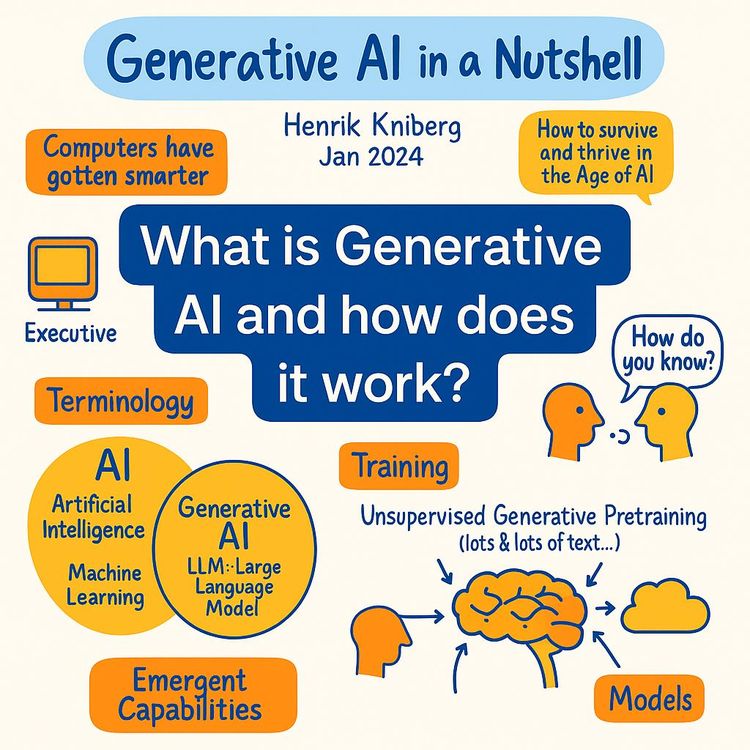
Video Course: What is Generative AI and how does it work?

Video Course: How to Use ChatGPT from Beginner to Professional
Video Course: How to Use Google Gemini for Google Workspace to Boost Productivity
Video Course: How to Use Claude 3.7 AI - Tips for Beginners!
Video Course: ChatGPT for Data Analytics: Full Course - from Beginners to Professional

Video Course: Generating Images and photos With ChatGPT?

Video Course: Generating Images & Photo's with MidJourney
Video Course: Generating Design's with Microsoft Designer and AI

Video Course: Generating Design's with Canva.com and AI
Join 20,000+ Professionals, Using AI to transform their Careers
Join professionals who didn’t just adapt, they thrived. You can too, with AI training designed for your job.