Use AI in Research Writing Without Breaking Ethics Rules (Video Course)
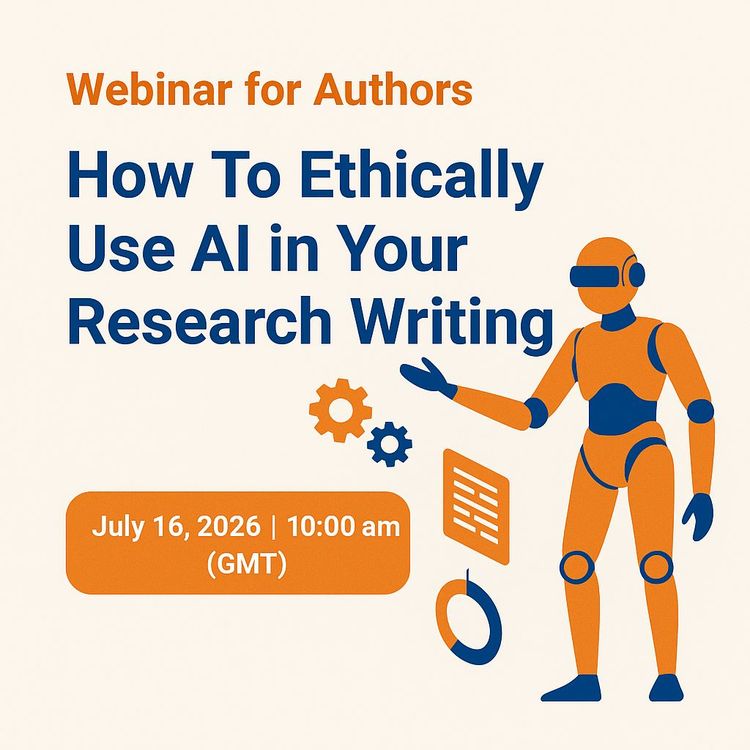
Most researchers use AI in their writing but can't explain what's ethical. This course walks you through the entire research writing process,from idea to submission,showing exactly how to use AI tools without losing credibility or your voice.
Related Certification: Certification in Applying Ethical AI in Research Writing
Also includes Access to All:
What You Will Learn
- Apply a five-principle ethical framework for AI use in research writing
- Identify appropriate AI tasks across the writing lifecycle (discovery, outlining, editing)
- Detect and prevent AI-generated citation errors by verifying all sources
- Choose target journals early and align AI prompts and disclosures with their policies
- Use AI to improve clarity and equity for non-native English speakers while preserving your voice
- Write specific, transparent disclosure statements and never list AI as an author
Study Guide
Introduction: Why This Course Exists
Here's the reality: roughly 80% of researchers are using AI tools in their writing and publishing processes. That's not a prediction, it's not a trend, it's where we are right now. And yet, most of those same researchers can't clearly explain what's ethical and what's not. They don't know what to disclose, what to avoid, or how to maintain their credibility while using tools that feel like they're changing every single week.
This course exists to fix that. I'm going to walk you through the complete research writing lifecycle, from the moment you have an idea through final submission, and show you exactly how to integrate AI tools without compromising your integrity, losing your voice, or running into trouble with publishers. You'll learn what the actual rules are, why they exist, and how to apply them practically in your own work.
The academic publishing world is in a strange place right now. The tools for writing and research have exploded, the policies haven't caught up, and everyone from graduate students to tenured professors is trying to figure out where the lines are. That's where you come in. By the time you finish this course, you'll have a clear framework for making good decisions about AI use in your writing, and you'll understand not just what to do, but why it matters.
Module 1: The Ethics Foundation
Let's start with the fundamentals, because you can't make good decisions about AI tools without understanding the ethical landscape you're operating in.
The Core Principles That Guide Everything
There are five principles that should govern every decision you make about AI in your research writing. Think of these as your north star when the details get murky.
<
Transparency means you're open about what tools you used and how you used them. It's not about being forced to disclose,it's about building trust with your readers, editors, and the broader research community. When you're transparent about your AI use, you're saying, "Here's exactly how this work came together, and I stand behind every part of it."
Accountability is about ownership. You are responsible for everything in your manuscript, period. If AI helped you format a reference or rephrase a paragraph, that's fine. But you're the one who takes responsibility for whether that reference is correct or that paragraph makes sense. The buck stops with you, not with the tool.
< br> Originality means your unique perspective and contribution to knowledge remain intact. AI should help you express your ideas, not replace them with something more generic. When you lose your scholarly voice, you lose what makes your research valuable to the conversation.
Verification is the non-negotiable practice of checking everything the AI tells you. This is especially critical with citations and references, where AI tools are notorious for making things up. You verify, and then you verify again.
Integrity ties it all together. It's about being honest about what you did, even if you think nobody would notice. It's about doing the right thing when nobody's watching, because your reputation and the integrity of the entire research enterprise depend on it.
Why This Matters More Than Ever
Here's what's happening in the real world. Publishers have developed AI policies, but they're all slightly different. Institutions are creating guidelines, but they're fragmented and confusing. And in the middle of all this, you're sitting there with a manuscript to write and no clear answers.
The pressure is real. Your career depends on publishing. You want to use every tool available to you. But you also don't want to be the person who loses credibility because of a misunderstanding about what's acceptable. That's why I'm going to give you a framework that works regardless of the specific tool or policy you're dealing with.
Module 2: The Equity Opportunity
Let me tell you something that doesn't get discussed enough. For decades, researchers who don't speak English as their first language have faced an enormous uphill battle in academic publishing. They've had to compete with native speakers whose only advantage was the accident of birth. Their research might have been brilliant, but if the writing didn't meet an arbitrary standard of fluency, it was rejected or ignored.
This is an ethics problem. It's an equity problem. And it's one of the most compelling reasons to embrace AI tools in research writing.
How AI Levels the Playing Field
Consider the experience of a researcher in a country where English is not the primary language. They've spent years conducting careful research, they have significant findings, but their written English doesn't do their work justice. In the past, they might have had to pay for expensive editing services or rely on more fluent colleagues. They might have given up entirely.
AI tools change this equation. Grammar correction happens instantly. Style suggestions appear as you type. Sentence structure improves with a click. The playing field isn't perfectly level yet, but it's far more level than it was before.
Here's a concrete example. A researcher in the life sciences wants to describe a complex experimental procedure. English isn't their first language. They write their draft, then use AI to help rephrase and refine. The result? A manuscript that reads as if it were written by a native speaker, because it was improved by a tool that doesn't care where you're from or what your first language is.
The Balance You Need to Strike
Now, here's the tension. If AI helps everyone write in the same polished, grammatically correct way, doesn't that erase the individual voices that make research interesting? Yes, it does. And that's a real concern.
The key is to use AI as a support system, not a replacement for your thinking. Let it help you express your ideas more clearly, but don't let it replace the unique perspective you bring to your field. Your research questions are yours. Your interpretation of the data is yours. Your contribution to the academic conversation is yours. AI is just helping you say it better.
I've seen researchers who've mastered this. They use AI to handle the mechanical aspects of writing,grammar, style, formatting,so they can focus their mental energy on the substantive work of making a compelling argument. They've stopped worrying about whether their English is good enough and started focusing on whether their research is good enough. That's where you want to be.
Module 3: Before You Write a Single Word
Let me save you some pain. The most common mistake I see in research writing,with or without AI,is skipping the preparation phase. Everyone wants to jump straight to the writing, but the foundation you lay before you start matters more than almost anything else.
Pick Your Journal First
You need to identify your target journal before you start writing. Not after a draft is done, not halfway through, but at the very beginning. Here's why this matters so much when you're using AI tools.
When you know your target journal, you can prompt your AI tools to match that journal's specific requirements. You can tell the tool, "I'm writing for the Journal of Clinical Psychology" and it can adjust the structure, tone, and formatting accordingly. Without a target journal, your AI assistance is just guessing.
Different journals also have different policies about AI use. Some are strict about what tools you can use and how you disclose them. Others are more relaxed. If you don't know the rules before you start, you might find yourself having wasted months of work on a manuscript that doesn't meet the requirements.
Understanding the Policy Landscape
Here's a frustrating truth: the policies are all over the place. Only about 25% of researchers say they have clear AI policies at their target journals. That means three-quarters of you are working in some level of uncertainty.
So what do you do? You ask. You check the journal's author guidelines. You look for a section on AI use. You email the editorial office if you have questions. You document what you find. This isn't just about covering yourself,though that's part of it,it's about understanding the expectations of the venue where you want to publish.
Use Pre-Submission Inquiries Wisely
One of the smartest things you can do is send a pre-submission inquiry before you invest months in a full manuscript. This is a brief email to the editor describing your research and asking if they'd be interested in seeing the full submission. It's a way to gauge interest, get feedback on fit, and avoid wasting your time on a journal that's not interested.
AI can help you draft these inquiries. You can prompt a tool with your research summary and ask it to craft a professional, focused email that gets straight to the point. But here's the catch,you need to personalize it. Editors can tell when they're getting a form letter. They can definitely tell when you've sent the same inquiry to multiple journals without changing the details.
A good pre-submission inquiry should be short, specific, and make it clear you've done your homework. Mention why you chose this journal specifically, what you're working on, and why you think it would be a good fit. That's it. Save the details for the full submission.
Module 4: Literature Review with AI Tools
Now we're getting into the meat of the process. The literature review is where AI tools can save you enormous amounts of time, but it's also where the most significant risks live. Let me walk you through both sides.
Tools That Actually Help
There are several AI tools designed specifically for literature discovery and management. Tools like Elicit can help you find and synthesize information from academic sources. Research Rabbit and Connected Papers create visual maps of how scholarly works relate to each other. NotebookLM is excellent for organizing and analyzing your research materials. SciSpace integrates literature review functions directly into your research workflow.
These tools expand your discovery beyond what you'd find with a simple keyword search. They can suggest papers that challenge your arguments, not just support them. They can help you see connections between different bodies of literature that you might otherwise miss.
But here's the critical part: AI tools suggest sources. They don't verify them. There's a difference between discovering a paper exists and knowing what's in it.
The Citation Trap
I need to be absolutely clear about this because it's the most dangerous part of using AI in research writing. AI language models can fabricate references that look completely legitimate. They invent authors, titles, journal names, page numbers, DOIs,all of it. The references don't exist. They're hallucinations.
This has happened to careful researchers who then found themselves in the embarrassing position of having published fake citations. The errors then propagate through the literature because other researchers trust the citation and repeat it without checking.
Here's your non-negotiable rule: never cite a source you haven't personally read and verified. Not once, not ever. If an AI tool suggests a reference, you find that reference yourself and read it before including it in your manuscript. This isn't optional. It's not a suggestion. It's the difference between responsible scholarship and academic misconduct.
What AI Is Actually Good At
Now that I've scared you about the risks, let me tell you what AI does really well. Reference formatting is at the top of the list. If you've ever spent hours reformatting your references from APA to Harvard to whatever a journal requires, you know how tedious this is. AI tools handle it in seconds.
These tools can also help you manage your reference library, organize sources by theme, and ensure consistency throughout your document. When you add or remove a citation, everything updates automatically. This is the kind of task that used to eat up hours of your time and now takes seconds.
The key is to use the right tool for the right job. Use AI for formatting, organization, and discovery. Don't use it for verification or credibility. Those are your jobs.
Module 5: Outlining and Drafting
Let's talk about the actual writing process. This is where most of the ethical questions come up, so I want to be clear about where the lines are,and where they're not.
Structure Is Your Friend
AI is excellent at helping you structure your manuscript. You can give it your research question, your key findings, and your target journal, and ask it to generate a suggested outline. The tool will organize your content into logical sections, suggest transitions between ideas, and help you create a narrative flow that matches what the journal expects.
This is a legitimate use because you're using the AI as a thinking partner, not a ghostwriter. You're the one who knows the content. The AI is just helping you organize it better. You can then take that outline and write your manuscript section by section, using the structure as a guide rather than a substitute for your own thinking.
Where the Line Is Drawn
Here's where things get tricky. When you ask an AI to write a complete section of your paper, you're crossing from assistance into something else. The distinction matters because of what it does to your scholarship and your voice.
Let me give you an example. You might be tempted to ask an AI to "write an introduction for a paper about the effects of climate change on coastal ecosystems." That's a request for content generation. The AI doesn't know your specific research, your findings, or your argument. It's going to produce something generic that sounds like every other paper ever written on the topic.
A better approach is to use the AI to help you draft your introduction. You give it your specific research question, your main argument, and the key points you want to make. Then you ask it to help you phrase things more clearly or suggest transitions between ideas. The result is still your work, just refined and polished with the help of a tool.
Finding Your Voice in a Sea of AI Text
Here's something you might not have thought about: AI-generated text has a particular rhythm and style that's becoming increasingly easy to spot. When you read enough AI output, you start to notice patterns. The sentences are grammatically perfect but somehow flat. The vocabulary is sophisticated but generic. The tone is professional but empty.
Editors and reviewers see this too. They read thousands of manuscripts, and they can tell when an author's voice has been replaced by an AI's. This matters because your voice is part of your scholarly identity. It's how your colleagues recognize your work. It's how you contribute to the conversation in your field.
So what do you do? You use AI for what it's good at,grammar, style, clarity,and you push back when it tries to make you sound like everyone else. You keep the idiosyncrasies that make your writing yours. You trust that your unique perspective is worth preserving, even if it's not grammatically perfect.
Module 6: Revising and Editing with AI
This is where AI truly shines. The revision process is perfect for AI assistance because the heavy lifting,the thinking, the analysis, the argument,is already done. What's left is the polishing, and AI is a master polisher.
What AI Does Well
Grammar and punctuation correction tops the list. AI tools catch errors that human proofreaders miss. They're especially good at picking up subtle issues like subject-verb agreement, comma splices, and tense consistency. If you've ever spent an afternoon hunting for a missing comma, you know the value of a tool that finds it instantly.
Style and tone adjustment is another strength. You can tell an AI to make your writing more formal, more concise, or more accessible, and it will give you specific suggestions for how to do that. This is particularly useful when you're submitting to a journal with specific style requirements and you want to ensure your manuscript matches.
Sentence structure and flow are also areas where AI excels. It can flag sentences that are too long or complex, suggest simpler alternatives to jargon, and help you create better transitions between paragraphs. The result is writing that's cleaner, clearer, and more professional.
The Content Trap
Here's where you need to be careful. AI can make your writing grammatically correct, but it can't tell you whether your content is accurate. These are two completely different things.
I've seen manuscripts where the grammar was flawless but the science was wrong. The authors had used AI to polish their writing but hadn't verified their facts. The result was a beautifully written paper with serious errors. Don't let this be you.
The rule is simple: AI handles form, you handle content. Use AI to make your writing more polished, but always double-check the accuracy of what you're saying. Your readers are counting on you to get the details right.
AI as Your Advisory Board
Think of AI as an advisory board for your writing. It can suggest, recommend, and flag,but it can't decide. You're the one who makes the final call on every change.
This means you need to be a critical consumer of AI suggestions. Don't accept every change the tool proposes. Some suggestions will be wrong for your context. Some will change the meaning of what you're trying to say. Some will just be bad ideas.
Different disciplines also have different writing conventions. A writing style that works for a clinical trial won't work for a humanities paper. A tone that's perfect for a methods section won't be right for a discussion of implications. You're the one who knows the conventions of your field, so you're the one who should be making the final decisions about what stays and what goes.
Module 7: Submission and Disclosure Done Right
You're ready to submit. Your manuscript is polished, your references are verified, and you're confident in your work. But before you hit that submit button, let's talk about disclosure,the part that makes most researchers nervous.
What to Say and How to Say It
Let's start with what not to do. Don't say, "AI was used in the preparation of this manuscript." That tells the editor nothing and might raise more questions than it answers. It's vague, unhelpful, and could be interpreted as an attempt to hide something.
Instead, be specific about what you used and why. A better approach is something like: "AI-assisted editing software (Jenni.ai) was used to manage citations and maintain consistency of reference formatting throughout the manuscript." This tells the editor exactly what you did, why you did it, and reassures them that you understand the boundaries of acceptable use.
If you used multiple tools for different purposes, disclose each one. If you used AI for grammar checking and citation management, say so. The more transparent you are, the less likely you are to face questions later.
Why AI Can Never Be a Co-Author
Let me be very clear about this: AI tools cannot be authors on your paper. Not first author, not co-author, not corresponding author. The guidelines from the Committee on Publication Ethics (COPE) and the International Committee of Medical Journal Editors (ICMJE) are explicit on this point.
Why? Because authorship comes with responsibility. An author must be able to take responsibility for the content of the paper, to consent to publication, and to be held accountable for errors. AI tools can't do any of these things. They can't sign a copyright agreement, they can't respond to reviewer comments, and they can't be held accountable for mistakes.
There were some early cases where researchers listed chatbots as co-authors. It didn't end well. Journals universally rejected these submissions or retracted them when they were found out. Don't be the person who thinks they've found a creative workaround. You haven't. You've just found a quick way to get your manuscript rejected.
Verification Before Submission
Before you submit, run your manuscript through an AI detection tool. This might seem counterintuitive,why would you want to flag your own work?,but think about it from the publisher's perspective. They'll be running your manuscript through detection software anyway. If it comes back flagged, you want to know before they do.
If the detection tool flags content, you have a chance to review it. You might need to revise sections that sound too generic. You might need to add more of your own voice. You might need to document your AI use more thoroughly. Whatever the case, it's better to find out before submission than after.
Then there's the cover letter. Yes, AI can help you draft it. But please, for the love of scholarship, proofread it. I've seen cover letters with the wrong journal name, the wrong editor's name, even the wrong field of study,all because someone used a template and didn't check the details. A little personalization goes a long way toward showing the editor you actually care about their journal.
Module 8: The Other Side of the Desk
Here's something most people don't think about: publishers are using AI too. While you're using AI to write your manuscript, publishers are using AI to screen submissions, identify potential issues, and even help select reviewers. Understanding their side of the equation helps you work with the system rather than against it.
What Publishers Are Doing
Publishers are using AI for initial manuscript screening. They're checking submissions for signs of AI-generated content, looking for patterns that might indicate plagiarism, and flagging potential ethical issues. They're also using AI to verify author information, check for conflicts of interest, and ensure submissions meet their basic requirements.
Some publishers are going further. They're using AI to help select peer reviewers, matching manuscripts with experts who are more likely to agree to review and provide quality feedback. They're using AI to detect patterns of fraud or misconduct that might not be visible to human editors.
The Fairness Question
Here's a question that doesn't get asked enough: if publishers require authors to disclose their AI use, shouldn't they be transparent about their own? It's a fair point. If you're being asked to disclose the tools you use, publishers should be equally transparent about the tools they use to evaluate your work.
Some publishers are starting to do this. They're publishing their AI policies, explaining how they use AI in editorial workflows, and being transparent about the role of automation in the review process. This kind of transparency builds trust and helps authors understand what to expect.
What Double-Blind Review Really Means
You might encounter double-blind peer review systems. This is where the author doesn't know who the reviewers are, and the reviewers don't know who the author is. The goal is to reduce bias in the review process.
In some systems, an online database handles reviewer selection automatically. The editor doesn't choose who reviews your paper,the system does. This removes human bias from the equation and ensures everyone is treated fairly. It's a good use of automation, and it's becoming more common in academic publishing.
Understanding this helps you see the bigger picture. AI isn't just changing how you write. It's changing how the entire publishing ecosystem works. The more you understand about the system, the better you can navigate it.
Module 9: Your Action Plan
Let's bring everything together into a practical action plan you can start using today.
Before You Write
First, audit your current AI usage. What tools are you using, and what are you using them for? Be honest with yourself about this. You can't make good decisions about AI use until you understand your current habits.
Second, establish your personal ethical guidelines. What are you comfortable using AI for? Where do you draw the line? Write these down. Having a personal policy makes it easier to make good decisions when you're in the middle of a deadline and tempted to take shortcuts.
Third, document everything. Keep a log of what AI tools you use, how you use them, and when. This documentation will be invaluable when you're writing your disclosure statement or if you're ever asked about your process.
During the Writing Process
Use AI for what it's good at: structure, grammar, formatting, and clarity. Avoid using it to generate content that you haven't thought through yourself. The goal is to produce a manuscript that reflects your thinking, your voice, and your contribution to the field.
When you use AI, verify the output. Check every citation. Read every suggested reference. Make sure the AI's suggestions align with your own understanding of your research. Don't outsource your critical thinking.
Before Submission
Run your manuscript through an AI detector to see what the publisher will see. Review your disclosure statement and make sure it's specific and accurate. Double-check that you've complied with all the journal's policies, not just the AI-specific ones.
For Institutions and Publishers
If you're in a position of influence at an academic institution or publishing organization, you have a responsibility to help create the infrastructure for ethical AI use. This means developing clear policies, providing training, and creating resources that help researchers understand what's expected of them.
It means being transparent about your own AI use, whether that's in editorial workflows, manuscript screening, or reviewer selection. It means creating an environment where researchers feel comfortable asking questions about AI use without fear of punishment, so they can get the help they need to do the right thing.
Conclusion: Moving Forward with Confidence
Here's the thing about academic publishing: it runs on trust. Trust that the authors did the work they say they did. Trust that the citations are real. Trust that the findings are reported accurately. And trust that the people who wrote the paper actually wrote it, in the sense that they understand it and stand behind it.
AI tools don't have to undermine that trust. Used correctly, they can strengthen it by helping researchers communicate more effectively, by leveling the playing field for non-native English speakers, and by freeing up mental energy for the substantive work of research.
But the responsibility ultimately falls on you. You decide how to use these tools. You decide where to draw the line between assistance and substitution. You decide whether to be transparent about your processes or to hide them.
I've given you the framework. You've seen how to apply it at every stage of the research writing process, from selecting a journal to submitting your final manuscript. You know what to disclose and how. You understand the risks and the rewards.
The researchers who thrive in this new landscape will be the ones who figure out how to use AI as a powerful assistant without losing themselves in the process. They'll be the ones who maintain their scholarly voice while embracing new tools. They'll be the ones who understand that transparency isn't a burden,it's a competitive advantage.
So go write. Use the tools available to you. But never forget that the most important tool in your research toolkit is still your own mind. The AI is just here to help you sharpen it.
Frequently Asked Questions
This FAQ focuses on practical questions people ask about using AI tools ethically in research writing. It covers how to integrate AI into your process without losing your voice, breaking policies, or damaging credibility. The questions move from basic concepts to advanced issues like disclosure, detection tools, team agreements, and business applications, so you can build a clear, actionable system for using AI as a helpful assistant,not a shortcut.
What does it mean to use AI ethically in research writing?
Ethical AI use in research writing means using AI as a support tool, not as the source of your ideas or arguments. You stay fully responsible for the methods, data interpretation, and conclusions. AI is there to help with structure, phrasing, clarity, and reference formatting,not to decide what you think or what the findings mean.
AI can help you outline sections, refine awkward sentences, suggest clearer wording, or reformat citations. But it should never replace your reading of the literature, your analysis of data, or your core argument. You must also verify any fact, citation, or summary an AI tool suggests before you keep it.
Key idea: you stay the accountable author; AI stays the assistant. The more your manuscript reflects your thinking,and the more you verify and disclose AI support,the safer you are ethically.
Why is there so much emphasis on AI ethics in academic publishing right now?
AI tools spread faster than most publishers and universities could write policies. That gap created confusion: some authors used AI heavily without saying so, while journals scrambled to decide what they would accept. At the same time, generative AI can produce very convincing nonsense,fake citations, incorrect claims, or oversimplified conclusions that look polished on the surface.
Editors now have to protect the reliability of the published record while dealing with tools that can generate entire manuscripts in minutes. Different journals have adopted different rules, which makes things even more confusing for authors who publish across fields.
The emphasis on ethics comes from one core concern: trust. Editors, reviewers, and readers need to trust that your data, references, and arguments are real, checked, and genuinely yours,not blindly generated by a system you did not verify.
What percentage of AI-generated content is acceptable in a research paper?
There is no standard "safe percentage" of AI-generated content. Most publishers care much more about how you used AI than about a numerical share of text. A short but crucial AI-written paragraph in the Results section can be more problematic than a larger amount of AI-assisted phrasing in the Discussion that you fully rewrote and checked.
Generally acceptable: using AI to help draft outlines, refine grammar, clarify sentences, or reformat references,provided you review everything and disclose your use. Risky: letting AI generate whole sections (especially Methods, Results, or Conclusion) and making only light edits.
Instead of chasing a percentage, focus on two rules: the intellectual contribution,ideas, interpretation, and argument,must be yours, and you must be honest and specific about where AI helped.
Can AI be listed as a co-author on a research paper?
No. AI cannot be an author under current mainstream ethics guidelines. Authorship implies several things AI cannot do: approve the final manuscript, accept responsibility for errors, respond to peer review, or take part in misconduct investigations. AI tools also cannot consent or meet criteria set by groups like COPE and ICMJE.
Even if a tool generated a large amount of text, that still would not justify authorship. It would instead trigger questions about whether the humans involved met their responsibilities as authors. Journals that once allowed AI names on bylines have reversed course.
Practical rule: list only humans as authors,those who made real intellectual contributions and are willing to stand behind the work. AI tools belong in the methods or acknowledgements section and in your AI disclosure statement, not on the byline.
When should I begin using AI tools in relation to my target journal?
You should pick your target journal and read its policies before you involve AI in the writing. That sequence gives you a clear frame: structure, word limits, reference style, and especially AI rules. Then you can prompt your tools with the journal's expectations instead of writing in a vacuum.
For example, you might ask an AI tool to: "Suggest a structured outline for a manuscript aimed at [Journal], which uses [specific sections] and [citation style]." This keeps you aligned from day one and cuts down on painful reformatting later.
Simple process: choose journal → study its guidelines and AI policy → design outline (with or without AI) → then use AI inside those boundaries. This one habit saves time and reduces ethical risk.
How much research do I need to complete before involving AI in my writing?
Bring AI into your workflow after you have done the real research work: collected data, analyzed it, and read core literature yourself. AI is strongest at helping you organize and express ideas you already understand, not at inventing research for you.
If you use AI too early, you risk building an argument on shaky ground: summaries you have not checked, "related work" you have not read, or interpretations that don't fit your data. That leads to shallow manuscripts that fall apart under review.
Guideline: finish the science (or business analysis) first, then use AI for structure, clarity, and polish. Let AI speed up writing,not replace reading, thinking, and interpreting.
What role can AI play in conducting and organizing a literature review?
AI tools can stretch your literature search and help you tame the volume of sources. Tools like Elicit or SciSpace can suggest papers based on your topic, summarize abstracts, cluster themes, and show connections between studies. Others can pull key points from PDFs you upload and help you track recurring concepts.
Treat these outputs as maps, not verdicts. AI can surface directions you might have missed, but it can also hallucinate papers or misread nuance. You should always download and read the actual articles that you consider important for your argument.
Safe approach: use AI to discover and organize potential sources, then do the human work,read, annotate, compare, and only cite what you have personally checked.
How can AI help me structure my research paper without taking over my voice?
Think of AI as a whiteboard partner for structure. You can paste your research question, main findings, and target journal into a prompt and ask for suggested headings, logical section order, and key subtopics. Then you adjust that outline to match what you actually did and what your readers need to see first.
After that, use AI sparingly at the sentence level. Ask it to rewrite specific sentences for clarity or shorten a paragraph you already wrote. Avoid "Write the Introduction section for me." That's where you lose your voice and end up with generic prose that sounds like everyone else using the same tool.
Practical rule: let AI propose skeletons and sentence tweaks; you handle the story, the nuance, and the final phrasing that reflects how you think.
What are the risks of having AI draft entire sections of my manuscript?
Handing over whole sections to AI sounds efficient but costs you authenticity and control. AI-generated sections often feel smooth but shallow: they repeat standard phrases, oversell claims, and rarely reflect the specific quirks of your data, context, or discipline. Reviewers read hundreds of papers and can sense this sameness quickly.
There's also the risk of hidden errors. An AI might confidently describe a method you did not use, misstate limits of your study, or introduce references that are slightly wrong. If you only skim and "approve" its text, you carry the blame for those errors.
Rule of thumb: if you did not think the paragraph, you should not publish the paragraph. Use AI to support your writing, not to stand in for it.
How can AI assist with non-native English writing without crossing ethical boundaries?
For non-native English speakers, AI can remove an unfair handicap. You can paste your own draft and ask a tool to improve grammar, smooth awkward phrasing, or make sentences clearer while preserving technical terms. You can also compare multiple AI-suggested versions and choose what feels closest to your intent.
The line is crossed when AI starts inventing content you never wrote or thought. If a tool adds claims, changes the meaning of a limitation, or introduces examples you did not use, you should roll those back. Your job is to protect precision even as you improve fluency.
Best use: you create the content; AI polishes the language. You approve every change and make sure your ideas,not the tool's generic phrasing,are what readers see.
What literature review and reference management tools are recommended?
Several tools are especially useful if you use them with discipline. For discovery and outlining, Jenni AI, Elicit, SciSpace, and NotebookLM can suggest related work, outline structures, and summarize uploaded papers. For mapping literatures, Research Rabbit and LipMaps show how articles connect.
For pure reference management, classic tools like Zotero, Mendeley, and EndNote remain excellent. They integrate with word processors, store PDFs, and handle thousands of citation styles. Many AI writing tools now plug into these managers to keep references consistent as you edit.
Smart setup: use AI-enabled tools for finding and summarizing, a reference manager for storing and formatting, and your own reading and note-taking as the filter that decides what truly belongs in your manuscript.
How should AI-generated reference suggestions be verified?
Assume every AI-suggested citation is a lead, not a fact. First, search the title or author in trusted databases like Google Scholar, PubMed, Scopus, or your field's main index. Confirm that the paper exists, the journal name and year match, and the topic is actually what the AI claimed.
Next, access the full text. Read enough to know what the paper truly argues and whether it supports the point you want to make. If you cannot access or read it, you should not cite it. Finally, add it to your reference manager from a reliable source, not by copy-pasting unverified details.
Non-negotiable rule: never cite a reference you have not personally checked. AI can propose; only you can approve.
What are the most common revision challenges that AI tools can address?
Most researchers struggle with the same revision issues: dense sentences, uneven flow, unclear transitions, and mismatch with journal style. AI tools are helpful here. They can highlight long or convoluted sentences, suggest clearer wording, and propose transitions between sections.
They can also adapt tone,more neutral, more confident, or more concise,so you can match your field's style. Some tools even analyze a journal's published articles and suggest adjustments to headings, tenses, or section ordering to help you fit their expectations.
Use AI where it shines: clarity, concision, structure, and surface-level consistency. Then use your judgment to keep the technical meaning and nuance exactly where it should be.
Are AI detection tools reliable for determining if a manuscript was AI-generated?
AI detection tools are imperfect and sometimes unfair. They tend to flag very polished, repetitive, or formulaic writing as "AI-like",even if a human wrote it. They can also miss AI-generated text that has been heavily edited. That means both false positives and false negatives are common.
Some services (such as Verify My Writing) help authors challenge false positives by analyzing writing patterns and producing reports that support human authorship claims. This can be valuable if your manuscript is flagged during review.
Takeaway: do not rely on detection tools to "clear" you. Instead, focus on ethical use, clear disclosure, and strong documentation of your process so you can confidently explain how the manuscript was created.
How can AI be used to revise and edit papers while maintaining academic precision?
Use AI editors like an assistant copyeditor with strict boundaries. Start by asking for specific help: "Shorten this paragraph without changing the meaning," or "Improve clarity while keeping all technical terms." Then compare the original and suggested versions side by side.
Pay special attention to definitions, numbers, and causal claims. If a suggestion softens a limitation, strengthens a conclusion beyond your data, or removes a critical qualifier, reject it. Often, the best approach is to accept part of a suggestion and tweak the rest manually.
Effective pattern: AI proposes edits for clarity and flow; you protect nuance and accuracy. You are responsible for every word that survives into the final version.
What information should be included in an AI disclosure statement when submitting a manuscript?
Your AI disclosure should be specific, boring, and honest. Mention the tool names and describe precisely what they were used for. Vague lines like "AI was used to help prepare this manuscript" can raise more suspicion than clarity.
Better examples: "ChatGPT was used to improve sentence clarity and grammar; no sections were generated entirely by AI," or "Jenni AI was used to reformat references and check consistency between in-text citations and the reference list." Some journals provide phrasing templates,use them when available.
Checklist: tools used, exact tasks (e.g., grammar, outline, formatting), assurance of human verification, and a clear statement that the authors take full responsibility for all content.
How do publishers use AI in the editorial process?
Publishers increasingly use AI behind the scenes. Typical applications include plagiarism checks, AI-writing detection, screening for fake author affiliations, and spotting unusual patterns such as repeated submissions from paper mills. AI also helps match manuscripts with reviewers based on topic, previous work, and conflicts of interest.
In some systems, editor-independent algorithms suggest reviewers, and both sides remain anonymous (double-blind). This can reduce bias and prevent cozy reviewer networks from forming. Editorial teams still make the final decisions, but AI cuts down repetitive administrative work.
Implication for authors: expect your manuscript to be scanned by multiple automated systems. That makes honest disclosure and verifiable references more important than clever tricks to "beat" detection.
Can AI help me draft submission cover letters?
Yes, as long as you avoid generic, copy-paste outcomes. AI is great at generating a clean structure: opening greeting, brief summary of the work, why it fits the journal, and closing line. You can also ask it to adjust tone: more concise, more formal, or more direct.
However, you must personalize key details: the exact journal name, editor's name, how your work connects to recent articles they've published, and what is distinct about your study. One of the most embarrassing mistakes is leaving a previous journal's name or editor in place,AI won't catch that for you.
Best workflow: use AI for a starting template, then rewrite the core paragraphs yourself so the letter clearly reflects your real study and real target journal.
What are the consequences of undisclosed or inappropriate AI use in research manuscripts?
Undisclosed or irresponsible AI use can cost you more than a single paper. In the short term, editors may issue a desk rejection as soon as they suspect AI-written text that contradicts their policies. If problems appear later,hallucinated citations, invented data, or misrepresented methods,your paper can be retracted even after publication.
Retractions are public and long-lasting. They can damage your reputation with future editors, funders, and collaborators. In some institutions, they may also trigger internal investigations and affect promotions or contracts.
Core principle: saving a few hours is never worth risking long-term trust. Use AI openly, within guidelines, and keep records of how you used it in case questions arise later.
What are the key differences between responsible and irresponsible AI use in research writing?
Responsible AI use is boring in the best way: clear boundaries, careful checking, and full transparency. You use AI for support tasks (outlining, wording, formatting, proofreading), verify all outputs, and disclose your process. The manuscript still sounds like you and reflects your thinking.
Irresponsible AI use is about outsourcing judgment. That includes letting AI invent arguments, write sections you barely review, generate references you never check, or remain hidden from your disclosures. Even if the text reads well, the foundation is weak and ethically questionable.
Simple test: if an editor asked you to explain every claim, citation, and wording choice, could you? If the answer is no because "the AI did it," you've crossed the line into irresponsible use.
Why is the "English gap" in research writing an ethics and equity issue, and how can AI help?
For a long time, native English speakers had a quiet advantage: their writing often looked more polished, which made their work easier to publish even when the ideas were similar to others. That creates a systemic bias that has nothing to do with research quality and everything to do with language background.
AI tools that improve grammar, phrasing, and structure give non-native speakers a way to close that gap. When used ethically, they help level the field so editors and reviewers focus on the strength of the methods and insights, not on accent on the page.
Ethical stance: using AI to express your own ideas more clearly is fair; using AI to substitute for your ideas or fill in gaps in reading and thinking is not.
Certification
About the Certification
Get certified in ethical AI-assisted research writing. Prove you can plan, draft, and edit papers faster with AI tools while protecting academic integrity, avoiding plagiarism, and meeting publication standards.
Official Certification
Upon successful completion of the "Certification in Applying Ethical AI in Research Writing", you will receive a verifiable digital certificate. This certificate demonstrates your expertise in the subject matter covered in this course.
Benefits of Certification
- Enhance your professional credibility and stand out in the job market.
- Validate your skills and knowledge in cutting-edge AI technologies.
- Unlock new career opportunities in the rapidly growing AI field.
- Share your achievement on your resume, LinkedIn, and other professional platforms.
How to complete your certification successfully?
To earn your certification, you’ll need to complete all video lessons, study the guide carefully, and review the FAQ. After that, you’ll be prepared to pass the certification requirements.
Other AI Video Courses
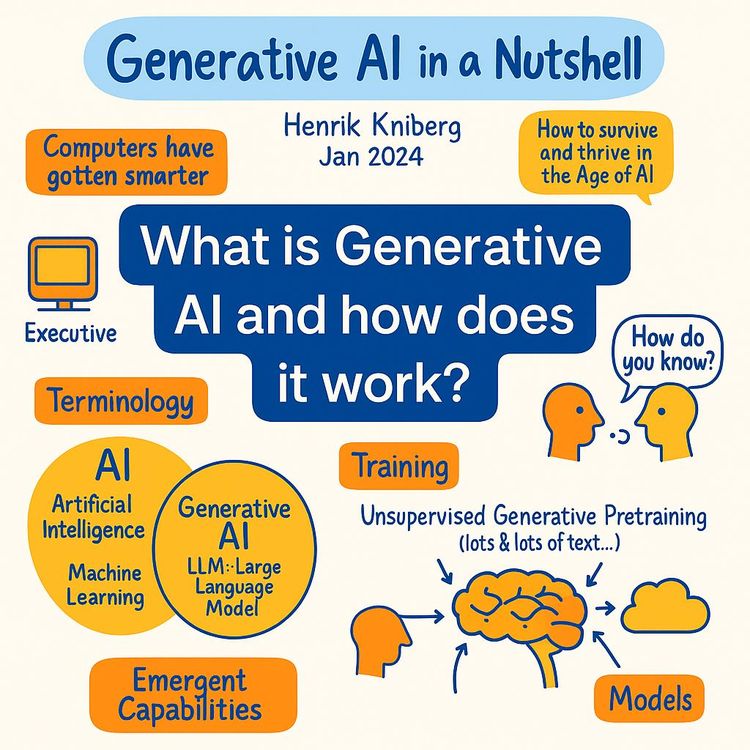
Video Course: What is Generative AI and how does it work?
Video Course: How to Use ChatGPT from Beginner to Professional
Video Course: How to Use Google Gemini for Google Workspace to Boost Productivity

Video Course: How to Use Claude 3.7 AI - Tips for Beginners!

Video Course: ChatGPT for Data Analytics: Full Course - from Beginners to Professional

Video Course: Generating Images and photos With ChatGPT?

Video Course: Generating Images & Photo's with MidJourney
Video Course: Generating Design's with Microsoft Designer and AI
Video Course: Generating Design's with Canva.com and AI
Join 20,000+ Professionals, Using AI to transform their Careers
Join professionals who didn’t just adapt, they thrived. You can too, with AI training designed for your job.