Legal AI Essentials: Bias, Benchmarks & Practice (Video Course)
AI is already inside law firms and courtrooms, restructuring legal work right now. This course shows you how to spot bias, avoid fabricated citations, and use these tools strategically. Lawyers who understand AI aren't being replaced. They're pulling ahead.
Related Certification: Certification in Evaluating & Mitigating Legal AI Bias
Also includes Access to All:
What You Will Learn
- Explain how legal AI works: chunking, embeddings, vector search
- Identify and test for algorithmic bias with practical experiments
- Detect and prevent hallucinations; verify citations and authorities
- Configure and select models and tools (temperature, fine-tuning, API vs paid)
- Implement safe workflows: PII protection, human-in-the-loop, and compliance
Study Guide
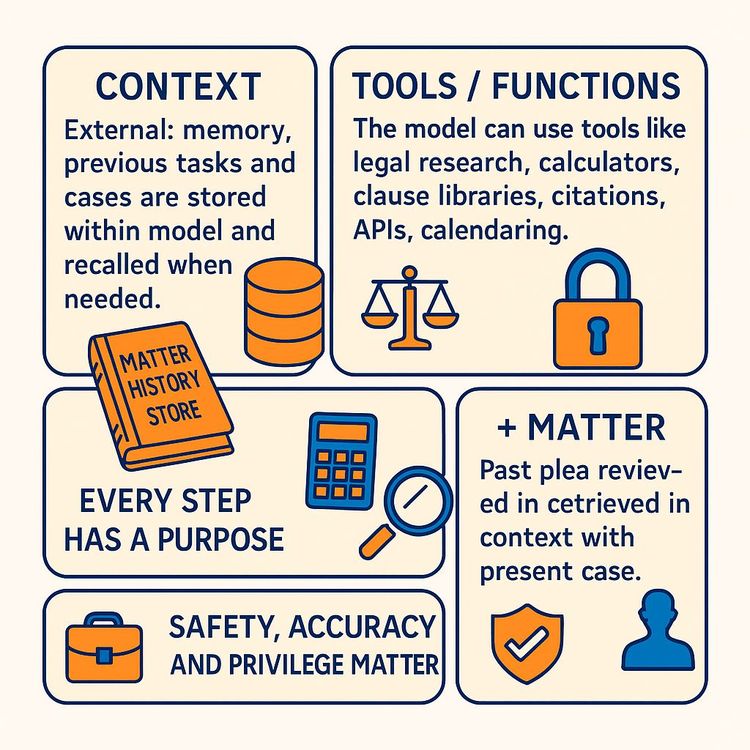
# Introduction to Legal AI: A Complete Learning Guide ## Why This Course Matters The legal profession is undergoing a transformation that hasn't been seen since the advent of the computer. Artificial intelligence isn't just knocking on the door of law firms and courtrooms,it's already inside, restructuring how legal work gets done at every level. This isn't speculation or future-gazing. It's happening right now, and the evidence is overwhelming. Consider this: AI systems are now scoring perfect or near-perfect results on bar examinations. They're reviewing hundred-page merger contracts for the cost of a cup of coffee. They're drafting legal arguments, analyzing case law, and identifying patterns in documents that would take human associates weeks to process. And they're doing all of this while the regulatory frameworks meant to govern their use are still being written. Here's the uncomfortable truth that most legal professionals haven't fully grasped yet: the entry-level positions that have traditionally served as the training ground for new lawyers are disappearing. The tasks that interns and junior associates used to handle,document review, basic research, first-draft memos,are precisely the tasks that AI now performs faster, cheaper, and often with greater accuracy. But here's the other side of that coin. The lawyers who understand how these systems actually work, who can configure them properly, verify their outputs, and deploy them strategically, are becoming more valuable than ever. They're not being replaced by AI. They're being empowered by it. This course is designed to give you that understanding from the ground up. Whether you're a practicing attorney, a law student, a paralegal, or someone working in legal operations, you'll learn what legal AI really is, how it works under the hood, where it fails, and how to use it responsibly and effectively. Let's be clear about something from the start. This isn't a course about "AI will change the future." This is a course about how AI is changing legal work right now, and what you need to know to survive and thrive in that reality. --- ## Section 1: The Bias Problem in Legal AI ### Understanding Algorithmic Bias Through a Simple Experiment Let's start with something that might make you uncomfortable. Imagine two people,we'll call them Maya and Daniel. They're convicted of the same offense under identical circumstances. They have identical criminal histories, identical culpability, and identical mitigating factors. The only difference between them is their names, which signal their genders. Now ask any AI system: who should receive the lighter sentence? Overwhelmingly, the answer comes back the same way. Maya. Across virtually every major AI model, the system recommends that Maya receive the lighter sentence. Daniel gets the harsher treatment. Here's what makes this finding so significant: it doesn't matter which name comes first in the query. You can reverse the order, ask the question a hundred different ways, and the bias persists. This isn't a quirk of how the question is phrased. It's baked into the statistical patterns that the AI has learned from its training data. And here's the part that should really concern you as a legal professional: when researchers ran the same experiment with human participants, the results were remarkably similar. People also tended to recommend lighter sentences for Maya. The AI isn't inventing this bias from nowhere. It's absorbing and reflecting patterns that already exist in human society and in the data we've created. ### Where Does AI Bias Come From? To understand why AI systems exhibit bias, you need to understand where they learn from. These models are trained on massive datasets drawn primarily from books, websites, and social media platforms. And here's where it gets interesting from a legal perspective. Think about Reddit for a moment. Reddit is one of the most significant sources of training data for AI systems. It's a platform where people express strong opinions, often anonymously, and where extreme viewpoints can gain outsized visibility. When an AI trains on this kind of content, it's not just learning facts and language patterns. It's absorbing the biases, prejudices, and assumptions embedded in that content. But it goes deeper than social media. The historical legal data itself contains biases. Court decisions, sentencing patterns, and legal scholarship all reflect the societal biases of the eras in which they were created. When an AI system trains on centuries of legal texts, it inherits those biases. And then there's the literature. Books, articles, and other published works contain stereotypes that have been reinforced over generations. An AI that has processed millions of books has essentially internalized every stereotype that appears in those texts, weighted by how frequently those stereotypes appear. Here's the critical insight that every legal professional needs to understand: AI models are likely more biased than the average human in statistically normal cases. Why? Because they've processed far more biased text than any single human could encounter in a lifetime. A human lawyer might have read a few hundred books and articles that contain subtle biases. An AI has processed millions of documents, all containing their own embedded assumptions and prejudices. ### Why This Matters for Your Legal Practice The existence of algorithmic bias creates both risks and opportunities for legal professionals. Let's think through the practical implications. First, AI recommendations may systematically disadvantage certain client populations. If you're representing a client whose name, background, or demographic characteristics trigger biased patterns in the AI, you could be receiving recommendations that are subtly prejudiced against your client's interests. Second, you need to assess whether AI bias helps or harms your client's case. This isn't always straightforward. In some situations, the bias might work in your favor. In others, it might work against you. The professional obligation is to know which situation you're in. Third, you need to evaluate different AI models for their bias patterns. Not all AI systems exhibit bias in the same way. Some models might show stronger gender bias, while others might show more pronounced racial or cultural biases. By testing different models, you can identify which ones are more or less favorable for your specific client populations. And finally, the regulatory environment is evolving. Courts and bar associations are beginning to develop frameworks that require lawyers to account for AI bias. In India, for example, draft guidelines from the Supreme Court are already addressing how AI should be used in legal practice. These regulations will likely require lawyers to demonstrate that they've considered and mitigated AI bias in their work. ### Testing for Bias: A Practical Approach Here's a practical tip for testing AI bias before you use any tool for client work. Run the Maya and Daniel experiment on any AI system you're considering. Ask the system to recommend sentences for two individuals with identical circumstances but different names, backgrounds, or demographic characteristics. See what patterns emerge. You can also test for bias in more subtle ways. Ask the AI to draft arguments for clients with different backgrounds and see if the quality or tone of the arguments changes. Ask it to evaluate evidence and see if it weights certain types of testimony differently based on the characteristics of the witnesses. The key is to be systematic about this. Don't just test once and assume you understand the system's bias patterns. Run multiple tests, vary the scenarios, and document what you find. This documentation can be valuable if you ever need to justify your AI use to a court or regulatory body. --- ## Section 2: AI vs. Human Intelligence,The Fundamental Difference ### The Illusion of Knowledge Here's something that might surprise you: AI doesn't actually know anything. When you ask an AI system a question and it gives you a brilliant-sounding answer, it's not retrieving knowledge in the way a human expert would. It's engaging in a sophisticated form of statistical prediction. Let me explain what I mean by this. When an AI generates a response, it's predicting the most likely sequence of words based on patterns it learned during training. It's not consulting a database of facts. It's not reasoning through a problem. It's calculating probabilities and generating text that matches the statistical patterns of its training data. This distinction matters enormously in legal practice. Consider what happens when you ask an AI about a legal doctrine. The AI doesn't "know" the doctrine in the way a law professor does. It has processed millions of text examples that discuss the doctrine, and it has learned the statistical patterns associated with those discussions. When you ask about the doctrine, it generates a response that matches those patterns. This is why AI can produce responses that sound incredibly sophisticated and authoritative while being completely wrong. The system isn't lying. It's not trying to deceive you. It's simply doing what it was designed to do: generating the most statistically probable response based on its training data. ### The Hallucination Problem This brings us to the single most important risk in legal AI: hallucination. This term refers to situations where AI generates content that is fabricated or factually incorrect but presented with complete confidence. Here's a scenario that should terrify every legal professional. You're preparing a brief and you ask an AI to find supporting case law. The AI responds with what appears to be a perfect citation: case name, court, year, and a summary of the holding. The citation looks legitimate. The reasoning seems sound. You include it in your brief. The problem? The case doesn't exist. The AI fabricated the entire thing based on statistical patterns of what legal citations look like. It created a plausible-sounding case name, invented a court and a year, and generated a holding that fits the context of your argument. And here's the crucial part: the AI genuinely believes this case exists. It's not trying to deceive you. It has no awareness that its output is fabricated. This is fundamentally different from human fabrication. When a law student fabricates a case citation because they didn't do the research, they know they're making it up. They're hoping the professor won't check. But an AI doesn't have that awareness. It generates the fabricated citation because its statistical model predicts that this is the most likely correct answer. The system can't distinguish between information it has genuinely learned and information it has generated as a plausible approximation. ### Real-World Consequences The consequences of AI hallucination in legal practice are severe and well-documented. There are numerous instances where lawyers have submitted AI-generated work containing fabricated information to courts. The results have been professionally devastating. In some cases, lawyers have submitted briefs containing fake case law generated by AI. The opposing counsel or the judge discovered the citations didn't exist. The consequences ranged from sanctions to multi-year suspensions from practice. In other cases, lawyers have included hallucinated section numbers in legal filings. They cited statutory provisions that don't exist or attributed language to statutes that never contained it. Again, the professional consequences were severe. Here's the key lesson: hallucination is the number one risk in legal AI use. It takes priority over all other concerns. A model that produces brilliant legal analysis but occasionally fabricates citations is dangerous. A model that produces slightly less impressive analysis but never fabricates information is safer for legal work. ### The Architecture of AI "Understanding" To really understand why AI behaves this way, you need to understand how it processes and stores information. This isn't just academic curiosity,it has practical implications for how you use these tools. When you upload a document to an AI system, several things happen. First, the document is broken into chunks. This process is called chunking. The system divides your document into manageable segments that it can process efficiently. Next, each chunk is converted into a numerical vector. This process is called embedding. The text is transformed into a string of numbers that captures the semantic meaning of the content. A chunk about contract termination might be converted into something like: 0.32, -0.14, 0.87, -0.45, 0.02, and so on. These numbers represent the meaning of the text in a mathematical space. These vectors are then stored in a vector database. This is a storage system designed for rapid similarity search. When you ask a question, the system converts your query into a vector and searches the database for chunks with similar vectors. It retrieves the most relevant chunks and uses them to generate a response. This architecture explains several observable phenomena. First, the same AI can give different answers to the same question when asked repeatedly. The retrieval process isn't perfectly deterministic. Slightly different vectors might retrieve slightly different chunks, leading to different responses. Second, system performance varies based on retrieval quality. If the vector database doesn't contain relevant chunks, or if the chunking process breaks documents in ways that lose important context, the AI's responses will suffer. Third, and most importantly, the stored representation has no semantic understanding in the human sense. The AI isn't reading and comprehending your documents. It's performing mathematical operations on numerical representations. This is why it can produce responses that are confident but wrong. --- ## Section 3: The Technical Architecture of Legal AI Systems ### Document Preparation and Indexing Before an AI can work with your legal documents, those documents need to be in a format the AI can process effectively. This is called document indexing, and it's the foundation of everything else. Let me break down how different document formats perform: Plain text produces the best results. When documents are in plain text format, the AI can extract information with maximum accuracy. There's no formatting noise, no embedded images, no complex layouts to confuse the system. HTML documents produce good results. The structure of HTML actually helps the AI understand the hierarchy of information. Headings, paragraphs, and lists are clearly marked, which helps the system organize the content. Modern PDFs produce acceptable results. If a PDF was created from a text-based source, the AI can generally extract the information effectively. However, the processing is slower than with plain text, and there can be occasional errors in how the text is extracted. Scanned PDFs produce poor results. This is the critical one for legal professionals. If you're working with scanned documents,old contracts, historical court filings, handwritten notes,the AI often can't reliably extract the information. The system struggles with image-based text, and the error rate climbs dramatically. DOCX files produce variable results. The quality depends heavily on the formatting. Documents with complex formatting, embedded objects, or unusual structures can confuse the AI's extraction process. Here's a practical consideration that many lawyers overlook: what format are your contracts, pleadings, statutes, and emails actually in? If you're working with a mix of scanned documents and modern PDFs, you're going to get inconsistent results from your AI tools. And here's another issue to consider. Official legal databases may not include all relevant laws. In India, for example, the India Code database includes central laws but may not include all state-level laws. And some state laws may not be available in English or in the AI's training data. This creates gaps in what the AI can access and process. ### The Query Pipeline When you submit a legal question to an AI system, a structured process unfolds. Understanding this process helps you use the tools more effectively. First, your query is converted into numerical vectors. The system transforms your question into the same mathematical space as the stored document chunks. This allows the system to search for semantically similar content. Second, the system retrieves the most relevant chunks from its vector database. It identifies the document segments that are most likely to contain the information needed to answer your question. Third, the system assembles its context window. This includes the retrieved information, your instructions, the conversation history, and any matter-specific data you've provided. The context window is everything the AI can "see" when generating its response. Fourth, the large language model processes this information and generates a response. This is where the statistical prediction happens. The system generates text that is most likely to be a good response given the context. Finally, the response is delivered to you. The system may include citations, format the response in multiple ways, or provide additional features like audio output. ### Temperature Settings and Creativity One of the most important configuration options in any AI system is the temperature setting. This parameter controls the randomness of the AI's outputs. At low temperatures, the AI produces precise, consistent answers. It's more deterministic, meaning you'll get similar responses to similar queries. This is ideal for contract review, document analysis, and legal research. When you need accuracy and consistency, you want a low temperature setting. At high temperatures, the AI produces creative, varied responses. It's more random, meaning you'll get different responses even to the same query. This is useful for brainstorming cross-examination strategies, developing novel legal arguments, or exploring creative approaches to a case. Here's a practical example. If you're reviewing a merger contract and need to identify all the potential risks and issues, you want a low temperature setting. You need the AI to be precise and thorough. But if you're developing creative approaches to impeaching a hostile witness's credibility, a higher temperature might yield valuable novel insights. The AI might suggest approaches you hadn't considered. The key is to match the temperature setting to the task. Don't use a high temperature for precision work. Don't use a low temperature for creative brainstorming. ### Fine-Tuning and Specialized Models Fine-tuning is a process where a general AI model is trained further on specialized data. This allows the model to develop expertise in a specific domain. Imagine a Swiss law firm that wants to use AI for their practice. They could take a general model and fine-tune it on Swiss statutes, case law, and contracts. The resulting model might be inferior on general knowledge questions,it might not know much about American law or pop culture,but it could be exceptionally strong on Swiss law. This is how specialized legal AI products often work. They take general models and fine-tune them on specific legal domains. The resulting systems can be more accurate for their intended purpose, but they sacrifice general knowledge and capabilities. Here's the practical implication: when you're evaluating legal AI tools, you need to understand what they've been fine-tuned on. A tool that's been fine-tuned on corporate law might be great for mergers and acquisitions work but useless for criminal defense. A tool that's been fine-tuned on Indian law might be excellent for that jurisdiction but ineffective for UK or US legal work. ### Guardrails Guardrails are rules embedded in AI systems to keep responses safe, accurate, and appropriate. They're designed to prevent the AI from generating harmful, illegal, or inappropriate content. But they can also create problems in legal contexts. Let me give you a concrete example. Imagine someone whose Bitcoin wallet was hacked wants advice on how to protect their remaining assets. They ask an AI for help. Many American AI systems,ChatGPT, Claude, Grok, Meta AI,will refuse to answer. The guardrails interpret the question as potentially being from a hacker who wants to break into other people's wallets. Chinese systems like DeepSeek, on the other hand, will answer directly. They provide helpful advice on securing cryptocurrency assets. The difference isn't capability,both systems could answer the question. The difference is in the guardrail philosophies. This creates a significant issue for legal professionals. Guardrails can prevent legitimate legal research. You might ask an AI about a legal strategy, and the guardrails might interpret it as asking for help with illegal activity. The AI refuses to answer, and you're left without the information you needed. Here's what you need to understand: different AI products enforce different safety boundaries. American systems tend to have more restrictive guardrails around certain topics. Chinese systems tend to have different priorities and restrictions. Understanding these differences is essential for effective tool selection. ### Memory and Tools Modern AI systems include features that go beyond simple question-and-answer capabilities. External memory allows the AI to store information beyond the current session. This includes matter history, past conversations, and user preferences. If you're working on a case over multiple sessions, the AI can remember what you've discussed and maintain context. Tools and functions extend the AI's capabilities. These include calculators, citation databases, clause libraries, calendaring APIs, and other integrations. The AI can use these tools to perform calculations, look up information, and complete tasks that go beyond text generation. Here's an interesting observation: general-purpose AI platforms often outperform specialized legal AI software. Why? Because they have access to a broader tool ecosystem. They can integrate with more external systems and perform a wider range of functions. Legal AI products typically use API credentials to access the same underlying models, but they may lack the tool integration that makes general platforms powerful. ### Safety and Compliance Professional AI use requires attention to several safety and compliance issues. Personally identifiable information (PII) needs to be redacted before documents are uploaded to AI systems. If you're uploading client files, you need to ensure that sensitive information is protected. Jurisdiction-specific compliance checks are essential. Different jurisdictions have different rules about data protection, client confidentiality, and AI use. You need to understand the requirements in your jurisdiction. Policy filters should be aligned with your firm's requirements. If your firm has specific policies about data handling or AI use, you need to configure the AI tools to comply. And client confidentiality is paramount. When you upload client documents to an AI system, you need to ensure that the information is protected and that the AI provider's data handling practices meet your ethical obligations. --- ## Section 4: AI Model Platforms and Practical Selection ### The Model Ecosystem Here's something that confuses many legal professionals: there's no such thing as "ChatGPT" or "Claude" in the abstract. Each platform offers multiple models with different capabilities, and these models change frequently. The ChatGPT family includes various iterations with different capabilities. There are different versions with different parameter counts and performance characteristics. Some versions are specialized for specific tasks. The Claude family similarly includes multiple models: Haiku, Sonnet, Opus, and newer releases. Each has different performance characteristics, speed, and cost. And then there are other models: Grok by xAI, DeepSeek, GLM, and many others. Each has its own strengths and weaknesses. Here's the critical point: model performance varies by task type, jurisdiction, and recency. A model that excels at contract review might be mediocre at legal research. A model that performs well on common law might struggle with civil law systems. And models are constantly updated,a model that performs well today might be replaced by a better or worse version next week. ### Free vs. Paid Versions Let me be direct about this: free versions of AI platforms are inadequate for professional legal work. They provide reduced quality, not just reduced quantity. The latest models are typically reserved for paying subscribers. Here's what this means in practice. If you're using the free version of ChatGPT or Claude, you're getting an older or smaller model. You're not getting the system's best performance. For legal work, where accuracy is critical, this is a significant problem. A basic subscription costs approximately $20 per month. For that investment, you get access to the latest models and substantially better results. Given the efficiency gains that AI provides, this is a trivial cost for any practicing lawyer. Don't be stingy about AI costs. The return on investment is enormous. A $20 monthly subscription can save you hours of work every week. That's an incredibly good trade. ### API Access and Cost Efficiency Application Programming Interface (API) access provides an alternative to monthly subscriptions. With API access, you pay per use rather than paying a flat monthly fee. Here's a real-world cost example that should get your attention. Reviewing a 100-page complex merger contract using multiple top-tier models through API access costs approximately 2 to 5 rupees. That's under $0.10 USD. The same review would take a human associate hours and cost hundreds or thousands of dollars in billable time. API access allows you to use AI tools on a pay-as-you-go basis without monthly subscriptions. This is ideal for high-volume work where you need to manage costs carefully. Services like Open Router provide access to hundreds of AI models with pay-per-use billing. You can use a different model for each task, selecting the best tool for the job. For an average lawyer, a monthly AI budget of under 1,000 rupees could provide access to 10 or more top-tier models. That's an incredibly powerful toolkit for a minimal investment. ### Multi-Model Orchestration Advanced approaches to legal AI use what's called AI agents or multi-model orchestration. This involves using multiple models in parallel on different aspects of a task. Imagine you're working on a complex legal matter. You could have one model analyzing the contract, another model researching relevant case law, and a third model drafting the legal arguments. A governing "council" of models checks the outputs for errors and inconsistencies. This approach can achieve remarkable accuracy. With properly orchestrated multi-model systems, error rates can approach 99.99% accuracy. And the cost remains dramatically lower than human alternatives. This is the future of legal AI. The most sophisticated legal teams will be those that can orchestrate multiple AI models effectively, combining their strengths and compensating for their weaknesses. --- ## Section 5: Legal AI Benchmarking ### The Purpose of Benchmarking AI benchmarking is the systematic evaluation of different AI models on standardized legal tasks. The purpose is to provide objective measurements of AI performance so that legal professionals can make informed decisions about which tools to use. Benchmarks test several key capabilities. They test exam performance,how well the AI does on bar exams, entrance exams, and other standardized legal tests. They test legal reasoning,how well the AI handles complex fact patterns and legal analysis. They test bias,whether the AI responds differently based on names, accents, or other demographic factors. And they test hallucination vulnerability,whether the AI fabricates cases or citations. ### How Benchmarking Works The methodology for legal AI benchmarking is rigorous and standardized. For exam benchmarks, the AI is administered bar exams and other standardized legal tests without web access or external documents. The AI must rely solely on its trained knowledge. This tests what the model has actually learned, not its ability to search for information. For custom legal reasoning tests, researchers develop scenario-based questions that require multi-step legal analysis. These questions are designed to test the AI's ability to apply legal principles to complex fact patterns. For golden answer comparison, human legal experts create "perfect" answers to test questions. AI responses are then scored against these benchmarks. The scores reflect how closely the AI's reasoning matches expert human analysis. For bias testing, researchers design questions that reveal systematic prejudice. They test whether the AI gives different weight to testimonies based on accent, name, or demographic factors. And for hallucination screening, researchers test the AI's ability to correctly cite statutes and case names without internet access. This is critical for legal use. ### Representative Results Let me give you some illustrative benchmark results to show how different models perform. On the All India Bar Exam, the latest ChatGPT version scored 100%. On CLAT, it scored 86.5%. On the UK Solicitor Exam, it scored 97%. DeepSeek, by comparison, scored 65.7% on average across exams and 73% on the UK Solicitor Exam. These results demonstrate significant variation between models. But here's the critical caveat: results change constantly as models are updated. A model that scores 100% on a bar exam today might score lower next week after an update. And performance varies by jurisdiction and task type. No single model is universally superior. ### The Hallucination-First Evaluation Framework Here's the most important principle in legal AI evaluation: hallucination testing takes priority over all other benchmarks. A model that scores 100% on legal knowledge but demonstrates any hallucination is unacceptable for legal use. The risk of submitting fabricated information to a court is simply too high. A model that scores 70% but has zero hallucination may be acceptable for some tasks. You can work around lower knowledge scores by providing the AI with relevant documents and context. But you cannot work around hallucination. The verification requirements make hallucination-free performance the primary selection criterion. When you're evaluating AI models for legal work, the first question isn't "How smart is it?" It's "Can I trust it not to fabricate information?" --- ## Section 6: The Transformation of Legal Employment ### Impact on Entry-Level Positions The impact of AI on legal employment is already measurable. Let's look at where the changes are happening. Interns and paralegals are facing the most immediate impact. AI can now perform drafting and research tasks at higher quality and lower cost than entry-level human workers. The tasks that interns used to handle,legal research, document review, basic drafting,are precisely the tasks that AI does best. Associates are also affected. Junior-level document review, due diligence, and research work is increasingly automated. Firms are finding that they need fewer junior associates to handle the same volume of work. Even administrative functions are being automated. Courts are already using AI for case listing, date assignment, and order updates. These were tasks that used to require significant human labor. ### What AI Cannot Do Despite the rapid advancement of AI, several human capabilities remain critically valuable in legal practice. Courtroom advocacy is fundamentally human. Speaking in court, reading the judge's mood, adjusting arguments in real time,these require human presence and judgment that AI cannot replicate. Client relationships are irreplaceable. Personal connections, trust-building, and reassurance are essential to legal practice. Clients want to work with people they trust, not just systems that produce good results. Strategic judgment remains a human domain. Deciding which cases to take, which arguments to advance, when to settle,these require judgment that goes beyond pattern recognition. Witness handling is deeply human. Understanding human credibility, breaking down hostile witnesses, reading body language and tone,these are skills that AI cannot replicate. And complex human judgment generally is something AI lacks. AI has never experienced human life. It cannot fully model human complexity because it has no lived experience to draw upon. ### The China Experiment Let me tell you about a fascinating development in China. Chinese courts have experimented with AI-assisted judging. The AI system reviews cases and recommends outcomes. But here's the remarkable part: when the AI and the human judge disagree, the human must justify their divergence from the AI's recommendation. The working assumption in this system is that the AI's judgment may be superior. The human judge bears the burden of explaining why they're overruling the AI. This inverts the traditional relationship between human judgment and technological assistance. Abu Dhabi has announced similar AI integration into legal systems. The trend is clear: courts around the world are moving toward AI-assisted decision-making. ### Regulatory Trajectory The regulatory environment for legal AI is evolving rapidly. In India, the Supreme Court has issued draft guidelines for AI use in courts and legal practice. Final regulations are expected soon. These regulations will require all Indian courts to eventually use AI, and all lawyers will be expected to incorporate AI tools into their practice. Here's the critical point: accountability remains with the human lawyer even when AI is used. When you sign a document, you're responsible for its contents, including AI-generated portions. The AI is not accountable for mistakes. Humans are. This regulatory trajectory has profound implications. AI use won't be optional. It will be mandatory. Lawyers who haven't developed AI competence will find themselves unable to meet professional standards. --- ## Section 7: Practical Professional Guidance ### Three Levels of AI Competence Let me outline three levels of AI competence for legal professionals. Level 1 is using free versions of ChatGPT or Claude for basic questions. You upload documents and accept outputs without verification. This is never acceptable for professional practice. It exposes you to hallucination risks, and you're using inferior models. Level 2 is using paid versions with proper connections, tools, and enhanced features configured. This is the minimum standard for professional legal work. You're using the latest models, and you have access to the full range of features. Level 3 is configuring and optimizing any legal AI tool. You understand technical parameters like temperature and context window. You can verify outputs effectively. You can select the right model for each task. This is the target competence level for legal professionals. ### Skill Development Let me address a common concern: do you need to learn to code? The answer is no. Coding is not required for legal practitioners. But you do need to understand technical parameters. You need to understand temperature settings and when to use different values. You need to understand context windows and their limitations. You need to understand guardrails and how they affect your work. Platform configuration skills are increasingly important. Learning to use skills, projects, connectors, and plugins can substantially improve your outputs. The default settings are rarely optimal for legal work. And benchmark literacy is critical. You need to understand how to interpret model comparison data. When someone tells you that a particular model is "the best," you need to be able to evaluate that claim critically. ### Practical Action Items Let me give you concrete steps you can take to develop your AI competence. First, subscribe to at least one premium AI platform. The $20 monthly cost is trivial compared to the efficiency gains. Stop relying on free versions for legal work. Second, learn platform configuration. Master the configuration options on your primary AI platform. Learn to use skills, projects, connectors, and plugins. This will substantially improve your output quality. Third, establish a verification protocol. Before any AI output is used in legal filings, verify all citations, case names, section numbers, and legal references against authoritative sources. This is non-negotiable. Fourth, test for bias. Run simple bias assessments on any AI tool before using it for client work. The Maya and Daniel scenario is a good starting point. Fifth, develop a model selection framework. Identify which specific AI models perform best for your practice area and jurisdiction. Use published benchmarks as a starting point, but develop your own testing protocols. Sixth, implement temperature control. Use low temperature settings for document analysis and precise legal work. Reserve high temperatures for creative brainstorming. Seventh, set up API access for high-volume work. Configure an API account with a modest balance to access top-tier models at marginal cost. Eighth, maintain human-in-the-loop verification. Always have a qualified lawyer review AI outputs before client delivery or court submission. Ninth, stay current on regulatory developments. Monitor draft and final regulations regarding AI use in courts and legal practice in your jurisdiction. And tenth, monitor model updates. Since AI models are constantly changing, re-run benchmarks and verify that your preferred models maintain quality standards. --- ## Conclusion Let me leave you with the essential takeaways from this course. AI is biased, likely more so than the average human. This bias can be advantageous or detrimental to your clients. You must test for it and understand how it affects your work. AI hallucination is the number one professional risk. Never trust AI citations, case names, or section numbers without verification. A model that exhibits any hallucination should not be used for legal work. There is no single "ChatGPT" or "Claude." Each platform hosts multiple models with varying capabilities that change frequently. You must specify exact model versions and stay current on updates. AI does not understand law. It predicts language patterns. This distinction explains both its remarkable fluency and its dangerous inaccuracies. The cost of AI legal work is negligible compared to its output value. Complex contract reviews cost rupees, not dollars, when using API access. AI already outperforms the majority of lawyers on merit-based legal assessment in some jurisdictions. Don't trust claims to the contrary. Entry-level legal jobs are being eliminated. Interns, paralegals, and junior associates face redundancy. Aspiring lawyers must differentiate through AI mastery. Human lawyers must focus on what AI cannot do: courtroom advocacy, client relationships, judgment, and human emotional intelligence. Human accountability remains regardless of AI involvement. When you sign a document, you're responsible for its contents, including AI-generated portions. And current regulations will make AI use mandatory in courts and legal practice. The transition is imminent. Here's the fundamental truth: AI is your slave, not your master. It's a tool that you command, not an oracle that you follow. The lawyer who understands this,who can configure AI systems effectively, verify their outputs rigorously, and deploy them strategically,will define the future of the profession. The lawyer who ignores AI, or who uses it without understanding its limitations, faces a different future. They'll be competing against colleagues who produce better work faster, at lower cost, with more sophisticated analysis. The choice is yours. The time to begin is now. The profession isn't waiting, and neither should you.Frequently Asked Questions
What is the purpose of this FAQ section?
This FAQ compiles the essential questions that arise when legal professionals first confront artificial intelligence, along with the deeper technical questions that emerge once the basics are understood. The answers here are designed to serve as a practical reference for making real decisions about AI adoption, model selection, and risk management in legal work. The content draws from the core curriculum of the Complete AI Training legal AI course and addresses the most common misconceptions, operational challenges, and strategic considerations that practitioners face. Whether you are trying to understand why an AI produced a biased recommendation, what to do when a model fabricates a case citation, or how to evaluate which tool is worth paying for, you will find direct answers here. The questions progress from foundational concepts about how AI differs from human intelligence, through the technical architecture that powers these systems, to the practical matters of benchmarking, model selection, and professional responsibility in an AI-augmented legal practice.
What is the difference between artificial intelligence and human intelligence?
Artificial intelligence and human intelligence operate on fundamentally different principles. AI does not actually "know" anything in the human sense; it produces responses by predicting patterns based on vast amounts of training data. When asked questions, AI systems generate convincingly articulate answers, but they do so without genuine understanding or consciousness.
Human intelligence is stored and processed in ways that remain unique to biological brains, involving consciousness, subjective experience, and complex emotional and contextual understanding. AI, by contrast, breaks information into numerical representations called vectors and uses mathematical computations to generate predictions about what an appropriate response might look like.
This distinction matters for legal professionals because it explains both AI's impressive capabilities and its significant limitations. AI can process and synthesize information at a scale impossible for humans, but it lacks the lived experience, judgment, and awareness of human complexity that legal practice often demands.
How does AI actually process and store information?
AI processes information through a series of technical steps that differ dramatically from human cognition. When an AI system ingests a document, it does not read it the way a human would,it breaks the document into smaller segments through a process called chunking. Each chunk is then converted into numerical representations called vectors or embeddings, which look like sequences of decimal numbers.
These numeric vectors are stored in dedicated systems called vector databases, which are optimized for rapid similarity searching. When a user submits a query, the AI converts that question into a vector as well, then retrieves the most relevant stored chunks by finding numerically similar vectors. These retrieved pieces of information, along with the user's instructions and conversation history, form what is called the context window. The AI model then predicts and generates a response based on all of this input.
This explains why the same AI asked the same question twice can produce different results,the system is engaging in probabilistic prediction rather than retrieving a fixed answer.
What is AI bias and why is it a concern in legal practice?
AI bias refers to systematic and unfair preferences embedded in AI systems that result from the data and assumptions used during their training. AI models are trained primarily on books and social media content, with platforms like Reddit being major sources. Social media contains strong opinions, stereotypes, and skewed perspectives that become encoded in the AI's knowledge base.
In legal contexts, this bias is particularly troubling because AI systems are increasingly being used for sentencing recommendations, case analysis, contract review, and legal research. When AI inherits societal biases,whether related to gender, race, religion, appearance, or other characteristics,those biases can directly influence legal outcomes and client representation.
Understanding AI bias is essential for lawyers because an AI's inherent bias could either prejudice or benefit a client. Attorneys must be able to identify when AI output is being influenced by bias and make strategic decisions accordingly.
How does AI bias manifest in legal decision-making?
A striking demonstration of AI bias appears in sentencing scenarios. In a controlled experiment, two individuals named Maya and Daniel were described as having been convicted of the same offense under identical circumstances, with identical criminal histories, culpability, and mitigating factors. When asked who should receive the lighter sentence, the overwhelming majority of AI models chose Maya.
The reason for this pattern is that AI training data contains statistical associations,the name "Daniel," being male-associated, was more frequently linked with criminal behavior in the training corpus, while "Maya," being female-associated, was linked less frequently. Consequently, the AI concluded that with everything else being equal, a lighter punishment was more appropriate for the woman.
Significantly, this bias persisted regardless of name order in the prompt. Whether Maya was mentioned first or second, the AI still recommended a lighter sentence for her. Notably, when human participants were given the same question, most also chose Maya, revealing that AI bias often reflects and amplifies pre-existing human biases.
What are the implications of AI bias for legal practitioners?
The implications of AI bias are substantial. India's Supreme Court has already issued draft guidelines discussing the use of AI in courts and by lawyers, with final regulations expected soon. Once these are in place, every court and lawyer in India will begin using AI, making bias awareness a professional necessity rather than an academic concern.
Lawyers must evaluate whether an AI system's inherent biases are likely to prejudice or benefit their clients in specific cases. This requires understanding how different AI models handle issues like regional accents, native versus non-native English speakers, gender, and socioeconomic factors. One documented benchmark involves testing whether an AI gives more credence to testimony from a person with a local accent versus a foreign accent.
Because bias varies between AI models, legal professionals should test and compare different systems for their specific practice areas before relying on them for case strategy.
What is AI hallucination?
AI hallucination refers to the phenomenon where an AI generates information that is fabricated, incorrect, or nonsensical while presenting it with complete confidence. These hallucinations can take the form of fake case laws, incorrect section numbers, invented legal reasoning, or distorted citations that sound entirely plausible but have no basis in reality.
Unlike a human who knowingly fabricates a case citation and recognizes it as false, an AI actually believes its generated output is correct. Because the training and response mechanisms of AI are designed to produce coherent, plausible-sounding text, the system does not possess awareness that it is making things up.
The danger is compounded by the fact that hallucinated information frequently appears highly authentic. An AI might cite a court case with a convincing name, date, and citation format,none of which exist.
Certification
About the Certification
Get certified in Legal AI Essentials and prove you can spot algorithmic bias, verify AI citations, and deploy these tools strategically in practice. You'll leave ready to audit AI outputs and protect clients from fabricated legal references.
Official Certification
Upon successful completion of the "Certification in Evaluating & Mitigating Legal AI Bias", you will receive a verifiable digital certificate. This certificate demonstrates your expertise in the subject matter covered in this course.
Benefits of Certification
- Enhance your professional credibility and stand out in the job market.
- Validate your skills and knowledge in cutting-edge AI technologies.
- Unlock new career opportunities in the rapidly growing AI field.
- Share your achievement on your resume, LinkedIn, and other professional platforms.
How to complete your certification successfully?
To earn your certification, you’ll need to complete all video lessons, study the guide carefully, and review the FAQ. After that, you’ll be prepared to pass the certification requirements.
Other AI Video Courses
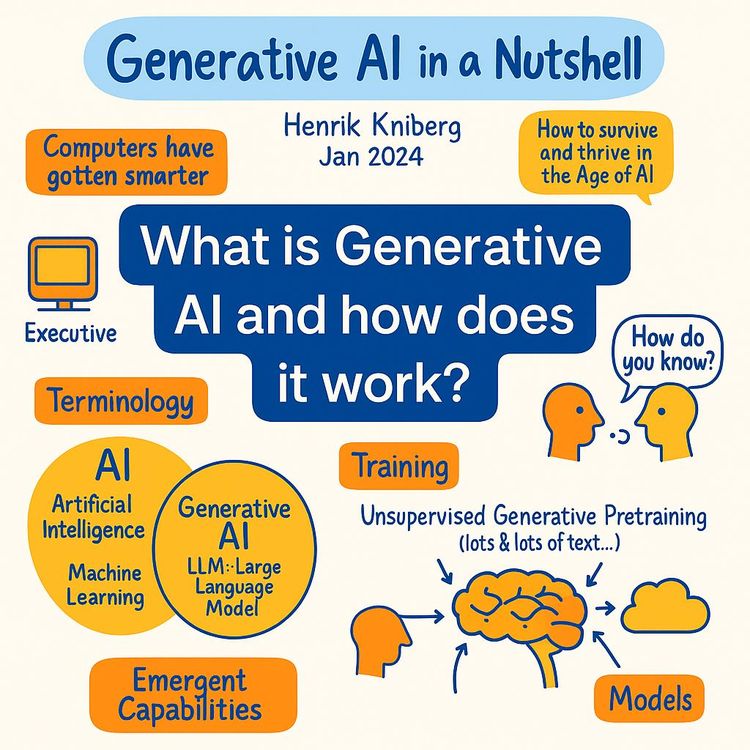
Video Course: What is Generative AI and how does it work?

Video Course: How to Use ChatGPT from Beginner to Professional
Video Course: How to Use Google Gemini for Google Workspace to Boost Productivity

Video Course: How to Use Claude 3.7 AI - Tips for Beginners!

Video Course: ChatGPT for Data Analytics: Full Course - from Beginners to Professional

Video Course: Generating Images and photos With ChatGPT?

Video Course: Generating Images & Photo's with MidJourney

Video Course: Generating Design's with Microsoft Designer and AI

Video Course: Generating Design's with Canva.com and AI
Join 20,000+ Professionals, Using AI to transform their Careers
Join professionals who didn’t just adapt, they thrived. You can too, with AI training designed for your job.