Manus AI Automation Framework: From Prompt to Scalable Content (Video Course)
Stop chasing prompt hacks. Build a repeatable AI system that turns strategy into shippable assets,content libraries, research, even ready-to-zip files. Learn TCVAA, set guardrails, keep quality tight, and scale output without losing your voice.
Related Certification: Certification in Building Scalable AI Content Automation Pipelines
Also includes Access to All:
What You Will Learn
- Define precise outcomes, templates, and guardrails before automation
- Apply the TCVAA workflow: Trigger → Context → Action → Verification → Artifact
- Build and perfect reusable templates and zip-ready packaging for assets
- Implement verification and human-in-the-loop checks to prevent scaling errors
- Scale production with routing, parallelization, and autonomous agent patterns
Study Guide
Introduction: What This Course Covers (And Why It Matters)
You don't need another "prompt hack." You need a system.
The $100K Manus AI Automation Framework is a complete approach to using AI as an operational engine for your business , not a novelty tool you poke when you're bored. In this course, you'll learn how to architect repeatable AI workflows that turn strategy into assets on demand: content libraries, research reports, productized deliverables, even packaged zip files of deploy-ready materials. The goal isn't to write one great post or one slick script. The goal is to build a machine that can reliably produce hundreds or thousands of good assets that compound into revenue, authority, and momentum.
You'll move from one-off commands to strategic, system-based automation. You'll learn to think like an operator: define outcomes, set guardrails, build templates, verify quality, and scale output. This framework will help you automate content creation, research, and digital product development , with a human-in-the-loop process to keep standards high and risk low.
Authoritative Statement:
"It's my job to know how to make money. It's the AI's job to implement the task."
The Mindset Shift: Strategy Precedes Automation
Generic prompts yield generic results. The strategic phase determines everything that follows. Before you ask AI to create anything, you define three things: the strategy, the exact artifact you want, and the rules of the system. When those are clear, AI becomes the most reliable "employee" you've ever had. When they're vague, AI mirrors your uncertainty and produces noise.
Example 1:
Weak: "Write a marketing plan for my coaching business."
Strong: "Using the PAS copy framework and a casual-professional tone, produce a 7-email sequence for first-time founders who struggle with sales calls. Each email must include a 2-sentence story, one objection rebuttal, and a booking CTA. Keep total word count per email under 200 words."
Example 2:
Weak: "Make content about SEO."
Strong: "Create 25 LinkedIn carousels targeted at B2B SaaS CEOs. Each carousel follows a 7-slide template: Hook, Pain, Myth, Case Snapshot, 3-Step Fix, KPI to Track, CTA. Use data-backed statements only. Include a disclaimer on Slide 7: 'Results vary by niche and site age.' Package all outputs and filenames in a zip-friendly folder structure."
Tip:
If you can't describe the final artifact in one concise sentence, you're not ready for automation. Clarify the structure, tone, constraints, and success criteria first.
Core Concept: Define the Exact Desired Outcome
Ambiguity is the enemy of automation. You must know the final format and the purpose of the output before you start. That includes details like: number of sections, tone, data sources, disclaimers, call-to-action, naming conventions, and packaging instructions.
Example 1:
Desired outcome: "A zip file containing 100 niche research reports. Each report is a 2-page PDF with: (1) Market summary, (2) Top 3 monetization plays, (3) Audience psychographics, (4) Risks/disclaimers, (5) Three example offers. Style: Plain English, bullets preferred, max 400 words per page."
Example 2:
Desired outcome: "A Google Sheet populated with 200 video hooks for personal finance TikToks. Columns: Hook, Angle, Primary Emotion, Contrarian Twist, CTA. Constraints: no income guarantees, no tax advice; curiosity-first angles only."
Best Practice:
Write the final output template by hand (once). Then ask AI to fill it at scale.
Start with Expert Analysis (Not Guesswork)
Don't ask AI for a strategy. Ask it to analyze proven ones. Deconstruct what already works, then turn that into your system's rules. This is where you set guardrails and reduce risk. You're not outsourcing your thinking; you're using AI to map the terrain so your decisions are informed, not improvised.
Example 1:
"Identify 20 top-performing landing pages for B2B SaaS trials. Extract patterns: headline structure, value props, social proof types, CTA placement, length, and tone. Distill into a universal template with fill-in-the-blank fields."
Example 2:
"List 15 popular YouTube creators in the productivity niche. Summarize their top 5 video formats, common hooks, pacing, visual elements, and retention tactics. Turn that into a video script blueprint for 60-90 second shorts."
Tip:
Ask the AI to include negative rules: what to avoid, what not to claim, and which clichés to ban. Guardrails prevent expensive mistakes later.
Input Is Everything: Teach the AI the Lay of the Land
The early phase is a conversation, not a command. Feed the AI your strategic context, the rules you want it to follow, and the definitions that matter. Think of it as onboarding an employee. You're transferring your mental models so it can implement with precision.
Example 1:
"In this project, use a skeptical tone. Favor contrarian angles, back claims with a source, and always propose a testable next step. Avoid buzzwords. Keep average sentence length under 14 words."
Example 2:
"Use the following research sources only: [source list]. If unsure, ask for clarification rather than fabricate. For financial content, include: 'This is not financial advice' in the final slide or paragraph."
Best Practice:
Save this onboarding message as a reusable "Context Block" you can drop into any new workflow.
The Five-Step AI Workflow Pattern (TCVAA)
Reliable automation is a process. The TCVAA model keeps it predictable and scalable: Trigger → Context → Action → Verification → Artifact.
Step 1: Trigger
The trigger is the event or input that kicks off the workflow. It could be a new idea, a dataset, a customer question, or a keyword list. Define it clearly so your system knows what to do next.
Example 1:
A CSV upload of 500 high CPC keywords for the "commercial insurance" niche.
Example 2:
A new customer support ticket tagged "billing confusion" entering a routing queue.
Tip:
Normalize your triggers. Use consistent fields, formats, and naming conventions so you can scale without manual cleanup.
Step 2: Context
Context is the guardrails and instructions you hand the AI so it can complete the task correctly. Include goals, style, structure, constraints, examples, and what to avoid. Context prevents rework.
Example 1:
"Create a 7-slide carousel using this structure: Hook, Problem, Examples, Niche Reveal, Strategy, Disclaimer, CTA. Tone: direct but helpful. Audience: small agency owners. Avoid guarantees. Use clear next steps."
Example 2:
"For support responses: respond in under 120 words, acknowledge frustration, restate the issue, provide a specific fix, and link to one help doc. Don't use emojis or slang."
Best Practice:
Keep a "Context Library" of reusable blocks: tone, structure, disclaimers, banned phrases, templates, file naming rules.
Step 3: Action
Action is the creation step. The AI does the work: writing, researching, summarizing, outlining, organizing, or drafting. If Trigger and Context are sound, Action becomes consistent.
Example 1:
"Using keyword 'cyber liability insurance,' generate the full text for a 7-slide carousel per the defined structure. Include an example claim scenario on Slide 3."
Example 2:
"Draft a 1-page product spec for a simple calculator tool (mortgage overpayment). Inputs, outputs, formulas, edge cases, and UI notes."
Tip:
Don't overstuff the Action prompt. Let the Context do the heavy lifting. Keep commands short, direct, and tied to your template.
Step 4: Verification
Verification is your quality control. This is where flaws are caught before they scale. Use automated checks and human review. Encourage the AI to audit its own output against your rules.
Example 1:
"Evaluate your output against these criteria: structure adherence, tone match, banned claims, and clarity. List any issues you find, then rewrite to fix them."
Example 2:
"Run a guardrail checklist: (1) Disclaimer present, (2) No income guarantees, (3) CTA present and clear, (4) Sources cited. If any missing, correct and re-submit."
Best Practice:
Expect the first perfect template to take hours. That time investment saves you from fixing the same mistake hundreds of times later.
Step 5: Artifact
The artifact is the final, verified output: the finished content, report, or , more powerfully , a perfected template you can reuse at scale. The artifact is your production unit.
Example 1:
A polished carousel template with variable fields (keyword, niche reveal, example list, strategy steps, disclaimer) ready to populate across 500 inputs.
Example 2:
A zipped folder with 200 cleaned CSVs, each named and organized by niche, plus a manifest file listing titles, disclaimers, and CTA links.
Tip:
Treat "template + guardrails" as the true asset. That's what drives repeatability (and revenue).
Case Study: Scalable Content Generation with High-CPC Keywords
Let's walk through a practical scenario to see the framework at work.
Strategy:
Create educational carousels that highlight lucrative niches using high CPC keywords as the curiosity hook. Each carousel drives traffic to a lead magnet or service page.
Trigger + Context:
Trigger: A list of high CPC keywords. Context: A fixed 7-slide template , 1) Hook ("$48 A Click?"), 2) Problem/Opportunity, 3) Example Keywords, 4) High-Value Niche Reveal, 5) Strategy Breakdown, 6) Disclaimer, 7) CTA.
Action:
AI generates text and image descriptions for one carousel based on a single keyword.
Verification:
Human reviews the output. The first pass usually has fluff or off-brand phrases. You refine hooks, tighten claims, add disclaimers, and lock the tone. This can take hours for a first perfect artifact. Worth it.
Artifact:
Once the first carousel is perfected, you treat it as a template. Then you scale: apply it to 500 keywords and package outputs into organized folders (one per keyword), zipped for easy delivery.
Example 1:
Keyword: "business interruption insurance." Hook: "$62 Per Click? Here's Why." Niche Reveal: "Local restaurants with fragile supply chains." Strategy: "Offer a 15-minute risk audit, map cash-flow risks, bundle a mitigation checklist, upsell policy review." Disclaimer: "Not insurance advice; consult a licensed professional."
Example 2:
Keyword: "cyber liability insurance." Hook: "Hackers Love This Gap." Niche Reveal: "SMB e-commerce stores using outdated plugins." Strategy: "Security audit → patch priority list → incident response checklist → retainer offer." Disclaimer: "General information; not legal or insurance advice."
Best Practice:
Build a packaging script or checklist: standardized filenames, slide text in a CSV, folder per asset, manifest file with titles and links. Consistency reduces friction when publishing at scale.
Advanced Techniques: Prompt Chaining
Rather than expecting one magic prompt to do everything, chain prompts so each step builds on the last. This reduces confusion and improves quality.
Example 1 (Research → Synthesis → Template → Populate):
1) "List 25 experts known for high-retention short-form content." 2) "Synthesize their hook and pacing tactics into a 60-second script template." 3) "Create a fill-in-the-blank version of that template." 4) "Populate the template for 'credit card points travel' with 5 variants."
Example 2 (Analysis → Framework → Guardrails → Output):
1) "Analyze 50 top email subject lines in SaaS." 2) "Extract patterns into a subject-line formula library." 3) "Define guardrails: ban clickbait, include specificity." 4) "Generate 100 subject lines for 'freemium to paid conversion' using formulas A, B, and C."
Tip:
Save chains as named mini-systems. You can slot them into larger workflows later.
Advanced Techniques: Routing
Routing sends each input to the correct workflow. If an idea comes in labeled "video," it goes to your video chain. If it's "email," it goes to your email chain. This prevents one-size-fits-nothing outputs.
Example 1:
Input: "New marketing campaign for product launch." Router logic: if "video" → script chain; if "carousel" → carousel chain; if "email" → sequence chain; if multiple → spawn parallel tasks and combine in a launch kit.
Example 2:
Input: "Customer asks about refund policy." Router logic: if "billing" → billing response template; if "technical" → troubleshooting playbook; if "legal" → standard policy response with escalation note.
Best Practice:
Use a tagging vocabulary. Clear tags (e.g., "shorts," "carousel," "FAQ") make routing deterministic and faster.
Advanced Techniques: Parallelization
Run multiple AI instances at once to accelerate complex projects. One can synthesize research while another drafts scripts, and another generates visuals or metadata. You combine outputs at the end.
Example 1:
Instance A: "Research evergreen storytelling patterns (fables, parables)." Instance B: "Analyze top engagement metrics for 'career advice' TikToks." Instance C: "Draft 30 scripts that marry Story Pattern X with Metric-optimized pacing."
Example 2:
Instance A: "Compile 100 product-led growth case studies." Instance B: "Extract 10 repeatable PLG plays." Instance C: "Generate 10-play explainers for 20 different SaaS verticals."
Tip:
Parallelize where dependencies are low. Merge outputs with a final "synthesis and cleanup" pass.
The "Sideways Content" Method
Most creators stay at the surface. Experts break a topic into parts and create content for each part. Sideways content floods a niche with specificity and value. It also makes you hard to compete with because you own the long tail.
Example 1 (Jump Higher):
Break it down into: 100 drills, glossary of 100 terms (plyometrics, SSC), nutrition plans, periodization models, footwear breakdowns, pro athlete analyses, injury prevention routines. Each becomes a content series with its own template.
Example 2 (Real Estate Lead Gen):
Sideways components: 50 outreach scripts, 20 neighborhood profile templates, 100 listing description angles, 30 open-house checklists, 25 financing explainer carousels, 15 first-time buyer FAQs, 10 market report formats.
Best Practice:
Ask the AI to first map the "topic universe" (100+ subtopics), then generate a template for each category, then populate each template in batches.
Autonomous Agents: Let the System Run (With Rules)
An autonomous agent operates with a degree of independence once you've defined the goal, framework, and rules. It can gather information, make intermediate decisions, and self-correct. You still remain accountable , the agent just handles the grunt work.
Example 1:
Goal: "Produce a weekly 'Niche Opportunities' digest." Agent loop: collect high CPC keywords → route to carousel chain → verify disclaimers → package into zip → draft email summary → queue for review.
Example 2:
Goal: "Create a library of 200 sales objections and responses." Agent loop: scrape/transcribe calls (approved data) → categorize objections → generate responses using SPIN or PAS → verify tone → export to a searchable doc and CSV.
Tip:
Always include a "stop and ask" rule for ambiguous cases. Agents should escalate uncertainty, not guess.
Guardrails and Human-in-the-Loop (HITL)
Automation doesn't mean abdication. You own strategy, verification, and the final publish button. Guardrails keep your system on the rails. Human-in-the-loop ensures standards are met.
Example 1 (Do / Don't Set):
Do: cite sources, include disclaimers, maintain tone. Don't: promise income, give financial/tax/legal advice, use slang or emojis in professional copy.
Example 2 (Financial Niche Guardrail):
"Avoid absolute terms like 'guarantee' or 'never.' If examples contain dollar amounts, label them 'for illustration only.' Add: 'This is general information, not financial advice.'"
Best Practice:
Sample-check outputs regularly (e.g., 5-10% of batches). If you find patterns of error, fix the template , not just the asset.
System Over Individual Asset
The system is the product. Think franchise operations: consistency beats complexity. The best framework doesn't try to be everything. It stays simple, stable, and easy to scale.
Example 1:
One winning carousel template used across 50 niches will outperform 50 scattered "creative" formats that no one can maintain.
Example 2:
A single webinar structure (Hook → Teaser → Pain → Myths → Framework → Case → CTA) can be adapted to dozens of topics, reducing prep time by orders of magnitude.
Tip:
Standardize filenames, headers, disclaimers, and CTAs. When the format is identical, publishing becomes a conveyor belt.
Flaws Scale Faster Than Success
A tiny mistake inside a template becomes a massive problem at scale. That's why you invest heavily in verification before you scale.
Example 1:
Missing disclaimer on a financial carousel template → replicated across 300 posts → compliance nightmare.
Example 2:
Wrong formula in a calculator spec → coded into an app → thousands of users see bad numbers. Fix the template first, then the batch.
Best Practice:
Build a pre-flight checklist. The template can't pass to "Artifact" status until every box is checked.
Evaluation and Optimization Loop
Once the system runs, your job shifts to measurement and refinement. Track performance. Modify templates based on data. Feed learnings back into the workflow.
Example 1 (Content KPIs):
Measure: hook CTR, time-on-slide, saves/shares, click-through rate to CTA. Keep the top-performing slide structures; drop what underperforms.
Example 2 (Funnel KPIs):
Measure: email open rates, click rates, reply rates, booked calls. A/B test subject lines, CTAs, and stories within the same template.
Tip:
Document changes with simple versioning: Template v1.2 → what changed, why, and the result. Keep a change log in your artifact folder.
Implications & Applications by Field
The framework isn't just for content creators. It applies wherever repeatable knowledge work exists.
Education:
Generate libraries of practice problems, vocabulary lists, reading comprehension passages, and lesson infographics , all from a standard pedagogy template.
Example 1:
"Create 200 algebra word problems by difficulty band. Each includes answer key, common mistake, and a hint."
Example 2:
"Produce 50 history handouts with: timeline, 5 key figures, 3 primary sources, discussion prompt, and a one-paragraph summary."
Marketing:
Build hyper-targeted campaigns at scale. One messaging framework becomes 100 ad sets, 20 landing pages, and a series of social posts , all consistent.
Example 1:
"For 10 customer segments, generate tailored pain-point ads, matching landing pages, and 3 retargeting variants each."
Example 2:
"Create 30 niche-specific case-study one-pagers, each with context, problem, solution, and outcomes."
Business Operations:
Automate internal reports, SOPs, onboarding checklists, and training modules using standardized templates.
Example 1:
"Monthly KPI snapshot: executive summary, wins, risks, blockers, and next steps per department."
Example 2:
"Produce role-specific onboarding guides: responsibilities, tools, SOP links, success metrics, and first-30-day plan."
Content Creation:
Turn one research session into hundreds of outputs. Use sideways content to dominate a niche.
Example 1:
"A single expert interview produces 50 shorts, 10 carousels, 5 articles, and a resource kit."
Example 2:
"A niche report becomes a series of posts: glossary breakdowns, frameworks, case snippets, and Q&A clips."
Action Plan: From Zero to Scaled System
Here's how to implement the framework step by step. This mirrors the recommended action items and turns them into a concrete plan.
1) Identify a Repeatable Task
Pick a process you do often with a consistent shape (carousels, research reports, help docs).
Example 1:
Weekly newsletter segments that follow a pattern: Insight, Example, CTA.
Example 2:
Customer FAQs: each answer follows a standard pattern: Summary, Steps, Link to docs.
2) Deconstruct the Winning Formula
Analyze top performers in your niche. Use AI to extract patterns and build a template.
Example 1:
"Dissect 30 top carousels from this niche. What do they have in common? Turn those into template rules."
Example 2:
"Audit 20 high-converting landing pages. Create a structure with headline formulas, proof types, and CTA placements."
3) Build a Master Template
Combine structure, tone, guardrails, and examples. This becomes your reusable asset.
Example 1:
A 7-slide carousel template with exact text fields, character limits, disclaimer, and CTA variations.
Example 2:
A one-pager research template with fixed sections, source formatting, and a summary constraint.
4) Test and Verify with a Single Artifact
Generate one complete output. Spend the time to perfect it. Add "do/don't" guardrails.
Example 1:
Tighten hooks, remove fluff, fix tone, and add compliance language. Have AI self-critique and iterate.
Example 2:
Compare your artifact to best-in-class examples. If it wouldn't make you proud published, it's not ready to scale.
5) Scale Production
Apply the template to a large dataset. Use routing and parallelization to accelerate.
Example 1:
Feed 500 keywords into the carousel generator. Package outputs into a zip with a manifest CSV.
Example 2:
Spin up parallel instances to draft scripts while others clean research sources, then merge and verify.
6) Maintain Human Oversight
Sample-check outputs regularly. Update the template promptly if issues recur.
Example 1:
Review 10% of a batch. If you see a repeated error, halt, fix the template, regenerate the affected assets.
Example 2:
Hold a weekly "postmortem" on performance metrics and adjust the system based on data.
Building Your Execution Environment
You don't need fancy tools to start. A well-organized folder system, a spreadsheet tracker, and a documented set of prompts and templates can take you far. When you add complexity, do it to reduce manual effort , not to feel busy.
Example 1:
Folder structure: /Projects → /Frameworks → /Templates → /Artifacts → /Manifests → /ChangeLog.
Example 2:
Spreadsheet columns: Asset Name, Input Source, Template Version, Guardrails Used, Review Status, Reviewer, Notes, Publish Link.
Tip:
Keep a "Prompt Library" for context blocks, chain steps, and verification checklists. You'll reuse them constantly.
Two Deep-Dive Implementations
To further ground this, here are two complete implementations that map directly to the framework.
Implementation 1: Niche Opportunity Carousels
Trigger: High CPC keyword list → Context: 7-slide template, tone, disclaimers → Action: Generate carousel text and image prompts → Verification: AI self-audit + human review → Artifact: Perfected template + batch of 500 carousels → Packaging: Zip by niche, include manifest CSV.
Example 1:
Niche: "Dental implants." Hook: "$45 A Click? The Real Play." Strategy slide outlines a 3-step local SEO + retargeting funnel. Disclaimer included.
Example 2:
Niche: "Fleet insurance." Hook: "Clicks This Price? Here's Why It Works." Strategy slide covers safety program audits and claims reduction offers. Disclaimer included.
Implementation 2: Sideways Content Library (Jump Higher)
Trigger: Topic → Context: sideways map (drills, glossary, nutrition, periodization) + templates → Action: Generate 100 drills, 100 glossary terms, 30 nutrition plans → Verification: Quality passes on clarity, safety, and disclaimers → Artifact: A zip of PDFs, CSVs, and a master index.
Example 1:
Drill library with tags (beginner/intermediate/advanced), equipment needed, reps/sets, common mistakes, and coaching cues.
Example 2:
Glossary with simple definitions, quick analogies, and "how this helps your vertical" notes.
Quality Control: What to Automate vs. What to Keep Human
Automate pattern-heavy, rules-based tasks. Keep human judgment where nuance, ethics, or brand-sensitive decisions matter.
Example 1 (Automate):
Drafting first-pass scripts, populating templates, formatting content, packaging files, generating manifests.
Example 2 (Human):
Final tone polish on flagship assets, sensitive claims, risk-related content, and final approvals.
Tip:
Use AI to propose improvements to your own templates. Ask it to find blind spots and simplify steps.
How to Teach the AI to Self-Audit
Write verification prompts that force the AI to catch its own mistakes before you see them. This saves time and improves consistency.
Example 1:
"Compare your output to this checklist: structure adherence, specificity, clarity, banned phrases, disclaimer present, CTA present. List issues, fix them, and show before/after."
Example 2:
"Score this asset from 1-10 on hook strength, clarity, and usefulness. If any score < 8, revise and explain what changed."
Best Practice:
Include a "hallucination firewall": if unsure about a fact, ask for clarification or mark as assumption. Never invent citations.
Packaging and Delivery: Think Like an Operator
Your outputs should be ready to deploy. Clean packaging reduces friction for posting, client delivery, or product assembly.
Example 1:
Zipped folder structure: /NicheName → /Text → /ImagePrompts → /Preview → manifest.csv with titles, CTAs, and disclaimers.
Example 2:
For email sequences: one doc per email, a master index with subject lines/preheaders, and a CSV import ready for your ESP.
Tip:
Include a "ReadMe" file explaining how to use the assets. Think onboarding for future you.
Practice Questions
Multiple-Choice
1) What does the 'V' in TCVAA stand for?
a) Volume b) Velocity c) Verification d) Value
2) What is the "Sideways Content" method primarily used for?
a) Creating a single, long-form piece of content.
b) Breaking a broad topic into many specific sub-topics for scalable content creation.
c) Writing content in a different language.
d) Fact-checking competitor content.
3) According to the framework, what is the user's primary role in the AI-human partnership?
a) To write complex code.
b) To ask the AI for business ideas.
c) To define the strategy and verify the output.
d) To let the AI operate completely on its own.
Short Answer
1) Why is "starting with a conversation" to research expert strategies a crucial first step before creation?
2) Describe the difference between a single "magic prompt" and "prompt chaining." Why is the latter more effective for complex tasks?
3) Provide one guardrail you'd set for financial content and explain why.
Discussion
1) Choose a hobby or area of expertise. Brainstorm five sideways content ideas and outline a TCVAA workflow for a 10-part series.
2) The system-over-asset concept: how does prioritizing consistency help you build an audience or brand with AI-generated content? Consider trade-offs.
3) You've spent eight hours perfecting an infographic template. What are the next three steps to scale production, and where does human review fit?
Additional Resources and Further Study
Recommended Areas:
Systems thinking for business, copywriting and psychology, marketing funnels and conversion optimization, and niche market analysis. These add nuance to your prompts, judgment to your verification, and context to your strategy.
Example 1:
Apply systems thinking to identify bottlenecks in your workflow and remove steps that don't affect output quality.
Example 2:
Use basic CRO principles to guide CTA placement and messaging in your templates, then test and iterate.
Recap of Key Insights & Takeaways
Strategy Precedes Automation:
You decide the business model and the outcome. AI executes. Don't ask it how to make money; tell it what to build.
System Over Individual Asset:
You're not chasing perfection on one post. You're building a machine that makes thousands of good ones.
Flaws Scale Faster Than Success:
Verification is the highest-ROI step. One tiny error becomes hundreds if your template is wrong.
AI Overcomes Blind Spots:
Use it to analyze patterns you can't see, synthesize expert strategies, and challenge assumptions.
Human-in-the-Loop Is Essential:
You own guardrails, audits, and final approvals. Automation without accountability is chaos.
Value Lives in Specificity:
Sideways content builds authority and trust. Niche detail beats vague generalities every day.
Conclusion: Build the System, Then Scale the Output
This framework turns AI from a novelty into a growth engine. You now have the full blueprint: define precise outcomes, deconstruct expert strategies, load context and guardrails, run the TCVAA workflow, perfect a single artifact, and then scale to hundreds or thousands of assets with routing and parallelization. Keep human oversight tight. Measure what matters. Improve the template, not just the instance.
The payoff isn't just faster content. It's a repeatable system that compounds , the kind of operating leverage that makes a business feel unfair to compete with.
Next Step:
Choose one repeatable task this week. Build the master template. Perfect one artifact. Then press "scale." Your future system , and your future revenue , starts with that one clean pass.
Frequently Asked Questions
This FAQ exists to answer the most common questions about applying the Manus AI Automation Framework to build a reliable, scalable system for content and business process automation. It moves from basics to advanced tactics, clarifies misconceptions, and shows how to turn prompts into production-ready workflows. Expect practical steps, guardrails, and examples that you can implement immediately.
Core Principles of AI Automation
What is the fundamental goal of this AI automation framework?
Core idea:
The goal is to turn AI from a one-off answer machine into a repeatable, scalable system that produces consistent business assets. You treat AI like an employee who follows rules, standards, and templates,then scale that system across topics, channels, and deliverables.
Instead of asking for random outputs, you define a clear "artifact" (e.g., a video script template, a research report, a landing page format). You invest upfront time to perfect the template and guardrails. Then you feed the system new inputs (keywords, market segments, source documents) and get reliable outputs.
Example: A marketing agency creates a 9-slide carousel template with strict structure, tone, and CTA rules. Once perfected, they generate 300 carousels across sub-niches by swapping topics, not reinventing the format. The framework prioritizes system quality and repeatability over ad-hoc creativity.
Why is the quality of the input so critical for AI automation?
Simple rule: garbage in, garbage out.
AI follows the structure, constraints, and context you provide. If your instructions are vague, the outputs will be generic. If your strategy is flawed, scaling only multiplies the error.
High-quality inputs include: a defined end-state (artifact), strict formatting rules, examples of "good vs. bad," tone and voice guides, and source materials. This level of specificity lets the AI act like a trained system, not a guesser.
Example: "Write a blog on finance" yields fluff. "Using this 7-part outline, write a 900-1,100 word article on 'business credit cards,' cite these sources, avoid guarantees, and include a compliance disclaimer" yields consistent, usable content. Strategy and clarity are the leverage points that compound at scale.
What is the essential first step before using AI for any business task?
Define the artifact and its exact structure.
Tell the AI precisely what you want: the deliverable, the format, and the success criteria. Examples:
- Image template for social carousels with slide-by-slide rules.
- Research template for market analysis (sections, metrics, sources).
- Script template for short-form video (Hook → Problem → Insight → CTA).
- Batch of niche reports with predefined fields (CPC, volume, questions).
- Landing page wireframe with sections and copy rules.
Once the artifact is crystal clear, you can build prompt chains, guardrails, and verification around it. Clarity upfront shortens iteration time and prevents scaling mistakes later.
What does it mean to "start with a conversation" with the AI?
Use AI to strip out strategy before production.
Before creating content, ask AI to map experts, frameworks, and common pitfalls. Example (webinars):
- "List 25 recognized experts on high-converting webinars."
- "Summarize their unique hooks, structures, and engagement tactics."
- "List the top failure points and why webinars flop."
You're building a knowledge base, not outputs,yet. Then you turn the distilled strategy into templates, guardrails, and prompts. This front-loaded research gives your system an expert backbone so creation is faster and more accurate.
The Strategic Workflow Model
What is a reliable AI workflow pattern for automation?
Use TCVAA: Trigger → Context → Action → Verification → Artifact.
- Trigger: Define the creation goal (e.g., "50 social videos on high-value keywords").
- Context: Provide research, format rules, tone, data sources, examples.
- Action: AI generates the draft(s) using the context.
- Verification: Human-in-the-loop checks accuracy and fit; AI self-critiques.
- Artifact: Final output or template ready for scale.
Example: For carousel content, you collect competing formats, define slide rules, and set brand guidelines (Context). AI drafts carousels (Action). You correct tone and compliance (Verification). Then you lock the template (Artifact). This pattern keeps quality stable while you scale throughput.
How is this workflow applied to create content at scale?
Refine once, then "wash, rinse, repeat."
After you perfect a template (e.g., short-form video script), you reuse it with new inputs: topics, keywords, stories, or case studies. The structure stays fixed; the content changes.
Example: A coaching brand locks a 45-second video script format. They then produce 200 videos by swapping topics (productivity myths, focus drills, context-switching costs) while keeping the same Hook → Problem → Insight → CTA flow.
This method creates consistent brand experience and reduces editing time. The template is the asset; the data feeds it.
What is "sideways content" and how does AI facilitate its creation?
Break a big topic into its expert-level sub-topics.
Instead of one broad piece ("How to jump higher"), create dozens or hundreds of micro-pieces experts care about: drills, mechanics, nutrition, recovery, gear, mistakes.
AI can:
- Generate glossaries, drill lists, checklists, and myth-busters.
- Map content by persona (beginner vs. advanced).
- Turn each micro-topic into scripts, carousels, infographics, or guides.
Example: A home repair channel produces 150 videos by turning "plumbing" into micro-topics like well pumps, drain slope, P-traps, leak diagnosis, and permit basics. Sideways content builds authority and keeps your pipeline full.
Advanced Automation Techniques
What is "prompt chaining" and why is it superior to single prompts?
Chaining reduces ambiguity and compounds context.
Complex tasks require stages: research → refine → format → create. Each step adds constraints and improves the final output.
Example chain:
1) "Find 500 home repair keywords."
2) "For each, produce a report with volume, CPC, FAQs."
3) "Format into 10-slide carousel using [template]."
4) "Generate images for the first 10."
Compared to a "magic prompt," chaining gives you checkpoints for quality and strategy alignment. It's how you turn AI into a dependable assembly line.
How does an autonomous AI agent differ from a standard AI chatbot?
Agents execute workflows; chatbots answer questions.
With the framework set (goal, template, guardrails), an agent can:
- Pull data from defined sources.
- Execute prompt chains independently.
- Self-check against rules and sources.
- Package final outputs without manual nudges.
Example: An agent ingests a keyword list, builds reports, formats scripts, and posts drafts to a CMS for review. No new prompt per item. Think "automated worker" running a predefined process.
What are "guard rails" and why are they crucial for scaling AI outputs?
Guardrails prevent small errors from becoming big problems.
Rules control tone, claims, formatting, and sources. Examples:
- Don't make direct income promises.
- Always include a disclaimer in finance/health topics.
- Avoid "#" in text sent to voiceover tools.
- Cross-check CPC against a specific dataset.
- Enforce brand colors and typography.
When scaling hundreds of items, consistency is everything. Guardrails are the safety net that protects reputation and compliance.
What are "routing" and "parallelization" in an AI workflow?
Route by task type; parallelize to increase throughput.
- Routing: Classify inputs and send them to specialized chains (e.g., video scripts vs. code vs. infographics).
- Parallelization: Run multiple instances at once (e.g., one model analyzes competitors while another drafts outlines).
Example: A content ops team routes "how-to" topics to a tutorial template and "myth" topics to a debunking template, while parallel jobs build SEO briefs and image prompts. Result: Faster context-building and cleaner outputs.
Practical Implementation and Best Practices
It can take many hours to create the initial prompt and template. What is the justification for this time investment?
One-time depth → long-term leverage.
You're building the "machine" (template + guardrails), not just one asset. The process: draft → critique → refine → verify → lock. This may include sending corrected examples, tone references, and "bad vs. good" comparisons.
After approval, production time drops dramatically. Example: An 8-hour template build for carousels can reduce each future carousel to minutes. Front-load the pain so scale is painless.
How can this framework be used to create bulk content that isn't considered low-quality spam?
Strategy + specificity = value at scale.
Bulk doesn't mean bland. Your content is grounded in proven formats, accurate data, and sideways coverage of micro-topics. Each piece is unique in topic and insight, even if the structure is consistent.
Example: A trades brand publishes 300 short videos, each solving a tightly scoped issue (e.g., "Why your GFCI trips," "PEX vs. copper in cold climates"), with a standard hook and CTA. Scale the system, not the noise.
What are some specific examples of "artifacts" that can be created with this framework?
Think reusable assets and productized outputs.
- 500-slide carousel packs on niche keywords.
- 100 short-form video scripts following a fixed flow.
- Expanded digital products: drills, glossaries, checklists.
- Zip files of niche reports for lead magnets.
- Infographics summarizing podcast or article insights.
Each artifact is packaged, consistent, and ready to deploy or sell. Templates are the multipliers behind each artifact.
How can you ensure the AI-generated information is accurate?
Verification is non-negotiable.
- Keep a human-in-the-loop for initial batches and spot checks.
- Restrict data sources to vetted documents and sites.
- Add fact-check prompts ("Verify against [source] and list discrepancies").
- Require citations and link back to source docs.
Example: Finance posts must cite the specific dataset used and include a compliance disclaimer. You're accountable for what goes public,treat QA like a product release.
How should a business owner think about using AI differently with this framework?
You define strategy; AI executes tasks.
Your role: pick the niche, clarify the monetization path, define the artifact, and set success metrics. AI's role: produce the assets according to your system.
Example: You choose to sell a "Keywords-to-Carousels" pack to roofers. AI researches sub-topics, drafts carousels using your template, and prepares the files. You approve and publish. Think like a systems architect, not a prompt hobbyist.
Additional FAQs: From Basics to Advanced
How do I choose the right artifact for my business?
Start with your monetization path and customer journey.
Ask: What asset moves prospects to the next step? Options:
- Awareness: short videos, carousels, infographics.
- Consideration: comparison guides, niche reports, case studies.
- Conversion: landing pages, email sequences, calculators.
Example: An agency selling SEO services creates 50 "Local Niche Opportunity Reports" as lead magnets. The artifact directly supports sales. Pick the asset that shortens time-to-trust and time-to-purchase.
What metrics should I track to measure ROI?
Measure both production efficiency and business impact.
- Production: time per artifact, error rate, revision count.
- Performance: CTR, watch time, read time, lead volume.
- Revenue: conversion rate, average order value, CAC vs. LTV.
Example: Track "template set #3" vs. "template set #4" for watch time and conversion to lead. Keep a dashboard in Airtable or a spreadsheet. Make performance data the feedback loop for template upgrades.
How do I pick a profitable niche and keyword strategy?
Look for buying intent + content gaps.
- Use AI to list sub-niches with high CPC and underserved topics.
- Pull FAQs from forums, support tickets, and competitor comment sections.
- Prioritize keywords tied to offers you actually sell.
Example: A bookkeeping firm builds content around "contractor bookkeeping," "job costing," and "quarterly tax prep," not just "small business tips." Profit comes from alignment, not volume.
Certification
About the Certification
Get certified in the Manus AI Automation Framework. Design repeatable AI workflows, apply TCVAA, set guardrails, automate research, build content libraries, and ship on-brand, ready-to-zip assets at scale without quality drift.
Official Certification
Upon successful completion of the "Certification in Building Scalable AI Content Automation Pipelines", you will receive a verifiable digital certificate. This certificate demonstrates your expertise in the subject matter covered in this course.
Benefits of Certification
- Enhance your professional credibility and stand out in the job market.
- Validate your skills and knowledge in cutting-edge AI technologies.
- Unlock new career opportunities in the rapidly growing AI field.
- Share your achievement on your resume, LinkedIn, and other professional platforms.
How to complete your certification successfully?
To earn your certification, you’ll need to complete all video lessons, study the guide carefully, and review the FAQ. After that, you’ll be prepared to pass the certification requirements.
Other AI Video Courses
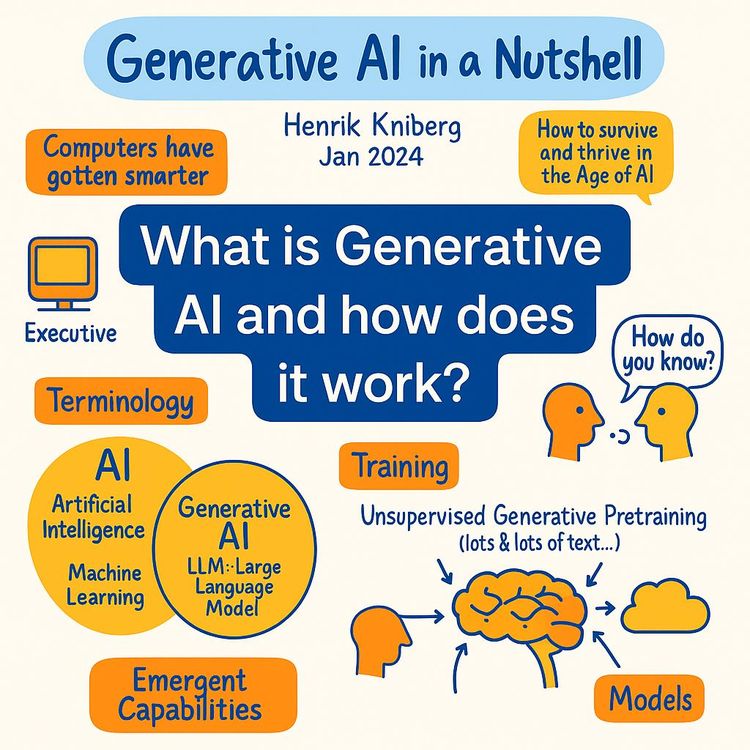
Video Course: What is Generative AI and how does it work?

Video Course: How to Use ChatGPT from Beginner to Professional
Video Course: How to Use Google Gemini for Google Workspace to Boost Productivity

Video Course: How to Use Claude 3.7 AI - Tips for Beginners!

Video Course: ChatGPT for Data Analytics: Full Course - from Beginners to Professional

Video Course: Generating Images and photos With ChatGPT?

Video Course: Generating Images & Photo's with MidJourney

Video Course: Generating Design's with Microsoft Designer and AI

Video Course: Generating Design's with Canva.com and AI
Join 20,000+ Professionals, Using AI to transform their Careers
Join professionals who didn’t just adapt, they thrived. You can too, with AI training designed for your job.